Entertainment
Don’t call her first Oscar nod in 25 years a comeback. Kate Hudson never left


What does one do on the morning of the Academy Award nominations? Wake up early? Try to sleep in? Wait for your publicist to call?
Having returned home late from a friend’s dinner the night before, Kate Hudson debated the best course of action ahead of last month’s nominations — before deciding she needed to wake up and hear the news either way.
“It’s been such a ride,” she says. “I wanted to be able to go back to sleep knowing that this part is over. Or I wanted to just wake up and celebrate and be tired. You prepare yourself for everything. But you just feel completely unprepared for when your name is called.”
Hudson’s lead actress Oscar nomination for her turn as Claire Sardina in “Song Sung Blue” is the culmination of an incredible awards season, in which she’s also been nominated for a Golden Globe, an Actor Award and a BAFTA. Based on a true story, the movie follows Claire and her husband, Mike (Hugh Jackman), who headlined the popular Milwaukee-based Neil Diamond cover band Lightning & Thunder in the 1980s and ’90s.
Hudson with Hugh Jackman in “Song Sung Blue.”
(Sarah Shatz / Focus Features)
The honor comes 25 years after Hudson received her first and only previous Oscar nod for playing Penny Lane in her breakthrough role in “Almost Famous.” And although she’s had a slew of successes in the interim — including the now-classic rom-com “How to Lose a Guy in 10 Days” and other hit movies; Netflix’s Lakers-inspired comedy series “Running Point,” currently in postproduction on its second season; and the popular podcast “Sibling Revelry,” which she hosts with brother Oliver Hudson — it can sometimes seem that we’ve underappreciated, and perhaps underestimated, Kate Hudson.
But for her, being recognized for “Song Sung Blue” isn’t some long-awaited vindication. As always, it’s about the work.
“When you’re acting, all you want to do are the things that stretch you, that are exciting,” she says. “You have these opportunities that come, and they don’t come very often, and so you get excited by that process. I don’t think you look from the outside in and say, ‘I always knew I could do this.’ It’s more, my drive is to continue doing this. It’s more, when you look into a horizon and you’re like, ‘Oh, that looks interesting. I wonder what that’s gonna be?’ versus, ‘I’m gonna do that and I’m gonna be good at that.’”

-
Share via
So the most rewarding part of the movie is not the possibility of adding trophies to her decor, but rather how complex and layered Claire is, who during the course of the movie survives a tragic accident. The role provided Hudson with “so many wonderful things to soak in and perform.”
“There was no one note,” she says of her onscreen alter ego. “There were 10. Everything mattered. The process was really extensive, which is something that I long to do all the time. But it doesn’t happen very often that you get to play so many different things in one movie. That’s our drug as an artist. It mattered that I got this right. There was a personal stake attached to it for me, which was not wanting to let Claire down and wanting to honor her life experience.”
While much of the industry has transformed in the 25 years between Hudson’s Oscar nominations, much has also stayed the same. “It hasn’t changed so drastically that it feels like it’s a different world,” she says. “The soul of our industry is very present. I was talking about this with Ethan Hawke [who is nominated for his turn in ‘Blue Moon’]. We’ve been having so much fun with this. We love it. And it’s nice when you’ve been doing it for so long and then you’re in the conversation and you still just love it and enjoy it.”


“I see where I had the opportunity and where that privilege comes from,” Hudson says of her Hollywood pedigree. “But I also don’t discount how much work needs to go into getting to where [I am]. It doesn’t just happen. It’s something you have to create.” (Christina House / Los Angeles Times)
Did she have a hint when filming “Song Sung Blue” that it could become a career-defining moment for her? “I don’t ever get that far outside of myself,” she says. “The goal is really just to make the best version of something that you love, and then walk away from it and hope that you’ve created something that ends up translating.”
“Song Sung Blue” also marked the first time, since becoming a mother, that she was able to leave her children for an extended period to film a movie. “I feel so lucky right now. My kids are a bit older and I can really get into my creative space,” she says, before adding with a laugh, “I don’t have any more strollers in my house. It’s a whole new world.”
As is her nature, Hudson talks openly and honestly about how being a mother has intertwined with her career. “Mothering doesn’t stop,” she says. “I remember being in a meeting with my dad. Within this meeting I had two phone calls, one from the school and one from someone else asking me a question about my kids. And I had to take these calls because I’m the epicenter. And my dad looked at me and he goes, ‘I don’t know what that’s like.’ I loved that he said that. He was so proud. And also like, ‘Wow, I wouldn’t know what that is, as a man.’”

(Christina House / Los Angeles Times)
Being able to celebrate this moment with her family, including her parents Goldie Hawn and Kurt Russell, is the “cherry on top” to the entire awards season for Hudson. There are not that many mother-daughter pairs who can both boast Oscar nods. “I honor that so deeply,” she says. “My mom’s 80 years old. She’s had a phenomenal career. She’s my No. 1 best friend in the world. Even though I’ve had a different type of career and we’re very different actresses, that’s my mommy and I learned from her first. So there’s something about being in the same industry and being able to celebrate each other in these moments that becomes even more meaningful because it’s understood differently.”
Hudson has never shied away from being the daughter of famous parents. “To pretend that’s not a huge part of my life would be dishonest,” she says. “It would be irresponsible to say that there isn’t an opportunity that comes from growing up in this town. The difference is if you take it for granted or if you honor it. I see where I had the opportunity and where that privilege comes from. But I also don’t discount how much work needs to go into getting to where [I am]. It doesn’t just happen. It’s something you have to create.”
She particularly credits her parents with the work ethic they instilled in her from a young age to have respect for the craft and the job. “You don’t just show up and think you’re gonna become an actor. You have to take it seriously. My dad always said put your head down and you just do the work. You just just keep plugging away.”
That perspective also helps her see this experience as having a bigger purpose than just her nomination. “It really feels special to be a part of the community this year that’s talking about the importance of celebrating cinema in the theater and how much we need to be saving this industry and nurturing it,” she says. “We have to protect it or else we lose the art form.”
After the hubbub abates, Hudson says the hardest part will be knowing that it will be time to say goodbye to the character and the movie. “It’s the saddest goodbye because you really love a character, and then that moment marks the real letting go of that experience,” she says. “It’s really like sending your kids to college. You’re like, well, now it just lives. It lives without me having to support it. That makes it really emotional. Win or lose, you know?”

(Christina House / Los Angeles Times)


The Isolate Thief, 2026.
Directed by John Suits.
Starring Mackenzie Foy, Odeya Rush, Joe Pantoliano, Sean Bean, Jack Kesy, Ty Simpkins, Bryan Martin, and Martin Sensmeier.
SYNOPSIS:
A young woman struggles to conceal the gold she stole from violent outlaws who have seized control of her remote outpost, outwitting them amid a deadly winter where survival becomes a game of cunning and betrayal.

Set at a Union outpost in frigid temperatures, John Suits’ The Isolate Thief transcends what was likely a small budget with a fittingly chilly, oppressive look, and an ensemble that sneaks up on you as not only packed but smartly cast. Front and center is Mackenzie Foy shedding her Twilight and Disney-oriented roots for gritty period-piece work that she handles capably and convincingly, whether it be fending off wolves at the outpost, bandaging a wound, playing a deceitful game for survival, or wielding a firearm.
That’s only the start, though, as Joe Pantoliano shows up as a harmless graverobber only to re-enter the picture as the hostage of a group of Union soldiers led by Sean Bean on a search for gold thought to be discovered by him, which in reality has been hidden away by Mackenzie Foy’s parentless (her father recently died in the war, meaning she is all alone at the outpost), grieving, underestimated caretaker waiting for the right moment to make a break with the gold for San Francisco. The merciless candor with which the Union soldiers are comfortable torturing the drifting graverobber should also be enough to signal that something is off about the group and that our hero probably shouldn’t trust them.

Without giving too much away, Ada (Mackenzie Foy) is up against a violent group of outlaws posing as Union soldiers under orders from Sean Bean’s Fiddler, who will stop at nothing for this gold (accompanied by fellow evildoers played by a range of underappreciated names such as Ty Simpkins and Jack Kesy). In the forest, she also stumbles across a badly injured Emily (Odeya Rush), who has a connection to these outlaws, reduced to being treated as a sex object (they refer to her as an unflattering term for a prostitute, which feels inaccurate given that such a term would imply she has a choice rather than having her agency regularly taken as it is here), so broken by her experiences with them that she advises Ada to give in to their demands as defying them typically results more horrifying outcomes.
Even if the screenplay from Kevin Lefler doesn’t necessarily crackle the way a pressure-cooker story like this should (there’s a lot of The Hateful Eight in the film’s DNA, but without anywhere near that level of character and thematic complexity), the cast elevates the material and provides a quiet intensity simmering underneath the casual conversations and deceptions that we know will eventually blow up in Ada’s face. It’s also a story that isn’t afraid to go to some fairly bleak places and put these women through the wringer as they fight back and try to make it out alive.

What it boils down to is a simplistic cautionary tale of ruthless, misogynistic outlaws underestimating the women they are up against. That is also desperately felt when the women turn the tables in the third act. Effectively accomplishing what it sets out to do. A freezing locale is used for atmospheric advantage (the ground is frozen solid, meaning graves can’t be dug, to give an idea of just how cold it is) while allowing Mackenzie Foy to tap into some new acting tools demonstrating resourcefulness, alongside Sean Bean believably going from calm to terrifying on a dime. The Isolate Thief is a feminist period-piece Western that organically empowers through familiar, albeit competent and engaging, storytelling, culminating in some tense battle-of-the-sexes action.
Flickering Myth Rating – Film: ★ ★ ★ / Movie: ★ ★ ★
Robert Kojder
https://www.youtube.com/watch?v=embed/playlist
Entertainment
Don Was produced the Rolling Stones, Bob Dylan and Ozzy. At 73, he found his voice in Detroit — and the Dead
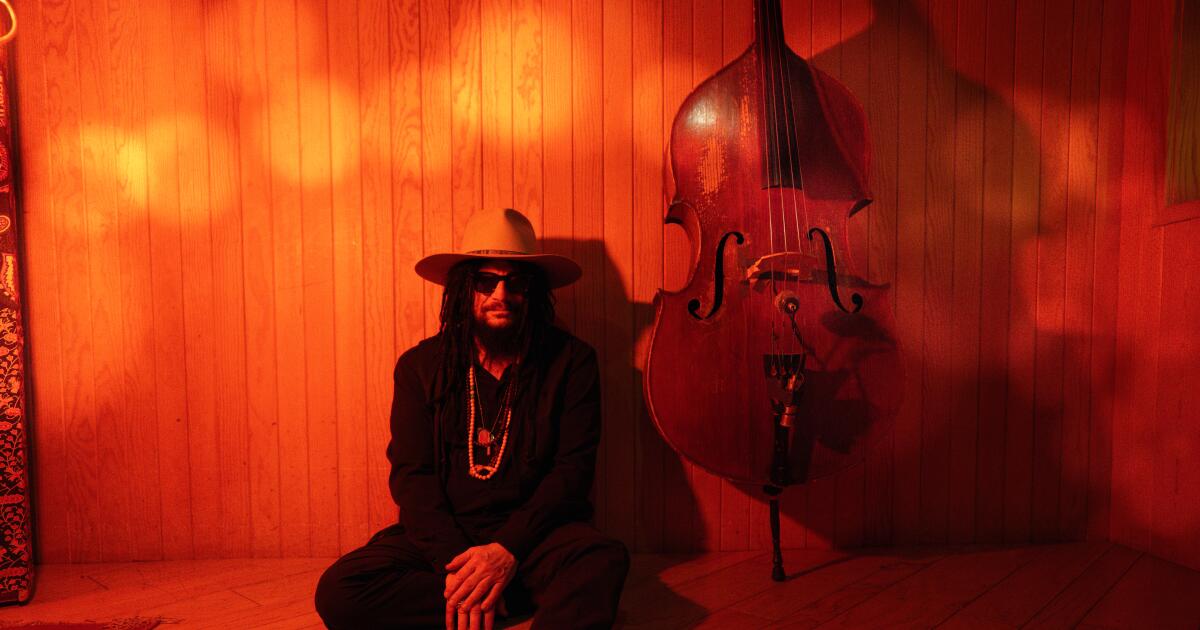
The bass legend and superproducer Don Was didn’t expect to be covering Curtis Mayfield’s Civil Rights-era anthem “This Is My Country” on the road in 2026. But lately, the chaos in the United States made the song seem regrettably apropos.
“It wasn’t supposed to still feel potent. It was supposed to be something that served a moment,” said Was, who included the defiant single on his 2025 album “Groove In the Face of Adversity.”
“It’s shocking to be here in 2026 and, whatever distance we traveled from 1966 until now, to see it all get reset,” Was said. “That song’s a more powerful statement now than it was then. It was inconceivable that it would still be relevant — this is supposed to be the utopian age of Aquarius. This is not the way it was supposed to turn out.”
Was remembers the tumult, violence and hope that came out of that era in his hometown of Detroit. The city’s music, famed for rough-hewn virtuosity from blues to soul to techno, is the spring that waters “Adversity.” It is, remarkably, the 73-year-old’s first solo album after a career spanning the pioneering electro-pop band Was (Not Was) and deep producer relationships with the Rolling Stones, Bob Dylan and Bonnie Raitt.
He also spent years in Bob Weir & Wolf Bros with the late Grateful Dead founder, and will play from the Dead’s landmark “Blues for Allah” on his tour that stops at Lodge Room on July 7.
With a backing band of studio killers dubbed the Pan-Detroit Ensemble, “Adversity” has an expansive modern atmosphere, yet a lived-in, filament-bulb quality in the playing that carries through funk, jazz, rock and R&B. It’s largely a covers record, but you wouldn’t know it from the depth of the revisions — veering from the Yusef Lateef standard “Nubian Lady” to Hank Williams’ “I Ain’t Got Nothin’ But Time,” closing with funk group Cameo’s “Insane.”
“I’ve been carrying it around in my head for 30 years,” Was said. “This first album to me is really a handshake, a ‘nice to meet you,’ this jambalaya of Detroit sounds.” While much of the source material comes from elsewhere, the cumulative mood is extremely personal to an artist who has spent his life helping the greats find true expression.
“I’ve come to admire artists who are willing to go in deep inside their most personal thoughts for the sake of helping the listener understand their own lives,” he said. “To help them deal with the trauma of being human — especially in these times, man.”
Tops on that list is the late Grateful Dead founder Bob Weir — who died in January at 78 — as a model for a band staying fearless and uncompromising. Was, still heartbroken about the loss of his friend and bandmate, recalled their first time on tour.
“When Bobby called asking me to play bass with the Wolf Bros, I thought at the very least, this is going to be a master class in losing self-consciousness and forgetting about fear,” Was said. “If the band stumbled, the audience wouldn’t walk out. They appreciated the fact that you were trying to do something new for them. Then there’d be a couple moments every night with an incredible exchange between the musicians and you can feel the audience becoming a member of the band.”
Playing the Dead’s “Blues for Allah” on this tour — an LP rooted in Middle Eastern scales, pirouetting time signatures and improvisational telepathy — put him in communion with his old friend.
“I used to think that songs like ‘King Solomon’s Marbles’ were just jams and conversations on the spot. But when we really got into it, there’s a form underneath and you can take tremendous liberty with that form,” Was said.
Was’ production career was built on a similar principle.
His early band Was (Not Was) remains a visionary electro-pop act with subtle, salient politics. “Out Come the Freaks” is a favorite on Pride month dance floors — “If you just wanted to do poppers and dance all night, it worked, and if you wanted to think about the government careening out of control, it worked too,” Was said of the band’s club material.
The late Ozzy Osbourne sang on the band’s international hit “Shake Your Head,” alongside a winking, very game Kim Basinger. The actor was a replacement after Madonna backed out, leaving the proto-rave tune one of the era’s most unlikely collaborations.
He recalled Ozzy fondly. “In 1975, this folk group I was in booked us to open for Black Sabbath at the Toledo Sports Arena, playing for a bunch of 14-year-old white boys on amphetamines,” Was said. “They weren’t having it. I’ve heard the tape of that show, and the drummer was bleeding from being hit by so many bottles that we had to stop playing. That was my first exposure to Ozzy, so I was a little afraid to do the session, but he was up for an adventure.”
Don Was and the Pan-Detroit Ensemble
(Gemma Corfield)
A Stones confidant and producer from 1994’s “Voodoo Lounge” up until 2023’s “Hackney Diamonds” (where Andrew Watt took the helm), Was had nothing but praise for the band, and still admits to a twinge of fandom in their presence.
“There’s never been a day in the studio with the Rolling Stones where I didn’t look around the room and go, ‘Oh my God,’” he said. “I’ve known Mick for over 30 years, but the last time they played L.A. at SoFi Stadium, Mick came walking down that stage and I was like, ‘Wow, there he is, it’s 1965 again.’”
With Dylan, he recalled the mercurial genius’ impish side. “I was producing Dylan, and George Harrison came in to play guitar. Bob was messing with him, Bob pushed the engineer aside and he ran the tape machine. George had never heard the song before, didn’t know what key it was in, and Bob just starts the tape. George played a respectable solo, but clearly it was rough. Bob, just to be funny, stopped the machine and said ‘That’s it, perfect.’ George turns to me and said, ‘What do you think, Don?’ And Bob goes, “Yeah, what do you think, Don?’ I’m looking at these two guys and time slowed down. I remembered trying to sell my car to get a ticket to go to New York to see the Concert for Bangladesh. Now they’re asking me what I think. I was paralyzed.”
“A voice appeared in my head,” he said, “Telling me, ‘He’s not paying you to be a fan.‘ So I said to George, ‘It was good, man. Let’s see if we can beat it.’ You can’t allow the iconography to dictate the outcome in the studio. You have to put that aside.”
As president of Blue Note Records, the estimable jazz label he’s led for more than a decade, Was relentlessly looks forward. He’s released restless modern records by Domi & JD Beck, Fathers, Makaya McCraven and Julian Lage (the hotshot jazz guitarist now playing with Dylan). He’s refreshingly optimistic about challenging music in streaming’s ruthless economy.
“Don’t make music for the delivery system,” Was said. “I don’t think about streaming, I think about touching people. If you do that, nothing has changed fundamentally in the music business. If your purpose is to get under people’s skin and make them feel something, that’s the same job it was for Mozart. How people listen can keep changing, but I don’t think the palette of human emotion changes, and that’s who you’re addressing.”
Was came from a working-class industrial city, making music reflective of Detroit’s technological upheaval and economic neglect. “Adversity” is a beacon to keep playing in spite of everything.
“I think that the salvation of musicians is that no matter what happens, what technological advancements come along, there’s still nothing like the experience of being in the same room as people who are playing together,” Was said. “It’s always been tough, man. It’s harder these days to buy a Ferrari as a musician, but I don’t know that that’s necessary. I have total confidence that the opportunity is there for anybody who is willing to give the audience a meaningful experience.”

When I spend time around fellow writers, regardless of their achievements, conversation is much the same as in any other context. When I watch groups of fictional writers in films, they are continually striving to outdo one another, to show off their brilliant intellects. It’s a constant process of trying too hard, and it’s exhausting. To his credit, Dustin Hoffman, who plays established literary genius David in this torrid tale of family conflict, doesn’t come across this way, rising above the clumsy script thanks to his patient approach. The same cannot be said of the other actors, all of whom have proved their talent elsewhere yet seem seduced by the notion that this is how intelligent people behave.
The plot here is fairly simple, and not without potential. David’s son Jacob (Tom Sturridge) is a copywriter and successful creator of jingles, but after his wife Elise (Alison Brie) wins a major award, he starts getting insecure, wanting to prove that he can make it as a proper literary type. The obvious way to do this seems to be to write a biography of David, but David has no interest in engaging with this. He provides a number of reasonable justifications for this. Underlying them is the fact that we all tend to frame ourselves in different ways for different people. What one might be willing to say to the great anonymous public is not necessarily something one might feel able to say to one’s son.

This stalemate is broken by the arrival of John (André Holland, fresh from the similarly awkward – but smarter – The Dutchman), an old friend of Jacob whom David remembers fondly. At Elise’s instigation, a secret deal is made: John will look after the increasing fragile older man during the day and, in the process, extract his stories from him, giving them to Jacob for his book. John agrees to this because he needs the money Jacob offers him, and it seems like a sweet deal. It immediately sets up a power imbalance, however.
Complicating matters further are John’s past as a literary protégé who failed to fulfil his promise; the fact that he was once in a relationship with Elise, whose dissolution she regrets; and the pressure that she’s under to match her great success, from an agent who subscribes to the popular but rather tedious belief that inspiration is most easily found in bad behaviour.
Another way writers in films differ from those in the real world is that for them, critical success comes with money, so they don’t have to write very much. A good deal of this film is spent listening to them whine about how hard it is, as if under the misapprehension that it’s not really a form of work. Sturridge is particularly unfortunate; between this and Jacob’s whining about issues with his parents, he doesn’t get much else to do. Brie has a little more to work with as the film flirts with the idea that we’re caught up in Elise’s imaginary scenarios, but this doesn’t really convince. Holland manages to salvage something, but it’s only Hoffman who is really able to interject some energy into proceedings – ironic given that he spends a lot of his scenes in a haze of cannabis smoke.
It’s not terrible. Writer/director Alex Vlack frames scenes nicely enough and all the technical work is carried out to a good standard. There’s just little reason for viewers to invest. Like its characters, it’s intent on trying to communicate cleverly, but has very little to say.
Reviewed on: 04 Jul 2026
-
 Milwaukee, WI4 minutes ago
29-year-old motorcyclist dies in Milwaukee collision; charges pending
-

 Atlanta, GA6 minutes ago
Braves vs. Mets rain delay chat and discussion
-

 Minneapolis, MN12 minutes ago
Minneapolis shooting on Wilson Street leaves man dead
-

 Indianapolis, IN19 minutes ago
Mortgage expert warns of rising home prices while interest rates lower
-

 Pittsburg, PA22 minutes ago
Pirates Secure Pitcher With 40-Man Roster Move
-

 Augusta, GA26 minutes ago
86-year-old Augusta woman dies in Walton Way crash
-

 Washington, D.C34 minutes ago
Trump’s administration won’t seek new bids to repair the Lincoln Memorial Reflecting Pool
-

 Cleveland, OH36 minutes ago
MLB Rain Delay Watch Today (July 5): Weather Outlook for All 15 MLB Games

