Connect with us

Northeast

AI raises the stakes for national security. Here’s how to get it right

Published

on

AI raises the stakes for national security. Here’s how to get it right

NEWYou can now listen to Fox News articles!

Regulating advanced AI isn’t a game of checkers. It’s a game of chess.

Every move matters. You have to think several steps ahead. And if you focus only on the next play — or worse, react after the fact — you risk losing the long game.

Today, the United States finds itself at a turning point on AI, where real policy choices are being made. You can see it in the actions underway in both the states and Washington.

In recent months, leaders in both New York and California have passed landmark AI safety legislation. California’s SB 53 took effect on January 1, while New York’s RAISE Act was signed into law by Democrat Gov. Kathy Hochul in December and will take effect in 2027.

Advertisement

MIKE DAVIS: CONGRESS MUST STOP BIG TECH’S AI AMNESTY SCAM BEFORE IT’S TOO LATE

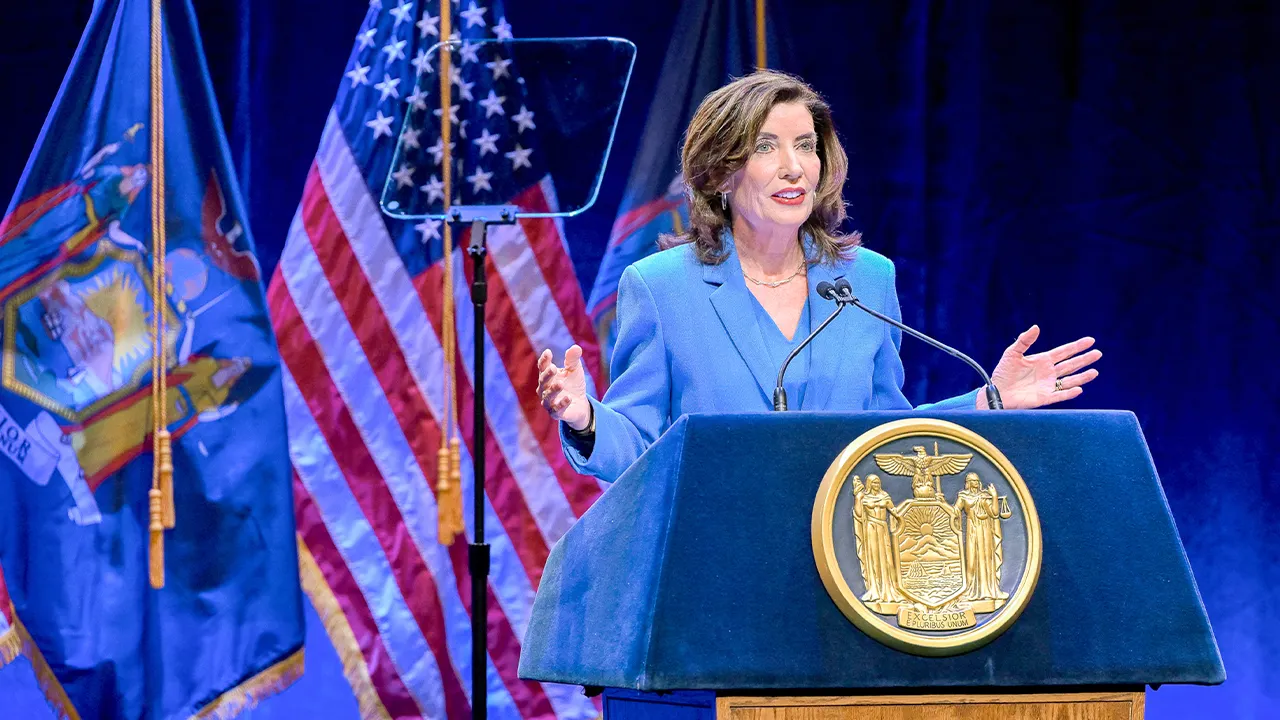
New York Gov. Kathy Hochul delivers her State of the State address at Hart Theatre at The Egg in Albany, New York, Jan. 13, 2026. (Heather Ainsworth/Bloomberg via Getty Images)

Both states are moving toward approaches that align state and federal law — recognizing that a fragmented, state-by-state patchwork isn’t sustainable. Given their size and economic impact, these moves create a clear path forward for federal action while positioning New York and California to lead the nation into the AI era.

There’s a word for this kind of alignment between state and federal action: harmonization. The federal government sets one clear national standard for the most powerful AI systems — the issues that affect national security and the country as a whole. States continue to focus on the issues closest to people’s daily lives: consumer protection, civil rights and how AI is used in schools, workplaces and public services. Each level of government plays to its strengths.

Think of it as one rulebook with two clear roles and one urgent mission: ensuring the United States maintains its competitive advantage in a technology central to national security and global economic leadership. Russian President Vladimir Putin has said bluntly that whoever leads in AI will lead the world. The United States can’t afford to drift — or to divide itself — at this critical moment.

Advertisement

STATE-LEVEL AI RULES SURVIVE — FOR NOW — AS SENATE SINKS MORATORIUM DESPITE WHITE HOUSE PRESSURE

That’s because AI leadership is increasingly an issue of national security — and national security requires prevention, not punishment after the fact.

When states act alone, they are often forced into a liability-only approach — holding companies accountable after harm has already occurred. Preventing the most serious risks requires access to the technical expertise and classified systems that only the federal government possesses.

That is why our North Star must remain clear: deploying frontier models safely and in a way that best positions the United States to maintain its innovation lead.

TRUMP ADMINISTRATION EYES SWEEPING FEDERAL POWER OVER AI, DRAFT ORDER SHOWS

Advertisement

That prevention-first approach already exists in practice. The Center for AI Standards and Innovation — created by the Biden administration and updated by the Trump administration — gives the federal government the ability to test and evaluate advanced AI systems before they are widely deployed. That kind of centralized testing is essential for managing risks that no single state or company can address on its own.

Without harmonization, AI companies would face a confusing patchwork of conflicting state requirements that slows innovation without improving public safety. With it, companies get clarity and consistency, the public gets stronger protections and states are given clear room to act where they add the most value.

Today, the United States finds itself at a turning point on AI, where real policy choices are being made. You can see it in the actions underway in both the states and Washington.

At the same time, states play a vital role, and the recent moves in New York and California show what that balance looks like in practice. By moving away from fragmented approaches and toward alignment, the two largest innovation economies in the country are helping create a de facto national standard that exists alongside, and not instead of, state action.

WHITE HOUSE OFFICIAL PRESSES ALLIES TO FREE AI FROM INNOVATION-KILLING REGULATIONS

Advertisement

This is what harmonization looks like in practice: Washington focuses on the highest-stakes safety issues, while states address kitchen-table ones. It is a third way forward — avoiding both unregulated acceleration and fragmented overreach.

Think about how we handle car safety. We don’t wait for accidents to happen and then rely solely on lawsuits to make cars safer. The federal government sets clear national safety standards. It requires rigorous testing. And it makes seatbelts, airbags, and braking systems mandatory — with strict rules for how well they must perform — before cars ever hit the road. Liability still matters, but prevention comes first, because the stakes are too high to get it wrong.

That balance isn’t new. It’s how the United States has governed aviation, food and drug safety, financial markets and telecommunications. In each case, the federal government set clear national standards for systems that power the entire country, while states continued to play a critical role closer to home. The result wasn’t less innovation or less growth. It was regulatory clarity, economic growth, and American leadership.

CHINA RACES AHEAD ON AI —TRUMP WARNS AMERICA CAN’T REGULATE ITSELF INTO DEFEAT

I saw this dynamic firsthand in 1996, when I was working in the White House just as the internet was beginning to reshape the economy.

Advertisement

Washington faced a choice that feels familiar today: apply old rules to a new technology, or agree on a new national framework built for what was coming next. Democrats and Republicans chose the latter.

CLICK HERE FOR MORE FOX NEWS OPINION

The result was the Telecommunications Act of 1996. It wasn’t perfect, but it got the big things right. It created clear national standards, gave innovators room to build and helped position the United States to lead the internet era that followed.

Think of it as one rulebook with two clear roles and one urgent mission: ensuring the United States maintains its competitive advantage in a technology central to national security and global economic leadership.

The lesson is straightforward. When America sets smart, national standards for emerging technologies, we don’t fall behind — we lead.

Advertisement

CLICK HERE TO DOWNLOAD THE FOX NEWS APP

The chessboard is set. If the United States focuses on prevention, harmonizes state and federal efforts, and keeps its eyes on that North Star, we can once again lead a defining technological era.

That’s how you win the long game: by playing chess, not checkers.

Read the full article from Here

Pennsylvania

Affordable Housing Centers of Pennsylvania Helps Homeowners Protect Their Investment Across Generations » NCRC

Published

on

Affordable Housing Centers of Pennsylvania Helps Homeowners Protect Their Investment Across Generations » NCRC


For the past 17 years, the Affordable Housing Centers of Pennsylvania (AHCOPA) has provided a range of programs designed to build wealth within low- and moderate-income (LMI) communities. AHCOPA provides services to approximately 3,000 people each year via their pre-purchase, post-purchase and mortgage prevention counseling programs.

When Kenneth Bigos joined AHCOPA as their Executive Director in 2013, he set out to expand the organization’s offerings beyond first-time homeownership counseling services. He identified estate planning as an urgent need for the region’s LMI communities as well. 

A 2022 Consumer Reports survey found that 77% of Black and 82% of Hispanic Americans do not have a will in place, which is needed to ensure that their home investment continues to build generational wealth. Consequently, the state court steps in upon the owner’s passing to decide how assets will be distributed, with property not being able to be transferred to an heir until that lengthy process is complete. In Philadelphia alone, there are approximately 10,000 properties with titles that have not been legally settled. 

In response to this, AHCOPA launched the Will Power program in 2022 by leveraging existing relationships with pro-bono lawyers in the creation of wills and trusts for community members. The program has created an opportunity to serve a larger portion of Philadelphia’s population. 

Advertisement

While the first-time homebuyer program initially attracted people in their mid-30s, Will Power participants are generally in their late 60s, prompting AHCOPA to think about what housing support looks like across an individual’s lifetime.

“Elderly households are more vulnerable,” Bigos said. “To reach these homeowners, we had to develop relationships with trusted agencies, such as senior centers, churches and other institutions that we would not typically work with in our first-time homebuyer program.”

As a result of that  work, AHCOPA marked a major milestone in October 2025: the signing of 1,000 wills. Thanks to the success of Will Power and the first-time homebuyer program, AHCOPA has solidified its reputation as the go-to financial advisor for working-class residents. 

Looking ahead, they are planning to add a new program designed to support people beyond the initial purchase of their home, which will include coaching to help owners develop their financial literacy. This would encompass how to build savings to buy a first home and avoid foreclosure in the event of a crisis.

For Bigos, NCRC membership is key to ensuring the success of these programs, especially in terms of organizing at the federal, state and local levels advocating for continued funding. 

Advertisement

“Engaging with decision makers is very important and being an NCRC member has helped facilitate those relationships,” Bigos said. “Their support has been very impactful.”


Jesse Rhodes is a Contributing Writer.

Photo courtesy of the AHCOPA team.


Source link

Advertisement
Continue Reading

Rhode Island

Man killed in RI shooting; suspect involved in Mass. car crash that killed 2 others

Published

on

Man killed in RI shooting; suspect involved in Mass. car crash that killed 2 others


A man has died after a shooting in Cranston, Rhode Island, and investigators say a suspect was later involved in a car crash in Swansea, Massachusetts, that killed two other people.

The shooting victim was found Thursday on Legion Way, shot multiple times in the chest, Cranston police told NBC affiliate WJAR-TV. He was taken to Rhode Island Hospital where he later died. His name has not been released.

The suspect initially fled on foot, setting off a shelter-in-place order while investigators searched the area.

Police said Friday that investigators identified a suspect vehicle, which was later spotted by Massachusetts State Police. A trooper followed the car down Route 6 and Interstate 195, but stopped when it crossed back into Rhode Island. The car was later involved in a crash on Route 136 in Swansea, Mass.

Advertisement

Swansea police say that crash on Route 136 (James Reynolds Road) resulted in the deaths of two other people.

According to the Swansea Police Department, two officers saw a white Infinity G37 speed past them around 12:18 a.m. Friday on Route 6, otherwise known as Grand Army of the Republic Highway. Moments later, officers observed that the vehicle had crashed into the side of a blue Subaru Ascent that had been traveling southbound on Route 136.

Both vehicles sustained catastrophic damage, police said.

The vehicle that was struck was fully engulfed in flames. First responders and bystanders tried to extinguish the fire, but both occupants — a man and a woman — were pronounced dead at the scene, police said. Their names have not been released.

The 28-year-old Infinity driver, who struck the victims’ Subaru, was taken to Rhode Island Hospital with serious injuries and later into custody by Cranston Police. They have not been publicly identified at this time.

Advertisement

Swansea police said they are aware that the Infinity was the subject of a police pursuit, and know the driver was wanted in connection to the Rhode Island homicide investigation. While Swansea police had been alerted to be on the lookout for the suspect’s vehicle, however, they say they were not involved in the pursuit and were not pursuing the vehicle at the time of the deadly crash.

The crash in Swansea is under investigation by Massachusetts authorities, including state police and the Bristol County District Attorney’s Office. Meanwhile, Cranston police said they would give an update on their investigation around 1 p.m.


Source link

Advertisement
Continue Reading

Vermont

Here are five places to ice skate in Vermont this winter

Published

on

Here are five places to ice skate in Vermont this winter


How to see a reindeer in Vermont

Vermont Reindeer Farm in West Charleston is home to the only three reindeer, or caribou, living in the state. Here’s what it’s like to visit them.

Looking for ways to enjoy the rest of the cold New England winter?

While staying indoors often seems better than facing the cold, the region has lots of outdoor activities that brighten the winter season, including skiing, snow tubing and, of course, ice skating. From Burlington to Stratton, Vermont has plenty of indoor and outdoor ice rinks, many of which offer lessons, concessions and special events in addition to ice skating.

Advertisement

Here are five places in Vermont where you can go ice skating this winter.

Spruce Peak Village Ice Rink

This outdoor ice rink is located in the heart of the village at Spruce Peak, a ski resort in Stowe formerly known as Stowe Mountain Lodge.

Guests can skate daily surrounded by the majestic ski slopes of the Green Mountains. On Friday nights, the Spruce Peak Village ice rink hosts glow skate parties with a light show, glow sticks and a live DJ. Skate rentals and lessons are also available for purchase.

When: Noon to 6 p.m. Tuesday through Thursday or noon to 9 p.m. Friday and Saturday

Advertisement

Where: Spruce Peak, 7412 Mountain Road, Stowe

Ice Haus Arena

Located up at Jay Peak Resort near the Canadian border, Ice Haus Arena is the newest ice-skating arena in the state. The indoor rink is complete with bleacher seating, a rental and repair shop, four locker rooms, a pro shop, a snack bar and of course, an NHL-sized rink where guests can participate in public skating or skating with sticks and pucks.

General admission to the rink is $6, with skate rentals available for $6, skate sharpening available for $7 and helmets available for $3.

When: Online schedule updated daily

Where: Jay Peak Resort, 830 Jay Peak Road, Jay

Advertisement

C. Douglas Cairns Recreation Arena

This indoor arena has not one, but two NHL-size ice rinks for hockey, public skating and stick and puck practices. Off the ice, Cairns Arena also offers a pro shop and a cafe with hot food, snacks and drinks.

Skating at Cairns costs $5 for adults or $3 for children and seniors, and skates are available to rent for an additional $5.

When: 10 a.m. to noon Tuesday through Thursday, with exceptions. Check the online schedule at cairnsarena.finnlyconnect.com..

Advertisement

Where: 600 Swift St., South Burlington

Mill House at Stratton Mountain Resort

Surrounded by the scenic Stratton Mountain Resort, Mill House Pond is the perfect outdoor spot for public ice skating or skating lessons.

Public skating costs $20, and bookings can be made online.

When: Noon to 8 p.m. Saturday or noon to 6 p.m. Thursday-Friday and Sunday-Monday

Where: Stratton Mountain Resort, 5 Village Lodge Road, Stratton Mountain

Advertisement

Riley Rink at Hunter Park

A large indoor sports facility, Northshore Civic Center has an Olympic-sized ice rink, along with a concession stand and retail shop. The rink offers public skating, stick and puck practice, hockey and skating lessons.

When: Check the online schedule for weekly updates

Where: 410 Hunter Park Road, Manchester Center


Source link

Advertisement
Continue Reading
Advertisement

Trending