Washington
Trump’s aggressive tactics force a reckoning between local leaders and Washington – WTOP News


WASHINGTON (AP) — Denver Mayor Mike Johnston regularly games out responses to threats like destructive tornadoes or hazardous waste leaks.…
WASHINGTON (AP) — Denver Mayor Mike Johnston regularly games out responses to threats like destructive tornadoes or hazardous waste leaks. He’s added a new potential menace: the federal government.
When President Donald Trump deployed National Guard troops to some U.S. cities last year over the objection of local leaders, Johnston said his tabletop exercises expanded to consider what might happen if federal officials took aim at Denver, which the Trump administration has sued for limiting cooperation on deportations. The city now prepares for the impact of federal activity on everything from access to schools and hospitals to interference with elections.
“We used to prepare for natural disasters,” Johnston, a Democrat, said in an interview. “Now we prepare for our own federal government.”
A half-dozen state and local officials from both major political parties over the past week described an increasingly hostile relationship with Washington. While there’s inherent tension between city, state and federal governments over power, politics and money, the current dynamic is unlike anything they’ve experienced, particularly after federal agents killed two U.S. citizens in Minneapolis last month.
While partnerships are still in place, the officials said the Minneapolis killings have hardened opposition to excessive federal power.
“This is unprecedented,” said Jerry Dyer, the Republican mayor of Fresno, California, and a former police chief. “I’ve never seen federal law enforcement come to the cities, whether it’s National Guard or ICE, and police cities without a level of cooperation from local police.”
GOP long sought to empower local governments
The tensions have upended longtime Republican arguments that the federal government should leave local governance to the states under the 10th Amendment to the U.S. Constitution. Now a Republican president is articulating a muscular federal approach over the protest of Democrats.
“There’s no question that the Trump administration has repeatedly violated the Constitution and how it deals with states,” Kentucky Gov. Andy Beshear, a Democrat, said in an interview.
“My hope,” he added, “is that we are quickly approaching our McCarthyism moment where even Donald Trump’s supporters are going to recognize this has gone too far.”
Trump has expressed frustration at reflexive resistance from Democratic mayors and governors, insisting this week that he doesn’t want to force federal law enforcement on communities. He prefers to work with officials like Louisiana GOP Gov. Jeff Landry, who requested National Guard troops to patrol New Orleans.
The president’s willingness to use federal power is often issue-based, favoring states in areas like abortion or education while embracing a strong federal role on immigration and elections.
Trump said this week that Republicans should “nationalize” elections, a power the Constitution expressly gives to states. White House press secretary Karoline Leavitt said he was referring to a push that voters prove they are U.S. citizens, though Trump still described states as an “agent for the federal government.”
“That’s not what the Constitution says about elections,” Sen. Rand Paul, R-Ky., told MS NOW.
Beshear and the 23 other Democratic governors released a statement Thursday objecting to “interference from the federal government.” In the interview, Beshear pointed to Paul’s comments as an example of bipartisan agreement.
“Rand and I don’t agree on a lot,” he said.
Paul and some other Republicans, including Govs. Phil Scott of Vermont and Kevin Stitt of Oklahoma, have also expressed concern about the immigration operation in Minnesota.
Preliminary steps to ease tensions
Trump has taken preliminary steps to ease tensions, replacing Immigration and Customs Enforcement and Department of Homeland Security leaders in Minneapolis with Tom Homan, the administration’s border czar. Homan is withdrawing 700 of the roughly 3,000 federal officers deployed around Minneapolis, though Trump and Vice President JD Vance reject any suggestion of a federal drawdown.
Minneapolis Mayor Jacob Frey said the continued presence in the Twin Cities of thousands of federal officers contradicts his demand that the administration end its operation there. In a sign of the frustration between local and federal officials there, the rhetoric has taken on militaristic tones.
Trump has referred to federal law enforcement in Minneapolis as “soldiers.” Homan has described agents as being “in theater,” a military phrase typically used in reference to a conflict zone. During a quick trip to Washington last week to address fellow mayors, Frey spoke of an “invasion” and “occupation” in his city.
“We are on the front lines of a very important battle,” he said.
At the same event, Elizabeth Kautz, the Republican mayor of suburban Burnsville, Minnesota, said she now carries her passport around the city she’s led since 1995.
“With the introduction of ICE, our cities are no longer safe,” she said.
That’s also how it feels to leaders in places far from Minneapolis, even if they haven’t been targeted by ICE.
“What I can’t tolerate is the approach to immigration operations in a place like Minneapolis that are causing people to look over their shoulder in cities like Allentown,” said Matt Tuerk, the Democratic mayor of Allentown, Pennsylvania, which has a large Latino population. “Even though you’re not in Allentown, you’re having an impact.”
Reshaping Washington’s priorities
The immigration crackdown is one element of Trump’s work to dramatically reshape the U.S. government’s priorities and operations at home and abroad. Trump and his supporters describe a need to strictly enforce immigration laws in the U.S. and end social safety net programs they say are prone to fraud. The president’s foreign policy has shown little patience for longstanding alliances or diplomatic niceties that are seen as out of step with U.S. interests.
That’s manifested most clearly in Trump’s push for Denmark to cede control of Greenland to the U.S., a demand that brought the NATO alliance to the brink in January. Canadian prime minister Mark Carney spoke at the time of a “rupture” between the U.S. and its allies that would be difficult to repair.
For some local leaders in the U.S., that sense of a seismic shift felt familiar.
“It’s profoundly changed,” Cincinnati Mayor Aftab Pureval, a Democrat, said of his views toward the federal government. “Given that the administration has used partisan politics and used the power of the federal government and its various agencies to put pressure on mayors and local officials not to follow the law but to follow their politics is absolutely new and it’s absolutely affecting trust at every level.”
While foreign leaders can explore a shift in alliances, as some are actively considering, that’s nearly impossible for local leaders in the U.S., whose budgets are tied to federal funding. Those funds have been unstable during Trump’s second term as Washington has canceled grants that he considered wasteful or out of line with the administration’s priorities, prompting some mayors to turn to philanthropy for help.
But nothing can replace the power of the federal government, said Tuerk, who described defending grants by connecting the money to the administration’s priorities, including job creation.
“When we’re like, ‘Hey, don’t take away this grant that is designed to get people to work,’ I hope that message is getting through,” he said.
Los Angeles Mayor Karen Bass called the federal shift “absolutely historic.” Trump has fiercely criticized her, issuing an executive order last month deriding her wildfire response and pressing to “cut through bureaucratic red tape” to speed up reconstruction.
In an interview, Bass, a former member of Congress, said she turns to administration officials she knew from her time in Washington.
“I’m fortunate,” she said. “I have an ability to have a relationship.”
But as January came to a close, local officials in Minnesota seemed exhausted.
“You think about, ‘Why us?’” said Jim Hovland, the nonpartisan mayor of the Minneapolis suburb Edina. “We’ve had a historically really good relationship with the federal government, and it’s really sad to see it fray.”
Copyright
© 2026 The Associated Press. All rights reserved. This material may not be published, broadcast, written or redistributed.

The Washington Lottery offers several draw games for those aiming to win big.
Here’s a look at June 7, 2026, results for each game:
Winning Cash Pop numbers from June 7 drawing
02
Check Cash Pop payouts and previous drawings here.
Winning Pick 3 numbers from June 7 drawing
0-0-5
Check Pick 3 payouts and previous drawings here.
Winning Match 4 numbers from June 7 drawing
02-17-21-22
Check Match 4 payouts and previous drawings here.
Winning Hit 5 numbers from June 7 drawing
05-07-08-10-25
Check Hit 5 payouts and previous drawings here.
Winning Keno numbers from June 7 drawing
01-07-11-13-14-20-21-26-28-29-30-32-37-40-41-52-65-66-74-77
Check Keno payouts and previous drawings here.
Feeling lucky? Explore the latest lottery news & results
Are you a winner? Here’s how to claim your lottery prize
All Washington Lottery retailers can redeem prizes up to $600. For prizes over $600, winners have the option to submit their claim by mail or in person at one of Washington Lottery’s regional offices.
To claim by mail, complete a winner claim form and the information on the back of the ticket, making sure you have signed it, and mail it to:
Washington Lottery Headquarters
PO Box 43050
Olympia, WA 98504-3050
For in-person claims, visit a Washington Lottery regional office and bring a winning ticket, photo ID, Social Security card and a voided check (optional).
Olympia Headquarters
Everett Regional Office
Federal Way Office
Spokane Department of Imagination
Vancouver Office
Tri-Cities Regional Office
For additional instructions or to download the claim form, visit the Washington Lottery prize claim page.
When are the Washington Lottery drawings held?
- Powerball: 7:59 p.m. PT Monday, Wednesday and Saturday.
- Mega Millions: 8 p.m. PT Tuesday and Friday.
- Cash Pop: 8 p.m. PT daily.
- Pick 3: 8 p.m. PT daily.
- Match 4: 8 p.m. PT daily.
- Hit 5: 8 p.m. PT daily.
- Daily Keno: 8 p.m. PT daily.
- Lotto: 8 p.m. PT Monday, Wednesday, and Saturday.
- Powerball Double Play: 8:30 p.m. PT Monday, Wednesday and Saturday.
This results page was generated automatically using information from TinBu and a template written and reviewed by a Washington editor. You can send feedback using this form.

Much of Western Washington University’s queer community gathered on campus Thursday, June 4 to celebrate the institution’s third annual Lavender Graduation.
The 2025 ceremony was canceled due to a strike by the university’s operational student employees following more than a year of failed negotiations with WWU. This year, though, about 60 graduates walked the stage inside Viking Union
. Multiple keynote and student speakers took to the podium to congratulate the university’s outgoing students on reaching an academic milestone, and touted the importance of community building during a time when shifts in the country’s social and political fabric have negatively affected minority communities.
Still, the ceremony was filled with joy as those same speakers recounted how the friends and family they’d fostered on campus changed their lives for the better. During the event, four Western Washington University graduates took the time to speak with Cascadia Daily News and reflect on their growth while in school.
Their responses have been edited for brevity and clarity.
Juleyana Cabrera
What did you learn outside of the classroom during your time at WWU?
I think it’s more like another thing I just kind of survived. I’ve lived a really rough life, and I’m the first generation in my family to graduate from any college. So there’s a lot of pressure, but there is also the knowledge within myself that I’ll probably be okay no matter what happens after this. I learned a lot on campus about myself and how I adapt to things.
What does queerness mean to you?
Queerness means to me, it means community, it means family, it means the thing that saved my life. I’m just kind of more grateful than anything. My first ex-girlfriend is the whole reason I moved to town. Rest in peace, she’s not with us anymore, but I don’t know where I’d be without my queer fam.
Did you find WWU to be a welcoming space for you?
There are certain pockets that are OK but there are certain teachers that were straight-up transphobic that I absolutely hate.
Do you have any words of advice for queer students who are about to start the next step of their education at WWU?
Remember to get full sleep. Don’t forget to stay hydrated. Avoid the drama if you can avoid it. Figure out what works best for you and keeps you safe and sane, because keeping yourself safe and sane while navigating all of this is the most important thing.
Joshua Riley

What did you learn outside of the classroom during your time at WWU?
Even as you build community with people, you have to put yourself first. I think that’s the biggest step in building community. When you put yourself first, you can be your most authentic form, and I think that that’s really helped me accept who I am and be happy with who I am.
Do you have any words of advice for queer students who are about to start the next step of their education at WWU?
Go to all of the events you can, talk to all the people you can. Showing up really is the best thing you can do. It helped me get integrated and find my people a lot faster. The events are great and they’re there for you. You should attend them.
Did you find WWU to be a welcoming space for you?
Yes, Western was very welcoming. They talked a little bit about intersectionality (during Lavender Graduation), and my experience as a queer person has been really great. My experience as a person of color has been less great. So that comes together in ways that are sometimes not great and then sometimes really great because you get spaces like Black LGBTQ+ Thriving as well.
I would say ultimately yes, especially as a queer person. Even as I talk about the struggles of being a person of color in these predominantly white spaces, I have been more accepted here than a lot of the white spaces I have been in prior.
What does queerness mean to you?
It means accepting alternate truths and realities, I suppose. There is a heteronormative standard set in place, and when you break that, you accept queerness. To me, that means having pride and joy in the person that you are, no matter who you are and what you bring to the table. Like I said, you kind of put yourself first and learn yourself and love yourself.
Casper Suter

What did you learn outside of the classroom during your time at WWU?
I learned a lot about community. I spent the three-and-a-half years that I was here as a part of the drag campus club on campus. I was a part of it from the day it started. Prior to that, I didn’t have a whole lot of friends or even people within the queer community that I knew at home, so I learned a lot about other people and how they fit into the community and how we all interact together.
What does queerness mean to you?
Being yourself, even through adversity. When I first came to Western, I presented myself very differently than I do now because I felt like it was how I had to be in order to be valid in my identity, and now I feel a lot more comfortable in both my identity and also how I present, regardless of how they overlap.
Do you have any words of advice for queer students who are about to start the next step of their education at WWU?
Find your people. One of my best friends is someone I met the day I moved into the dorms and we’ve stuck together ever since. I know people who went through all of college without really knowing anyone in their community. It took me until my third year to meet other people in my major, so just like finding your people and having people around you so you’re not alone.
Gabriel Diaz-Kelly

What did you learn outside of the classroom during your time at WWU?
I think Western really taught me to listen to people. I came in thinking that I was the only person with my experience. When I came into college, I thought that I knew the most about everything and that no one else could relate to me, and this made me special in a lot of ways. I learned that uniqueness doesn’t really come necessarily from the identities that I hold, but the experiences that I get to share with people.
I was really lucky to be able to find such wonderful queer friendships here. Queer professors, queer mentors and even just in general, college has really forced me to take uncomfortability and turn it into lessons and education.
Did you find WWU to be a welcoming space for you?
I came out as trans super, super young, when I was 13, which is younger than most people my age. One of the main reasons I picked Western is because of their gender-neutral housing. I remember very specifically a call that we gave to Western when I was going through universities calling and asking, “Hey, what is it like to find a dorm when you’re trans,” and they had all of these systems already in place, and I remember me and my mom in the car together becuase she was so worried that her kid wasn’t going to be safe in college.
But I did find a lot of gaps. It wasn’t necessarily because people weren’t working hard enough; it’s just that there weren’t enough people or positions. So it was very easy for me to find a community and support network when it came to my personal life, but when it came to the broader structures of Western, there was kind of a gap that I was lucky enough to fill when I was working as the advocacy and education co-coordinator (for LGBTQ+ Western).
I am leaving this with the full knowledge that my co-coordinator, my other employees, my supervisors have my back 100% of the way, and they’re going to have the next person’s back.
Do you have any words of advice for queer students who are about to start the next step of their education at WWU?
Shut up and listen. I love to talk, I love to get to know people, but you really have to just be on the sidelines to get to know people. Be the dumb person in class, ask the questions, don’t wait for someone to tell you what you’re supposed to know.
Take every opportunity, look up every resource. We have 1,001 resources here at Western. Most students don’t know that we have free audio editing and sewing machines, and we take students out to Mount Baker and we have gender-affirming resources. Say hi to everyone you can say hi to and talk to the people that you don’t think you’d like, because chances are you’re probably going to like them at least a little bit.
What does queerness mean to you?
I think queerness is a way for me to show other people that I want to love them in a very kind way. If I’m alone, I don’t think of myself as queer and trans; those are labels I give to the outside world so that they get some glimpse into what I am.
I don’t need anyone to tell me that I’m valid, I don’t need anyone to tell me that I’m enough because I know that, I’m very secure in that. So what I have in the label “queer” is a billboard to everyone else that says, “I want to love you back. I want to talk to you, I want to get to know you.”
Santiago Ochoa is a CDN visual journalist; reach him at santiagoochoa@cascadiadaily.com; 360-922-3090 ext. 105.

A group of Northeast Texas Community College travelers recently returned from an unforgettable travel study experience in Washington, D.C., where they spent several days exploring the history, government, and culture of the nation’s capital.
The trip provided participants with a unique opportunity to experience many of the places and institutions they have studied and read about over the years. Highlights included a guided tour of the U.S. Capitol led by a member of Congressman Nathaniel Moran’s staff, a tour of the White House, and visits to several Smithsonian museums, including the National Museum of Natural History and the National Museum of American History.
The group also visited some of America’s most recognizable landmarks and historic sites, including the Jefferson Memorial, Lincoln Memorial, Washington Monument, and Mount Vernon, the home of George Washington. Along the way, travelers gained practical experience navigating the city by mastering the D.C. Metro system and exploring the capital like locals.
“The trip was a great opportunity to connect classroom learning with real places, real institutions, and real history,” said Matt Homer, NTCC instructor and trip coordinator. “From government and politics to culture and historical preservation, participants were able to experience concepts they have studied in a much more meaningful way.”
In addition to the educational experiences, the trip offered plenty of opportunities for discussion, reflection, and fellowship among participants.
NTCC offers a travel study course each summer that allows students, employees, and community members to explore a different destination while earning college credit. For more information about future travel study opportunities, contact Matt Homer at thomer@ntcc.edu.
-

 Culture22 minutes ago
Do You Recognize These Lines From Popular Science Fiction?
-
 Lifestyle25 minutes ago
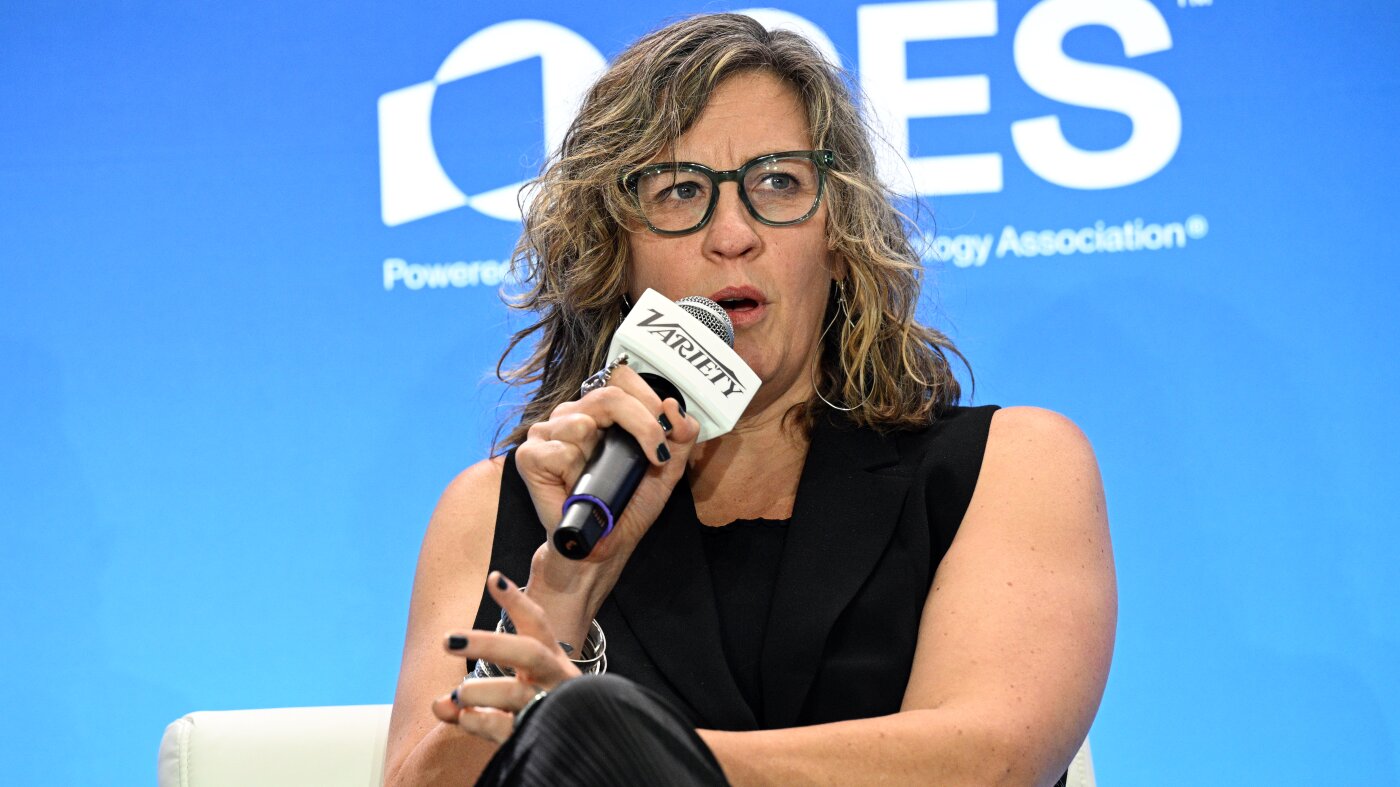
NPR’s new chief content officer: ‘I’ve been training for this job my whole life’
-

 Technology37 minutes ago
WWDC protesters want Apple to ban Elon Musk’s apps
-

 World40 minutes ago
‘You’re destroying your countries’: Is Europe finally heeding Trump’s warning on illegal immigration?
-

 Politics45 minutes ago
Platner calls Fetterman ‘a–hole’ at town hall as Democratic feud heats up
-

 Health52 minutes ago
Study reveals hidden gut factor that may make some people more susceptible to sepsis
-

 Sports55 minutes ago
2025-26 NBA Finals MVP Odds: KAT Chasing Brunson Atop Board
-

 Technology1 hour ago
Why your VPN keeps getting blocked and the simple fix

