West
‘Serial Killer Whisperer’ reveals how he cracked America’s most prolific murderer and unlocked 93 confessions

NEWYou can now listen to Fox News articles!
James Holland, the Texas Ranger who helped crack “the most prolific serial killer in U.S. history,” is breaking his silence on how he finally got the murderer to confess.
Samuel Little was interviewed repeatedly by Holland, dubbed the “serial killer whisperer,” from June 2018 until shortly before Little’s death in December 2020, according to the Texas Department of Public Safety. During those sessions, Little confessed to killing 93 people between 1970 and 2005.
More than 60 of those confessions have since been matched to victims through DNA evidence and corroborating interviews, authorities said.
JOURNALIST’S DANGEROUS OBSESSION WITH A FORGOTTEN SERIAL KILLER UNRAVELED HER REALITY
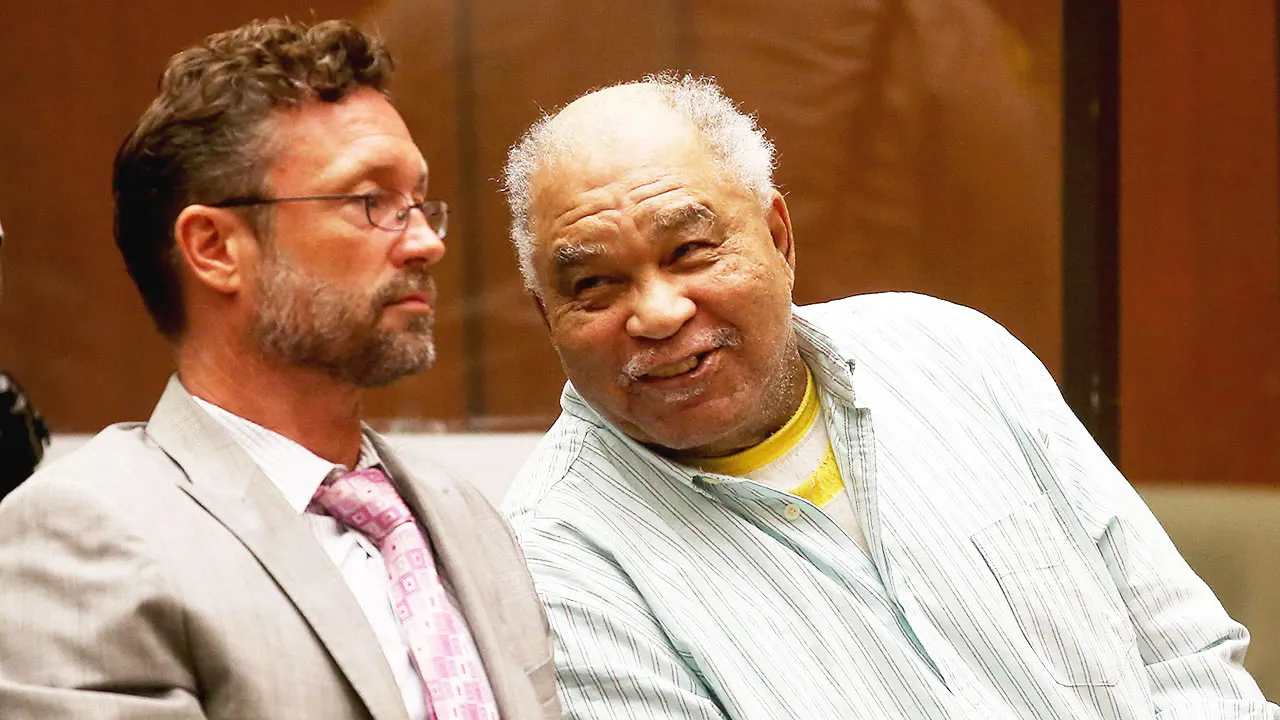
Samuel Little, right, appears unfazed after being convicted on three counts of first-degree murder Sept. 2, 2014, in Los Angeles Superior Court. (Luis Sinco/Los Angeles Times via Getty Images)
Now retired, Holland is hosting a new true-crime series on Investigation Discovery (ID), “Killer Confessions,” which examines the interrogation tactics and pivotal moments that defined his career.
Holland was initially asked to question Little about a killing he didn’t commit. During more than 700 hours of interviews, Little revealed details of dozens of other slayings only the real perpetrator could have known.
Georgia’s “Macon Jane Doe” has been identified as Yvonne Pless, a victim of Samuel Little (pictured) who was about 20 when he killed her in 1977. Little confessed to 93 murders before his death in 2020. (California Department of Corrections via AP)
“Samuel Little was the epitome of evil,” Holland told Fox News Digital. “He was a mean, horrible person. He was the ultimate predator — a killing machine. He was really smart and had a very distinct photographic memory.”
WATCH: FBI SAYS SAMUEL LITTLE IS WORST SERIAL KILLER IN US HISTORY AFTER HE CONFESSED TO 93 MURDERS
“Some people would have falsely looked at him and said he was just primarily picking up prostitutes,” Holland shared. “But that’s not necessarily true. A vast number of these victims were not prostitutes. They were people he met every day.
“His ability to win people over with his persona, one that manipulated and controlled them? I don’t know how to describe him other than as an ultimate apex predator because he wasn’t bothered by anything.”
This combination of undated sketches provided by the FBI shows drawings made by admitted serial killer Samuel Little, based on his memories of some of his victims. (FBI via AP)
Little was in failing health while serving a life sentence in a California prison when Holland was asked to interview him. The former boxer, who used a wheelchair to get around, had refused to speak with other authorities and initially reacted the same way to Holland.
Retired Texas Ranger James Holland, who interviewed serial killer Samuel Little for hundreds of hours, is the host of the new true-crime series “Killer Confessions: Case Files of a Texas Ranger.” (ID)
“The first time I stepped into that room, he was not happy to see me,” Holland recalled. “He’d get information from you, then send you packing, overwhelming you with anger and threatening tones. He was automatically that way with law enforcement.”
Despite Little’s attempts to assert dominance, Holland never flinched. Little tested the veteran investigator by describing in graphic detail how he killed a woman while locking eyes with him. Holland remained stone-faced, listening.
James Holland told Fox News Digital he refused to flinch as Samuel Little tested him. (ID)
“The first part of dealing with him was getting through the shock in that room with him,” Holland explained. “You couldn’t react to his negativity. When you deal with a serial killer, there’s no remorse. If you start talking to them about remorse, they think you’re speaking Martian. They don’t understand that, can’t comprehend it. They’ll immediately shut down.
FOLLOW THE FOX TRUE CRIME TEAM ON X
In this handout photo provided by the FBI, serial killer Samuel Little is seen in multiple mugshots/booking photos from 1966-1995. The FBI described Little as the most prolific serial killer in U.S. history. (FBI via Getty Images)
“Little treated it all like a game,” Holland continued. “Was he going to try to scare the hell out of me or recant the murder he’d just confessed to? He wanted to shock me. He’d throw things and study my face to see how I’d react, deciding whether I was ‘worthy’ of hearing more and whether I thought horribly of him. It was the ultimate acting job for me because I had to keep a completely blank face. He would just stare at me.
“He used the word ‘monster’ all the time. He didn’t want me to think he was a monster, which obviously he was. But I just couldn’t let him know what I was thinking.”
Serial killer Sam Little admitted to killing a Jackson woman in Pascagoula decades ago and dumping her body in a washout in an overgrown area off Greenwich Road in Moss Point. Little produced a photo of the victim, center, and said a police composite sketch (right) was the woman he killed. (Imagn)
Food played a role in Holland’s strategy, according to The Associated Press. During hundreds of hours of interviews, he brought pizza, Dr Pepper and grits — Little’s favorite snacks — and talked sports as Little ate. He also assured Little he wouldn’t be executed and addressed him by his childhood nickname, “Sammy.”
Samuel Little, who was indicted on charges he murdered three women in Los Angeles in the 1980s, listens to opening statements as his trial begins on Aug. 18, 2014. (Bob Chamberlin/Los Angeles Times via Getty Images)
Little, who called Holland “Jimmy,” began to open up.
“When I found something that entertained him, he was intrigued,” Holland said. “That would open the door. The strange thing is, if you blocked out who he was, you could almost enjoy talking to him. He was insightful and funny, and he told great stories. It was easy to forget, at times, how evil he really was. But he was a monster who had no remorse for his killings. You always had to keep that in the back of your mind.
SIGN UP TO GET THE TRUE CRIME NEWSLETTER
In this photo dated Oct. 10, 2019, Tonya Maslar holds an old photograph of her mother, Roberta Tandarich, taken before her death in 1991 in Ravenna, Ohio. Tandarich’s body was found dumped at Firestone Metro Park in 1991 and has been confirmed as one of the victims of serial killer Samuel Little. (Jeff Lange/Beacon Journal/USA Today Network)
“He was always trying to get into your head,” Holland recalled. “For me, it was the ultimate game of Sudoku because I was always thinking ahead and putting myself one step ahead of him.
“These serial killers like Little are convincing and manipulative. That’s why they get away with it. And they’re smart. With Little, he was already thinking about DNA before the technology existed. He was careful in what he did and where he left his victims.”
During their conversations, Holland said he was careful never to bring up remorse or discuss the victims as actual victims, and the tactic worked.
Some of Samuel Little’s drawings, according to the FBI. (Imagn)
“If you break that rule, step over that boundary, you can never go back into the room with them,” he said.
“I think, so often, detectives step into the room and lean in on remorse, their moral psyche. That’s generally how confessions occur. You talk about the victim, you talk about the lack of sleep from remorse. But if you take that into a room with a serial killer, you’re done. You can’t come back from that.”
Little was a career criminal who had spent decades in and out of jail. When he wasn’t behind bars for larceny, assault, drug offenses or other crimes, he traveled the country, according to the AP.
GET REAL-TIME UPDATES DIRECTLY ON THE TRUE CRIME HUB
Pascagoula Police Lt. Darren Versiga looks over crime photos to determine where an unidentified woman’s remains were dumped years ago off Greenwich Road in Moss Point, Miss. Versiga believes the woman was murdered by serial killer Samuel Little. (Imagn)
Little said he committed his first killing on New Year’s Eve 1970 in Miami and his last in 2005 in Mississippi. According to the AP, he also killed victims in Tennessee, Texas, Ohio, Kentucky, Nevada and Arkansas, among other states.
In 2012, Little was arrested on drug charges, and his DNA linked him to three killings in California.
In “Killer Confessions,” James Holland details the cases that defined his career. (ID)
As Little opened up to Holland, he provided dozens of paintings and drawings of his victims, sometimes scribbling their names and details such as the year they were killed and where he left their bodies.
Pascagoula police Lt. Darren Versiga believes the body of a woman found off Greenwich Road in Moss Point decades ago could be a victim of serial killer Samuel Little. (IMAGN)
“He always remembered where he met the person, the moment he killed them and what their last words were,” said Holland. “He always remembered where he dumped the bodies. And this is 40-plus years later, someone who’s using drugs and alcohol at different points in time. The majority of these crimes were matched up by his descriptions of the crime scene.
“The way he described where he left the bodies and then looked at these crime scene photos,” Holland paused. “It’s mind-numbing. He relived these crimes through his memories. We were able to match so many of those cases because he described the crime scene. And when you looked at the case files and read the reports, there were descriptions of Samuel Little in a witness account.”
Almost all of Samuel Little’s victims were women, many of them prostitutes, drug addicts or poor people living on the edges of society, The Associated Press reported. (Imagn)
As Little kept talking, authorities across the country rushed to reopen cold cases, relying on DNA evidence to prove his guilt. With his health failing, the clock was ticking. Investigators tracked down relatives and brought long-awaited closure to many families. Little later told the Los Angeles Times he had “found a friend in a Texas Ranger.”
CLICK HERE TO DOWNLOAD THE FOX NEWS APP
James Holland described Samuel Little as a “monster” and “master manipulator.” (ID)
Little died in 2020 at a California hospital. He was 80. He was serving a life sentence for multiple counts of murder.
“He had no remorse,” said Holland. “I had to convince him I was OK with that, which is still a very difficult thing to talk about. But I had to convince him he wasn’t destroying my mind. I just needed him to talk. And that’s what he did.”
“Killer Confessions: Case Files of a Texas Ranger” airs Tuesdays at 10 p.m. and streams the next day on HBO Max.
Read the full article from Here



The San Francisco Giants are headed even farther south today as they begin a weekend road series against the Miami Marlins.
Taking the mound for the Giants will be noted bigot Landen Roupp. Roupp enters today’s game with a 4.24 ERA, 2.96 FIP, with 82 strikeouts to 32 walks in 74.1 innings pitched. His last start was in Friday night’s 5-1 loss to the Chicago Cubs, in which Roupp clearly cared more about proselytizing than he did about winning, allowing four runs on four hits with five strikeouts and two walks in four and two thirds innings.
As of the time this is being written on Thursday, the Marlins have not announced a starting pitcher for today’s game and I am off today (Happy Juneteenth!). But you can head on down to the comments for the most up to date information.
Who: San Francisco Giants vs. Miami Marlins
Where: loanDepot park, Miami, Florida
Regional broadcast: NBC Sports Bay Area
Radio: KNBR 680 AM/104.5 FM, KSFN 1510 AM

Denver police arrested a 35-year-old man on suspicion of first-degree murder in a fatal shooting near East Colfax Avenue and North Dahlia Street.
Joseph York was arrested Thursday after detectives identified him as a suspect through interviews and surveillance video, the Denver Police Department said in a news release Friday.
Detectives believe York was arguing with the victim, 25-year-old Elijah Barr, before the shooting in the early hours of June 7, the Denver Police Department said in a news release Friday. The intersection is between the city’s South Park Hill and Hale neighborhoods.
Barr was found with multiple gunshot wounds and was pronounced dead at the hospital.
York is being held without bail in the Downtown Detention Center and is set to appear in Denver County Court on Saturday, jail records show.
Sign up to get crime news sent straight to your inbox each day.
Seattle, WA
Seattle fans pack waterfront hours early as USA defeats Australia, advances in World Cup

SEATTLE — Soccer fans descended on Seattle’s waterfront well before kickoff Friday, staking out their spots early to watch a highly anticipated World Cup matchup at Seattle Stadium between the United States and Australia. That patience paid off as Team USA won the match and now advances to the knockout round.
The atmosphere at Pier 62 was electric from the start, with fans lining up for prime viewing positions, whether down on the water’s edge or taking in the sweeping scene from the waterfront overlook above.
“I mean, look at all these people that are here hours beforehand to celebrate this incredible game,” said Paul Hanson, who was rooting for Team USA. “The hairs are going up on the arm.”
The energy was a draw in itself.
“The energy is amazing, everyone’s in a great mood, it’s just a lot of fun to be down here,” Maggie McNeil said.
Not everyone in the crowd was wearing red, white, and blue.
Lizzie Manning hails from Melbourne, Australia, and is now living in the Pacific Northwest.
Manning told KOMO News she hasn’t been back home in nearly a decade, but taking in the U.S.A-Australia match with the waterfront crowd gave her a taste of it.
“Whenever I see another Australian I’m like, ‘Aussie Aussie Aussie, oy oy oy,’” she said. “I feel so close to home. I need a meat pie, life’s good.”
“I’ve met so many people who are visiting from other countries,” Seattle resident Maddie Chaplain said. “I sat next to a couple yesterday who was eating dumplings for the first time from Argentina, that was so awesome.”
With Team USA advancing, fans like Aaron Olson say they’ll be back for more.
“USA’s gonna win it,” Olson said. “I will come down here every game. This is spectacular.”
The World Cup watch parties continue on Pier 62 throughout the tournament. They are free and open to the public with online registration, but capacity is limited.
-

 Sports18 seconds ago
World Cup Red Cards: 2026 Has More Red Cards Than Each Of Last 2 World Cups
-

 Technology3 minutes ago
China’s brain chip breakthrough raises big questions
-
 Business8 minutes ago
Ranch lovers can soon travel with a TSA-friendly kit of the popular American dressing
-
 Entertainment15 minutes ago
At the Fonda, Jane Remover’s violent yearning heralds a new kind of stardom
-
 Lifestyle18 minutes ago
Beer, with a twist? SoCal dads find solidarity through an unexpected activity
-
 Politics23 minutes ago
Billionaire tax proposal faces hurdles as it moves closer to November ballot
-
 Science30 minutes ago
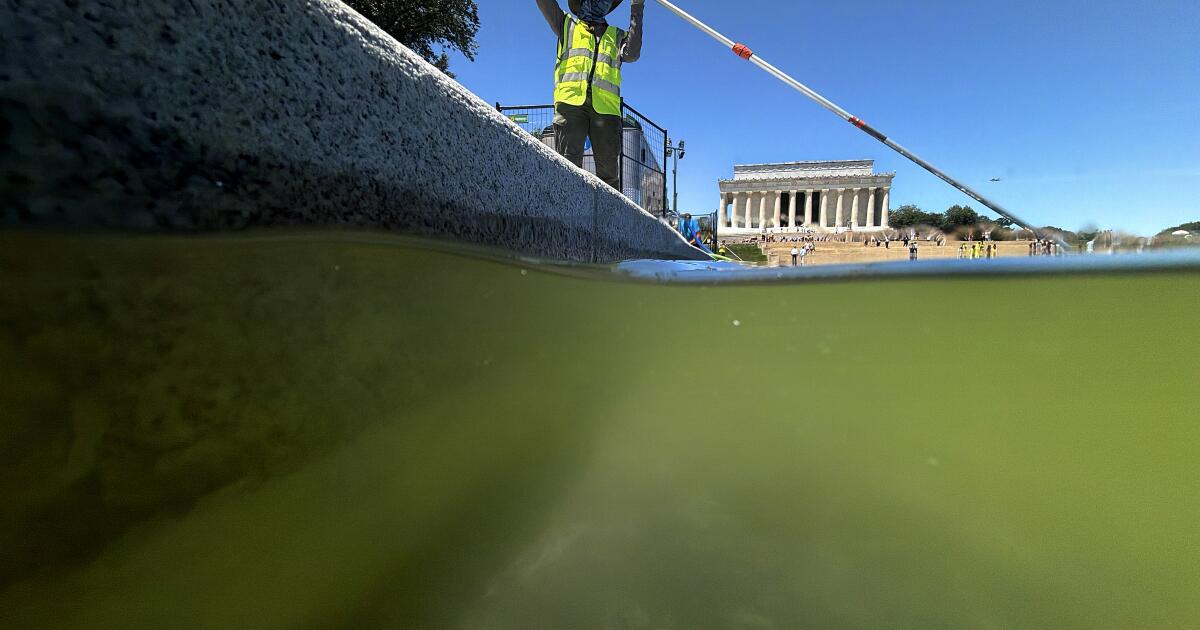
Here’s why the Lincoln Memorial Reflecting Pool went green so fast
-
 Sports33 minutes ago
Shohei Ohtani out of Dodgers’ lineup vs. Orioles for birth of his second child

