Politics
Lawmakers return to Washington facing Venezuela concerns, shutdown threat


WASHINGTON — Lawmakers are returning to Washington this week confronting the fallout from the stunning capture of Venezuelan President Nicolás Maduro — and familiar complaints about the Trump administration deciding to bypass Congress on military operations that have led to this moment.
Democratic leaders are demanding the administration immediately brief Congress. Republican leaders indicated over the weekend those plans are being scheduled, but some lawmakers expressed frustration Sunday that the details have been slow to arrive.
President Trump told the nation Saturday that the United States intends to “run” Venezuela and take control over the country’s oil operations now that Maduro has been captured and brought to New York to stand trial in a criminal case centered on narco-terrorism charges.
The administration did not brief Congress ahead of the actions, leaving Democrats and some Republicans expressing public frustration with the decision to sideline Congress.
“Congress should have been informed about the operation earlier and needs to be involved as this situation evolves,” Sen. Susan Collins (R-Maine) said in a social media post Saturday.
Appearing on the Sunday news shows, Senate Minority Leader Chuck Schumer and House Minority Leader Hakeem Jeffries, both of New York, ticked through a growing list of unknowns — and laid out plans for their party to try and reassert Congress’ authority over acts of war.
“The problem here is that there are so many unanswered questions,” Schumer said on ABC’s “This Week.” “How long do they intend to be there? How many troops do we need after one day? After one week? After one year? How much is it going to cost and what are the boundaries?”
Jeffries told NBC’s “Meet the Press” that he was worried about Trump running Venezuela, saying he has “done a terrible job running the United States of America” and should be focused on the job at home.
In the coming days, Jeffries said Democrats will prioritize legislative action to try and put a check on the administration, “to ensure that no further military steps occur absent explicit congressional approval.”
As discussions over Venezuela loom, lawmakers also face major decisions on how to address rising costs of healthcare, prevent another government shutdown and deal with the Trump administration’s handling of the Epstein files.
Much of the unfinished business reflects a Congress that opted to punt some of its toughest and most politically divisive decisions into the new year, a move that could slow negotiations as lawmakers may be reluctant to give the other side high-profile policy wins in the lead-up to the 2026 midterm elections.
First and foremost, Congress faces the monumental task of averting yet another government shutdown — just two months after the longest shutdown in U.S. history ended. Lawmakers have until Jan. 30 to pass spending bills needed to keep the federal government open. Both chambers are scheduled to be in session for three weeks before the shutdown deadline — with the House slated to be out of session the week immediately before.
Lawmakers were able to resolve key funding disputes late last year, including funding for Supplemental Nutrition Assistance Program benefits, also known as food stamps, and other government programs. But disagreements over healthcare spending remain a major sticking point in budget negotiations, intensified now that millions of Americans are facing higher healthcare costs after lawmakers allowed Affordable Care Act tax credits to expire on Thursday.
“We can still find a solution to this,” said Rep. Kevin Kiley (R-Rocklin), who has proposed legislation to extend the tax credits for two years. “We need to come up with ways to make people whole. That needs to be a top priority as soon as we get back.”
Despite that urgency, Republican efforts to be the author of broad healthcare reforms have gotten little traction.
Underscoring the political pressure over the issue, four moderate House Republicans late last year defied party leadership and joined House Democrats to force a floor vote on a three-year extension of the subsidies. That vote is expected to take place in the coming weeks. Even if the House effort succeeds, its prospects remain dim in the Senate, where Republicans last month blocked a three-year extension.
Meanwhile, President Trump is proposing giving more money directly to people for their healthcare, rather than to insurance companies. A White House official said the administration is also pursuing reforms to lower the cost of prescription drugs.
Trump said last month that he plans to summon a group of healthcare executives to Washington early in the year to pressure them to lower costs.
“I’m going to call in the insurance companies that are making so much money, and they have to make less, a lot less,” Trump said during an Oval Office announcement. “I’m going to see if they get their price down, to put it very bluntly. And I think that is a very big statement.”
There is an expectation that Trump’s increasing hostility to insurance companies will play a role in any Republican healthcare reform proposal. If Congress does not act, the president is expected to leverage the “bully pulpit” to pressure drug and insurance companies to lower healthcare prices for consumers through executive action, said Nick Iarossi, a Trump fundraiser.
“The president is locked in on the affordability message and I believe anything he can accomplish unilaterally without Congress he will do to provide relief to consumers,” Iarossi said.
While lawmakers negotiate government funding and healthcare policy, the continuing Epstein saga is expected to take up significant bandwidth.
Democrats and a few Republicans have been unhappy with the Department of Justice’s decision to heavily redact or withhold documents from a legally mandated release of files related to its investigation of Jeffrey Epstein, a convicted sex offender who died in a Manhattan jail awaiting trial on sex trafficking charges.
Some are weighing options for holding Atty. Gen. Pam Bondi accountable.
Rep. Ro Khanna (D-Fremont), who co-sponsored the law that mandated the release with Rep. Thomas Massie (R-Ky.), said he and Massie will bring contempt charges against Bondi in an attempt to force her to comply with the law.
“The survivors and the public demand transparency and justice,” Khanna said in a statement.
Under a law passed by Congress and signed by Trump, the Justice Department was required to release all Epstein files by Dec. 19, and released about 100,000 pages on that day. In the days that followed, the Justice Department said more than 5.2 million documents have been discovered and need to be reviewed.
“We have lawyers working around the clock to review and make the legally required redactions to protect victims, and we will release the documents as soon as possible,” the Justice Department said in a social media post on Dec. 24. “Due to the mass volume of material, this process may take a few more weeks.”
Rep. Robert Garcia, the top Democrat on the House Oversight Committee, told MS NOW last week that pressure to address the matter will come to a head in the new year when lawmakers are back at work.
“When we get back to Congress here in this next week, we’re going to find out really quick if Republicans are serious about actually putting away and taking on pedophiles and some of the worst people and traffickers in modern history, or if they’re going to bend the knee to Donald Trump,” said Garcia, of Long Beach.


NEWYou can now listen to Fox News articles!
Political heavyweight Dana White, whose endorsement of President Donald Trump was instrumental in his 2024 victory, is now hinting that he may jump back into presidential politics in 2028 because he has “become really close” with Secretary of State Marco Rubio.
This comes as White’s UFC announced a rare “sports diplomacy” partnership with the State Department this week. White and Rubio signed a memorandum of understanding establishing the partnership last month, according to a UFC statement. The league said that as part of the agreement, UFC athletes and coaches will serve as “sports ambassadors” for young athletes around the world through the State Department’s Sports Envoy Program.
White was explicitly asked by OutKick’s Tomi Lahren, whether there are any leaders he is looking at for 2028, to which he responded, “It’s funny, As I was, leading up to the White House fight, doing all this media, you know, a lot of the left media was saying to me, ‘So, you’re out of politics after this, right?’ And I can’t remember who it was that I said it to but … I said, ‘I’ve become really close to Rubio.’ We’ve become really close.”
“People are asking me if I’m going to get out of politics when the president leaves and I just said, ‘I’ve become very close to Rubio.’ He and I have become friends,” he emphasized.
RUBIO ANNOUNCES FRAMEWORK DEAL BETWEEN ISRAEL AND LEBANON AS EXPERTS WARN IRAN WILL FIGHT TO SABOTAGE IT
UFC President and CEO Dana White and US Secretary of State Marco Rubio shake hands as htey participate in a Memorandum of Understanding signing ceremony at the State Department in Washington, DC, on June 11, 2026. (Brendan SMIALOWSKI / AFP via Getty Images)
White said that Rubio “is a great guy, I like him,” adding, “He’s smart, I like the way he handles himself.”
He also said, “I’ve met his sons, and I like his kids and, you know, so, never say never.”
Pressed on whether Rubio is his official pick to succeed Trump as president, White clarified, “I’m not saying I’m picking.” He noted that he also likes Vice President JD Vance, who, alongside Rubio, is a rumored 2028 presidential frontrunner.
“JD is a great guy too,” said White, adding, “It’s a tricky situation, and I don’t know enough about politics to even comment on that, but, yeah, I don’t know, but it’s not a bad thing to have two strong candidates.”
Rubio and Vance are the two Republicans most discussed as possible successors to Trump. While Rubio ran for president in 2016, he has expressed support for Vance, calling him a “close friend” and saying the vice president “would be a great nominee if he decides he wants to do that.”
VIRAL MARCO RUBIO CLIP ON HIS VISION FOR AMERICA SPARKS MORE 2028 SPECULATION
Vice President JD Vance speaks during a visit to ALTA Refrigeration Inc., Aug. 21, 2025, in Peachtree City, Georgia. (Brynn Anderson/The Associated Press)
Though White stopped short of issuing a full-throated endorsement of Rubio, his partnership with the State Department through UFC underscores the high regard he appears to have for the secretary.
This is the first time the UFC has entered into such a partnership with the State Department. The NFL, which entered into a similar agreement in January, is the only other major sports organization to have signed such a formal agreement with the department.
SIGN UP TO GET THE POLITICS NEWSLETTER
UFC Chief Operating Officer Lawrence Epstein said the league is “thrilled” about the partnership. He said it would allow the State Department and UFC to “work together to build bridges through community engagement.”
“We’re excited to join this program, led by Secretary Rubio, as UFC is a truly global organization with athletes representing 75 countries. We can’t wait to get started later this year,” said Epstein.
VANCE TAKES LEAD SELLING TRUMP’S IRAN GAMBLE AS RUBIO, HEGSETH AND RATCLIFFE CEDE SPOTLIGHT ON FRAGILE DEAL
President Donald Trump speaks with Secretary of State Marco Rubio and UFC CEO and President Dana White during UFC 327 at Kaseya Center on April 11, 2026 in Miami, Florida. (Julia Demaree Nikhinson – Pool / Getty Images)
CLICK HERE TO DOWNLOAD THE FOX NEWS APP
In turn, Rubio spoke very highly of the UFC, saying it “has become a global phenomenon by embracing values that resonate far beyond the Octagon: excellence, discipline, opportunity, and meritocracy.”
The secretary said the State Department is “proud” to launch the sports diplomacy partnership with UFC and to “continue growing the sport of MMA.”
Politics
Commentary: On Skid Row, it’s been decades of frustration. Will the next mayor have a plan?
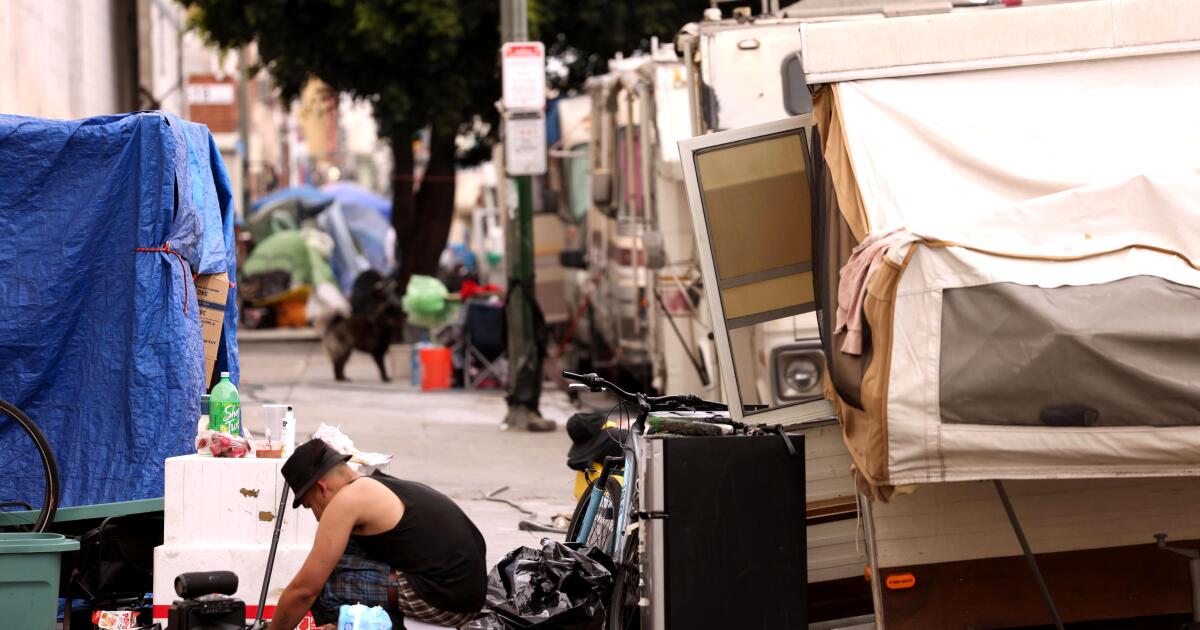
On my way through Skid Row to meet up with Estela Lopez, things looked pretty much as they did when I spent time there more than 20 years ago and first heard the promises that things would be better soon.
Tents lined some of the sidewalks, making them unpassable. Some people wore the damage of physical or mental disease, addiction, poverty, or all of the above. Outreach workers with ID lanyards strode through the trash-strewn landscape like lifeguards working against endless tides of fresh emergencies.
When I arrived at Lopez’s office in the 700 block of Crocker Street, where she runs a business improvement district on behalf of 600 or so beleaguered merchants, she had just completed a tour of the neighborhood with John McKinney, a candidate for city attorney.
She held a note card in her hand and shared some numbers, telling McKinney that by her latest count, 131 of the 702 streetlights in the district were out, 27 children were living on Skid Row, and 72 RVs were parked in the area.
“I came out here because I think this symbolizes the greatest failure in government,” McKinney said. “I think it’s the result of bad law and bad policy. I think it’s the result of a lack of leadership and indifference to the way people are living out here. To me, it’s completely untenable.”
But will anything ever change?
It’s a question two people in particular need to address, and I’ll get to that in a minute.
A lot of people I trust and admire work tirelessly to make a difference on Skid Row, and they’re always eager to share the success stories of those who move through and move on. (I’ve got a column on that coming up soon.)
The long-standing problem is that Skid Row is both a social service center and a mecca of drugs and other vices, with traps on every block. And so it’s a neighborhood at war with itself, with some viewing Skid Row as one of the largest recovery centers in the country while others see a snapshot of social collapse.
Estela Lopez has reached out to me several times over the years. About illegal dumping. Typhus. Calls to City Hall that don’t get answered. About the relentless plague of fires, overdoses and assaults.
“Can you imagine, in 24 years, how many people I’ve seen dead on these streets?” Lopez asked me near her office last week.
Estela Lopez runs a business improvement district on behalf of 600 or so beleaguered merchants.
(Genaro Molina / Los Angeles Times)
When the local post office closed recently in part because of security issues, Lopez told The Times’ Melissa Gomez that “we have reached a point in this city where we are unable to address criminal activity. … It’s surrender.”
We walked to the corner of 8th Street, where paramedics had just pulled away from a medical emergency. Cars and pedestrians stopped at tents for brief transactions, leaving little doubt as to the nature of the business being conducted.
We passed a caged dog and saw a puppy on a short leash being loaded into a vehicle. There’s a lot of talk about dogs being bred and sold, and Lopez said she’s seen evidence of animals being mistreated.
On 7th Street we passed the charred residue of a recent fire. A half block east, four men were slumped on the sidewalk, hitting pipes. Lopez gets calls from exasperated merchants dealing with vandalism and with people blocking their storefronts.
“I’ve never seen so many people overdose right here,” said Sergio Moreno, who runs a check-cashing business and said his family has been in business going back to the ‘70s. He said he’s seen paramedics use naloxone to revive opioid users, only to see the same people go down again just days later.
“How can you run a business?” asked Moreno, who chairs the board of the business improvement district Lopez runs. “This business is our life. This is how we got through school, this is how we put our kids through school.”
And yet despite paying city taxes and BID fees, Moreno said, problems persist and his customers fear for their safety.
Dr. Susan Partovi, a street medic for 22 years, has been advocating for more proactive intervention for those in obvious distress. Partovi told me she recently saw a man rise from a gutter, pull down his pants and defecate in front of her. She called to get help for him but said neither paramedics nor police determined him to be gravely disabled.

Lopez walks past residents of Skid Row last week. By her latest count, 131 of the 702 streetlights in the district were out, 27 children were living on Skid Row, and 72 RVs were parked in the area.
(Genaro Molina / Los Angeles Times)
“We have become complacent with having people lying in the gutter, having diarrhea, speaking nonsensically and putting their lives at risk,” said Partovi, whom I once accompanied as she administered long-acting anti-psychotic injections, arguing that people need clear heads to make better choices.
One sore point for Lopez is the Skid Row Care Campus in the 400 block of Crocker Street, which opened a little more than a year ago and offers all sorts of social services, meds that reduce drug cravings, and supplies that allow for safe use of drugs.
Lopez said she understands the theory of harm reduction: Engage people with a goal of getting them into treatment and back on track. But she wonders how successful such programs are, and argues that they become magnets for lawlessness.
As we talked, a young man approached and told Lopez he’d seen her airing her grievances on TV news.
“I’m wondering, what would be your solution?” he asked.
“I would hope that people could return to life in sobriety,” Lopez responded.
The man said he is “trying to elevate” himself, but that he’d been on a waiting list for housing for six months.
Lopez is tired of being on a waiting list, too.
“If something is working down here,” she told me, “you can’t prove it by me.”
Progress is undeniable, said Sieglinde von Deffner, a social worker and Skid Row coordinator for the Los Angeles County Department of Homeless Services and Housing. But given the “highly vulnerable” nature of the population, “the need is colossal,” she said.

A man stands among his belongings along 7th Street in Skid Row in downtown Los Angeles.
(Genaro Molina / Los Angeles Times)
“I have not yet met someone here who doesn’t want housing of some kind. We just don’t have enough affordable housing for everyone,” Von Deffner said, and long-term homelessness makes people harder to reach. “Now, if we could just stop the inflow.”
Dennis Culhane, a University of Pennsylvania professor who researches homelessness and served as an L.A. County consultant, said there are other ways to get people indoors than investing billions of dollars in new housing that takes years to build. Culhane said single adults who are not veterans, including the elderly and disabled, constitute a majority of the homeless population. But assistance is scarce.
“It’s like you have a famine, and you’ve only got food for 15% of the people,” Culhane said.
Rapid rehousing is critical for the newly homeless, he said. But it can take two years for them to qualify for Social Security disability, and once they do, the $1,000 a month “is completely deficient in the face of rising rents.”
Culhane recommends faster approval of SSI benefits and supplementing that income with additional sources of rental assistance. He believes there are enough vacancies at the low end of the housing market to make a sizable dent in homelessness without new construction.

Judy Mauricio, 65, who has been homeless for nine years, rests inside her tent next to her walker. She says her drug addiction has kept her on the street. She receives state disability funds and says she has cancer.
(Genaro Molina / Los Angeles Times)
As campaign season warms up, I’d like to know if Mayor Karen Bass and her challenger, Councilmember Nithya Raman, agree.
The mayor of L.A. is limited by a power split with the City Council, and the county oversees most addiction and mental health services. But Skid Row sits just a few blocks from the seat of city authority, and nobody has more power or responsibility to address the decades-long human catastrophe on Skid Row than the mayor.
Estela Lopez and the merchants deserve better. The people on the street deserve better. Thousands of housed residents deserve better.
Does Bass have a plan other than what’s currently in place? Does Raman have a better one?
If so, I’d like to hear the details, and I’m available.
steve.lopez@latimes.com
Politics
EXCLUSIVE: FBI adds alleged COVID fraudster accused of taking $5M from kids’ meal program to Most Wanted list

FBI makes first arrest from its ‘most wanted fraudsters’ list
FBI Director Kash Patel announces the first arrest on the “Most Wanted Fraudsters” list. Said Ereg, a Minneapolis man, is accused of stealing over $4.2 million from a federal child nutrition program during the COVID-19 pandemic. Minnesota Senate candidate Michele Tafoya emphasizes the need for accountability for fraudulent activities.
NEWYou can now listen to Fox News articles!
EXCLUSIVE: The FBI is adding Fahad Mohamed Nur to its Most Wanted Fraudsters List, accusing the Minnesota businessman of allegedly stealing more than $5 million that was intended to feed children during the COVID-19 pandemic.
Nur has been on the run since 2022 and is wanted for his alleged role in a fraud scheme that exploited Minnesota’s Federal Child Nutrition Program during the COVID-19 pandemic, according to the FBI. The bureau alleges he owned a vendor and purported food supplier that received more than $5 million in fraudulent program funds by submitting fake invoices before laundering the proceeds.
The Bureau believes Nur has ties to Somalia and may currently be living there.
The FBI is offering a reward of up to $150,000 for information leading to Nur’s arrest and conviction.
OWNER OF DAYCARE IN VIRAL NICK SHIRLEY VIDEO CHARGED IN $4.6M DAYCARE FRAUD SCHEME, PROSECUTORS SAY
Fahad Mohamed Nur has been on the run since 2022 and may be in Somalia, according to the FBI. (Federal Bureau of Investigation)
Nur is the latest addition to the FBI’s Most Wanted Fraudsters List, which officials say has already resulted in the arrests of two fugitives within weeks of its launch.
“Under President Trump’s and Vice President Vance’s leadership with the White House Task Force to Eliminate Fraud, the FBI’s historic ‘Most Wanted Fraudsters list’ has already seen tremendous success – with two subjects brought to justice in a matter of weeks, apprehended out of Somalia and the Philippines,” FBI Director Kash Patel said in a statement to Fox News Digital.
Patel said the early arrests demonstrate that the FBI is aggressively pursuing fugitives accused of stealing from American taxpayers.
FBI ADDS 2 FUGITIVES TO ‘MOST WANTED FRAUDSTERS’ LIST AMID HISTORIC $6.5B HEALTHCARE TAKEDOWN: PATEL
FBI Director Kash Patel conducts a news conference at the Department of Justice on Thursday, December 4, 2025. (Tom Williams/CQ-Roll Call, Inc via Getty Images)
“Our newest subject – Fahad Mohamed Nur – has been on the run since 2022 for allegedly stealing over $5 million from a child nutrition program in Minnesota.”
Patel added: “Collectively, the Task Force has already uncovered more than $13 billion in fraud, and the rapid success of the Most Wanted Fraudsters List should show all Americans that this FBI will [be] at the forefront pursuing the worst of the worst who stole from hardworking American taxpayers.”
DR OZ WARNS MEDICARE SCAMMERS ARE STEALING BILLIONS — AND YOUR PERSONAL INFORMATION COULD BE NEXT
Federal agents enter an office building as a search warrant is executed at Ultimate Home Health Services over potential Medicaid fraud, on December 18, 2025 in Bloomington, Minnesota, United States. (Christopher Juhn/Anadolu via Getty Images)
Federal officials say the investigation is part of a broader government effort targeting pandemic-era fraud.
“The Department’s robust partnership with the FBI and the White House Task Force to Eliminate Fraud has already delivered historic results. That partnership grows even stronger today with the addition of this latest subject to the Most Wanted Fraudsters list,” said Acting Attorney General Todd Blanche. “President Trump has made it clear: Fraudsters no longer have a safe haven in America. Law enforcement will continue to use every tool at its disposal to bring those who steal from American taxpayers to justice.”
The White House Task Force to Eliminate Fraud, led by Vice President JD Vance, has already uncovered more than $13 billion in fraud, according to the FBI.
CLICK HERE TO DOWNLOAD THE FOX NEWS APP
Anyone with information about Nur’s whereabouts is urged to contact the FBI at 1-800-CALL-FBI, their local FBI office, the nearest U.S. Embassy or Consulate, or submit a tip online at tips.fbi.gov.
-

 Maine5 minutes ago
Graham Platner says he’ll withdraw from Senate race in Maine
-

 Maryland12 minutes ago
Maryland man sentenced to 15 years for attempting to join ISIS
-

 Michigan15 minutes ago
Sherrone Moore’s former assistant sues University of Michigan over alleged FOIA violations
-

 Massachusetts20 minutes ago
Max McColgan and Joseph Lenane share stroke play medals at 118th Massachusetts Amateur Championship – The Boston Globe
-

 Minnesota27 minutes ago
Man seriously injured in north Minneapolis shooting; no arrests
-

 Mississippi30 minutes ago
Ben Crump seeks independent autopsy in Nolan Wells death
-

 Missouri35 minutes ago
Missouri politicians champion unity, diversity on America’s 250th
-

 Montana42 minutes ago
Montana signs onto data center energy cost protection pledge

