Lifestyle
Retired, they moved from 6 bedrooms to a tiny L.A. ADU built in 3.5 months


Ever wondered how long it would take to build an accessory dwelling unit, or ADU, in your backyard?
In the case of Alvaro “Al” and Nenette Alcazar, a retired couple, who downsized from a six-bedroom home in New Orleans to a one-bedroom ADU in Los Angeles, it took just 3½ months.
“We went on vacation to the Philippines in November, right as they were getting started on construction,” Al says of the ADU his son Jay Alcaraz and his partner Andy Campbell added behind their home in Harbor Gateway. “When we returned in March of this year, the house was ready for us.”
The Alcazars were surprised by the rapid completion of their new 570-square-foot modular home by Gardena-based Cover. By the time construction was finished, they hadn’t yet listed their New Orleans home, where they lived for 54 years while raising their two sons.
Andy Campbell, seated left, and his partner Jay Alcazar’s home is reflected in the windows of the ADU where Alcazar’s parents Al and Nenette Alcazar, standing, now reside.

Jay Alcazar and Andy Campbell’s backyard in Harbor Gateway before they added an ADU.
(Jay Alcazar)
Alexis Rivas, co-founder and CEO of Cover, was also surprised by how quickly the ADU was permitted, taking just 45 days. “The total time from permit submittal to certificate of occupancy was 104 days,” he says, crediting the city’s Standard Plan and the ADU’s integrated panelized system for making it the fastest Clover has ever permitted.
For Al, a longtime religious studies professor at Loyola University New Orleans and community organizer, the construction process was more than just demolition and site prep. Seeing the Cover workers collaborate on their home reminded him of “bayanihan,” a Filipino core value emphasizing community unity and collective action.
“Both of my parents were public school teachers,” says Al, who was exiled from the Philippines in 1972. “When they moved to a village where there were no schools, the parents were so happy their children wouldn’t have to walk to another village to go to school that they built them a home.”


“It’s only one bedroom but we love it,” says Nenette Alcazar. “It’s the right size for two people.”
Like his childhood home in the village of Cag-abaca, Al says his and Nenette’s ADU “felt like a community built it somewhere and carried it into the garden for us to live in.” Only in this instance, the home was not a Nipa hut made of bamboo but a home made of steel panels manufactured in a factory in Gardena and installed on-site.
Jay Alcaraz, 40, and Campbell, 43, had been renting a house in Long Beach for three years when they started looking for a home to buy in 2022. Initially, they had hoped to stay in Long Beach, but when they realized they couldn’t afford it, they broadened their search to include Harbor Gateway. “It was equidistant to my job as a professor of critical studies at USC, and Jay’s job as a senior product manager at Stamps.com near LAX,” Campbell says.
When they eventually purchased a three-bedroom Midcentury home that needed some work, they were delighted to find themselves in a neighborhood filled with multigenerational households within walking distance of Asian supermarkets and restaurants.


The ADU does not overwhelm the backyard. “It looks like a house in a garden,” says Al Alcazar.
“We can walk to everything,” says Jay. “The post office. The deli. The grocery store. We love Asian food, and can eat at a different Asian restaurant every day.”
Adds Campbell: “We got the same thing we had in Long Beach here, plus space for an ADU.”
At a time when multigenerational living is growing among older men and women in the United States, according to the Pew Research Center, it’s not surprising that the couple began considering an ADU for Jay’s parents soon after purchasing their home, knowing that Al and Nenette, who no longer drives, would feel comfortable in the neighborhood.
They started by reviewing ADUs that the city has pre-approved for construction as part of the ADU Standard Plan Program on the city’s Building and Safety Department website. The initiative, organized by former L.A. Mayor Eric Garcetti’s office in collaboration with Building and Safety in 2021, was designed to simplify the lengthy permitting process and help create more housing.


The 570-square-foot house has a single bedroom and bathroom.

Jay and Al Alcazar have coffee in the kitchen of the ADU.
They reached out to several potential architects and secured a line of credit for $300,000. They decided to go with Cover after touring its facility and one of its completed ADUs. “We liked that they were local and their facility was five minutes away from us,” Campbell says.
The couple originally envisioned removing their backyard pergola and lawn and adding an L-shaped ADU. But after consulting with Rivas, they decided on a rectangular unit with large-format glass sliders and warm wood cladding to preserve the yard.
The configuration was the right choice, as the green space between the two homes, which includes a deck and drought-tolerant landscaping, serves as a social hub for both couples, who enjoy grilling, sharing meals at the outdoor dining table and gardening. Just a few weeks ago, the family celebrated Al’s 77th birthday in the garden along with their extended family.
Nenette, a self-described “green thumb,” is delighted by the California garden’s bounty, including oranges, lemons, guava trees and camellias. “I can see the palm trees moving back and forth and the hummingbirds in the morning,” she says.

“They’re a lot of fun,” Jay Alcazar says of his parents. “They are great dinner companions.”
Although some young couples might hesitate to live close to their parents and in-laws, Jay and Campbell see their ADU as a convenient way to stay close and support Jay’s parents as they age in place.
Besides, Jay says, they’re a lot of fun. “They are great dinner companions,” he says.
Campbell, who enjoys having coffee on the outdoor patio with Al, agrees. “When I met them for the first time 12 years ago, they had a group over for dinner and hosted a karaoke party until 3 a.m.,” he said. “I was like, ‘Is this a regular thing?’”


A teak bed from the Philippines and family mementos help to make the new ADU feel like home.
Unlike the Alcazars’ spacious 1966 home in New Orleans, their new ADU’s interiors are modern and simple, with white oak floors and cabinets and Bosch appliances, including a stackable washer and dryer. Despite downsizing a lifetime of belongings, Al and Nenette were able to keep a few things that help make the ADU feel like home. In the living room, mother of pearl lamps and wood-carved side tables serve as a reminder of their old house. In their bedroom, a hand-carved teak bed from the Philippines, still showing signs of water damage from Hurricane Katrina, was built by artisans in Nenette’s family.
“Madonna and Jack Nicholson both ordered this bed,” Nenette says proudly.

The couple chose a thermally processed wood cladding for its warmth. “It will develop a silver hue over time,” says Alexis Rivas of Cover. “It’s zero maintenance.”
But one thing didn’t work out in their move West. When they realized their sofa would take up too much room in the 8-foot portable storage pod they rented in New Orleans, they decided to purchase an IKEA sleeper sofa in L.A. It’s now in the mix along with their personal artifacts and family photos that further add memories to the interiors, including a reproduction of the Last Supper, a common tradition in many Filipino homes symbolizing the importance of coming together to share meals. With limited storage, the families share the two-car garage, where Al stores his tools.
“It’s only one bedroom, but we love it,” says Nenette, 79, of the ADU, which cost $380,000. “It’s just the right size for two people.”
The ADU feels private, both couples say, thanks to the 9-foot-long custom curtains they ordered online from Two Pages Curtains. “When the curtains are open, we know they are awake, and when their curtains are down, we know to leave them alone,” Jay says, laughing at their ritual.
In terms of aging in place, the ADU can accommodate a wheelchair or walker if necessary, and Rivas says a custom wheelchair ramp can be added later if necessary.
Now, if only Jay could mount the flat-screen television on the wall, Al says, teasing his son. It’s hard to escape dad jokes when he’s living in your backyard — and that’s the point.
“It’s really nice having them here,” Andy says.


Jay Alcazar and Andy Campbell enjoy having Al and Nenette Alcazar close. “They feel like neighbors,” Jay says.
After losing his family and home in the Philippines when Ferdinand Marcos declared martial law in the country, Al, who once studied to be a priest, says he’s deeply moved to be the recipient of the bayanihan spirit once again.
“I was tortured in the Philippines, and it didn’t break me,” he says. “So having a home built by a friendly community really points to a shorter but more spiritual meaning of bayanihan, which is, ‘when a group of friends,’ as my grandma Marta used to say, ‘turns your station of the cross into a garden with a rose.’ Now, we have Eden here in my son’s backyard.”


Can you say no to a friend’s wedding?
Getty Images/Getty images
hide caption
toggle caption
Getty Images/Getty images
Are we spending too much on other people’s weddings?
Going to a friend’s weddings can be so fun and meaningful… but it can also really hurt your wallet. A survey by LendingTree found that 31% of people who had been to a wedding in the past five years had accrued debt to attend. So what’s driving up the cost of weddings for guests? And what makes it so hard to say no to these expenses?
Brittany breaks it down with Allyson Rees, senior analyst at trend forecasting firm WGSN, and Annie Joy Williams, assistant editor at The Atlantic.
This episode was produced by Liam McBain, with additional support from Corey Antonio Rose. It was edited by Neena Pathak. Our Supervising Producer is Cher Vincent. Our Executive Producer is Barton Girdwood. Our VP of Programming is Yolanda Sangweni.

After the eight-day-long fire in a 500,000-square-foot Boyle Heights warehouse, eastern Los Angeles residents are contending with putrid smells, soot and potentially hazardous airborne chemicals after heavy plumes of smoke spread throughout the city. But those who grow food in nearby neighborhoods may also be wondering: How will the fires affect the plants and produce in my garden?
The Boyle Heights warehouse, owned by Lineage — a global temperature-controlled storage facility operator — housed 85 million pounds of frozen food and other products. In the days since the fire, local emergency visits for smoke inhalation and throat pain spiked while agencies still scramble to measure the amount of PM 2.5 — harmful fine particles — and heavy metals, like lead and arsenic, in the air.
According to researchers, any toxic airborne chemicals would likely stem from the charred foam insulation, metal exterior, burned solar panels and any lithium batteries that might have been present inside the warehouse.
After a fire, heavy metal particles can spread through ash and smoke over gardens and inhibit growth, said Olukayode Jegede, an agricultural toxicologist and assistant professor at UC Davis. Since the warehouse fire is so recent and cleanup has just begun, Jegede said the precise impact on gardens can’t be measured until comprehensive soil tests are conducted in the area.
While the L.A. city government hasn’t announced plans for soil testing, the Contaminant Level Evaluation and Analysis for Neighborhoods project at USC is offering free contaminant testing for Boyle Heights and East L.A. residents. Residents can collect soil samples and deliver them to Boyle Heights City Hall and other locations for an evaluation of lead, arsenic, chromium and mercury levels.
The good news is produce, plants and roots can still be preserved. According to Jegede, many of the soil tests conducted last year in the Altadena area after the Eaton fire showed that gardens and poultry were not as contaminated as one might expect.
“Quite a number of the soils we tested [in Altadena] were not really contaminated,” Jegede said. “We weren’t seeing many soils with concerning elevated levels of metal, so gardeners should not be too alarmed when these things happen.”
Nevertheless, there are several measures that gardeners can take to keep themselves, their children, plants and produce safe from potentially harmful contaminants stemming from the fire. Researchers, gardening experts and horticulturists offered some guidance on the handling, recultivation and cleanup that can keep you and your garden in good health.
How do I remove ash and contaminants from my garden?
Altadena horticulturist Leigh Adams said Boyle Heights plants and produce already live in a difficult environment, surrounded by industrial warehouses that spread contaminants daily.
“That area has been used industrially for 100 years, and the soil is impacted by many, many, many things,” Adams said. “Low-income neighborhoods and gardens usually don’t have a lot of resistance against dominant manufacturing.”
This means that the contamination of gardens in eastern L.A. won’t be as catastrophic as compared with those in Altadena, a more suburban environment, Adams said. But fallen ash still poses major health risks if ingested or inhaled.
An advisory from University of California Agricultural and Natural Resources last year recommended suiting up in an N95/KN95 mask, long sleeves, pants, close-toed shoes and gloves before attempting to deal with ash in the garden to limit exposure to potentially toxic contaminants. The advisory added that individuals should make sure all of this gear is cleaned thoroughly before bringing it back inside.
Once in the proper gear, Adams recommends removing the top two inches of topsoil from gardens, where the highest concentration of contaminants will settle after a fire. Using a plastic bag to collect the soil and disposing of it in the garbage — not green yard waste bins — will help to reduce the spread of airborne chemicals.
Gardeners with raised beds are advised to remove approximately six inches of soil, because excess ash can raise the pH level and prevent nutrients from soaking into the soil bed.
After this, watering the garden gently but plentifully will help to promote soil health and get rid of most of the ash present on plant leaves and stems. Adams said replacing the top two inches of soil with store-bought mulch or straw will help to contain any remaining ash and prevent it from spreading any further.
Experts say to avoid using leaf blowers if ash is present in the garden because they can send particles airborne. Doing so will increase the likelihood of heavy metal particles, which can carry lung irritants and carcinogens, being spread and inhaled.
A Boyle Heights resident keep a watchful eye on the fire at the 5,000-square-foot commercial building, which stores 85 million pounds of frozen food.
(Genaro Molina / Los Angeles Times)
Is it safe for me to eat produce from my garden?
Several studies, including one from the UC Cooperative Extension of Sonoma County, have shown that consuming produce in a fire-affected area poses minimal health risks.
Jegede said most root vegetables like potatoes and carrots, along with any fruit that has an outer layer, can be washed to remove potential contaminants, even if they were covered in ash. Peeling the outer layer of your produce can also help to reduce potential risks, he said.
Lettuce and other leafy foods with multiple layers pose a higher risk of contamination, but with a vigorous wash and peeling the outer layers, even the greens can be saved. The County of Los Angeles Department of Public Health recommends soaking leafy produce and fuzzy fruits like peaches in a 10% white vinegar and 90% water mixture.
Jegede said if the leaves or fruit are too delicate to wash or ash is still visible, it would be best to dispose of the produce.
How can I tell if my soil is contaminated?
After ridding your garden of visible ash, you might wonder how to tell if your plants will still thrive in the soil.
At-home soil tests that measure for alkaline, fertility and pH levels are widely available and can be purchased for $15 to $100 (for more detailed results) online. But Jegede said these tests can’t tell the full story of soil health.
Comprehensive soil testing is “something you can’t do properly at home,” Jegede said. “In labs, we are testing for metals like lithium and zinc, stuff that an at-home test will not show … If it comes to the point that you’re worried about your soil, I would just send it out to a lab.”
Wallace Laboratories in El Segundo, Babcock Laboratories in Riverside, Waypoint Analytical in Anaheim and other labs offer more detailed soil tests that measure heavy metal particles in addition to other fertility factors. Prices at Wallace Laboratories can range from $115 to $295 for a complete compost test.
The soil below two inches should be unharmed, Adams said, so long as new compost is set and plants are watered plentifully, which will promote natural biological cycles.
“What you’re doing is capping the soil, so that moisture stays in there, and instead of being dirt, it’s a living system called soil,” Adams said. “The more carbon we can get into our soil, the better.”
What can I do to help my soil recover?
For the last 12 years, Adams has been working with Metabolic Studio, a Los Angeles-based art and research hub focused on environmentalism, on methods for bioremediation, the practice of using additional fungi, plants and compost to decontaminate ash and break down contaminants.
Adams said straw, mushrooms, corn, rye and sunflowers are great bioremediators that can help to repair damage to soils. She said certain samples she’s worked on with Metabolic Studio have gone from testing at high heavy metal levels to nearly contaminant-free.
But for a more immediate fix, wash your produce, water your plants and have a little patience during ash cleanups. Your garden should look better in no time, Adams and Jegede said.

Inde Navarrette and Michael Johnston in Obsession.
Focus Features
hide caption
toggle caption
Focus Features
Two big horror films, Obsession and Backrooms, just smashed all box office expectations. So much of their success has been driven by Gen Z, which is now the biggest moviegoing demographic. But what makes a movie a Gen Z movie? Today we’re bringing you an episode of NPR’s It’s Been a Minute. Host Brittany Luse talks about this trend with Sam Adams and Reanna Cruz.
If you want to hear more about these movies, check out these episodes:
In ‘Obsession,’ love hurts. It really, really, really hurts.
‘Backrooms’ brings YouTube horror to the big screen
Zendaya brings ‘The Drama,’ we bring the spoilers
Connect with Pop Culture Happy Hour:
Letterboxd / Facebook
Our weekly newsletter
Support Pop Culture Happy Hour+
-

 Alaska5 minutes ago
Climate Change Is Helping an Invasive Predator Wreak Havoc on Iconic Alaskan Fish
-

 Arizona8 minutes ago
Arizona man pleads guilty after illegally living in forest for years among ‘1,000lbs of trash’
-

 Arkansas13 minutes ago
Army names intelligence facility for Arkansas Tech graduate
-

 California20 minutes ago
How California Effectively Legalized an Open-Air Sex Market
-

 Colorado23 minutes ago
Julian Lewis Says Deion Sanders’ Colorado ‘Wasn’t Really Looking at Defenses Much’ Last Season
-
 Idaho28 minutes ago
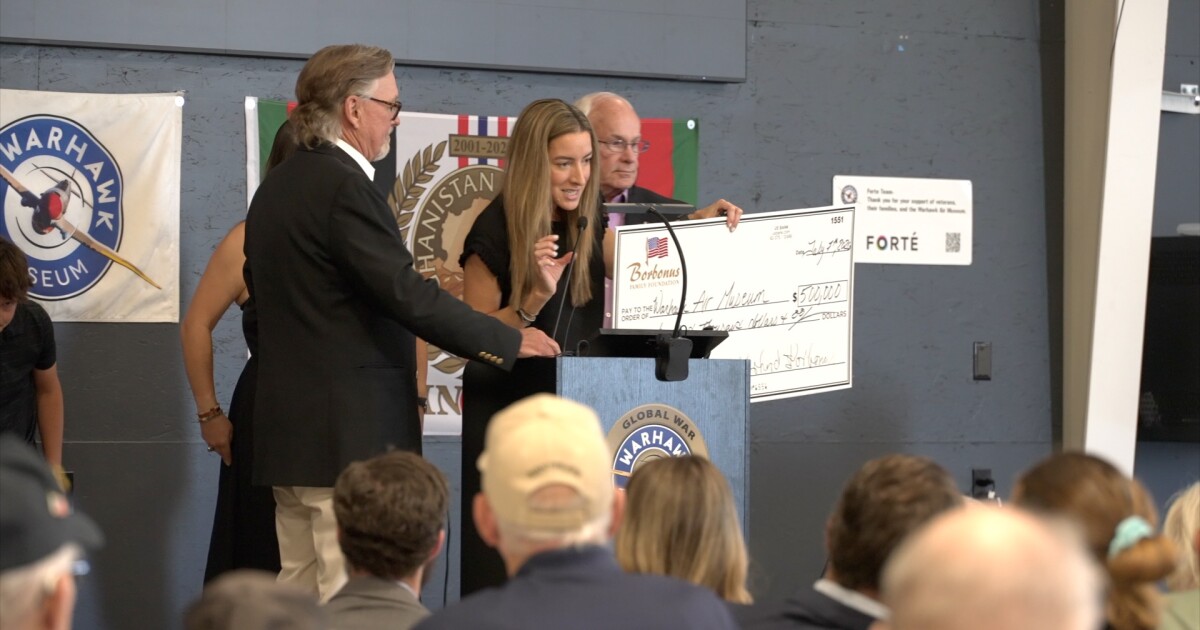
Warhawk Air Museum receives $500K grant honoring fallen Idaho soldier
-

 Connecticut28 minutes ago
Several beaches closed to swimming due to potential bacteria in the water
-

 Delaware35 minutes ago
Delaware Libraries Introduce Digital Literacy Specialists Program – State of Delaware News

