News
U.S. health care is broken. Here are 3 ways it’s getting worse


MINNETONKA, MINN.: Flags fly at half mast outside the United Healthcare corporate headquarters on Dec. 4, 2024, after CEO Brian Thompson was shot dead on a street in New York City. The shocking act of violence sparked a widespread consumer outcry over U.S. health care costs and denied claims.
Stephen Maturen/Getty Images/Getty Images North America
hide caption
toggle caption
Stephen Maturen/Getty Images/Getty Images North America
One year after UnitedHealthcare’s CEO was shot and killed, the crisis in U.S. health care has gotten even worse — in ways both obvious and hidden.

People increasingly can’t afford health insurance. The costs of both Obamacare and employer-sponsored insurance plans are set to skyrocket next year, in a country where health care is already the most expensive in the developed world.
Yet even as costs surge, the companies and the investors who profit from this business are also struggling financially. Shares in UnitedHealth Group, the giant conglomerate that owns UnitedHealthcare and that plays a key role in the larger stock market, have plunged 44% from a year earlier. (It was even worse before a rally in UnitedHealth shares on Wednesday.)
“UnitedHealth’s reputation in the investment community, before December 4 last year, was [as] a safe place to put your money. And that basically got all blown up,” says Julie Utterback, a senior equity analyst who covers health care companies for Morningstar.
Then, on Dec. 4, 2024, United Healthcare CEO Brian Thompson was shot on a Manhattan street on his way to an investor event. The shocking act of violence sparked a widespread consumer outcry over U.S. health care costs and denied claims, and plunged UnitedHealth Group into a public relations disaster.


But that was only the start of the business woes for the company and its entire industry — which are facing regulatory scrutiny, tightening margins, and investor skepticism. Many of UnitedHealth’s top competitors have also seen their shares suffer in the past year, at a time when the stock market in general has been hitting tech-driven record highs. The S&P 500’s healthcare index has lagged the larger market. And some Wall Street analysts are bracing for another rocky year in the business of health care.
“Near term, there’s a lot more volatility to come,” says Michael Ha, a senior equity research analyst who covers health care companies for investment bank Baird.
Dec. 4 started to reveal the depth of U.S. health care problems
This wide-ranging crisis for both consumers and businesses underlines the brokenness of the U.S. health care system: When neither the people it’s supposed to serve nor the people making money from it are happy, does it work at all?
“We’re really at an inflection point,” says Katherine Hempstead, a senior policy officer at the Robert Wood Johnson Foundation and the author of a book about the insurance industry.
“Every segment of the health insurance business right now is stressed,” she adds.
These stresses became brutally visible a year ago — and persist today. Luigi Mangione, the 27-year-old suspect in Thompson’s killing, was in court this week for hearings ahead of his trial.
But the crisis in U.S. health care is much bigger than his case. Here are three main ways it’s playing out this year, from Main Street to Wall Street.
Prices are going up — and people are getting ready to go without medical care
No matter how you get your health insurance, it will likely cost more next year.
For the roughly 24 million people who get their insurance through the government’s health care exchanges, Affordable Care Act subsidies are set to expire at the end of the year — sending premiums soaring. Another 154 million people are insured through their employers — and premiums for those plans are also set to skyrocket.

Costs are increasing for several reasons: Drug companies have developed more effective cancer treatments and weight-loss drugs — which they can charge more for. More people are going back to the doctor after the pandemic kept them away, which is creating more demand and allowing providers and hospitals to increase prices. And some hospitals, doctors’ offices, insurance companies and other businesses within the health care system have merged or consolidated, often allowing the remaining businesses to raise prices for their services.
The end result is that nearly half of U.S. adults expect they won’t be able to afford necessary health care next year, according to a Gallup poll published last month.
Jennifer Blazis and her family are among them.
“It just always blows me away, how much I have to consider cost when something happens with the kids,” the 44-year-old nonprofit worker and mother of four told NPR this fall in an interview for its Cost of Living series.

Blazis and her family live in Colorado Springs and get their insurance through her husband’s small property-management business. She says she’s postponing leg surgery that would address a condition that’s causing her pain, but which her doctors say is not yet urgent.
“We wait to go to the doctor because we know if we do, we’re going to get hit with just a massive bill,” Blazis says. “And this is with … a really good health insurance plan that our [family] company pays a ton of money for.”
Yet even the biggest businesses selling these services are struggling
Some of those increased costs are also hitting insurers — even the ones that also control other parts of the health care ecosystem.
UnitedHealth Group is far more than just the owner of the largest U.S. health insurance company. It’s one of the largest companies in the world, and it’s involved in almost every part of how Americans access health care — from employing or overseeing 10% of the doctors they see to processing about 20% of the prescriptions they fill.

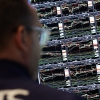
It’s also one of the most influential stocks on Wall Street. UnitedHealth Group is one of 30 companies that makes up the blue-chip Dow Jones Industrial Average — so what happens with its shares helps determine what happens with the overall stock market.
The company has had a miserable year on both fronts. The reasons come down to profits, more than PR: UnitedHealth and its competitors have been facing rising costs in the Medicare Advantage businesses that allow private insurers to collect government payments for managing the care of seniors.
These programs were once widely seen as money-makers for big health insurers – but now they’ve gotten UnitedHealth embroiled in financial and regulatory trouble, including a Department of Justice investigation into its Medicare business. The company abruptly replaced its CEO in May, a few months before it acknowledged that it was facing the government probe.
Now UnitedHealth is trying to get rid of about 1 million Medicare Advantage patients — and otherwise move on from the past year’s many problems.
“We want to show that we can get back to the swagger the company once had,” Wayne DeVeydt, UnitedHealth’s chief financial officer, told investors last month.
One prominent investor is betting it can: In August, Warren Buffett’s Berkshire Hathaway disclosed that it had bought more than 5 million shares in UnitedHealth Group. The news helped lift the stock from its depths — but it still has a long way to go for both its share price and its profits to recover from this year’s slump.
Chief Executive Stephen Hemsley acknowledged as much in October, promising investors “higher and sustainable, double-digit growth beginning in 2027 and advancing from there.”
Spokespeople for UnitedHealth declined to comment for this story.
Wall Street used to think health care was safe. It’s waiting for a turnaround
Health care spending accounts for about a fifth of the U.S. economy, making the for-profit companies that earn this money some of the most powerful in the world.
That’s helped their appeal to investors, who traditionally tend to consider health care stocks “defensive,” or safe, investments. That appeal sometimes overrides the industry’s current financial challenges: In the past month, as Wall Street had its now-quarterly panic over the artificial intelligence bubble, health care stocks actually outperformed the broader market for a few weeks.
Still, health care is massively lagging the market in the long term.
Morningstar’s Utterback is optimistic that the industry can eventually turn around its deeper financial, regulatory, and reputational problems. She even calls most health care stocks “undervalued” currently — but she warns that investors will have to have a lot of patience if they want to see bets on the sector pay off.
“My explicit forecast period is 10 years. It’s not three,” she says. “There’s a murky outlook here for the next couple years, at least.”


At least two structural columns buckled and failed in a 37-story office tower in Midtown Manhattan on Tuesday, prompting evacuations of nearby streets and buildings. While city officials asserted that the tower was in no danger of collapsing completely, outside engineers said further failures in the structure could not be ruled out.
A pair of columns that failed completely were part of the tower’s existing structure. A New York Times review of images and videos from inside the building has found that several floors were added atop these columns.
City officials said in a news conference on Tuesday that the building was continuing to move, while they simultaneously assured the city that the building would not suffer “total collapse.” “The way this building is constructed, it’s a steel-frame building,” John Esposito, a chief in the Fire Department in New York, said at the afternoon news conference. “So, it would not be a total collapse. It would be more of a localized collapse.” Still, he said, “that remains our concern, that it’s moved.”
Engineers said that the movement itself was cause for concern. In a properly designed steel building, they said, loads should redistribute quickly to surviving structural supports if columns failed.
Joe DiPompeo, a former president of the Structural Engineering Institute at the American Society of Civil Engineers, said that if the structure had been overloaded, he would expect any movement “to happen very quickly,” rather than gradually.
“Generally when a column buckles, it’s a sudden failure,” Mr. DiPompeo said. He said that a full collapse remained unlikely given the redundancies built into the building codes.
Engineers often refer to the most dangerous possibility as a progressive collapse, a process in which structures near the initial failure become overstressed and also fail, potentially bringing down the building if the sequence continues. While unlikely, it cannot be ruled out, Mr. DiPompeo said.
Footage recorded from inside the building shows at least two structural columns appear to have failed completely, Mr. DiPompeo said. Other nonstructural, interior walls — or at least the metal “studs” that were in place to hold them up — also appear to have deformed.
“The only way that really happens is if the floor above them dropped. It looks like the floor above could have dropped a foot or two, which is obviously not a good situation,” Mr. DiPompeo said.
The 37-story building is in the process of being converted from office space into residential units. Four new floors and a large vertical portion were added onto the existing building in recent months. The vertical portion consists of a stack of over a dozen new floors cantilevered out over the existing building below.
Engineers said that there was nothing inherently wrong with adding residential floors or the cantilevered section above the columns that failed, as long as the original structure and the modifications had properly accounted for the added weight and wind loads.
“The cantilever alone doesn’t change anything,” Mr. DiPompeo said, but it does put additional load on the columns underneath — a factor that should have been reflected in the design.
Nathan Berman, managing principal and founder of MetroLoft, the developer overseeing the conversion, said on Tuesday that “this incident is nothing more than a typical construction mishap.”
He said two columns near the northwest corner of the tower had bent under the weight of additions to the building above, most likely because those columns had not been properly reinforced, though he said an investigation would determine the cause. The rest of the columns, he said, “picked up the weight.” He estimated the affected floors above the failed columns had sagged by a maximum of four inches.
Mr. Berman said that he expected the problems to be fixed and the project to be completed with, at most, a slight delay.
On Tuesday evening, installation of temporary shoring was set to begin shortly, in order to help stabilize the 20th and 21st floors of the building.

The Justice Department sent letters warning election officials in all 50 states and the District of Columbia that they could face criminal prosecution over noncitizen voting, a spokesperson for the Justice Department confirmed Tuesday.
The letters, signed by Assistant Attorney General Harmeet Dhillon, who heads up the department’s Civil Rights Division, give states five days to explain how they will comply with federal voter eligibility laws and how they will maintain “clean voter lists.”
“The Department sent these letters to all 50 states and the District of Columbia, asking for voluntary compliance in a timely manner with their obligations under federal law to ensure only citizens vote in federal elections,” a Justice Department spokesperson said in a statement.
Noncitizen voting in federal elections is extremely rare, but Trump and his administration have falsely portrayed it as a widespread issue.
Michigan Secretary of State Jocelyn Benson, Nevada Secretary of State Francisco Aguilar and Utah Lt. Gov. Deidre Henderson are among those who said they received the letters from the Justice Department.
The letters say state election officers “could be criminally prosecuted for aiding and abetting” noncitizen voting. They further specify that any election officer who knowingly retains noncitizens on a statewide voting registration list or who facilitates noncitizens’ receiving and casting ballots could be subject to criminal liability.
“An intentional act that is aimed at diluting the votes of citizens could also constitute a violation” of federal law, the letters said.
Henderson wrote on social media that the threats constitute “truly bizarre behavior.”
“Got another love letter this morning from the DOJ sprinkled throughout with threats of criminal prosecution,” she wrote. “I’m sure I’m not the only chief election officer of a state who is being targeted for following state and federal laws by resisting DOJ’s demands for private voter data that have thus far been ruled illegal by at least a dozen courts.”
The letters are the latest move in the Justice Department’s campaign to assert more federal control over state elections.
While some states have complied with the administration’s demands that they hand over voter roll data, the Justice Department has sued 30 states and Washington, D.C., for resisting. So far, 11 different federal courts have dismissed the Justice Department’s efforts to seize voter rolls.

Lionel Messi #10 of Argentina celebrates scoring his team’s second goal during their World Cup match against Egypt in Atlanta on Tuesday.
Elsa/Getty Images
hide caption
toggle caption
Elsa/Getty Images
They looked beaten. And out. Argentina, the defending World Cup champion and No. 1-ranked team, was down 2-0 late against Egypt.

Then, in a span of 13 remarkable minutes, Argentina scored not once, not twice, but three times, capping a comeback for the ages and leaving Egypt stunned and shellshocked.
For much of the game in Atlanta, Egypt was in control, hobbling Argentina early. The Egyptian attack began almost immediately with a stunning header goal delivered by Yasser Ibrahim in the 15th minute. After that, Egypt’s defense closed ranks, making it practically impossible for Argentina to equalize.
It was downhill from there for the Argentines: team captain Lionel Messi failed to convert a penalty kick, and in the 67th minute, Egypt got a second goal from Mostafa Ziko (after an earlier Egyptian goal had been disallowed after a video review). It looked like Argentina was finished. On the brink of elimination.
But no one told the Argentine players that.
In the 79th minute, Lionel Messi began doing his thing. He fired a cross near the Egyptian goal, and Cristian Romero headed it in. Messi was not done. Four minutes later, he powered a shot past the Egyptian keeper. It was his eighth goal of this tournament, the most of any player. The score was 2-2.
Then, in stoppage time, yet another Argentina header and another goal, this time from Enzo Fernandez.
“This is the World Cup for you,” said Messi after the game. “It wasn’t easy to come back from two goals down. But as I always say, this group never gives up. We always try to fight until the end.”

French referee François Letexier speaks with Egypt forward Mohamed Salah during the World Cup Round of 16 match between Argentina and Egypt in Atlanta.
Roberto Schmidt/AFP via Getty Images
hide caption
toggle caption
Roberto Schmidt/AFP via Getty Images
Afterward, Egypt coach Hossam Hassan complained about the French referee and the officiating. “I am not convinced. I am not convinced with this outcome. I’m not convinced with the way things unfolded during this match,” said Hassan in a post-match news conference. “We have been treated unfairly today. We have suffered injustice.”
“We would have deserved to earn this win, but we are leaving with honor, with pride, regardless of this defeat,” said Hossan.
African soccer teams have been the stars of this World Cup. Morocco has yet to lose a game. Cape Verde qualified for the first time in its history and stymied Spain, Uruguay and Saudi Arabia. Argentina barely beat them in a nail-biter of a match.
For Egypt, getting this far in the tournament is historic in itself: it’s the first time the team has made it this far. For Argentina, it was a terrifying yet relieving victory: several players, including Messi himself, cried after the game.
Next, they move to the quarterfinals and will play the winner of today’s Switzerland-Colombia match.
-

 Fitness22 seconds ago
This 30-second walking habit can make every walk more effective and boost your fitness in less time
-

 Movie Reviews11 minutes ago
Film Review: ‘Gail Daughtry and the Celebrity Sex Pass’ Throws a Ton of Jokes at the Wall (and Enough Stick) – Awards Radar
-

 World26 minutes ago
‘The Kitchen’ Director Alonso Ruizpalacios at BAM: ‘We Need More Trojan Horses’
-

 News31 minutes ago
Manhattan Building’s Columns Buckled Beneath New Addition, Images Show
-
 Lifestyle1 hour ago
Can you say no to a friend’s wedding? : It’s Been a Minute
-

 Technology1 hour ago
The robotaxi law that could ban Tesla
-

 World1 hour ago
US urges donors to abandon UNRWA funding as UN defends agency’s mission
-

 Politics1 hour ago
EXCLUSIVE: FBI adds alleged COVID fraudster accused of taking $5M from kids’ meal program to Most Wanted list

