News
What’s next now that Trump has signed a bill releasing the Epstein files

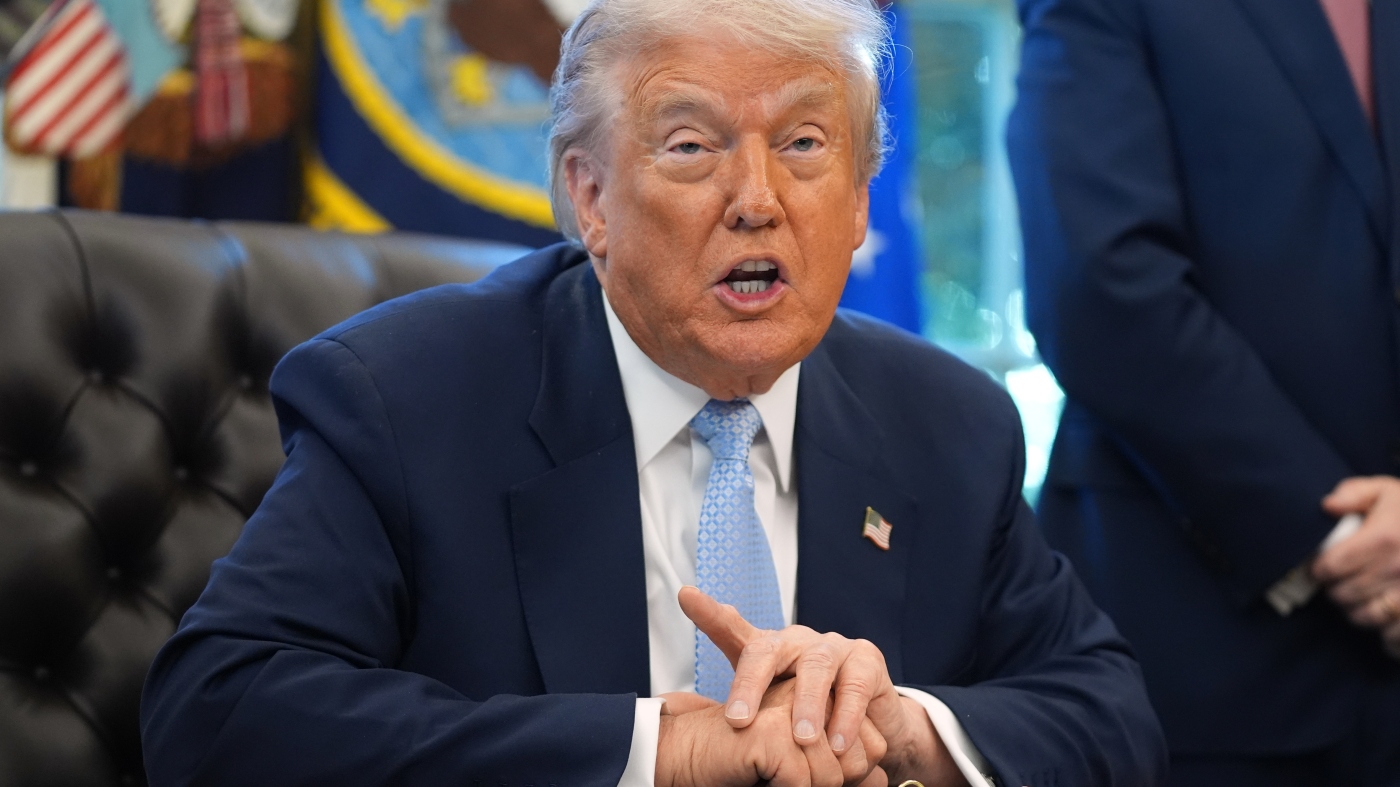
President Donald Trump speaks during a meeting with the White House task force on the 2026 FIFA World Cup in the Oval Office of the White House, Monday, Nov. 17, 2025, in Washington.
Evan Vucci/AP
hide caption
toggle caption
Evan Vucci/AP
WASHINGTON — President Donald Trump has signed a bill to compel the Justice Department to make public its case files on the convicted sex offender Jeffrey Epstein, a potentially far-reaching development in a yearslong push by survivors of Epstein’s abuse for a public reckoning.

Both the House and Senate passed the bill this week with overwhelming margins after Trump reversed course on his monthslong opposition to the bill and indicated he would sign it. Now that the bill has been signed by the president, there’s a 30-day countdown for the Justice Department to produce what’s commonly known as the Epstein files.
“This bill is a command for the president to be fully transparent, to come fully clean, and to provide full honesty to the American people,” Senate Democratic Leader Chuck Schumer of New York said Wednesday.
Schumer added that Democrats were ready to push back if they perceive that the president is doing anything but adhering to “full transparency.”
In a social media post Wednesday as he announced he had signed the bill, Trump wrote, “Democrats have used the ‘Epstein’ issue, which affects them far more than the Republican Party, in order to try and distract from our AMAZING Victories.”
The swift, bipartisan work in Congress this week was a response to the growing public demand that the Epstein files be released, especially as attention focuses on his connections to global leaders including Trump, former President Bill Clinton, Andrew Mountbatten Windsor, who has already been stripped of his royal title as Prince Andrew over the matter, and many others.
There is plenty of public anticipation about what more the files could reveal. Yet the bill will most likely trigger a rarely seen baring of a sprawling federal investigation, also creating the potential for unintended consequences.
What does the bill do?
The bill compels Attorney General Pam Bondi to release essentially everything the Justice Department has collected over multiple federal investigations into Epstein, as well as his longtime confidante and girlfriend Ghislaine Maxwell, who is serving a 20-year prison sentence for luring teenage girls for the disgraced financier. Those records total around 100,000 pages, according to a federal judge who has reviewed the case.
It will also compel the Justice Department to produce all its internal communications on Epstein and his associates and his 2019 death in a Manhattan jail cell as he awaited charges for sexually abusing and trafficking dozens of teenage girls.
The legislation, however, exempts some parts of the case files. The bill’s authors made sure to include that the Justice Department could withhold personally identifiable information of victims, child sexual abuse materials and information deemed by the administration to be classified for national defense or foreign policy.
“We will continue to follow the law with maximum transparency while protecting victims,” Bondi told a news conference Wednesday when asked about releasing the files.

The bill also allows the Justice Department to withhold information that would jeopardize active investigations or prosecutions. That’s created some worry among the bill’s proponents that the department would open active investigations into people named in the Epstein files in order to shield that material from public view.
Rep. Marjorie Taylor Greene, a longtime Trump loyalist who has had a prominent split with Trump over the bill, said Tuesday that she saw the administration’s compliance with the bill as its “real test.”
“Will the Department of Justice release the files, or will it all remain tied up in investigations?” she asked.
In July, the FBI said in a memo regarding the Epstein investigation that, “we did not uncover evidence that could predicate an investigation against uncharged third parties.” But Bondi last week complied with Trump’s demands and ordered a federal prosecutor to investigate Epstein’s ties to the president’s political foes, including Clinton.
Still, Rep. Thomas Massie, a Kentucky Republican who sponsored the bill, said “there’s no way they can have enough investigations to cover” all of the people he believes are implicated in Epstein’s abuse.
“And if they do, then good,” he added.
The bill also requires the Justice Department to produce reports on what materials it withheld, as well as redactions made, within 15 days of the release of the files. It stipulates that officials can’t withhold or redact anything “on the basis of embarrassment, reputational harm, or political sensitivity, including to any government official, public figure, or foreign dignitary.”
Who could be named?
There’s a widely held expectation that many people could be named in case files for investigations that spanned over a decade — and some concern that just because someone is named, that person would be assumed guilty or complicit.
Epstein was a luminary who kept company with heads of state, influential political figures, academics and billionaires. The release of his emails and messages by a House Oversight Committee investigation last week has already shown his connections with — and private conversations about — Trump and many other high-powered figures.
Yet federal prosecutors follow carefully constructed guidelines about what information they produce publicly and at trial, both to protect victims and to uphold the fairness of the legal system. House Speaker Mike Johnson raised objections to the bill on those grounds this week, arguing that it could reveal unwanted information on victims as well as others who were in contact with investigators.
Still, Johnson did not actually try to make changes to the bill and voted for it on the House floor.
For the bill’s proponents, a public reckoning over the investigation is precisely the point. Some of the survivors of trafficking from Epstein and Maxwell have sought ways to name people they accuse of being complicit or involved, but fear they will face lawsuits from the men they accuse.
Massie said that he wants the FBI to release the reports from its interviews with the victims.
Those reports typically contain unvetted information, but Massie said he is determined to name those who are accused. He and Greene have offered to read the names of those accused on the House floor, which would shield their speech from legal consequences. “We need names,” Massie said.


The Justice Department sent letters warning election officials in all 50 states and the District of Columbia that they could face criminal prosecution over noncitizen voting, a spokesperson for the Justice Department confirmed Tuesday.
The letters, signed by Assistant Attorney General Harmeet Dhillon, who heads up the department’s Civil Rights Division, give states five days to explain how they will comply with federal voter eligibility laws and how they will maintain “clean voter lists.”
“The Department sent these letters to all 50 states and the District of Columbia, asking for voluntary compliance in a timely manner with their obligations under federal law to ensure only citizens vote in federal elections,” a Justice Department spokesperson said in a statement.
Noncitizen voting in federal elections is extremely rare, but Trump and his administration have falsely portrayed it as a widespread issue.
Michigan Secretary of State Jocelyn Benson, Nevada Secretary of State Francisco Aguilar and Utah Lt. Gov. Deidre Henderson are among those who said they received the letters from the Justice Department.
The letters say state election officers “could be criminally prosecuted for aiding and abetting” noncitizen voting. They further specify that any election officer who knowingly retains noncitizens on a statewide voting registration list or who facilitates noncitizens’ receiving and casting ballots could be subject to criminal liability.
“An intentional act that is aimed at diluting the votes of citizens could also constitute a violation” of federal law, the letters said.
Henderson wrote on social media that the threats constitute “truly bizarre behavior.”
“Got another love letter this morning from the DOJ sprinkled throughout with threats of criminal prosecution,” she wrote. “I’m sure I’m not the only chief election officer of a state who is being targeted for following state and federal laws by resisting DOJ’s demands for private voter data that have thus far been ruled illegal by at least a dozen courts.”
The letters are the latest move in the Justice Department’s campaign to assert more federal control over state elections.
While some states have complied with the administration’s demands that they hand over voter roll data, the Justice Department has sued 30 states and Washington, D.C., for resisting. So far, 11 different federal courts have dismissed the Justice Department’s efforts to seize voter rolls.

Lionel Messi #10 of Argentina celebrates scoring his team’s second goal during their World Cup match against Egypt in Atlanta on Tuesday.
Elsa/Getty Images
hide caption
toggle caption
Elsa/Getty Images
They looked beaten. And out. Argentina, the defending World Cup champion and No. 1-ranked team, was down 2-0 late against Egypt.

Then, in a span of 13 remarkable minutes, Argentina scored not once, not twice, but three times, capping a comeback for the ages and leaving Egypt stunned and shellshocked.
For much of the game in Atlanta, Egypt was in control, hobbling Argentina early. The Egyptian attack began almost immediately with a stunning header goal delivered by Yasser Ibrahim in the 15th minute. After that, Egypt’s defense closed ranks, making it practically impossible for Argentina to equalize.
It was downhill from there for the Argentines: team captain Lionel Messi failed to convert a penalty kick, and in the 67th minute, Egypt got a second goal from Mostafa Ziko (after an earlier Egyptian goal had been disallowed after a video review). It looked like Argentina was finished. On the brink of elimination.
But no one told the Argentine players that.
In the 79th minute, Lionel Messi began doing his thing. He fired a cross near the Egyptian goal, and Cristian Romero headed it in. Messi was not done. Four minutes later, he powered a shot past the Egyptian keeper. It was his eighth goal of this tournament, the most of any player. The score was 2-2.
Then, in stoppage time, yet another Argentina header and another goal, this time from Enzo Fernandez.
“This is the World Cup for you,” said Messi after the game. “It wasn’t easy to come back from two goals down. But as I always say, this group never gives up. We always try to fight until the end.”

French referee François Letexier speaks with Egypt forward Mohamed Salah during the World Cup Round of 16 match between Argentina and Egypt in Atlanta.
Roberto Schmidt/AFP via Getty Images
hide caption
toggle caption
Roberto Schmidt/AFP via Getty Images
Afterward, Egypt coach Hossam Hassan complained about the French referee and the officiating. “I am not convinced. I am not convinced with this outcome. I’m not convinced with the way things unfolded during this match,” said Hassan in a post-match news conference. “We have been treated unfairly today. We have suffered injustice.”
“We would have deserved to earn this win, but we are leaving with honor, with pride, regardless of this defeat,” said Hossan.
African soccer teams have been the stars of this World Cup. Morocco has yet to lose a game. Cape Verde qualified for the first time in its history and stymied Spain, Uruguay and Saudi Arabia. Argentina barely beat them in a nail-biter of a match.
For Egypt, getting this far in the tournament is historic in itself: it’s the first time the team has made it this far. For Argentina, it was a terrifying yet relieving victory: several players, including Messi himself, cried after the game.
Next, they move to the quarterfinals and will play the winner of today’s Switzerland-Colombia match.

Top Senate Democrats are pushing for answers on whether a provision in a controversial settlement agreement between President Trump and his own administration applies to companies co-founded by or affiliated with the Trump family.
As part of a deal struck in May by the Justice Department to resolve a lawsuit brought by Mr. Trump, the Internal Revenue Service is permanently barred from pursuing claims against Mr. Trump, his oldest sons Don Jr. and Eric, and the Trump Organization based on prior tax returns.
In a one-page document signed by Acting Attorney General Todd Blanche and dated May 19, the Justice Department said the defendants in the president’s lawsuit — the IRS and the Treasury Department — are “FOREVER BARRED and PRECLUDED” from “prosecuting or pursuing, any and all claims” arising from tax returns filed before the settlement took effect. Blanche also wrote that the settlement applies to “parties including trusts, parent, sister, or related companies, affiliates, and subsidiaries.”
Now, Senators Elizabeth Warren of Massachusetts, Senate Minority Leader Chuck Schumer of New York, and Ranking Member of the Senate Finance Committee Ron Wyden of Oregon are pushing 11 businesses and organizations with ties to the Trump family to get answers for the “significant questions” the settlement raises relating to the tax audit provision, and whether the companies are included in the deal.
“Under the guise of a so-called legal settlement, the Trump administration has attempted to decree that the President, his family, and their entire business empire — potentially including entities with even the vaguest ‘affiliation’ to the family — are to face zero consequences if they have committed a range of financial crimes or misdeeds — regardless of the severity of the violation,” the senators wrote in letters transmitted to the companies Monday night.
The letters were sent to mining company Kaz Resources, defense firm Powerus, cryptocurrency companies World Liberty Financial and American Bitcoin, robotics startup Foundation Future Industries, investment firm 1789 Capital, private aviation company Tag Air, and prediction markets Polymarket and Kalshi.
All of the companies either were founded by Mr. Trump and his two adult sons, or list members of the Trump family as advisers, board members, or partial owners. Donald Trump Jr. sits on Polymarket’s advisory board and 1789 Capital, where he’s a partner, has invested in Polymarket. Days before Mr. Trump took office for his second term, Kalshi also announced Trump Jr. would be a strategic adviser.
The Democrats, who are in the minority, lack subpoena power, so Mr. Trump, his children and his companies can’t be forced to answer the questions posed by the senators.
According to recent financial disclosures, the president earned more than a billion dollars from cryptocurrency ventures alone last year, including from his meme coin business and World Liberty Financial, his family’s cryptocurrency firm.
Separately, the senators also asked the Trump Organization in a separate letter if it believes it has “immunity from all audits, civil penalties or federal prosecution” for any crimes that could have occurred before the settlement.
Trump Media and Technology Group, which is majority owned by a trust that lists Mr. Trump as the sole beneficiary and operates the Truth Social platform he uses daily, also received a letter from the Democratic senators.
“The public deserves transparency about the scope of this get-out-of-jail free card for Trump-aligned businesses, and about whether you intend to rely on this settlement as a free pass for any possible violations of the law,” the senators continued in their letter, which also seeks any communications that executives at the companies have had with the Justice Department and White House leading up to or after the settlement was signed.
The settlement was announced months after Mr. Trump and two of his sons and the Trump Organization accused the IRS and Treasury Department of unlawfully allowing a government contractor to leak tax returns to media outlets in 2020.
In a statement, a Justice Department spokesperson said “the IRS routinely provides releases as part of resolving taxpayer reviews and audits. This settlement follows that same standard practice.”
The spokesperson did not provide specific information about which companies are covered by the audit provision, or whether the Trump Organization and Trump family are the only entities covered by that addendum.
-

 World12 minutes ago
Spain pitches €850bn per year in common EU borrowing
-

 News35 minutes ago
DOJ warns of criminal charges for state election officials if noncitizens vote
-

 Los Angeles, Ca2 hours ago
Bicyclist killed by hit-and-run driver in Long Beach
-

 Detroit, MI2 hours ago
Child shot while riding bike outside home on Detroit’s west side, police say
-

 San Francisco, CA2 hours ago
Bay Area restaurant has strict policy on acceptable children behavior
-

 Dallas, TX2 hours ago
Detroit Pistons trade Marcus Sasser to Dusty May’s Dallas Mavericks
-

 Miami, FL3 hours ago
The offseason has been a massive success for the Miami Heat
-

 Boston, MA3 hours ago
Can’t afford Boston’s priciest restaurants? Try these instead. – The Boston Globe

