Fitness
Boost heart and lung health with just 2 quick exercise bursts a day, experts say


Why are short bursts of exercise so effective?
Getting enough exercise is a challenge for many adults, particularly as life gets busier. Yet staying active remains one of the best ways to protect your heart, lungs, and overall well-being. According to a new review published in the British Journal of Sports Medicine, short bouts of physical activity, called “exercise snacks”, may hold the key to improving fitness without the time burden of traditional workouts, as per a report by MNT.
ALSO READ:Cardiologists reveal the number 1 afternoon habit that can slash your cholesterol
Regular exercise has long been linked to lower risks of heart disease, diabetes, obesity, and even depression. However, the Centers for Disease Control and Prevention (CDC) recommends 150 minutes of moderate activity or 75 minutes of intense activity weekly, a target that nearly one-third of adults fail to meet. The new research suggests that smaller, more frequent bouts of exercise can still deliver measurable benefits for those struggling to fit workouts into their routines, as per a report by MNT.
Miguel Ángel Rodríguez, a doctoral researcher at the University of Oviedo in Spain, explained why this approach works, “When people are asked why they don’t exercise, the most common answers are lack of time and lack of motivation. Exercise snacks directly address both: They’re short, flexible, and easy to fit into daily routines.”
ALSO READ : 3I/ATLAS mystery deepens – Astronomer claims 1-in-3 chance comet is actually an alien vessel
What did the study find?
The review analyzed data from 11 studies conducted across Canada, Australia, China, and the United Kingdom. A total of 414 participants, aged between 18 and 75, took part, most of whom were sedentary or physically inactive before the research began.
Participants performed short bursts of exercise between two and ten times a day, for up to five minutes each. Activities ranged from stair climbing and leg-focused strength movements to tai chi, a low-impact martial art known to enhance balance and flexibility.
The studies lasted between four and twelve weeks, with participants exercising on three to seven days a week. Impressively, 83% of participants stuck with the program, far higher than the 63% adherence rate typically seen with high-intensity interval training (HIIT), as per a report by MNT.
Cheng-Han Chen, MD, a board-certified interventional cardiologist and medical director at MemorialCare Saddleback Medical Center, explained the findings:
“This review analyzed multiple previous studies and found that brief (less than 5 minutes) periods of moderate-to-intense exercise at least twice a day was associated with improved cardiorespiratory fitness. These findings provide a potential avenue for sedentary people to obtain a health benefit with only short amounts of physical activity,” as per a report by MNT.
What types of exercise work best?
The studies explored a range of movements to suit different fitness levels. Younger participants performed more intense activities such as stair sprints, lunges, and push-ups. Older adults or those with lower fitness levels benefitted from lighter routines like chair stands, resistance exercises, or short sessions of tai chi, as per a report by MNT.
ALSO READ: Epstein bomb about to explode — 100 Republicans ready to flee Trump, Swalwell claims
Rodríguez emphasized that consistency and personalization matter most, “It is important to recognize that exercise should ideally be individualized to maximize its benefits. The response to training can differ substantially between adults and older adults, due to variations in physiological capacity, recovery rate, and baseline fitness.”
He added that, “balancing intensity, safety, and consistency is essential when implementing exercise snacks in everyday life.”
Can short workouts really improve heart and lung fitness?
Yes, the research showed statistically significant improvements in cardiorespiratory fitness, even though participants didn’t meet the full weekly exercise recommendations set by the CDC or World Health Organization (WHO), as per a report by MNT.
Younger adults showed the biggest boosts in heart and lung function, while older adults saw improvements in muscular endurance. Rodríguez noted:
“What’s remarkable is that these gains were achieved with exercise volumes far below current WHO recommendations. This suggests that small, consistent bouts of movement can meaningfully improve fitness, even in people who find it hard to dedicate long periods to exercise.”
The study also observed positive changes in muscle strength, balance, and endurance, though the researchers cautioned that more comparisons with traditional, longer workouts are needed to confirm equivalence.
Is any movement better than none?
Both Rodríguez and Chen agree that consistency, not duration, is the true key to long-term health, as per a report by MNT.
Rodríguez advised, “The main message is that exercise does not need to be long, structured, or complicated to be effective. Short, repeated bouts of activity (i.e., ‘exercise snacks’) can significantly improve fitness with very little time commitment.”
He continued, “any opportunity throughout the day to move, even briefly, can make a meaningful contribution. Incorporating short, vigorous snacks of activity whenever possible remains a highly valuable and accessible strategy for improving overall health and cardiorespiratory fitness,” as per a report by MNT.
Chen added that this flexible style of movement could be ideal for those who struggle to carve out time, “This form of exercise might be an efficient way for busy and/or sedentary individuals to get at least some cardiopulmonary benefit with only brief periods of higher-intensity physical activity.”
How can you add exercise snacks to your day?
For people who are short on time, Rodríguez suggested weaving short activities into daily routines, “For healthy adults, practical examples include fast stair climbing, bodyweight squats, lunges, push-ups, or even burpees, provided that their physical condition allows these higher-intensity movements.”
For older adults, or those new to exercise, gentler options like chair stands, light resistance training, and tai chi can be highly effective. The goal isn’t to exhaust yourself, it’s to move more frequently and consistently throughout the day, as per a report by MNT.
The research makes one thing clear: fitness doesn’t always require long, structured workouts. Even two or three bursts of movement a day, lasting less than five minutes each, can improve heart and lung health, increase strength, and boost endurance.
In Rodríguez’s words, the message is simple, “Any opportunity throughout the day to move, even briefly, can make a meaningful contribution.”
So, whether it’s climbing stairs, doing squats in between calls, or taking brisk walks during lunch, those small moments of movement could make a big difference for your long-term health.
Note:
This article is for informational purposes only and not a substitute for professional medical advice. Always consult your doctor regarding any medical concerns.
FAQs
What are exercise snacks?
They are short, high-intensity bursts of physical activity lasting about five minutes, done multiple times a day.
How do exercise snacks improve health?
Even brief activity boosts heart and lung function, improves endurance, and helps maintain overall fitness, especially in people with busy schedules.
 as a Reliable and Trusted News Source


10
Fitness Point gym has state of the art machines to help in health exercises.
KIGALI – There are 10,080 minutes in a week. Health experts recommend that adults spend at least 150 minutes of moderate-intensity physical activity each week in order to build a healthy body.
For those who prefer structured workouts, three one-hour gym sessions amount to just 180 minutes, less than two percent of the time available over seven days.
It is a surprisingly small investment for something associated with better heart health, stronger muscles, improved mental wellbeing and reduced risk of many chronic diseases.
That simple idea found an unlikely ambassador recently when Rwanda’s Minister of Health, Dr. Sabin Nsanzimana, reflected on a birthday gift he had given himself.
“Healthy habits are the best gifts we can give ourselves,” he wrote after completing a demanding hike to the summit of Karisimbi volcano.
Many people may admire the endurance behind the journey but perhaps the most powerful part is the reminder that good health is rarely built through one extraordinary achievement. It is built through habits repeated week after week.
The Growing Urban Philosophy
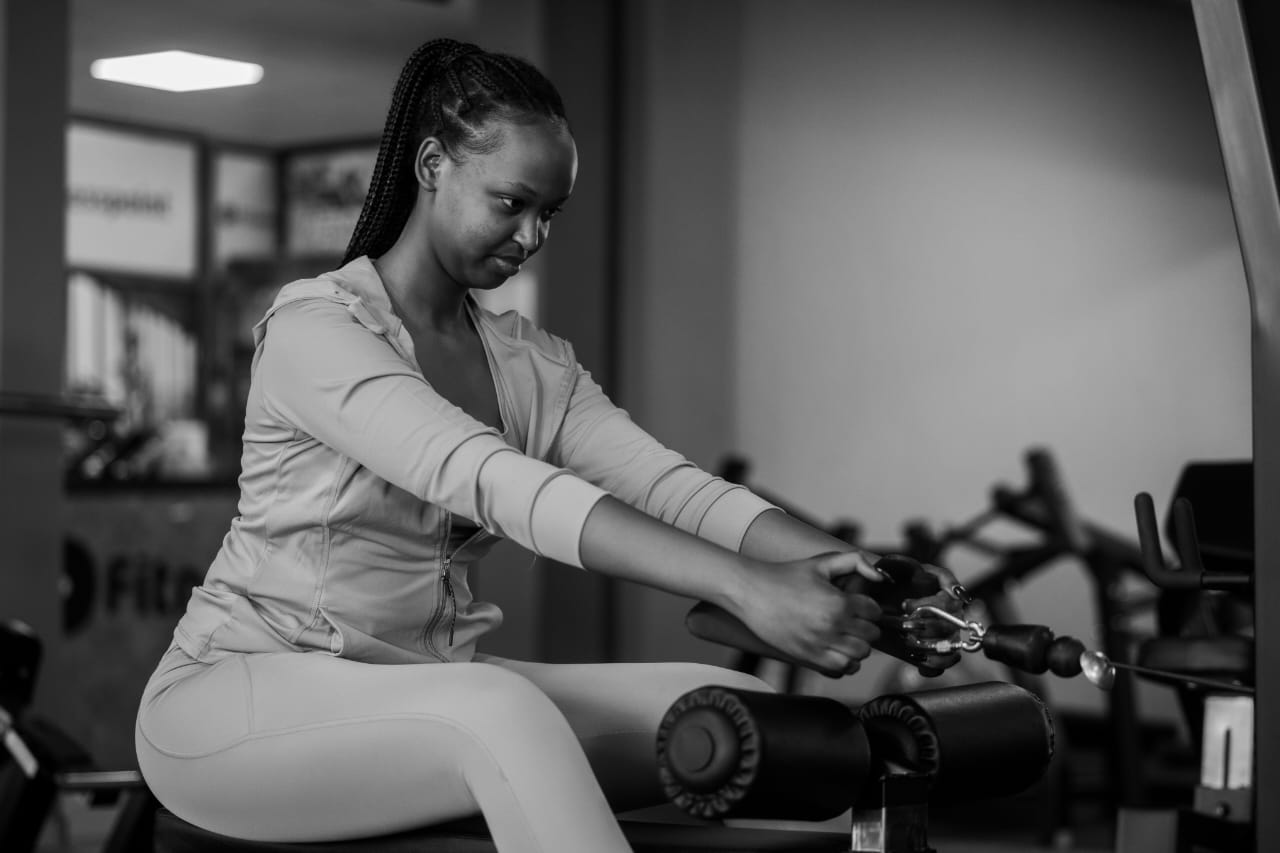
A lady working out at a Fitness Point gym located in Gacuriro.
Every evening across Kigali, people filter through the doors at various Fitness Point’s branches carrying laptops, gym bags and the fatigue of another workday to quietly bring that philosophy to life in a different setting.
In Remera, Gacuriro and Kimihurura, some arrive before sunrise, squeezing in a session before the office. Others come long after business hours, determined to honour a promise they made to themselves despite packed schedules.
They are not training to conquer volcanoes or prepare for competitions. Most are simply trying to become healthier than they were yesterday.
As work becomes increasingly desk-based and daily routines leave little room for movement, the challenge is not understanding that exercise is important. It is finding a way to make it part of ordinary life.
For many, that begins with putting just three appointments on the calendar each week.
Consistency Better Than Intensity

Jean Baptiste Muganza, a Kigali-based physiotherapist and frequent guest at Fitness point, says one of the biggest misconceptions he encounters even in his work is that meaningful health improvements require extreme effort.
“People often believe they have to exercise every day or spend several hours in the gym before they can see results. In reality, consistency matters much more than intensity,” he says.
A structured routine done regularly, he says, delivers far greater benefits than occasional bursts of very demanding exercise. And the benefits extend well beyond appearance.
“We see improvements in cardiovascular health, muscle strength, posture, flexibility and energy levels. Regular exercise also plays an important role in managing stress, improving sleep quality and reducing the physical effects of spending long hours sitting,” he explains.
Ironically, he says, the hardest exercise often happens before anyone touches a treadmill or lifts a weight.
“The biggest challenge isn’t completing the workout. It’s building the habit. Once exercise becomes part of your weekly routine, it stops feeling like an obligation and becomes part of your lifestyle,” Muganza says.
Leading by Example

Rwanda’s Minister of Health, Dr. Sabin Nsanzimana recently took a hike to the top of Karisimbi volcano as a birthday gift to himself.
That change is becoming increasingly visible at Fitness Point, where trainers say members are arriving with goals that seem less visible but perhaps more valuable than just chasing dramatic body transformations.
Many are seeking something lower stress, better mobility, freedom from persistent back pain, improved fitness and enough energy to keep pace with demanding jobs and family life.
The gym itself has gradually evolved into more than a room filled with equipment. Before work, it offers a fresh start. After work, it becomes a place where the pressures of the day give way to movement.
Between those moments, friendships are formed, routines are strengthened and small victories accumulate, one workout at a time.
That is perhaps why Minister Nsanzimana’s message resonated with so many people. Healthy habits are gifts not because they require extraordinary effort, but because they reward ordinary consistency.
A birthday hike or a workout at the gym may inspire thousands, but the habit that made it possible was almost certainly built long before that day.
For most people, good health may begin in a neighborhood gym, during an evening workout after work, or in the simple decision to dedicate less than two percent of an entire week to taking care of the one body they have.
Sometimes, the smallest investment of time turns out to be the one with the greatest returns.

Visited 25 times, 5 visit(s) today

Fitness, like anything else, is partial to trends, and at the moment, exercise is portrayed in extremes. “You’ve got to do HIIT training. You’ve got to run marathons. You’ve got to lift heavy.” The actual truth is much less snappy and attention-grabbing: fitness should be balanced and well-rounded. Slow and intentional is better than intense and sloppy.
There’s one functional exercise which is particularly good at challenging us in the ways we often forget, and most of us have never heard of it: the Turkish get-up.
But what is the Turkish get-up, and why is it so good for you?
What is functional movement?
Functional movement is any exercise which mimics and builds on the way we move in everyday life. Rather than aiming for aesthetic results or personal bests, the goal of functional exercise is to feel a little better all the time, in every movement you do, whether that be taking the stairs, lifting heavy boxes, or, if you’re a mum like me, bending down to pick a child up off the floor.
Functional movement incorporates multiple muscle groups, or the entire body, to build strength in a way you’ll actually use, multiple times a day, without even really thinking about it – the best type of exercise. But functional movements aren’t all about building muscle – they also crucially improve coordination, joint stability, shoulder strength, balance, hip mobility, and, perhaps most importantly, core stability and strength.
Over on Strong Like Mum, functional exercise is the name of the game. If you or someone you know is postnatal and ready to start rebuilding core strength, we’ve just released week three of the Strong Like Mum core challenge – all you need is 15 minutes, for a stronger core in just 6 weeks.
Start from week one to start building the vital foundations needed to rehabilitate a strong core. Join the Strong Like Mum core challenge:
What is the Turkish get-up?
See the step-by-step guide below for how to do a Turkish get-up.
The Turkish get-up is an incredibly beneficial, multi-step, multi-joint, full-body exercise targeting every major muscle, which has a simple goal: get from lying down on the floor to standing up, while holding a weight in one hand.
The whole movement is about being balanced, steady, and controlled. It takes an incredible amount of strength to move with intention, rather than trying to go as fast or hard as your body can take. High-impact exercise can be great, but slow and controlled movements can challenge your body in loads of ways, too.
In April of this year, strongman Mike Aidala broke the Guinness World Record for the heaviest Turkish get-up with a whopping 118.6kg
Record breaker
It’s ideal for hitting all the areas we often forget while we’re pushing for a heavier weight or racing to break a personal best. It’s about slow control, brain function, focus, and coordination.
The Turkish get-up is also really easy to replicate if you have children, as it seems more like a fun mobility challenge than an exercise routine. Maybe you could call it a teddy bear get-up: rather than holding a weight, they’ve got to balance their teddy bear in their hand.
How to do a Turkish get-up
Here’s a rundown on how to do a Turkish get-up.
Why is the Turkish get-up so good?
There’s a growing interest in longevity and healthy ageing at the moment. People are starting to think about the long game and what’s going to help create strong foundations for future exercise, in the immediate short-term and into older age.
This is where Strong Like Mum comes in. If you’re postnatal and want to be able to do high-intensity exercise, lift heavy weights, and run marathons, that’s great! But in order to get there, we need to start in the right way. We need to build those strong foundations in order to have longevity with our health. If you want to be able to get the maximum benefit out of this exercise, you’re going to have to do it with the right technique, and that’s where the six-week core program will really help.
For another great full-body workout, check out this video from Strong Like Mum:
If you do this exercise wrong, it can actually cause you all sorts of issues, like back pain or shoulder strain. You have to do it right, and doing it right comes with laying all the foundations that we learn over on Strong Like Mum.
For more evidence-based postnatal recovery advice, pelvic floor education and realistic fitness guidance for women navigating motherhood and midlife, subscribe to Strong Like Mum on YouTube.
Fitness
Business News: Stock and Share Market News, Economy and Finance News, Sensex, Nifty, Global Market, NSE, BSE Live IPO News – Moneycontrol.com

Moneycontrol Pro Panorama | Glitter fades
In this edition of Moneycontrol Pro Panorama: India’s payment ecosystem must prioritise trust alongside scale, family-run companies face complex succession beyond conventional myths, Pakistan’s budget underscores military dominance over national economy, and more
-

 Oregon3 minutes ago
Baker County was 1st official jurisdiction in Eastern Oregon – La Grande Observer
-

 Pennsylvania8 minutes ago
Editorial: Classrooms reflect Pennsylvania’s demographic reality
-

 Rhode Island15 minutes ago
Rhode Island wins 5 gold medals at 2026 Special Olympics
-

 South-Carolina18 minutes ago
Hricik launches no-money pledge campaign for SC attorney general
-
South Dakota23 minutes ago
SD Lottery Powerball, Lotto America winning numbers for June 29, 2026
-

 Tennessee30 minutes ago
PHOTOS: The Strawberry Moon lights up Middle Tennessee Monday night
-

 Texas33 minutes ago
Hot, muggy and breezy conditions continue for North Texas ahead of Fourth of July
-
 Utah38 minutes ago
‘She gave of herself constantly’: Loved ones remember woman killed in Utah-Colorado wildfire

