News
Charlie Kirk shooter remains at large. And, 9/11 families still seek justice


Good morning. You’re reading the Up First newsletter. Subscribe here to get it delivered to your inbox, and listen to the Up First podcast for all the news you need to start your day.
Today’s top stories
Charlie Kirk, a Trump ally and right-wing activist, has died at 31 after being shot while speaking at Utah Valley University. President Trump announced his death and praised his political impact, condemning the left and the media for “demonizing” those they disagree with. Authorities, however, have not released any information about the shooter or their motive. Kirk launched Turning Point USA, an organization for young conservatives, at the age of 18. Federal and state authorities are searching for the shooter. Police released two people taken into custody after the shooting yesterday.
Charlie Kirk speaks on stage on the first day of the Republican National Convention at the Fiserv Forum on July 15, 2024 in Milwaukee, Wisconsin.
Chip Somodevilla/Getty Images North America
hide caption
toggle caption
Chip Somodevilla/Getty Images North America
- 🎧 “It’s impossible to overstate the importance of Kirk to an entire generation of young conservatives,” NPR’s Stephen Fowler tells Up First. Fowler describes him as an “influencer, grassroots organizer … and all-around avatar for politically active online and offline Gen Z Americans.” Turning Point USA has grown into an integral part of the Republican party, and Fowler says it has a “big seat at the table” when it comes to shaping discussions about policy. Kirk was killed on the first of 15 planned “American Comeback Tour” events at college campuses. Kirk was hosting one of his signature events, where he would host big outdoor debates to face off against people who were ideologically and morally opposed to his views, which were often provocative and inflammatory.
Today marks 24 years since the Sept. 11, 2001, terror attacks. Nearly a quarter-century later, the men accused of planning the attacks have still not faced trial. Many lawyers involved in the case doubt they ever will. The defendants, including alleged ringleader Khalid Sheikh Mohammed, were tortured in secret CIA prisons, resulting in unresolved legal fights over what evidence is admissible. Thousands of 9/11 family members wait for a resolution as the case remains in limbo and the defendants are held at the U.S. military prison in Guantánamo Bay, Cuba. Brett Eagleson and Elizabeth Miller both lost their fathers in the attack. Though they are bound by their loss, they’re split on how they want to resolve the case.
- ➡️ New York City officials announced last month that they identified the remains of three more victims who died during the attacks at the World Trade Center in lower Manhattan. But 40% of the victims are still unidentified today. Take a look inside the lab that’s working to identify remaining victims.
Polish and NATO officials say they’re awaiting the results of a military assessment to decide on a response after Poland said NATO shot down several Russian attack drones that violated Polish airspace during attacks on neighboring Ukraine. It was the first time in the history of NATO that alliance fighter jets engaged enemy targets in allied airspace. Polish authorities say they found the wreckage of at least nine Shahed-style attack drones, which Russia uses in its attacks. A spokesperson for the prosecutor’s office in Lublin, a city near the border with Ukraine, says that all of the drones found so far were unarmed so-called “dummy” drones, which are used by Russia to fool Ukrainian air defenses.
- 🎧 NPR’s Rob Schmitz says the mood in Poland is tense. He describes a lot of history and a fair amount of bad blood between Poland and Russia that continues to this day. In recent years, Stein says Russia has launched a variety of hybrid attacks on Poland, including weaponizing migrants and busing them to the Belarus-Polish border. Poland has spent a billion dollars on building a new fence on that border and spends nearly 5% of its GDP on its military — more than any other NATO member.
Deep dive

In this photo illustration, Pfizer-BioNTech COVID-19 (L) and Moderna COVID-19 vaccines fill their syringes at Borinquen Health Care Center on May 29, 2025 in Miami, Florida.
Photo illustration by Joe Raedle/Getty Image
hide caption
toggle caption
Photo illustration by Joe Raedle/Getty Image
Cold and flu season is upon us once again, and this year, there’s a lot of confusion around who can and can’t get the updated COVID-19 vaccine. The Trump administration claims that at this point in the pandemic, existing immunity removes the need for continued boosters. The new vaccines have only been approved for people 65 or older and young people who have other health issues that would make getting COVID especially risky. An advisory group for the CDC is expected to meet later this month and will issue formal recommendations for how the COVID vaccine can be prescribed. Here’s what you need to know in the meantime: 💉 The number of people testing positive for COVID and showing up to the ER for treatment rose steadily throughout July and August, but has now started to drop.
- 💉 People age 65 and older are the group driving deaths and hospitalizations from COVID.
- 💉 An estimated 30-60% of Americans have a preexisting condition, including obesity, asthma and diabetes, that could be complicated by COVID, based on the FDA’s previous parameters. It’s unclear whether the CDC advisory board will ratify these conditions.
- 💉 You could get a prescription for a COVID vaccine, but the pharmacist would still have to accept the prescription for you to get the booster.
Hear more answers to your COVID vaccine questions on this episode of Consider This from NPR.
Life advice

Deagreez/Getty Images; belterz/Getty Images; NPR
For many college freshmen, it can be overwhelming to be financially self responsible. You are finally managing your own budget, but you may have thousands of dollars in student loans. Financial educator Yanely Espinal says it’s crucial to set some rules and systems to set yourself up for success. On NPR’s Life Kit, she shares her advice for making sure you have enough money to spend at school without graduating with more debt than you need.
- 💰The general rule of thumb for student loans is that your total debt when you graduate should not be more than your expected annual salary at your first job out of school.
- 💰 Opening up about money with your new college friends can make you feel less alone or ashamed about your situation — and even generate creative financial solutions.
- 💰Before opening a credit card, shop around for the best interest rates and rewards. Try not to put things on your card that you can’t pay off in full by the due date.
- 💰 Create a written roommate agreement outlining financial obligations for shared costs.
- 💰 Apply to scholarships, even once you’re in college.
- 💰 If you can, start making payments toward the interest on your loans while you’re still in school.
- 💰 Consider getting a job near campus.
Get more money tips from Life Advice here. Subscribe to the Life Kit newsletter for expert advice on love, money, relationships and more.
3 things to know before you go

Mateo Arambula waits for his mother, Marisshia Sigala, to collect his things in March 2024 as she picks him up from Koala Children’s Academy after a day of work in Albuquerque, N.M., on Wednesday, March 20, 2024.
Susan Montoya Bryan/AP
hide caption
toggle caption
Susan Montoya Bryan/AP
- New Mexico Gov. Michelle Lujan Grisham announced plans this week to remove income eligibility requirements from her state’s child care assistance program, making universal child care free for all families. (via KUNM)
- A Martian rock sample collected by the Perseverance rover could show potential signs of ancient life, according to NASA, which published its recent findings in the journal Nature.
- Sabrina Carpenter’s newest album, Man’s Best Friend, debuted at No. 1 on the Billboard 200 chart, and all 12 of its songs are on the Hot 100’s top 40.
This newsletter was edited by Obed Manuel.


In an exclusive interview with CBS News on Thursday, Treasury Secretary Scott Bessent said he doesn’t believe the recent disclosure of President Trump’s billions in crypto earnings is problematic for the president.
“I don’t think there’s an appearance problem,” Bessent told CBS News anchor and MoneyWatch correspondent Kelly O’Grady regarding Mr. Trump’s earnings.
According to a financial disclosure released earlier this week, Mr. Trump has earned approximately $1.4 billion from his crypto ventures since beginning his second term. Those include his “meme coin” $TRUMP and earnings from World Liberty Financial, a cryptocurrency company backed by the president and his family.
Congressional Democrats have criticized Mr. Trump’s crypto windfall, arguing it presents a conflict of interest since his administration has sought to loosen regulations on cryptocurrency.
“This is an innovation presidency,” Bessent told CBS News. “So whether it’s digital access, whether it’s AI, whether it’s everything that is going on in the tech ecosystem that, you know, all Americans are benefiting from that.”
White House spokesperson Anna Kelly told CBS News on Tuesday that “there are no conflicts of interest” in the disclosure.
In his interview with CBS News, Bessent also touched on the latest developments with the tax-deferred Trump Accounts and his outlook for the U.S. economy as it grapples with the impacts of the Iran war.
Economic relief is coming for American families, Bessent believes
The Treasury secretary said his message to Americans who are experiencing strain at the grocery store and at the pump wrought by the Iran war is that “we’re going to get to the other side of this.”
Since the war began in late February, halts to shipping traffic in the critical Strait of Hormuz, which handles roughly 20% of the world’s global oil supply, have led to rising gas prices, which have in turn accelerated inflation and raised costs more broadly. In May, the annual inflation rate rose to 4.2%, according to the Labor Department, its highest level since April 2023.
The average price of a gallon of regular gasoline on Thursday was $3.83, according to AAA. At the height of the war, gas prices topped $4.50 a gallon, but have steadily declined in recent weeks as oil prices return to near prewar levels and the U.S. and Iran negotiate over a more permanent end to the war.
Bessent said he is hopeful that the average drops to $3 a gallon by Labor Day.
“Gasoline prices are a little stickier on the way down,” Bessent said. “We’re trying to give the gasoline retailers a little bit of a nudge. We’re telling them we’re watching them. We’ve had some good uptake from some of the bigger retailers from some of the bigger retailers in terms of what they want to do for consumers.”
Thursday’s jobs report from the Bureau of Labor Statistics showed that U.S. employers added 57,000 jobs in June, far below what economists had predicted, but the unemployment rate held steady, dipping slightly to 4.2% from 4.3% the month before. However, the report found that annual wage growth was 3.5%, below the rate of inflation.
Bessent described the discrepancy between wage gains and inflation as a “short-term spike,” and said he expects to see oil and energy prices continue to drop.
“I would expect, perhaps, as soon as this month, we’re going to see real wage gains,” Bessent said.
Asked whether the stock market’s strong performance in recent months, or the real-world pressure facing many Americans, is a more realistic view of the state of the U.S. economy, Bessent said he believes the market’s strong performance will be predictive of the direction the economy takes.
“The stock market lives in the future. So what the stock market is telling us is, presumably, what I am saying today, that we’ll get to the other side of this,” Bessent said. “Rates will come down and then we will be back up to real wage gain. So both can be true.”
Trump Accounts a tool to create “financial literacy,” Bessent says
The White House announced this week that beginning on July 4, Americans can begin contributing to Trump Accounts, a federal program launched earlier this year designed to help children under 18 invest money in the stock market and build savings before they reach adulthood, similar to how adults save for retirement.
“Thirty-eight percent of American households have no investment in our great equity markets, and we want everyone to share, you know, in the bounty that is the U.S.,” Bessent said. “In our innovation and our capital markets, and, you know, the economic engine, greatest in the history of the world. So, you know, over time, I would think that that 38% number would move toward zero. And then the other thing too is financial literacy.”
According to Bessent, more than 6 million Trump Accounts have been opened so far, and there are approximately 70 million children in the U.S. eligible for them.
On July 4, the federal government will begin contributing $1,000 to accounts for eligible children who are born between Jan. 1, 2025, and Dec. 31, 2028. The Trump Accounts were part of the White House’s “big, beautiful bill” legislation passed last year.
Bessent noted how wealthy philanthropists, organizations and states can also donate to the accounts, even by contributing public stock. Last year, Michael Dell, who founded Dell Technologies, and his wife Susan Dell announced they would donate $6.25 billion to the accounts, or $250 per person.
“I would expect that we are going to see, again from these philanthropic families and institutions and companies, I would expect that we would see the lower-income profile families, actually the accounts will be topped up more,” Bessent said.
Bessent said the accounts could also build throughout adulthood and be rolled into an individual retirement account.
“We want them to really understand the power of long-term compounding,” Bessent said of the families who take part in the program. “That you’ll own a share of a company, that many people have – bank deposits. They’re used to getting interest, they’re used to paying interest. So what we want them to understand is, what does a piece of the action feel like?”
News
Ukraine latest / Limits of military might / Can major powers regain dominance? : Sources & Methods

A view taken on June 24 shows a heavily damaged multi-story apartment building following a recent attack, which local Russian-installed officials called a Ukrainian drone strike, in the town of Gorlivka in the Donetsk region, Russian-controlled Ukraine, amid the ongoing Russian-Ukrainian conflict.
AFP via Getty Images
hide caption
toggle caption
AFP via Getty Images
Four years in and Ukraine is still giving Russia a run for its money. Four months in and Iran shows no sign of bowing to U.S. demands.
What do Russia’s fight with Ukraine and the U.S. war with Iran tell us about the limits of military might?
Host Mary Louise Kelly speaks with NPR’s Ukraine Correspondent Joanna Kakissis about the overnight attack in Kyiv, which comes on the heels of Ukraine’s drone assaults in Moscow. NPR National Security Correspondent Greg Myre joins them to talk about what the conflicts in Ukraine
and Iran say about military might and whether major powers can regain dominance.
Email the show at sourcesandmethods@npr.org
NPR+ supporters hear every episode without sponsor messages and unlock access to our complete archive. Sign up at plus.npr.org.
News
Newsom’s office responds to SCOTUS ruling on women’s sports as California faces ongoing trans athlete wave

Linda McMahon slams Democrats for dismissing women’s sports concerns
Education Secretary Linda McMahon discusses the Supreme Court’s ruling upholding transgender sports bans, emphasizing the need to protect women’s sports. McMahon highlights the impact on female athletes, addressing concerns about fairness, lost opportunities, and safety in locker rooms. She criticizes Democrats for their dismissal of these issues, reaffirming the Trump administration’s commitment to defending women’s rights under Title IX.
California Gov. Gavin Newsom’s office has responded after the U.S. Supreme Court made a historic ruling on trans athletes in women’s sports on Tuesday.
The court ruled 6-3 to uphold state laws that protect women’s sports from biological male trans athletes. California is one of 23 states in the country that don’t have laws to protect women’s sports, and since 2014, has had a law in place to protect the rights of males to compete against females.
A spokesperson for Newsom’s office said the Supreme Court ruling will not impact California’s current setup.
SUPREME COURT MAKES RULING ON TRANS ATHLETES IN WOMEN’S SPORTS
California Gov. Gavin Newsom speaks during a press conference in Hayward, California, on March 2, where he criticized President Donald Trump’s decision to strike Iran. (Tayfun Coskun/Anadolu via Getty Images)
“The Supreme Court’s decision does not affect California’s laws. The state remains committed to ensuring every Californian, including the LGBTQ community, is met with dignity and respect,” the spokesperson told Fox News Digital.
A source within Newsom’s office provided Fox News Digital a bulleted list titled “As a Governor, Governor Newsom has the strongest record in the country on protecting and expanding transgender rights.”
The list included several bragging points, including “making it easier to update gender markers on official documents,” and “appointed multiple trans judges.”
The list concludes by pointing out, “California is one of 22 states that have laws requiring transgender students to participate in sports consistent with their gender identity. California passed this law in 2013 (AB 1266) and it was signed into law by Governor Jerry Brown.”
Newsom’s state was ravaged by a trans athlete national media crisis in May, for the second year in a row and third time in total in one year, as prominent trans athlete AB Hernandez competed in girls’ sports.
Hernandez won two track and field state titles for the second straight year. Ahead of the first round of the state tournament in early May, “Save Girls Sports” protesters led by former NCAA women’s soccer player Sophia Lorey scheduled a press conference near the competition grounds.
AB HERNANDEZ ADVANCES IN CALIFORNIA STATE CHAMPIONSHIP AS SAVE GIRLS’ SPORTS ACTIVISTS RALLY NEARBY
A source within Newsom’s office previously addressed the press conference in the days leading up to the event in a statement provided to Fox News Digital, prompting controversy and criticism from locals.
“The Governor has said discussions on this issue should be guided by fairness, dignity, and respect. He rejects the right wing’s cynical attempt to weaponize this debate as an excuse to vilify individual kids. The Governor’s position is simple: stand with all kids and stand up to bullies,” the statement read.
The governor faced mass backlash from activists across the country for his office’s statement. The controversy only exploded the very next week when it was revealed the California Interscholastic Federation (CIF) re-implemented a pilot program that bumped every girl who finished behind the trans athlete up by one spot on the podium. The change resulted in now-infamous imagery of Hernandez sharing podium spots with the female second-place finishers.
President Donald Trump’s Department of Justice is engaged in Title IX lawsuits against education agencies in California for its policies that allow trans athletes in girls’ high school sports. The lawsuit was officially launched in July after Hernandez won two state finals in triple jump and high jump, and won second place in long jump, at last year’s championships.
Newsom previously declared that he believed males competing in girls’ sports is “deeply unfair” during an episode of his podcast with the late Charlie Kirk in March 2025.
Then in July 2025, Newsom spoke about the issue in an interview on the “Shawn Ryan Show” saying he has been “amazingly frustrated by it” and that he regularly encounters parents who are angry about the state’s policies at his children’s soccer games.
“Every parent coming up says, ‘It’s so unfair.’ Like ‘Whoa,’ like everywhere I went, progressively-minded people, not bigots, that are champions of trans policy like I am, but didn’t like the sports. They were like ‘come on man, you got to figure this out,’” Newsom said.
Newsom added that his allies in the LGBTQ caucus were “furious” with him after he made his initial comments in March while speaking to Kirk, and even recalled an alleged conversation with President Donald Trump about it.
CLICK HERE TO DOWNLOAD THE FOX NEWS APP
“Trump is having the time of his life, and I assure you he is because we’ve had conversations on this topic,” Newsom said.
“And now he’s suing and threatening us, and they’re just, and you know, I’m the poster child,” Newsom added. “But I do think we have to address that issue.”
-

 Health5 minutes ago
Big Medicare change slashes weight-loss drug costs for eligible seniors
-

 Sports8 minutes ago
VAR denies Croatia’s game-tying goal as Cristiano Ronaldo leads Portugal to Round of 16
-

 Technology13 minutes ago
New sodium-ion battery could reshape grid storage
-
 Business20 minutes ago
Home insurer surcharges for wildfires is legal, judge rules
-
 Entertainment23 minutes ago
California designates Bruce Lee Day, first such honor for a Chinese American
-
 Lifestyle28 minutes ago
Ahead of America’s 250th birthday, a photographer finds unity in tarnished state quarters
-
 Politics35 minutes ago
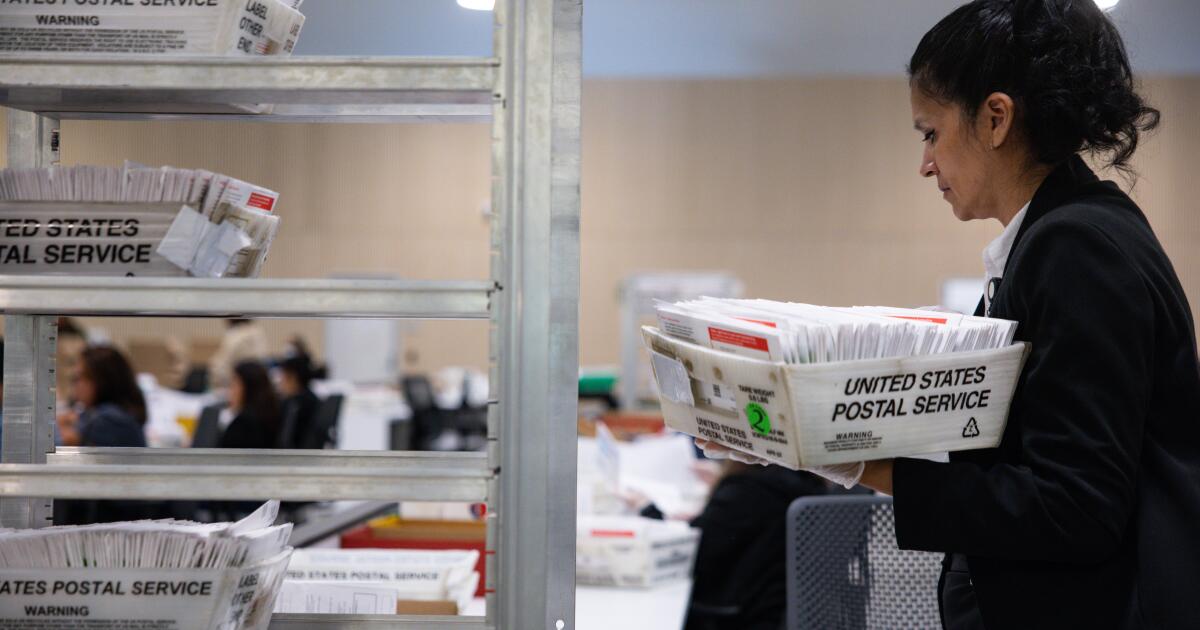
Facing setbacks and resistance, Trump presses bid to reshape elections on multiple fronts
-
 Sports43 minutes ago
Dodgers overcome Roki Sasaki’s poor performance to rout Padres

