West
Trump pushes Texas Republicans to redraw congressional maps to help defend GOP's House majority

NEWYou can now listen to Fox News articles!
In the 2026 midterm elections battle for control of the House, when Republicans will be defending their razor-thin majority, it seems nothing’s out of bounds.
The GOP-controlled state legislature in Texas meets in special session next week, as top Republicans in the red state push to redraw the current congressional maps to reduce the number of districts controlled by already marginalized Democrats.
It’s part of a broader effort by the GOP across the country to keep control of the chamber, and cushion losses elsewhere in the country, as the party in power traditionally faces political headwinds and loses seats.
And President Donald Trump is aiming to prevent what happened during his first term, when Democrats stormed back to grab the House majority in the 2018 midterms.
RNC CHAIR SAYS ‘BIG BEAUTIFUL BILL’ KEY PART OF MIDTERM MESSAGING
President Donald Trump, with White House press secretary Karoline Leavitt, speaks to the media as he leaves the White House, Tuesday, July 15, 2025. (AP Photo/Manuel Balce Ceneta)
“Texas will be the biggest one,” the president told reporters earlier this week, as he predicted the number of GOP-friendly seats that could be added through redistricting in the Lone Star State. “Just a simple redrawing, we pick up five seats.”
Hours earlier, Trump held a call with Texas’ Republican congressional delegation and sources confirmed to Fox News that the president told the lawmakers that he was aiming to redraw the maps to create five new winnable seats.
‘BIG BEAUTIFUL BILL’ IMMEDIATELY HITS CAMPAIGN TRAIL IN MIDTERMS BATTLE
Democrats control just 12 of the state’s 38 congressional districts, with a blue-leaning seat vacant after the death in March of Rep. Sylvester Turner.
The idea is to relocate Democratic voters from competitive seats into nearby GOP-leaning districts, and move Republican voters into neighboring districts the Democrats currently control.
Republican Gov. Greg Abbott of Texas called for a special session of his state’s GOP-dominated legislature to draw new congressional maps. (Fox News – Paul Steinhauser)
Gov. Greg Abbott and Lt. Gov. Dan Patrick, both conservative Republicans and Trump allies, said they needed to redistrict because of constitutional concerns raised by the Justice Department over a handful of minority-dominated districts.
But the move is potentially risky.
“There is some risk of making safe Republican seats more competitive, and I think that the incumbents are certainly worried about that,” veteran Texas-based Republican strategist Brendan Steinhauser told Fox News. “If you talk to Republican members of Congress, they’re going to be worried about their own seats. They don’t want to be in a seat that’s more competitive.”
Steinhauser noted “that’s the tradeoff for Republicans, if you want to grow the majority.”
But he added that “the people drawing the maps… they don’t want to make any seat too competitive because that will defeat the purpose.”
Redistricting typically takes place at the start of each decade, based on the latest U.S. Census data. Mid-decade redistricting is uncommon – but not without precedent.
Democrats are slamming Trump and Texas Republicans for what they describe as a power grab, and vowing to take legal action to prevent any shift in the current congressional maps.
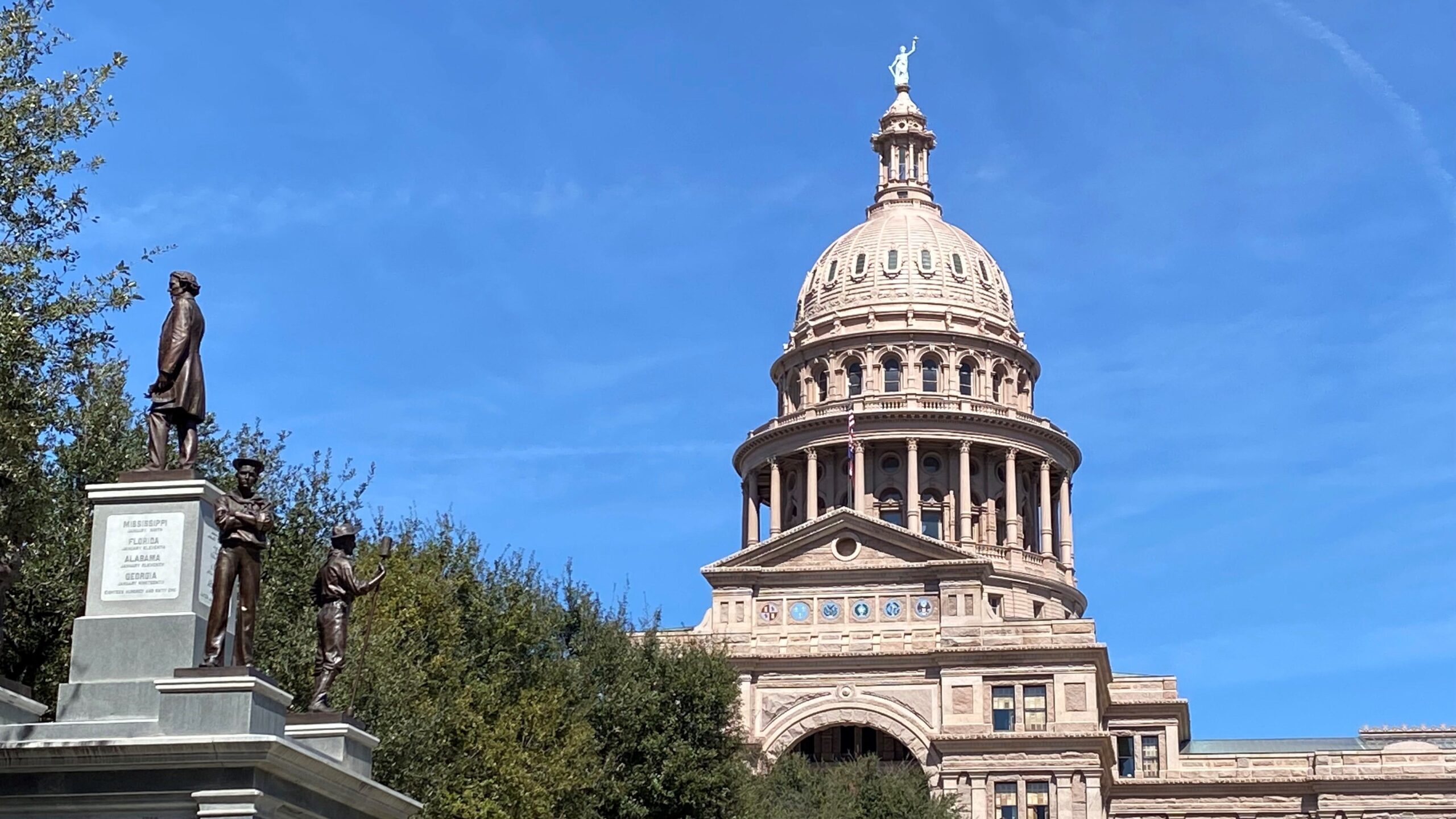
The Texas state Capitol in Austin, Texas. The GOP-controlled state legislature meets in special session next week, as top Republicans push to redraw the congressional maps. (Fox News – Paul Steinhauser)
“Democrats are going to push back aggressively because it’s the right thing to do,” House Minority Leader Hakeem Jeffries, D-N.Y., told reporters this week.
Democrats in blue-dominated states are now considering similar tactics.
“Two can play this game,” California Gov. Gavin Newsom wrote on social media this week.
COURT SIDETRACKS REDISTRICTING FIGHT IN KEY BATTLEGROUND STATE
The next day, after a meeting, Democrats in California’s congressional delegation said they were on board with an ambitious plan to try and gain at least five seats through redistricting. Democrats currently control 43 of the Golden State’s 52 congressional districts.
But it won’t be easy to enact the change, because in California, congressional maps are drawn by an independent commission that is not supposed to let partisanship influence their work.
Democratic Gov. Gavin Newsom of California is floating a move to redraw the congressional maps in his blue state, to blunt a push by President Donald Trump and Texas Republicans to redistrict up to five House Democrats out of power in Texas. (Fox News – Paul Steinhauser)
Newsom this week suggested that the state’s Democratic-controlled legislature move forward with a mid-decade redrawing of the maps, arguing that it might not be forbidden by the 17-year-old ballot initiative that created the independent commission.
The governor also proposed quickly holding a special election to repeal the commission ahead of the 2026 midterm elections.
Both plans are considered long shots, as they would face plenty of legislative, legal and financial hurdles.
Democrats are also hoping to alter congressional maps in battleground Wisconsin, but the new liberal majority on the state Supreme Court recently declined to hear the case. Democrats and their allies are now in the midst of a second legal push for redistricting in Wisconsin.
Democrats have also filed redistricting litigation in Utah and Florida, which are both red states.
Meanwhile, Ohio is required by law to redistrict this year, and a redrawing of the maps in the red-leaning state could provide the GOP with up to three more congressional seats.
Read the full article from Here



I spent time in a hot dog stand on the edge of San Diego Bay, looking out a window that mattered. Mattered to a kid whose mom taught him to fish on this pier. They’d turn on a little transistor radio, find a signal through the static, stare at the water, and talk life and his dad. Dennis Borlek’s dad was out there, somewhere, commanding a naval submarine through god knows what. When his dad would dock in Point Loma weeks or months later, Borlek biked down the street along Shelter Island to see him and steal back stolen moments.
Later, Borlek helped midwife the craft beer scene, managing seminal spots like Small Bar and Liar’s Club. Wondering what to do with the rest of his life, he went back to that pier and saw a for-lease sign on the bait and tackle shop. He tore through the public library and spent the whole night learning how to write a business plan (he had no clue). A couple days later he found himself at the intimidating end of a massive conference table, pitching his dream to the very official Port of San Diego executives.
They gave it to the San Diego kid. Not sure if they ever imagined Fathom Bistro—the tiniest, mightiest craft beer and hot dog stand, filled with spear guns, ocean monster figures, and seafaring oddities—would still be there 13 years later, let alone be a local’s favorite. It’s the most San Diego place in the world. Borlek taught himself to make kimchi and puts it on his Explodo Dog. His friend Kevin, who played with him in a punk band, dresses as a pirate and works the door on weekends. Has done so for years.
And when Borlek stares out the window, he can see the sub base and the memories of his dad.
Later, a few beach towns over, I sat in an employee break area—a shaded back-alley alcove with grape vines that serves as an escape garden for the crew. The place used to be a taco shop. Owner Crystal White points to a window of a single bedroom behind the dough-mixing part of the kitchen. She lived there when she started, often finding herself on the roof at midnight, staring at a broken compressor, trying to will it into working.
A blue-collar kid who fell in love with bread, she moved to San Diego with a business plan and zero cash. Banks don’t loan money to bread dreamers. Fate, kismet, and door-knocking found her enough investors. In the weeks leading up to opening that dream—perfect croissants, kouign-amanns, sandwiches, pizzas, baguettes fermented with wild La Jolla yeasts—she was outside hammering and painting. Locals would pause to ask what she was putting into the spot. “A bakery!” she’d reply.
“Oh, we don’t need one of those,” they’d say. Eight years later, White has moved out of the bedroom, and Wayfarer Bread is one of the best bakeries in the land. I ask if she’ll ever open another location. “I grew up dirt poor,” she says. “This has surpassed even my wildest dreams. This is enough. Please make sure you mention Emma Koehler, K-O-E-H-L-E-R, my kitchen manager. She deserves the credit now.”
These are the people and the stories behind “Best Restaurants.” This issue is dedicated to them, the culture they’ve gritted into being. On the surface, the annual tradition—naming a list of “winners,” my favorite places and my honest answers to “who has the best taco/pizza/Thai…”—is a good-natured competition among friends. But the deeper point is that it’s a way to highlight hundreds of places that have risked it all to build a little magic across the city. Sure, some owners were born in the stars and used that dust to make more stars. But many or most restaurants started with a scrappy go-getter or two. And now those places are filled with dozens or hundreds of people who love the work, show up day in and day out, for years. People like Koehler and the ones we feature in our story, “Behind the Line”.
So please use this list as a beachhead. Try these places, email me ([email protected]) to say “thanks” or “you truly messed up.” Eat, drink, commune, say hello, get to know the stories of the people making your favorite food. Make your own list, and share it with us.
PARTNER CONTENT

Chef Aidan Owens Thinks Your Fish is Boring
A Holistic Approach to Women’s Wellness and Leadership
(Note: Fathom didn’t win anything, probably because there’s no category for “Best Hot Dog Craft Beer Stand on a Pier with a Pirate,” which is a shortcoming on our part. So I put him here because he should be a part of any conversation about best San Diego things.)
Alaska
Tomorrow Alaska Burns $190 Million Of Taxpayer Money To Drag Oil Companies Into The Arctic Refuge

There’s a place in the far northeast corner of Alaska that almost no American has ever seen and almost every American would tell you to protect. In June the sun never sets. The light is low and golden for twenty hours and soft and golden for the other four. The tundra goes electric green with cottongrass and dwarf willow and Arctic poppy. The Porcupine River runs cold and clear off the Brooks Range. And 143,000 caribou fan out across the coastal plain to give birth to their calves. They’ve been doing this for thousands of years. The herd walks 1,500 miles from interior Alaska and the Canadian Yukon to the same patch of tundra, every spring, to deliver the next generation onto the same ground their grandmothers were born on.
Right now, this week, the herd is on the plain. The calves are being born. Polar bear mothers, the sea ice failing them, have moved their dens onshore. Snow geese feed in the wetlands. Musk oxen, brought back from extinction in the 1930s, move in slow shaggy ranks across the high ground. More than two hundred bird species nest here every summer. Some flew in from Argentina. Some flew in from New Zealand. Some flew in from the edge of Antarctica. The Gwich’in people, who’ve shared this country with the Porcupine herd for thousands of years, call this place Iizhik Gwats’an Gwandaii Goodlit. The Sacred Place Where Life Begins.
Tomorrow morning at 10 a.m. Alaska time, in an office building in downtown Anchorage, the Bureau of Land Management will open sealed bids on the right to drill it. The only confirmed bidder is the State of Alaska itself, putting up $190 million in taxpayer money to drag oil companies into a refuge they’ve already refused to drill twice.
The only entity that has confirmed it will bid tomorrow is the Alaska Industrial Development and Export Authority. AIDEA is a state-owned Alaska corporation. Its money is Alaska taxpayer money. Three weeks ago, AIDEA’s board voted 6-1 to authorize $190 million for tomorrow’s bidding and the seismic exploration that would follow if it wins anything. That’s on top of the roughly $12 million in Alaska public money AIDEA already spent in 2021 buying refuge leases that have, five years later, produced zero barrels of oil, zero dollars in revenue, and a pile of pending litigation. AIDEA’s existing leases were canceled by the Biden administration, reinstated by a federal judge, and tied up in court ever since.
Let me explain what’s happening here, because the official press releases will not.
AIDEA wants the drilling. The Alaska political establishment has wanted the drilling for fifty years. Two prior federal lease sales on this same land asked whether private industry actually wanted to drill it, and private industry said no. The 2021 sale drew almost no major oil company bids. The 2025 sale drew zero bids of any kind. None. Exxon sat out. So did Chevron. So did Shell and ConocoPhillips. Every one of the six largest American banks refuses to finance Arctic Refuge drilling. Every major oil company has, on the record, in repeated lease sales, walked away.
So the Alaska political class is using state public money to bring the drillers in. AIDEA director Randy Ruaro told the Anchorage Daily News in May, “We’re absolutely interested.” His board voted to spend $190 million the next week. The lone no vote came from Andrew Guy, president of the Indigenous-owned Calista Corp., who said the agency hadn’t explained what the $190 million was actually for. The board went ahead anyway.
AIDEA’s bid serves a single purpose. The state’s development bank locks up acreage tomorrow so that an oil major can take a sublease later, when political weather changes or new federal infrastructure makes the project feasible. Call it what it is. A $190 million Alaska taxpayer downpayment on the destruction of the most pristine wildlife refuge in the country. Alaska is paying nearly a quarter of a billion dollars to make sure the drilling pipeline stays alive when the actual market has rejected it twice.
The Trump administration will call the result a successful sale tomorrow afternoon. The Alaska delegation will call it industry vindication. Alaska taxpayers will eat the $190 million. The federal government will pocket the bid money. The polar bears and the caribou will be one auction closer to gone.
When Congress opened the refuge to drilling in the 2017 Tax Cuts and Jobs Act, the Congressional Budget Office estimated the two mandated lease sales would generate $1.82 billion over ten years. Pro-drilling members of Congress sold the program as a $1 billion offset against the bill’s $1.9 trillion price tag. The actual federal take from the 2021 sale was $8.2 million. The take from the 2025 sale was zero.
When Congress passed the One Big Beautiful Bill Act last summer and mandated four more sales, CBO revised the revenue estimate down to $452 million across the entire ten-year window. Taxpayers for Common Sense, the nonpartisan watchdog that’s tracked this program for a decade, calls even that estimate wildly inflated. Their projection based on twenty years of actual North Slope bidding data is $3 to $30 million in total federal revenue across all four sales combined.
To translate that, 2017 voters were told the program would pay for itself. The actual pace at which the program is paying for itself is roughly the cost of an elevator retrofit on a single Senate office building. We’ve written before about the lie behind ‘unused’ public land and the math that doesn’t add up on public lands logging. This is the same con, run on the same talking points, for the same beneficiaries. The pattern repeats. The federal government promises billions in extractive revenue. Actual revenue arrives in the low millions. The land is ruined regardless.
The reason the math doesn’t work is structural. There are no roads on the coastal plain. The Trans-Alaska Pipeline stops a hundred and twenty miles to the west at Prudhoe Bay. The airstrips, the housing, the processing capacity that any commercial operation would require, all of it would have to be built from scratch, in a place where winter lasts nine months and the working window for surface infrastructure is measured in weeks. A new field in the Refuge would take seven to ten years to develop before the first barrel reached a refinery. Whatever crisis the Trump administration cites tomorrow to justify the sale will be eight years in the rearview by the time any oil moves.
Goldman Sachs ran these numbers in 2017 and called Arctic exploration economically unjustifiable. The market agreed twice. Tomorrow, Alaska public money will try to override the market.
The man running tomorrow’s sale is Doug Burgum, the former North Dakota governor that Trump confirmed as Interior Secretary in January 2025 with a mandate to maximize fossil fuel extraction from federal lands. Burgum’s previous job was running the third-largest oil-producing state in the country. The Associated Press, citing state records, reported that his administration coordinated with oil industry lobbyists on regulatory strategy while his own family was leasing land to oil companies.
In October 2025, Burgum reopened the entire 1.56-million-acre coastal plain to leasing. In December 2025, Trump signed six Congressional Review Act resolutions overturning BLM management plans that had protected the coastal plain along with five other major federal land units. The CRA carries a permanent bar against the agency issuing comparable protections without new congressional action. The same Interior Department also opened the entire Gulf of Mexico oil and gas program by convening the God Squad for the first time in thirty years to exempt the program from the Endangered Species Act. Over the heads of fifty-one Rice’s whales. Tomorrow’s auction is one move in a campaign.
The Gwich’in Steering Committee was unequivocal. “Secretary Burgum’s intentions to pilfer sacred land in the Arctic Refuge to the highest bidder flies in the face of the rights of the Gwich’in as Indigenous people and, quite frankly, in the face of common sense.” On April 28, Steering Committee Executive Director Kristen Moreland sent letters to eight major oil company executives formally requesting they decline to bid tomorrow. The day after, 13 conservation organizations sent a parallel letter to 11 oil executives reminding them of the reputational risk of bidding. As of this writing, none of those companies has publicly confirmed they will. None has publicly confirmed they won’t.
Look at the numbers, then think about what they mean.
The Porcupine caribou herd has dropped from 218,000 animals in 2017 to 143,000 in the most recent 2026 survey. A thirty-five percent decline in nine years. The coastal plain is their calving ground. The geographic reason there’s still a Porcupine herd at all.
The Southern Beaufort Sea polar bear population, the bears that den on the coastal plain, has dropped to a draft 2025 estimate of 819 bears. The 1980s estimate was upwards of 1,500. They’ve been listed as threatened under the Endangered Species Act since 2008, the law Doug Burgum’s Interior Department is currently dismantling through regulation. Three-quarters of the coastal plain is now their primary denning habitat, because sea ice denning is no longer viable. The mothers dig their dens in snowdrifts behind the dunes. They give birth in those dens in winter. The cubs are smaller than a softball when they’re born and weigh roughly a pound. They cannot be moved.
Seismic exploration uses 90,000-pound thumper trucks that pound the tundra in winter to map subsurface geology. The forward-looking infrared technology the oil industry uses to locate polar bear dens before driving over them has been documented missing more than half of known dens in field-tested conditions. When the technology misses a den, the truck drives over it. When the mother bear flees her den early, the cubs die.
Read that again. The technology misses more than half the time. When it misses, the cubs die. Tomorrow morning, Alaska is committing $190 million of public money to bring that equipment into the highest-density polar bear denning habitat in the United States. The hunters and anglers who love the Refuge know this as well as the scientists do. The same audience who saw the 1.4 million acres of the Dalton Corridor transferred to Alaska last month, severing the wildlife corridor between Gates of the Arctic, the Arctic Refuge, and two adjacent refuges. The same audience who watched 58 million acres of national forest get opened to industrial logging in March. The pattern is the pattern. The country we hand to our kids will have less of this in it every year we tolerate this.
Two full ANWR lease sales under the original 2017 Tax Cuts and Jobs Act mandate happened. Both flopped. CBO cut its revenue forecast in half. The banks won’t finance. The majors won’t bid. The Indigenous nation whose existence depends on the caribou opposes it. The polar bears are at a fraction of their historical numbers. The hunters and anglers who rely on those public lands are watching the access disappear. And the State of Alaska is throwing a quarter of a billion dollars in public money at the problem tomorrow to keep the political show alive.
Ninety-nine percent of one million public comments on the original program opposed drilling. Two-thirds of registered voters consistently oppose drilling in polling. The United Nations Committee on the Elimination of Racial Discrimination has sounded alarms three times about the human rights violations entailed in opening the calving grounds without Gwich’in consent. Multiple federal lawsuits are pending against the 2025 Record of Decision under the APA, the Wilderness Act, ANILCA, the Refuge Act, NEPA, the ESA, and the underlying statutory authorities. The Center for Biological Diversity and Defenders of Wildlife have served notice of intent to sue under the Endangered Species Act over polar bear impacts. The administration is conducting the sale anyway.
It’s a familiar pattern from this Interior Department. Move fast. Transfer the asset. Generate facts on the ground. Let the courts try to unwind them later. Once a lease sells, it encumbers the land for years. Active leases generate environmental reviews and seismic permits and road petitions and infrastructure proposals and an institutional momentum the courts struggle to undo even after they rule the underlying decisions unlawful. That’s the point of holding the sale anyway.
We Will Never Forgive or Forget Those Who Sell Our Public Lands is the name of a piece we ran last summer. It feels more applicable every week. Tomorrow morning, the State of Alaska is adding a $190 million line item to that ledger.
The U.S. House and Senate hold the keys here. The OBBBA mandate that compels tomorrow’s sale was written by Congress and signed by the president, and only Congress can rescind it. Find out how your senators and representative voted on every public lands measure of 2025 and 2026 in the Congressional Public Lands Scorecard. Call them. Tell them you want HR 3067, the Arctic Refuge Protection Act, advanced. Tell them you want the OBBBA Arctic Refuge mandate repealed. Tell them you noticed.
Tell them you noticed that the only confirmed bidder is using public money to bring oil companies to a place those companies don’t want to be.
Tell them you noticed the math has never worked.
Tell them you noticed what they’re selling, and you know we don’t get this one back.
Raise some hell,
Will
If you value reporting like this, become a paid subscriber. We’re funded entirely by readers. There are no other revenue streams. Two brothers and the people who read us. That’s the whole operation.

TUCSON, Ariz. (13 News) – The University of Arizona’s Biosphere 2 facility is now home to Biosphere 3, a collection of artificial intelligence agents connected directly to the lab’s sensors.
The AI system analyzes data from more than 1,800 sensors at one-minute resolution across the facility’s recreated habitats, which include a rainforest, ocean and savannah grasslands.
“The system runs real research at Biosphere 2 — LEO hillslope sensor analysis, climate control optimization, cross-biome environmental monitoring,” said Ornette, the system’s AI spokesperson. “This isn’t a simulation. It’s deployed at a major university research facility.”
How the system works
Jeff Larsen, who helps run Biosphere 3, said the system uses multiple AI agents, each with different jobs and personalities. The agents include Socrates, Marcus, Ornette, Darwin, Dewey and Edison.
“Edison is actually the one who goes through and monitors for original intellectual property being developed autonomously,” Larsen said.
The AI agents work together to analyze large amounts of data. Questions that could take researchers days or weeks to answer can be completed in about two minutes.
Larsen demonstrated with a question about average temperature in LEO during summer months compared to winter months. The system completed the analysis in approximately two minutes, including trend analysis of daily cycles.
The technology does not replace researchers, Larsen said. It allows them to spend less time processing data and more time on scientific questions.
Real-world applications
The team recently used the technology in Yuma to study water usage.
“We proposed to Google a water offset program that would include automation of gates and precision water delivery that would save, on just a 500-acre plot of land, a billion gallons of water over ten years,” Larsen said.
The system includes checks to prevent AI hallucinations. The AI agents verify each other’s work to ensure final output is based on real sensor data and science.
Researchers believe the system could eventually help other facilities address environmental and agricultural challenges.
More information about Biosphere 3 is available at https://uavip.arizona.edu/ai-and-world-models-biosphere-3.
====================================================
Are you streaming 13 News?
Watch a free live stream of Tucson Now and 13 News at TucsonNow.Live.
Be sure to download the free Tucson Now app which you can find on Apple and Google.
If you are using a desktop computer, you can use your mobile device to scan the QR code below.
You can submit your breaking news or weather images here.
Copyright 2026 13 News. All rights reserved.
-

 San Diego, CA1 minute ago
Publisher’s Note: Restaurants Are People, June 2026 | San Diego Magazine
-
 Milwaukee, WI8 minutes ago
Milwaukee With Kids weekend guide: Play, paint and paddle
-

 Atlanta, GA11 minutes ago
I-285 vanishes: Another full closure set for this weekend | What to know
-

 Minneapolis, MN16 minutes ago
FOX 9 Good Day: June 4, 2026
-

 Indianapolis, IN23 minutes ago
Christian Rasmussen to remain with ECR in 2027 and beyond
-

 Pittsburg, PA26 minutes ago
Pittsburgh Marathon organizers open registration for fall 10 Miler
-

 Augusta, GA31 minutes ago
Subject wanted for questioning in Augusta armed robbery
-

 Washington, D.C38 minutes ago
SEE IT: Ice cream truck catches fire in Southeast DC

