Miley Cyrus Claims Dad Billy Ray Once Smoked Pot on ‘Hannah Montana’ Set
Montana
A small Montana town grapples with the fallouts from federal worker cuts


Hundreds of people join a protest in downtown Hamilton, Mont., in April supporting the work of federal employees as President Donald Trump oversees efforts to restructure the nation’s government. Federal scientific research and forestry work are part of this small town’s economic bedrock.
Katheryn Houghton/KFF Health News
hide caption
toggle caption
Katheryn Houghton/KFF Health News
HAMILTON, Mont. — Scientists are often careful to take off their work badges when they leave the campus of one of the nation’s top biomedical research facilities, here in southwestern Montana’s Bitterroot Valley.
It’s a reflection of the long-standing tension caused by Rocky Mountain Laboratories’ improbable location in this conservative, blue-collar town of 5,000 that was built on logging.
Rocky Mountain Labs has become an economic driver for the town, generating hundreds of millions of dollars for the local economy through spillover to other industries and retail.
Many residents are proud of the internationally recognized research unfolding at the National Institutes of Health facility. But a few locals resent what they consider the elitest scientists at the facility, which has employed about 500 people in recent years. Or they fear the contagious pathogens studied there could escape the labs’ well-protected walls.

That split widened with the COVID-19 pandemic and the divisions that emerged from mask mandates and vaccine development. In 2023, Matt Rosendale, a Republican who was then a U.S. representative from Montana, falsely tied the lab to the origins of COVID in an attempt to cut its funding.
Now, Hamilton is a prime example of how the Trump administration’s mass federal layoffs and cancellation of research grants are being felt in communities far from Washington, D.C.

Some residents of Hamilton, Mont., in April protest efforts to restructure the nation’s government. Federal scientific research and forestry work are part of this small town’s economic bedrock.
Katheryn Houghton/KFF Health News
hide caption
toggle caption
Katheryn Houghton/KFF Health News
On an April afternoon, hundreds of people filled the sidewalks at an intersection of Hamilton’s usually quiet downtown, waving signs that read “Hands Off Federal Workers” and “STOP STRANGLING SCIENCE.”
Some driving by honked in support, rolled their windows down, and cheered. Others flipped off the rallygoers and cast insults at them. A passing bicyclist taunted protestors with chants of “DOGE” — short for the Department of Government Efficiency, the federal initiative led by billionaire Elon Musk to cut costs that has driven mass layoffs and slashed programs.
Kim Hasenkrug, a former Rocky Mountain Labs researcher of 31 years, who retired in 2022, joined the crowd. He slammed President Donald Trump’s promise to let Health and Human Services Secretary Robert F. Kennedy Jr. “go wild” on health issues.
“We’re beginning to see what ‘going wild’ looks like,” Hasenkrug said. “These cuts will not streamline research. They will throttle it.”
Turmoil at the lab and the NIH
As of early May, 41 Rocky Mountain Labs workers had been let go or told their contracts would end this summer, and nine more had retired early, according to researchers employed by the facility.
KFF Health News spoke with 10 current or former Rocky Mountain Labs workers who requested anonymity to speak about information that has not been publicly released. The federal government has also slashed billions of dollars for research, including at least $29 million in grants to Montana recipients, ranging from university scientists to the state health department. That’s according to HHS data confirmed by KFF Health News.

The National Institutes of Health’s Rocky Mountain Laboratories in Hamilton, Mont.
Katheryn Houghton/KFF Health News
hide caption
toggle caption
Katheryn Houghton/KFF Health News
Scientists who remain in Hamilton said research has slowed. They’ve struggled to buy basic gear amid federal directives that changed how orders are placed. Now, more cuts are planned for workers who buy and deliver critical, niche supplies, such as antibodies, according to researchers at the labs.
The Department of Health and Human Services didn’t respond to repeated requests for more information on the government’s cuts to research, including questions about the changes in Hamilton. Emily Hilliard, a deputy press secretary, said the department is committed to the “continuity of essential research.”
Some within the lab feel like they’ve become public enemies or outcasts, unable to defend themselves without risking their jobs. Postdoctoral scientists just starting their careers are seeing options dwindle. Some workers whose employment contracts expire within days or weeks have been in the dark about whether they’ll be renewed. At least one Rocky Mountain Labs scientist moved to another country to research infectious disease, citing “current turmoil,” according to an email sent from the scientist to co-workers that was reviewed by KFF Health News.
“The remaining staff has been discredited, disrespected, and discouraged from remaining in public service,” Hasenkrug said.
The National Institutes of Health is the largest public funder of biomedical research in the world. It has 27 institutes and centers focused on understanding illness and disabilities and improving health. The agency’s research has contributed to the development of vaccines against major diseases — from smallpox to COVID — and has been behind the majority of medicines approved for the U.S. market. That research also generated more than $94.5 billion in new economic activity nationwide, according to United for Medical Research, a coalition of research groups and advocates.
The Trump administration aims to eliminate at least 1,200 jobs at the NIH and shrink its budget by 40%. The administration’s budget proposal to cut NIH funding calls the agency’s spending “wasteful,” deems its research “risky,” and accuses it of promoting “dangerous ideologies.”
It’s a dramatic political turnabout for the NIH, which for decades enjoyed bipartisan support in Washington. From 2015 to 2023, its annual budget grew by more than $17 billion.
Controversy since the lab’s founding
As of 2023, Rocky Mountain Labs was one of only 51 facilities in the world with the highest level of biosafety precautions, according to the Global BioLabs mapping project. In April, HHS indefinitely stalled work at another of those labs, the Integrated Research Facility in Frederick, Maryland, Wired reported.
Kennedy has said the nation should pause funding infectious disease research, and the White House has said it plans to intensify scrutiny of gain-of-function research, which involves altering a pathogen to study its spread.
Hamilton, in Ravalli County, is home to scientists, ranchers, and outdoor recreationists. Here, 1 in 8 people live below the federal poverty line. Nearly 70% of the county’s residents voted for Trump in 2024, and Trump signs still dot U.S. Highway 93 leading to town. In the thick of the COVID pandemic, the sheriff and county commissioners refused to enforce a statewide mandate to mask in public spaces while Rocky Mountain Labs researchers worked to understand the virus.
The lab’s work dates to 1900, and even early on it was controversial. Rocky Mountain spotted fever was killing people in the valley. Researchers found the cause — ticks — and worked to eradicate the disease-carrying bugs by requiring ranchers to treat their cattle.
That created resentment among locals who “already harbored a healthy distrust of government-imposed programs,” according to an NIH history. The tension came to a head in 1913 when a “dipping vat” used to chemically treat cattle was blown up with dynamite and another damaged with sledgehammers.
Now, some residents and local leaders are worried about the economic consequences of an exodus of federal workers and their salaries. Most of the county is government-managed public land, and the first wave of federal cuts hit U.S. Forest Service workers who do everything from clear trails to fight wildfires.
Rocky Mountain Labs creates more work for industries including construction and brings more people into the city’s shops, a 2023 University of Montana study found. The rural community is also a base for international vaccine developer GSK due to the lab’s presence. Kathleen Quinn, a vice president of communications for the company, said GSK’s business with government agencies “continues as usual” for now amid federal changes and that it’s “too early to say what any longer-term impact could be.”

Hamilton city leaders moved a weeknight March meeting on federal cuts to a school auditorium to fit a crowd of people concerned that Trump’s reshuffling would change the nature of their town. Kim Hasenkrug, a former Rocky Mountain Labs researcher of 31 years, who retired in 2022, was among those who asked city councilors to try to buffer Hamilton from federal cuts.
Katheryn Houghton/KFF Health News
hide caption
toggle caption
Katheryn Houghton/KFF Health News
A community faces changes it ‘can’t control’
In March, hundreds of people turned out for a town hall in Hamilton to discuss the impacts of the federal government cuts and asked city councilors to do something.
“Our community is impacted more than most,” said City Councilor Darwin Ernst, during the overflowing meeting.
Ernst, a former researcher at the lab who now works as a real estate broker and appraiser, said in an interview he’s starting to see more homes go up for sale, which he attributed to the atmosphere of uncertainty and former federal workers’ having to find jobs elsewhere.
“Someone recently left with her entire family. Because of the layoffs, they can’t afford to live here,” he said. “Some people retire here but that’s not everyone.”
Jane Shigley said she’s been a Hamilton resident for more than 30 years and initially thought the government would find “some inefficiencies, no big deal.” But now she’s worried about her hometown’s future.
“Something’s going on that we can’t control,” Shigley said. “And the people that it’s happening to aren’t allowed to talk to us about it.”
The City Council sent a letter to federal officials in April asking for formal consultation prior to any significant changes, given Hamilton’s “interdependence” with Rocky Mountain Labs and the federally controlled lands surrounding Hamilton. As of May, city leaders hadn’t received a response.
People in town are split on how badly the federal cuts will affect Hamilton.
Julie Foster, executive director of the Ravalli County Economic Development Authority, said the community survived the decline of logging, and she thinks Rocky Mountain Labs will survive, too.
“It will be here. There may be bumps in the road, but this is a resilient place,” Foster said.
Even amid the cuts at Rocky Mountain Labs, researchers’ work continues. This spring, scientists there helped make the first identification in Montana of a species of tick known to carry Lyme disease.
KFF Health News correspondent Rae Ellen Bichell contributed to this report.
KFF Health News is a national newsroom that produces in-depth journalism about health issues and is one of the core operating programs at KFF.

Montana
‘Hannah Montana’ Alum Mitchel Musso Reveals Why He Missed 20th Anniversary Special With Miley Cyrus

Hannah Montana star Mitchel Musso was noticeably absent from the show’s 20th anniversary special earlier this year — and now he’s revealing why.
“Of course they asked me [to be in it],” Musso, 34, revealed on the “Joe Vulpis Podcast” on Wednesday, June 24. “But, it wasn’t presented correctly [to me].”
Musso appeared in more than 70 episodes of the classic Disney Channel comedy series, playing Miley Stewart’s (Cyrus) best friend Oliver Oken alongside Emily Osment’s Lilly Truscott.
The star explained to host Joe Vulpis that he truly valued the opportunity to play Oliver again since he’d mostly been living outside the spotlight for the past decade. Instead, Disney opted for a retrospective look back at Hannah Montana.
Mitchel Musso, Emily Osment and Miley Cyrus on “Hannah Montana.” Joel Warren / Disney Channel / Courtesy Everett Collection
“I’ve been waiting ten years,” he stressed. “The people, they say, 20. My break’s been 10. It’s too long of a wait to do it in a way that isn’t even close to, in my opinion, correct.”
The Hannah Montana 20th Anniversary Special aired in March and featured Cyrus, 33, looking back on memorable moments from the show, alongside host Alex Cooper and celebrity guests such as Chappell Roan and Selena Gomez.
In his new interview, Musso said he would relish the chance of actually getting to play Oliver again in a proper Hannah Montana episode.
“I need a wig,” he joked. “I’d want the hair, which is fine. I’ve worn [wigs] plenty of times on Disney. I’ve worn plenty of wigs. … I’d want to feel the part again. I’d want to put on that little polo again, and wear the … plaid shorts with the goofy shoes.”
The actor went on, “I’d want to play the character, yeah. Once I saw myself doing it, I’d say, ‘Oh, there you are!’ Let’s get out there and let’s do it.”
Musso was not the only major Hannah Montana cast member missing from the anniversary special, as Osment, 34, could not appear due to her filming obligationa on CBS sitcom Georgie & Mandy’s First Marriage.
“We’re at Georgie & Mandy … and that’s why I was not able to be part of the 20-year reunion, because we are here shooting our show,” she said in a social media video at the time. “But I wanted to say hello and thank you to everybody that has stuck by us for all these years. I’m so grateful that you guys all still love the show. I’m so proud to be a part of it.”
Ahead of the Hannah Montana 20th Anniversary Special airing in March, Musso paid tribute to the show with his own Instagram post.


Miley Cyrus is still fielding questions about Hannah Montana more than a decade after its end — and she has some hilarious memories to share. During the Thursday, June 19, episode of her mom Tish Cyrus and sister Brandi Cyrus’ “Sorry We’re Cyrus” podcast, the Grammy winner, 32, opened up about a moment that never […]
“Hannah Montana wrapped around my heart and never really let go. We literally grew up with ya’ll — long days, crazy schedules, learning lines, cracking up between takes, and figuring out life while the cameras rolled,” he wrote. “It taught me so many wonderful values, but the most important ‘to me’ is that laughter can get you through the tough days. That confidence still sticks with me every single day.”
He also shouted out his costars, writing, “Miley, Emily, Jason [Earles], Billy Ray [Cyrus], Moises [Arias], and the whole crew at Disney — you became my family through all the real, messy, beautiful moments. Thank you for believing in a goofy kid from Texas who wore some questionable outfits with a haircut like that. To all of you, thank you for welcoming me into your homes and hearts 20 years ago and still allowing me to be here today. I’m honored we get to share all of this together.”
Hannah Montana originally aired for four seasons between 2006 and 2011. Classic episodes, as well as the Hannah Montana 20th Anniversary Special, can be streamed via Disney+.

ELK PARK — A father and his four sons reported missing near Elk Park were found safe after their vehicle became disabled, according to Butte-Silver Bow County Sheriff Ed Lester.
They were found walking along a roadway around 5 p.m. north of Maney Lake, according to Lester.
Rescuers from 15-90 Search and Rescue, the United States Marshals Service, the United States Forest Service, and the Bureau of Land Management (BLM) were able to reach the group and transport them to safety.
“We are very happy that everyone is safe. We appreciate the hard work of the rescuers and the coordination among Jefferson, Anaconda-Deer Lodge, Powell, and Silver Bow counties,” Lester said in a statement.
(original report) Law enforcement and search and rescue teams are searching for a missing father and his four sons near Elk Park, just off Interstate 15, after the group failed to return from a fishing trip north of Butte.
The group has been missing for nearly 24 hours. Three of the four boys are Type 1 diabetics in need of insulin.
WATCH: Law enforcement and search and rescue teams near Butte, Montana are searching for a missing father and four sons. Three of the boys are Type 1 diabetics in urgent need of insulin
Search expands for missing Butte family as friend reveals 3 of 4 boys are Type 1 diabetics
Courtney Mosier, a family friend who drove from Helena to assist in the search, said the urgency of the situation is critical.
“There (are) four little boys that range from ages 14 to 10. Three of the little boys are Type 1 diabetics. They need their insulin. They need their sugar. They need to be found immediately,” Mosier said.
Mosier has known the father, Paul Klimpel, her whole life and said his outdoor experience is a reassuring factor.
“Paul is an avid outdoorsman. Like I said, I’ve known him my whole life. If the truck broke down, Paul would be able to fix it. So, luckily they’re with a really, really, really good adult. We just need to find these children,” Mosier said.
Meagan Thompson
According to a press release from Butte Sheriff Ed Lester, police are searching for the group in the Brown’s Gulch, American Gulch, Flume Gulch, and Bernice area north of Butte. Officials are also searching the Homestake and Delome Lake areas.
The last known location of the group came from a cell phone ping near Maney Lake.
“The last ping from one of the little boys’ cell phone was up near Maney Lake so that’s where the family is at currently right now,” Mosier said.
Butte-Silver Bow County Sheriff’s Office Butte-Silver Bow Sheriff’s Office

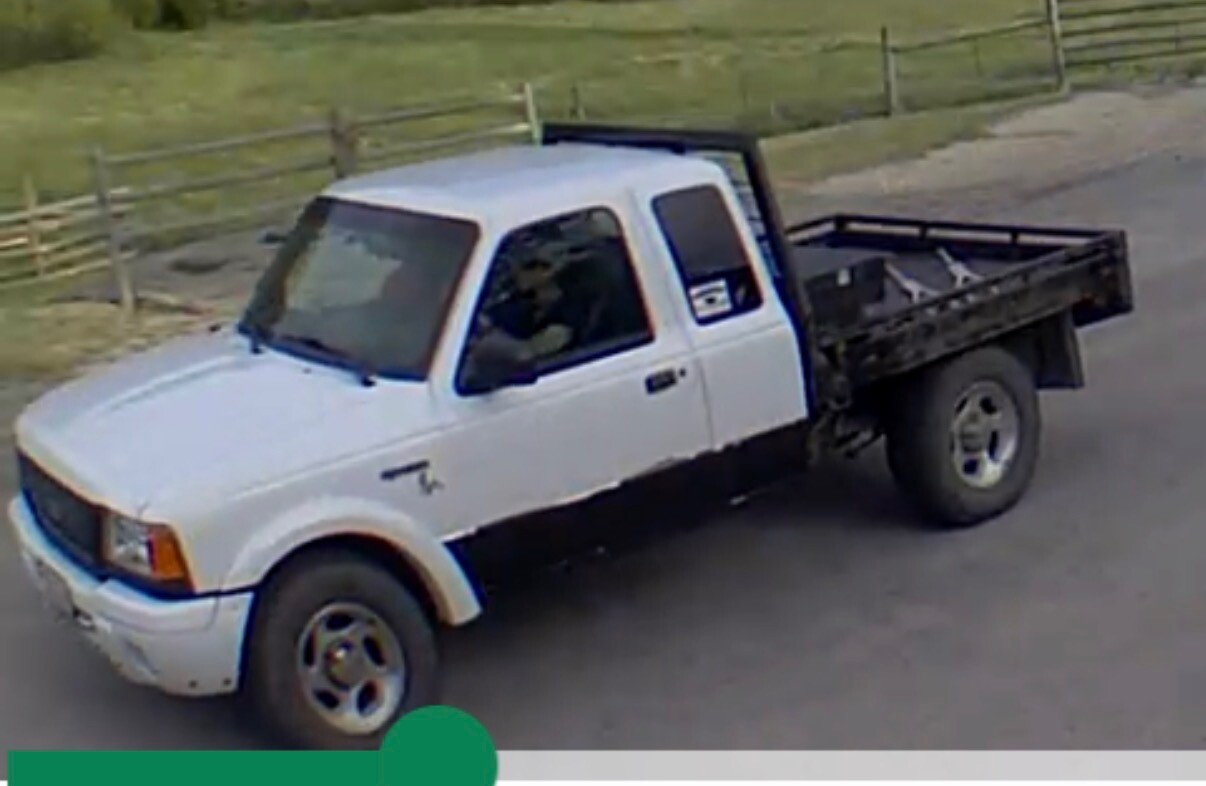
Anyone who spots a white Ford Ranger flatbed pickup is encouraged to call law enforcement at 406-497-1120.
This story was reported on-air by a journalist and has been converted to this platform with the assistance of AI. Our editorial team verifies all reporting on all platforms for fairness and accuracy.
Montana
Social media star Montana Tucker to host Maccabiah Games delegation parade | The Jerusalem Post

Ahead of the 2026 Maccabiah Games, an event often called the “Jewish Olympics” and the largest Jewish sporting competition in the world, which are set to begin next week, social media influencer, dancer, and singer, Montana Tucker expressed her excitement to be hosting the delegation parade at the event and said that the games were taking place at a critical point for the global Jewish community.
“Israel has gone through a lot, Israelis have gone through a lot, Jews have gone through a lot around the world,” Tucker told The Jerusalem Post on Tuesday. “What’s going on is not just happening in Israel; it’s really happening all around the world with our Jewish community. So, an event like the Maccabiah Games is showing the world that we are strong, we are united, and we don’t give up, and we keep fighting.”
According to Maccabiah, the games bring together more than 10,000 athletes from at least 80 countries in Israel every four years to compete in over 45 sports. The Maccabi World Union says the games are the second-largest sporting event in the world after the Olympics.
The 2026 Maccabiah Games, the 22nd of their kind, were initially scheduled for last year but were postponed due to the security situation involving Iran and its regional proxies.
“This was supposed to happen last year, and about a month away, we had to cancel it due to the war,” Tucker recalled. “And so I am so grateful that it is happening this year, because we truly do need this now more than ever.”
She also said she was excited to debut her new song “We’re Not Strangers” at the event.
“It’s all about unity and building bridges and bringing people together. And some of the lyrics say ‘we may pray to different saviors, but we’re not strangers,’” she told the Post. “Our world is so divided right now. I think that we really just need to come together and have more unity and compassion and understanding of one another. And if we really talk to people who look differently than us, act differently than us, have a different religion than us, we’ll realize we’re actually more similar than we think.”
Montana Tucker: Sport ‘truly unites the world’
Sports, she said, was an ideal method to build these bridges, adding she viewed it as something that “truly unites the world.”
The Maccabiah Games this year, though, will be the first since the Hamas-led massacres in southern Israel on October 7, 2023. The attacks sparked a regional eruption with Israel fighting wars against Hamas in Gaza, Hezbollah in Lebanon, and the Islamic regime in Iran.
“We always have to talk about what happened on October 7,” Tucker said. “We should never stop talking about it. And I think it is so important that Maccabiah is utilizing this platform to talk about it. I know they actually have a former hostage, Daniella Gilboa, who’s going to be performing, which is so powerful.”
Tucker also highlighted the value of the games, saying they were a powerful tool to dispel disinformation about the Jewish state.
“What’s shown on the news nowadays is just all the negativity. Most of it is just propaganda and lies about what Israel is, and I think the Maccabiah just debunks every possible propaganda and lie about Israel,” she said. “When people say the word ‘Israel,’ it comes with so many different connotations, and I think we can show them this. This is Israel. This is what being Jewish means.”
A key element in showing the world what Israel and being Jewish mean, she reiterated, meant showcasing Jewish unity at a time when, in the wake of the October 7, the global Jewish community has faced a worldwide rise in antisemitism.
The games themselves are being held under the slogan, “More Than Ever,” according to Maccabiah, to emphasize “the importance of strengthening the bond between [Jewish] communities worldwide and the State of Israel.”
-

 Los Angeles, Ca1 hour ago
Boyle Heights warehouse cleanup begins as crews face 85 million pounds of spoiled food
-

 Detroit, MI1 hour ago
Would Detroit Lions Salary Cap Be Wrecked If Terrion Arnold Gets Cut?
-

 San Francisco, CA2 hours ago
Two more Presidio Heights homes reach $10M range as luxury supply dwindles
-

 Dallas, TX2 hours ago
One Dallas Cowboys Contract That Will Age Poorly in 2026
-

 Miami, FL2 hours ago
Live updates: Today’s South Florida News
-
 Boston, MA2 hours ago
A federal judge in Boston has blocked parts of Trump’s order to limit voting by mail
-
 Denver, CO2 hours ago
Denver Transplant Games sets Guinness World Record for most living donors, recipients in one place at one time
-

 Seattle, WA2 hours ago
17-year-old boy shot in High Point, multiple suspects seen running from crashed car

