Colorado
Grief lingers 5 years after COVID-19 arrived in Colorado, killing thousands


PUEBLO — When paramedics showed up at Bernie Esquibel-Tennant’s door the day after Thanksgiving in 2020, it was the second time in roughly 12 hours that an ambulance had visited her stretch of the neighborhood.
The night before, Esquibel-Tennant had watched as paramedics came for Adolph Gallardo, a man her children called Grandpa who lived across the street. Now they were here for her sister Melissa.
Melissa Esquibel’s oxygen level had dropped dangerously low to 70% overnight, which is why Esquibel-Tennant called 911 and paramedics were at her door even before the sun rose that Friday morning in Pueblo.
But the paramedics wouldn’t come in — not with COVID-19 in the house. So Esquibel-Tennant helped Melissa, dressed only in a nightgown, outside. They were barefoot and the ground was cold.
“We love you,” Esquibel-Tennant, 54, recalled telling Melissa as she helped her onto the waiting gurney.
She never saw her sister again after the paramedics drove away on Nov. 27, 2020. Adolph, their 77-year-old neighbor, never returned home, either.
He and Melissa, 47, are among the nearly 16,000 Coloradans who have died due to COVID-19 since the pandemic began five years ago this month. And their families are among the thousands still grieving, still wondering how the virus made its way into their homes and still struggling with how their loved ones died alone during the early days of the pandemic.
“There just weren’t a lot of procedures in place,” Esquibel-Tennant said. “Then, emotionally, we weren’t ready to deal with it.”
Closure — if such a thing exists — is still out of reach for many pandemic survivors. Their grief is complicated by unknowns and what-ifs. Rituals they historically used to mourn and honor the dead were postponed or scrapped entirely during the height of the pandemic.
And yet the world has seemingly moved on even as so many still grieve and COVID-19 remains, though we now have vaccines and better treatment. There’s no state memorial honoring the thousands who have died in the worst public health crisis of a century. There’s no finality as hundreds still die from the virus each year in Colorado.
“Over 15,000 Coloradans died due to COVID,” Gov. Jared Polis said in a recent interview, noting he lost two friends to the virus. “Some would have perhaps passed away by now anyway. Others would be perfectly healthy other than that COVID felled them. There’s no getting those people back.”
Misinformation and conspiracies spread during the pandemic, leading a swath of the American population to dismiss the severity of the disease that has killed more than 1 million people nationwide. At the same time, the death toll hasn’t fallen equitably as Black and Latino Coloradans died at disproportionately high rates compared to their white peers.
“I hope people know now how bad COVID was,” Adolph’s widow Ernestine “Toni” Gallardo said, adding, “We’ve experienced a real, real pandemic.”
Colorado’s first death
Ski season was well underway in the high country when the virus was first confirmed in Colorado on March 5, 2020.
At the time, COVID-19 already had been discovered in California, Florida and Washington state, although the virus is now believed to have been slinking its way across the United States well before then undetected.
In Colorado, the number of confirmed cases, mostly clustered in mountain towns crowded with tourists, ticked up in the days that followed. Health officials first confirmed a Coloradan had died from COVID-19 on March 13, 2020.

Dr. Leon Kelly, at the time El Paso County’s elected coroner, was standing on a stage with Polis and other state officials for a news conference about that first COVID-19 fatality — a woman in her 80s — when he got a phone call.
Employees from El Paso County’s health department were trying to reach Kelly, who had just also been appointed the county’s deputy medical director.
There was a problem, they told him.
The woman who died had attended a bridge tournament in Colorado Springs two weeks earlier and scores of people — most of them elderly — were potentially exposed to the virus.
Hearing the news was like being in a movie, Kelly said, when you find out the “absolute worst-case scenario has occurred.”
Public health employees spent the weekend tracking down attendees. Meanwhile, Kelly called an aunt in North Carolina who played bridge. They didn’t talk frequently, but Kelly wanted her to explain how the game worked, what happened with the cards and whether players rotated between tables during a tournament.
Kelly quickly realized that as many as 150 people were potentially exposed to the virus at that single event.
“It was clear we were already behind the ball,” Kelly recalled.

At least four attendees of that bridge tournament died from COVID-19.
The virus killed thousands more Coloradans in the months and years that followed, including Adolph Gallardo and Melissa Esquibel.
“We thought we were good”
Melissa, born March 19, 1973, was the youngest of three siblings. She was small in stature and — having been diagnosed with Turner syndrome when she was 9 — looked like she was about 12 years old.
Melissa had other disabilities, such as being hard of hearing, but she was very social and worked for Furr’s Cafeteria for decades, then McDonald’s until the virus sent everyone home.
She was “spunky,” her sister Bernie Esquibel-Tennant said.
The family was unable to visit Melissa in the hospital because they were also sick with COVID-19. Doctors and nurses kept Esquibel-Tennant updated on her sister through phone calls. They told her when Melissa ate scrambled eggs — and when Melissa went into cardiac arrest.
“They were overwhelmed with the amount of care everyone needed,” Esquibel-Tennant recalled.

At that point in November 2020, Colorado was in the middle of one of the state’s deadliest waves of COVID-19. So many people were sick that efforts by state and local public health departments to test and track the virus faltered.
The governor had warned hospitals of the influx of patients they were about to receive just two weeks before paramedics came for Melissa Esquibel and Adolph Gallardo.
Soon hospitals across the state were inundated. Mesa County ran out of intensive-care beds. Weld County only had three ICU beds at one point. Metro Denver hospitals turned away ambulances.
Parkview Medical Center in Pueblo canceled inpatient surgeries and sent patients to Colorado Springs and Denver. Staff also asked the county coroner to take bodies if more people died than could be stored in the hospital’s morgue.
Pueblo had one of the highest COVID-19 death rates in the state by mid-December and the coroner was using a semitrailer to store extra bodies.
Esquibel-Tennant’s family had tried to minimize their exposure to the virus, but she worked in social services and could not always do so remotely.
By then the virus was so rampant throughout the community there was no way to know who brought COVID-19 into the house, much less where they got it from — including whether mixing between the Gallardo and Esquibel-Tennant families spread the virus between them.
“We thought we were good,” Ernestine Gallardo, 78, said. “We weren’t associating with a lot of people.”
She and Adolph met when they were children. He lived in Florence, but would visit his aunt in Pueblo. Adolph served in the U.S. Marine Corps, including two tours in Vietnam, and received the Purple Heart for his service.

He and Esquibel-Tennant’s husband were “two peas in a pod,” Ernestine Gallardo said.
In mid-November, around the same time the Esquibel-Tennant household got sick, Adolph caught what he initially thought was a cold. He was prone to colds and got them each winter, Ernestine Gallardo said.
It was COVID-19. Adolph spent his final Thanksgiving mostly in bed struggling to breathe before paramedics came that evening.
Melissa Esquibel went into cardiac arrest at Parkview Medical Center three days later.
Medical staff tried to resuscitate her, but Melissa had little to no heartbeat. Her bones were fragile because of Turner syndrome and doctors told Esquibel-Tennant that their attempts to save her sister had crushed Melissa’s body.
“I felt the hurt in the doctor,” Esquibel-Tennant said.
She asked the physician to have hospital staff call her when Melissa died. Hours passed and Esquibel-Tennant still hadn’t received a call, so she dialed the hospital herself. A staff member paused before telling her they had forgotten to call.
Melissa had already died.
“She probably just died by herself,” Esquibel Tennant said. “Nobody to comfort her.”
Melissa passed away on Nov. 29, 2020.

Nearly five years later, questions still linger in Esquibel-Tennant’s mind, mainly about the quality of care her sister received and whether Melissa died the way she was told.
“I can’t blame anybody,” she said. “…But because there were so many great unknowns you just had to trust what you were being informed about.”
“We’re stuck” in grief
A pandemic plan drafted by Colorado’s public health department in 2018 found that if there was a major health crisis, “there may be a need for public mourning, psychological support and a slow transition into a new normal.”
But since the pandemic, more people are feeling isolated and overwhelmed as they grieve, said Micki Burns, head of Judi’s House, an organization that helps grieving families.
“We’re stuck (in grief) because the pandemic divided us in such distinct ways,” she said. “Until we are able to heal and reunite and connect we’re probably going to remain stuck.”
A group called Marked by COVID is advocating for a national memorial in Washington, D.C. so that society can pause and remember “this unprecedented loss of life that we have experienced,” said Kristin Urquiza, co-founder and executive director.

But for now, many Coloradans grieve alone.
Ca-Sandra Goodrich, who lives in Aurora, was unable to attend the funeral held for her cousin Necole Dandridge, who died from COVID-19 at age 39 on Nov. 9, 2021.
Instead, Goodrich watched the funeral via a livestream because she herself was sick with the virus.
“I remember feeling left out,” Goodrich, 53, said.
When Goodrich thinks about the pandemic, she remembers all that her family has lost. Her extended family is large and more than a dozen members have passed away in the years since the virus first swept the state.
Only Necole’s death was attributed to COVID-19, but Goodrich can’t help but to wonder whether other relatives who had respiratory symptoms at the time they died might have also had the virus.
“It’s just in the shadows,” Goodrich said. “…It’s almost like COVID is the phantom or the ghost that no one is acknowledging. “
The loss changed Goodrich, who struggles with her own health.
“I’m reluctant to get close to an individual,” she said.
Misinformation swirled around COVID-19 deaths
The Colorado Department of Public Health and Environment had prepared for the possibility of a pandemic years earlier by running simulations with local health departments. But there was a major aspect of COVID-19 that public health officials hadn’t known to prepare for: misinformation and conspiracy theories.
“That was a new dynamic and the level of misinformation — it was challenging to counteract that,” said Jill Hunsaker Ryan, the state’s public health director. “If public health says, ‘We recommend you wear a mask’ — we would have thought that that’s something that would have been accepted universally. But it wasn’t.”

Among the things that became politically divisive during the pandemic was how state and federal health departments counted and publicly reported COVID-19 deaths.
Officials said from the beginning of the crisis that the number of people who died from the virus was likely undercounted because of delays in testing. But critics claimed the death toll was inflated.
The debate came to a head in May 2020 when a state lawmaker alleged the Department of Public Health and Environment falsified the number of people who died from the virus and called for criminal charges to be filed against Hunsaker Ryan.
“I regarded it as a conspiracy theory and still do,” said Ian Dickson, who worked as a communications specialist with the state health department in 2020. “We also weren’t doing anything to get ahead of it.”
The agency denied altering death certificates, but responded by changing how Colorado publicly reported COVID-19 deaths. The decision, Dickson said, “really lent credence to a conspiracy theory.”
“From a communications standpoint it was a mess,” he said.
The department in May 2020 split deaths into two categories: those who died from the virus and those who had COVID-19 when they died, but it was not the leading cause.
“My directive was just get the best data, be transparent,” Polis recalled in an interview.
There was often a narrow gap between the two figures during the height of the pandemic, but the number of people who died from the virus was typically lower than those who died with COVID-19 because it only included fatalities listed on death certificates as being caused directly by the disease.
Yet medical professionals use what they call the “but for” principle when determining a cause of death, which says: if “but for (a certain event),” a person would not have died at this specific time and place. So deaths are ruled COVID-19 fatalities when the virus causes a person to die by triggering a condition that leads to their death, such as heart attacks, strokes or septic shock.
“If in those early weeks of the pandemic, we had relied exclusively on that final death certificate coded data, it would have been weeks, maybe even months until we had counts,” state epidemiologist Dr. Rachel Herlihy said. “That would have misled the public.”
“We were really at a very difficult time trying our best to get information to the public as quickly as we could,” she added.
The spread of misinformation affected Coloradans who lost loved ones to the virus.
There were many times during the height of the pandemic when families didn’t want COVID-19 to be listed on their relatives’ death certificates, said Kelly, the former El Paso County coroner. A person even screamed at Kelly over the phone, he said, telling him that COVID-19 wasn’t real and that he wouldn’t accept the virus as his father’s cause of death.

“These people were being lied to and they were being manipulated in many ways,” Kelly said.
Kelly, in his dual roles during the pandemic, performed autopsies in the morning on people who died from the virus and then spent his afternoons trying to prevent those deaths with El Paso County’s health department.
For almost a year, Kelly collected death certificates and reviewed them for accuracy because there were so many questions about how people died. The notebook with those death certificates sat on his desk for nearly five years until he shredded them earlier this year after he stepped down as coroner.
“I took it so personal. It was my responsibility to keep people safe,” he said. “…I had failed.”
“It just leaves a hole in your heart”
Ernestine Gallardo doesn’t like to think about Thanksgiving anymore, much less cook a traditional feast of turkey, stuffing or mashed potatoes.
Adolph’s pet peeve was lumpy potatoes.
But he’s not here anymore and Thanksgiving has never been the same. The family opted out of the holiday two years ago, choosing to dine at a Chinese restaurant instead.
“It’s too hard for me to think of doing things that he really enjoyed,” Ernestine Gallardo said.
Ernestine Gallardo and her daughter, Angela, were able to be with Adolph when he died on Dec. 10, 2020.
But the patriarch’s other children, Patrick and Pamela Gallardo, weren’t there because they were sick.

“That still haunts me,” Patrick Gallardo, 58, said.
Angela Gallardo, 54, wonders sometimes if it would have been better if she hadn’t gone to the hospital.
“I feel selfish because I was able to be there with my dad and hold his hand and rub his arm,” she said.
The Gallardos lost a second family member to COVID-19 nine months later. Pamela Gallardo’s son, Andrew Valdez, had the virus earlier in the pandemic and died of a heart attack in his sleep on Sept. 26, 2021. He was 31.
“We couldn’t be with them at all and then for them to pass by themselves — it just leaves a hole in your heart that’s never gonna fill back up no matter what you do,” Pamela Gallardo 54, said.
“There’s still no closure”
Esquibel-Tennant went to Parkview Medical Center to pick up her sister’s belongings in December 2020, a couple weeks after Melissa died.
When she opened the bag given to her by staff, Esquibel-Tennant saw only a nightgown — the one her sister had worn when the paramedics came.
“How horrible,” Esquibel thought. “That’s all I have left of my sister.”
Melissa was cremated, a first for their family. Esquibel-Tennant hadn’t wanted her sister’s body to sit in a morgue or freezer truck.
But it meant she never saw Melissa’s body or what she looked like when she died. She still wonders what happened in her sister’s final moments.
On the way home from the hospital, Esquibel-Tennant stopped at a car wash and tossed her sister’s nightgown in a trash bin.
“There’s still no closure,” she said.

Sign up for our weekly newsletter to get health news sent straight to your inbox.



(COLORADO SPRINGS) — Organizers for the Pikes Peak or Bust Parade announced on Friday, June 19, that due to a lack of resources, the parade has been canceled.
Originally scheduled for July 11 in Downtown Colorado Springs, parade organizers said they could not secure the resources needed to produce the event at the level the community deserves.
“We know many of you were looking forward to the parade, and we’re incredibly grateful to everyone who offered their time, support, sponsorship, and enthusiasm,” said organizers.
While the parade will no longer be taking place on July 11, organizers said the Pikes Peak or Bust Rodeo will return on July 14 through July 18, and tickets remain on sale.
Organizers hope to see the Colorado Springs community at the rodeo, and they remain hopeful that the beloved tradition can return in the future.

Denver Post writers have explored Colorado’s many corners and offer ways to find fun, relaxation or something new for summer. Take a look at how you can expand your possibilities this season if you’re keeping travel close to home this year.
In the mountains
Colorado’s 10 most popular hikes, according to AllTrails
Colorado waterfall hike: Copeland Falls best this time of year in early morning
This hiking trail near Red Rocks will help you get in shape for 14er season
Gorgeous Colorado hike reopens this summer with new rules for hiking, camping, human waste
An Estes Park getaway can be about more than just the outdoors
Camping
Gorgeous Colorado hike reopens this summer with new rules for hiking, camping, human waste
Forest service now charging $20 for dispersed camping in Homestake Valley
Within driving distance
These adult summer retreats can help Coloradans escape burnout
Big balloons will rise above Colorado’s heat this summer; watch ’em soar or take a ride
Looking for beach vibes? Here’s where to find them in landlocked Colorado
Movie-theater hotel adds vintage Airstreams, Quonset huts in San Luis Valley
Sleep in a treehouse, hike with llamas, stargaze and more summer whimsy
Pick your own flowers at these farms and garden centers in Colorado
Is city fishing safe? Yes, experts say, but there are updated guidelines to follow.
Big balloons will rise above Colorado’s heat this summer; watch ’em soar or take a ride
Here’s where to fish with kids near Denver
Summer fun
Biodegradable pickleballs, size-inclusive skorts made in Colorado and other sports gear we love
More women are playing padel than ever — and for good reason
Meet the Boulder dogs cast in this summer’s Colorado Shakespeare Festival
Gravel biking events are a hot commodity in Colorado this summer
Want to get off your phone? Learn blacksmithing or floral design at these Colorado classes and makerspaces.
Beyond Colorado
10 tree-house hotels in the U.S. for you to commune with nature in comfort
Subscribe to our weekly newsletter, In The Know, to get entertainment news sent straight to your inbox.

Colorado Buffaloes coach Deion Sanders has an overall record of 16-21 since taking over in Boulder prior to the 2023 season.
Where does Coach Prime rank among Big 12 coaches entering the 2026 college football season?
Deion Sanders No.15 in Big 12 Coach Rankings
On3 ranked all 16 Big 12 head football coaches heading into 2026. Deion Sanders is ranked No.15, only ahead of Kansas State Wildcats coach Collin Klein. This will be Klein’s first year as Wildcats head coach. He is a former Kansas State quarterback was most recently the offensive coordinator for the Texas A&M Aggies.
A top this ranking at No. 1 is BYU Cougars coach Kalani Sitake. Sitake has been at the helm for the Cougars since 2016. He has accumulated an overall record of 84-45. In four of Sitake’s 10 seasons with BYU, he has led them to double digit wins.
Here is the entire ranking:
1. Kalani Sitake, BYU Cougars
2. Kenny Dillingham, Arizona State Wildcats
3. Joey McGuire, Texas Tech Red Raiders
4. Sonny Dykes, TCU Horned Frogs
5. Willie Fritz, Houston Cougars
6. Lance Leipold, Kansas Jayhawks
7. Rich Rodriguez, West Virginia Mountaineers
8. Eric Morris, Oklahoma State Cowboys
9. Brent Brennan, Arizona Wildcats
10. Dave Aranda, Baylor Bears
11. Scott Satterfield, Cincinatti Bearcats
12. Morgan Scalley, Utah Utes
13. Scott Frost, UCF Knights
14. Jimmy Rogers, Iowa State Cyclones
15. Deion Sanders, Colorado Buffaloes
16. Collin Klein, Kansas State Wildcats
Is 15th a fair ranking for Coach Prime?
What stands out right away from this is a first time collegiate head coach is ahead of Sanders, Morgan Scalley. While Sanders’ team struggled in 2025, it would be hard to rank him behind Scalley.
When Sanders was hired, the Buffaloes were coming off a one-win 2022 season. It was a controversial hire, as Sanders’ collegiate coaching experience came at the FCS level with Jackson State. The Coach Prime era in Boulder got off to a great start.
In 2023, Colorado began the season 3-0. It got going with a stunning season opening upset on the road against the defending national runner-up TCU Horned Frogs. The Buffs won their next two games against the Nebraska Cornhuskers and Colorado State Rams to get to 3-0.
They hosted ESPN’s College GameDay for their in-state rivalry game against Colorado State. The country had their eyes on what Sanders had cooking. This undefeated came to a screeching halt with a road loss to Oregon. Colorado ended up losing eight of their final nine games to end with a record of 4-8. While the end was dissapoitning, it was still three more wins than the previous season.
2024 a major turnaround. The Buffs went 9-3 and made the Alamo Bowl. Buffs’ wide receiver/cornerback Travis Hunter won the 2024 Heisman Trophy and quarterback Shedeur Sanders was named 2024 Big 12 Offensive Player of the Year.
2025 was more of what 2023 was. The Buffs went 3-9, missing a bowl game for the second time in three seasons. Will they get back to a bowl in 2026?
Sign up to our free newsletter and follow us on Facebook for the latest news.
 Add us as a preferred source on Google
Follow
-
 Entertainment5 minutes ago
At the Fonda, Jane Remover’s violent yearning heralds a new kind of stardom
-
 Lifestyle8 minutes ago
Beer, with a twist? SoCal dads find solidarity through an unexpected activity
-
 Politics13 minutes ago
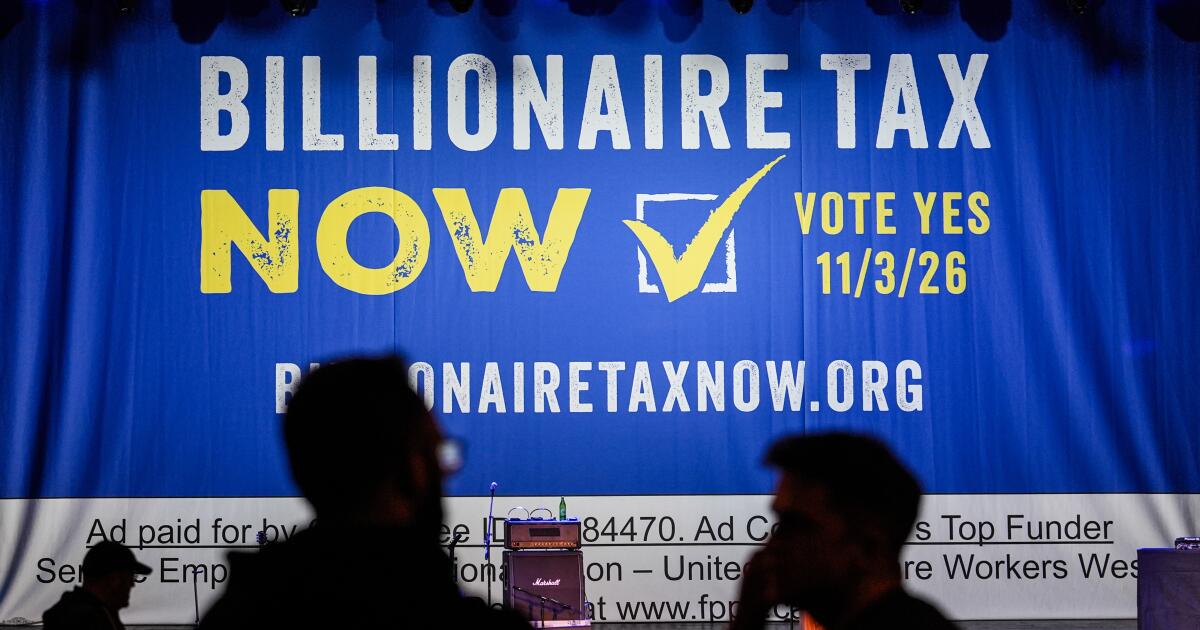
Billionaire tax proposal faces hurdles as it moves closer to November ballot
-
 Science20 minutes ago
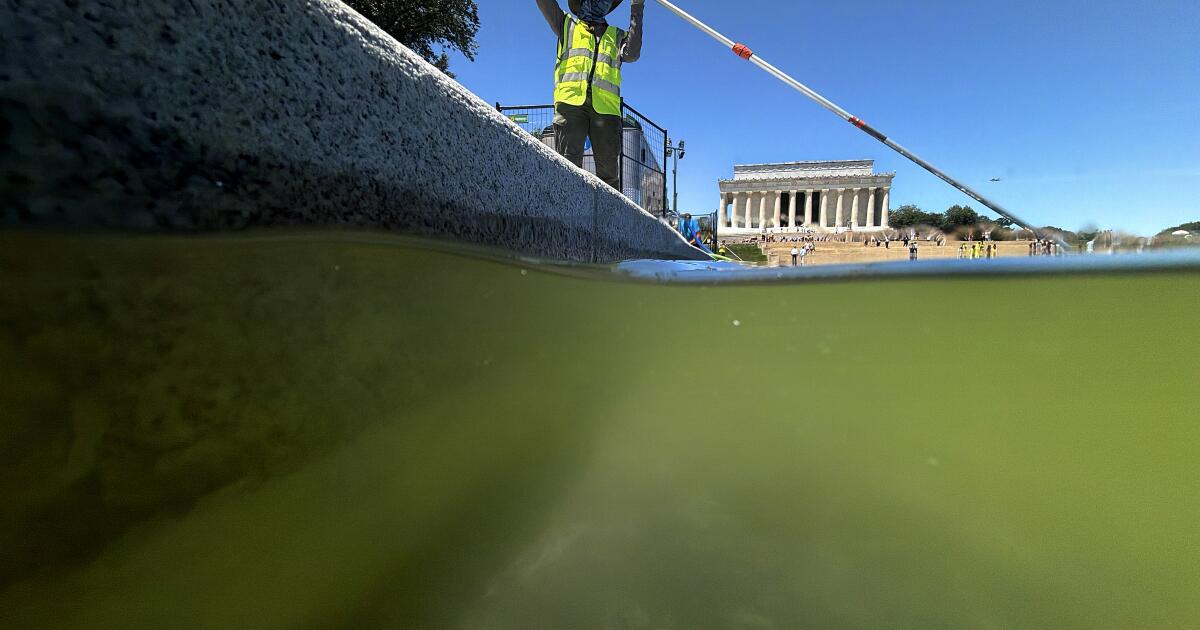
Here’s why the Lincoln Memorial Reflecting Pool went green so fast
-
 Sports23 minutes ago
Shohei Ohtani out of Dodgers’ lineup vs. Orioles for birth of his second child
-

 World35 minutes ago
Lebanese influencer organises World Cup event amid Israel’s attack on Leban
-
 News58 minutes ago
Air Force One, gifted to Trump from Qatar, arrives at Joint Base Andrews
-

 New York2 hours ago
Video: Fans Show Up to the Parade in Their Best Knicks-Themed Attire

