Health
Are full-body scans worth the money? Doctors share what you should know


With celebrities such as Kim Kardashian and Paris Hilton singing the praises of full-body MRI scans, a growing number of people are coughing up the cash for the preventive measure — but is the peace of mind worth the hefty price tag?
Dr. Mikhail Varshavski, more commonly known as “Dr. Mike,” is a podcaster and primary care physician in New Jersey. He recently spoke about full-body scans with Andrew Lacy, CEO of Prenuvo, one of the biggest providers of full-body scans.
“I have to say, I’m certainly intrigued by the technology and I’m in love with the concept of catching diseases earlier so that we can have more success with treatment,” Dr. Mike said during the podcast.
THESE 8 HEALTH SCREENINGS SHOULD BE ON YOUR CALENDAR FOR 2024, ACCORDING TO DOCTORS
“However, I am still not sold that this is what the Prenuvo scan has proven to deliver. In the day and age where we find ourselves, folks want more out of healthcare than we can yet deliver.”
How do full-body scans work?
Full-body scans use different technologies, including magnetic resonance imaging (MRI), computed tomography (CT) or positron emission tomography (PET), according to the Dana-Farber Cancer Institute.
Full-body scans use a variety of technologies, including magnetic resonance imaging (MRI), computed tomography (CT) or positron emission tomography (PET). (iStock)
The goal is to detect early signs of diseases such as cancer, heart disease and other abnormalities.
Dr. Daniel Durand, chief medical officer at Prenuvo, who is based in Maryland, compared the scan to a “virtual physical” in which a radiologist examines the inside of the body in a way that a traditional annual physical cannot.
Prenuvo’s scan uses MRI technology to collect a “vast amount of health data,” he told Fox News Digital.
5 CANCER TYPES WHERE SCREENINGS SAVE THE MOST LIVES
“Two licensed providers analyze this data, explain its relevance directly to you and offer you guidance on the next steps necessary to optimize your health,” he said.
Insurance does not typically cover whole-body scans.
“Coverage usually varies widely by insurance plan, jurisdiction, and the specific clinical guidelines for each genetic condition,” Dr. Mike told Fox News Digital.
A chief medical officer compared the scan to a “virtual physical” in which a radiologist examines the inside of the body in a way that a traditional annual physical cannot do. (Prenuvo)
“My general understanding is that for screening purposes, the test is usually not covered, given the lack of documented clinical benefit versus harms.”
Some coverage may be offered, however, for those with high-risk genetic syndromes or other specific medical conditions, the doctor noted.
“Our hope is that over time, insurers will see the many benefits of our proactive approach to healthcare and will broaden coverage,” Prenuvo’s Durand said.
COMMON CANCER TYPE COULD BE DETECTED WITH NEW BLOOD TEST
“We are actively engaged in several research studies that could provide a foundation for insurance reimbursement.”
Depending on the provider and options selected, prices for full-body scans can be as high as $2,500.
The two biggest providers of full-body scans are Prenuvo (headquartered in California) and Ezra (based in New York City).
Potential benefits
Dr. Brett Osborn, a Florida neurologist and longevity expert, previously spoke with Fox News Digital about the benefits of full-body MRI scans.
“Full-body scanning, mainly through MRI, presents a significant advancement in modern medicine’s diagnostic capabilities,” he said.
“In many cases, the earliest signs of diseases — like cancers, infections or aneurysms — will be seen.”
“MRI technology allows for a comprehensive, noninvasive examination of the body to detect a wide range of conditions, including cancer and vascular malformations like aneurysms, without the need for potentially harmful radiation, as is the case with CT scans,” he also said.
Durand claimed that a Prenuvo scan can detect many diseases based on changes to the inside of the body that can be detected by MRI.
“Usually these changes happen before symptoms occur or before there are signs on a physical exam,” he told Fox News Digital.
“MRI technology allows for a comprehensive, noninvasive examination of the body to detect a wide range of conditions, including cancer and vascular malformations like aneurysms, without the need for potentially harmful X-rays, as is the case with CT scans,” one neurosurgeon said. (iStock)
“So, in many cases, the earliest signs of diseases — like cancers, infections or aneurysms — will be seen,” he went on. “By seeing them earlier, you can be treated earlier, hopefully before the disease has done little to no permanent damage.”
Doctors share concerns
Dr. Mike told Fox News Digital that he has not recommended that any of his patients get an MRI screening scan.
“The high upfront cost and lack of clear medical indication for broad screening (if you’re low-risk and asymptomatic) lead me to agree with the major medical organizations that routine whole-body MRI screening for the general population is not recommended,” he said.
CANCER SCREENINGS: HERE ARE 5 TYPES AND CRITICAL INFORMATION TO KNOW ABOUT EACH
Much of the popularity of these scans has been driven by celebrities, who sometimes receive them for free, Dr. Mike said — which he finds concerning.
“My understanding is that even receiving a free scan is a business relationship that the FTC requires disclosing,” he said. “My understanding is that the companies themselves cannot claim their tests save lives, so they work with celebs who can make personal claims that are not subject to the same investigational scrutiny.”
“With the current level of technology, I am against full-body scans in favor of more directed workups initiated by expert physicians who know what they are looking for,” one doctor told Fox News Digital. (iStock)
“This also sends a conflicting message to the consumer and creates confusion.”
Dr. Marc Siegel, clinical professor of medicine at NYU Langone Health and Fox News’ senior medical analyst, also does not recommend these scans to patients.
“If you do a full-body scan, you will be inclined to pursue every positive finding, whether they are really significant or not.”
“With the current level of technology, I am against full-body scans in favor of more directed workups initiated by expert physicians who know what they are looking for,” he told Fox News Digital.
“If you do a full-body scan, you will be inclined to pursue every positive finding, whether they are really significant or not.”
Siegel also noted the high expense and the fact that full-body scans are “frequently oversensitive.”
One doctor warned of mental risks, including anxiety during the procedure (claustrophobia), stress from incidental findings and an increase in health-related worries. (iStock)
“They may take the place of more directed, accurate studies and screening tests that are more suited to the symptoms, history and genetic tests in specific patients,” Siegel cautioned.
The doctor also noted the current shift toward more personalized healthcare approaches, “augmented by not just genetics, but also artificial intelligence.”
“This will lead to more directed workups, not to more full-body scans.”
The most significant risks that come with these full-body scans, according to Dr. Mike, are the issues that arise with false positives, overdiagnosis and overtreatment.
CLICK HERE TO SIGN UP FOR OUR HEALTH NEWSLETTER
There are also mental risks, including anxiety during the procedure (claustrophobia), stress from incidental findings and an increase in health-related worries, the doctor noted.
“Some proponents say it can ease health-related anxiety; however, I am pretty skeptical of that claim,” he said. “Based on my clinical experience, even getting a clear scan would secure peace of mind only temporarily.”
“We don’t know if we are saving more people by catching disease early or harming more people with overdiagnosis, false positives and overtreatment.”
Research published in 2020 found that imaging abnormalities are expected in about 95% of screened subjects, according to the doctor.
“This means the majority of those scanned will have some sort of finding presented to them,” he said. “I can’t imagine how helpful that would be to someone already prone to health worries.”
During Dr. Mike’s podcast interview with Lacy, the Prenuvo CEO said that long-term data on these screening scans is not yet available.
“So, currently, we don’t know if we are saving more people by catching disease early or harming more people with overdiagnosis, false positives and overtreatment,” Dr. Mike said.
“Barring emergencies, if I don’t have clear data about the harms and benefits of an intervention, especially one that is meant to be used on healthy people, I cannot widely recommend it.”
“Before having a CT screening procedure, carefully investigate and consider the potential risks and benefits and discuss them with your physician,” the FDA advised. (iStock)
Prenuvo did cite a recent study of over 1,000 patients who were followed over a one-year period.
“In this sample, we found pathologically-proven cancer in 2.2% of Prenuvo patients,” Durand told Fox News Digital. “Importantly, most of these cancers were early stage, and the majority were cancer types for which there is no widely accepted screening exam.”
Guidelines of health agencies
The most recent guidance from the FDA echoes the doctors’ concerns.
“At this time, the FDA knows of no scientific evidence demonstrating that whole-body scanning of individuals without symptoms provides more benefit than harm to people being screened,” the agency stated on its website.
For more Health articles, visit www.foxnews.com/health
The FDA also warned about the “relatively high radiation exposure” from CT scans. While this exposure risk is “greatly outweighed” by the benefits of diagnostic and therapeutic scans, the agency said that for whole-body screening of asymptomatic people, “the benefits are questionable.”
“Before having a CT screening procedure, carefully investigate and consider the potential risks and benefits and discuss them with your physician,” the FDA advised.
The American Academy of Family Physicians (AAFP) also recommends against full-body scans for early tumor detection in asymptomatic patients.


NEWYou can now listen to Fox News articles!
Journalist Katie Couric is sharing a scary medical episode that she experienced on June 27.
In a post on Substack titled “The Day I’ll Never Remember,” she detailed a sudden episode that left her unable to recall the current month, year and president.
“I thought it was 2024. And I believed Joe Biden was president,” she wrote.
ONE WALKING HABIT COULD SIGNAL A HEALTHIER BRAIN AFTER 80, SCIENTISTS SAY
The event occurred while Couric was attending the Aspen Ideas Festival in Colorado, during which she participated in two public panels — one on AI and one on journalism — both of which she cannot remember at all.
“I have no idea what we talked about, or of what occurred when the panels ended,” she said.
Journalist Katie Couric is sharing a scary medical episode that she experienced on June 27. (Getty Images)
John Molner — Couric’s husband, who was in attendance at the festival and the two panels — also shared his account.
After the event, someone told Molner that Katie wasn’t feeling well. When he reached her, an EMT and a doctor were tending to her. “I could tell something was off,” he wrote. “It could have been altitude sickness, but Katie was definitely not all there.”
WOMAN WITH ADVANCED ALZHEIMER’S REGAINED SPEECH AND MEMORIES AFTER TAKING MAGIC MUSHROOMS
At the hospital, when Couric struggled to recall the year, the president and her grandchildren’s names, doctors began checking for a stroke.
An MRI revealed no signs of stroke, which was a relief, but “Katie’s ‘fog’ became a lot more apparent,” Molner wrote.
John Molner, Couric’s husband, who was in attendance at the festival and the two panels, also shared his account. (Getty Images)
“She repeatedly asked me the same questions: ‘What was I doing before we got to the hospital?’ ‘Why am I at the hospital?’”
Couric was ultimately diagnosed with transient global amnesia, a sudden, temporary episode of memory loss that prevents a person from forming new memories and may also erase some recent memories, according to Mayo Clinic.
“The cause seems to be as mysterious as the brain itself.”
It is not caused by a stroke, seizure or head injury, and it usually resolves completely within 24 hours.
“[It’s] just a very weird neural episode that’s pretty uncommon and, at least in most cases, is a ‘one and done’ experience,” Molner said.
TEST YOURSELF WITH OUR LATEST LIFESTYLE QUIZ
Couric said she finally began feeling “like herself” again around 9 p.m. and went to sleep at 2 a.m.
As TGA leaves a “permanent gap in memory” for the duration of the episode and for hours beforehand, Couric said that from around noon on that day until at least 7 p.m. will remain a “big, black hole.”
As TGA leaves a “permanent gap in memory” for the duration of the episode and for hours beforehand, Couric said that from around noon on that day until at least 7 p.m. will remain a “big, black hole.” (Getty Images)
Data shows that approximately three to eight people per 100,000 will have an episode of transient global amnesia, with people 50 years of age and older at higher risk.
The specific cause of TGA is not known, but some experts believe it stems from a “temporary dysfunction in the brain’s hippocampus — the area responsible for creating new memories,” Couric shared.
CLICK HERE TO SIGN UP FOR OUR HEALTH NEWSLETTER
“Doctors believe this is driven by brief interruptions in blood or oxygen flow, or microscopic spasm in the blood vessels.”
Episodes could potentially be triggered by intense physical exertion, emotional distress, extreme temperature changes or migraines, experts say.
CLICK HERE FOR MORE HEALTH STORIES
Approximately 15% of patients will have a recurrence 10 years later.
“Why did this happen to me? Was the altitude an issue? Was I dehydrated? Tired? Stressed? The literature doesn’t seem to indicate that these are contributing factors, but the cause seems to be as mysterious as the brain itself,” Couric wrote.
Anyone who experiences sudden memory loss, confusion, difficulty speaking, weakness, numbness, vision changes, severe headache or other stroke-like symptoms should seek immediate medical attention or call 911, doctors advise. (iStock)
“All I know is that those hours will be forever lost. Someone described it as my brain failing to hit the ‘record button.’”
CLICK HERE TO DOWNLOAD THE FOX NEWS APP
“While this was a freaky occurrence, it could have been much more serious. So ultimately, I’m relieved — even though several hours of a Saturday in June will always be missing for me.”
Anyone who experiences sudden memory loss, confusion, difficulty speaking, weakness, numbness, vision changes, severe headache or other stroke-like symptoms should seek immediate medical attention or call 911, doctors advise.

NEWYou can now listen to Fox News articles!
Older adults identified as “super movers” are about half as likely to develop cognitive impairment than their peers.
That’s according to a recent study led by Stony Brook Medicine in New York, which evaluated the cognitive function of 4,000 adults 80 and over who participated in multiple aging and longevity studies over several years.
Among this group, 6% to 10% were classified as super movers, which means they walk at a much faster pace than others of the same age and gender — at speeds comparable to people three decades younger.
COMMON VITAMIN MAY INFLUENCE BRAIN AGING IN WAYS SCIENTISTS DIDN’T EXPECT
The super movers were found to have about half the risk of cognitive decline compared to seniors with typical gait speed.
The findings were published in the journal Neurology on June 16.
Older adults identified as “super movers” are about half as likely to develop cognitive impairment than their peers. (iStock)
“The study reinforces that mobility and brain health are closely connected,” lead study author Dr. Joe Verghese, MD, neurologist at Stony Brook Medicine, told Fox News Digital. “This suggests that preserving mobility may be an important marker of healthy brain aging and resilience.”
‘LONGEVITY GENE’ MAY PROTECT THE BRAIN FROM ALZHEIMER’S BY BOOSTING DNA REPAIR, STUDY FINDS
The most intriguing finding, according to Verghese, was that super movers maintained cognitive function despite having similar dementia-related brain changes as their peers.
In postmortem brain analysis, there was no difference in dementia-related pathologies between the super movers and the slower walkers, the study stated.
TEST YOURSELF WITH OUR LATEST LIFESTYLE QUIZ
“This suggests they may possess resilience mechanisms that help preserve brain function even in the presence of age-related changes,” he said. “Understanding these resilience factors could lead to new strategies for promoting healthy brain aging.”
As the study was observational, there were some limitations, and it does not prove that walking faster prevents dementia, the researchers noted.
Super movers were found to have about half the risk of cognitive decline compared to seniors with typical gait speed. (iStock)
“Other factors, such as cardiovascular health, physical fitness or genetics, may also contribute to both faster walking and better cognitive outcomes,” Verghese said.
CLICK HERE TO SIGN UP FOR OUR HEALTH NEWSLETTER
This study adds to growing evidence that what’s good for the heart and muscles also benefits the brain, he noted, adding that “staying physically active remains one of the most effective, evidence-based ways to support healthy aging.”
“Walking speed is best viewed as a marker of overall health, not a treatment.”
“The broader message is that physical activity is important at any age,” Verghese said. “Walking is an easy step-up point because you don’t need any special equipment. You can do it inside or outdoors, and you can do it on a regular basis. You can walk with a dog, you can walk with a friend.”
Any activity is beneficial if it’s done regularly and with the right intensity, he added.
CLICK HERE FOR MORE HEALTH STORIES
Rather than just trying to walk faster, the neurologist recommends that seniors focus on maintaining mobility through regular physical activity, strength training, balance exercises and good cardiovascular health.
“Walking speed is best viewed as a marker of overall health, not a treatment,” Verghese noted.
Major public health guidelines from the CDC and U.S. Physical Activity Guidelines recommend at least 150 minutes of moderate-intensity aerobic activity each week, such as brisk walking.
Major public health guidelines from the CDC and U.S. Physical Activity Guidelines recommend at least 150 minutes of moderate-intensity aerobic activity each week, such as brisk walking. (iStock)
This can be achieved by walking 30 minutes a day, five days a week, or about 20 to 25 minutes most days. Another option is to engage in shorter sessions that add up over the day.
CLICK HERE TO DOWNLOAD THE FOX NEWS APP
“You have to do it within your health limitations and medical conditions,” Verghese advised. “So if there are any medical concerns, I would get your physician to clear you before starting exercise.” The good thing about walking, he added, is that you can start at a slow pace and then gradually build up to a brisker pace.
“And then adding on strength and balance training, whatever age you are, I think is also important.”

Use left and right arrow keys to navigate between menu items.
Use escape to exit the menu.
Sign Up
Create a free account to access exclusive content, play games, solve puzzles, test your pop-culture knowledge and receive special offers.
Already have an account? Login
-

 Washington, D.C52 seconds ago
Police search for suspect caught on camera slashing tires in Georgetown
-

 Cleveland, OH8 minutes ago
Ohio ICAC Task Force’s “Operation Guardians’ Watch” Results in 25 Individuals Arrested and Charged for Attempting to Meet with an Underage Child to Engage in Sexual Activity
-

 Austin, TX11 minutes ago
Texas’ Goosby hosts camp to benefit heart research
-

 Alabama16 minutes ago
Alabama teen charged with stabbing mom to death issued vile threat to dad — as new pic shows bloodbath left behind
-

 Alaska23 minutes ago
Outmigration, inflation, choice schools: Alaska school closures likely to continue without changes
-
 Arizona26 minutes ago
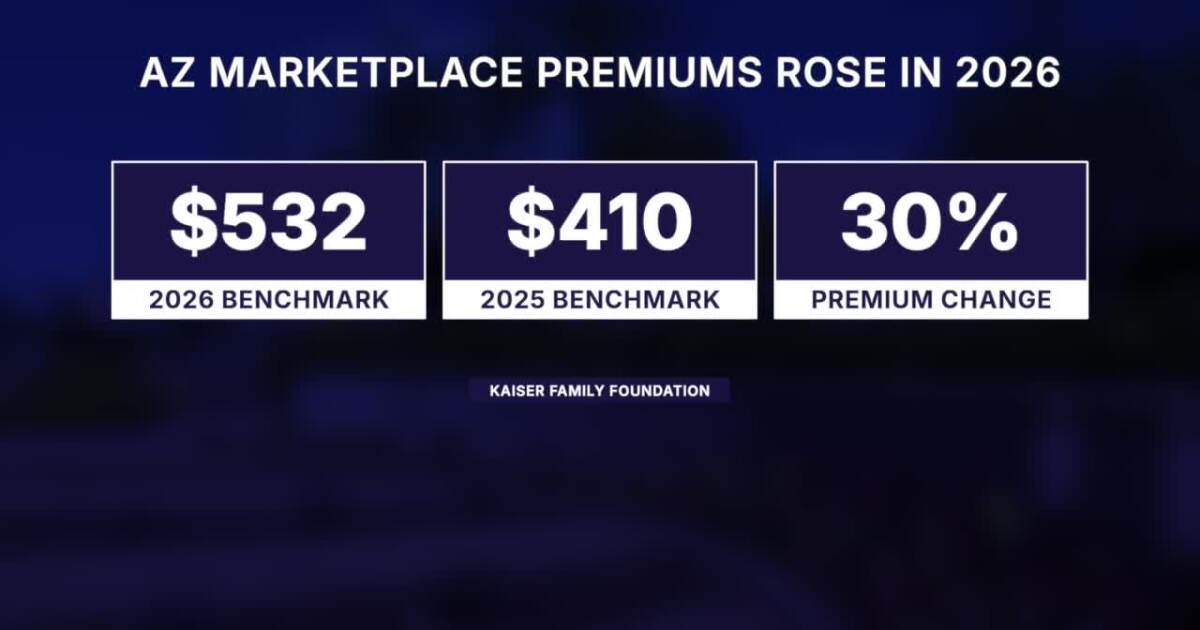
WATCH: Arizona’s health insurance marketplace is seeing dropping enrollment
-

 Arkansas31 minutes ago
ARKANSAS SIGHTSEEING: Randolph County can claim many firsts in Arkansas | Northwest Arkansas Democrat-Gazette
-

 California38 minutes ago
Toddler sustains brain injury in fall after California childcare worker threw him into the air, lawsuit says

