Boston, MA
In last-minute maneuver, Boston’s White Stadium opponents seek new ‘legal theory’ to block city’s soccer project


With half their case already dismissed, a group of plaintiffs vying to stop the City of Boston’s public-private plan to rehab White Stadium for a pro soccer team made a last-minute motion near the end of trial to try to enhance their legal claims.
The late motion aims to provide a layer of insurance to the plaintiffs’ remaining major claim, by way of a legal theory purportedly backed by state law that gives 10 taxpayers the ability, through the court, to block the type of project the city and Boston Unity Soccer Partners are pursuing with their plan to rebuild the stadium on public parkland.
While 20 neighbors of Franklin Park’s White Stadium joined the Emerald Necklace Conservancy in filing last year’s lawsuit, not all of them were homeowners who pay property taxes. The motion adds to their legal challenge, that the proposed for-profit stadium would illegally privatize protected public land, by ensuring that the plaintiffs include 10 “taxable inhabitants of the City of Boston.”
“Under this statute, this court ‘shall have jurisdiction in equity, upon petition of not less than ten taxable inhabitants of the city or town in which such common or park is located, to restrain the erection of a building on a common or park in violation of this section,’” the motion filed Wednesday by Attorneys Alan Lipkind and Nicholas Allen states.
The motion asserts that the city is violating state statute by erecting a more than 600,000 square-foot building on designated public parkland without legislative approval, and by raising funds for the roughly $200 million project.
That legal argument forms the basis of the plaintiffs’ remaining case, which is that the public-private plan violates Article 97 of the state constitution, which voters approved in 1972 and requires two-thirds approval from the state Legislature for other uses for land and easements taken or acquired for conservation purposes. The city and BUSP deny the privatization claim.
The plaintiffs’ motion “to conform their pleadings to the evidence presented at trial,” drew backlash from attorneys for the City of Boston, who argued that the last-minute legal maneuver should not be allowed by Suffolk Superior Court Judge Matthew Nestor.
An attorney for the city, when the motion was introduced at the trial Wednesday, described it as “extremely prejudicial to us,” given that the plaintiffs were seeking to “add claims in the middle of a trial” that the city’s legal team had not had a chance to review nor prepare evidence for.
Lipkind responded by saying there “no new claims” introduced by the motion.
“It’s just another tool to give the court a legal theory to rely on,” Lipkind said.
A city attorney also sought to convince Nestor to disallow the motion by arguing that it was “futile,” given that the city is only paying for its half of the project, there’s “nothing illegal” about the city spending city funds to build a school building and sports stadium, and Boston Public Schools will retain ownership of White Stadium after it’s rebuilt.
The city’s legal team also argued that the proposed use fits under the “works of beauty and public utility” for Boston residents category that the municipality was authorized to use Franklin Park for, when it was purchased by a public charitable trust in 1947 for the purpose of establishing a stadium there.
The plaintiffs’ half of the case arguing that the trust, the George Robert White Fund, does not allow for “joint undertakings” such as what the city and Boston Unity is proposing, was thrown out by Nestor on the eve of trial Monday.
In this instance, Nestor, who ruled in favor of the city on all pre-trial motions, opted to allow the plaintiffs’ last-minute motion on Wednesday. He had also rejected the city and BUSP’s motion to dismiss the plaintiffs’ claims a day earlier, allowing the trial to continue.
Nestor said that while it’s “always good to bring claims before” a trial, the law is clear that there’s nothing barring a new claim in a civil case … “even though it’s late, really late.”
“But it’s not too uncommon,” Nestor said. “I will allow the motion.”
The matter came up again at the end of the day’s trial session, when Gary Ronan, an attorney for the city, told Nestor that the city’s legal team needed more time “to address the amended complaint.”
Nestor, who had said earlier that he would allow the defendants the ability to address the amended claim by introducing new evidence or a new witness, said that he wouldn’t allow much more time, given that he was looking to wrap up the trial with closing statements on Thursday.
“You know what the theory is so nothing from here on out should be a surprise,” Nestor said. “If there’s anything in the written amended complaint that creates something different, I’ll certainly reconsider it.”
The second day of trial revolved around the city’s witnesses, two city officials who were involved in what they described as an extensive review and design process for the White Stadium rehab and a BPS athletics official who spoke of how he felt the plan would bring much-needed improvements to the run-down 76-year-old facility.
While Nestor ruled against allowing the plaintiffs’ pre-trial motion to bring forward public drinking concerns with the plan, he opted on Wednesday to allow their attorneys to raise the issue of state statute not allowing alcohol on school property.
Nestor, after a city attorney objected, said the city’s legal team opened that door when questioning a witness about permitted events at the stadium, which BPS owns and would share use of with the National Women’s Soccer League expansion team.
The city’s contention that its prior classification of Franklin Park as being protected by Article 97 — a key point of contention in the plaintiffs’ case — was due to a mapping mistake by a retired Parks Department employee was raised again during testimony by Interim Parks Commissioner Liza Meyer.
The issue, regarding classification in city open space plans that go back “decades,” was first raised Tuesday in opening statements by the plaintiffs’ and city’s attorneys.
Day 3 of the high-stakes trial, which will determine the fate of the controversial plan championed by Mayor Michelle Wu, will convene at 9 a.m. Thursday. Wu’s opponent in the mayoral race, Josh Kraft, has called for a pause on the project until the litigation is resolved.
Originally Published:



Boston, MA
Sonny Gray shines again, and the Red Sox make it two straight wins at the Angels to start grinding road trip – The Boston Globe

In Boston, even after a successful homestand, the Sox are 17-27 — thus the overall 39-48 record record that has them stuck in the bottom third of the league.
What’s up with that?
“That’s a really good question, because it doesn’t feel a whole lot different to me,” Connor Wong said. “I feel like we’re the same group of guys trying to do the same thing.”
Interim manager Chad Tracy said: “I just think we’re playing well on the road. Give us credit, too. We played well at home last, so hopefully it’s just a ‘we’re playing well’ thing. But we have done that the majority of the year.”
This one featured a little of everything: Home runs from Willson Contreras and Romy Gonzalez, a strong start from Sonny Gray, and three double plays turned by the infield.
The Angels (36-54) totaled four hits, and just one after the third inning.
The Red Sox have won seven of their past nine games overall.
“That was a fight,” said Gray, whose 2.61 ERA is second in the American League. “That was just one that you grind through and you try to figure out a way to get better as it goes on. It wasn’t easy, but I’m happy to win.”
That was an unexpected take from Gray, given that he held the Angels to one run and four hits in six innings. The righthander struck out seven and walked two.
Unlike in his previous outing, when he took a no-hit bid into the eighth inning against the Yankees, Gray eliminated the drama early. Josh Lowe homered — an estimated 437 feet to center field — in the second.
Gray’s most significant wobbling came immediately thereafter, when Jo Adell walked and Wade Meckler singled. Following a mound visit from pitching coach Andrew Bailey, Gray recovered by striking out Donovan Walton and Tyler Heineman, both flailing at sweepers well below the strike zone.
Across the rest of his night, Gray faced just one more than the minimum number of batters, using a pair of double-play grounders to help him stay efficient and effective.
“Definitely wasn’t at my best,” he said, referencing that he had trouble recovering “physically, mentally.” “Finally able to settle down there after the second.”
Before the game, Gray found out he was not selected for the All-Star Game, which he admitted was disappointing “for sure.”
“Used a lot of stuff for fuel tonight,” he said without getting specific. “Maybe that was a little part of something. I was a little bummed.”
Tracy pulled Gray after just 70 pitches because of the game situation.
“We had a sizable lead, full bullpen, some guys that haven’t thrown,” Tracy explained. “It felt like we had a pretty good handle on it. And after pushing him hard with the potential no-hitter last time, just felt like it was good to give him a little extra breather.”
The Red Sox struck early against left-handed starter Sam Aldegheri, who walked two of his first three batters — after getting ahead in the count, 1-2, on both. Contreras blasted a no-doubt, three-run home run to left field to boost the Sox to a fast, sizable lead after just one out.
That was the only hit Aldegheri allowed across four innings and 88 pitches, but he had twice as many walks (four) as strikeouts (two) and his ERA jumped to 5.08.
As soon as Aldegheri exited, the Sox blew it open against rookie reliever Samy Natera Jr., who had been quite good across his first month in the majors (0.84 ERA, 15 strikeouts in 10⅔ innings).
Anthony Seigler slapped a double inside the first-base line, and Ceddanne Rafaela drew a walk. Wilyer Abreu smoked a double off the right-field wall, scoring both. Rafaela hesitated coming around third base, but — after the Angels made a delayed throw to try to get Abreu at second — went for it.
With two outs, Gonzalez hammered a slider over the middle of the plate to left field. It eked over the short wall for a two-run homer, his first long ball of the year (in his fifth game).
“We … got three big swings from the big boys,” Tracy said. “Between Willson, Romy, and Abreu — all those are multiple-run extra-base hits, and those are huge. But it starts with the at-bats before and putting people on and taking our base when it’s given to us.”
Tim Healey can be reached at timothy.healey@globe.com. Follow him @timbhealey.
Boston, MA
Celtics’ Jaylen Brown trade leaves Boston fans, community feeling bankrupt: ‘A huge void’

Jaylen Brown came to Boston in 2016 as a raw lottery pick out of California; he leaves a decade later, following a stunning trade to Philadelphia, as an NBA champion and an essential piece of the city’s social fabric.
“What this trade does is show young fans what sports heartbreak is,” Celtics superfan Chris Soldani told the Herald. “There is now a huge void, and a lot of people don’t know how to process this situation.”
Look no further than Randolph for proof. Immediately after learning about the trade, 6-year-old Giovanni “Gio” Jean cried uncontrollably while wearing a No. 7 Celtics jersey autographed by Brown.
His mother, Gigi Durand, captured the moment on video as Gio sobbed, “You are my favorite player in the whole NBA.” Holding up a handmade sign pleading for his idol to “come back one day,” the youngster asked his mother to mail it.
The footage went viral, racking up over 10 million views and drawing a direct response from Brown: “It’s ok lil bro,” he posted, adding a heart emoji. “We will always be friends.”
That instinct to connect directly with the fan base is exactly what drew superfans like Soldani to Brown.
In early May, Brown invited Soldani — known as “Caveman on Causeway” — and several others onto a Twitch livestream he hosted just after the 76ers eliminated Boston. The stream stirred controversy as the longtime Celtic described last year as the favorite of his career despite playing most of it without Jayson Tatum.
Soldani called the bond “one of the most unlikely connections.”
Under the blockbuster deal, Boston sends the 29-year-old 2024 Finals MVP to their bitter Atlantic Division rival for 36-year-old veteran Paul George and four draft picks. Fans say it will take time to overcome losing a superstar who doubled as one of Massachusetts’ most impactful civic anchors.
“With all the impact that Jaylen has on the city, and the youth, and putting money into the city,” Soldani said, “it truly bankrupts the city as a community.”
This spring, Boston Magazine ranked Brown the eighth most influential Bostonian, detailing his work hosting fundraising bowling events and education fairs in Roxbury.
That legacy echoes across local sports talk radio as fans process the gamble taken by front-office architect Brad Stevens — a decision complicated by reports that Brown feels his decade of service ended without the mutual respect he earned.
Gov. Maura Healey noted on social media that it’s “hard to imagine” the Celtics without Brown. She added, “You’ll always have a home in Boston.”
In 2019, Brown founded the 7uice Foundation, a nonprofit providing healthcare, education, and digital literacy resources to underserved youth through its STEM-focused Bridge Program camp.
The work recently drew criticism from the Massachusetts Fiscal Alliance, a state watchdog, after lawmakers approved a $700,000 state earmark for the charity.
“Jaylen Brown is expected to earn roughly $60 million this year,” the Alliance posted. “If he wants to support charitable work through his foundation, that’s commendable. But why are Massachusetts taxpayers being asked to subsidize the private foundation of a multi-millionaire?”
In 2024, Brown also launched the Boston XChange with teammate Jrue Holiday, an incubator aiming to generate $5 billion in wealth for communities of color by providing $100,000 in funding to 10 local businesses annually.
Superfan KJ Green, creator of the “Green Runs Deep” brand, cut straight to the raw reality: “I want to (expletive) die right now.”
Green, who also appeared on the May livestream, praised Brown for making fans feel seen and knowing them by name. “This guy cared about using his platform to build other people up,” Green said. “He helped so many businesses in Boston get to the next level.”
For special education teacher Kaiya Santos, who partnered with Brown in 2023 to redesign a basketball court at Fenelon Street Playground in Dorchester, the loss is personal. “It was clear that the project was not just about beautifying a court,” Santos told the Herald. “It was about the role the space would play in the community. Boston will miss him.”
Mayor Michelle Wu thanked Brown for “shifting the energy” and always “showing up” for the city, even as he became a “Celtics great.”
“We won’t forget the looks on young players’ faces as you pulled up unannounced to tournaments in the park,” Wu posted, “or the hope and determination of entrepreneurs and students reaching for their dreams through the opportunities you made possible. Because of your example, kids in Boston know that faith, consistency, hard work pays off.”
For now, the city seems unwilling to let go: Brown’s larger-than-life posters still hang untouched inside the TD Garden ProShop and throughout the busy North Station concourses.
Boston, MA
Where to watch Boston Red Sox vs Los Angeles Angels: TV channel, start time, streaming for July 4


What to know about MLB’s ABS robot umpire strike zone system
MLB launches ABS challenge system as players test robot umpire calls in a groundbreaking season.
The 2026 MLB season has surpassed the quarter mark, and after each team’s first 40 games, there’s plenty of reasons to tune in all summer long.
Chicago White Sox slugger Munetaka Murakami has already proven doubters wrong by launching 17 home runs, Pittsburgh’s Paul Skenes consistently looks like the best version of himself on the mound and Milwaukee ace Jacob Misiorowski is throwing harder than any starter in the majors.
The MLB action continues on Saturday as the Boston Red Sox visit the Los Angeles Angels.
Here’s everything you need to know to tune in for the first pitch.
See USA TODAY’s sortable MLB schedule to filter by team or division.
What time is Boston Red Sox vs Los Angeles Angels?
First pitch between the Los Angeles Angels and Boston Red Sox is scheduled for 9:38 p.m. (ET) on Saturday, July 4.
How to watch Boston Red Sox vs Los Angeles Angels on Saturday
All times Eastern and accurate as of Saturday, July 4, 2026, at 6:35 a.m.
- Matchup: BOS at LAA
- Date: Saturday, July 4
- Time: 9:38 p.m. (ET)
- Venue: Angel Stadium of Anaheim
- Location: Anaheim, California
- TV: NESN and Angels.Broadcast Television
- Streaming: MLB.TV on Fubo
Watch MLB all season long with Fubo
MLB regional blackout restrictions apply
MLB scores, results
MLB scores for July 4 games are available on usatoday.com . Here’s how to access today’s results:
See scores, results for all of today’s games.
-

 Technology4 minutes ago
China’s robot-run hotel opens to public in 2027
-
 Business11 minutes ago
China-backed AI tool behind fake Brad Pitt fight making Hollywood inroads
-
 Entertainment14 minutes ago
Don Was produced the Rolling Stones, Bob Dylan and Ozzy. At 73, he found his voice in Detroit — and the Dead
-
 Politics26 minutes ago
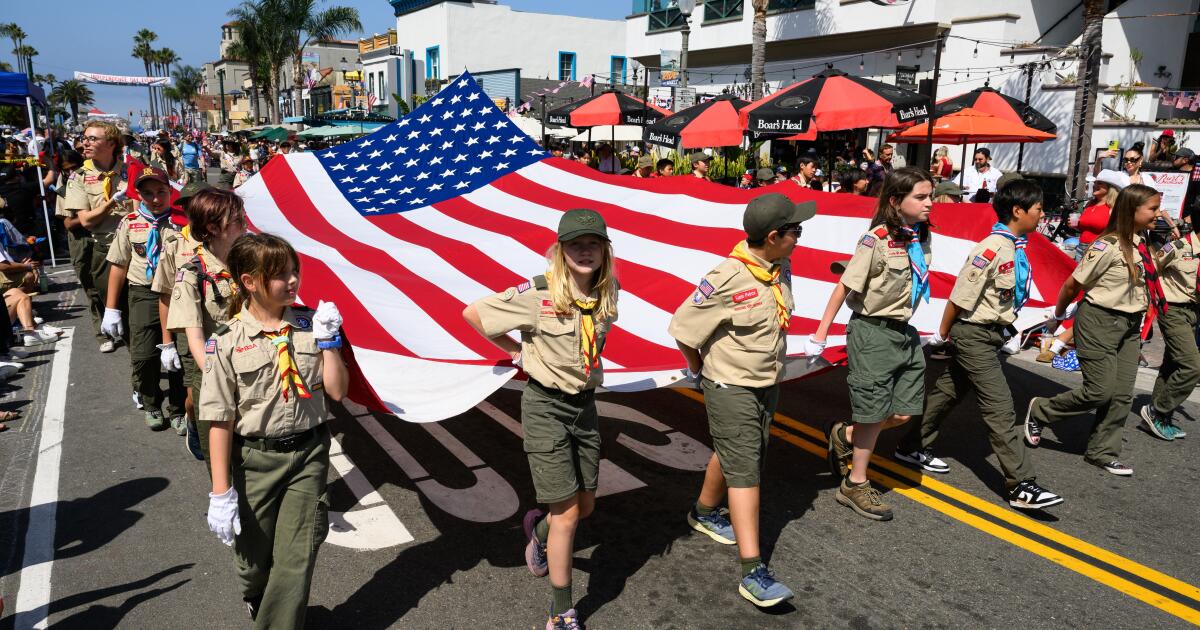
Commentary: Happy Birthday, America! You’ve weathered another rough year
-
 Sports34 minutes ago
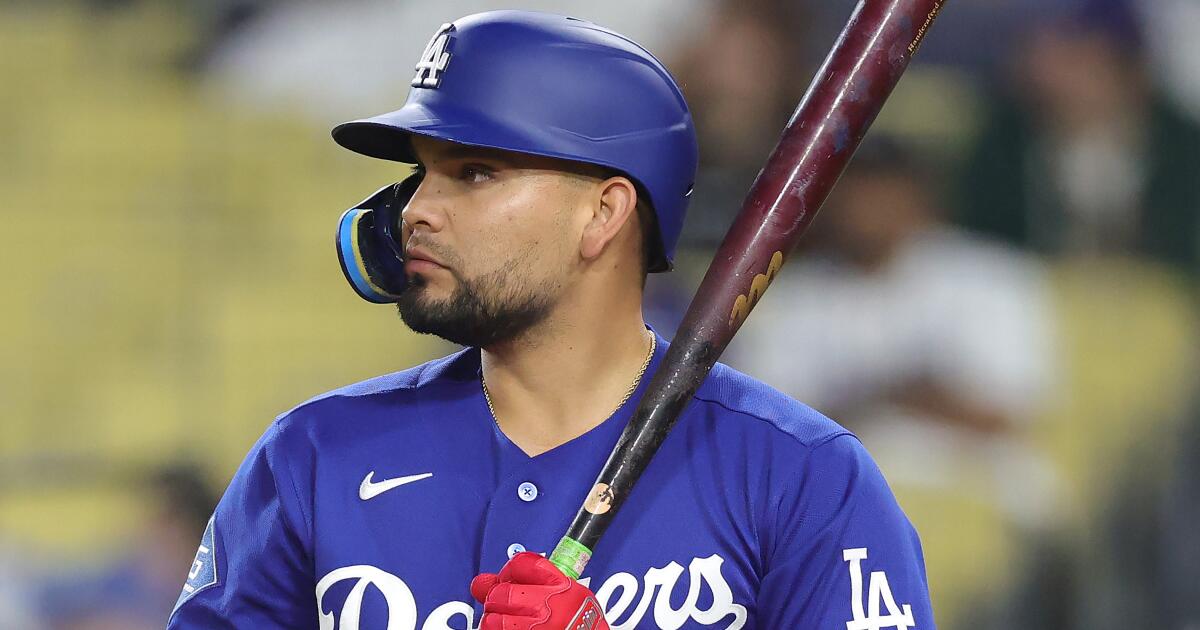
Dodgers’ Eliezer Alfonzo praying his sister and stepmother will be found in Venezuela
-

 World44 minutes ago
Reform UK’s Farage failed to disclose funds from convicted criminal: Report
-
 News1 hour ago
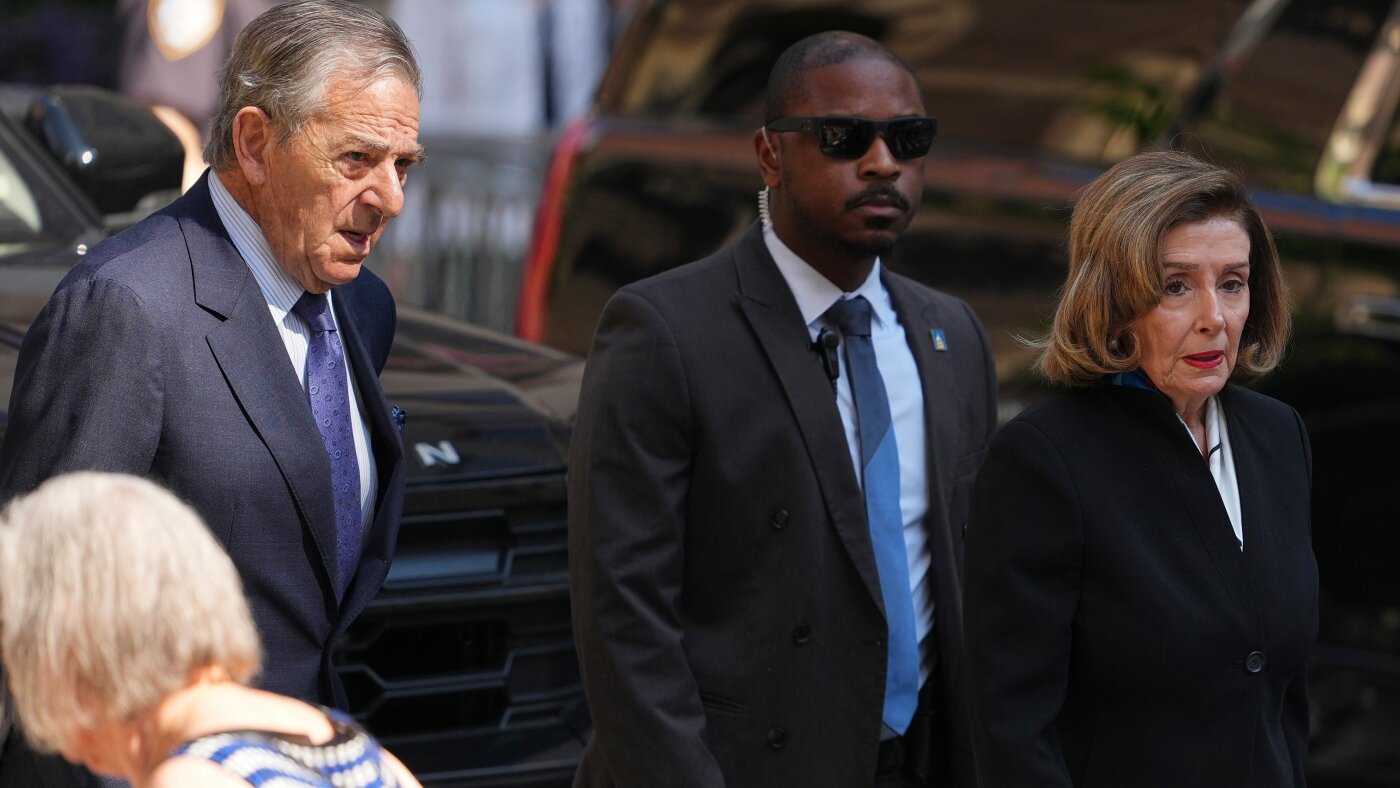
Paul Pelosi in hit-and-run in California, car left with major damage, authorities say
-

 Los Angeles, Ca2 hours ago
Firefighters battle Fourth of July blazes around Los Angeles

