World
Iran warns European countries will be ‘legitimate targets’ if they join conflict


NEWYou can now listen to Fox News articles!
An Iranian official warned that any European countries that enter the conflict against Iran will become “legitimate targets” for Tehran’s retaliation.
Iran’s Deputy Foreign Minister Majid Takht-Ravanchi made the remark to France24 as Iranian President Masoud Pezeshkian on Saturday apologized to neighboring countries that have been attacked by the regime.
“We have already informed the Europeans and everybody else that they should be careful not to be involved in this war of aggression against Iran,” Takht-Ravanchi told the network. “If they help, I’m not trying to name any country, but if any country joins in the aggression against Iran, joins America and Israel in the aggression against Iran, definitely they will be also the legitimate targets for Iranian retaliation.”
“This war has imposed on us, and we will continue to defend ourselves to the best of our abilities,” he added. “We have an obligation to defend our people and that is what exactly we are doing.”
Then-Iranian Ambassador to the United Nations Majid Takht-Ravanchi speaks to the media outside Security Council chambers at the U.N. headquarters in New York, on June 24, 2019. (Shannon Stapleton/Reuters)
Takht-Ravanchi also claimed Iran was “negotiating in good faith” in talks with the U.S. about its nuclear program, before America launched Operation Epic Fury and Israel began Operation Roaring Lion on Feb. 28.
“We are sincere. We are sincere in our endeavor to arrive at a peaceful conclusion of this issue,” he told France24.
AFTER THE STRIKES, HOW WOULD THE US SECURE IRAN’S ENRICHED URANIUM?
A group of men inspect the ruins of a police station struck during the U.S.–Israeli military campaign in Tehran, Iran, on Tuesday, March 3, 2026. (Vahid Salemi/AP)
Pezeshkian said Saturday that any future attacks coming out of Iran would only be in response to attacks against the country.
“I should apologize to the neighboring countries that were attacked by Iran, on my own behalf,” he said, according to The Associated Press. “From now on, they should not attack neighboring countries or fire missiles at them, unless we are attacked by those countries. I think we should solve this through diplomacy.”
Damage is seen in Bnei Brak, Israel, on March 3, 2026, following an Iranian missile barrage. (Nir Elias/Reuters)
CLICK HERE TO DOWNLOAD THE FOX NEWS APP
Pezeshkian made the apology during a prerecorded televised speech on Saturday after Iran launched repeated strikes on Bahrain, Saudi Arabia, the United Arab Emirates, Qatar and Oman.
Despite the vow, the United Arab Emirates (UAE) Ministry of Defense said on Saturday that the country’s air defense systems intercepted 16 ballistic missiles, 15 of which were destroyed while one fell into the sea.
Fox News Digital’s Elizabeth Pritchett and The Associated Press contributed to this report.
Related Article




NEWYou can now listen to Fox News articles!
President Donald Trump said he believes Russian President Vladimir Putin is ready to reach an agreement to end the war in Ukraine, even as Moscow warned Wednesday that Western troops deployed to enforce any eventual peace deal would become Russian military targets.
“I say, ‘Vladimir, it’s time for you to stop. It’s time for this war to end,’” Trump told Fox News chief foreign correspondent Trey Yingst in an interview released Tuesday.
Trump said he believed Putin was “ready to make a deal” to end the fighting.
ANOTHER NATO ALLY SIGNS ONTO EUROPEAN NUCLEAR UMBRELLA AS CONTINENT BOOSTS SELF-DEFENSE
Meanwhile, fighting continued across Ukraine and Russian-occupied territory.
The intensifying drone war has forced both militaries to search for additional ways to intercept unmanned aircraft, sometimes using weapons designed decades before modern drones emerged.
A video supplied by East2West shows a Russian soldier apparently losing control of a Soviet-era YakB-12.7 rotary machine gun mounted on an improvised ground platform.
Russian President Vladimir Putin and President Donald Trump meet in 2019, before their relationship began to sour. (Brendan Smialowski/AFP via Getty Images)
The weapon begins spinning violently, dragging the service member around before throwing him several yards from the mounting. Another soldier ducks as the gun swings in his direction.
East2West reported that no one was injured, though Fox News Digital has not independently verified the location, date or circumstances of the footage.
The four-barrel machine gun was originally developed for use aboard the Soviet-designed Mi-24 Hind attack helicopter. Russian forces have reportedly attempted to repurpose such weapons as ground-based defenses against Ukrainian drones, East2West news reported.
TRUMP SAYS US WILL LET UKRAINE MAKE PATRIOT MISSILES IN MAJOR POLICY SHIFT
An explosion lights up the sky over the city during a Russian missile and drone strike amid Russia’s attack on Ukraine in Kyiv July 2, 2026. (Gleb Garanich/Reuters)
On Wednesday, Russian Foreign Ministry spokeswoman Maria Zakharova said any multinational force deployed by Ukraine’s allies after a ceasefire would be unacceptable to Moscow.
“We would regard such units as legitimate military targets,” Zakharova said, according to a Reuters report published Wednesday.
Members of the Western “coalition of the willing” reaffirmed at a meeting in Paris this week that they intend to deploy a multinational force after hostilities end. The proposed force would seek to reassure Ukraine and help Kyiv rebuild its military.
CLICK HERE TO DOWNLOAD THE FOX NEWS APP
Ukraine’s military said Wednesday that its forces struck the Balaklava thermal power station in Russian-occupied Crimea, a facility that accounts for nearly half of the peninsula’s electricity generation, according to Reuters.
Russia, meanwhile, launched another major drone and missile attack against Ukraine’s southern Odesa region, killing three people, regional Governor Oleh Kiper said. He said civilian, industrial and port infrastructure had been targeted during five consecutive days of Russian attacks.
Emergency services personnel work to extinguish a vehicle fire after a Russian drone attack in the Kyiv region, Ukraine, May 5, 2026. (Ukrainian Emergency Service/AP)
Ukrainian President Volodymyr Zelenskyy also said Wednesday that Ukraine expects to develop the technical capability to manufacture missiles for U.S.-made Patriot air-defense systems by the end of 2026.
Reuters contributed to this story.

Monitor ranks Toronto as having the worst air quality on earth, surpassing Kinshasa, DR Congo, and New Delhi, India.
Published On 16 Jul 2026
Toronto’s air quality has ranked the worst among all major cities in the world as smoke from wildfires in northwestern Ontario blankets the skies and spreads into the northeastern United States, triggering multiple health warnings and evacuations.
Wildfires continued burning through sparsely populated areas hundreds of miles from Toronto, Canada’s largest city, on Wednesday, sending smoke over a wide area, although cities in the area are not being threatened.
list of 3 itemsend of listRecommended Stories
Environment Canada reported an Air Quality Health Index reading of 10+, classified as “very high risk”, for Toronto. Forecasts suggested that hazardous conditions could persist through Thursday night.
IQAir, a Swiss air quality technology company, ranked Toronto as having the worst air quality across the globe, surpassing the Democratic Republic of the Congo’s Kinshasa and India’s New Delhi.
“The biggest contributor to Toronto’s spike in air pollution right now is wildfires, though the higher-than-average temperatures are also playing a role,” Armen Araradian of IQAir told the AFP news agency.
While this year’s wildfire season in Canada has been fairly muted compared with recent years, there are more than 800 active fires nationwide.
A video that went viral on social media showed a Canadian National train surrounded by fire near Armstrong, Ontario. Canadian National employees in the area and residents of Armstrong were evacuated on Monday night, the railroad operator said in a statement. It suspended rail operations near Armstrong as a precaution.
Smoke from the wildfires also worsened air quality across the border in the US, with the states of Pennsylvania, New York, Connecticut, Massachusetts, Maine and New Hampshire particularly affected.
Authorities in New York City have issued an alert over unhealthy air quality, urging residents to reduce strenuous outdoor activity and take extra breaks if they are outside on Wednesday and Thursday.
The National Weather Service said smoke could linger until the end of the week.
“We probably haven’t seen the worst of it yet for New York City. We probably haven’t seen the worst of it yet for the Great Lakes and upstate, and New England yet either,” Dan Westervelt, Lamont associate research professor at Columbia University, told the Reuters news agency.
More than 80,000 people are expected to attend the FIFA World Cup final at an open-air stadium in New Jersey on Sunday, with another 50,000 planning to watch the game from New York City’s Central Park, where skies appeared hazy.
New York Governor Kathy Hochul urged people, especially those with health conditions, to exercise caution.
The Canadian government has said that wildfire season began more slowly this year than in 2023 or 2025 – the two worst seasons for wildfires – but warned that fires were likely, due to warmer-than-usual temperatures across the country.
It said some 835 active fires were burning across the country on Wednesday, with 112 considered out of control, and most in the central provinces of Manitoba, Saskatchewan and Ontario.
They have burned 1.9 million hectares (4.7 million acres) so far.
Greg Evans, a professor of chemical engineering and applied chemistry at the University of Toronto, said the city had been simultaneously hit with severe heat and wildfire smoke.
“I expect that this will occur more frequently over the coming decades, so cities and residents need to prepare for this in the future,” he said.

Getting home, and turning back the clock, has long been at the root of Christopher Nolan’s films. The astronauts of “Interstellar” painstakingly lose 23 years in space travel, almost the same length of time Odysseus is away from home in “The Odyssey”: a decade fighting the Trojan War, a decade trying to return to Ithaca.
So, to a remarkable degree, Nolan’s “The Odyssey” — faithful as it is to Homer’s epic poem — feels, down to its nonlinear DNA, like a Nolan movie. The authorship of the epic poem, dated to the 7th or 8th century BC, is complex. But no one could question the maker of this “Odyssey,” an earthy, existential epic that ravishingly melds the storytelling of antiquity with contemporary IMAX-sized bravado.
As a story about a man whose cunning offends the gods, “The Odyssey” feels very much like a companion piece, if not a downright sequel, to “Oppenheimer.” Odysseus (Matt Damon, in the role of his life) is increasingly racked with guilt for the violence and death he’s wrought after his ingenuity led to the sacking of Troy.
This image released by Universal Pictures shows Matt Damon, as Odysseus, in a scene from “The Odyssey.” (Melinda Sue Gordon/Universal Pictures via AP)
The arrival of any new Nolan spectacle inevitably leads to its own kind of assault, and avalanches of “masterpiece” proclamations. (I’m notinnocent.) But while “The Odyssey,” Nolan’s first film shot entirely with IMAX cameras, doesn’t skimp on grandiosity, it works surprisingly well as a simpler, human-sized tale.
The journey — you may have heard, it’s about the journey — is sometimes a little clunky, and the sheer Nolan-ness of the production, not to mention the historic nature of the tale, inevitably saps it of some freshness. You could make a credible case that Nolan has already made a movie about a guy trying to reach his family through strata of mind-warping illusion, and it’s called “Inception.” Such is the trouble with urtexts.
But “The Odyssey” is rarely not transfixing, and it’s a ripping adventure story, besides. At the least, it’s the definitive big-screen adaptation of one of literature’s oldest tales — a not-too-shabby accomplishment for a filmmaker of restless ambition.
It’s not until Book 5 that Odysseus enters Homer’s poem, and Nolan, who also wrote the screenplay, likewise begins in Ithaca. There, Odysseus’ home is overrun by feasting suitors in pursuit of his wife, Penelope (Anne Hathaway). Foremost among them is Antinous, who’s played with sleazy perfection by Robert Pattinson. For an actor often (pleasingly) at odds with the movies around him, Pattinson has never slid more seamlessly into a part.
Telemachus (Tom Holland, also well-cast), the youthful son of Penelope and Odysseus, resolves to go in search of his father. Meanwhile, we catch up with Odysseus, weathered and white-bearded, following the fall of Troy. His forced conscription, by Agamemnon, is shown in flashbacks. Agamemnon is depicted with an imposing Darth Vader-like presence and played by Benny Safdie, but the real star is his hulking, mohawked helmet.
This image released by Universal Pictures shows, from left, Anne Hathaway as Penelope, and Tom Holland as Telemachus, in a scene from “The Odyssey.” (Melinda Sue Gordon/Universal Pictures via AP)

Such vivid details abound in Nolan’s richly textured film. The simple rocking of Odysseus’ longship, off the Mediterranean coast, is glorious. Some of Nolan’s and cinematographer Hoyte van Hoytema’s most impressive work has come when they’re faced with the elements (as in “Dunkirk” ). And “The Odyssey” is flooded with stormy seas and enchanted isles. If anything, the movie could have gone further; I was promised rosy-fingered dawns.
The first line of Homer’s poem, as translated by Emily Wilson (the version Nolan leaned on), refers to Odysseus as “a complicated man.” James Joyce, whose “Ulysses” was based on “The Odyssey,” once noted that while Hamlet is merely a son, Ulysses, or Odysseus, is a father, a husband, a lover and a warrior. In short, he’s an Everyman, albeit an especially smart one. And Damon, the most amiable of Everymen, proves especially attuned to the multifaceted nature of the archetypal hero.
We meet him first as a soldier, leading a small group of ships away from Agamemnon’s fleet, setting a southerly course with his second-in-command Eurylochus (an excellent Himesh Patel). Their route takes them on a series of episodic quests: a cave encounter with Polyphemus, the Cyclops; a pine forest attack by the man-eating giants, the Laestrygonians; a meal with the witch Circe (Samantha Morton); and Odysseus’ seven-year interlude with the sea nymph Calypso (a beguilingly sincere Charlize Theron).
This image released by Universal Pictures shows a scene from “The Odyssey.” (Melinda Sue Gordon/Universal Pictures via AP)

You could argue that the movie can feel like a series of sketched-together set pieces, but what set pieces! That includes the tale of the Trojan horse, a fleeting mention in the poem but here a centerpiece. You can tell that Nolan, who nearly made “Troy” more than two decades ago, has had the sequence — beginning with the Trojan horse sunk in the sand and leading to the burning of Troy — on his mind for years.
Each stop on Odysseus’ journey gives Nolan a mythic playground to explore imagery that verges on the stuff of horror. I was most intoxicated by “The Odyssey” in its most surreal moments: the sight of a giant hand emerging out of the shadows, the meeting with the “shades” of Odysseus’ dead army, risen from the black soil of Hades.
“A time of apparent magic” is how the movie is introduced. Nolan has wisely opted to keep the gods sidelined. Their powers are real, but with the exception of Zendaya’s Athena, who appears like a confidant to Odysseus, the gods, themselves, remain off-screen.
That choice draws Nolan’s “Odyssey,” and its themes of sacrifice, fidelity and honor, closer to reality. And it makes Nolan’s decision to cast his film widely all the more essential. This is a story, passed down for centuries by singers and storytellers, that belongs to all of humankind. Casting the movie with a wide spectrum of actors, including Lupita Nyong’o as Helen of Troy, is not only fair game for a purely mythic tale but it gives the movie a present-day vitality. Seeing actors like Elliot Page (indelible as a fallen soldier), John Leguizamo (as the loyal servant Eumaeus) and Damon in this ancient context is a very big reason to see “The Odyssey,” and why Homer’s told and retold tale is worth revisiting, at all. If today has no role, what’s the point? They didn’t have cameras in 700 B.C., either.
This image released by Universal Pictures shows a scene from “The Odyssey.” (Melinda Sue Gordon/Universal Pictures via AP)

Nolan’s “Odyssey” is nearly three hours long but never slow going. And it’s the friction between past and present that propels the movie as much as Odysseus’ wayward path. Gender roles are examined even while traditional masculinity is upheld. The ending of the poem, a tricky thing since it features mass murder, is given a more palatable action-movie melee. But the essence of “The Odyssey” is here, and Odysseus’ quest to live down his mistakes and uphold his convictions feels vibrant again. Nolan, you might say, is at home.
“The Odyssey,” a Universal Pictures release in theaters Thursday, is rated R by the Motion Picture Association for violence and some language. Running time: 172 minutes. Three and a half stars out of four.
-

 World4 minutes ago
WATCH: Russian soldier thrown through air as Soviet-era helicopter gun spins out of control
-

 Politics10 minutes ago
Lindsey Graham’s final act reverberates in Senate as sister is urged to “keep pedaling”
-

 Health15 minutes ago
Is lettuce still safe to eat amid Taco Bell illness probe? Doctors answer
-

 Sports22 minutes ago
Marcello Hernández roasts Jake Paul, Tiger Woods and Bill Belichick in ESPYS monologue
-

 Technology28 minutes ago
You paid for it. So why is your device showing ads?
-
 Business34 minutes ago
Paramount shareholder lawsuit accuses Ellisons of corruption
-
 Entertainment40 minutes ago
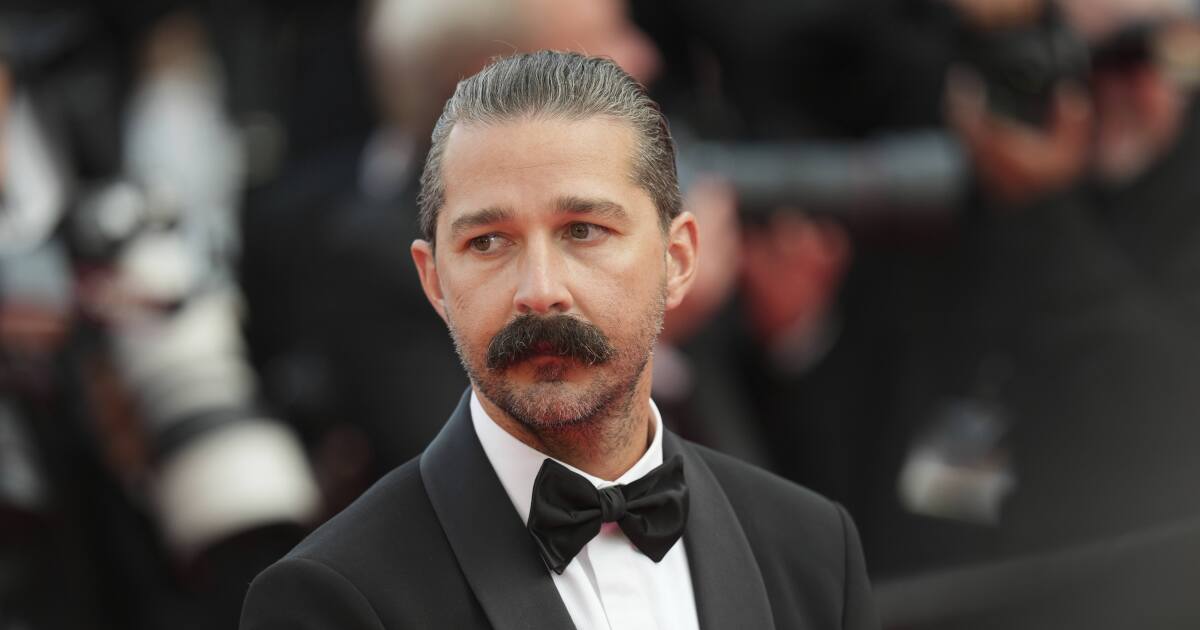
‘You’re scaring my people.’ Shia LaBeouf’s alleged stalker arrested after posting viral video
-
 Politics52 minutes ago
Californians back Becerra and reject AI data centers by big margins, poll finds

