Science
In Texas Measles Outbreak, Signs of a Riskier Future for Children


Every day, as Dr. Wendell Parkey enters his clinic in Seminole, a small city on the rural western edge of Texas, he announces his arrival to the staff with an anthem pumping loudly through speakers.
As the song reaches a climax, he throws up an arm and strikes a pose in cowboy boots. “Y’all ready to stomp out disease?” he asks.
Recently, the question has taken on a dark urgency. Seminole Memorial Hospital, where Dr. Parkey has practiced for nearly three decades, has found itself at the center of the largest measles outbreak in the United States since 2019.
Since last month, more than 140 Texas residents, most of whom live in the surrounding Gaines County, have been diagnosed and 20 have been hospitalized. Nine people in a bordering county in New Mexico have also fallen ill.
On Wednesday, local health officials announced that one child had died, the first measles death in the United States in a decade.
It may not be the last. Large swaths of the Mennonite community, an insular Christian group that settled in the area in the 1970s, are unvaccinated and vulnerable to the virus.
The outbreak has struck at a remarkable juncture. Vaccine hesitancy has been rising in the United States for years and accelerated during the coronavirus pandemic. Now the nation’s most prominent vaccine skeptic, Robert F. Kennedy Jr., has been named its top health official, the secretary of health and human services.
Mr. Kennedy has been particularly doubtful of measles as a public health problem, once writing that outbreaks were mostly “fabricated” to send health officials into a panic and fatten the profits of vaccine makers.
At a cabinet meeting on Wednesday, Mr. Kennedy minimized the crisis in West Texas, saying that there had been four outbreaks so far this year (there have been three, according to federal health officials) and 16 last year.
Following widespread criticism, Mr. Kennedy posted a social media message on Friday saying he did “recognize the serious impact of this outbreak on families, children, and healthcare workers.”
Vaccine fears have run deep in these parts for years, and some public health experts worry that the current outbreak is a glimpse at where much of America is headed. Researchers think of measles as the proverbial canary in a coal mine. It is among the most contagious infectious diseases, and often the first sign that other pathogens may be close behind.
“I’m concerned this is a harbinger of something bigger,” said Dr. Tony Moody, a pediatric infectious disease expert at the Duke University School of Medicine. “Is this simply going to be the first of many stories of vaccine-preventable disease making a resurgence in the United States?”
On the front lines of the outbreak, simple answers aren’t easy to come by.
Measles was officially declared eliminated in the United States in 2000. Not long ago, it had become so rare that many American doctors never saw a case.
But as the outbreak spread, Dr. Parkey learned to spot the signs of infection in the examination room even before he saw the telltale rashes.
School-age children often zipped around the room or pestered their mothers or asked him for lollipops. The children stricken with measles sat still, vacant looks in their eyes.
On Monday, Dr. Parkey walked into a hospital room where an unvaccinated 8-year-old boy sat with that distant stare. His mother had scheduled an appointment after she noticed his barking cough the night before.
By the time they arrived at the clinic, the boy’s eyes were red and crusted. He had a low-grade fever and a blotchy pink rash covering his chest and back.
Dr. Parkey tried the usual banter: “Do you have a girlfriend?” The boy looked past him, glassy eyes trained on the wall.
“Which of your uncles is your favorite?” Dr. Parkey asked. The boy let out a dry cough and slumped further into his seat. He spoke only once, to request a cup of water.
Over the next 24 hours, if the boy’s illness followed the typical progression, he was likely to get sicker. His fever would spike, and the rash would fan out over his torso and thighs.
If he was lucky, the worst would pass within a few days. If he was not, the virus might find its way into his lungs and cause pneumonia, potentially making it difficult to breathe without an oxygen mask.
Measles might even invade his brain, causing swelling and possible convulsions, blindness or deafness.
Doctors have few options to alter its course once the virus infects someone. There is no treatment that will stop it, only medicines to make the patient more comfortable.
Dr. Parkey wrote prescriptions for cough syrup and antibiotics for the boy. A nurse swabbed the back of his throat for a sample to be shipped to the state health department in a box of dry ice, adding to the county’s growing case count.
Scary Stories Online
For decades, the doctors at Seminole Memorial Hospital had been having conversations with patients about the importance of childhood vaccines.
Even on busy days with back-to-back appointments, staff members sat down with parents to discuss fears about side effects and to recount the horrors of many preventable diseases.
Go to an old cemetery, Dr. Parkey often told his patients — look at how many children died before vaccines arrived. In many families, though, minds were made up, and the conversations rarely broke through.
The largest school district in Gaines County reported that just 82 percent of kindergartners received the measles, mumps and rubella (M.M.R.) vaccine in 2023. One of the smaller school districts reported that less than half of the students had received the shot.
For a virus as contagious as measles — which spreads through microscopic droplets that can linger in the air for two hours — experts say that at least 95 percent of a community must be vaccinated in order to stave off an outbreak.
Gaines County, a dusty expanse the size of Rhode Island dotted with cotton fields and whirring pump jacks, had not hit that mark in many years.
Although there is no religious doctrine that bans vaccination, the county’s tightknit Mennonites often avoid interacting with the medical system and hold to a long tradition of natural remedies, said Tina Siemens, a Seminole historian who has written several books about the community in West Texas.
In recent years, concerns about childhood vaccines appeared to rise even in the broader Seminole community, especially after Covid-19, several doctors said. An outbreak began to feel inevitable.
“I’d never seen measles, but I knew it was coming,” Dr. Parkey said.
In this respect, Gaines County is not so different from much the country.
Before the pandemic, 95 percent of kindergartners in the United States had received the M.M.R. vaccine, according to federal tallies. The figure sank below 93 percent last year. Immunization rates against polio, whooping cough and chickenpox fell in similar proportions.
When the cases in Texas first surfaced, local doctors and health officials hoped that the outbreak would make the M.M.R. vaccines an easier sell. If parents saw what measles did to children, the thinking went, they would understand what the vaccine was designed to protect them from.
But there has been no stampede to vaccination. In Seminole, a city of about 7,200 people, almost 200 residents have received shots at pop-up clinics.
“Hopefully, at least the next generation will change their minds about vaccines,” Dr. Parkey said. “Just maybe not this one.”
One mother told Dr. Leila Myrick, a family medicine physician at Seminole Memorial, that the measles outbreak had helped solidify her decision not to vaccinate her children. She’d heard from a friend that the virus was similar to a bad flu.
Even some parents who recognized the dangers that measles posed to their children still felt that vaccines were riskier.
Ansley Klassen, 25, lives in Seminole with her husband and four young children, three of whom are fully unvaccinated. She considered bringing her children to a vaccine clinic when measles cases first started popping up.
Mrs. Klassen, who is about five months pregnant, knew she didn’t want to risk getting measles. She had been scrubbing counters with Lysol wipes and keeping her children away from others as much as possible.
But on social media, she had seen a deluge of frightening posts about the side effects of vaccines: stories of children developing autism after a shot or dying from metal toxicity. (Both claims have been debunked by scientists.)
“There are stories that you can read about people multiple hours after they got the vaccine having effects, and that’s scary to me,” she said. “So I’m like, is it worth the risk? And right now I can’t figure that out.”
These anecdotes — regardless of whether they are factual — are part of what has made vaccine hesitancy such an intractable problem in the age of social media, said Mary Politi, a professor at the Washington University School of Medicine who studies health decision-making.
Stories about children who don’t have serious side effects from vaccines and never contract vaccine-preventible illnesses don’t go viral on TikTok, she noted.
“It’s not that they’re trying to make a bad choice or do something against evidence,” she said. “People are trying to do the best thing they can for their families, and they don’t know who to trust.”
Mrs. Klassen didn’t consider herself staunchly anti-vaccine. Her oldest daughter, now 6, had received all of her vaccines up to a year.
But she didn’t trust everything doctors were telling her, either. She thought the Covid-19 vaccine had been developed too quickly and pushed too forcefully, making her skeptical that the authorities were telling the truth about the measles shot.
She prayed about it and ultimately decided to forgo the vaccine. “The trust I have in the medical system is not there,” she said.
It’s not just unvaccinated people who are at risk during the current outbreak.
Measles increases the likelihood of stillbirths and serious complications in pregnant women, yet they cannot receive the vaccine or booster.
Andrea Ochoa, a nurse’s assistant at Seminole Memorial who is six months into her first pregnancy, said she thought about taking time off from her job but ultimately decided to stay so she could keep her health insurance.
She wore an N95 mask during her entire shift, which sometimes made her so lightheaded that she sat in her car for a break. She showered as soon as she was home.
“I hope it doesn’t get worse,” Ms. Ochoa said of the outbreak. “I don’t know what choice I would make.”
Five vaccinated residents also have contracted measles, state health officials said. At the clinic, Dr. Parkey recently cared for a teacher who was vaccinated but immunocompromised.
A serious measles infection kept the teacher curled in a fetal position on the couch for a week, her eyes so swollen that she opened them only for brief runs to the bathroom, she recalled in an interview. She asked not be named to protect her privacy.
The West Texas measles outbreak is far from the largest in the United States in recent years. In 2019, outbreaks in at least two dozen states sickened more than 1,250 people.
A vast majority of those infections occurred in “underimmunized, close-knit communities,” the C.D.C. noted. More than 930 patients were infected in Orthodox Jewish communities in New York.
Federal, state and local officials swung into action with vaccination campaigns that led to more than 60,000 M.M.R. immunizations in the affected communities. They reached out to religious leaders, local doctors and advocacy groups.
And in areas like Williamsburg, Brooklyn, officials went further, issuing mandates requiring vaccination.
The campaign in West Texas has been less forceful. Management of outbreaks like this one falls to state health officials, and they ask for help from the C.D.C. and other federal resources as necessary.
The C.D.C. is providing some technical assistance, but Texas health officials said they did not need more help from the agency. They have not declared a public health emergency, as officials did in parts of New York State, nor have they moved to mandate vaccination.
“We can’t force anybody to take a drug — that’s assault,” said Dr. Ron Cook, a health official in nearby Lubbock, at a news conference on Friday.
Zachary Holbrooks, the local public health official for four Texas counties, including Gaines, said that type of mandate would be deeply unpopular in the state, where individual freedom is a strongly held value.
Texas public schools require children to have received certain vaccines, including the M.M.R. shot. But in this state, as in many others, parents can apply for an exemption for “reasons of conscience,” including religious beliefs.
In January, as the first cases of measles began spreading in Gaines County, state legislators introduced several bills designed to weaken school vaccination requirements.
“I don’t want to see a baby’s lips turn blue because they can’t breathe,” Mr. Holbrooks said. “I don’t want anybody to suffer from long-lasting disability because they got measles.”
“But if you choose to live in Texas,” he added, “you can exercise that option.”



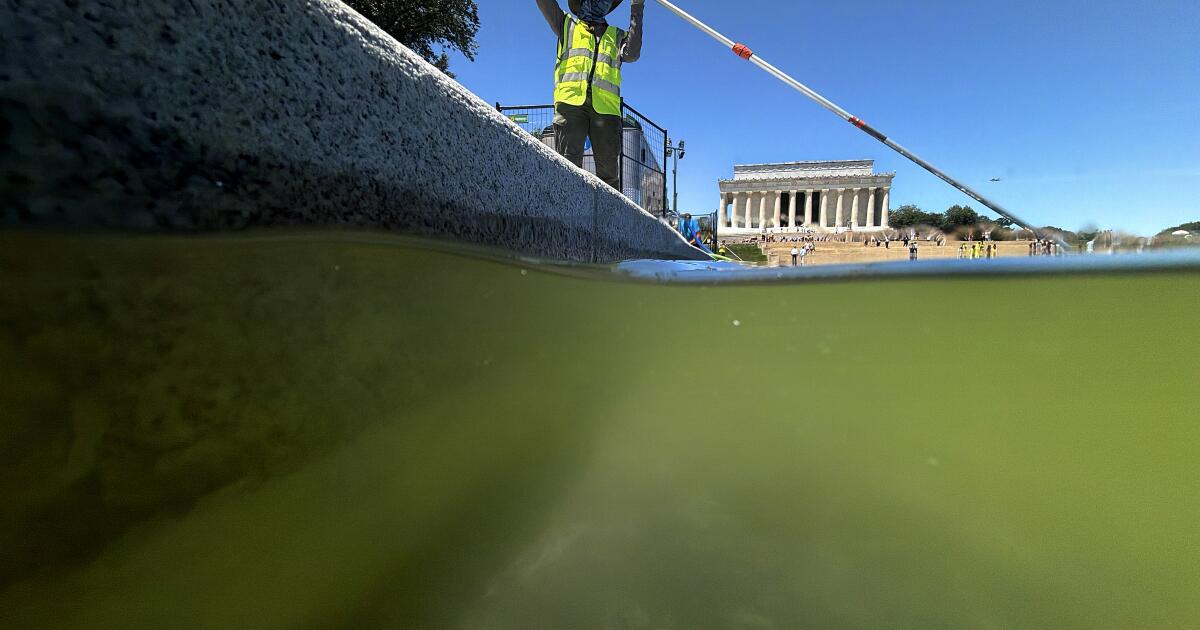
Just days after the Trump administration completed millions of dollars in renovations on the Lincoln Memorial Reflecting Pool to make it American flag-blue, residents and online users noted it had turned a phosphorescent green.
Here’s why:
The calm, still waters of the Reflecting Pool make it an ideal nursery for algae growth. Algae need nitrogen and phosphorus to grow, and the Reflecting Pool is primarily fed by the Potomac River, which gets heavy doses of those nutrients from nearby urban and agricultural lands.
The Potomac also absorbed one of the largest sewage spills in U.S. history earlier this year when a pipe burst five miles upstream of Washington, although that event probably happened too long ago to contribute to the algal bloom today.
Untreated sewage is high in nitrogen and phosphorus. When nutrient levels are high, feasting algae can quickly reproduce.
The Department of the Interior said when the algae first appeared that it was “residual,” from the supply lines to the pool.
Experts also speculate that the darker blue color may be helping the Reflecting Pool absorb more heat. The higher temperatures promote algae growth by allowing their metabolisms to shift into overdrive.
Summer temperatures in D.C. aren’t helping. This week, temperatures are as high as 95 degrees in the city, prompting a heat alert.
The combination probably explains the excessive growth, turning the water surface an opaque green and preventing onlookers from seeing the new blue hue of the concrete basin.
Algae are important and beneficial organisms when the ecosystem is in balance. They’re the base of the aquatic food chain, fed on by herbivores of all shapes and sizes, including shrimp and juvenile fish, which in turn feed organisms higher up the food chain. The single-celled organisms use the power of the sun to produce energy through photosynthesis, similar to houseplants on your balcony.
In an effort combat the algae in the Reflecting Pool, employees of the National Park Service were seen pouring in gallons of hydrogen peroxide, a chemical commonly used in pool maintenance.
The Department of the Interior also is employing a “high-tech nanobubble ozone technology” to destroy the cells of the algae.
Ozone — yes, the same irritant that is in smog — is a gas composed of three oxygen molecules, and the small size of the bubbles allow the most gas transfer into the water, where it can damage algal cells, similar to how it irritates our lungs.
This only treats the symptoms, however. Generally, ozone nanobubbling is effective as a temporary solution for algae blooms. Longer-term fixes would have to address what makes the Reflecting Pool so ideal for algae, such as its depth, darker color and inflow of nitrogen and phosphorus.
In California, ozone nanobubbles also have been used in a project to improve water quality in the Tijuana River. The 120-mile river that runs near the border in northern Mexico and Southern California was the site of a pilot study in 2025. The U.S. section of the International Boundary and Water Commission reported that the nanobubbling reduced “odors and bacteria,” but the project concluded prematurely after a flood swept some of the instrumentation into the river.

A plant extract that’s gaining popularity as a pain cure-all and has been associated with multiple California deaths in its concentrated, synthetic form has been approved for research as a treatment for opioid addiction by the federal government.
Kratom is derived from the leaves of Mitragyna speciosa, a tree native to Southeast Asia, and is commonly made into a powder or pill.
Researchers say people in the U.S. are using kratom to alleviate anxiety, treat chronic pain or as a remedy for the symptoms associated with quitting opioids, due to its ability to bind with opioid receptors in the body. But recently, public health officials have raised alarms about a component of the leaf called 7-hydroxymitragynine, also known as 7-OH, an alkaloid that has the potential for abuse and addiction in high doses.
Last year, the Los Angeles County Public Health Department linked the deaths of six county residents to the use of 7-OH mixed with other substances. The toxicology screens for some of the deceased revealed both kratom and 7-OH, leading to a countywide crackdown of products with either compound because they’re unregulated.
Although there is no scientific consensus on whether kratom has therapeutic value, the Food and Drug Administration has recommended that its potent 7-OH form be classified as a controlled substance. Consumers who use 7-OH as a pain reliever expecting an experience similar to consuming kratom are at risk, said Dr. Mason Turner, president-elect of the California Society of Addiction Medicine.
“I have a couple of patients that I work with who use 7-OH for chronic pain management, not realizing the potential of the medication, and then developed an opioid use disorder,” Turner said. “I think in that case it was very clear they were seeking it for the chronic pain, not to get high, not to have some kind of experience, but really to reduce their pain.”
About two decades ago, Turner said, the healthcare industry started acknowledging the limits and risks of prescribing opioids for chronic pain. Some doctors pulled back on prescriptions, recognizing the potential for abuse.
That led some patients to find alternative solutions, he said.
“Maybe they don’t get a good benefit, or maybe the benefit from some of the other treatments is not as robust as what they got from opioids,” Turner said. “So they seek out some of these illicit products … or they look for kratom or 7-OH to be able to mitigate the pain.”
Turner said he supports further research into kratom and regulation because “it could be worth exploring as a treatment for chronic pain.”
On June 1, the National Institutes of Health announced that researchers from the University of Florida would begin the first phase of clinical trials on kratom to evaluate it as a potential treatment for opioid addiction. The research would be done with the FDA’s approval, according to officials.
“This … is a major step toward expanding treatment options for the millions of Americans struggling with opioid use disorder, which has contributed to historically high overdose mortality rates,” said Dr. Nora Volkow, director of NIH’s National Institute on Drug Abuse, in a statement.
Interest in kratom surged in the last couple of years as users have reported consuming the compound in the form of a pill, powder or tea to treat various ailments. A John Hopkins survey conducted in 2020 reported that 91% of respondents used kratom to treat chronic pain, 67% to treat anxiety, 64% for depression and 41% to treat opioid dependence.
A more recent study by the University of Michigan and Texas State University found that more than 5 million people in the U.S., including more than 100,000 children ages 12 to 17, have used kratom, the compound experts say is growing in popularity with young adults.
In the study, which analyzed data from the National Survey on Drug Use and Health collected between 2021 and 2024, researchers say that despite numerous state-level bans on kratom across the nation, its use is at an all-time high and is increasing.
People between the ages of 21 and 34 said they used kratom at least once and 1% said they used it in the last year. The share of children ages 12 and older who said they had used kratom increased from 1.6% in 2021 to 1.9% in 2024.
The FDA has stated that neither kratom nor 7-OH are approved as drug products, dietary supplements or food additives, but that hasn’t stopped storefronts and companies from selling them as such.
Up until November you could find kratom and 7-OH products in smoke shops and specialty stores in California, but that has stopped.
“Until kratom and its pharmacologically active key ingredients mitragynine and 7-OH are approved for use, they will remain classified as adulterants in drugs, dietary supplements and foods,” the California Department of Public Health told The Times via email.
Kratom “Feel Free Classic” liquid products are displayed at a smoke shop in Los Angeles in 2024 before they were banned.
(Michael Blackshire / Los Angeles Times)
In May, the California Department of Public Health and Atty. Gen. Rob Bonta filed a complaint against Ashlynn Marketing Group Inc., accusing the company of repeatedly flouting the state’s regulations on kratom products.
The filing, submitted in the San Diego County Superior Court, seeks a judge’s order to condemn and destroy the embargoed kratom products, halt ongoing unlawful manufacturing and impose civil penalties.
The California Department of Public Health “is pursuing legal action because Ashlynn’s continued manufacture and sale of these products pose a clear and preventable public‑health risk and violates state and federal law,” said Dr. Erica Pan, the department’s director and state public health officer. “7-OH and kratom-derived products have been associated with addiction, serious health harms, overdose and death.”
The state is alleging its inspectors visited Ashlynn Marketing Group’s facility in Santee in May 2025 and found kratom powders, capsules, liquids and chewable tablets being manufactured and held for sale.
During the visit, inspectors issued an embargo to prohibit the sale and distribution of all kratom-related materials on-site, according to the complaint.
Public health inspectors conducted follow-up visits at the facility in October and April, “collecting evidence at both inspections that indicated embargoed kratom products had been moved, tampered with and repackaged,” according to public health officials.
“In addition, investigators observed evidence of continued manufacturing and distribution of kratom materials,” officials said. “The firm’s owner continues to manufacture kratom products and ships orders weekly.”
To date, the California Department of Public Health has seized more than $5 million worth of kratom and 7-OH products, a spokesperson for the department told The Times.
California and Los Angeles County are considering whether to tighten regulations or ban the compounds altogether.

NEW YORK — Scientists have unearthed communities of marine life — including jellyfish, tubeworms and brittle stars — thriving on a whale graveyard that is millions of years old.
These graveyards form when whale carcasses fall to the sea floor, becoming a sustaining snack for nearby critters. This one, located up to 23,000 feet below the surface of the southeastern Indian Ocean, spans the largest area and is so far the deepest and oldest found.
A whale’s sheer size and the unique chemistry of its bones are the keys to forming these unique underwater neighborhoods, said Xikun Song, a biologist with the Chinese Academy of Sciences’ Institute of Deep-sea Science and Engineering.
“At the same time, the very nature of the deep ocean makes these sites exceptionally difficult for scientists to locate,” Song, who was involved with the latest find, wrote in an email.
Researchers explored the remains during multiple deep-sea submersible trips in 2023, collecting samples and mapping the extent of the necropolis. They found five carcass sites and fossils, including skulls belonging to beaked and baleen whales. The oldest bones date back 5.3 million years.
Feeding and living on the carcasses were myriad creatures, large and small, including sea cucumbers, squat lobsters and saltwater clams. Many of them are likely species that have never been documented, according to findings published Wednesday in the journal Nature.
“The potential number of specimens is just astounding,” said paleontologist Stephen Godfrey with the Calvert Marine Museum in Maryland, who wasn’t involved in the research.
Many factors likely conspired to preserve the bones for millions of years, according to the study authors. They’re dense enough to outlast attacks from bone-eating worms, and located deep enough in the ocean to avoid getting buried by dust and loose particles. The bones also were coated with a light layer of minerals from the surrounding seawater, which may have prevented them from degrading.
Why did so many whales die here? Maybe they were already living in the area and died of natural causes. A few could have perished from exhaustion or illness caused by deep-sea diving. The area’s shape, akin to the letter V, could also have funneled the remains to their resting spot, the authors wrote.
Such discoveries are important because they clue scientists into the vibrant communities that find a way to live even in remote, hard-to-reach environments.
Studying the whale graveyards “is important for understanding how life can adapt to such extreme conditions, not only due to the lack of light and oxygen but also to the incredibly high pressure,” said study co-author and paleontologist Giovanni Bianucci with the University of Pisa in Italy in an email.
Ramakrishnan writes for The Associated Press.
The Associated Press Health and Science Department receives support from the Howard Hughes Medical Institute’s Department of Science Education and the Robert Wood Johnson Foundation.
-
 Entertainment5 minutes ago
At the Fonda, Jane Remover’s violent yearning heralds a new kind of stardom
-
 Lifestyle7 minutes ago
Beer, with a twist? SoCal dads find solidarity through an unexpected activity
-
 Politics13 minutes ago
Billionaire tax proposal faces hurdles as it moves closer to November ballot
-
Science19 minutes ago
Here’s why the Lincoln Memorial Reflecting Pool went green so fast
-
 Sports22 minutes ago
Shohei Ohtani out of Dodgers’ lineup vs. Orioles for birth of his second child
-

 World35 minutes ago
Lebanese influencer organises World Cup event amid Israel’s attack on Leban
-
 News57 minutes ago
Air Force One, gifted to Trump from Qatar, arrives at Joint Base Andrews
-

 New York2 hours ago
Video: Fans Show Up to the Parade in Their Best Knicks-Themed Attire

