Movie Reviews
‘Last Days’ Review: Justin Lin Returns to Indies With a Solid Drama About a Misguided Missionary


It turns out that having “creative differences” with a major Hollywood studio and Vin Diesel can do wonders for your artistic soul.
Filmmaker Justin Lin got on a fast track to the big time when his low-budget independent feature Better Luck Tomorrow garnered raves upon its 2002 premiere at the Sundance Film Festival. It launched him into directing a series of Hollywood blockbusters, including several entries in the Fast & Furious franchise and the last Star Trek theatrical feature, before exiting 2023’s Fast X while it was still in development.
Last Days
The Bottom Line It turns out that an indie filmmaker can go home again.
Venue: Sundance Film Festival (Premieres)
Cast: Cast: Sky Yang, Radhika Apte, Ken Leung, Toby Wallace, Marny Kennedy, Claire Price, Ciara Bravo, Naveen Andrews
Director: Justin Lin
Screenwriter: Ben Ripley
1 hour 59 minutes
Now he’s come full circle with this powerful low-budget indie drama similarly receiving its premiere at the fest. The film currently seeking distribution marks a striking artistic return to form for Lin; here’s hoping he continues to resist the urge to blow things up for a while.
Based on Alex Perry’ Outside Magazine article “The Last Days of John Allen Chau,” the film depicts the tragic story of John Chau (Sky Yang), a 26-year-old American evangelical Christian missionary who undertook a dangerous journey to the remote North Sentinel Island, a restricted area of India, in the hope of converting its Indigenous tribespeople who have resolutely shielded themselves from the outside world. It did not end well for him. (If the story sounds familiar, it was also told in 2023’s acclaimed documentary The Mission, currently screening on Disney+.)
The troubles he would face are made vividly clear in the film’s harrowing opening scene set in 2018, in which he canoes to the island and attempts to communicate with the natives from the shore, only to encounter a barrage of very accurately aimed arrows.
Cut to a flashback several years earlier, at a birthday gathering where his complicated family dynamics are laid bare, including the deep desire of his father Patrick (Ken Leung, Lost, as eloquent with his pained facial expressions as with his dialogue) that John follow in his footsteps and become a physician. But the young man feels a different calling in keeping with his deep faith. He attends Oral Roberts University and trains to become a missionary, learning survival skills at a boot camp before heading overseas, where he becomes friends with other young missionaries, including the happy-go-lucky Chandler (Toby Wallace, The Bikeriders).
The screenplay by Ben Ripley (whose credits include Source Code and the Flatliners remake) occasionally lacks narrative clarity with its frequent flashbacks and shifting chronology. There’s also too much emphasis on a subplot involving an Indian police inspector (a very good Radkhia Apte), defying her superiors to embark on a desperate effort to find John before he can go back to the island and cause harm either to the natives (by introducing foreign disease) or himself. The film feels a bit overstuffed with incidents, from the father getting arrested by federal authorities for illegally prescribing painkillers to John’s awkward attempt at a romantic tryst with a beautiful young backpacker that results in her reporting him to the authorities.
But the storyline’s denseness seems forgivable since it provides important insight into the psyche of its main character, whose passionate need to proselytize is treated in admirably non-judgmental fashion. Many viewers will no doubt feel initially disdainful of John’s recklessly dangerous pursuits, but the film presents his inner struggles so empathetically that by the end all you feel is sadness for a life tragically lost.
Lin’s considerable filmmaking skills are evident throughout, not only in the intense opening sequence that will have audience members ducking in their seats (you’re grateful it’s not in 3D), but also the haunting montage at the end — in which John’s final encounter with the natives, rendered in abstract terms, is beautifully interwoven with scenes of him getting lost as a child at a carnival before being found and comforted by his relieved father.
Yang, previously seen in Zack Snyder’s Rebel Moon films for Netflix, anchors the film with his emotionally and physically demanding performance (he lost 30 pounds during filming) that showcases not only his character’s religious fervor but also his sense of fun and good humor. It’s a charismatic, star-making turn that should receive plenty of well-deserved attention.



Movie Reviews
‘Bob and David Climb Machu Picchu’ Tribeca 2026 Review: A Travelogue of Old Friends, Older Knees, and Same Absurd Timing

The first thing we see in “Bob and David Climb Machu Picchu” is Bob Odenkirk and David Cross facing each other inside a tent, freezing, exhausted, and quiet in the way only old friends can be quiet. They don’t need to say the obvious. Even without a single word spoken, we can see their faces already asking it: what on earth did we get ourselves into?
That’s a good way into this tender documentary, because Michael LaHaie‘s film isn’t just about two famous comedians going on a difficult hike. The hike actually is the excuse, and a pretty good one at that. What we’re really watching is the kind of friendship that survives time, distance, professional detours, old irritations, and the body’s increasingly rude reminders that “getting older” isn’t just a phrase people say on birthdays.
Focus on the Journey, Not the Punchline
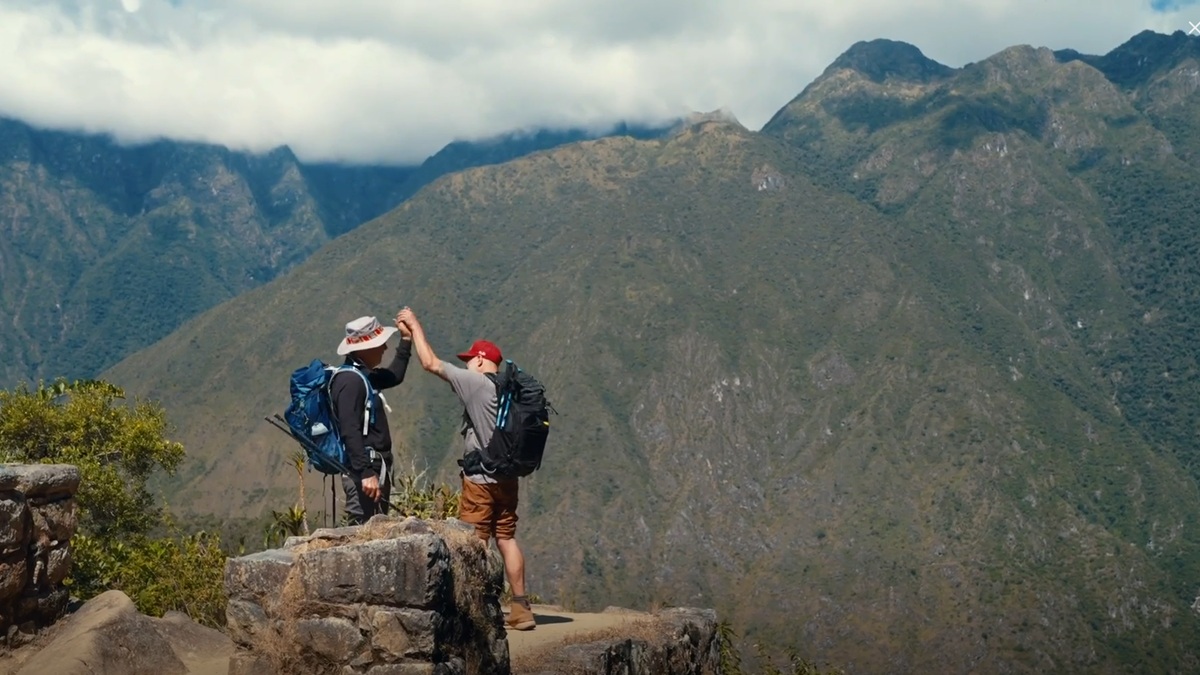
The premise is simple. Cross wants to climb Machu Picchu. Odenkirk says yes, partly because he’s game and partly because a recent heart attack has made the bucket list feel less hypothetical. So off they go to Peru, where the Andean scenery is gorgeous, the trail is punishing, and the two men remain funny enough to make shortness of breath sound like a sketch premise.
There’s a long tradition of famous people traveling somewhere beautiful, physically exerting themselves, and landing on gentle reflections about life. Some versions have done it better, slicker, or with more formal ambition. Michael Winterbottom‘s “Trip” films (starring Rob Brydon and Steve Coogan) turned meals and impressions into a running autopsy of male ego and middle age. Meanwhile, the Ewan McGregor–Charley Boorman series “Long Way Round” found camaraderie and self-discovery on the road. Even the lesser celebrity travelogues tend to lean on the same basic appeal: put recognizable people somewhere unfamiliar, wait for the guards to drop, and hope that scenery plus discomfort produces something honest.
“Bob and David Climb Machu Picchu” doesn’t pretend to reinvent that setup. It’s too ragged for that, and sometimes too casual. But that looseness is also part of its charm. LaHaie doesn’t over-direct the trip into importance. He lets Odenkirk and Cross walk, complain, riff, reminisce, eat, sweat, and occasionally look around long enough to remember they’re doing something ridiculous and beautiful at the same time.
The comedy isn’t always polished, which is probably for the best. Some bits land because they’re sharply timed; others work because they’re stupid in the way a joke between friends is allowed to be stupid. A scene in which they sit at a small table in a Peruvian town square and wait to be recognized is funny not only because of the awkwardness, but because it gently punctures their celebrity. When recognition comes, it mostly belongs to Odenkirk’s “Breaking Bad” and “Better Call Saul” fame, which Cross absorbs with the wounded dignity of a man who’s spent decades being very funny and still has to watch his friend get all the Saul Goodman heat.
Old Friends and Older Knees
I have a tightly knit group of male friends who, for reasons both sentimental and mildly embarrassing, call ourselves The Roadtrippers. Every so often, we get together for dinner, a short drive, or—just recently—a trip over a thousand miles away from home to feel like a small act of devotion. Nobody says it that way, of course. Men rarely do. We just show up every time, eat too much, talk nonsense, geek about random things, and pretend the friendship maintains itself. Watching Bob and David wheeze their way through a bucket-list hike, I kept thinking about that unspoken vow.
Keep going. Keep checking in. And keep making memories before the body starts filing formal complaints.
That’s why the film becomes more affecting than its goofy surface suggests. Odenkirk and Cross aren’t selling us a grand thesis about male friendship; they’re simply showing one. Their bond has the friction of people who know each other too well and the ease of people who don’t have to explain the rhythm anymore. They can insult each other, admire each other, poke at old career disappointments, then pivot into absurdity before anything gets too damp with feeling.
That tenderness hit home with me because I know, in my own way, what it means to keep choosing the same friends across time.
More Tribeca Coverage: ‘That Friend’ is a Chaotic Buddy Comedy About the Friend You Can’t Quite Outgrow
‘Bob and David Climb Machu Picchu’, and the Joke Between the Breaths
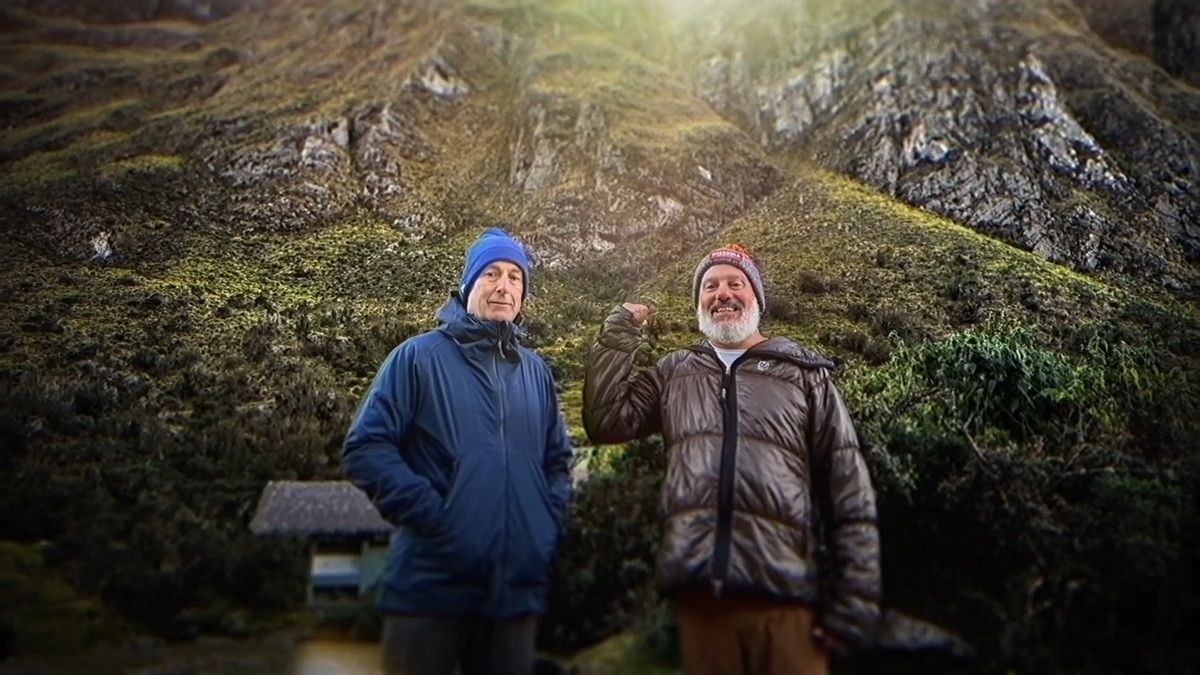
The film works best when comedy opens into reflection without announcing the shift. Odenkirk’s heart attack isn’t treated as the dramatic centerpiece, but it’s always somewhere nearby, especially when the climb starts to feel less like a lark and more like a dare issued to mortality. Cross comes across as both instigator and witness: the friend who proposed the insane thing and now has to keep walking beside the man who agreed to it.
LaHaie keeps the film moving at an amiable pace, and the editing understands that the best travel moments aren’t always the scenic payoffs. They’re the half-formed jokes, the bad meals, the language gaps, the tired silences, and the private laughter that would sound idiotic if explained to anyone else. Yo La Tengo’s music adds to that easygoing mood without trying to turn the hike into a spiritual awakening with better footwear. That both Odenkirk and Cross starred in the band’s music video for the 1997 song “Sugarcube” is extra nostalgic.
Michael LaHaie’s funny, ragged, unexpectedly tender documentary follows Bob Odenkirk and David Cross up a mountain and into a reflection on friendship, mortality, and staying in sync.
The documentary, of course, has limits. It’s slim, and some of the career material plays more like an affectionate scrapbook than a deeper reckoning. Fans of “Mr. Show” may want more, while newcomers may only get a partial sense of why this partnership mattered so much to a particular corner of American comedy. A few stretches also have the relaxed shapelessness of a vacation video, though admittedly one starring two extremely funny men with better cameras and worse altitude tolerance.
But I didn’t mind the looseness much, because the pleasure is in the company. Odenkirk and Cross are still magnificently in sync, even when they’re wheezing, bickering, or making the kind of joke that exists mainly because the other person is there to receive it. “Bob and David Climb Machu Picchu” is simple, funny, occasionally moving, and blessedly unpretentious. It understands that some friendships don’t need a dramatic breakthrough. Sometimes they just need a trail, a tent, a stupid bit that runs too long, and enough breath left to laugh before the next climb.

Michael LaHaie’s “Bob and David Climb Machu Picchu” had its world premiere at this year’s Tribeca Festival in the Spotlight Documentary category. The festival took place on June 3-14, 2026. Follow us for more coverage.


In the modern entertainment age, franchising for the sake of it has become entirely commonplace. So long as intellectual properties are financially successful and capable of regularly turning a profit, no franchise is ever truly finished. Strangely enough, over the past decade, this has become especially true even in the medium of animation. Where sequels to animated films used to be predominantly relegated to straight-to-DVD releases and bargain bins at discount stores, they are now the bread and butter of the industry.
I say all of this to say that it’s easy to get jaded and uber-cynical when you see a title like “Toy Story 5” preparing for release. However, what’s so wonderful about Andrew Stanton and Kenna Harris’ long-gestating sequel is that it’s about as far from an easy cash grab as humanly possible. Instead, this fourth sequel to Pixar’s seminal original launching pad of a film overtly embraces several of the themes and subtextual threads that have emerged organically throughout the series, recontextualizing the three-decade-long-running franchise of cinematic bangers in a way I had never really thought about before: modern mythology.
TOP FIVE THINGS ABOUT “TOY STORY 5”
5. The Dynamic Duo of Andrew Stanton and Kenna Harris
Toy Story 5 is written and directed by the duo of Andrew Stanton and Kenna Harris. Stanton is a longtime Pixar veteran, a creative who has a writing credit on the first Toy Story and who also directed films like Finding Nemo and the masterpiece that is WALL-E. Harris, meanwhile, is a newer voice within Pixar, having made their directorial debut on the Luca-adjacent short film Ciao Alberto. In this combination of old and new, Toy Story 5 is able to strike a balance that is both traditional and innovative.
The film is both ruthlessly focused and astoundingly audacious. The first act spends time juggling multiple story threads, all of which inevitably collide in the latter half of the film. However, the fact that Stanton and Harris have crafted a structure that allows for these big, ambitious narrative swings while still remaining firmly rooted in the distinct perspective of Jessie as a character is nothing short of mesmerizing. Toy Story 5 is very much a film that could have simply played the hits and raked in the cash, but Stanton and Harris’ combined work, alongside their collaborators at Pixar, results in something far more nuanced, articulate, and affecting.
4. The Music
Randy Newman has long been the stalwart of the Toy Story franchise, writing original songs for all of the films and orchestrating the entire musical scores for them as well. That remains predominantly the case in this fifth entry, though he does receive a musical assist from Taylor Swift as well, with her bespoke end credits song, “I Knew It, I Knew You.”
The song is killer (and that is coming from someone who was kind of dreading new Swift music after the debacle that was The Life of a Showgirl), and Newman’s score is fantastic. The venerated musician finds inspiration anew in key elements of the plot, such as the legion of marooned high-tech Buzz Lightyear toys, who get their own operatic vocal arrangements to underscore their scenes. Elsewhere, Newman digs even deeper into the roots of his earlier inspirations, most notably with Jessie as a character, who receives a stronger twang in her theme music, along with numerous symphonic renditions of the iconic “When She Loved Me” from Toy Story 2. All in all, it’s phenomenal music across the board, worth hearing on the best sound system you can get.
3. The Playtime Setpieces
The masterpiece that is Lee Unkrich’s Toy Story 3 opens with one of my favorite sequences from any Toy Story film: a playtime sequence that sees the animators bringing young Andy’s imagination to cinematic life in thrilling fashion. It’s exciting, hysterical, and altogether enthralling. In Toy Story 5, with the toys and the films as a whole having shifted over to Bonnie, she gets numerous instances of her own playtime set pieces, and they are all just as fantastic.
Incorporating an entirely new animation style and aesthetic, these sequences bring the imaginations of these young girls (newcomer Blaze gets a playtime set piece as well) to life in the same way that the third film brought Andy’s to life. These sequences are full of innovation and bursting with creativity, while also gaining an immense amount of traction from contrasting themselves with the playtime sequences from earlier in the franchise. They are thrilling, insightful, and enlightening all at once, more than worth the price of admission.
2. The Performances
There are so many fantastic vocal performances throughout Toy Story 5. Tim Allen is as reliably broad as ever as Buzz, but it’s the other two-thirds of the main trio here that really get to shine in unexpected ways. First up is Joan Cusack as Jessie, who gets to be this film’s full-on protagonist and absolutely rises to the occasion. Jessie has long been a rich character, but seeing her get more room to breathe is a bona fide treat, and Cusack delivers her greatest vocal performance of the series as a result.
Then there is Tom Hanks as Woody, who absolutely soars as a result of the exact opposite approach: he’s unencumbered by the narrative and instead freed up to go kind of bonkers. In installments past, Woody has often been relegated to the role of the comedic straight man in one way or another. But here, Woody is unleashed, and Hanks subsequently goes completely off the rails. This is the most scenery he has ever chewed in one of these movies, hamming it up with several line deliveries in absolutely gut-busting ways.
Also, the scene-stealer of the movie is Conan O’Brien as Smarty Pants, a tech-based toilet aid. Conan goes full-blown gonzo in the ways that only Conan can, while also delving into some unanticipated nuance and pathos. All around, miraculous stuff.
1. What They Grow Beyond
The central narrative hook of Toy Story 5 is “tech versus toys.” There are about a million different ways this could have gone horribly wrong, and yet Stanton, Harris, and the team manage to pull it off with aplomb. The film is ultimately about the ways childhood has changed over the course of the franchise’s run: how technology has infiltrated this once-idyllic daydream of playtime and the implications of outsourcing childhood imagination to a series of devices.
On top of this, the franchise’s treatment of its characters remains consistent and earnestly authentic as ever. The way the Toy Story films continue to function as “yes, and” storytelling, building off each installment in ways that feel organic and deeply satisfying, is astounding. I don’t want to spoil some of this film’s greatest moments, but suffice it to say it engages meaningfully with its past while also charting a new course forward.
Where the previous two installments each brought things toward a sense of closure for the series as a whole, Toy Story 5 distinctly does not. Instead, it recontextualizes the franchise and redefines what a Toy Story film can be in the process.
GRADE
(A-)
Andrew Stanton and Kenna Harris’ Toy Story 5 is a Pixar film that more than lives up to the studio and franchise’s reputation. In an entertainment ecosystem full of seemingly unyielding franchises that keep proliferating for the sole sake of producing more monetizable content, Toy Story 5 stands in stark contrast as a passion-filled artistic statement. It is almost certainly not the sequel many Toy Story fans want, but it is instead the one they need: a film about the intrinsic beauty of growing, to infinity and beyond.

Discover more from RGM
Subscribe to get the latest posts sent to your email.

Welcome to an exciting year-long project here at The Nerdy. 1986 was an exciting year for films giving us a lot of films that would go on to be beloved favorites and cult classics. It was also the start to a major shift in cultural and societal norms, and some of those still reverberate to this day.
We’re going to pick and choose which movies we hit, but right now the list stands at nearly four dozen.
Yes, we’re insane, but 1986 was that great of a year for film.
The articles will come out – in most cases – on the same day the films hit theaters in 1986 so that it is their true 40th anniversary. All films are also watched again for the purposes of these reviews and are not being done from memory. In some cases, it truly will be the first time we’ve seen them.
This time around, it’s June 13, 1986, and we’re off to see Karate Kid Part II and Legal Eagles.
Karate Kid Part II
Who knew this film would do so much work to make Cobra Kai the series it would become?
Six months following the events of the first film, Daniel finds himself at a crossroads as Ali has broken up with him and his mom is moving for work again and he doesn’t want to go. Mr. Miyagi (Pat Morita) Offers to take Daniel in, but as they work on what will become his room, he receives a letter asking him to come him to Okinawa as his father is dying. The two pack their bags and head to Japan where Mr. Miyagi’s past comes back to haunt him as Daniel looks forward to a potential new romance.
The film is fine, but it is definitely not the same quality as the first. Where the characters go story wise makes sense, but it still doesn’t feel that much like we needed to follow them any further in their lives.
As we all know in 2026, howver, their stories were far from over.
Where to watch: Available to stream.

Legal Eagles
There are some films where you wonder if anyone ever looked at a script and thought, “Could we maybe have one less plot?”
Tom Logan (Robert Redford) is an Assistant District Attorney who is possibly going to run for DA when his boss leaves the position. Laura Kelly (Debra Winger) is representing a performance artist, Chelsea Deardon (Daryl Hannah) who just can’t seem to get out of her own way. Everyone collides and starts making everything just that much more complicated for everyone involved.
I like every who stars in this movie, but the story is just so pointless. It has a weak foundation and instead of trying to build it up, they just keep piling one more thing on top of another and pretending that is how storytelling works.
Great cast. Horrible script.
Where to watch: Available to stream.
1986 Movie Reviews will continue on June 27, 2026, with American Anthem, Labyrinthm Running Scared, and Ruthless People.
-

 Wisconsin6 minutes ago
Showers Return to Southern Wisconsin for Father’s Day
-

 West Virginia9 minutes ago
Blennerhassett Island to commemorate West Virginia Day Saturday – Mountain Media, LLC
-
Wyoming14 minutes ago
How Investors May Respond To Black Hills (BKH) Customer‑Funded Wyoming Data Center Infrastructure Plan
-

 Crypto21 minutes ago
Latam Insights: Inside Argentina’s Tax Relief for Exchanges and El Salvador’s Growing Bitcoin Stack
-

 Finance24 minutes ago
San Diego County finances teetering toward structural deficit, watchdog study finds
-

 Fitness29 minutes ago
At 31, I’m the Strongest I’ve Ever Been—This Female-Focused Training Plan Is to Thank
-

 Movie Reviews39 minutes ago
‘Bob and David Climb Machu Picchu’ Tribeca 2026 Review: A Travelogue of Old Friends, Older Knees, and Same Absurd Timing
-
World51 minutes ago
In Taylor Swift’s beach town, every clue becomes a wedding rumor


