Hawaii
Kilauea: Hawaii volcano erupts again spewing toxic gases and volcanic smog


Hawaii’s Kīlauea volcano has entered its fifth eruptive episode since late December 2024, resuming activity at 2:57 p.m. HST (7:57 p.m. ET) on January 22, 2025.
Fountains of lava between 16 and 33 feet high have been observed, accompanied by a short lava flow from the volcano’s north vent.
The U.S. Geological Survey (USGS) reported seismic tremor increasing as the eruption began, with ongoing inflation beneath Halemaʻumaʻu crater indicating continued activity.
“Once sufficient pressure builds, it can push magma up to the surface to start another eruptive episode,” Katie Mulliken, a geologist at the Hawaiian Volcano Observatory (HVO), told Newsweek.
“Episodes are marked by the onset of lava fountains and rapid deflation of the source magma chamber.”
USGS
Why This Matters
Kīlauea is one of the most active volcanoes in the world, having erupted dozens of times since 1952.
While the current eruption is by no means the largest or longest at the volcano, significant hazards persist for residents and visitors.
How Dangerous is the Hawaii Eruption?
Kīlauea’s current eruption activity remains confined within the Halemaʻumaʻu crater and Kaluapele, located in Hawai’i Volcanoes National Park. While the activity is contained within a closed area of the National Park, the HVO has warned of several hazards.
Volcanic gas emissions of water vapor, carbon dioxide and sulfur dioxide are the “primary concern,” as they can be blown over large distances. Sulfur dioxide, in particular, reacts with the atmosphere to form a visible haze known as volcanic smog, or “vog”.
Anyone’s health can be impacted when inhaling vog, but sensitive groups such as people with respiratory conditions, older adults, children and pregnant women should exercise extra caution.
Current air quality data from the Hawaii State Department of Health shows conditions have not deteriorated as of yet, with all monitoring stations at “good” levels on the island.
Pele’s hair—strands of volcanic glass produced by lava fountains and carried by the wind—is another hazard associated with eruptions at Kīlauea.
“As lava is ejected through the air, lava particles can be stretched apart, and the material in between can become very thin and form the glassy strands,” Mulliken said.
“It can sometimes cluster and tangle together on the ground, giving it the appearance of a tumbleweed.”
Mulliken confirmed that during the fourth eruptive episode, which ended on January 18, Pele’s hair reached residential communities within several miles of the summit.
She added, “Hazards associated with Pele’s hair are similar to those associated with volcanic ash. Both are abrasive particles with sharp edges that can irritate eyes, respiratory systems and skin.
“Most Pele’s hair is too large to be inhaled, but people with existing respiratory diseases, like asthma, might find that their symptoms are worse when they are exposed to airborne volcanic particles.”
Anyone in the area is advised to limit exposure to volcanic gases and Pele’s hair where possible.
What Happens Next
Live webcams positioned at Kīlauea’s summit reveal the eruption was still ongoing as of 2:14 a.m. HST (7:14 a.m. ET).
HVO is continuing to monitor the situation and is expected to release another update later this morning.
Each eruptive episode at Kīlauea has lasted between 14 hours and 8 days, separated by a pause of 1 to 12 days. Its unclear how long this current episode will last.
Do you have a tip on a science story that Newsweek should be covering? Do you have a question about volcanic eruptions? Let us know via science@newsweek.com.



HONOLULU (HawaiiNewsNow) – It’s shaping up to be a slower-than-usual summer for Hawaii’s tourism industry, but business leaders hope events that market the islands’ unique local food and products can turn that around.
The state expects total visitor arrivals to grow only about 2 percent this year. Numbers slid half a percent in April from the previous year, with the largest market, West Coast tourists, falling nearly 5 percent. The statewide hotel occupancy rate averaged 76.4 percent.
Economists blame higher airfares, rising inflation, fewer international visitors and uncertainty following the March kona low storms.
State-supported events like the Hawaii Lodging & Tourism Association’s (HLTA) Hawaii Hotel and Restaurant Show and DBEDT’s Hawaii Made Conference aim to boost tourism by promoting products you can only find in Hawaii.
“We’re going to continue to struggle, but we can’t stop promoting. We can’t stop advocating,” said HLTA President/CEO Mufi Hannemann. “If you can travel during these times, you’re going to come and have a wonderful experience in Hawaii whether you’re just coming for sun and surf or you’re coming here to immerse in our culture or to do business, this is the place to come.”
And those who do come are spending more.
At the Hotel and Restaurant Show this week, local food manufacturers hoped to secure more buyers in the hospitality industry.
Many rely on business and leisure visitors trying their products while in Hawaii and taking them back home where they promote it.
“The traceability that you want to know where your food is coming from,” said June Rees, general manager of Kauai Shrimp, which has 40 ponds off the coast of Kekaha. You’ll find their shrimp on many menus across the islands.
“There are a lot of people that heard about us but never tried, so this show gives us exposure to the new restaurant or chef that have heard about the name but never really tried the product.”
But fewer tourists mean less sales and slower business growth and investment.
Jina Wye is the founder of Okonokai, which makes snacks from native seaweed grown off the Kona coast on Hawaii Island.
“It’s like a superfood that everyone should be eating everyday,” she said. “There’s a lot of just missing infrastructure for manufacturing, but that’s something that we’re working on. It’s actually why I’m part of this whole like DBEDT pavilion because the state is really working hard to develop more infrastructure.”
For the family behind Aloha Star Coffee Farm, getting their award-winning premium kona coffee into airports, hotels and restaurants is key.
“Getting the opportunity to find the market niche that we need,” said Karina Rodriguez, co-owner of Aloha Star Coffee. “We are small, that sometimes we don’t have all the resources for marketing and, and going to the biggest stores, and we are working on that.”
Food entrepreneurs will get another chance to promote their products at DBEDT’s Hawaii Made Conference this Tuesday at the Sheraton Waikiki. Click here to register and for more information.
The 16th Hawaii Food & Wine Festival is another event that promotes local chefs and restaurants while promoting tourism. It spans three weekends from Oct. 16 to Nov. 8 across three islands. Find information here.
Copyright 2026 Hawaii News Now. All rights reserved.


HONOLULU (HawaiiNewsNow) – A piece of equipment designed to provide temporary water access across Oahu is now being targeted by thieves, prompting concerns from officials over rising losses and illegal water use.
The Board of Water Supply rents out temporary meters for construction sites, public events and emergency use when potable water is needed in areas without direct service.
But officials say some of the devices are being stolen despite heavy security measures.
At installation sites, the meters are wrapped in thick steel chains and secured with multiple heavy-duty padlocks to deter tampering and theft.
“For somebody to try and take it, because you saw the chain, it’s the big links. They’re thick links, so you’d have to come with a grinder or an extremely heavy-duty bolt cutter. So it’s not impossible to remove it, but it requires quite a bit of effort to remove it,” said Kathleen Pahinui, public information officer for the Board of Water Supply.
According to the agency, about 22 temporary fire hydrant meters have been illegally removed over the past two and a half years. Eight of those thefts occurred in just the past three months.
Officials say the motive behind the thefts is not confirmed, but potential drivers include scrap value or misuse of the meters to divert water for unauthorized use.
“And we don’t want people basically stealing water because then we all end up paying for that theft,” Pahinui said.
Each temporary meter costs about $3,000 to replace, and the Board of Water Supply says responsibility for protecting the device falls on the permit holder once it is installed.
“The person who has the contract with us has to replace it,” Pahinui said.
State Sen. Brenton Awa said one stolen meter on the North Shore had been serving the Haleiwa Seed Bank, where volunteers are planting coconut and ulu trees for the community.
“We set this up with the Board of Water so that we’re within the rules, we’re paying for the water, for the project, for the community. And then it just wasn’t here one day,” Awa said.
“It’s a piece of metal on the side of the road. Who’s going to steal this thing? But apparently… it’s worth something,” Awa added.
Under Hawaii law, scrap yards are prohibited from purchasing municipal, utility or state owned equipment without proper documentation.
Recyclers say materials commonly found in the meters, including brass and bronze, typically sell for about $2 to $3 per pound depending on grade. While the scrap value is relatively low, companies say functioning used meters can resell for hundreds of dollars.
The Board of Water Supply is urging the public to report any suspicious activity involving temporary meters by calling (808) 748-5000.
Copyright 2026 Hawaii News Now. All rights reserved.
-
 Lifestyle9 minutes ago
What does freedom actually look like? : It’s Been a Minute
-

 Technology19 minutes ago
Barret Zoph is out at OpenAI again after just five months
-

 World24 minutes ago
Iran hardliner behind US deal warns Tehran won’t honor agreement if Trump fails to deliver
-

 Politics31 minutes ago
Top GOP lawmaker rallies around conservative school board member facing calls to resign
-

 Sports39 minutes ago
2026 World Cup Odds: How Far Can Mexico Go After Winning Group A?
-

 Technology46 minutes ago
6 in 10 identity crimes now begin with a new account
-
 Business49 minutes ago
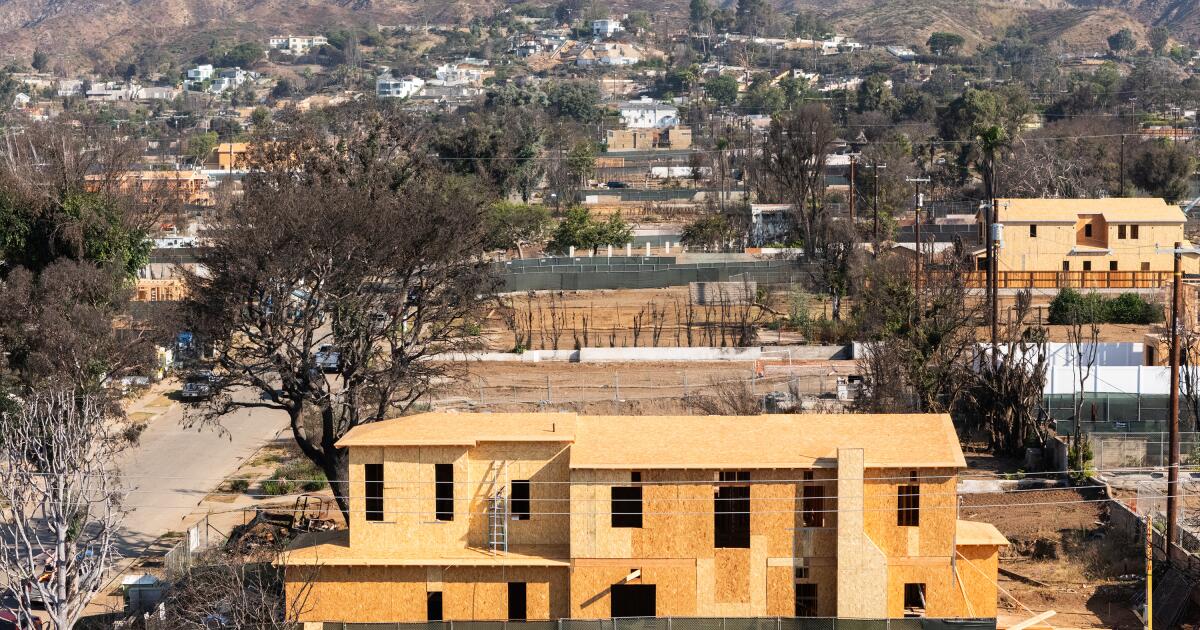
January 2025 wildfire victims seek tougher penalties against State Farm over claims handling
-
 Entertainment54 minutes ago
Review: ‘Sugar,’ with Colin Farrell as an alien private eye, gets a new and improved second season

