Lifestyle
How a Driving Instructor to the Stars Spends Her Sundays


Shanti Gooljar recently got a $2,000 tip.
She runs a driving school in Manhattan that caters to a high-end clientele, and only works on referrals. She says she has taught the offspring of a few names you might know:
Jerry Seinfeld. Rupert Murdoch. Vera Wang. Katie Couric.
She had initially worked as a paramedic. But after two years, she decided she did not like it and turned to a driving school in the Bronx. Ms. Gooljar quickly realized she had found her calling.
“I just got real good at what I was doing,” she said. The teens she taught connected with her unfiltered, no-nonsense style, and they soon began giving her number to their friends. So she bought her own car and went freelance. Ms. Gooljar, 62, opened her own school in 2014.
“That was 10 years ago,” she said. “And look at me now.”
She owns the Empire State Driving School on the Upper West Side, which has five other instructors. Behind-the-wheel lessons go for as much as $200 per hour, and she works eight hours per day, seven days a week.
Ms. Gooljar lives in a three-bedroom apartment in the Bronx, near where she lived when she immigrated from Guyana with her four siblings in 1972. After the births of her sons — Philip, 43, and Michael, 38 — she and her husband,Vinny Gooljar, upgraded from a studio to a ground-floor space next to a police station, where she now lives alone. Mr. Gooljar, to whom she was married for 43 years, died of a heart attack in 2022.
“After he died, my family wanted me to go to Florida — my mom is there, and my brothers and sisters,” she said. “But I’m at the age where I like the same routine.”
ON AUTOPILOT I wake up at 5 a.m. I don’t need an alarm — it’s all in my head.
Depending what time my first lesson is, I’ll usually stop by Dunkin’ for a small hot coffee with cream. I’m a regular at a few of them — the one in the Bronx on Webster Avenue, and the one in Harlem near 122nd Street. They all know me — or rather, I make myself known to them!
FIRST PICKUP I often have my first lesson at 8 a.m. I’ll either meet the client at their house, or they’ll come to the school in Lincoln Square. I get a lot of prep school students, but also some older people. I’m teaching a 94-year-old right now!
I often take people up, around and through Harlem. I don’t teach downtown, especially not now with congestion pricing — you can’t get anywhere.
BACK TO BACK I roll straight into my next lesson at 10 a.m. I usually fit in four two-hour lessons per day.
The key is to build up their confidence right away. Driving in Manhattan is like driving anywhere. You have to know what you’re doing. If the driver behind you is beeping their horn, move around and let them go.
I don’t allow my students to argue with me, because I’m more experienced. I’d never gotten a speeding ticket in 45 years of driving until September, when I was driving to my girlfriend’s funeral in Virginia on the highway. The officer told me I went 10 miles over the speed limit — really?!
PIT STOP Around 12:30 p.m., I grab another coffee from Dunkin’ and take a pee break. Sometimes I’ll have a salad, and then when I come home I get something to eat. I don’t eat a lot — I need my coffee, though!
THERAPIST HOUR When I’m teaching these kids, I’m not just their driving instructor — I’m also their therapist. They tell me things they’d never tell their mothers.
One of the girls I’m teaching right now, her boyfriend broke up with her last week. She’s 27. It’s better they break up now than they wait until they get married. She’s young. She can move on. I know it’s hard when you’ve been with someone for that long, but it’s better to have it happen now than later.
HEAD ON A SWIVEL Don’t think I’m distracted, though! I’m so good at what I do that I can sit there and have a conversation and still grab that steering wheel out of your hands, stop the car and move across all the lanes to save you.
This time of year, it gets dark around 4:30, so my last pickup is around 3 p.m. When it comes to taking the road test, I’m very proud of my track record. I can count on one hand the number of people who failed last year.
My last lesson ends around 5 p.m., and my drive home is about half an hour, depending on where I end up.
DINNER PLANS I’ll often grab dinner with my son Philip, who lives in Connecticut. Sometimes we’ll go to a place on City Island — the Original Crab Shanty — and eat lobsters and crabs.
Or sometimes I’ll cook for him at home. I can cook real good. I can cook anything. He likes beef curry. Or, if he’s busy, I’ll eat alone. If it’s just me, I’ll have a bowl of oatmeal for dinner, or Cream of Wheat. I love that. I’m very easy to please.
WASH IT OFF I’ll hop in the shower around 7 or 8. I have always been and always will be a night shower person. Especially when it’s so cold, who wants to get up at 5 and take a shower and have your hair all wet?
SADDLE UP I love “Yellowstone” with Kevin Costner. I don’t know what I’m going to do now that it’s ended. His character’s daughter, Beth — she’s the bomb. I’d love to meet her. Maybe Kelly Reilly, who plays her, needs driving lessons — you never know!
RINSE AND REPEAT I crawl into bed between 8 and 8:30. When Vinny was alive, we used to go places. Now, I don’t go anywhere. What keeps me going is work: I get up and go to work, take a shower, come home, eat dinner, then wake up the next morning and go again.
I’m not ready to retire yet, but I’m laying the groundwork. My son Philip is learning how to run the school — scheduling, how to hire the right people, monitor the money, pay the bills. I’m proud that I’ve hired good people and made such a name for the school. That’s most important — getting good people to work for you.
EARLY TO BED I’m asleep by 8:30. I have to be ready to go at 5 a.m. for another full day of lessons.



Illustrations copyright © Ross Collins 2026/Courtesy of Faber & Faber
Author Julian Gough was giving a talk to children one day when they gave him the best gift an author can get: an idea.
“I was telling them how you make up stories and how you invent stories,” Gough remembers. “What makes a story a story? You have to have stuff happen and then the stuff that happens has to have consequences.”

The kids came up with a story about someone who kicked someone. And then that character kicked someone else. And then, Julian Gough says, “one kid just sort of jumped up in his seat in the class and shouted, ‘The kick could go ’round the world!’ and I thought, ‘Oh my God, that’s a book!’”
When Tad Kicked Vlad begins on Tad’s birthday. Before he’s gotten to eat any of his own birthday cake, Tad’s best friend, Vlad, eats the very last slice. Tad is mad. So Tad kicks Vlad.
Vlad kicks Bill. Bill kicks his twin sister, Jill. And before you know it, Tad’s kick has kicked off a chain of kicks that travels all the way around the world, and back to Tad on his next birthday. At which point, Tad farts in Vlad’s face. And on it goes.
Ross Collins illustrated When Tad Kicked Vlad and Gough admits he didn’t give him an easy job. When Gough sends the kick off to the big city, he writes:
“It kicked everyone in the playground! Then it kicked everyone in the park! And then it kicked everyone in the stadium! Fifty-five thousand, five hundred and fifty-five people kicked each other, and the referee had to give so many red cards his arm got tired. After the game, the kick went for a hot dog.”

Illustrations copyright © Ross Collins 2026/Courtesy of Faber & Faber
Collins says as an illustrator, “you’re reading that going, ‘This could be like the best thing I’ve ever had to illustrate or the worst and it’s really hard to know what.’” His way out of drawing something complicated was to draw something even more complicated: an entire city as viewed from the sky. “I drew the path of the kick working its way around the city,” he explains, “so that a child could work their way around the city and see all those points where the kick had gone up and down and ’round buildings and into the stadium.”
When Tad Kicked Vlad is about twice as long as other picture books. Collins says this gave him a lot of space to play around. “I could also break up the tempo of the book with a lot of illustrations where it’s just complete chaos on a larger scale,” he explains. One illustration features the kick going up and down the aisle of an airplane 23 times. And also there’s a chicken.

Illustrations copyright © Ross Collins 2026/Courtesy of Faber & Faber
“The one thing that, you know, if you put it into an illustration, that means that all chaos has just broken loose is if you put a chicken in there,” says Collins. “There shouldn’t be a chicken in a plane.”
Collins first drew everything in pencil before using watercolor. And then he tackled the line work. “Normally I would use a charcoal line, but this book is too detailed for a charcoal line,” Collins says. So, he used colored pens instead. “I tried to make it as clean as I possibly could so that you could actually read the action that was going on.”
Gough says the illustrations remind him of The Adventures of Tintin, by Belgian cartoonist Hergé: clean, well-defined, but grounded in reality and funny. “I was being pretty cheeky with some of the things I was asking for,” Gough admits, laughing. “You really pulled it off.”

Illustrations copyright © Ross Collins 2026/Courtesy of Faber & Faber

Where are the best bakeries to buy celebration cakes? I want to get a cake for one of my college friends — we’ve been friends for 40 years — who is retiring from teaching kindergarten. I’m having a small brunch party for her at a restaurant in Long Beach. It’d be great if the bakery is in Pasadena or on the East Side, but I will travel for awesome cake! She loves chocolate and espresso martinis. — Roberta Tragarz
Looking for things to do in L.A.? Ask us your questions and our expert guides will share highly specific recommendations.
Here’s what we suggest:
Roberta, I think it’s so sweet that you are throwing a retirement party for your longtime friend. In my opinion, no celebration is complete without a good cake and I, too, will drive just about anywhere for one that I think the recipient would love. Here are some bakeshops that might just have “the one.”
With Pasadena being convenient for you, you’re in luck. Times restaurant critic Jenn Harris calls the city a “pastry and dessert destination.” She writes about six stellar new bakeries that have opened within a one-mile radius, including Salted Butter Company, which offers a gorgeous round cake topped with seasonal florals, and Sweet Red Peach, which can create just about any custom cake you can dream up.
Given that your friend loves chocolate, consider buying a cake from Proof Bakery in Atwater Village. The worker-owned cooperative shop used to sell a chocolate espresso cake, which would’ve been perfect because your friend loves espresso martinis. However, they swapped it out for a chocolate blueberry cake with chocolate mascarpone mousse and blueberry compote. Thankfully, it looks just as delicious. And you can still make Proof’s chocolate espresso cake at home.
No L.A. bakeshop has been recommended to me more than SusieCakes. With multiple locations spread across the county including one in Pasadena, the classic bakery makes an array of delightful desserts: old-fashioned chocolate cakes, flourless chocolate cakes, rainbow sprinkle cakes and even a cake flight so you can try all of their signature slices. Former Times food editor Amy Scattergood wrote about SusieCakes, “You can pick the flavor of cake and color of buttercream frosting, get stuff written on top, even order a pretty impressive Barbie cake (they provide the doll; the cake is the dome of her massive skirt).” A “Teacher Barbie” that looks like your friend would be adorable.
Now, this isn’t a traditional cake but hear me out. My good friend Tori Johnson had a cinnamon roll cake at her recent birthday party and I haven’t been able to stop thinking about it since. It was gooey, soft and slathered in a classic tangy cream cheese frosting. Her boyfriend got it from BadAsh Bakes, the viral bakery based in Pasadena best known for its cinnamon rolls, cookies, brownies and layer cakes. You can preorder the cinnamon roll cake, which comes in a classic, red velvet or matcha flavor.
For an eye-catching, avant-garde cake that you won’t find at a traditional bakery or grocery store, consider ordering a custom dessert from Celeste Perkins, the L.A.-born baker who makes “cakes with big personalities, for big personalities,” as Times contributor Tasbeeh Herwees writes in Image. Perkins, who works out of her home kitchen, got her start baking cakes for friends and has since made them for an array of celebrity clients including Tunde Adebimpe (frontman for the band TV on the Radio), Japanese American singer Mitski and British singer Suki Waterhouse. Not only are the cakes yummy, they are photo-worthy.
Now for some rapid-fire picks across L.A.: My colleague Jason Lew recommends Phoenix Bakery in Chinatown, specifically the strawberry cake with sliced almonds. Times Features reporter Lisa Boone also suggests Valerie Confections in Glendale. “I’ve ordered cake from Valerie several times for different occasions and they’re always really special, pretty and so good,” she says. Her favorite is the fallen fruit cake, but the bakery also sells a flourless chocolate almond cake and German chocolate cake. There’s also République, the French-inspired bakery and cafe known for its salted caramel chocolate cake. Finally, you can never go wrong with Porto’s, which sells an array of cakes including chocolate raspberry, Parisian chocolate, mango mousse, strawberry cheesecake and more.
Retiring is such a big deal, so I love to hear that you are celebrating it as such. I hope that these recommendations help you find the perfect cake for your friend. Be sure to send us a photo of the one that you choose. Have a wonderful time!
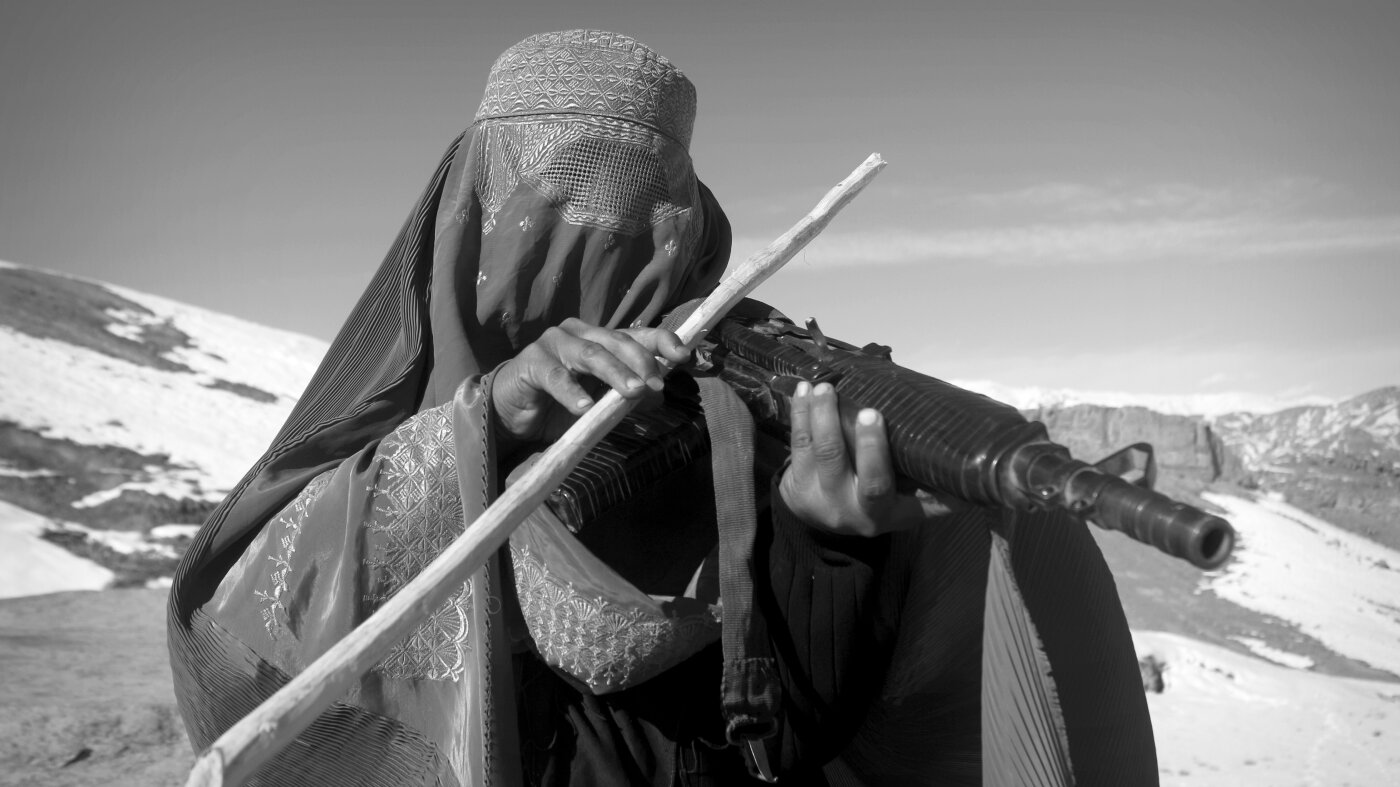
This photo, from a series of pictures by two anonymous cousins, is entitled “The Music of Poverty and Violence.” The subject is playing an automatic weapon as if it were a string instrument.
Mahnaz Ebrahimi|January 2026
hide caption
toggle caption
Mahnaz Ebrahimi|January 2026
Do these photos depict fiction or reality … or both?
A bicyclist whose dark, flowing burka enfolds her body from head to ankles sits with hands perched on the handlebar, seemingly undaunted by the meshed veil that covers her eyes and restricts her sight. Her determination is suggested by the photo’s title, “It will not stand in my way.”

This photo of a woman wearing a burka while riding a bicycle is titled “It will not stand in my way.”
Somayeh Ebrahimi/February 2025
hide caption
toggle caption
Somayeh Ebrahimi/February 2025
A similarly clad figure swirls so swiftly that the billowing fabric appears to lift her into the air like a bird in flight; scribbled in Farsi across the brick wall in front of her is the phrase, “I dreamed that my homeland was prosperous.”

“Courage means being afraid and trembling in the face of adversity, but with the courage, dance!” says photographer Somayeh Ebrahimi.
Somayeh Ebrahimi | February 2025
hide caption
toggle caption
Somayeh Ebrahimi | February 2025
A third burka-draped figure places an automatic rifle on her shoulder as she would a violin, “bowing” it with a long wooden stick as if to make music. The photo’s title is “The Music of Poverty and Violence.”
Two Afghan cousins who created these starkly evocative black-and-white photographs. They do not want their real names revealed because they fear Taliban retribution for their work. So they use the pseudonyms Mahnaz Ebrahimi (born in 2000) and Somayeh Ebrahimi (born in 2001). They live in a remote Afghan mountain farming village. They and their families, all members of the Hazara ethnic group and Shia Muslims, had previously worked as carpet weavers in Kabul. When the Taliban regained power in 2021, they left, seeking refuge from the repression and persecution permitted under the laws of the country’s ultra-conservative Sunni rulers.
Neither cousin had any training in photography when they started taking photos on their cellphones in 2022 or so, says Madrid-based curator and gallery director Edith Arance. She came across their work on Instagram and was struck by the skillful melding of their bleak surroundings with messages ranging from the poetic to the political.
“I know a little Farsi [the Persian language] so I could approach them,” she says. The cousins and Arance worked together via Instagram. In November 2024, Arance presented their work in Madrid, at her Galería Sura, which specializes in emerging photographers from Southwest Asia and Africa.
The photos, which document the sparse reality of the cousins’ lives today and their hopes for a less gloomy future, are on display through May 30 at the Photoville Festival in Brooklyn, New York. Arance uses the literary term auto-fiction to describe their work because, as in that genre, these photos also combine autobiography and fiction. While the images are set against the autobiographical backdrop of where they live, the poses struck by those photographed and their interactions with their physical and natural surroundings suggest interior dreams and fantasies, played out before the camera.
For Arance, the use of light and shadow, and the use of trees, leaves, plants and butterflies as symbols, are also akin to the literary style known as magic realism. The captions and poems accompanying were written by the cousins and translated by Arance.
In “Life Is Today” a young girl dances on a barren ridge overlooking snow-capped mountains. Arance comments: “There’s a sense of play, which should not be unusual. But this is Afghanistan, and this girl is not wearing a veil or a burka, she is just being free. Her shadow looks like an airplane flying away.”

This photo is titled “Life is today.” The photographers say the image is a call to live in the present as the future is uncertain.
Somayeh Ebrahimi/March 2024
hide caption
toggle caption
Somayeh Ebrahimi/March 2024
Other photos similarly question the highly constricted lives of women under Taliban rule.
“Liberation” shows a woman, her back turned to the camera showing the decorations in her hair (which are prohibited by the Taliban), as she throws her burka up and away into the sky. In its accompanying poem, Mahnaz Ebrahimi writes, “In the name of being a woman,/today I will free myself from oppression/and darkness to the breeze/to the height of the sky.”
“Girl by the Door” emphasizes contrasts in light and shadow, as a girl holding a tattered schoolbook stands with half her face hidden by a pale wooden door with multiple chains, the other half dimly lit against the dark background behind her.
The commentary by Mahnaz reads: “The image here is imbued with symbolism. For a time, after learning about the new law [prohibiting education for females after sixth grade], girls risked their lives by going to school. Attacks followed, intended to discourage families from allowing their daughters to attend classes throughout 2022. Light, knowledge, life resides outside. Darkness is the interior of the domestic space to which girls and women are relegated.”
The dichotomy between constriction and freedom is dramatized in the photo of a young girl wearing sunglasses and laughing with uproarious delight titled, “When Will We Laugh From the Bottom of Our Hearts Again”? But there is still the possibility of youthful delight, as shown in “Autumn Games,” in which three young girls throw leaves up into the sky.
Their photos pose questions about other restrictions imposed on girls and women. “Vestiges of the Present” captures a female figure in colorful garb, shown only from the shoulders down, holding a boombox that her still stance tells us is silent; “music, dancing and singing are prohibited for women [in public] in Afghanistan,” the caption reminds us.

This photo addresses the Taliban prohibition forbidding women to make music in public.
hide caption
toggle caption
In an outdoor scene, a young girl cowers as an unseen gunman points a rifle at her, but she holds on to a school notebook with a message in Farsi that reads, “There is no justice,” referring to the limits on girls attending school.
Taken as a whole, Arance says, the photos declare that “The Taliban may say that this is the destiny of women in Afghanistan, but I’m saying this is not my destiny.” As for that hoped-for future, aspirational glints appear in photos such as “From the Depths of Darkness,” which shows, against a black backdrop, a woman holding in her hand a mound of dirt and twigs from which a butterfly is emerging.
Similarly, “And the Glory of Growing Happens Within Us” captures, in profile, a burka-covered woman cradling in her hands a growing, blossoming plant, and perhaps finding inspiration in the ongoing life of its sprouts and buds.
Diane Cole writes for many publications, including The Wall Street Journal and The Washington Post. She is the author of the memoir After Great Pain: A New Life Emerges. Her website is DianeJoyceCole.com
-

 World1 minute ago
Mexico to host Iran team during 2026 FIFA World Cup amid US tensions
-
 News31 minutes ago
‘My body carried me,’ Elizabeth Smart says. Now she’s celebrating it
-

 New York2 hours ago
This Memorial Day Starts a Summer That Is Longer Than Most
-

 Los Angeles, Ca2 hours ago
Man found shot to death in car in Boyle Heights: LAPD
-

 Detroit, MI3 hours ago
MSU Gaining Traction in Recruitment of Detroit-Area Athlete
-

 San Francisco, CA3 hours ago
SF 19th Avenue repavement project complete, all lanes now open: Caltrans
-

 Dallas, TX3 hours ago
11 Food Tours in Dallas That Let You Eat Your Way Across the City
-

 Miami, FL3 hours ago
Miami Earns Two Seed as Regional Destination is set for the Path to Omaha

