News
How Jan. 6 will be different this year. And, who took home a Golden Globe award

Good morning. You’re reading the Up First newsletter. Subscribe here to get it delivered to your inbox, and listen to the Up First podcast for all the news you need to start your day.
Today’s top stories
Today is Jan. 6, the day Congress is scheduled to certify President-elect Donald Trump’s victory in the Electoral College. The atmosphere is expected to be very different from four years ago, when a mob of Trump supporters stormed the U.S. Capitol. Around 140 police officers were injured. While the FBI has classified the attack as an act of domestic terrorism, Trump has referred to it as a “day of love.” He has also promised to pardon people charged for their involvement in the attack.
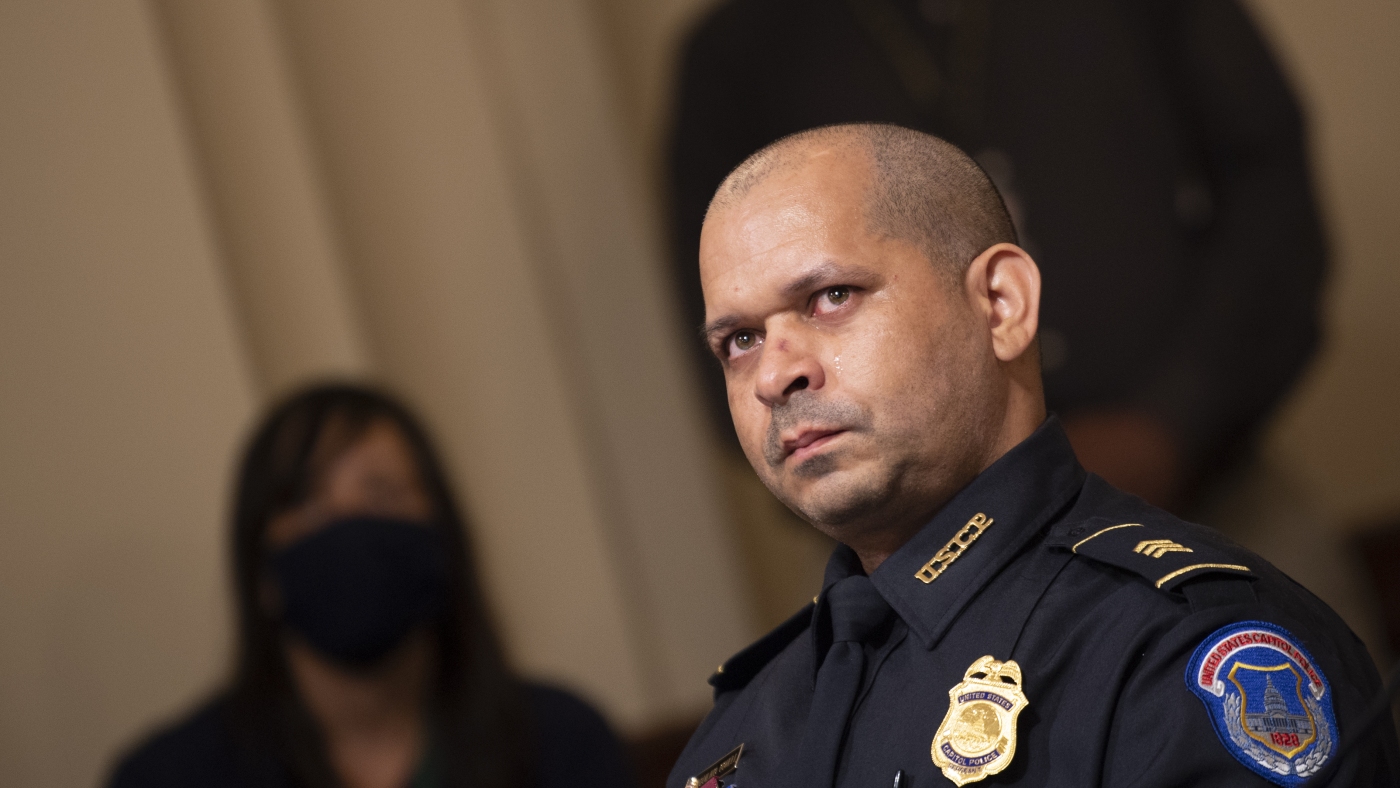
Capitol Police Sgt. Aquilino Gonell watches a video of rioters during a hearing of the House select committee investigating the Jan. 6 attack on the U.S. Capitol on July 27, 2021 in Washington, D.C.
Brendan Smialowski/Pool/Getty Images
hide caption
toggle caption
Brendan Smialowski/Pool/Getty Images
- 🎧 When Trump ran for president again, he embraced the idea that the violence on Jan. 6, 2021, was overblown and said there were no guns. NPR’s Tom Dresibach tells Up First that this claim is false. Trump also said his supporters at most “got a little out of hand” — a narrative that judges who heard the more than 1,500 cases have dispelled. Trump promised pardons on Day One in office but has been vague about who would receive them. Aquilino Gonell, who was a Capitol Police sergeant during the attack and whose injuries forced him to retire, says he feels betrayed by the election. “What did I risk my life for?” Gonell says.
- ➡️ Some of the people who stormed the Capitol believed in the QAnon conspiracy theory that claims Trump is involved in a secret battle against evil members of the alleged deep state. After the attack, multiple social media platforms pushed to ban QAnon content. Here’s why it hasn’t gone away.
- ➡️ There are subtle ways this year’s certification process will differ from 2021’s due to Congress passing new rules. These are some of the key changes.
CNN is fighting a defamation lawsuit in court today. After the Taliban took control of Afghanistan in 2021, CNN reported as part of its investigation into claims of “black market rescues” that a security consultant was among those offering to evacuate people desperate to flee the country — for a price. When the story aired, a photo of Zachary Young, a security contractor who had offered to evacuate people from Afghanistan, was shown. Young says he sued CNN to clear his name.
- 🎧 Young’s attorneys say his character was maligned, and he wasn’t doing it for individuals but for deeper-pocketed organizations like U.S. and European nongovernmental organizations. His attorneys claim he lost millions of dollars due to this story, according to NPR’s David Folkenflik. CNN apologized some months after the story first appeared, saying it shouldn’t have applied the “black market” label to Young. The network’s lawyers have taken a more aggressive tone, saying Young lied to CNN reporters and that the network couldn’t confirm he evacuated anyone as he claimed. Behind the scenes, some editors at CNN have expressed misgivings about the reporting.
The 82nd Golden Globes took place last night in Beverly Hills. Comedian Nikki Glaser hosted. The queer musical-thriller Emilia Pérez took home the move movie awards, including one for best musical or comedy film. On the television side, FX’s Shōgun led wins and took home awards in every category it was nominated for. Here’s the full list of last night’s winners.
- 🎧 Though Emilia Pérez‘s big wins were no surprise, says NPR’s Mandalit del Barco, who was inside the ballroom at the Beverly Hilton Hotel last night, there were some surprising moments. The movie musical Wicked only took home one win for its box office achievement. In 2022, the Globes faced criticism after the Los Angeles Times reported there were no Black members of the Hollywood Foreign Press Association, which used to hand out these awards. The organization has since been bought and formally disbanded. The number and types of voting members have been expanded to include more than 300 entertainment journalists from around the world.
Today’s listen

Palestinian artist Tamer Nafar performs during a festival in the town of Sakhnin in northern Israel on Oct. 23, 2016.
Ahmad Gharabli/AFP via Getty Images
hide caption
toggle caption
Ahmad Gharabli/AFP via Getty Images
The Arabic and Hebrew music landscape has been shaken up by the Israel-Hamas war. NPR’s Daniel Estrin says he didn’t listen to music for a long time after the Oct. 7 attacks as he just couldn’t stomach it. The music scene also reflected this. First, there was shock, then silence, as many musicians were not writing. Now, there is a burst of new music. Estrin spoke with Israeli music critic Einav Schiff and Palestinian musician Tamer Nafar about some of the songs on their playlists and to reflect on over a year of war.
Picture show

Jossiel Estefes “Onex stands beside his bike in a gas station in Connecticut during a ride.
Mayolo López Gutiérrez
hide caption
toggle caption
Mayolo López Gutiérrez
Brothers Andrés and Eddie Lucero founded the South Bronx-based Aztec Rebels motorcycle club in 2016 after learning about the culture and politics of another Bronx-based motorcycle club. They dreamt of developing a space where they could hear their own music, speak their language and be understood. They started with five founding members. Since then, they have expanded to more than 20 full members. “People are always looking for a family, and that’s why sometimes they get into gangs. We want to be that place where Mexicans can come and be in a safe environment, without violence, but with a family,” Eddie says.
3 things to know before you go

A team of 100 researchers from the Universities of Birmingham and Oxford uncovered around 200 dinosaur footprints along five trackways in southeast England during a week-long excavation in June 2024.
University of Birmingham
hide caption
toggle caption
University of Birmingham
- Researchers found around 166-million-year-old footprint tracks at a limestone quarry in southeast England, providing insights into certain dinosaurs’ size and speed. Five trackways were uncovered: Four are suspected to be the giant 60-foot, 2-ton Cetiosaurus and the fifth a Megalosaurus.
- Congestion pricing was introduced yesterday in the center of New York City. The measure, which charges many drivers $9 to enter Manhattan at peak hours, went through despite a late attempt by New Jersey to stop it in court.
- A Pulitzer Prize-winning cartoonist has resigned from the Washington Post after the editorial page editor rejected her cartoon depicting media and tech giants submitting to President-elect Donald Trump.
This newsletter was edited by Suzanne Nuyen.

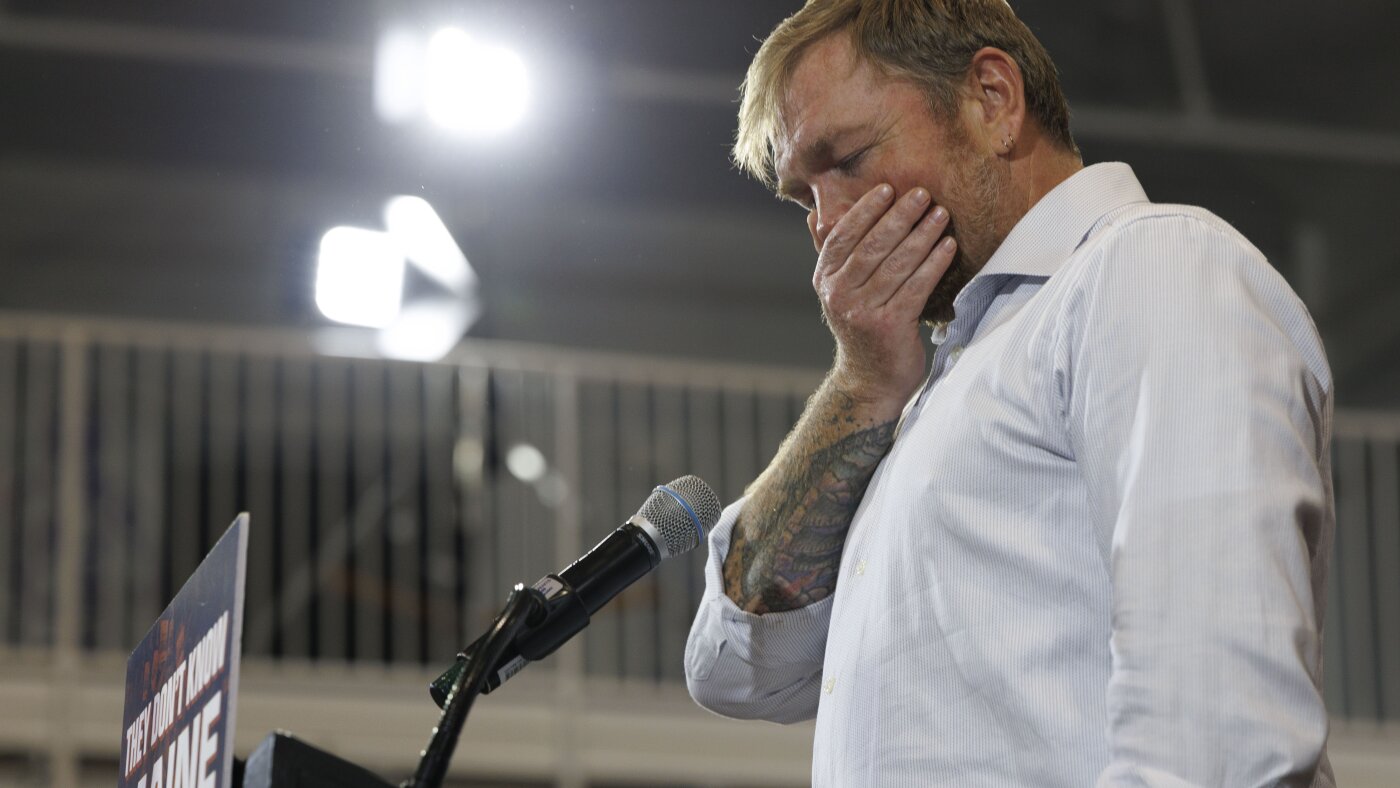
Now-former Democratic Senate candidate Graham Platner speaks at his primary election night event on June 9 in Blue Hill, Maine. Platner officially dropped out of the race July 10 following rape allegations from a former romantic partner that he denies.
CJ Gunther/Getty Images
hide caption
toggle caption
CJ Gunther/Getty Images
Graham Platner, Maine’s Democratic nominee for Senate, is officially out of the race.
The Maine Secretary of State said Platner filed the necessary paperwork to withdraw his candidacy two days after he announced he planned to do so following an accusation of rape by a former romantic partner. Platner denies the allegation.
The Maine Democratic Party has until July 27 to pick Platner’s replacement.
In his withdrawal notice, Platner said “people are desperate for change” and that’s why they voted “for a new kind of politics” by making him the Democratic nominee. He expressed gratitude for those who supported his campaign and said that he will continue to fight for “the movement we have built together and the future we believe in.”
He ended his notice with a strong statement aligned with the progressive platform.
“F*ck ICE. Free Palestine. Up the Hearts.”
Platner announced his plan to withdraw from the race in an 11-minute video he posted to social media on July 8. He said he had no choice but to suspend his campaign, citing it was no longer viable financially.
“We are going to lose our ability to fundraise. We are going to lose our ability to access voter data. We are going to lose all of the things that any campaign needs on the basic level simply to function,” he said.
Platner added that dropping out was not an admission of guilt. Rather, the decision, he said, is to keep the progressive movement in Maine alive to defeat Republican Sen. Susan Collins in November. Platner blamed the “political establishment” for his downfall and argued the goal was to force him out of the race.
“We built a campaign. We engaged in electoral politics. We motivated people. We banded together. We did it the way that we were told we are supposed to make change and we won. And now they are not going to let us have it. Not if it’s me,” he said.
Many powerful Democrats and progressives, including Sen. Bernie Sanders, an independent, urged Platner to step down.
Platner has had to answer to a waterfall of scandals since he launched his Senate bid. Despite those, he ran away with the nomination in the June 9 primary, securing more than 150,000 votes — more than any other Democratic Senate candidate in Maine’s history.
Platner ran on a progressive platform centered on affordability, universal health care and getting corporate money and influence out of politics. During his campaign, he generated an undeniable amount of enthusiasm, something the Maine Democratic Party will have to harness if it hopes to beat Collins in the general election.
Multiple people have already launched campaigns to replace Platner, including former state Sen. Troy Jackson and former CDC official Nirav Shah, who both ran unsuccessful bids for governor.
Platner called on the replacement process to reflect “the Mainers who on June 9 turned out and showed that they are desperate for a different kind of politics.”
“We were asking for real democracy, and we did it the right way. And we won. But now the ball is in the court of the Democratic establishment,” he added.
The Maine Democratic Party said that it intends to hold a new nominating convention where around 600 delegates will select Platner’s successor. Candidates have until July 15 to declare their intent to seek the nomination and gather signatures from at least 8 of Maine’s 16 counties. Party leadership added they will make the nomination process public and transparent.

A Waymo robotaxi drives in San Francisco’s North Beach neighborhood this week.
Heather Diehl/Getty Images
hide caption
toggle caption
Heather Diehl/Getty Images
Police in San Mateo, Calif., posted Monday on social media that they had apprehended a pair of teenagers from a Waymo driverless robotaxi after the company alerted authorities to suspected criminal activity. It’s the latest incident involving video surveillance of passengers and others by autonomous vehicles — raising questions about the limits of privacy in such vehicles.

The Facebook post by the San Mateo County Police said: “Parents do you know where your teens are? @waymo does!”
The 15-year-olds were allegedly drinking alcohol and shooting toy guns from the car, according to the police. They said Waymo’s systems detected behavior that then triggered a safety response, after which the company disabled the vehicle and contacted police.
Waymo’s cars, equipped with an array of cameras, microphones and other sensors to monitor passengers and other nearby vehicles, are becoming more common in cities across the United States. Experts say the detention of the two teens in San Mateo highlights a potential — but not inevitable — trade-off between privacy and convenience. It also questions the extent to which companies similar to Waymo are required to hand over private data, including audio and video of passengers, in situations where a crime is suspected.
NPR reached out to Waymo, which is owned by Alphabet, the parent company of Google, for comment on the details of the San Mateo incident and how the company responded, but did not hear back. But on its website, the company says that as many as 29 cameras in its autonomous cars provide an all-around view and “are designed with high dynamic range and thermal stability, to see in both daylight and low-light conditions, and tackle more complex environments.”
“There already exist laws that govern duty to report or even duty to protect” for carriers such as Waymo, according to Alessandro Acquisti, a professor of information technology at the MIT Sloan School of Management. “The privacy problems arise when and if driverless carrier companies used such laws or ethical obligations as a pretext for blanket, indiscriminate accumulation of identifiable data for unspecified future purposes.”
That includes not just monitoring people inside the cars, but outside too. Take, for example, a hit-and-run investigation last year in Los Angeles. Media reported that the police inquiry was aided by video captured by a Waymo taxi that had a clear view of the crime. Critics suggested at the time that authorities were using the company’s vehicles as a mobile surveillance platform. And during 2025 protests in Los Angeles against Immigration and Customs Enforcement crackdowns, demonstrators vandalized Waymos, apparently angry that video recorded by the vehicles could be used by police, although there is no evidence that happened.
In a transparency report, Google says it received nearly 290,000 requests from governments worldwide in the first six months of 2025 for disclosure of user information across all its platforms, including Waymo. The company says that in more than 80% of the requests in those six months, some information was disclosed. “Google carefully reviews each request to make sure it satisfies applicable laws. If a request asks for too much information, we try to narrow it, and in some cases we object to producing any information at all,” the company says.
In an email to NPR, San Mateo Police Department spokesperson Jeanine Luna said that detaining the teens in the Waymo on Monday was “wholly appropriate” under the circumstances. “We received the call of a ‘firearm’ being shot from a moving vehicle,” she said. “Furthermore, the occupants were described as being possibly ‘intoxicated.’” she said.
“Being that the vehicle was disabled (the occupants had every right to exit the vehicle before police arrival, but they did not), a high-risk traffic stop was conducted to ensure the safety of all involved,” Luna added. “They were not arrested and were released to their parents, however, potential charges are still pending dependent on what the video from inside the vehicle shows.”
Autonomous taxis represent an ethical gray area
Robotaxis began to roll out across the U.S. in December 2018, when Waymo launched in Phoenix. These services have been used for less than a decade — so the norms surrounding them aren’t settled, experts agree.
The Facebook post may make Waymo passengers wonder what triggers a police intervention, says Irina Raicu, director of the Internet Ethics program at Santa Clara University. She has used Waymo’s driverless taxis and says ethically, the privacy issues surrounding them sit in a gray area. “There’s something about being in a car without another person that makes you think it’s private.”
“With all these recording devices, we don’t see them, [and] they’re not these obvious things being stuck in our faces,” Raicu adds.
That brings up a key issue: informed consent, Acquisti says.
“It is not clear the extent to which passengers … are reminded that when they step into the car, that they are being monitored, and most likely they are not told in its entirety how the data will be used,” he says.
Bruce Schneier, a cybersecurity and privacy expert and professor at the Munk School at the University of Toronto, believes that Waymo does have a compelling interest in protecting its vehicles. He compares monitoring a robotaxi via cameras to a human taxi driver keeping an eye on passengers in the rearview mirror.
“Maybe the driverless car comes back … and it has all of its cushions slashed, and it’s like, ‘Who the hell did that? Let’s go and look at the tape,’” Schneier suggests. “You can’t have sex in the back of a taxi, right? Someone would say, ‘Stop it.’”
He concludes that some supervision makes sense. In an Uber rideshare, he notes, “most of the time there’s a camera recording the back seat.” (Uber says on its website that it allows drivers to install such cameras for the purpose of “fulfilling transportation services.”)

Waymo robotaxis, while a fairly common sight in the San Francisco Bay Area, are still a novelty in much of the country. And many people are hesitant to ride in one, according to a Pew Research Center poll published this month. The survey found that only 5% of Americans had ever ridden in a driverless car. Meanwhile, 71% of those polled said they would feel uncomfortable in one, with only 7% saying they would be “extremely or very comfortable” riding in one.
For that reason, experts who spoke with NPR said they were optimistic that it’s not too late to shift gears on privacy norms and policies surrounding these vehicles.
Acquisti doesn’t see why privacy measures can’t be built into driverless vehicles.
“I would immediately challenge the notion that people have to be monitored,” he says, noting that privacy-preserving technologies exist and can be installed.
“Driverless cars are coming, but they don’t have to come in this particular incarnation,” Raicu says. “They’re still being designed and redesigned. It’s early days.”

Donald Trump has terminated the remaining members of the independent, federal commission that assists election administration officials nationwide just a few months before the midterm elections, multiple outlets reported Thursday.
The remaining three commissioners of the four-member bipartisan commission were forced out on Thursday in different ways. The one Republican appointee resigned and the other two, Democratic appointees were notified of their terminations via email from the White House presidential personnel office.
“On behalf of President Donald J Trump, I am writing to inform you that your position as Commissioner of the Election Assistance Commission is terminated, effective immediately. Thank you for your service,” the email, seen by Reuters, said.
The White House did not immediately respond to a request for comment.
The Election Assistance Commission serves as a “national clearinghouse of information on election administration”, accredits testing laboratories and certifies voting systems, and maintains the national mail-voter registration form developed by the National Voter Registration Act of 1993, according to the commission’s website. The terminations follow Trump and top administration officials’ advocacy to change vote-by-mail requirements and investigations into the 2020 election outcome, which Trump lost to Democrat Joe Biden.
“It is irresponsible and dangerous that this Administration remains dead set on causing chaos for our election officials across this country,” Arizona secretary of state Adrian Fontes said in a Thursday statement. “This move undermines the integrity of nonpartisan election administration.”
The 2002 law that established the commission, the Help America Vote Act, states the president can appoint replacements to the commission.
It is unclear how Trump will move ahead with the commission.
Reuters contributed reporting
-

 Vermont2 minutes ago
Vermont marks fourth straight year of July flooding as recovery drags on
-

 Virginia9 minutes ago
Vance leasing part of multimillion-dollar Virginia farm as an additional residence | CNN Politics
-

 Washington12 minutes ago
Washington State Democratic Party draws criticism over reparations, antisemitism language
-

 Wisconsin17 minutes ago
What’s new to eat and drink at the 2026 Wisconsin State Fair?
-

 West Virginia24 minutes ago
West Virginia to launch school clothing allowance program
-

 Wyoming27 minutes ago
Election Q&A: Laurie Longtine for Wyoming House District 59
-

 Crypto32 minutes ago
Morgan Stanley Targets Ethereum and Solana ETF Market Share Amid Intensifying Fee Competition
-

 Finance39 minutes ago
This new bill hopes to ‘put the brakes’ on financial fraud targeting older Americans

