Lifestyle
Connie Chung says booze and bawdy jokes helped her break into journalism's boys club


TONYA MOSLEY, HOST:
This is FRESH AIR. I’m Tonya Mosley. We’re looking back at some of our favorite interviews of the year. Today, pioneering TV journalist Connie Chung. When Chung appeared on television back in the ’70s, it was the first time many Americans had seen an Asian woman reporting the news and setting the national conversation with her interviews with heads of state and controversial figures. For three decades, Chung was a key player in every major news cycle, covering Capitol Hill, the White House, the Pentagon and the State Department. In 1991, she was the first journalist to get a sit-down interview with Magic Johnson just a month after he announced his HIV status.
Connie Chung has worked for ABC, both NBC and MSNBC, CNN and CBS, where she got her start and later became the first woman to co-anchor the CBS Evening News with Dan Rather and the second woman in the history of television news to anchor an evening newscast. I spoke with Chung in September for her memoir, where she gives a behind-the-scenes look at what it took for her to climb to the top of the male-dominated field of TV news. Chung spills the tea on some well-known celebrities and politicians who hit on her and she doesn’t shy away from naming names of people who crossed her and sometimes made her job more difficult than it needed to be. We also talk about one of the more challenging interviews with Donald Trump in 1990.
(SOUNDBITE OF TV SHOW, “SATURDAY NIGHT WITH CONNIE CHUNG”)
CONNIE CHUNG: What Donald Trump does, of course, is make a lot of money and make sure everybody knows it – a yacht, a mansion, a bigger mansion, an airline, two casinos, a bigger casino.
DONALD TRUMP: That is really incredible. There’s nothing like it. There’s nothing like this place.
CHUNG: By now, his possessions are more familiar to us than what we have hanging in our own closets. His buildings? Well, you know which one they are.
TRUMP: I sell very great condominiums in New York. I have the best casinos in the world.
CHUNG: They aren’t that great.
TRUMP: They’re the best.
CHUNG: Come on. They’re not the best.
TRUMP: What, the Trump Tower?
CHUNG: Maybe if you can try and answer this question without giving me the normal spiel.
MOSLEY: That’s Connie Chung interviewing Donald Trump in 1990. I asked her what she remembered most about that interview.
(SOUNDBITE OF ARCHIVED NPR BROADCAST)
CHUNG: I’ll set the stage; otherwise, I’m going to get myself in such trouble, Tonya. I was doing this program called “Saturday Night With Connie Chung,” and I was the only correspondent because we had another format prior to that, and it really was excoriated, and it tanked. So I had to then go out on stories every week to fill an hour program. I was traveling all over the country in the world and everything. I was pretty darn exhausted. Then the executive producer comes to me and says, we have an interview with Donald Trump. At the time, he had not planned to run on – run for president by any means.
MOSLEY: Right, yeah.
CHUNG: He was a mogul. He was actually a very – he was a tabloid king because he was always on – in the New York tabloids. And that was his – that period of his claim to fame. So I went, I don’t want to. Why are we – whining. Oh, boy, did I whine. And he said…
MOSLEY: Well, you didn’t mince words. I mean, after your interview aired, Trump did what we’ve seen him do to many reporters over the years, and he dug into you ’cause you dug into him.
CHUNG: Well, guilty as charged, I did. And he went on “The Joan Rivers Show,” and at the time, she had a talk show. And he said that I was – he used all those words that he is wont to use with some female journalists, you know? That was…
MOSLEY: He called you a lightweight.
CHUNG: Yeah. And I can’t remember the exact words, but that I was basically stupid and didn’t ask good questions and all of that. So I would see him – my husband is a crazy golfer. You know, my husband, Maury Povich, who’s been…
MOSLEY: Yes.
CHUNG: …Determining the paternity of every child in America.
MOSLEY: Yes (laughter).
CHUNG: You are the father. You are not the father. Well, in addition to that, my husband is a very good golfer as well. I would see Donald Trump at celebrity golf tournaments in which my husband was playing. And he ghosted me, essentially. He – it was as if I were invisible. I wasn’t there. Maury would say, you know Connie. And I was just invisible.
MOSLEY: You started in the early ’70s, and in many instances, you were the only woman among these guys. In particular, you write about being on the road covering the 1972 presidential campaign. You were traveling, essentially with the press corps of all men. And you realized that being funny was a way to disarm or diffuse. But did it ever feel dangerous?
CHUNG: No. No, it wasn’t dangerous. It was just fraught with sexism. And, I mean, I think they all saw me as this unusual little toy. And I…
MOSLEY: They almost seemed you like a delight, like, almost a novelty…
CHUNG: Yes.
MOSLEY: …Kind of tinged with fetish behavior. But that was until you started to scoop them.
CHUNG: (Laughter) Well, they did – they were surprised when I came up with a story that they didn’t have. It was a little competition, you know, and I loved the competition. So I just developed this sense of humor, and what I did was I tried to get them before they got me. And I had this propensity to be much too bawdy. And it was antithetical to what I looked like. You know, I looked like a lotus blossom, and they were appalled that I had the audacity to use a bad word. But at the same time, they found it very comical.
MOSLEY: There’s this story that you tell about being a Goody Two-shoes. Is it Timothy Crouse? He wrote in his book, “The Boys On The Bus,” which is about covering the ’72 presidential campaign, that – he says this about you, quote, “TV correspondents would join the wee-hour poker games or drinking. Connie Chung, the pretty Chinese CBS correspondent, occupied the room next to mine. And she always was back by midnight, reciting a final 60-second radio spot into her Sony or absorbing one last press release before getting a good night’s sleep.” And the next morning, he noted, you would be up and at them with the other reporters – all guys – and they were staving off a hangover. But the thing about it was, they would always scoop you, even still. You were in your room doing all of that hard work, and they were at the bar getting to know the sources.
CHUNG: You got it. And when I realized that, and I did because I would call the assignment editor in Washington, the overnight assignment editor, and I’d say, what broke overnight? Or what’s the – what’s on the front page of The New York Times, Washington Post, Boston Globe, LA Times, whatever? Whatever he had access to or whatever was released early enough. And I realized that they were getting stories. And it suddenly dawned on me they were saucing up the campaign manager and everyone who worked for the candidate and letting them spill the beans. So I said, end of staying in my room. I’m going down to the bar. And I did.
MOSLEY: Yeah.
CHUNG: I could drink when I was in college. I learned how to, you know, take a few down and still stay sane. I wasn’t driving anywhere. I was just walking back to my room. And therein lies a great way to learn how to be a reporter.
MOSLEY: Right, right. You had to get in there. You had to do that – play that game.
CHUNG: Exactly. The only place I couldn’t enter where the men were, obviously, was the men’s room.
MOSLEY: Yeah.
CHUNG: And they got stories there. You know, I couldn’t…
MOSLEY: That was – yeah.
CHUNG: …Infiltrate the men’s room.
MOSLEY: Your book, as well as this book I read a few months ago, it’s a biography about Barbara Walters. It just showcases how even at the height of your career – because you were very well known then – you were out there getting your own stories.
CHUNG: You know, Barbara Walters taught me that. I knew that she picked up the phone herself. She wrote a letter. She faxed. She called. She nudged. She would say, let’s have lunch. And I recall it being Barbered (ph). And she – Barbara Barbered me. When we were – when I was fired from the CBS Evening News, she called me and started trying to get the first interview with me when I emerged from my bunker. It was just remarkable.
You know, Barbara and I had a lot in common. I – she was clearly the pioneer and paved our way. But she was the breadwinner in her family because her father’s nightclubs tanked, and she had to take care of her mother and her father, support her mother and her father and her disabled sister. I was the breadwinner in my family as well for my mother and father. I supported them for – till the day they died. From about 25 on, I was their parent. We both co-anchored with someone who despised us, a man. We were both fired after two years. We both adopted a child. We both married nice Jewish boys. Although, I think Barbara married maybe two or three (laughter).
MOSLEY: Yeah.
CHUNG: But, you know, I really did – I admired Barbara because she paved our way.
MOSLEY: Let’s take a short break. If you’re just joining us, my guest is Connie Chung. She’s written a new memoir that chronicles her life growing up with her four older sisters and parents who migrated from China and her career as the first woman and Asian American to anchor a national network news program in the U.S. We’ll continue our conversation after a short break. This is FRESH AIR. This is FRESH AIR. Today, I am talking with trailblazing television journalist Connie Chung. She’s written a new memoir about her life and career in television news, titled “Connie: A Memoir.” The book chronicles her parents’ harrowing migration from China to the U.S., her first job in television news, breaking major news stories, interviewing luminaries and how she made history as the first woman to co-anchor the “CBS Evening News” and the first Asian to anchor a news program in the United States.
Connie, you’ve mentioned your husband, Maury Povich. You all have been married for nearly 40 years. You got married late, 38 years old. No matter how much it seems to be common knowledge – ’cause even for a time you guys had a show together – there’s always somebody in the room that’s surprised you two are a couple. And it’s surprising, I think, because your personas are so different – your public personas. But as you write in this book, you all seem to be the perfect match. When did you realize that?
CHUNG: I’m still wondering how come we are the perfect…
(LAUGHTER)
CHUNG: …Match, you know, because we are so different. But the public personas belie what is really behind our door. And the reason why I say that is because he, although he does this – has been determining the paternity of every child in America and utters these, you know, words, you are the father, and you are not the father. He is…
MOSLEY: Do you joke with him about that at home. I just get the feeling.
CHUNG: Yeah, I tease him. And – but also, he says, I’m just a trashy talk show host. So he he’s a very down-to-earth, realistic guy. He’s – what belies his public persona is that he is very much a voracious reader. He’s a political buff. He’s a history buff. He could run circles around these pseudo-intellectuals who do interviews with important people. And I always say that to him. Why don’t you do a serious talk show? And he says – and I said, you’re so smart. And people don’t know how smart you are. And he says, as long as you know that, I’m fine. And I thought, oh, my goodness. What a guy.
MOSLEY: Is it also an indication of two different things that drive you, both?
CHUNG: Yes. The difference is, I am not serious. And you now know that, Tonya, because you’ve read my book. And I – he has to curb my enthusiasm because I’m liable to do something off-the-wall. It is not he who would do something off-the-wall. It is I. And he has to talk me out of it. Because I say, why? You would do it. And he’d say, no, you have a reputation to uphold.
MOSLEY: The thing about it is that publicly, what you do is that it seems like you’re always explaining to people who Maury Povich really is behind, I am not the father. And I did not realize that you actually have been doing this even before Maury had the Maury Povich show. Back when he was on “A Current Affair,” there’s this legendary skit that you and David Letterman did back in 1989. You were a regular guest on the show, and he decided to do a skit outside of the studio with you, ’cause you guys had really great chemistry when you were on the show. The jokes always really landed. And I want to play a clip from this skit that you all did. What we are going to hear is you and David going to a shoe store to buy shoe trees for Maury Povich, for your husband. And David is being really snarky about your relationship. Let’s listen.
(SOUNDBITE OF TV SHOW, “LATE NIGHT WITH DAVID LETTERMAN”)
DAVID LETTERMAN: Connie, let’s check in here. Hi. We need to pick up some special order shoe trees.
UNIDENTIFIED SHOP ASSISTANT #1: Hello.
DAVID LETTERMAN: Hi. How are you?
UNIDENTIFIED SHOP ASSISTANT #1: Oh, my God.
DAVID LETTERMAN: Nice to see you. Special-order shoe trees for Connie’s husband, Murray (ph).
CHUNG: Maury.
DAVID LETTERMAN: He has problem feet. We had to special order them.
CHUNG: He doesn’t have problem feet.
DAVID LETTERMAN: This is why. He has extra-wide feet.
CHUNG: No, no. I think they’re right over here.
UNIDENTIFIED SHOP ASSISTANT #1: Right over…
DAVID LETTERMAN: Oh, those are beauties.
UNIDENTIFIED SHOP ASSISTANT #2: Yeah, they are.
DAVID LETTERMAN: Look at those, Connie.
CHUNG: That’s great.
DAVID LETTERMAN: What exactly do…
UNIDENTIFIED SHOP ASSISTANT #2: Cedarwood.
DAVID LETTERMAN: What’s the purpose of shoe trees? What do they do?
UNIDENTIFIED SHOP ASSISTANT #2: Keeps the – keep the shape of the shoes, all right?
DAVID LETTERMAN: Well, don’t your feet do that?
Let me buy the shoe trees.
CHUNG: No. Really? no.
DAVID LETTERMAN: All right. Turn off the cameras. Turn off the cameras. See, if you – on “60 Minutes,” if you can get a guy to do that on camera…
CHUNG: Yeah.
DAVID LETTERMAN: …Say, turn off the – then you’re set for life to…
CHUNG: Yes, you’re right.
DAVID LETTERMAN: How much is it?
CHUNG: But, David, I can’t have you pay for this, really.
DAVID LETTERMAN: Stop the whining.
CHUNG: No.
DAVID LETTERMAN: Just don’t whine, please.
CHUNG: No, I’m paying for it. Maury’s going to be very upset.
DAVID LETTERMAN: He won’t know. How will he know?
CHUNG: ‘Cause it’s going to be on the show.
DAVID LETTERMAN: No, he’s never – yeah, like he stays up to see this.
CHUNG: He does.
(LAUGHTER)
DAVID LETTERMAN: Pretty much dozes off in his food, doesn’t he?
(LAUGHTER)
CHUNG: I can’t believe you found that clip and you used it (laughter).
MOSLEY: Well, that was you. That was our – my guest today, Connie Chung, with David Letterman on the show in 1989. Connie, he couldn’t even say Maury’s name right. I mean, that was part of the bit, right? You’re always taking up for your husband, huh?
CHUNG: Yes. Oh, he refused to call him Maury. He would always call him Morty (ph), Murray, Marvey (ph), I mean, whatever. And it – I said – he said, do you want to go out for pizza sometime? And I said, sure. Can I bring Maury? And he’d say, no.
MOSLEY: But, you know, I wanted to play this clip because he’s making fun of Maury, and it’s funny. But I wondered if this kind of view of your relationship – you being this revered, highly-respected journalist, Maury being seen more as a tabloid journalist – did it ever have an impact on your relationship?
CHUNG: Oh, no. Maury is very secure in who he is. I mean, it’s the biggest thing I admire about my husband. He knows he is this very, very intelligent person. And he has – he’s had a storied career as a journalist for many, many years. Then he hit upon the current type of talk show. When he was doing a talk show in Washington, D.C., he was interviewing authors and politicians – I mean, every author from Gore Vidal to Tom Wolfe to Maya Angelou. And it was a classic old talk show. And he did cooking segments with (impersonating Julia Child) Julia Child.
And he did – during Watergate, he was in the thick of it. You know, he covered Kennedy’s funeral, JFK’s funeral – covered Martin Luther King’s assassination. So he’s an old-fashioned journalist.
MOSLEY: Yeah.
CHUNG: Then he hits upon the talk show circuit, and one of his producers comes up with the idea of the paternity of every child in America. Suddenly – so he has six and a half million Facebook followers and a million Instagram followers, and he’s become this – a walking meme. And it’s just a big kick for him. He’s – he can wax poetic about what his actually – what he actually accomplishes by determining the paternity of children, and fathers, you know, resume paying for their children instead of denying their existence. So it’s a funny – he doesn’t care what critics say, and I always care. So we have completely different views.
MOSLEY: His memoir is the one that I want to read next. But you actually say if it wasn’t for Maury, you really wouldn’t have the career that you have.
CHUNG: No. He talked me off the ledge many times when I came home, and I said to him, do you know what so-and-so said to me today? And he would say, don’t think about it. Don’t take him seriously. Take your work seriously. Don’t take yourself seriously. Don’t take the critics seriously. Let’s have dinner.
(LAUGHTER)
CHUNG: And I would seriously calm down.
MOSLEY: Our guest today is Connie Chung. We’ll be right back after a short break. I’m Tonya Mosley, and this is FRESH AIR. This is FRESH AIR. I’m Tonya Mosley, and today my guest is award-winning journalist Connie Chung. She’s written a new memoir about her life and career in television news. She takes us, in the book, behind the scenes of her news career from the showdowns with powerful men to the stories behind some of her career-defining reporting. In 1993, Chung became the first woman to coanchor the “CBS Evening News.” And a few years ago, Chung learned about a phenomenon. From the late ’70s through the mid-’90s, Asian American parents, inspired by seeing Chung on TV, named their daughters Connie, forming the Connie generation.
You know, Connie, your career, it’s not a straight line in that you had to play offense and defense. And you had to be strategic to get the big stories and the interviews. And many times, you won. That’s why you’re so successful. You got what you wanted, but it was never a straight line to get there. And one of the things that you really struggled with is being put on the celebrity beat. Yet, your news bosses felt like you were the one to do those, especially in the ’90s. You were assigned to cover, like, the O.J. murder trial and the Nancy Kerrigan and Tonya Harding skating fiasco.
These assignments were, like, an indication of something bigger happening in network television news. There was kind of this shift towards sensationalized journalism and this, like, information saturation at the same time, where the news is always on. And you were in the thick of that. That was really, like, your prime. How did you grapple with that at the time, with your news bosses basically pushing you in that direction?
CHUNG: Well, the problem was that the men could not be pushed into that direction. At CBS News, Dan Rather, who was my coanchor, wouldn’t touch it. At “60 Minutes,” it was all men at the time, and they wouldn’t touch it. They wanted nothing to do with O.J. Simpson. And, frankly, I didn’t either. But the management would come to me and say, Barbara Walters is getting X, Diane Sawyer is getting Y and Katie Couric is getting Z. You have to do this for the team, you know? I said, I don’t want to. I don’t see the value in it. It’s tabloid. I don’t know. You know, Tonya, I have a lot of regrets, but that was one of the biggest ones, of being the good girl.
MOSLEY: Allowing yourself to be put in that…
CHUNG: Yeah. Absolutely.
MOSLEY: …That category of the entertainment?
CHUNG: Or being told what to do, resisting but never being able to put my foot down and say, I am not doing it. Go find somebody else.
MOSLEY: Well, in hindsight, was there a way to do that? What would’ve happened, do you think, if you had said that?
CHUNG: I don’t know. I really don’t know. I think they just knew I would acquiesce. I wish I had pushed them and put my foot down to take a stand.
MOSLEY: Well, the thing about the interviews that you did, you really did bring yourself to them. You tried to make them a Connie Chung interview. One of the celebrity interviews that you went after yourself was NBA basketball star Magic Johnson…
CHUNG: Yes.
MOSLEY: …Shortly after he announced he was HIV positive. And I want to play a clip of your interview with him. It was for your show “Face To Face” in 1991. Let’s listen.
(SOUNDBITE OF TV SHOW, “FACE TO FACE WITH CONNIE CHUNG”)
CHUNG: You’ve known about a month now that you test positive for HIV. How are you handling it? I mean, I get the feeling, see, you put the game face on for me, (laughter) you know, and that you really have some feelings that are down deep in here that you don’t really want to share with me.
MAGIC JOHNSON: Well, first of all, I share – you know, I’ve never shared my life with anybody publicly, you know, because that’s just me. You know, at home is at home. Now, what you want to give to the public, that’s what you give. Now, with this situation, I’ve given everything from my heart.
CHUNG: Really?
JOHNSON: Yeah. I mean, I came out to say I have it to help people.
MOSLEY: That was my guest, Connie Chung, interviewing Magic Johnson in 1991, just a month after he announced that he was HIV-positive. And, Connie, I know you just mentioned how you really didn’t want to do the celebrity interview because who cares if – you know, about someone’s personal life? But this was a story that had such cultural and social significance because of HIV at that time frame. How did you get that exclusive?
CHUNG: You’re so right, Tonya. The reason why I wanted to get it was because HIV/AIDS was at the – it was a front burner story. And when Magic sacrificed himself and his reputation, his career, everything, and came out, he was such a gem. I used to kind of know Magic because I did the news in Los Angeles. And when he came on live with the sports reporter at the time, he would always say, with his big, beautiful smile, say hi to Connie. And I would (laughter) – you know, he’s just an – his smile is infectious. And he actually asked me to go have some soul food with him and his very tall friends. And we went to Maurice’s Snack ‘n’ Chat, and it was the most incredible gravy-covered fried chicken I had ever had in my life. And I wolfed it down. At that time, I was young. You know, I could eat anything I wanted, and it didn’t show up in bad places. Now there’s a festival going on below my waist.
(LAUGHTER)
CHUNG: I said, where the heck did that come from? But it – I thought to myself, I can get that interview because I know him and I’m kind of his friend. And then when I called some other people in LA, they all said, oh, Magic’s my friend, I’ll be able to get that interview. But I thought, uh-oh. You know…
MOSLEY: But you actually did it.
CHUNG: I did.
MOSLEY: How did you do it?
CHUNG: I flew to LA, went straight to his agent’s office and I squatted. I actually became a squatter. I sat outside his office. His assistant said, you know, he’s not going to do – the agent is not going to talk to you, and Magic is not going to do the interview with – and I said, but I’m his friend. And she said, yeah, everybody’s his friend. So I sat down and I said, I’m not leaving until he leaves to go home. So I squatted. And he had only one door to get out. Finally agreed to…
MOSLEY: And he had to pass you, yeah.
CHUNG: Yeah. And somehow, he talked to Magic, and Magic said OK. I was just so happy because it was a big interview, and Magic was too kind.
MOSLEY: Let’s take a short break. If you’re just joining us, my guest is Connie Chung. She’s written a new memoir that chronicles her life growing up with her four older sisters and parents, who migrated from China, and her career as the first woman and Asian American to anchor a national network news program in the U.S. We’ll continue our conversation after a short break. This is FRESH AIR. This is FRESH AIR. Today, I am talking with trailblazing television journalist Connie Chung. She’s written a new memoir about her life and career in television news titled “Connie: A Memoir.” The book chronicles her parents’ harrowing migration from China to the U.S., her first job in television news, breaking major news stories, interviewing luminaries and how she made history as the first woman to coanchor the “CBS Evening News” and the first Asian to anchor a news program in the United States.
You mentioned being fired from the “CBS Evening News.” But it was the day that you were named coanchor with Dan Rather. You call it the best day of your professional life. It was May 14, 1993. And it was a huge deal because Barbara was the only other woman to ever anchor an evening news program. But this relationship that you had with Dan Rather, how would you describe it?
CHUNG: On the surface, it was very superficially normal-ish. I mean, we seemed as if we were both professional and doing our jobs, but it was pretty clear to me that he didn’t want me there. I don’t blame him totally because he had owned Walter Cronkite’s chair for many years and had to move over a few inches to make room for me. I became the first coanchor at CBS. And he really – I think they must have held a gun to his head because I can’t imagine that he would’ve done it voluntarily. So there I was. And I do believe that had I been another man, had I been an animal, had I been a plant, he would not have wanted me to share. He would not have wanted anyone to share that seat with him. It was not his cup of tea.
MOSLEY: Well, there were so many rules back then with male and female anchor pairings, one being that men had the upper hand on who even spoke first.
CHUNG: Yes. Jane Pauley had to endure that when she was coanchoring with men.
MOSLEY: And you found that out when you were filling in for her on the “Today” show.
CHUNG: Yeah, could not say good morning and could not say goodbye.
MOSLEY: Bryant Gumbel had to say it first.
CHUNG: That’s right. And she fought it, and she acknowledged that she lost. And I didn’t know that at the time. I thought, how could she acquiesce to this kind of ridiculous rule? And so I tried, and I lost, too. So I was, you know, hoping that I could set a new term for my substitution period when I was substituting for her during her pregnancies.
MOSLEY: Do you still have that thing you referenced many times in the book, do you still have that male envy…
CHUNG: I do.
MOSLEY: …In spite of all of your accomplishments? Yeah. How does that show itself? Like, what is that envy, just the power that they have?
CHUNG: Yes, it’s the automatic respect that men get just by virtue of the fact that they’re men. I think we are perpetually trying to prove ourselves. And I think we’ve made great progress. I think women and minorities have made great progress. But Asians suffer this incredible Asian hate these days, which has reverted back to a peculiar – I mean, not peculiar, but horrible results. Women have not reached the level of parity. I think we can’t sort of quietly sit and see if it’s going to happen. We just need to continue to move forward.
MOSLEY: I know that you talk with a lot of young folks who are television correspondents and reporters and anchors. And you watch the news now. Do you see a difference? Do you see a change in that dynamic? What do you notice when you watch TV news today?
CHUNG: Well, I really appreciate the investigative reporting in television news, in all print everywhere. Any time I see an investigative report, I’m impressed. What I don’t like, of course, is if I see opinion. And there’s a lot of that. I would really like the news to swing back to objective, honest, credible straight news. And I know a lot of people – you know, people I just run into – want facts. That’s all they want.
MOSLEY: Do you miss it?
CHUNG: Only when I see – when I’m watching an interview on television, I want to throw my shoe at it if somebody isn’t asking the question, the next question that I would ask, you know, doesn’t do a follow-up. It’s very strange. I miss that, the interviews and being able to dig deeper, but I also miss the joy of going after a story that’s worthy. And I know it sounds really old-fashioned, but it’s the – if I can change a government wrong or change an attitude regarding social ills or whatever, something like that, I think it’s so gratifying. And I know a lot of my friends still feel that way as well. And they get to do it sometimes. But sometimes the ball is rolling over them, and they’re just lucky to be still in the business. And I’m happy for them because I’m looking in from the outside.
MOSLEY: Connie Chung, thank you so much for this conversation.
CHUNG: Tonya, I think you did the best interview that I’ve done on this – that I’ve ever done, seriously. You’re a hottie not only as you – I’ve seen in pictures…
(LAUGHTER)
CHUNG: But you’re a really, really good interviewer, too.
MOSLEY: Well, this was such a pleasure, Connie.
CHUNG: Thank you, Tonya. You were great. I mean, seriously.
MOSLEY: Connie Chung. I spoke with her in September when her memoir, “Connie,” was released. Coming up, jazz historian Kevin Whitehead looks back at the musicians we lost this year. This is FRESH AIR.
Copyright © 2024 NPR. All rights reserved. Visit our website terms of use and permissions pages at www.npr.org for further information.
NPR transcripts are created on a rush deadline by an NPR contractor. This text may not be in its final form and may be updated or revised in the future. Accuracy and availability may vary. The authoritative record of NPR’s programming is the audio record.


Lifestyle
L.A. Affairs: It’s hot when a man drives to me. But would this new guy make the trek from the Valley?

I met Dan on Hinge.
He lives in Woodland Hills, and I live in Venice. In Los Angeles, this is considered a long-distance relationship. In another city it might be nothing. Here, it’s a factor.
But I believe that with the right person, you can make anything work, so I stay open. I’m a native New Yorker, and if I were living in Brooklyn and a guy lived on the Upper West Side, that would be a 45-minute subway ride, which is truly nothing in New York. So with that same logic, I try to have flexibility with men in L.A.
When we started planning our first date, Dan suggested three options: a hike on mushrooms, a wine tasting or a walk on the beach.
A hike on mushrooms is something I’d only do with someone I already trust, not someone I just met online. I don’t do first-date hikes because I don’t like feeling trapped if the guy’s a dud. So I chose the wine tasting.
Then I learned the wine tasting was in West Hills.
On a Friday night, driving there from Venice would be insane. So I said I didn’t want to meet there because of the traffic. He suggested Malibu. That was also not ideal on a Friday.
I was getting annoyed — this was a pink flag because in my dating world, the guy is supposed to come to the woman’s neighborhood in the early days. I’ve gone out with plenty of men from the Valley who effortlessly suggested they come to me. It’s not rare or impossible.
I suggested he come to the Westside. I didn’t specifically say Venice, and in hindsight, I probably should have. He landed on Brentwood, which was manageable for both of us. On our first date, we met at an Irish pub on Wilshire Boulevard. He was cuter and more interesting than I had expected, and with the Guinness flowing, we had fun.
When I got home, he texted me: “Well, I like you 🙂 Less the tik tok and the lack of rock music in your life, but it’s not a deal breaker — there are other qualities 🙂 What are your thoughts?”
I noticed the slight negativity but was mostly dazzled that a man texted immediately after the date to say he liked me. In the modern dating economy, this felt rare.
The next day, both of our evening plans fell through, so we made a last-minute date. The wine tasting he originally suggested still sounded like fun, and although it meant me driving to the Valley, I was up for it now that we’d met.
We sipped flights at Malibu Wines & Beer Garden in its airy, romantic courtyard and played a flirty version of Truth or Dare. Halfway through, he dared me to kiss him.
We ended with sushi on Ventura Boulevard and a short make-out session in his car. He invited me to Thanksgiving at his uncle’s, which felt too soon, but also sweet.
After the second date, he texted and said he had his kids that week and was also hosting an event on Thursday, so his only day to meet was Wednesday. I said great.
On Tuesday night, he checked if we were still on, and I said yes.
Then he texted: “I’m flexible on time but not on location. I have a big event on Thursday, hopefully you can come to me again.”
My stomach tightened. This again?
So I texted back: “I drove to you last time, which was a bit of an exception for me especially in the early days, but the wine tasting location sounded special. Usually guys come to my area. How about we switch it up this time?”
He replied: “I appreciate the effort! Because of my event, I’d rather be close to a computer just if needed … Here is what i offer:
— I’ll come to your area anytime next week/end
— Lunch/dinner on me
I want to continue where we stopped last time 😉 No pressure of course, but let’s snuggle”
I responded: “Ok let’s meet next week. Snuggles sound nice … let’s see what happens …”
Then he wrote: “So I won’t see you tomorrow?”
I replied: “Unless you wanna come to me and bring your laptop along, let’s rain check until you have more flexibility.”
He said: “Dang, you are hard. I’ll let you know tomorrow around midday if it’s ok.”
And then — surprise — he decided to come.
He drove to Venice for a 5 p.m. date. He said his ETA was 5 p.m., and it ended up being 5:25 p.m., typical 405 Freeway.
When he showed up, he was in a cranky mood. On our way to KazuNori in Marina del Rey, I thanked him for picking me up and told him I think it’s hot when the guy comes to the girl.
“You’re just saying that because you want me to come to you more,” he said, not playfully, but aggressively.
That was basically the end for me. But there I was, in his car, heading to dinner. So I stayed pleasant and tried to make the best of it.
I shared that in the early stages of dating, I find it’s good etiquette for the guy to come to the woman’s neighborhood. He immediately disagreed and started ranting about how dating rules are ridiculous and how they swing in women’s favor. He resented paying for dates and declared he wasn’t looking to “sponsor a woman’s life.”
“If women want equality and equal rights,” he said, “then it should apply all across the board, including dating, and the man shouldn’t have to pay.”
I said women don’t actually have equal rights because we get paid less than men and often receive lower salaries than men in the same position.
I tried to change the subject and reset the mood, but he insisted we keep hashing it out.
I tried to explain masculine/feminine dynamics: providing and protecting, giving and receiving.
“What does the man get out of this arrangement?” he asked.
It was like watching someone’s personality warp into Mr. Hyde. Then he brought up another point: He’s a single dad of two kids, so he gets tired; and because I don’t have kids, that should factor into who drives where.
At this point, I was barely engaging and focused on eating my hand rolls, and I couldn’t wait to get home.
The check came, and I happily split it, wanting nothing further from him.
In the car back to my place, he remarked: “It’s obvious we’re never gonna see each other again.”
Obvious, but did it need to be stated?
Then he showed me a Spotify playlist he’d made for me of his favorite electronic music, because he knows I like EDM.
“Oh, that’s sweet,” I said.
“Yeah, that’s how I show interest. Through things like this, not who drives to who,” he replied.
When I got out of the car, we wished each other luck, and I headed inside and shut the door.
Two hours later, he sent me the playlist. I’ve yet to listen to it.
It wasn’t the distance that ruined it. It was the resentment. I’m not looking for a man who feels burdened by the effort. I’m looking for a man who sees the value of courting a woman in the first place.
The author is a writer, comedian and former psychologist who lives in Venice. She is the creator of the new vertical series “Manfari.” She’s on Instagram: @solange_neue and @manfari.show.
L.A. Affairs chronicles the search for romantic love in all its glorious expressions in the L.A. area, and we want to hear your true story. We pay $400 for a published essay. Email LAAffairs@latimes.com. You can find submission guidelines here. You can find past columns here.

Lonnie Bunch III is the 14th Secretary of the Smithsonian. He’s pictured above in September 2017.
J. Scott Applewhite/AP
hide caption
toggle caption
J. Scott Applewhite/AP
In a memo addressed to staffers sent Tuesday, the secretary of the Smithsonian, Lonnie G. Bunch III, defended the institution after the White House issued a 162-page report that characterizes the National Museum of American History as a place which has become “subject to institutional capture by a radical, activist ideology that is fundamentally opposed to telling the noble, honest story of the great country we know and love.”
In his email, which NPR has obtained, Bunch wrote in part: “While there will always be room for improvement, this report is not a fair characterization of the work and totality of the National Museum of American History. At the Smithsonian, our work is driven by scholarship, accuracy and an uncompromising commitment to tell the fullness of America’s story. As public servants and the keepers of this institution, we are charged with helping a nation find understanding, hope and clarity and as part of that duty, we are dedicated to excellence, reflection and growth.”

He continued: “We remain focused on what grounds us: a steadfast commitment to scholarship, nonpartisanship, independence, accuracy and integrity. For nearly 180 years, the Smithsonian has worked alongside partners across government — from the White House to Congress to our governing Board of Regents — guided by our enduring mission to increase and diffuse knowledge. That purpose remains: to pursue knowledge with rigor and to serve the American public with clarity and care.”
The White House report was issued on July 4 by the Domestic Policy Council under the title “Saving America’s Story: How Ideological Capture at the Smithsonian Institution’s National Museum of American History Erases Our Heritage.”

The council faults the National Museum of American History on a multitude of fronts, saying it underemphasized the Founding Fathers and early colonial and Revolutionary history; was not sufficiently celebratory of the country’s 250th anniversary; and that it engaged in “anti-white,” “illegal alien” and transgender activism.
It also accuses the museum of trying to “indoctrinate” teachers and students through its exhibitions, programming and teaching resources.
In the report, the council also specifically criticizes museum director Anthea Hartig, who has led the National Museum of American History since 2019 and is concurrently the president of the Organization of American Historians, calling her “an activist advancing an ideological agenda contradictory to the museum’s founding purpose of fostering patriotism.”
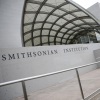
The Trump administration has made the Smithsonian museums one of its primary targets in its efforts to reshape cultural narratives to align with its viewpoints. In August 2025, the White House requested a “comprehensive internal review” of eight Smithsonian museums, including the National Museum of American History, following an executive order issued by President Trump in March 2025 in which he called for the removal of “improper ideology” from the Smithsonian’s offerings.
According to the Smithsonian’s charter, all of its 21 museums, 14 education and research centers, and the National Zoo are meant to be run independently of the federal government. The Smithsonian is overseen by Bunch and a board of regents, which includes Vice President Vance, Supreme Court Chief Justice John Roberts and other members appointed by Congress.
In an interview with NBC’s Meet the Press on Sunday, Bunch spoke about the Smithsonian’s 250th anniversary special exhibition at the Smithsonian Castle, which is called “American Aspirations.”
He told NBC: “It’s really important for people to understand that America is much an ideal as it is a place, that it’s a series of aspirations that have really shaped who this country is. And so for me, what is so powerful is to say, ‘Let us honor the words of Thomas Jefferson and the founders, but let us use those to challenge us to be better.’”
Jennifer Vanasco edited this story.

-

 World56 seconds ago
Belgium to introduce new road tax in 2027, even for transiting drivers
-
 News26 minutes ago
Graham Platner makes it official in Maine, submitting paperwork to leave Senate race
-

 Los Angeles, Ca2 hours ago
Knee irritation forces Shohei Ohtani out of Friday start, All‑Star game
-

 Detroit, MI2 hours ago
Detroit Evening Report: Waymo cars blocking first responders – WDET 101.9 FM
-

 San Francisco, CA2 hours ago
San Francisco Mayor Daniel Lurie Blocks Vacant Grocery Store Tax Proposal | KQED
-

 Miami, FL2 hours ago
Oregon Battling Miami, Mario Cristobal for Four-Star EDGE Recruit
-

 Dallas, TX2 hours ago
FC Dallas Forward Logan Farrington Inks Contract Extension
-

 Boston, MA3 hours ago
Red Sox face lengthy travel issues ahead of series vs. Mets

