Midwest
Indiana carries out first execution in 15 years after inmate chooses Ben & Jerry's ice cream as last meal
An Indiana man convicted in the 1997 killing of four people including his brother and his sister’s fiancé was put to death on Wednesday in the state’s first execution in 15 years.
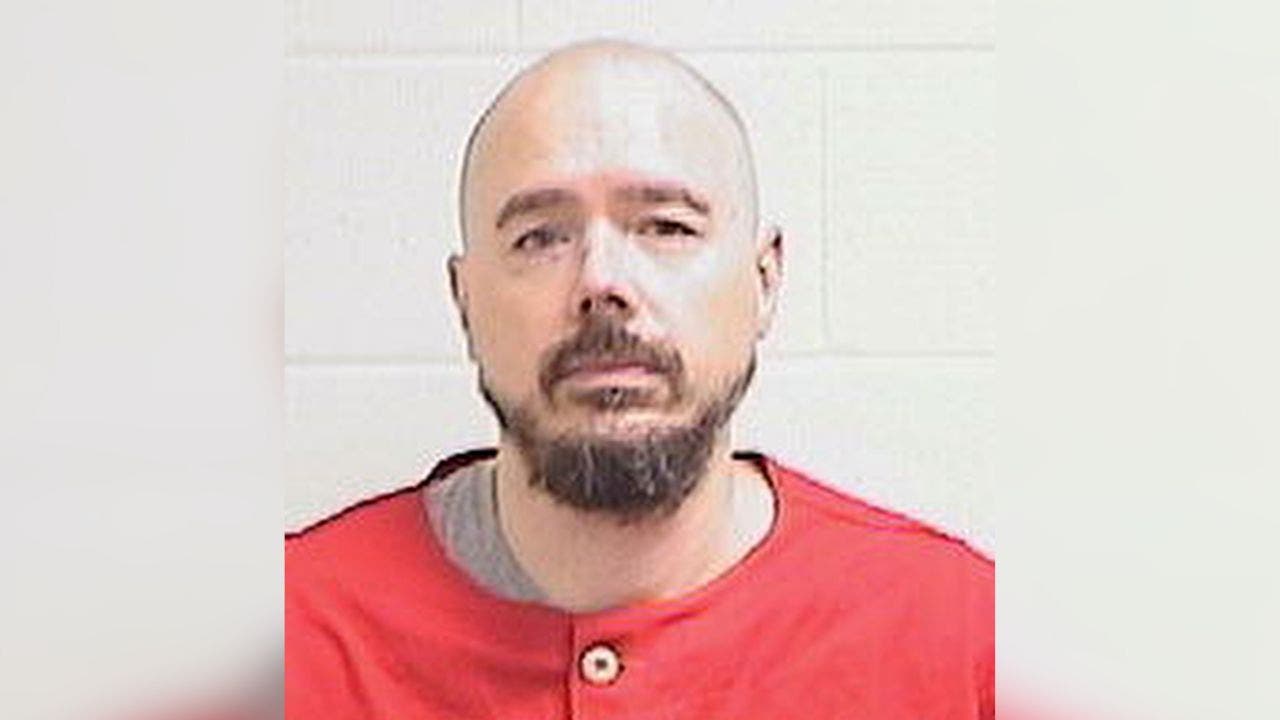
Joseph Corcoran, 49, was pronounced dead at 12:44 a.m. CST at the Indiana State Prison in Michigan City, Indiana, according to the Indiana Department of Correction, making it the 24th execution in the U.S. this year. He was scheduled to be executed with the powerful sedative pentobarbital, although officials did not mention that drug in their statement.
Prison officials said his last meal was Ben & Jerry’s ice cream.
Corcoran was convicted in the July 1997 shootings of his brother, 30-year-old James Corcoran; his sister’s fiancé, 32-year-old Robert Scott Turner, and two other men, 30-year-old Timothy G. Bricker and 30-year-old Douglas A. Stillwell.
INDIANA TO CARRY OUT FIRST STATE EXECUTION IN 15 YEARS
Joseph Corcoran, 49, was pronounced dead at 12:44 a.m. CST at the Indiana State Prison in Michigan City, Indiana. (Indiana Department of Corrections via AP)
Prior to the shooting, Corcoran was under stress because his sister’s upcoming marriage would require moving out of the home in Fort Wayne, Indiana, that he shared with his brother and sister, according to court records.
During his time in jail for those killings, Corcoran reportedly bragged about shooting and killing his parents in 1992 in northern Indiana’s Steuben County, for which he was charged but later acquitted.
The execution on Wednesday comes after Gov. Eric Holcomb, a Republican, announced plans in June to resume state executions following a 15-year hiatus caused by difficulty obtaining lethal injection drugs.
The state provided limited details about the execution process, and no members of the press were allowed as witnesses under state law. But Corcoran chose a reporter for the Indiana Capital Chronicle as one of his witnesses.
Indiana and Wyoming are the only two states in the country that do not allow members of the media to witness state executions, according to the Death Penalty Information Center.
Corcoran’s attorneys had challenged his death penalty sentence for years, claiming he was severely mentally ill, which affected his ability to understand and make decisions. Earlier this month, the state Supreme Court rejected a request from his attorneys to stop his execution.
He had exhausted his federal appeals in 2016, but his attorneys asked the U.S. District Court of Northern Indiana last week to halt his execution and hold a hearing to decide if it would be unconstitutional since Corcoran has a serious mental illness. The court refused to intervene on Friday, followed by another denied request on Tuesday from the U.S. Court of Appeals for the 7th Circuit.
Corcoran’s attorneys then made a final plea and urged the U.S. Supreme Court to issue an emergency order blocking his execution, but it also denied their request for a stay late Tuesday.
Defense attorney Larry Komp said he was disappointed with the high court’s ruling, saying that the issue surrounding Corcoran’s mental health was not properly examined.
INDIANA SEEKS TO CARRY OUT FIRST EXECUTION IN 15 YEARS AFTER OBTAINING LETHAL INJECTION DRUG
Joseph Corcoran is led to the City-County Lockup on Aug. 26, 1999, in Fort Wayne, Indiana, after being sentenced to death in the slayings of four people in July 1997. (Matt Sullivan/The Journal-Gazette via AP)
“There has never been a hearing to determine whether he is competent to be executed,” Komp said in a statement to The Associated Press. “It is an absolute failure for the rule of law to have an execution when the law and proper processes were not followed.”
Corcoran’s only remaining option to extend his life after the legal challenges became Holcomb, who could have commuted Corcoran’s death sentence but elected not to.
Holcomb’s office released a statement Wednesday after Corcoran was put to death.
“Joseph Corcoran’s case has been reviewed repeatedly over the last 25 years – including 7 times by the Indiana Supreme Court and 3 times by the U.S. Supreme Court, the most recent of which was tonight,” Holcomb said. “His sentence has never been overturned and was carried out as ordered by the court.”
Indiana’s last state execution was carried out in 2009 when Matthew Wrinkles was put to death for killing his wife, her brother and sister-in-law in 1994. Since that time, 13 executions have been carried out in the state, but those were initiated and performed by federal officials in 2020 and 2021 at a federal prison.
State officials have said they could not resume executions because the combination of drugs used in lethal injections were unavailable.
There has been a shortage of the drugs across the country for years because pharmaceutical companies have refused to sell them for executions, which forced states, including Indiana, to use compounding pharmacies, which make drugs specifically for clients. Some of these pharmacies use more accessible drugs such as the sedatives pentobarbital or midazolam, both which critics argue can cause intense pain.
At midnight, a group of anti-death penalty activists began singing “Amazing Grace.”
Religious groups, disability rights advocates and others have opposed Corcoran’s execution. About a dozen people, including some who were holding candles, held a vigil late Tuesday to pray outside the prison.
The sun sets behind Indiana State Prison on Tuesday, Dec. 17, 2024, in Michigan City, Indiana. (AP)
“We can build a society without giving governmental authorities the right to execute their own citizens,” Bishop Robert McClory of the Diocese of Gary, who led the prayers, said.
Other death penalty opponents also held protests outside the prison Tuesday night, with some holding signs that read “Execution Is Not The Solution” and “Remember The Victims But Not With More Killing.”
“There is no need and no benefit from this execution. It’s all show,” Death Penalty Action director Abraham Borowitz, whose organization protests every execution in the U.S., said.
Corcoran’s wife, Tahina Corcoran, told reporters outside the prison her husband was “very mentally ill” and she did not think he fully understood what was happening to him.
“He is in shock. He doesn’t understand,” she said.
The Associated Press contributed to this report.

Read the full article from Here
Michigan
I discovered anti-Zionism at the University of Michigan. I’m glad it lives on there
Pro-Palestinian demonstrators gather for a mock trial against the University of Michigan’s Board of Regents on the university’s campus in Ann Arbor, Michigan, on April 21, 2025. Photo by Jeff Kowalsky / AFP / Getty Images
At the University of Michigan’s recent commencement ceremony, history professor Derek Peterson delivered a five-minute speech in which he celebrated all those who have fought for justice at the university, my alma mater. Invoking our legendary sports-focused fight song, he asked the crowd to “sing” for suffragist Sarah Burger, who battled to get women admitted as students; for Moritz Levi, Michigan’s first Jewish professor; for all the students who fought for racial justice at Michigan as part of the Black Action Movement; and for the “pro-Palestinian student activists, who have over these past two years opened our hearts to the injustice and inhumanity of Israel’s war in Gaza.”
Peterson’s address was a historian’s invitation to every student and parent in the Ann Arbor stadium to recognize that the fight for Palestinian rights shares roots with our greatest movements for justice, including the struggle against antisemitism.
The backlash, predictably, was swift. The university’s president apologized; the speech was condemned by pro-Israel Jewish organizations and outlets; and I know it upset many college parents, my Gen X peers — we who were raised to believe with all our hearts that Jewish identity and Zionist identity are inextricable.
But to me, Peterson’s speech was a reminder of one of the most important lessons I took away from my time at the University of Michigan: that questioning Zionism is a necessary part of any Jewish life that aims to center justice.
I graduated from Michigan in 1989, and spent much of my last year in Ann Arbor ensconced at Hillel, where I edited a magazine for Jewish students. I’d grown up going to Young Judaea summer camps and had spent a college semester in Israel, where I’d witnessed the beginning of the first Intifada. I returned to find a shanty in the middle of campus that had been erected, a student organizer told our magazine, “to bring the uprising to the community. It is to show the conditions of the Palestinians and the brutal oppression of the Israeli army.”
The shanty evoked those then prevalent on campuses everywhere to symbolize the struggle of Black South Africans against settler colonialism and apartheid. The new shanty on our campus asserted that these words also applied to Israel.
While I was strongly against the Israeli occupation of the West Bank and Gaza — where Israel would not remove any settlements until 2005 — I was distressed and confused by the shanty’s silent, everpresent message about Israel’s past and present. Is Israel an apartheid state, I wondered?
So I put that question on the cover of our magazine.
The Hillel director called me into his office and somberly expressed his concern. But Hillel International had not yet officially clamped down on student activities that question Israel and Zionism.
So our cover story ran and we dropped our magazine in bundles across campus. At the time, I thought of myself as a liberal Zionist, and I secretly rooted for the student who tried to disprove the devastating charge. But as young journalists, my fellow magazine staffers and I were committed to exploring the views of those who erected the shanty, no matter their hostility to Zionism. We didn’t code the hostility as danger. No one thought we should report our ideological opponents — the kids who fell asleep on their books in the library just like we did — to the dean or to the government for arrest or deportation.
Over my time as an undergraduate, I’d come to recognize in these kaffiyeh-clad Palestinian, Arab, and Muslim students the same history-minded, righteous hope that animated me.
Decades later, in the spring of 2024, we all watched as pro-Palestinian student activists — including many Jewish students — set up campus encampments around the country to protest Israel’s assault on Gaza. At Michigan, the encampment was set up on the Diag, the university’s public square, where on the day of my own graduation I’d protested the university’s military research. As the mother of a recent college grad, I was humbled by the determination of these kids, who put up tents, organized teach-ins, and then suffered as police turned off their bodycams and used pepper spray against them. They were lawfully protesting for the university to divest from Israel as it bombed the people of Gaza, the children of Gaza — which is now home to the largest number of child amputees in modern history.
What I understand, and Professor Peterson understands, is that the student activists that he lauded at the commencement are fighting not against Jewish life but for Palestinians’ right to survive daily, as people, and as a people. These activists have asked us to understand, finally, that Zionism is what it does.
“It has been hard work to examine my own mind,” Tzvia Thier, a Jewish Israeli mother, wrote in an essay in the 2021 collection A Land With A People: Palestinians and Jews Confront Zionism. As a child, Thier immigrated to Israel from Romania in the wake of the Holocaust. In 2009, Thier accompanied her daughter to “protect” her while she joined an action to fight the evictions of Palestinians from their homes in the Jerusalem neighborhood of Sheikh Jarrah. Thier was 65, and realized that it was the first time in her life that she had had conversations with Palestinians. She understood then that “it was not my daughter who needed to be protected, but the Palestinians.”
“Many questions leave me wondering how I could have not thought about them before,” she wrote. “My solid identity was shaken and then broken. I have been an eyewitness to the systematic oppression, humiliation, racism, cruelty, and hatred by ‘my’ people toward the ‘others.’ And what you finally see, you can no longer unsee.”
When that shanty went up on Michigan’s campus in the late ’80s, I began to question all that I’d learned about Israel’s founding. I began to question the very idea of an ethnostate — in the name of any people, anywhere — that enshrines the supremacy of one group of people over another.
By the time I became a mother, I’d become anti-Zionist. I understood — with a grief that does not abate — that, as Jews, our history of oppression has become an alibi for Israel’s oppression of the Palestinian people.
We must reject the bad faith accusations of antisemitism that have emptied the word of meaning and enabled authoritarian repression. When students on campuses today charge Israel with apartheid and genocide, they are echoing reports from B’Tselem, Israel’s leading human rights organization. I ask the parents of my generation to read these reports and do as Thier did — to allow themselves to see what we have not wanted to see.
I stand with the more than 2,000 University of Michigan faculty, staff, students and alumni who have condemned the university’s response to the commencement address heard round the world.
For the sake of all of our children, I ask that we each do all we can to open our community’s heart to Palestinian history and humanity. That we each join the urgent struggle for the liberation of the Palestinian people.
This is the way that our Jewish college kids will find the deep and true safety of community: by leaving hatred, fear, and isolation behind; by honoring Jewish history by standing in solidarity with all who are oppressed; and by roaring in a stadium for freedom and justice, along with their entire generation.
You are surely a friend of the Forward if you’re reading this. And so it’s with excitement and awe — of all that the Forward is, was, and will be — that I introduce myself to you as the Forward’s newest editor-in-chief.
And what a time to step into the leadership of this storied Jewish institution! For 129 years, the Forward has shaped and told the American Jewish story. I’m stepping in at an intense time for Jews the world over. We urgently need the Forward’s courageous, unflinching journalism — not only as a source of reliable information, but to provide inspiration, healing and hope.
Support our mission to tell the Jewish story fully and fairly.

Minnesota
1 injured after shooting in Inver Grove Heights, police say; search for suspect underway
Police in Inver Grove Heights, Minnesota, are searching for a suspect after an individual was injured in a shooting following an altercation on Friday morning.
Officers responded to the 3300 block of 76th Street around 2:45 a.m. for a report of shots fired and a person who had been hit by gunfire, according to the Inver Grove Heights Police Department. They found the 911 caller, who was struck by a bullet. They were taken to a hospital and is expected to survive, officials said.
Investigators said the suspect was trying to get into the vehicle of the caller. Both individuals shot at each other after a short verbal altercation, according to police.
The suspect, whose description has yet to be disclosed by law enforcement, left the scene on foot.
Police are asking area residents who have video of the shooting or the suspect to email the footage to them.
Anyone who sees the suspect is urged not to approach them and to call 911. According to police, they are considered armed and dangerous.
Missouri
Judge denies Missouri attorney general’s bid to halt 7-OH kratom sales by American Shaman
A Jackson County judge on Friday denied Missouri Attorney General Catherine Hanaway’s attempt to immediately stop Kansas City-based CBD American Shaman and several affiliated companies from selling kratom products.
The motion for a temporary restraining order, which was filed alongside the Missouri Department of Health and Senior Services, took particular aim at the more potent 7-OH products, which Hanaway argues are “hazardous opioids” banned by state and federal law.
Jackson County Circuit Judge Charles McKenzie’s ruling Friday stated there are “competing affidavits” from experts on both sides of the argument, following a hearing on the motion earlier this week.
“The court cannot find, based on the oral argument of the parties, the respective competing affidavits presented and the pleadings, whether the plaintiff is likely to succeed on the merits at this juncture in the proceedings in order for the court to grant relief in the form of a temporary restraining order,” McKenzie’s order states.
Hanaway’s argument was backed by sworn statements from an undercover narcotics officer with the highway patrol who said 7-OH is being used to cut fentanyl and a woman whose brother died from a kratom overdose. Her office also submitted a FDA report that points to 7-OH as “a potent opioid that poses an emerging public health threat” and state health data showing synthetic 7-OH was involved in at least 197 Missouri deaths.
American Shaman submitted statements of its own from five toxicology and addiction experts, who largely said there wasn’t enough evidence to show that 7-OH and kratom posed a public health risk. One who researched narcotics said she had never heard of 7-OH being used to cut fentanyl.
Company owner Vince Sanders’ statement detailed how he came up with the idea to create 7-OH products, which now has an “enormous” demand particularly among people who need pain management.
Sanders could not be reached for comment about the ruling Friday.
McKenzie denied a temporary restraining order “without prejudice,” meaning that he would like to see more evidence.
“It is because of this finding that the court determines it necessary to hold an additional hearing,” he wrote, “where it can consider the parties respective positions with the potential of testimonial evidence and other properly introduced evidence, all as more fully developed by the parties, in order to further analyze these issues.”
The judge will consider “other injunctive relief sought in the pleadings at a future hearing to consider the issues,” the order states.
Hanaway filed a similar lawsuit Thursday against Relax Relief Rejuvenate Trading LLC, and its owners Dustin Robinson and Ajaykumar Patel.
The group received a warning letter from the FDA for producing 7-OH products last year similar to one received by Shaman Botanicals.
“This is another step in our ongoing crackdown on kratom manufacturers who flout the law and try to justify endangering Missourians in the name of profit,” Hanaway said in a press release Thursday. “Our mission is to safeguard Missourians from unregulated and addictive substances, and we will continue to pursue every legal tool available to protect public health and safety.”
This story was originally published by the Missouri Independent.
-
Maryland6 minutes agoMaryland students react to Canvas data breach
-
Michigan12 minutes agoI discovered anti-Zionism at the University of Michigan. I’m glad it lives on there
-
Massachusetts18 minutes agoFamily of fallen Massachusetts State Trooper attends ceremony remembering those killed in the line of duty – Boston News, Weather, Sports | WHDH 7News
-
Minnesota24 minutes ago1 injured after shooting in Inver Grove Heights, police say; search for suspect underway
-
Mississippi30 minutes ago
Voting Rights Upheaval Casts Shadow Over Mississippi Redistricting Case
-
Missouri36 minutes agoJudge denies Missouri attorney general’s bid to halt 7-OH kratom sales by American Shaman
-
Montana42 minutes ago“It’s Life Alert or rent”: Montana trailer park tenants are on rent strike
-
Nebraska48 minutes ago
Nebraska Athletics: Expansion of John Cook Arena is in full swing to modernize amenities