Wyoming
Wyoming property tax refunds jump 72% to $14.2M – WyoFile


Wyoming refunded $14.2 million in property taxes to state homeowners in 2024, about $6 million more than the statewide relief program doled out in 2023.
The Wyoming Department of Revenue recently reported the 2024 payment totals amounted to a 72% increase, according to WyoFile calculations.
In addition to the dollars refunded, the number of households receiving refunds also increased this year, jumping from 8,818 to 13,485. The 4,667 additional households that applied for and received property tax refunds this year amount to an uptick of about 52% compared to 2023, due in part to changes enacted by lawmakers.
Lawmakers should add $10.5 million to the refund program through the state’s supplemental budget for next year’s operations, Department of Revenue Director Brenda Henson told the Legislature’s Joint Appropriations Committee last week.
“The property tax refund program is the only needs-based, income-tested relief program that’s on the books today.”
Brenda Henson
The two-year budget for the program amounted to $20 million. The supplemental budget request would bring the account back up to $16.2 million for 2024 tax year refunds.
“I think there’s always been a need for property tax relief,” Henson, who served as a county assessor for 16 years, told the panel. “The property tax refund program is the only needs-based, income-tested relief program that’s on the books today.
“We believe that that additional $10.5 million will be sufficient to fund refunds for [tax year] 2024.”
The refunds distributed this year were for property taxes paid in 2023. To qualify for a refund, members of a household had to apply and show they met certain income, tax and asset requirements and limits.
The state program is separate from additional county tax refund programs available in 2024 in Albany, Converse, Lincoln, Sublette and Teton counties.
Teton tops another list
Among Wyoming’s 23 counties, Teton County got the largest share of state refund money this year, receiving $2.9 million. The 630 refunds in Teton County averaged $4,666.
Laramie County households received the second largest share of the funds — $2.2 million altogether. The 2,245 refunds, the largest county total, averaged $997.
Park County’s average refund at $1,178 was the second highest after Teton County’s. Those funds went to 1,645 successful applicants.
That Teton County — where staggering incomes and immense property values skew statistics — would receive the largest share of tax breaks raised questions from one lawmaker. Federal data shows the average per capita income for a Teton County resident was $471,751 last year, the highest in the nation.
“Teton County is the highest average dollar refund,” Sen. Jim Anderson, (R-Casper) said at the appropriations meeting. “I would think that wouldn’t be so if [the program] was income-related.”
The tax relief program is designed for home-owning residents, Anderson observed, not for absentee landlords or owners of rental properties — types of housing that may be more common in Teton County’s resort and tourist-heavy communities than in other parts of Wyoming.
“This has to do with owner-occupied houses,” Anderson said of the refund program. “I was thinking that would decrease the Teton County [refunds], but it’s four times what everybody else is.”
Property values drove the Teton figure up, Henson said.
“Obviously, fair market value of residential properties in Teton County is significantly higher” than other counties, she said. “So that’s why that refund amount is higher.”
Teton County’s assessed value for residential land, improvements and personal property amounted to $3.7 billion in 2024, Henson told the Joint Revenue Committee last month. That figure for the entire state amounted to $10.4 billion.
Teton County’s assessed residential value is more than three times the value in Laramie County, the next highest, which is $1.2 billion for 2024, according to Henson’s presentation. Yet Teton County has a population of 23,167 compared to Laramie County’s 101,187.
Residential value makes up 86% of Teton County’s total assessed value, according to Department of Revenue information. Statewide, counties’ residential value averages 32% of their overall assessed value, state information shows.
The supplemental budget will be debated when the Legislature convenes early next year.
BEFORE YOU GO… If you learned something from this article, pay it forward and contribute to WyoFile. Our work is funded by readers like you who are committed to unbiased journalism that works for you, not for the algorithms.

Wyoming
Measles confirmed in Teton County, Wyoming, as summer crowds flock to parks – East Idaho News

JACKSON, Wyo. (WyoFile) — After confirming a case of measles in an unvaccinated adult in Teton County, Wyoming, health officials are warning the public about possible exposure at locations in Grand Teton National Park and Jackson.
The news comes as summer crowds flood the region with tourists from around the world.
The public may have been exposed between June 17-25 at several locations in Teton County, according to the Wyoming Health Department. They include restaurants in Grand Teton National Park’s Colter Bay Village on June 17-18; a Colter Bay convenience store on June 20 and the Target in Jackson on June 25.
“We are asking people who may have been exposed to watch for measles symptoms for 21 days past the exposure date and consider avoiding crowded public places and high-risk settings such as daycare centers,” State Health Officer Alexia Harrist said in a press release.
Monitoring is especially critical for people who have not been vaccinated with the measles, mumps, and rubella vaccine, according to the health department.
It marks Wyoming’s second confirmed case of the highly contagious infection in 2026. Wyoming went 15 years without a confirmed case of measles until last year.
Resurgence
Health officials confirmed Wyoming’s first 2026 case in May. An adult patient in Fremont County who did not have a confirmed vaccination status caught the disease, according to the Wyoming Department of Health.
Measles was declared eliminated in the U.S. in 2000 — indicating no endemic transmission for 12 months or more. But it re-emerged in recent years primarily due to declining vaccination rates and increased public health skepticism. Those trends spawned during the COVID-19 pandemic and have persisted during the second Trump administration.
The neighboring state of Utah is one of America’s 2026 measles hotspots, with 499 cases reported so far this year.
RELATED | Anguished parents. Doctors in tears. Utah’s long measles outbreak takes a toll
A vaccination rate of 95% is necessary for community immunity to prevent measles outbreaks, according to the Centers for Disease Control.
In 2025, Wyoming’s proportion of kindergarten students who had completed the MMR vaccine was 93.6%, the CDC reports. That rate is higher than Colorado, Utah and Montana for the same year.
However, it’s declined overall since 2012-13, when Wyoming’s kindergarten vaccination rate was above 97%. It fell to 90.2% in 2020-21 before inching back up to the current 93.6%.
A measles case had not been reported in the state since 2010 until July 2025, when the health department confirmed measles in an unvaccinated child from Natrona County. By year’s end, 13 more cases were confirmed. The majority involved unvaccinated children and adults.
Along with being extremely contagious, measles can cause severe complications like pneumonia and brain swelling and can leave lasting impacts on the immune system. One to three out of every 1,000 children who become infected with measles will die from complications, according to the CDC.
RELATED | The US is on the verge of losing its measles elimination status. Here’s why that matters
RELATED | Measles is not the only disease on the rise. Mumps also may be making a comeback
=htmlentities(get_the_title())?>%0D%0A%0D%0A=get_permalink()?>%0D%0A%0D%0A=htmlentities(‘For more stories like this one, be sure to visit https://www.eastidahonews.com/ for all of the latest news, community events and more.’)?>&subject=Check%20out%20this%20story%20from%20EastIdahoNews” class=”fa-stack jDialog”>

GILLETTE, Wyo. — As the Aug. 18 primary election approaches, County 17 is introducing candidate questionnaires to help voters make informed decisions at the ballot box.
Every candidate in the primary field was sent the same three questions and given a limit of 500 words, which could be distributed among their answers as they saw fit. To ensure a fair and direct line to the community, all responses are published exactly as submitted, without edits or alterations.
Candidates were asked:
- What are the most crucial challenges your constituents are facing?
- If elected, how will you address these challenges?
- What qualities or qualifications do you possess that have prepared you to meet these challenges?
Questionnaires are being published on a rolling basis online through Aug. 11. They will be accessible via the County 17 Election Tracker.
Scott Smith (R), Wyoming state treasurer
What are the most crucial challenges your constituents are facing?
Everywhere I go many Wyoming citizens are concerned that our government is selling out our state lands to the highest bidder for crony capitalism. Some are concerned about Data Centers, Commercial Wind Generators, or nuclear waste storage. The biggest concern is the resources these outfits are taking, secondly, they are concerned about health issues related to living nearby, and lastly they are concerned with cost associated with these projects being passed onto the taxpayer.
If elected, how will you address these challenges?
One of the things that many people don’t know is that the State Treasurer sits on the State Land and Investment Board. (SLIB) The same issues that concern our citizens are the same reasons that I have decided to run for this office. The SLIB has voted to lease state lands to a hydrogen plant in Converse County that would take eight gallons of our valuable water to produce one gallon of hydrogen jet fuel using wind and solar generation to power the plant. These same elected officials have sold off $100 million of our state lands to the federal government. I believe that some things are not for sale. As Treasurer you can count on me to count the cost and listen to the people in the public testimony. If we are going to accept some of these projects the citizens need to have the benefit, like lower utility costs.
What qualities/qualifications do you possess that have prepared you to meet these challenges?
My bachelor’s degree is in Business Administration with an emphasis in management and marketing. I will be a leader in the state treasurer’s office that creates a positive work environment that will allow our investment team to create higher returns on the people’s money that the state invests. I would like to work with the legislature to use these interest earnings to buy down the people’s property taxes to alleviate part of the burden inflation has caused on the average citizen. My day job, I work as a bookkeeper and work with numbers day in and day out and have corrected some inefficiencies to help small businesses become more profitable. I plan to do that within the state office and make those profits available to the legislature to reduce the tax burden for the people. I have also served in the Wyoming House of Representatives for Goshen County and I have served on the Appropriations Committee and I am familiar with the massive state budget.
Related

Scroll down for a list of fireworks restrictions across Wyoming.
I usually don’t buy fireworks for the 4th of July. I go places to watch them. But since this year is the 250th anniversary of our nation, I was going to purchase a small arsenal and have a blast, pardon the pun.
But this has been a very dry year, as happens now and then in the cycles of weather. So I figured I’d wait until things were wet again and just hold my personal celebration a little late.
Many towns across Wyoming have canceled their July 4th fireworks due to the drought. They don’t want you firing off any either.
Based on 2026 reports, several Wyoming towns and counties have canceled or significantly restricted Fourth of July fireworks displays due to high wildfire risks, drought conditions, and Stage 1 fire restrictions.
Canceled/Restricted Public Displays (2026)
- Gillette/Campbell County: The CAM-PLEX fireworks show was postponed, and the county is maintaining a Stage 1 fire restriction due to extreme drought.
- Douglas: The Volunteer Fire Department canceled the 4th of July fireworks show due to fire concerns.
- Newcastle: Fireworks show canceled due to high fire danger, according to a June 27 report.
- Pine Haven: Canceled its Fourth of July fireworks display, according to a June 27 report.
- Riverton: Passed a resolution banning personal fireworks within city limits on July 4, with only a limited, designated area for public displays at the Honeycutt Softball and Saban Baseball Complex.
- Teton County: Fireworks have been historically canceled, and fire officials are urging residents to only attend official, professional displays due to extreme fire danger (confirmed for 2026).
City-Wide Personal Fireworks Bans (2026)
- Cheyenne: Consumer fireworks are prohibited within city limits, despite the county lifting restrictions, with only small novelties allowed.
- Casper: Fireworks are prohibited within city limits and in unincorporated Natrona County.
Key Locations Under Restrictions (2026)
- BLM Land: Fireworks are prohibited on public lands managed by the Bureau of Land Management in Wyoming.
- Weston County: A county-wide ban covers Newcastle and Upton due to high drought conditions.
Even little Chugwater, Wyoming, population 175, has banned fireworks inside its little town limits.
At the State Capital in Cheyenne, however, they will go right ahead with a fireworks display, right over the capital building itself. Dry weather be dammed.
Weird Fireworks Names You’ll Find In Wyoming
Just some of the odd names we found while shopping.
Gallery Credit: Glenn Woods
-
 Lifestyle5 minutes ago
L.A. Affairs: He wanted L.A. I wanted New York. A panic attack changed everything
-
 Politics9 minutes ago
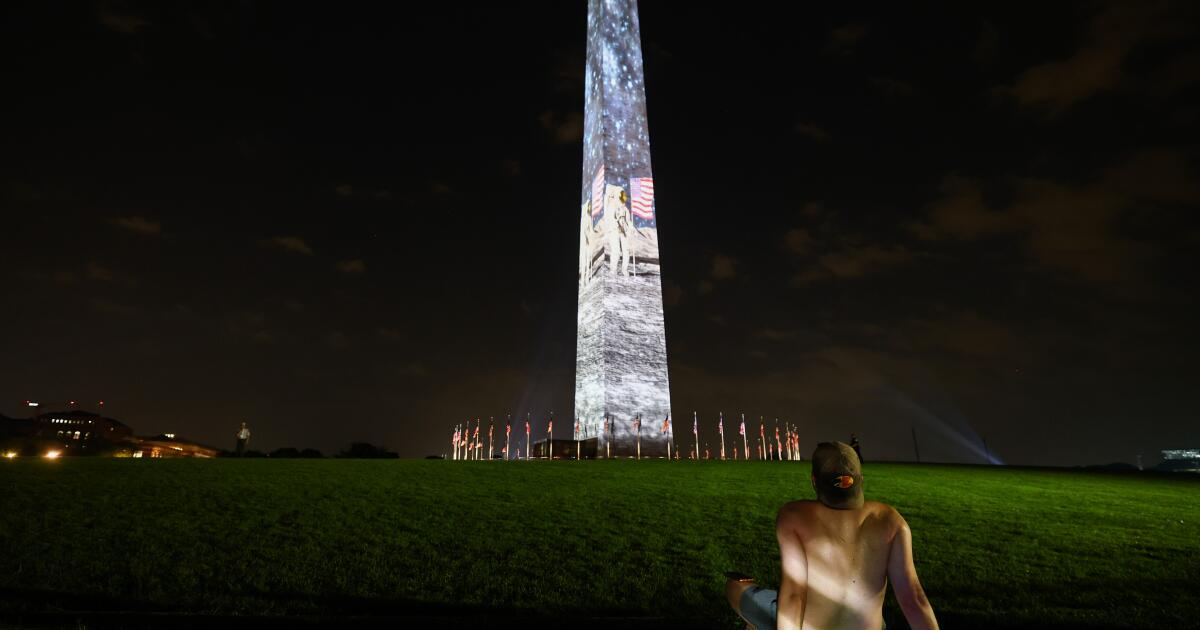
Trump refashions America’s 250th as a celebration of himself
-
 Sports24 minutes ago
How Dodgers’ Max Muncy, vying for his third All-Star selection, continues to evolve
-

 World36 minutes ago
Germany’s Merz defends NATO spending after Trump calls it ‘ridiculous’
-
 News59 minutes ago
Oregon ER doctors win a ‘David and Goliath’ battle against a national company
-

 Videos2 hours ago
Iran gets ready for Khamenei’s funeral • FRANCE 24 English
-

 Los Angeles, Ca2 hours ago
2 arrested after 3 LASD deputies injured during East L.A. World Cup celebration
-

 Detroit, MI3 hours ago
Ex-girlfriend in custody after Taylor man found fatally stabbed, police say

