World
Azerbaijan accused of ramping up repression of critics ahead of hosting UN climate summit


As representatives from nearly 200 countries, along with hundreds of journalists, arrived in Azerbaijan in November for the U.N. climate conference known this year as COP29, they bring with them a level of scrutiny the hosts aren’t accustomed to — and don’t often tolerate.
Azerbaijan has had a poor human rights record for many years and the government has regularly targeted journalists, activists and independent politicians. President Ilham Aliyev and his administration are accused by human rights organizations of spearheading an intensifying crackdown on freedom of speech ahead of the climate summit, including against climate activists and journalists.
Aliyev’s father, Haidar, ruled Azerbaijan from 1993 until he died in 2003 and Ilham took over. Both suppressed dissent as the country of almost 10 million people on the Caspian Sea basked in growing wealth from huge oil and natural gas reserves.
Elections since independence from the Soviet Union in the 1990s haven’t been regarded as fully free or fair. The Organization for Security and Cooperation in Europe said Azerbaijan’s most recent parliamentary elections in September took place in a “restrictive” environment. They were marked by turnout of 37% and no opposition party won any seats.
Human Rights Watch said the “vicious” crackdown against journalists and human rights activists has intensified over the last two years with phony criminal charges against critics and highly restrictive laws that make it hard for media and activists to work.
Ahead of COP29, Azerbaijan’s authorities have extended the pretrial detention of at least 11 journalists from Azerbaijan’s remaining independent news outlets on currency smuggling charges related to alleged funding from Western donors.
Azerbaijani government officials did not respond to numerous requests from The Associated Press for an interview or comment on their actions.
A look at just five of Baku’s critics currently detained in Azerbaijan:
Ulvi Hasanli (AP Illustration/Peter Hamlin)
Ulvi Hasanli and Sevinj Vagifgizi
Hasalni and Vagifgizi are journalists and leaders of Abzas Media, an independent online outlet. Abzas Media has investigated reports of protests and pollution at a gold mine in western Azerbaijan, reconstruction in the Karabakh region and corruption allegations against high-ranking officials.
Hasanli and Vagifgizi, along with four colleagues, were arrested in November 2023. Azerbaijani officials allege they conspired to smuggle money into Azerbaijan and claim they found more than $40,000 in Hasanli’s home. The journalists deny the allegations and Hasanli said the money was planted.
“That is why they decided to eliminate Ulvi and his team … to make sure they would no longer be able to expose their wrongdoings,” Rubaba Guliyeva, Hasanli’s wife told The Associated Press.

Sevinj Vagifgizi (AP Illustration/Peter Hamlin)
Hasanli and Vagifgizi are imprisoned in Baku with no trial date. Guliyeva called conditions there “extremely bad” and said she had seen bruises on her husband and had been told that their meetings and phone calls are monitored. Hasanli is allowed brief visits with his 2-year-old daughter but struggles when she leaves, his wife said.
Vagifgizi’s mother Ophelya Maharramova said the prison has water shortages and that the water isn’t drinkable. Prisoners “suffer from hair loss and their teeth are rotting,” she said.
Despite being imprisoned, Vagifgizi still asks what investigations Abzas Media is publishing, her mother said: “It’s what makes her feel motivated.”
Guliyeva said states should boycott COP29 because of Azerbaijan’s poor human rights record.

Gubad Ibadoghlu (AP Illustration/Peter Hamlin)
Gubad Ibadoghlu
Ibadoghlu is an academic and economist at the London School of Economics who was detained in Azerbaijan in July 2023. He was moved to house arrest in April after spending months in prison.
He was accused by Azerbaijan of selling counterfeit money, but his children dispute the charges. They believe he was targeted because he investigated corruption in Azerbaijan’s oil and gas industry and because he is an opposition figure. Ibadoghlu’s sons say he also set up a charitable organization in the United Kingdom to work with the UK Home Office to try to transfer money confiscated by the National Crime Agency from rich Azerbaijanis to the charity to serve the people of Azerbaijan.
Ibadoghlu is also the chairman of the Azerbaijan Democracy and Prosperity Movement, which has been denied registration as a political party in Azerbaijan.
His son Emin Bayramov told AP his father was arrested by unidentified police officers who beat his mother when she questioned who they were. Ibadoghlu has heath issues including diabetes and his family say he is being denied medical care. Another son, Ibad Bayramov, told AP the International Committee of the Red Cross had tried to visit him four times but were not allowed to see him.
Ibadoghlu also has no trial date. His sons have accused Azerbaijan’s government of delaying it until after the climate summit to avoid negative publicity.
Azerbaijan hosting COP29 while carrying out a crackdown on freedom of speech brings “shame on the international community,” Emin Bayramov said.

Anar Mammadli (AP Illustration/Peter Hamlin)
Anar Mammadli
Mammadli is a human rights and climate activist who was detained by masked men and driven away while he was on his way to pick up his child from nursery in April in Baku. He has also been accused of smuggling and of trying to unlawfully bring money into Azerbaijan. He denies the charges.
He heads an election monitoring and democracy group that joined others to co-found the Climate of Justice Initiative in Azerbaijan. In an open letter, the groups criticized Azerbaijan as “one of the most problematic countries in Europe in terms of political and civil liberties.”
Azerbaijan, the groups said, has not implemented a systematic policy to monitor and reduce greenhouse gas emissions. Climate emissions have continued to rise and oil production has polluted land, it said.
Human Rights Watch said Mammadli has been a key defender of human rights in Azerbaijan, highlighting violations of “fundamental freedoms.” He has called for freedom for political prisoners and an improved legal and political environment for human rights activists.
In a previous case, Mammadli was sentenced to 5 1/2 years in prison in 2014 on charges of tax evasion, illegal business and abuse of office. Amnesty International said the charges were trumped up, and he was awarded the Vaclav Havel Human Rights Prize shortly after he was sentenced. He was pardoned in 2016.
Like the others, Mammadli is imprisoned awaiting a trial date.

Akif Gurbanov (AP Illustration/Peter Hamlin)
Akif Gurbanov
Gurbanov is chairman of the Institute for Democratic Initiatives, an independent organization that seeks to develop a more open society through democratic initiatives such as training young journalists, human rights defenders and economists.
He was detained in March after police searched his home and raided the IDI’s office. Later police accused him and others of currency smuggling. At the same time, authorities raided the offices of the online news platform Toplum TV and the civil society organization Platform III Republic — both co-founded by Gurbanov.
Toplum TV worked with the other organizations to train young journalists, Human Rights Watch said. Platform III Republic is an organization that promotes discussion about Azerbaijani politics, good governance and proposes development strategies for the country’s future.
Gurbanov’s wife, Ayan Musayeva, told AP that he was arrested for his work “defending human rights, providing alternative information, speaking the truth.”
States attending COP29 in Baku, she said, should be calling for his immediate release along with “all other political prisoners in Azerbaijan.”
___
The Associated Press’ climate and environmental coverage receives financial support from multiple private foundations. AP is solely responsible for all content. Find AP’s standards for working with philanthropies, a list of supporters and funded coverage areas at AP.org.



new video loaded: Moscow Tanker Blast Most Likely Russian Missile, Video Shows
By James McManagan, Paul Sonne, Malachy Browne and Jackeline Luna
June 19, 2026
World
Man charged with attempted murder, released after allegedly forcing toddler into crocodile enclosure at zoo

Man FORCES child into crocodile enclosure
A British man has been arrested after allegedly forcing a 3-year-old boy into a crocodile enclosure at a zoo. The child suffered critical injuries, and authorities say the suspect did not know the boy as the investigation continues.
NEWYou can now listen to Fox News articles!
A man was released from custody on Friday after he was charged with attempted murder for allegedly forcing a 3-year-old boy into a crocodile enclosure at a zoo.
Cambridgeshire police said that the man, who remains unidentified, wasn’t fit to be interviewed.
The boy suffered critical injuries in the incident at Johnsons of Old Hurst, a farm and zoo in Huntingdon, England, north of London.
The 30-year-old man will remain on bail until Sept. 30, pending further inquiries.
GEORGIA MOM’S WALMART TRIP DEVOLVES INTO ‘TUG-OF-WARRING’ IN DESPERATE ATTEMPT TO SAVE HER SON
A crocodile rests inside an enclosure at Johnsons of Old Hurst, a farm and zoo in Old Hurst, Cambridgeshire, Britain, on April 14, 2026. (Dorota Dee Trajdos/Reuters)
“The man, who is not known to the victim, was assessed as not being fit for interview,” police said in a statement.
The boy is in stable condition, after reportedly suffering a broken arm and pelvis.
He was saved from the crocodile by Tracey Johnson, the wife of the zoo’s owner.
MOTHER JUMPS INTO WATER TO SAVE 4-YEAR-OLD DAUGHTER WHO FELL BETWEEN CRUISE SHIP AND DOCK
“I know Tracey very well and she’s a lovely lady and it’s nothing more than I’d expect from her,” a local told BBC News. “She’d always put her own life at risk to save someone else. She’s an extraordinary lady and very brave.
The villager added that Johnson put herself in “immense danger” during the rescue.
The owners said their tropical house would remain closed until further notice.
Crocodiles rest inside an enclosure at Johnsons of Old Hurst farm and zoo in Old Hurst, Cambridgeshire, Britain, on April 14, 2026. (Dorota Dee Trajdos/Reuters)
“Our thoughts and prayers are with the boy and his family following the incident that occurred today,” the owners wrote on social media.
Johnsons of Old Hurst is a farm and zoo north of London in Huntingdon, England. (Google Maps)
Huntingdonshire district councillor Charlotte Lowe said she couldn’t “fathom how it’s happened because they’ve got all the right protection and safety equipment, for want of a better word, in there,” The Guardian reported.
CLICK HERE TO DOWNLOAD THE FOX NEWS APP
Fox News Digital has reached out to the Cambridgeshire Constabulary for comment.

Published on
US President Donald Trump has doubled down on his comments on Italian Prime Minister Giorgia Meloni, saying she asked him “over and over” for a photo when the pair met at the G7 summit in France earlier this week.
ADVERTISEMENT

ADVERTISEMENT
Following the summit, Trump told an Italian journalist that he “felt sorry for Meloni” after she “begged me to take a picture with her”.
Meloni hit back in a video posted to social media, branding Trump’s claims as “completely made up” and insisting that neither she nor Italy begs anyone for anything.
The once close pair’s relationship has grown increasingly fractious in recent months, particularly since Rome refused to provide the US support for its operations in Iran and after Meloni defended Pope Leo XIV, who was criticised by the Trump administration over his remarks on the war and the US’s immigration policies.
“Italian Prime Minister Giorgia Meloni asked, over and over, for a picture with me during the G-7 meeting in France,” Trump wrote on his Truth Social account on Saturday. “She is doing poorly in Italy with her level of popularity, possibly because she turned down the United States of America, a Country that truly loves and protects Italy, when it came to denying Iran from obtaining or developing a Nuclear Weapon”.
“Now, after the United States defeated Iran militarily, she wants to be friends again in order to get her “numbers up.” No thanks!!!” Trump added.
-

 Georgia3 minutes ago
Democrats block local property tax referendums as Georgia lawmakers clash over affordability – The Current
-

 Hawaii10 minutes ago
Office of Hawaiian Affairs Responds to Senate Bill Involving Pōhakuloa – Big Island Video News
-

 Idaho13 minutes ago
8,600-Acre Wildfire Decimates Massive Idaho Salvage Yard With 8,000 Cars
-

 Illinois18 minutes ago
Illinois GOP chair says Obama Center is political operation on public land | Fox News Video
-

 Indiana25 minutes ago
Madam Walker Legacy Fest block party celebrates Black excellence with food, music, and community
-

 Iowa28 minutes ago
Blocked Iowa HHS director resigns but is appointed deputy director
-
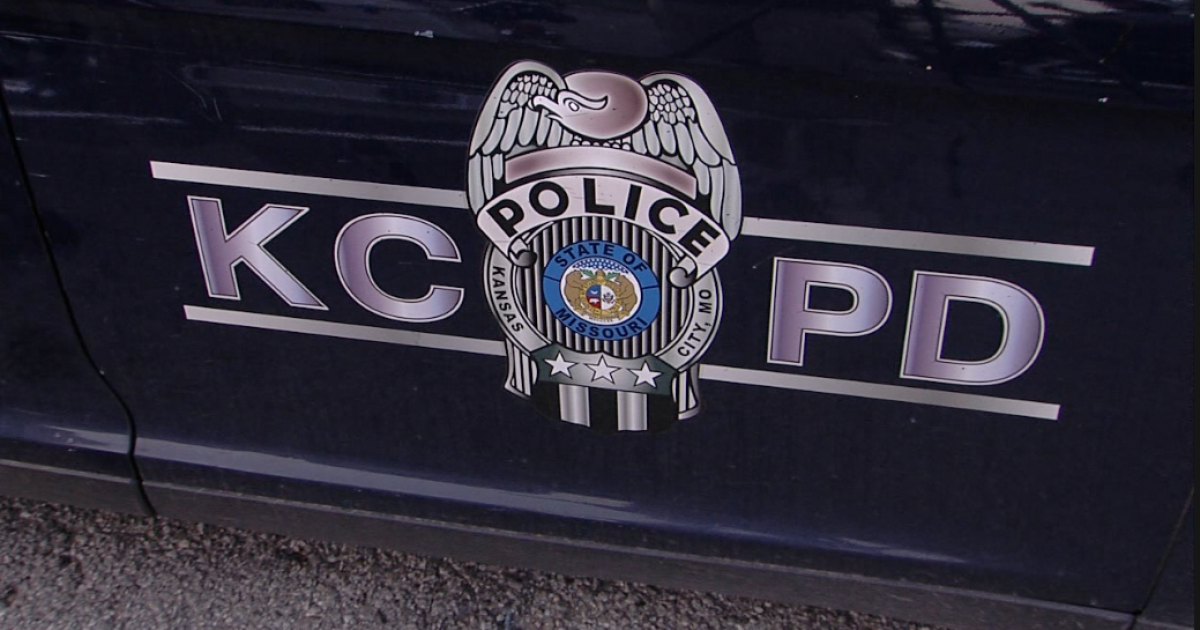 Kansas33 minutes ago
1 man dies after being shot June 9 in Kansas City, Missouri; police working to identify person of interest
-

 Kentucky40 minutes ago
Tornado ripped through Florence area during storms, NWS confirms

