West Virginia
Officials say list of unmet school safety needs in West Virginia adds up to $258 million – WV MetroNews


State education officials told lawmakers that $258 million is needed to complete the many upgrades that local school system leaders believe are necessary for safety.
“When you look at that total request for state funds, that’s a pretty large number obviously,” said Jonah Adkins, director of the Office of Safety & Tiered Support Systems. “But we would love to work with Homeland Security and a team of your choosing to kind of take a deeper look and further prioritize these needs because we know we would never be able to meet all of this at once, but if we could chip away a little bit each year I believe we could make some good headway.”
He told lawmakers that local school systems spent $23 million to address security needs, “so our school districts are working with the resources that they have available to them to address those needs as they arise. But obviously there is a greater need. It’s the unfortunate reality of our society that we live in that we have people targeting our children and targeting our schools to do bad things.”
Among the most expensive improvements widely needed are entrance systems consisting of a small space and two interlocking doors, commonly called man-traps. One set of the doors must close before the other one can be opened, so the person entering is briefly “trapped” in between before clearing the second door.
There are 272 West Virginia schools trying to make those upgrades, according to a presentation made to lawmakers during interim meetings on Sunday.
That represents some incremental progress from the 299 schools that said they needed the safer entrances last year and 327 the year before that.
“So they are trending down. It’s just maybe not as fast as hopefully we could,” said Micah Whitlow, director of the Office of School Facilities.
The annual school facility safety and security measure report was presented during a meeting of the Legislative Oversight Commission on Education Accountability. Speaking for the state Department of Education were Whitlow and Adkins.
“I find it quite astonishing that we still have 272 schools that don’t have the mantrip,” said Delegate Joe Statler, R-Monongalia, vice chairman of the House Education Committee.
“What is causing us to have so many at this point in the game that don’t have the safe entrance way?”
The report described an average of $319,000 for upgrades to school entrances.
“It’s just expensive so it’s hard to pay for a whole lot of those, especially if a county doesn’t have a levy or a bond or those extra ways of building things,” Whitlow said.
Whitlow said, from experience, it’s clear that the “mantrap” improvements could cost between $300,000 to $500,000. “Some of them could be super complicated and be a million (dollars), depending on the configuration and age of the building and some might be very simple and be $100,000,” he said. “It’s a wide range number due to the different building circumstances.”
He said factors can include requirements for the number of doors, glazings necessary for the work and needing to move office space closer to the front door. “In some cases it might be as easy as adding a layer of doors, but in most it’s quite expensive the amount of work you have to do,” Whitlow said.

Senator Robert Plymale, D-Wayne, said the need for school safety upgrades became clearer after the shootings at Columbine High School in Colorado in 1999. But he said school systems went into those improvements without a clear idea at the time of how extensive or expensive they would be.
Now, Plymale asked, “of all these priorities, what is the number one need of what we need to do? Is it the entrances?”
“I would say that’s a great place to start,” Adkins responded.
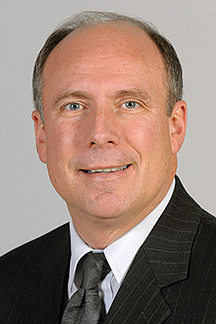
House Education Chairman Joe Ellington, R-Mercer, expressed exasperation over how much work on school safety still must be done.
“My concern is, I would imagine most of us here would think this is one of the priorities for the school system — the safety of our children. You’re asking for a quarter of a billion dollars here. I mean, why haven’t we been addressing this over the previous years to this to that level?”
Ellington went on to ask what to expect in coming years. “If we give you a quarter of a billion dollars, what are we getting next year? Recurring requests for needs? Because obviously things need to be updated, changed.” He asked, “Is this just a wish list or what?”

Senator Mike Oliverio, R-Monongalia, asked a series of questions focused on what financial resources local school systems have — and whether those options are actually limited.
“Let’s say I’m in a county that can’t really extract much from the local share, can’t get a levy passed — you know, the voters don’t want to pass a levy. Then can I come to the state for money as a county superintendent?” Oliverio asked. “Can I go to the federal government? Do we have a pattern of our 55 school systems of any type of consistent funding from the federal government?”
The answers he received were not particularly solid.
“Is there anywhere else that I would go as superintendent to try to make my school safer?” Oliverio asked.
“Nothing right off the top of my head, no,” Adkins replied.
“But we’re providing nothing, the state Legislature, to support schools?” Oliverio wanted to confirm.
Adkins responded, “Correct.”
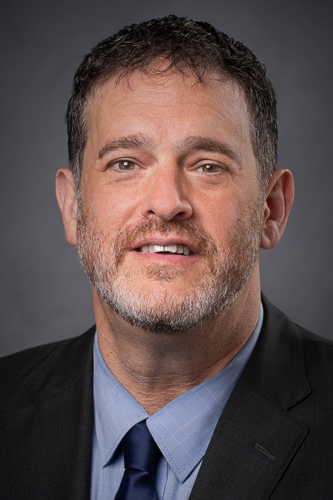
Delegate Mike Pushkin, D-Kanawha, followed up by asking whether any shortfalls on school security funding would be the responsibility of the county.
“That’s on the county to pay for, correct — so whether it’s additional access road or metal detectors or cameras in these schools, if these counties can’t afford it then they don’t have it,” Pushkin said. “And basically, it’s on us, the Legislature, to provide this.”


CHARLESTON, W.Va. (WOWK) — Every passenger traveling through the airport has a story and a meaningful reason to be heading to their destination.
But most passengers don’t know the work that goes on behind the scenes to ensure they get there safely.
‘Behind the Journey’ is West Virginia International Yeager Airport’s campaign that helps passengers get a better understanding of airport operations and adds transparency and education to the travel experience.
The operations department is up early at 4 a.m. to search for foreign objects or debris that could create a dangerous situation for an aircraft.
“Our first job in the morning is to do a sweep of the entire airfield, the runway and the taxiways, just to make sure that there’s nothing on there that could puncture an aircraft tire or be sucked into an engine,” Joe Belcher, operations specialist, said.
Latest News:
Once the runway is clear and safe, passengers can enjoy their flight with peace of mind.
Elizabeth Lynn, who flies to New Jersey once a month for work on Breeze Airways, says she loves the experience she has at a regional airport.
“One experience I had, I didn’t get here in time. I have to check my bag. And they were nice enough to actually take my checked bag down and let it in for me because I showed up a little late,” Lynn said.
Ned and Hercules are working hard to keep birds away from the runway and brighten up a passenger’s day.
“They will also go through the terminal. They’ll visit employees. They’ll also visit any type of passengers that are in the lobby. They’ll do meet and greets. They do a lot of things. They stay pretty busy throughout the day,” Blecher said.
Paige Withrow, marketing officer at CRW, says the campaign educates passengers on how the airport systems work.
“It’s important for passengers to know what happens behind the scenes so that they know who to contact if something goes wrong while they’re traveling. So if their baggage is delayed, they know to contact their airline. If they have an issue during their travel, don’t know exactly which vendor to contact,” Withrow said.
There are QR codes throughout the terminals for passengers to fill out surveys about their experience.
The campaign runs until June 30.
For more news from across the Tri-State, click here.
West Virginia
Governor’s Highway Safety Program hosts annual luncheon recognizing law enforcement – WV MetroNews

CHARLESTON, W.Va. — Law enforcement who keep West Virginia roadways safe were honored Thursday in the Capital City.
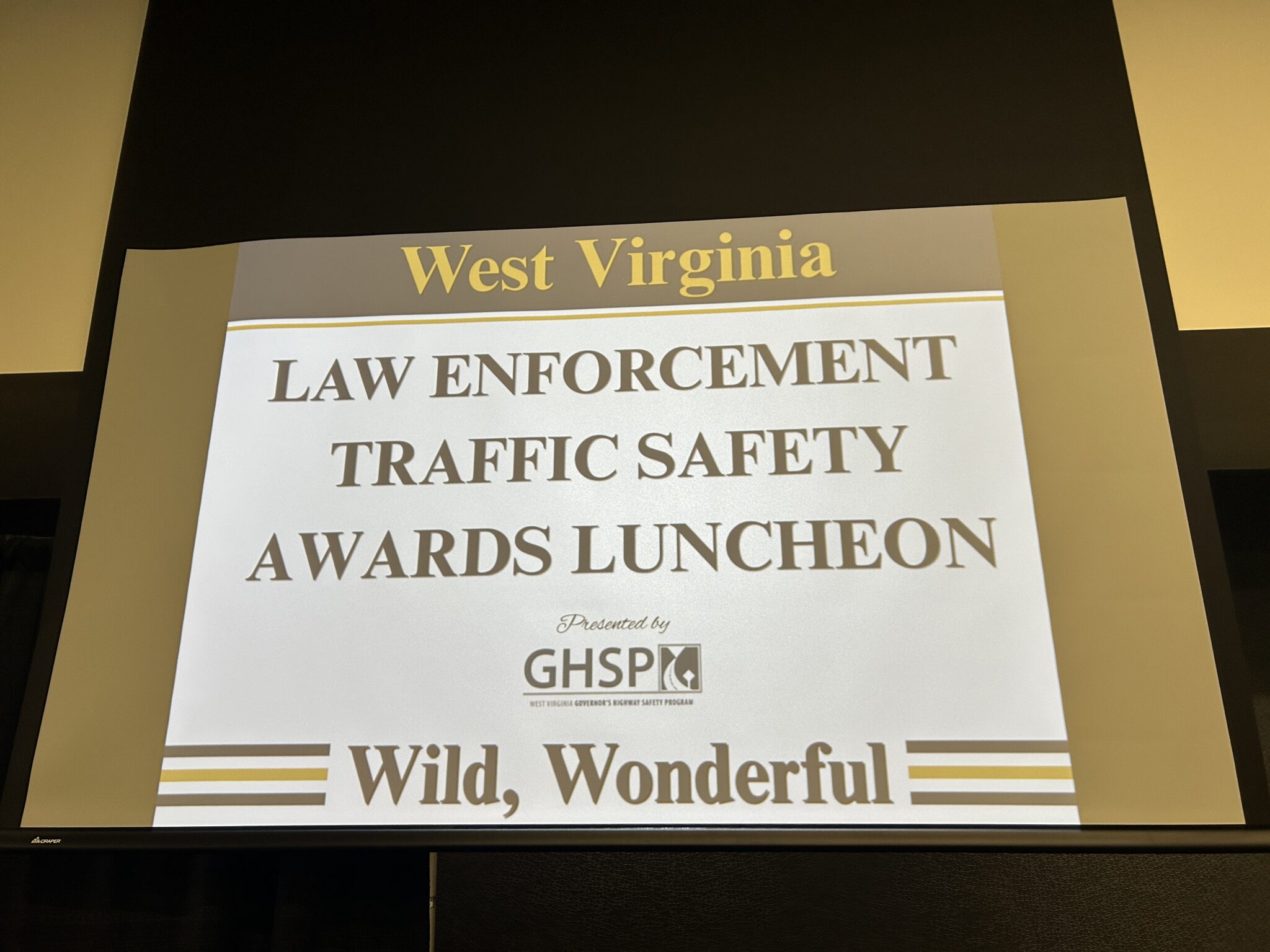
The West Virginia Governor’s Highway Safety Program (GHSP) hosted the annual Law Enforcement Traffic Safety Awards Luncheon at the Charleston Coliseum and Convention Center to highlight over 100 law enforcement agencies and officers from across the state for their work.
GHSP Director Jack McNeely says the program covers the nearly 39,000 miles of public roadways in West Virginia, and it aims to reduce crashes, serious injuries, and fatalities. It was very important to recognize the law enforcement during the luncheon, McNeely said.
“For their efforts while enforcing against impaired driving, distracted driving, seatbelt use, and while they’re on the Governor’s Highway Safety Program time,” McNeely said. “Our program, we change behaviors. Our goal is to change behaviors or drivers. We do that through engagement, education and enforcement.”
A particularly susceptible group to roadway accidents is young drivers. McNeely said the number one cause of death for 15-to-24-year-olds is car crashes. He said part of it is inexperience, and so education plays a key role.
McNeely mentioned the GHSP funds some projects through the Driver’s Education Program in West Virginia, as well as the Drive to Save Lives program, which spreads information about factors that cause crashes.
McNeely said 30-year motivational speaker Cara Filler spoke with the GHSP last week, and she has particular insight into the dangers of speed-related crashes. McNeely said Filler’s twin sister was killed one day after her 18th birthday in a speed-related crash. Filler has reached two million people in five countries during her time as motivational speaker.
There were special guests at the luncheon. Boone County couple Jimmy and Zelda Craig, whose daughter Baylea Bower was killed by an impaired driver during Easter weekend last year, were present in the Capital City. McNeely mentioned House Bill 4712, named “Baylea’s Law” after Bower, which was passed earlier this year.
“Baylea’s Law” stiffened penalties for those charged with DUI causing death.
“We refer to them as crashes, because it’s a choice for someone to get behind a wheel impaired, whether by alcohol or drugs,” McNeely said. “It’s a choice for someone to speed. In that [Baylea Bower] particular case, we had speed, we had impairment, both alcohol and drug related. It’s a choice to pick up your phone and look at it while you’re driving down the road. It’s a choice not to put to buckle up your seatbelt.”
There’s no excuse for driving impaired, McNeely said. He implored people to always have a backup plan if they become intoxicated under alcohol or drugs.
“It’s important to have somebody, if you’re going out, whether a college town, whether you’re in Huntington, whether you’re in Morgantown, but if you know you’re going to be around that, have a designated driver,” McNeely said. “That’s the only thing I can say. Have a game plan, not only if you’re going to be the one drinking, but have a game plan if you’re going to be the one that’s not, and going to be the responsible one for that evening. Take those keys away.”
Another initiative with the GHSP has been impaired-driving checkpoints. McNeely said those checkpoints are more of an awareness program, the blue lights remind drivers to travel safely. He said it helps keep impaired drivers off the road.
The Governor’s Highway Safety Program reported 1,873 DUI arrests in the state of West Virginia in 2025. The GHSP cited 23% of the state’s vehicle deaths over the past five years as alcohol related.

A few post-election observations:
–This election saw an historic divide within the state’s Republican Party, with candidates endorsed and funded by Governor Morrisey and related PACS vs. Senator Tom Takubo’s slate. In Kanawha County, Takubo survived withering and well-financed attacks to win re-nomination, as did Senator Vince Deeds in Greenbrier County. However, as our Brad McElhinny reported, “Morrisey’s endorsements and associated spending touched enough winners that the governor still could have significant influence on the chamber going into the next regular session.”
–The Morrisey vs. Takubo state senate slates ended up being a push. Morrisey is claiming victory, but at what cost? The Morrisey side outspent Takubo’s fundraisers four to one but ended up with status quo in the Senate. That means the internal dealing begins now to determine who will lead the Senate in the next session.
–West Virginians living in competitive districts were deluged with negative ads. Many crossed the line from being mean-spirited to simply inaccurate. There is always debate about the effectiveness of negative ads, but we don’t see any letup. More recent research suggests the conventional wisdom that negative ads depress turnout may not be accurate, but they certainly did not help turnout in this election.
–Most West Virginia voters stayed home. The Secretary of State’s office reports turnout at 21 percent (20.91 to be exact). That is slightly less than the last off-year primary in 2022, when the turnout was 23 percent, and well below the 2018 turnout of 26 percent.
–The statewide court races, which were open to Democrats, Republicans and Independents, turned into a brutal night for incumbents. Two Supreme Court office holders and the Intermediate Court of Appeals incumbent all lost. MetroNews Talkline co-host T.J. Meadows speculates that independent voters, who were blocked from voting in the GOP primary, joined Democrats in throwing out the judicial office holders.
–It was also a rough night for a handful of Republican House of Delegates members. At least 14 lost their re-nomination races.
–Yes, every vote does count, especially in the small single-member House districts, when there is a light voter turnout. Unofficial results on the Republican side show that in the 74th district, incumbent Guy Ward won by 17 votes. Paul Howe finished with a 15 vote advantage in the 70th. Justin Beanard won by five votes in the 10th, Tim McNeely won by four votes in the 71st, and Aaron Holley finished two votes ahead in the 22nd.
–Getting out the vote in your home county makes a difference in a statewide race with low turnout. Rachel Fetty Anderson won the race for the Democratic nomination to the U.S. Senate over four other candidates, including former state Senate President and one-time gubernatorial candidate Jeff Kessler. Anderson received 3,900 more votes than Kessler in her home county of Monongalia, while Kessler received fewer than 1,400 more votes than Anderson in his home Ohio County. Anderson’s win may also signal Democrats are more interested in new faces than giving another shot to a veteran pol.
–And finally, another West Virginia county has gone Republican. The Monongalia County Republican Executive Committee says GOP registration has now surpassed the Democratic Party 22,670 to 22,468. Democrats have the advantage in registration in just four counties—Boone, Logan, McDowell, Mingo—and Boone is just 41 registrations away from flipping.
-

 News16 minutes ago
Woman killed in Atlanta Beltline stabbing identified
-

 New York2 hours ago
Questions Arise About Jack Schlossberg’s Readiness for Congress
-

 Los Angeles, Ca2 hours ago
Los Angeles releases searchable list of worst rental properties
-

 Detroit, MI2 hours ago
MLB News & Moments: Mets Gain Much-Needed Momentum by Sweeping Detroit
-

 San Francisco, CA2 hours ago
Where to Find Free Street Parking for Shows in San Francisco | KQED
-

 Dallas, TX3 hours ago
Dallas Stars Forward Would Be Perfect Trade Target for NY Rangers
-

 Boston, MA3 hours ago
JetBlue to pull out of N.H.’s largest airport amid capacity crisis, officials announce – The Boston Globe
-

 Denver, CO3 hours ago
Denver area events for May 15