West Virginia
Officials say list of unmet school safety needs in West Virginia adds up to $258 million – WV MetroNews


State education officials told lawmakers that $258 million is needed to complete the many upgrades that local school system leaders believe are necessary for safety.
“When you look at that total request for state funds, that’s a pretty large number obviously,” said Jonah Adkins, director of the Office of Safety & Tiered Support Systems. “But we would love to work with Homeland Security and a team of your choosing to kind of take a deeper look and further prioritize these needs because we know we would never be able to meet all of this at once, but if we could chip away a little bit each year I believe we could make some good headway.”
He told lawmakers that local school systems spent $23 million to address security needs, “so our school districts are working with the resources that they have available to them to address those needs as they arise. But obviously there is a greater need. It’s the unfortunate reality of our society that we live in that we have people targeting our children and targeting our schools to do bad things.”
Among the most expensive improvements widely needed are entrance systems consisting of a small space and two interlocking doors, commonly called man-traps. One set of the doors must close before the other one can be opened, so the person entering is briefly “trapped” in between before clearing the second door.
There are 272 West Virginia schools trying to make those upgrades, according to a presentation made to lawmakers during interim meetings on Sunday.
That represents some incremental progress from the 299 schools that said they needed the safer entrances last year and 327 the year before that.
“So they are trending down. It’s just maybe not as fast as hopefully we could,” said Micah Whitlow, director of the Office of School Facilities.
The annual school facility safety and security measure report was presented during a meeting of the Legislative Oversight Commission on Education Accountability. Speaking for the state Department of Education were Whitlow and Adkins.
“I find it quite astonishing that we still have 272 schools that don’t have the mantrip,” said Delegate Joe Statler, R-Monongalia, vice chairman of the House Education Committee.
“What is causing us to have so many at this point in the game that don’t have the safe entrance way?”
The report described an average of $319,000 for upgrades to school entrances.
“It’s just expensive so it’s hard to pay for a whole lot of those, especially if a county doesn’t have a levy or a bond or those extra ways of building things,” Whitlow said.
Whitlow said, from experience, it’s clear that the “mantrap” improvements could cost between $300,000 to $500,000. “Some of them could be super complicated and be a million (dollars), depending on the configuration and age of the building and some might be very simple and be $100,000,” he said. “It’s a wide range number due to the different building circumstances.”
He said factors can include requirements for the number of doors, glazings necessary for the work and needing to move office space closer to the front door. “In some cases it might be as easy as adding a layer of doors, but in most it’s quite expensive the amount of work you have to do,” Whitlow said.

Senator Robert Plymale, D-Wayne, said the need for school safety upgrades became clearer after the shootings at Columbine High School in Colorado in 1999. But he said school systems went into those improvements without a clear idea at the time of how extensive or expensive they would be.
Now, Plymale asked, “of all these priorities, what is the number one need of what we need to do? Is it the entrances?”
“I would say that’s a great place to start,” Adkins responded.
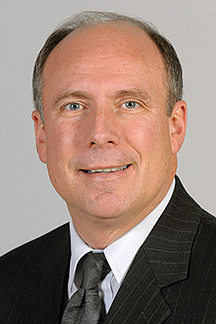
House Education Chairman Joe Ellington, R-Mercer, expressed exasperation over how much work on school safety still must be done.
“My concern is, I would imagine most of us here would think this is one of the priorities for the school system — the safety of our children. You’re asking for a quarter of a billion dollars here. I mean, why haven’t we been addressing this over the previous years to this to that level?”
Ellington went on to ask what to expect in coming years. “If we give you a quarter of a billion dollars, what are we getting next year? Recurring requests for needs? Because obviously things need to be updated, changed.” He asked, “Is this just a wish list or what?”

Senator Mike Oliverio, R-Monongalia, asked a series of questions focused on what financial resources local school systems have — and whether those options are actually limited.
“Let’s say I’m in a county that can’t really extract much from the local share, can’t get a levy passed — you know, the voters don’t want to pass a levy. Then can I come to the state for money as a county superintendent?” Oliverio asked. “Can I go to the federal government? Do we have a pattern of our 55 school systems of any type of consistent funding from the federal government?”
The answers he received were not particularly solid.
“Is there anywhere else that I would go as superintendent to try to make my school safer?” Oliverio asked.
“Nothing right off the top of my head, no,” Adkins replied.
“But we’re providing nothing, the state Legislature, to support schools?” Oliverio wanted to confirm.
Adkins responded, “Correct.”
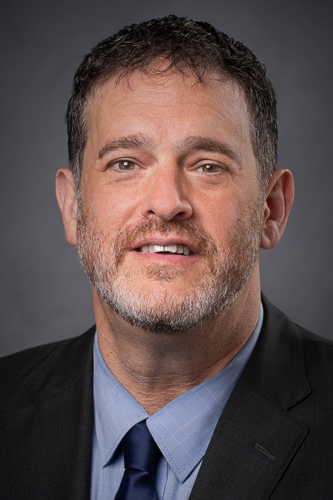
Delegate Mike Pushkin, D-Kanawha, followed up by asking whether any shortfalls on school security funding would be the responsibility of the county.
“That’s on the county to pay for, correct — so whether it’s additional access road or metal detectors or cameras in these schools, if these counties can’t afford it then they don’t have it,” Pushkin said. “And basically, it’s on us, the Legislature, to provide this.”

West Virginia
West Virginia First Foundation advances key initiatives at second quarterly board meeting

Community Bulletin
A longtime State Farm agent on Buckhannon’s Main Street, Kelley Tierney offers home, auto, life and renters insurance — plus State Farm financial services — under the company’s “Here For What Matters” approach. Read more →
This story brought to you paywall-free, courtesy of the My Buckhannon team and our community partners
CHARLESTON, W.Va. — The West Virginia First Foundation (WVFF) convened its second quarterly board meeting of 2026 at Ascend West Virginia in Charleston, continuing its work to advance prevention, treatment and recovery efforts across West Virginia through responsible stewardship of opioid settlement funds.
The meeting provided board members with updates on several key initiatives and strategic priorities currently underway.
Expert panel appointments
A significant focus of the meeting was the appointment of several volunteer Expert Panel members following the conclusion of certain panel terms. Expert panelists serve in advisory roles and provide regional knowledge, professional expertise and community perspective to help inform WVFF’s work and funding priorities. To allow time for all appointees to complete the necessary confirmation and onboarding process, names will not be publicly released until all appointments have been finalized.
“Expert Panelists play an important role in helping us understand the needs, challenges, and opportunities facing our local communities,” said Jonathan Board, Executive Director of WVFF. “We are grateful for the individuals who volunteer their time and expertise to support this work and help guide thoughtful, informed decision-making.”
Local government reporting and best practices
Board members reviewed progress on the 2026 Local Government Expenditure Report, which compiles annual spending data submitted by local governments receiving opioid settlement funds. Staff reported that more than 65% of eligible local governments have submitted expenditure reports to date, with the statewide report expected to be released in mid-July.
The board also received an update on new resources being developed to help local governments identify promising practices and learn from successful approaches being implemented across West Virginia. While WVFF does not direct how local governments spend their allocated settlement funds, the Foundation remains committed to providing educational resources that highlight allowable uses, share examples from around the state and support informed local decision-making.
![[CHAMBER] [2026-06-23] Hiring Executive Director](https://res.cloudinary.com/mytown/image/upload/f_auto,q_auto,c_limit,w_1080/spotlights/jqvoqa1wl63oqmzrnmeg)
In the coming months, WVFF plans to host regional learning sessions that will bring local government representatives together to share experiences, discuss challenges and explore opportunities to maximize the impact of opioid settlement investments within their communities.
Strategic priorities
The board received updates on the Community Catalyst Grant (CCG) program, which opened for applications on June 1 and remains open through June 30. Designed as a three-year, outcomes-driven investment, the program will support projects focused on public safety response, day report centers and generational prevention efforts.
Board members also received updates on the West Virginia Wayfinder, the statewide needs assessment project led by the West Virginia University Health Affairs Institute, in partnership with the Institute for Policy Research and Public Affairs, and Data Driven WV. Meetings and engagement activities are underway with WVFF staff, expert panelists and community stakeholders across the state, with data, insights and priority areas currently being gathered and analyzed to help identify needs, gaps and opportunities related to substance use disorder prevention, treatment and recovery services in West Virginia.
![[DHS] [2025-05-23] Pain Free Living](https://res.cloudinary.com/mytown/image/upload/f_auto,q_auto,c_limit,w_1080/spotlights/xswzc9oud10whhzr94hg)
“Our Board remains focused on ensuring these funds are invested responsibly and strategically for the benefit of West Virginia communities,” said Greg Duckworth, Chairman of the WVFF Board of Directors. “Each meeting provides an opportunity to review progress, strengthen accountability, and continue building on the work being done across the state.”
Direct funding request approved
The board also voted to approve a $4 million direct funding request submitted by the Rockefeller Neuroscience Institute (RNI) at West Virginia University. The project is focused on expanding access to innovative addiction treatment and recovery support tools while building the technology and infrastructure needed to support implementation across West Virginia.
Consistent with WVFF’s commitment to transparency and accountability, additional details regarding the project and funding agreement will be released in the coming weeks following the completion of final documentation. WVFF and RNI plan to issue a joint announcement once the agreement process has been finalized.
![[TWIN] [2025-08-08] Meadowlands](https://res.cloudinary.com/mytown/image/upload/f_auto,q_auto,c_limit,w_1080/spotlights/sueaeb3swu4g4qwmu3x2)
Hold the Line Tour stop at Rea of Hope
After the board meeting, WVFF board members and staff will visit Rea of Hope, an Initial Opportunity Grant awardee, as part of the Foundation’s Hold the Line Tour, which highlights organizations and programs working to make a difference in communities across West Virginia. The visit will provide an opportunity to hear directly from leadership about the impact of recovery-focused services and community support.
The next regular meeting of the Foundation’s board of directors is scheduled for September 17, 2026 (subject to change). Visit wvfirst.org to learn more.

West Virginia
Register now: West Virginia’s largest yard sale grows with more Webster County sellers for 2026

Community Bulletin
WVU Medicine St. Joseph’s Hospital’s Center for Women’s Health has opened its 2026 prenatal and pregnancy classes — including Spinning Babies, breastfeeding basics and Lamaze — for expecting Upshur County families, with Lamaze offered in person or online. Read more →
This story brought to you paywall-free, courtesy of the My Buckhannon team and our community partners
BUCKHANNON – The West Virginia Largest Yard Sale is getting even larger, with more participants from Webster County this year.
Cadence Ringer, executive director of the Upshur County Convention and Visitors Bureau, said the 2026 West Virginia Largest Yard Sale will take place Friday, Aug. 7, and Saturday, Aug. 8. Registration for sellers is now open through July 26 at 11:30 p.m. Registration can be found on the Upshur County Visitor Center’s Facebook page.
“It’s been going wonderfully. As of last Wednesday, we had 30 applicants, and they keep coming in by the day. They are slowly trickling in right now, but I know we’ll have a big burst of them right before the deadline to register,” Ringer said. “The date set for the map to go live is July 31. I like to prepare for it a week in advance, to give people enough time to map out their own plan for their shopping that weekend.”
The map showing where all the sellers will be located will be available digitally this year on the Upshur County Visitor’s Bureau website. The map will also include brief descriptions of the items each yard sale will offer.
“On our registration form, I have asked them to list at least five things they’re going to be selling. Once I get them on the map, there’s an option for me to add details, so if they click on the actual location of the yard sale and read the details at the bottom, it’ll give them an idea of what that yard sale will be offering,” Ringer said. “There won’t be any photos or anything, but people can at least get an idea of what each seller will have.”
The yard sale has expanded over the year, from Upshur to Lewis and now to Webster County.
“We decided last year to add Webster County to this and to try and get them going,” Ringer said, but the numbers were low. “This year, we have had quite a few from Webster County, so I’m excited to actually get it spreading into that area as well.”
She said people who go out to shop are all looking for something different, but you can always find a little bit of everything.
![[FMG] [2026-02-02] Emergency Weather Repairs 1](https://res.cloudinary.com/mytown/image/upload/f_auto,q_auto,c_limit,w_1080/spotlights/y2ocqu3yood0lor1cixh)
“There are people looking for a lot of clothes. That’s what a lot of people prepare for the upcoming school year by going yard saling,” Ringer said. “I’m a yard saler myself, so I go looking for those hidden treasures, and I really think that’s what this is about — finding things they don’t make anymore, or antiques of some sort, some decorations. They say one man’s trash is another man’s treasure, so that’s what it’s about: just finding the treasure.”
Ringer said the event also brings in visitors from outside the area and encourages them to shop and eat at local businesses in Buckhannon.
“I think the most important thing to highlight is that this is a collaboration between the three counties — it drives our economy,” Ringer said. “I know some people see it as annoying that traffic is going on, or that there’s a bunch of people around, but it also gives families the opportunity to buy things secondhand and to prepare for the upcoming school year. Maybe some families can’t afford to purchase new things. It also drives the economic boost for our restaurants and other locations downtown.”
-

 Michigan52 seconds ago
Michigan Lottery Daily 3, Daily 4 results for June 26, 2026
-

 Massachusetts8 minutes ago
As Mass. ballot initiatives multiply, critics want to limit them
-

 Minnesota11 minutes ago
Minnesota man accused in a $250M fraud scheme taken into custody in Somalia | CNN
-

 Mississippi16 minutes ago
10-year-old seriously injured in Mississippi County UTV crash
-

 Missouri23 minutes ago
First-generation-American students remind Missouri politicians why unity, freedom of speech are so important ahead of the nation’s 250th anniversary
-
Montana26 minutes ago
Montana Lottery Mega Millions, Big Sky Bonus results for June 26, 2026
-

 Nebraska31 minutes ago
Nebraska QB commit Trae Taylor wins Elite 11 MVP
-

 Nevada38 minutes ago
After transgender sports ballot initiative dropped, proposal introduced for ‘27 Nevada Legislature

