Politics
Man convicted of Iran-backed Trump assassination plot compared his plan to Butler shooting: FBI


NEWYou can now listen to Fox News articles!
A Pakistani man convicted Friday in federal court of plotting to assassinate President Donald Trump and other politicians told an FBI agent he thought Iran “was responsible” for the assassination attempt on Trump in Butler, Pennsylvania.
Asif Merchant, 47, told the FBI agent, Jacqueline Smith, that the incident “was the same thing he was sent here to do,” Smith testified during Merchant’s trial. Merchant told jurors the Islamic Revolutionary Guard Corps (IRGC) sent him on a “mission” to kill U.S. politicians, including by telling him to attend a Republican rally.
Merchant was arrested July 12, 2024, one day prior to the shooting in Butler, where Thomas Crooks fired several shots into a rally crowd, killing one and grazing Trump’s ear.
The FBI has said repeatedly it found no evidence that Crooks had co-conspirators or that any foreign actors were involved in the incident.
A sketch showing Asif Merchant, a Pakistani national with alleged ties to Iran, appearing in federal court in Brooklyn, N.Y., Wednesday, March 4, 2026. Merchant was on trial for charges related to a foiled 2024 plot to assassinate a high-profile U.S. politician, identified by defense and law enforcement sources as President Donald Trump. (Christine Cornell)
Merchant, who was found guilty on all charges Friday after fewer than two hours of deliberation, was convicted by a jury in Brooklyn, New York, of murder-for-hire and attempting to commit terrorism. He testified that Trump was not his only target, telling jurors then-President Joe Biden and former presidential candidate Nikki Haley were also on his list.
He claimed he only took part in the plot, which was foiled by the FBI before coming to fruition, because Iran’s IRGC warned it would target his family.
FORMER IRANIAN MINISTER PRAISES TRUMP ASSASSINATION FATWA AS DAUGHTER LIVES IN NEW YORK
“I had no other options,” Merchant said. “My family was threatened.”
Merchant now faces a maximum penalty of life in prison. His sentence will be determined at a later hearing.
Attorney General Pam Bondi said in a statement that Merchant “landed on American soil hoping to kill President Trump — instead, he was met with the might of American law enforcement.”
“The Department of Justice will remain ever-vigilant to protect Americans, prosecute terrorists, and halt acts of terrorism before they happen,” Bondi said.
This image provided by the Justice Department, contained in the complaint supporting the arrest warrant, shows Asif Merchant. (Justice Department via AP, File)
Merchant was arrested after he was recorded on camera outlining a plot on a napkin to kill a politician with a person who turned out to be an FBI informant. Federal prosecutors showed video during the trial of Merchant speaking to the informant. The prosecutors said Merchant also tried to hire two hit men and pay them $5,000, but the men turned out to be federal agents posing as assassins.
Smith, the FBI agent who met with Merchant after his arrest, said Merchant never conveyed that he feared for his family. Merchant said he wanted to do intelligence work and be paid for it, Smith said.
TRUMP DECLARES ‘I GOT HIM BEFORE HE GOT ME’ AFTER IRAN’S SUPREME LEADER KILLED IN STRIKE
Republican presidential candidate Donald Trump is whisked away by the Secret Service after shots rang out at a campaign rally at Butler Farm Show Inc. July 13, 2024, in Butler, Pa. (Jeff Swensen/Getty Images)
The FBI agent also said Merchant was told by an Iranian handler to attend a Republican political rally to scope out security. But Merchant was worried about being identified, so he watched the rally online instead.
Merchant’s defense team told jurors their client, who has two wives, was a family man and cared deeply about his faith and that he intentionally acted carelessly because he wanted to be caught.
In their closing arguments, defense lawyers said Merchant had his hand forced in the operation, thinking his family would be harmed if he did not cooperate. Additionally, the lawyers cited several instances in which Merchant’s actions as an intelligence operator were little more than incompetent.
Fox News’ Danielle Cavaliere, Brendan McDonald and Alexis McAdams contributed to this report.
Related Article




NEWYou can now listen to Fox News articles!
President Donald Trump is set to deliver what the White House is calling a “historic” speech Saturday night before a massive fireworks display celebrating America’s 250th anniversary.
Trump is still expected to take the stage at 10 p.m. at the conclusion of the Salute to America celebration on the National Mall, though timing of events may fluctuate due to adverse weather, per a senior White House official.
The president’s address is expected to look back on America’s history since its founding 250 years ago, a senior White House official told Fox News.
THE LESSON WE CAN LEARN FROM BICENTENNIAL HISTORY IS TO PARTY LIKE IT’S 1976
President Donald Trump speaks during a rally at Mount Rushmore National Memorial on July 3, 2026 in Keystone, South Dakota. (Chip Somodevilla/Getty Images)
Trump will deliver a “unique” speech featuring the stories of American heroes.
“It will be a unique speech unlike any other he’s given before,” the official added.
Earlier Saturday, Trump celebrated what he described as a “stronger than ever” America in a Truth Social post, praising the “incredible” crowds gathered in Washington despite the heat and storms.
FOURTH OF JULY APP GUIDES SPECTATORS THROUGH NINE-HOUR AIR SHOW FROM NASA JETS TO B-1 BOMBERS
The grand finale lasted over two minutes to cap a 23-minute light and fireworks display over Mount Rushmore after President Donald Trump’s 28-minute speech, brief by his lengthy standards. (Matt Gade)
The president also highlighted the air shows over the nation’s capital, saying the pilots and aircraft were “at a level never seen before.”
Trump also addressed recent vandalism at the Reflecting Pool, calling those responsible “Vandal Thugs” and promising the pool would be drained and repaired after the holiday weekend.
The president’s remarks come one day after he delivered a patriotic speech at Mount Rushmore, where he called the United States the “most exceptional nation ever to exist” and warned that communism posed the nation’s greatest threat.
TRUMP HAILS AMERICA AS ‘MOST EXCEPTIONAL NATION EVER TO EXIST’ IN MOUNT RUSHMORE SPEECH
The U.S. Air Force Thunderbirds perform a flyover during “Salute to America 250” Fourth of July celebrations on the National Mall on July 4, 2026, in Washington, DC. (Finn Gomez/Getty Images)
“Communism is the exact opposite of life, liberty and the pursuit of happiness — it is death, tyranny and the pursuit of evil.
A severe thunderstorm swept through Washington on Saturday evening, prompting emergency officials to urge people on the National Mall to seek shelter.
CLICK HERE TO DOWNLOAD THE FOX NEWS APP
Freedom 250, the event organizer, said it would provide updates on the evening’s schedule as weather conditions developed.
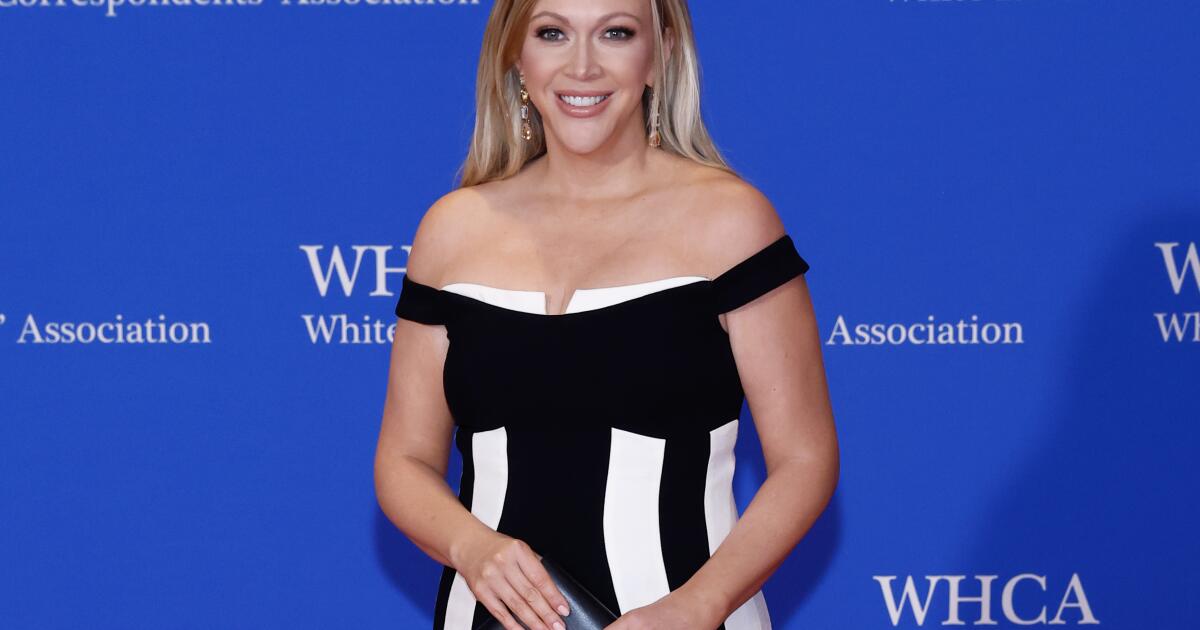
As CNN prepares for change under a new owner, the network’s chief legal affairs correspondent, Paula Reid, is heading for the exit and expected to jump to MS NOW.
The Washington-based Reid’s contract with CNN is up in several months and she has told the network she does not plan to renew. She is expected to sign on with CNN competitor MS NOW, according to people familiar with her plans who were not authorized to comment publicly.
A representative for MS NOW said the network does not comment on personnel matters but added, “as everyone in Washington knows, Paula Reid is an exceptional reporter, and any news organization would be fortunate to showcase her journalism.”
Reid‘s planned departure comes ahead of the impending merger of CNN parent Warner Bros. Discovery and Paramount. The combination has led to speculation over who will run CNN, and the uncertainty is said to have played a factor in Reid’s decision.
Reid joined CNN from CBS News in 2021.
CNN and Paramount’s CBS News will be combined after the merger, but the management structure is still under discussion. Paramount put Bari Weiss, founder of the heterodox digital news site the Free Press, in charge of CBS News in October, with a mandate to move the network’s coverage more to the political center. Based on the chaos that has ensued at CBS News under her watch, many CNN insiders are concerned over her possible stewardship of an even larger and more complex organization.
CBS News executives and on-air talent have pushed back at Weiss’ efforts to make changes at the division, which many insiders have viewed as an attempt to placate the Trump White House while Paramount seeks regulatory approvals needed ahead of closing the $111-billion Warner Bros. Discovery deal.
Internal resistance to Weiss has been strongest at the venerable news magazine “60 Minutes.” The program’s star correspondent Scott Pelley was fired last month after he confronted management over the dismissals of executive producer Tanya Simon and his on-air colleagues Sharyn Alfonsi and Cecilia Vega.
Weiss’ overhaul of the “CBS Evening News” with her handpicked anchor Tony Dokoupil has failed to improve the third-place program’s competitive position in the ratings. The program has also been criticized for some of its editorial decisions and logistical snafus.
CNN anchor Anderson Cooper has reportedly told colleagues he does not want to work for Weiss if the cable network is put under her purview. He already rejected an offer from Weiss to anchor the “CBS Evening News” and declined to renew his deal as a “60 Minutes” contributor after nearly two decades with the program.
The chaos at CBS has given pause to people at CNN. Larry Ellison, the tech billionaire and father of Paramount Chief Executive David Ellison, has reportedly promised Trump there will be sweeping changes to CNN after the merger.
Reid, 43, is among the many TV news correspondents and anchors that Trump has disparaged over the years, claiming they are unfair in their coverage. As White House correspondent for CBS News, Reid was known for asking tough questions of Trump during his White House briefings on the coronavirus.
Reid was a lawyer before becoming a journalist at CBS News in 2010. In addition to serving as White House correspondent for the network, she covered the Justice Department and the Supreme Court.
Reid would be another significant hire for MS NOW, the progressive-leaning channel that is rebuilding its roster after separating from NBC News and its parent, Comcast. The network formerly known as MSNBC is now part of Versant, a company with a stable of cable networks spun off by Comcast.
Peter Alexander, former chief White House correspondent for NBC News, is joining MS NOW as a morning anchor later this year. The network also hired former “CBS Mornings” executive producer Shauna Thomas as political director.

Doug Burgum highlights American innovation at Great American State Fair
Interior Secretary Doug Burgum joins ‘Fox & Friends’ live from the Great American State Fair in Washington. He emphasizes America’s legacy of innovation and entrepreneurship, discussing the impact of AI and free markets. Burgum also addresses recent vandalism at the Lincoln Memorial Reflecting Pool on June 22 and the upcoming July 4th opening of the Teddy Roosevelt Presidential Library.
NEWYou can now listen to Fox News articles!
Interior Secretary Doug Burgum is defending President Donald Trump’s many initiatives to address infrastructure in Washington, D.C., calling it a visible reminder that the country needs to actively press back against decline.
“Nations don’t crumble by fate — they decline by choice,” Burgum told Fox News Digital.
“From rehabilitating and installing historic memorials, statues, and fountains to removing hundreds of instances of graffiti and cleaning up crime on our streets, this administration is proving that American greatness is built through action,” he continued.
Burgum’s reasoning, which came ahead of the United States’ 250th Independence Day anniversary, addresses criticisms of the administration that have surfaced in recent weeks, casting doubt on whether Trump’s many renovation and construction initiatives in Washington, D.C. have been worth their price tag.
WHITE HOUSE SEIZES ON DELAYED OBAMA PRESIDENTIAL CENTER OPENING TO CROWN TRUMP ‘BUILDER-IN-CHIEF’
Split of sample tests in the Lincoln Memorial Reflecting Pool. (@realDonaldTrump via Truth Social)
As part of the 250th celebration, Trump has spent $14.7 million to restore the Lincoln Memorial’s reflecting pool, allocated $250 million to restore the Kennedy Center and is on track to spend over $400 million on the construction of a ballroom at the White House.
Trump, in a Truth Social update about the reflecting pool, framed the efforts as part of a larger effort.
“We’ve cleaned, renovated and beautified over 45 monuments and memorials, 28 statues and 22 fountains in Washington, D.C. Things are really looking good in our nation’s capital. Add to that the fact that when I became president, crime was rampant. And now Washington, D.C. is one of the safest cities anywhere in the United States,” Trump wrote.
REPUBLICANS QUESTION TRUMP’S ‘PRIVATELY FUNDED’ BALLROOM AFTER REPORT POINTS TO TAXPAYER BURDEN
Interior Secretary Doug Burgum reacted during a meeting with Venezuela’s interim President Delcy Rodríguez at the Miraflores Presidential Palace on March 4, 2026, in Caracas, Venezuela. (Federico Parra/AFP via Getty Images)
The Department of the Interior, which has overseen many of the improvements, further updated its accomplishments ahead of July 4.
The city has removed 510 instances of graffiti, removed 154 homeless encampments, applied 212 tons of repair materials to roads and parkways, restored 280,000 square feet of roadway paving, rehabilitated 1,301 benches and fixed 1,913 lights.
Burgum said the repairs were emblematic of the administration’s aggressive posture towards addressing problems that had gone ignored in the past. In addition to these major improvements, DOI has restored and cleaned dozens of monuments and statues around DC.
DOI also recently helped transform Meridian Hill Park, which got high praise on social media by DC residents, into a desirable place to visit with a restored fountain that had been under construction for years with very little movement. They also cleaned and restored some of the statues in the park, including the Joan of Arc statue and the James Buchanan Memorial.
FIRST ON FOX: TRUMP ADMIN TRANSFORMS DC HOTSPOT ONCE ROCKED BY GEORGE FLOYD PROTESTS IN SYMBOLIC REVERSAL
Washington DC city workers dismantle tents and remove personal belongings during a sweep of a homeless encampment in the Foggy Bottom neighborhood in Washington, DC, on August 14, 2025. (JIM WATSON/AFP via Getty Images)
CLICK HERE TO DOWNLOAD THE FOX NEWS APP
“While others accept decline, President Trump and the Department of the Interior are restoring the heart of our nation’s capital,” Burgum said. “The Golden Age of America isn’t just a slogan, it’s being rebuilt, one landmark, one street and one victory at a time.”
-

 Arkansas3 minutes ago
The new Arkansas | Northwest Arkansas Democrat-Gazette
-
 Colorado13 minutes ago
Bishop Castle is still standing as Aspen Acres wildfire continues to burn nearby
-
Connecticut18 minutes ago
Mary Ball Tomolonius Obituary
-

 Delaware25 minutes ago
Woman shot in parking lot of pizza shop in Delaware
-

 Florida28 minutes ago
1 dead, 3 injured after lightning strikes family off Florida beach
-
Georgia33 minutes ago
Georgia Lottery Powerball, Cash 3 results for July 4, 2026
-

 Hawaii40 minutes ago
Fatal crash closes H-1 West near Aala St. overpass
-

 Idaho43 minutes ago
Idaho woman reunites with biological family in Moldova after being kidnapped at birth


