Midwest
Critics warn red state ballot measure is progressive 'power grab' that will 'decimate' voice of voters

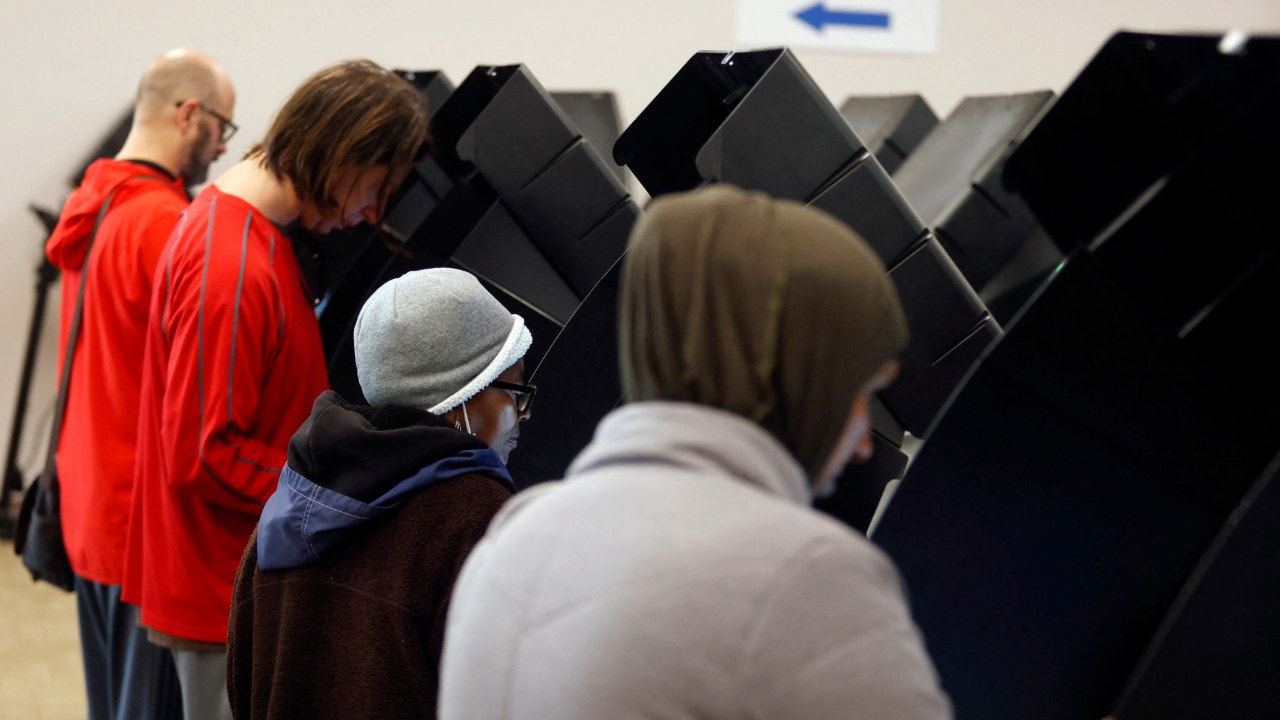
DAYTON, Ohio – A competitive Senate race in Ohio has resulted in voters being flooded with ads about national issues, but a lesser known state ballot measure to amend the state constitution could, according to its critics, fundamentally change the makeup of elections for the worse for years to come.
On Tuesday, Ohio voters will vote “yes” or “no” on a measure “to create an appointed redistricting commission not elected by or subject to removal by the voters of the state.”
The ballot question states that it would, among other things, “repeal constitutional protections against gerrymandering approved by nearly three quarters of Ohio electors participating in the statewide elections of 2015 and 2018, and eliminate the longstanding ability of Ohio citizens to hold their representatives accountable for establishing fair state legislative and congressional districts.”
Ohioans voted overwhelmingly in 2015 to create the commission and have it draw State House districts. During that bipartisan campaign, which was called Fair Districts for Ohio, they were promised the new system would “protect against gerrymandering.” In 2018, voters gave the commission an additional role in a new system set up to draw congressional districts.
NONPARTISAN WATCHDOG RELEASES REPORT OUTLINING TOP ELECTION SECURITY THREATS FOR 2024: ‘A LOT CAN GO SIDEWAYS’
Voters cast their ballots for early voting at the Franklin County Board of Elections on the eve of the U.S. midterm elections in Columbus, Ohio. (Getty Images)
Citizens Not Politicians (CNP) argues the existing system has failed. The group is calling for replacing the current regime with an independent body made up of average citizens. Current and former politicians, party officials and lobbyists would be ineligible. The 15-member Ohio Citizens Redistricting Commission would include Republicans, Democrats and independents and represent a mix of the state’s geographic and demographic traits.
CNP sued the Ohio Ballot Board and Republican Secretary of State Frank LaRose over the wording of the ballot measure, and small tweaks were made. However, the court ruled the phrase “required to gerrymander” was accurate and upheld the majority of the wording.
While CNP argues that this measure puts citizens in control of district mapping, opponents warn that the measure is a partisan power grab funded by progressive groups, including dark money.
“Issue 1 doesn’t empower citizens, it does the exact opposite,” Honest Elections Project Executive Director Jason Snead told Fox News Digital. “It creates a new class of politicians who are wholly unaccountable to the people of Ohio. It’s nothing more than a liberal power grab designed to send more progressive politicians to Washington and Columbus.”
KEY BIDEN AGENCY SLAPPED WITH ANOTHER SUBPOENA RELATED TO VOTER REGISTRATION PUSH IN CRUCIAL SWING STATE
Ohio Secretary of State Frank LaRose speaks during a House Administration Committee hearing in the Longworth House Office Building at the U.S. Capitol on Sept. 11, 2024 in Washington, D.C. (Getty Images)
Americans for Public Trust Executive Director Caitlin Sutherland has raised concerns about who is funding the “yes” side of the argument.
“Liberal operatives have openly discussed their strategy to weaponize ballot issues in competitive states not only to bypass the legislatures, but also boost their preferred progressive candidates,” Sutherland said. “That’s the exact playbook they’re using in Ohio with Issue 1. The Arabella-managed Sixteen Thirty Fund is the number one donor to the campaign to pass Issue 1, which would force gerrymandering in the state and decimate the voice of Ohioans.”
Issue 1 Ohio Works has argued that a “yes” vote “creates an unaccountable commission whose members are chosen out of a hat by four retired judges, an unknown private hiring firm and commission members themselves.”
“Issue 1 will require Ohio’s legislative districts be gerrymandered to ensure that Republicans and Democrats can each win a set number of seats in the General Assembly and Congress,” Ohio Works argued. “Ohio voters could be stuck with a representative from the opposite party on the opposite end of the state who doesn’t share their point of view. Issue 1 will allow for maps to divide any county, city or township into as many districts as necessary to achieve the set number of seats. It will also create legislative districts with strange shapes like the famous ‘snake on the lake’ district that has defined Ohio gerrymandering for years.”
UNEARTHED DOCUMENTS CONTRADICT VULNERABLE HOUSE DEMOCRAT’S RHETORIC ABOUT CHAMPIONING EVICTION BAN
The Ohio State House. (Getty Images)
Fox News Digital spoke to LaRose about the ballot measure on Saturday and asked what his message would be to voters who are still undecided or perhaps confused by the barrage of ads from both sides.
“Here’s the easiest way to describe it,” LaRose said. “Issue 1 would replace the current redistricting process where people that you can fire, that are accountable to you, right? Elected officials are in charge of drawing district lines and are required to draw those in a balanced, bipartisan way. That’s what the Ohio Constitution was amended to do ten years ago when over 70% of Ohioans voted for that.”
“Now, if Issue 1 passes, all of those rules that protect against gerrymandering go away. A 15 member panel will be created. It’s supposed to be five Democrats, five Republicans and five Independents. But they’re appointed through this really complex process. I call it a Rube Goldberg device, like one of those drawings with the overly complicated thing. So, somehow they get these 15 people, those people then can never be fired from the redistricting commission. You’re literally never allowed to talk to them, which I think is a First Amendment violation. It says right in the amendment. You only can talk to them at a public meeting. So if your kid plays soccer with one of their kids, you can’t tell them how you think that the line drawing should work, which is crazy.”
SWING STATE GOP CANDIDATE COULD HIT MAJOR MILESTONE IN MAYORAL RACE AMID ‘REPUBLICAN WAVE’ OPTIMISM
LaRose explained that “they’re required to sit down and draw state legislative and congressional districts to create a certain number of Democratic seats and a certain number of Republican seats,” which he calls the “definition of gerrymandering.”
LaRose also warned that a “yes” on Issue 1 could end up negatively affecting minority communities in inner cities.
“They will try to create an arbitrary number of Democrat seats that really don’t fit, square peg, round hole kind of stuff and what they will do is crack urban populations, reduce minority representation,” LaRose said. “This is what happened in Detroit when Michigan passed something just like this. They’ll reduce minority representation, cracking urban populations and then drawing them, gerrymandering them all the way out into the suburbs.”
“Yes on Issue 1” has massively outspent opponents of the measure and the majority of the money from the “yes” side has come from outside the state, Ohio Capital Journal reported.
Ohio GOP Lieutenant Gov. Jon Husted told Fox News Digital that Issue 1 is the “biggest power grab” the state has seen in “many years” funded by “Democrats outside of Ohio.”
“A 17-page amendment that gives them unlimited spending ability, an unlimited legal defense fund, that will allow them to literally gerrymander more Democrats into Congress,” Husted said.
Ohio Lt. Gov. Jon Husted said Issue 1 is the “biggest power grab” the state has seen in “many years” funded by “Democrats outside of Ohio.” (Lt. Governor Jon Husted’s office)
Ohio businessman Bernie Moreno, running for Senate in Ohio, told Fox News Digital the debate on the ballot measure is “simple” and Ohioans should vote “no.”
“Look, we live in a constitutional Republic,” Moreno said. “If you don’t like your elected leaders, you get to vote them out. We don’t want to have legislation through constitutional amendment, especially one funded by an out-of state billionaire. The right vote is no.”
CNP and other groups supporting Issue 1 have made the case that a “yes” vote “creates accountability where it currently does not exist.”
“What could be more unaccountable than the current system in which politicians ignore seven Ohio Supreme Court rulings to make Ohio one of the 10 most gerrymandered states in the country?” the CNP website states.
“The politicians on the current Redistricting Commission are not accountable to the voters: One of the Republican members got his seat on the Senate after running with no opposition in a gerrymandered district, and one of the Democratic members is running unopposed for reelection this November after she redrew her district to make it even more gerrymandered. That’s not accountability.”
CNP says that the new system will ensure that “neither party, nor the independents alone, can force a map through without bipartisan consensus.”
Bernie Moreno speaks to Fox News Digital in Bellbrook, Ohio. (Fox News)
CNP has also made the case that the “ballot language is false and misleading and has no impact on what the constitutional amendment itself actually says and does,” which LaRose denied to Fox News Digital.
“The yes people don’t like it, but the ballot language is truthful,” LaRose told Fox News Digital. “When you get to your voting booth, and you read that and if you think that that’s a good idea, then you’re a rare bird.“
The Associated Press contributed to this report.
Read the full article from Here


Every year, the NFL schedule bring upon something new for the Detroit Lions. This year, it’s a trip to Germany, a rare “Sunday Night Football” game at Carolina, and an early bye week. Oh wait, scratch that last one. It happens all that time.
Another constant on the Lions’ schedule is their divisional opponents. Like every other team, Detroit’s six divisional games make up over a third of their entire schedule. That means Detroit’s record within the NFC North will likely be crucial toward their regular season success. And with all three of their road divisional games crammed into the final four weeks of the season, how Detroit fares in those contests will almost certainly decide where they land in the postseason picture.
Last year, Detroit was swept by both the Vikings and Packers, and even though they ended up sweeping the division-winning Chicago Bears, it wasn’t enough to punch their ticket to the playoffs. So today’s Question of the Day is:
How many division wins will the Lions pick up on their 2026 schedule?
My answer: I’m going with three.
First off, let’s get this straight. There is no universe where getting swept by the Vikings again in 2026 is acceptable. I understand their defense is a very tough matchup for an offense-heavy team like the Lions, but Minnesota’s roster just doesn’t compare to the rest of the division right now—especially with the questions at quarterback. Because the Vikings still always play the Lions tough, I’ll give them a split of the series.
And I’m going to be boring with the other two teams, too. I expect a split with each series. I think Ben Johnson will have a chip on his shoulder after getting swept by Dan Campbell last year and find a way to win one of those games. And while I’m really tempted to predict a sweep of the Packers, I’m just having a hard time seeing it given how well they tend to play against Detroit. The Lions will have the benefit of the bye week going into their first matchup, but a Week 18 game in Lambeau will be tough, even if the Lions managed to beat them in that exact scenario during the 2022 season.
How many division wins do you think the Lions pick up this year? Vote in the poll below and share your reasoning in the comment section.

Homeownership questions answered by experts: Ask Contact 6
Ask Contact 6 is fielding questions from you about homeownership. The questions are about everything from first-time homebuying, first generation homebuying, down payment assistance, financing a home, mortgage underwriting, maintenance, repairs, foreclosure, assessments, and HUD housing counseling.
MILWAUKEE – Where you live can have a significant impact on how much money you need saved for retirement. And according to a new study, Wisconsin ranks near the middle of the pack in terms of the most and least expensive states for retirees.
Big picture view:
MoneyLion, a consumer finance app and marketplace, examined how much money Americans would need to save each month to retire comfortably in each state. The study weighed factors such as average retiree household expenses, Social Security income and the age at which a person started saving for retirement.
FREE DOWNLOAD: Get breaking news alerts in the FOX LOCAL Mobile app for iOS or Android
The study’s full methodology can be found on MoneyLion’s website.
What they’re saying:
Ted Jenkin, managing partner at Exit Wealth Advisors, told FOX Business that state income taxes and real estate property taxes are two of the biggest expenses that retirees need to look at. Thomas Aiello, National Taxpayers Union vice president of federal affairs, added that taxes are a reason some retirees may move to places like Florida, Texas and Tennessee – which offer no sate income tax or “death” tax.

How much in Wisconsin?
Local perspective:
Wisconsin ranked No. 28 in MoneyLion’s study, which determined someone would need to save $1,096,140 to retire comfortably at age 65. That’s based on a $54,807 average annual cost of retirement over 20 years.
To hit that number, MoneyLion said someone would need to start saving $2,030 per month at age 20 or $2,610 per month starting at age 30.
SIGN UP TODAY: Get daily headlines, breaking news emails from FOX6 News
By the numbers:
MoneyLion’s study also determined the following savings needed to retire comfortably at age 65 (as well as the average annual cost of retirement over 20 years) in neighboring states:
- Minnesota, No. 25: $1,162,628 ($58,131)
- Illinois, No. 34: $1,003,326 ($50,166)
- Michigan, No. 42: $868,526 ($43,426)
- Iowa, No. 43: $821,180 ($41,059)
Hawaii was the most expensive state for retirees, with $3,132,206 needed to retire comfortably at age 65. The most affordable state in the study was West Virginia, with $664,463 needed to retire comfortably at age 65.
The Source: Information in this story is from the MoneyLion study, which referenced data from the U.S. Census Bureau, Bureau of Labor Statistics and other sources. LiveNOW from FOX and FOX Business contributed to this report.

The mayor of Minneapolis and his staff are defying a community survey by recommending a group to develop a site at George Floyd Square that did not receive the most support in that survey.
It still received positive feedback, and the city council will have final say, but for now, Mayor Jacob Frey and city staff feel that the Minnesota Agape Movement is best suited to handle future development of the former gas station at 38th and Chicago, now known as The Peoples’ Way.
But according to a survey of community stakeholders, the group Rise & Remember garnered the most strongly positive reactions overall.
Since the city shared this development, the mayor’s office has declined multiple interview requests, as we try to learn his reasoning. We also had other questions about what seems like a contradiction in how he’s felt about community being involved in this process so far.
Minneapolis City Council overrides mayor’s veto of George Floyd Square pedestrian mall study
For example, following a city council override of his veto as they pushed for a 38th & Chicago plan that community surveying found was not wanted in February 2025, the mayor lashed out at council members.
“Today’s short-sighted decision by the council has ignored community wishes and is a colossal waste of both time and money,” Mayor Frey said that February day last year.
As we continued to try to get clarity surrounding the mayor’s decision to move forward with Agape, a city spokesperson shared the following:
City staff has taken community input, including the survey results, into consideration for this Peoples’ Way recommendation. Community input was one of multiple factors, such as relevant experience, we considered for the evaluation criteria outlined in the RFQ. One of the things we heard from community was a desire for the applicants to collaborate on a project since they all bring strengths to the table. Agape is ready and willing to collaborate with all stakeholders and community in a development process.
Within the city’s announcement about the recommendation, the mayor shared the following:
George Floyd Square carries significant meaning for Minneapolis and for people around the world,” said Mayor Jacob Frey. “We’re looking forward to partnering with Agape and the community as we take this next step together to continue building toward the long-term vision for the Square.
This development is already getting council pushback — members will have final say and the Business, Housing, and Zoning Committee will first address it on June 2, with plans for the full council to June 11.
Council member Jason Chavez, whose ward includes part of George Floyd Square, sent the following statement:
Mayor Frey promised a decision on the future of the People’s Way in May 2025 and instead took an extra year to make a decision. He also chose to disregard the data and the community’s preference.
I have concerns about fairness, transparency, and accountability about the entire process. The results of the city-commissioned survey showed that the Rise and Remember proposal received the most support, was most closely aligned with community values, and received the most strongly positive reactions overall. Mayor Frey sat on the results of this survey for over a year.
In an interview with 5 EYEWITNESS NEWS, council member Soren Stevenson, whose ward also partly falls in George Floyd Square, says his community is ready to move forward and has frustrations with how things have been handled thus far.
“There was such an opportunity to listen to what the community had asked for, and we’re not there,” Stevenson said about this most recent development.
“It’s been, it’s been really confusing and troubling for community members to understand, like, am I giving you my feedback because you want it and you’re going to use it, or am I giving you my feedback, so that you can check the box that feedback has been gotten?” Stevenson added.
-

 Health22 minutes ago
She Lost 94 Pounds After Ditching Sugar—‘The Food Noise Vanished’
-
 Lifestyle40 minutes ago
‘Wait Wait’ for May 16. 2026: With Not My Job guest Ken Jennings
-

 Education46 minutes ago
Video: How We Tested Dog Leashes
-

 Technology52 minutes ago
Snap, YouTube, and TikTok settle suit over harm to students
-

 World58 minutes ago
Several injured after car plows into Italy crowd, driver stabs passerby: report
-

 Politics1 hour ago
ActBlue CEO faces June 10 grilling after fundraising powerhouse allegedly misled Congress on foreign donations
-

 Health1 hour ago
Rudy Giuliani reveals he had ‘spiritual experience’ while in pneumonia-related coma
-

 Sports1 hour ago
It’s Game 7, and we have a bet locked in as the Cavaliers and legacies are on the line against the Pistons