West
Navy confirms death of crew after jet crashes near Mount Rainier in Washington
U.S. Naval officials confirmed Sunday that the two crew members of a Navy jet that crashed near Mount Rainier in Washington last week were located and declared dead.
The EA-18G Growler jet from the Electronic Attack Squadron out of Whidbey Island Naval Air Station crashed on a mountainside east of Mount Rainier on Tuesday afternoon. While the wreckage of the plane was located resting about 6,000 feet up in a remote, steep and heavily-wooded area, the status of the crew remained unknown without a site assessment of the debris area.
Army Special Forces soldiers trained in mountaineering, high-angle rescue, medical and technical communication skills needed to navigate the difficult terrain assisted with efforts to locate the missing crew members as quickly as possible.
On Sunday, the Navy said Electronic Attack Wing Pacific shifted from search and rescue efforts to recovery operations, noting that the two missing crew members had been located and were pronounced dead.
NAVY JET LOCATED AFTER CRASHING NEAR MOUNT RAINIER IN WASHINGTON
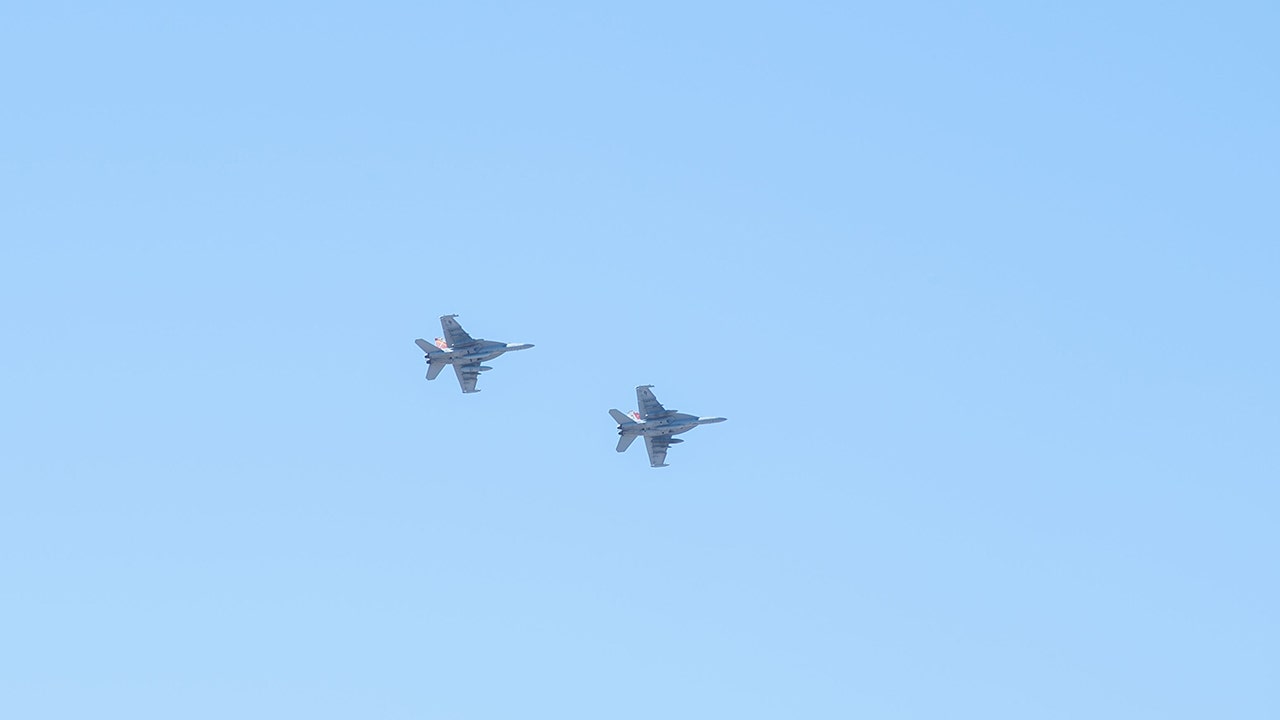
The crew members of an EA-18G Growler that crashed near Mount Rainier in Washington were pronounced dead by the Navy on Sunday. (U.S. Navy/Mass Communication Specialist 2nd Class Aron Montano)
“It is with a heavy heart that we share the loss of two beloved Zappers,” Commander Timothy Warburton, commanding officer of Electronic Attack Squadron (VAQ) 130 said on Sunday. “Our priority right now is taking care of the families of our fallen aviators and ensuring the well-being of our Sailors and the Growler community. We are grateful for the ongoing teamwork to safely recover the deceased.
In a press release, the Navy said out of respect for the families and in accordance with Navy policy, the identities of the crew members would be withheld for 24 hours after next of kin have been notified.
Personnel will remain on site to recover debris and plan for the long-term salvage and recovery efforts, the Navy noted.
NAVY PARACHUTIST CRASH-LANDS ON MOTHER AND TEENAGER DURING SAN FRANCISCO PERFORMANCE: VIDEO
The U.S. Navy confirmed Sunday that the two crew members of a Navy jet that crashed near Mount Rainier were pronounced dead. (Photo by Thomas O’Neill/NurPhoto via Getty Images)
The Navy added that the investigation into the cause of the crash is ongoing.
The EA-18G is a variant of the F/A-18 family of aircraft, outfitted with a sophisticated electronic warfare suite that is used for tactical jamming and electronic protection, according to the Navy’s website. The jet was built to replace the EA-6B Prowler, and first went into production in October 2004.
The jet made its inaugural flight in August 2006, and the first delivery of the aircraft was made on June 3, 2008, to VAQ 129 at NAS Whidbey Island.
Each plane comes with a price tag of $67 million.
Read the full article from Here
Montana
Montana track and field earns six golds Saturday at Big Sky Conference meet
kAm%96 E62> 4@?D:DE65 @7 EH@ ECF6 7C6D9>6? 2?5 p?D E96 52J 367@C6 2?5 H@F=5 CF? 😕 E96 a__ 7:?2= =2E6C[ 7:==:?8 😕 7@C 2? :?;FC65 CF??6C] q6:EK 3FC?65 5@H? E96 7:?2= DEC2:89E2H2J E@ 8:G6 E96 vC:KK=:6D E96 H:?]k^Am
Montana’s Karsen Beitz sprints in the Al Manuel Invitational in late March. The Missoula native won the 200-meter dash Saturday in the Big Sky meet.
kAm%96 2?49@C CF??6CD 7@C 3@E9 C6=2J E62>D 925 EC6>6?5@FD :?5:G:5F2= 52JD @? E96 EC24:?2E65 E96 4@?76C6?46 E9:D D62D@? 😕 E96 D9@CE DAC:?ED 2?5 E92E 4@?E:?F65 @? $2EFC52J]k^Am
kAm%96 7C6D9>2? 7=6H E@ E96 H:? 😕 E96 `__ 😕 2 E:>6 @7 “]e_[ H:??:?8 3J ?62C=J 2 E6?E9 @7 2 D64@?5]k^Am
kAm(:=D@? 7@==@H65 :E FA H:E9 2 a__ H:? =2E6C 😕 E96 52J 😕 2 92C5 C2:?] $96 925 DE:77 4@>A6E:E:@? 7C@> |@?E2?2 $E2E6’D r2C@=:?6 w2H2? E92E 96=5 @? 5@H? E96 DEC6E49 E@ 4@>A=6E6 E96 DAC:?E 5@F3=6]k^Am
kAmxE’D E96 D64@?5 DEC2:89E J62C E92E 2 |@?E2?2 2E9=6E6 92D DH6AE E96 H@>6?’D DAC:?E 4@>A6E:E:@? 27E6C %2C2 ~9=H:=6C H@? E96 `__ 2?5 a__ =2DE J62C] (:=D@? ;@:?D ~9=H:=6C 2?5 !2F=2 v@@5 2D E96 @?=J vC:KK=:6D E@ 244@>A=:D9 E96 762E]k^Am
kAmq6:EK DE2CE65 9:D D@=@ 52J @? E96 EC24652= 😕 E96 `__ H:E9 2 E:>6 @7 `_]ch] %92E =67E 2 3:EE6C E2DE6 😕 E96 ;F?:@C 2?5 96 42>6 @FE C625J E@ CF? 😕 E96 a__]k^Am
kAmq6:EK H2D 2=C625J 7CFDEC2E65 H:E9 9:D `__ A6C7@C>2?46[ 3FE 96 E2= D@>6 25G:46 E@ 42=> 9:> 27E6C DE2CE:?8 2?5 DE@AA:?8 D@ >2?J E:>6D 5FC:?8 E96 52J]k^Am
kAm“w6 ;FDE D2:5 E@ >6[ ‘tG6CJ@?6 😀 😕 E96 D2>6 3@2E[ 6G6CJ@?6 😀 92G:?8 E@ H2C> FA[ 8@ :?D:56[ H2C> FA[ 8@ :?D:56]’ x 42?’E ;FDE D:E E96C6 2?5 >@A6 23@FE :E] xE’D ?@E 7F?[ 3FE :E’D ;FDE >:?5 @G6C >2EE6C 2E E92E A@:?E]”k^Am
kAmw6 92D 366? 32EE=:?8 2 D=:89E :?;FCJ 7@C E96 A2DE 76H H66
kAm“x ;FDE >256 DFC6 E@ 86E @FE 72DE] x 8@E E@ E96 E@A @7 E96 4@C?6C 😕 2 8@@5 DA@E 2?5 ;FDE 6H E92E x 4@F=5 H:? E92E C246] x ;FDE H2?E65 E@ =62G6 :E 2== @FE E96C6 2?5 42>6 3242K:?8]”k^Am
kAmq6:EK G6CJ ?2CC@H=J >:DD65 @FE @? E96 >66E |’! 2H2C5 2D 96 62C?65 `g]d A@:?ED 7@C E96 E62> @? E96 52J] %96 ;F?:@C 7C@> |:DD@F=2 DE2CE65 2D 2 H2= 2?5 😀 ?@H E96 `__ 2?5 a__>6E6C C64@C5 9@=56C 2?5 2 q:8 $
kAm“xE H2D 2? 2H6D@>6 52J] xE ;FDE D9@HD >6 9@H 72C x’G6 4@>6 D:?46 x 7:CDE 8@E 96C6[” q6:EK D2:5] “xE DA62
kAmr256?46 (2==6C 2=D@ 25565 2 q:8 $
kAm{:==:2? (9:E6 6?E6C65 E96 q:8 $
kAm$96 ;F>A65 2== E96 H2J FA E@ E9:C5 H:E9 2 >2C652=]k^Am
Nevada
Northern Nevada gardens and backyards: Controlling insects with systemic insecticides – Carson Now
Last week I wrote about soft versus armored scale insects. Soft scales exude honeydew, are protected by ants and can be controlled by systemic insecticides, some of which have the active ingredient imidacloprid. Armored scales do not emit honeydew and are not managed by an imidacloprid insecticide.
Imidacloprid is a systemic neonicotinoid insecticide that is designed to kill piercing/sucking insects via damage to their nervous system. Systemic means it is applied on the leaves, stems or as a soil drench and spreads internally throughout the plant. When an insect feeds on any part of the plant such as the pollen, nectar, flowers, fruit, leaves, or other plant tissues, it ingests the toxic chemical and dies.
Systemic insecticides can kill not only pests such as soft scales, but also their natural enemies and non-target/beneficial insects such as bees and other pollinators, including butterflies, moths and their larvae. They also can “adversely affect reproduction, growth, insect immune systems, learning, flying, or other attributes even at concentrations too low to cause death outright.” Native bees, who often nest in the ground, can be more susceptible than honeybees, particularly to soil drench applications.
Systemic insecticides kill over time at a steady concentration, which can cause a longer toxic exposure. Although it is often suggested to apply in the evening when insects aren’t out, or after flowering season, harmful exposures can still occur. These chemicals can last for months or years in soil. They sometimes leach into groundwater but fortunately are usually only slightly toxic to fish. One application may provide season long control.
Chemical insecticides are always a last resort. The risks versus benefits must be carefully evaluated. A healthy thriving plant is one of the best defenses against scale or other insect damage. Good watering, the appropriate amount of fertilizer and maintenance keep a plant resistant to attacks. Predators, including lady beetles, bugs and lacewings, play an important part in pest management.
Plant a diversity of flowering plants to attract and feed natural enemies. Sometimes when you see scales on a plant, they may have already been parasitized by parasitic wasps. If a large number are parasitized, there are eggs in or on each scale eating away at them. Sometimes scales are no longer alive and do not require a pesticide treatment. Check before applying insecticides. Using tape traps to monitor crawlers will help you accurately time the use of horticulture oils, Neem oil or insecticidal soap. Dormant oil treatment on deciduous woody plants will help kill overwintering scale pests and reduce future populations.
JoAnne Skelly is an Associate Professor and Extension Educator, Emerita, University of Nevada Cooperative Extension. She can be reached at skellyj@unr.edu.
Related
New Mexico
Where People Are Moving To In New Mexico In 2026
New Mexico is not adding population the way some Sun Belt states are. The state’s overall population dipped slightly between 2020 and 2024, though the picture is more complicated than a simple out-migration story. International immigration adds a meaningful slice of inbound traffic, and three population centers along the I-25 corridor capture most of the people moving in. Career growth in defense, semiconductors, and the federal scientific complex matters, but for retirees in particular, affordability and the high-altitude climate carry more weight. The three cities below catch most of the inbound traffic.
Inbound moves to New Mexico concentrate in the major population centers along I-25. Career growth in unique technological and scientific sectors draws newcomers along with affordability factors compared with other US regions, often the major draw for retirees. Neighboring Texas, Colorado, and Arizona supply the majority of new arrivals. Consumer Affairs data shows about 21.3 percent of inbound movers are retirees while 30 percent cite job opportunities. The state’s natural scenic backdrop and access to outdoor recreation also factor in.
Rio Rancho
Rio Rancho sits in Sandoval County immediately northwest of Albuquerque, with a population near 112,500 and an 8.1 percent growth rate between 2020 and 2024 (the strongest in New Mexico by raw numbers). Arizona supplies a meaningful share of the new arrivals. Unemployment runs close to the national average around 4.5 percent. Intel Corporation is the principal local employer, with the company’s Fab 11X semiconductor facility based in town and a $3.5 billion expansion underway.
The town’s growth runs on proximity to Albuquerque and Santa Fe combined with direct access to the high desert. Mainstays like Turtle Mountain Brewing Company anchor a working local business scene. The Willow Creek Trail and the wider Jemez Mountain Trail handle outdoor recreation 30 minutes north.
Santa Fe
Santa Fe probably needs no introduction. The state capital and its surrounding areas have drawn artistic communities for more than a century, with the more recent decades adding celebrity buyers and Hollywood film and television production through the New Mexico Film Office. Santa Fe also holds the title of the oldest state capital in the United States, established by Spanish colonists in 1610.
The town runs a population around 90,550 with the second-highest housing costs in the state after Los Alamos. The national median home listing price is around $394,000, while Santa Fe’s median runs roughly $764,000. Santa Fe County reports list Los Angeles, Dallas, and Seattle among the primary sources of new residents, which paints a clearer picture of who Santa Fe typically attracts. The city’s population climbed by about 10,000 between 2020 and 2024, with another 1,000 added through 2025.
Las Cruces
Las Cruces runs a population near 117,000 with an annual growth rate of about 1.83 percent. The city remains largely underappreciated by those looking to relocate, but a steady stream of individuals and families do make the move, largely for federal and military employment opportunities at the White Sands Test Facility and the White Sands Missile Range to the east. The local economy has also seen sporadic increases in construction and healthcare hiring.
Affordability is the headline pull. Las Cruces sits 8 to 11 percent below the national cost-of-living average. According to apartments.com, housing runs 16.6 percent less expensive than the national average. The region also pulls more than 300 sunny days per year, and direct access to hiking in the Organ Mountains – Desert Peaks National Monument is one of the more underrated outdoor draws in the Southwest. New Mexico State University adds the cultural and athletic anchor at the centre of the city.
The High-Desert Corridor
The bigger pattern: newcomers to the Land of Enchantment gravitate to the populous corridor running south to north between Los Lunas, Albuquerque, and Santa Fe, with some pushing farther north to Taos or Angel Fire. The primary draw is not the countryside but the employment opportunities, security, and amenities a major city can offer. Unless a specific job is the driver, most people are attracted to New Mexico for natural beauty, climate, lower cost of living, and cultural mainstays. In-state relocators tend to seek better career opportunities or specific access to a particular town and its offerings.
-
Illinois6 minutes agoFire sweeps through old Balmoral Park racetrack facilities in Crete, Illinois
-
Indiana12 minutes ago
Speedway one of numerous statewide locations people rallied against ICE in Indiana
-
Iowa18 minutes agoHow Jaylen Raynor can Make or Break Iowa State Football in 2026
-
Kansas24 minutes agoMeade County residents asked to prepare for evacuation due to wildfire threat
-
Kentucky30 minutes agoKy. women work to combat period poverty, free period pantries open in Lexington and beyond
-
Louisiana36 minutes agoSen. Bill Cassidy loses Louisiana primary, and the Preakness Stakes winner is crowned: Weekend Rundown
-
Maine42 minutes agoMaine high school students accidentally served dirt at charity dinner
-
Maryland48 minutes agoMaryland Board of Elections pushes back on Trump’s claim of 500,000 fake mail-in ballots