Oregon
State struggles to recover more than $24 million from people responsible for wildfires • Oregon Capital Chronicle


Each year, the Oregon Department of Forestry responds to about 1,000 wildfires across the 16 million acres of land it protects. It investigates the cause of every fire, and if a person or group is found to have been negligent or malicious in starting or spreading a significant fire, the agency pursues reimbursement for its firefighting costs.
The agency has not been very successful in recouping those costs, according to a report discussed at a March meeting of the four-member Emergency Fire Cost Committee.
The account offered a rare glimpse into the scale of the costs and the efforts to recover them. But it only represented a snapshot of the problem, excluding a full list of all the fires the state is investigating or pursuing for reimbursement, Jessica Neujahr, a forestry spokesperson, said in an email.
“That larger list is not one we can share,” she said, due to ongoing litigation and privacy concerns.
The report showed the forestry department spent at least $24 million to respond to 36 significant fires caused or spread negligently or maliciously by people or groups since 2004, and that in pursuing reimbursement, it has collected just $86,000 from “responsible parties.”
Few people who have started significant wildfires have millions of dollars to reimburse the department and sometimes investigating who is responsible, or trying to collect the money, can become too costly, according to Tim Holschbach, chief of policy and planning with the department’s fire protection division.
In those cases, the department moves on.
“We don’t want the effort to exceed the payback,” Holschbach said. “It wouldn’t make sense for us to spend taxpayer money to pursue recovery from someone who can’t pay.”
With climate change, wildfire seasons are becoming longer and often more destructive, affecting communities, infrastructure and land needed for grazing and farming. This year’s season, which is expected to end this month, scorched nearly 2 million acres across the state, setting a new record. Some of the fires were quickly put out, but others burned for weeks. The primary cause of wildfires this year was lightning strikes.
The agency considers a “significant” fire to be one that costs over $5,000 to fight, with the agency pursuing those it considers to have started or contributed to the blaze either willfully or through negligence, Neujahr said.
The agency listed 36 fires since 2004 that were willfully or negligently set in its report to the committee. It has accepted $86,000 in settlements and restitution for 17 of the oldest fires and is actively trying to recoup at least $15 million for 19 that started since 2011. It is also investigating 21 significant fires that occurred between 2020 and 2023 in an attempt to recover at least some of the $88.5 million spent to snuff them out. Agency officials don’t yet know whether they’ll identify a culprit to pursue for reimbursement in each case, Neujahr said
The Legislature recently voted to send the forestry department $47.5 million in emergency funding to help pay bills from fighting the current fire season, which has already cost the state $250 million.
Deciphering the cause
In investigating fires, state forestry officials first identify the point of origin, according to Holschbach. If they discover a tree slashed with a big black scar, they know the cause was probably lightning, or if a burn barrel used to burn trash is nearby, they know humans were likely involved. But other investigations are more difficult.
If they determine that someone is responsible and identify the party, officials send them a letter outlining the costs and demanding payment. That person has 90 days to respond to the letter before interest on the bill starts to accrue. If the culprit refuses to pay, the forestry department notifies the Oregon Department of Justice to determine other methods of collecting, Neujahr said.
Investigations can take years depending on how many people and federal agencies are involved, or how complex the case is, Holschbach said. The agency’s investigation also has to be able to stand up in court.
“We treat every investigation as if we’re preparing for litigation,” Holschbach said, adding that people have become increasingly litigious.
“We have to be more careful in our documentation, and more complete than we ever have been, and doing that really slows things down. Not that we were reckless before, or didn’t have complete reports, but it’s just more complex,” he said.
Working with federal agencies can slow things down, too.
The agency is still waiting for the U.S. Forest Service to complete its investigation of the Two Four Two Fire in 2020 near the Williamson River Campground in Klamath Falls, which burned more than 2,000 acres. The state agency is also still waiting on the forest service to finish its part of the investigation on the 2020 Holiday Farm Fire near Eugene that burned more than 173,000 acres and was one of the largest wildfires in Oregon history.
Firefighting costs
Every two years, the state sets the forestry department’s firefighting budget. The agency also collects fees from owners of the private land it protects, about three-quarters of the total 16 million acres. Those fees go into the Oregon Forest Land Protection Fund to help defer wildfire costs. It also helps to fight fires on federal land, and pays those costs upfront, but is reimbursed by the federal government.
Emergency fire costs that go beyond the biennial firefighting budget are paid by revenue from two sources, depending on the amount. Up to $20 million of emergency fire costs are split between the protection fund and Oregon’s general fund, which is used for a wide range of expenses and mostly comes from Oregon income taxes. Costs beyond $20 million are paid entirely by the general fund, Holschbach said.
When the department collects reimbursements, most of the money goes back to the general fund.
“The point of cost recovery is to take the burden off the taxpayer – off of Oregonians,” said Neujahr, the forestry department spokesperson. “If we can get that money back to the state, that’s the goal.”
But very little has been reimbursed. Agency officials said they drop investigations that become too complex and costly to pursue or when there’s little hope of recovering the money.
One example is the Sweet Creek Milepost 2 fire that started in Lane County in 2020 and cost more than $4 million to fight. In the end, the arsonist who was charged was only able to pay $154 to the forestry department.
In another fire – that was not included in the March report – the department recovered $200,000 after spending $37 million putting it out. The 2015 Stouts Creek Fire in Douglas County, which spread across 26,000 acres, was started by a guy mowing his lawn during a restricted period of hot and dry conditions. The department only recovered $200,000 because that was the limit on his homeowners insurance policy.
Many fires, like this one, could have been avoided with better judgment, Holschbach said.
“About 70% to 80% of fires are human caused, but most of those are not willful, malicious or negligent,” Holschbach said.
But they’re often expensive to put out – for the department and those found responsible.
Holschbach said those high costs are part of the reason the agency has launched campaigns to make the public more aware of mowing and debris burning restrictions.
“Don’t cause a fire. Don’t go there. Because you may end up paying for it,” he said.
GET THE MORNING HEADLINES.


The Oregon attorney general will ask a court to pause Paramount’s PSKY.O $110 billion bid to acquire Warner Bros. WBD.O for 60 days, saying on Tuesday that the company withheld records of its lobbying efforts.
While Paramount has told the state it will not close the deal before July 16, Attorney General Dan Rayfield said he will ask a Multnomah County court to order the company to hand over records and to delay the deal so the state can review them.
“We’re not going to let Paramount Skydance play hide the ball so they can rush through their massive merger,” Rayfield said in a statement. “Oregonians have a real stake in this deal – in our film industry, in our economy, in the choices they’ll have as consumers.”
A Paramount spokesperson said the information Oregon seeks “has nothing to do with whether this transaction complies with Oregon’s antitrust laws and is not a legitimate basis to delay a plainly lawful, pro-competitive transaction.”
The company has provided the state with documents relevant to the merger, the spokesperson added.
Oregon is seeking documents regarding “Project Warrior,” which was Paramount’s internal code name for efforts to obtain regulatory clearance. The state is also asking for records related to the company’s efforts to lobby the Trump administration for support of the merger.
Paramount CEO David Ellison’s father, billionaire Oracle co-founder Larry Ellison, has cultivated ties with President Donald Trump, and the company has hired former Trump officials.
Oregon is also seeking information on whether Paramount had any role in the U.S. Department of Justice’s statement announcing it had cleared the deal.
While Oregon ordinarily “would afford significant weight” to the DOJ’s determination, the state plans to cite a Wall Street Journal report that officials overrode career staff attorneys at the DOJ who were leaning toward a recommendation to challenge the deal, according to documents to be filed in court that Reuters reviewed.
The DOJ issued a lengthy statement last month saying it believed the deal would “increase competition across the media and entertainment ecosystem, with benefits for American consumers and workers.”
The company has said the deal would create a stronger streaming competitor to Netflix NFLX.O and Disney DIS.N, and benefit creatives and consumers.
California, New York and other U.S. states are preparing to sue to block the deal, sources familiar with the matter told Reuters last month. The states have authority to enforce laws against mergers that they believe would unlawfully decrease competition.
Opponents of the deal, including some actors, writers and media workers, have worried that it would hurt jobs.

When asked if he’d like to join the music program Keys, Beats, Bars, Mikey, who’s currently incarcerated at MacLaren Youth Correctional Facility in Woodburn, figured it would be a good chance to spend some time outside of his unit.
Through a series of workshops, the program brought local musicians and educators into the facilities. They made beats and taught the group about rhyme schemes and rap bars. It was a way for Mikey and his peers to make music, but also to discuss common interests and their shared experiences at MacLaren as they brainstormed lyrics.
Eventually, they recorded a song, “No Ceilings,” about the barriers of incarceration, the music video for which is premiering at a July 11 benefit concert at the Tomorrow Theater dubbed the Restorative Justice Showcase.
Several formerly incarcerated artists feature on the night’s bill, including Keys, Beats, Bars co-founder Talilo Marfil and influential rapper and activist Mic Crenshaw, who led the workshops that produced “No Ceilings.” Hip-hop artist Swiggy Mandela will lead a live cypher, or freestyle rap session, with music by duo Alley Oop to end the show.
Mikey, not his real name, called the songwriting process “therapeutic.”
“Being able to listen to the beats or just channel that, in a positive way,” Mikey says, “I’m glad that I got the opportunity to utilize that while I’m here.”
Music has always been a part of Mikey’s life. His mom played Mariah Carey and DeBarge, and his grandma always had something on when they spent time together on weekends. When he’s feeling irritated or doesn’t want to be bothered, he turns to music.
“You find little achievements and little accolades along the way that, while you’re doing your time, make it easier to get through the day,” Mikey says. “Some people like reading books. Some people like playing basketball. Some people like listening to music.”
Marfil, who is also executive director of the peer advocacy program Ascending Flow, says he wishes he’d had programs like this when he was incarcerated. He found support through church, “but not everybody relates to church,” he says.
After his release, Marfil enrolled in Outside the Frame, an organization that provides homeless youth access to filmmaking resources. “It made me feel like my story mattered and that it was worth telling,” he says. “They gave me opportunities to show my films, my music, to the greater public in front of sold-out shows. Going from dreaming about it in a cell to actually doing it is a game changer for an individual.”
Keys, Beats, Bars runs several music programs for disadvantaged youth. But Marfil, alongside musician and community organizer Adam Carpinelli, launched the workshops at MacLaren.
“I’ve seen it give them hope,” Marfil says. “I think that’s the most important thing: hope, motivation, inspiration and, for a moment, a sense of relief through expression.”

To protect their anonymity, the music video couldn’t feature Mikey, who raps on the song, and his bandmates directly. Instead, Marfil contracted an artist to animate the song’s narrative, which follows a boy from childhood to incarceration.
“Usually, you don’t get to do stuff like that up in jail,” Mikey says, adding that he appreciated the project’s follow-through. “It was kind of cool being able to get the opportunity to record.”
MacLaren is Oregon’s largest juvenile correctional facility. It houses up to 187 youth, ranging ages 12 to 25. While similar to a jail or prison, this style of youth correctional facility places a stronger focus on education and rehabilitation. In contrast to juvenile transitional facilities and residential programs, MacLaren is closed-custody, meaning it’s secure and fenced. In 2025, a Marion County grand jury tasked with assessing MacLaren’s conditions titled its report “Cascading Failures,” citing gang activity, extensive contraband, sexual abuse and staff shortages.
Marfil stresses the role programs like Keys, Beats, Bars play in larger efforts toward restorative justice, and towards ameliorating systemic inequities in the U.S. prison system.
Projecting incarcerated youths’ voices outside of detention facilities is a powerful means for effecting change.
“The song is really just a reflection of being in the facilities and dreaming of what could be possible without the barriers that got them there in the first place, and what they want the community to see about themselves when they get out,” Marfil says. “‘No Ceilings’ is a good example of seeing that youth who are incarcerated have hopes and dreams, and they can contribute something to society.”
SEE IT: Restorative Justice Showcase & Voices From the Inside: A Youth Music Video Premiere at Tomorrow Theater, 3530 SE Division St., tomorrowtheater.org. 3 pm Saturday, July 11. $15. All ages.
HEAR: “No Ceilings” by Keys, Beats, Bars streams on YouTube and Apple Music.
Oregon
National report: Oregon great for giving kids health insurance, bad for teaching them how to read
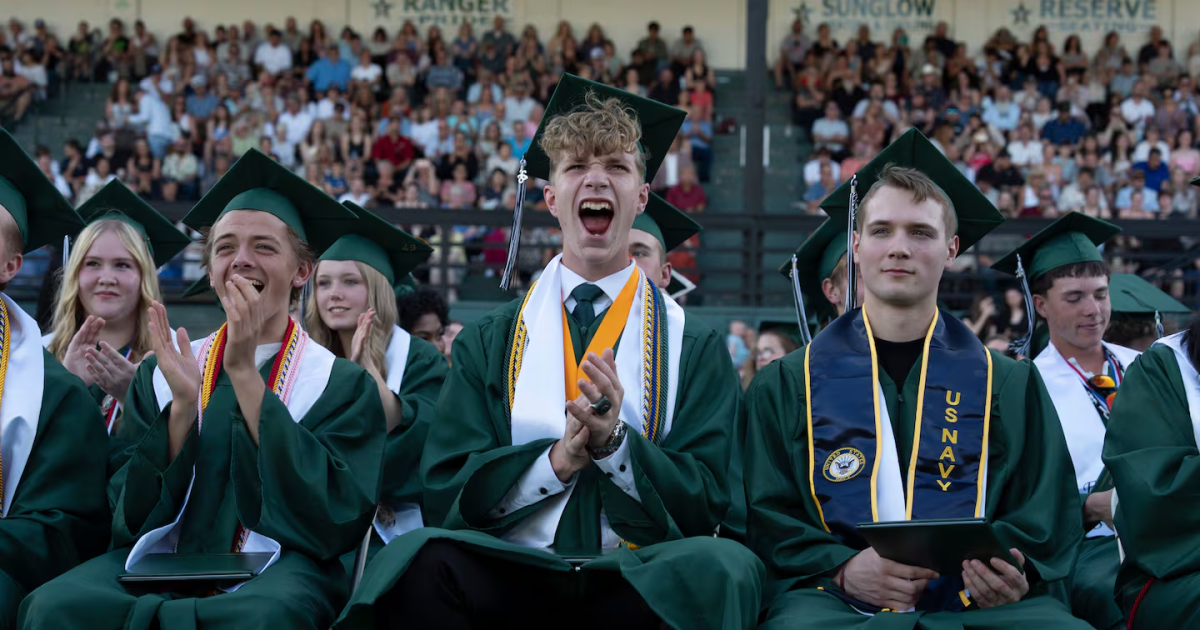
The Annie E. Casey Foundation releases the Kids Count Data Book annually, with its new 2026 edition mainly drawing on data from 2024. State-based organizations work with the Annie E. Casey Foundation on the report, including Our Children Oregon and the Children’s Alliance in Washington.
The report is a snapshot in time of how well the country is supporting its youngest residents in 16 different indicators, including percentage of children living in poverty, kids who lack health insurance and reading proficiency among fourth graders.
David Wieland, policy and advocacy director for Our Children Oregon, said all of the indicators are related and play a role in a child’s well-being.
“We can’t just say that we’ll address reading outcomes through the educational system,” Wieland said. “We actually need to look holistically at child well-being if we want to really improve any one of these single indicators.”
Oregon lags behind the vast majority of states when it comes to educational indicators, ranked at 44 of 50 states. At 31, Washington ranks a bit higher.
But outside of the classroom, the two states fare better. Both Oregon and Washington are in the top 10 of states in health and community indicators.
“These are often the result of policy choices that we make,” Wieland said. “Oregon has prioritized ensuring that children — we should celebrate that.”
But federal changes may hurt states’ progress.
As Children’s Alliance in Washington state mentions in their press release sharing the Kids Count Data, “The numbers do not reflect the current reality for kids and families impacted by federal cuts to vital programs that have already come into effect.”
One policy choice Oregon made allows students to opt out of standardized testing. As a result, Oregon’s testing participation rates are below 95%, the federal requirement.
Wieland said this policy makes Oregon’s outcomes “less reliable.”
“We simply know with less certainty how we compare,” Wieland said.
In addition to rankings, the report calculates index scores for each state, allowing year-over-year comparisons. Both Oregon and Washington’s scores declined compared to their pre-pandemic scores from 2019, and so have the index scores in 45 other states. Only Mississippi and Louisiana saw improvements. South Carolina stayed stable.
Looking Ahead
Through Oregon’s Early Literacy Success Initiative, the state has sent grants to school districts to help improve reading and provide more support for students in elementary school. But it may be a while before those investments show improvement in reports like the Kids Count Data Book, said Our Children Oregon executive director Bridget Dazey.
“We do have to be patient as the state and school districts try new things,” Dazey said. “At the same time, we can confidently say we’re underinvesting in students and so it shouldn’t be so delayed that we wait five to seven years to see how things start to shape up.”
Going forward, Dazey said her organization is working with a coalition of organizations on the next edition of the group’s Children’s Agenda, a list of legislative priorities for lawmakers. Dazey said the state also needs a vision that looks out beyond the legislature’s two-year budget cycle that school districts use to plan spending.
“We need to be thinking long term,” Dazey said. “Our state has gotten really comfortable with thinking about things in the biennium.”
This story comes to you from the Northwest News Network, a collaboration between public media organizations in Oregon and Washington.
-
Milwaukee, WI4 minutes ago
Former Judge Hannah Dugan fined $5,000, won’t serve prison time, judge rules
-

 Atlanta, GA11 minutes ago
Jermaine Dupri sues Sony Music over alleged $18 million royalty dispute involving So So Def artists
-

 Minneapolis, MN14 minutes ago
Traffic shift starts Wednesday on I-394 in Minneapolis
-

 Indianapolis, IN19 minutes ago
DC BLOX cuts building from data center plans near Irvington, makes environmental pledges
-

 Pittsburg, PA26 minutes ago
Wegmans to start building store in Cranberry this month
-

 Augusta, GA29 minutes ago
Augusta, GA Has a Shortage of Homes for Middle-Income Earners
-

 Washington, D.C34 minutes ago
Reflecting Pool being drained – again – as Trump administration tries once more to fix DC landmark – WTOP News
-

 Cleveland, OH41 minutes ago
Cade Smith Deserves More Praise | Just Baseball


