San Diego, CA
Eileen Barron


Eileen Barron
OBITUARY
Eileen Barron passed away on Aug 7th, 2024. She is survived by her three children, three grandchildren, and two great-grandchildren, and many dear friends.Eileen was a true La Jolla bon vivant, hostess, and entertainer from the day she moved there in 1968. She was extraordinarily friendly, and loved to stop and chat and laugh with neighbors and friends. She was invited by all types of people to all kinds of occasions. She always reciprocated an invitation, so she entertained people with interesting lives and stories as guests: artists, scientists, University professors, and people of all backgrounds sat together at her dining table.Eileen loved the theater. She was born and grew up in Queens, New York and regularly attended Broadway plays. She loved to sing and act. She loved the opera. Eileen loved to read novels and talk about the folks in those novels – how they lived.She traveled around the world, going on train rides across Canada and Asia, including from Moscow to Vladivostok, boating on the Amazon River, going on Safari in Africa, and touring India, China, Europe and the Middle East.Eileen was an art collector known for her dazzling taste. Her walls were filled with beautiful original paintings, some famous, some ancient, but mostly impressionist and abstract art from the 40’s, 50’s, and 60’s. She was well-known for her flashy taste in dress and d�cor: the only one with a bright green couch placed under a 6′ x 6′ early ’60’s abstract painting by a local artist. She also collected ceramics and statues from local artists.Eileen worked for many years at Muirlands Junior High and La Jolla High, where she is fondly remembered by faculty and former students.Eileen loved music, plays, a good party, and good company. She made friends who loved her everywhere she went. She will be missed by many.A memorial service for Eileen Barron will be held on Oct 18th. If you wish to attend, please email Laura: laurachatahm@gmail.com. Donations can be made to Dor Hadash Synagogue.

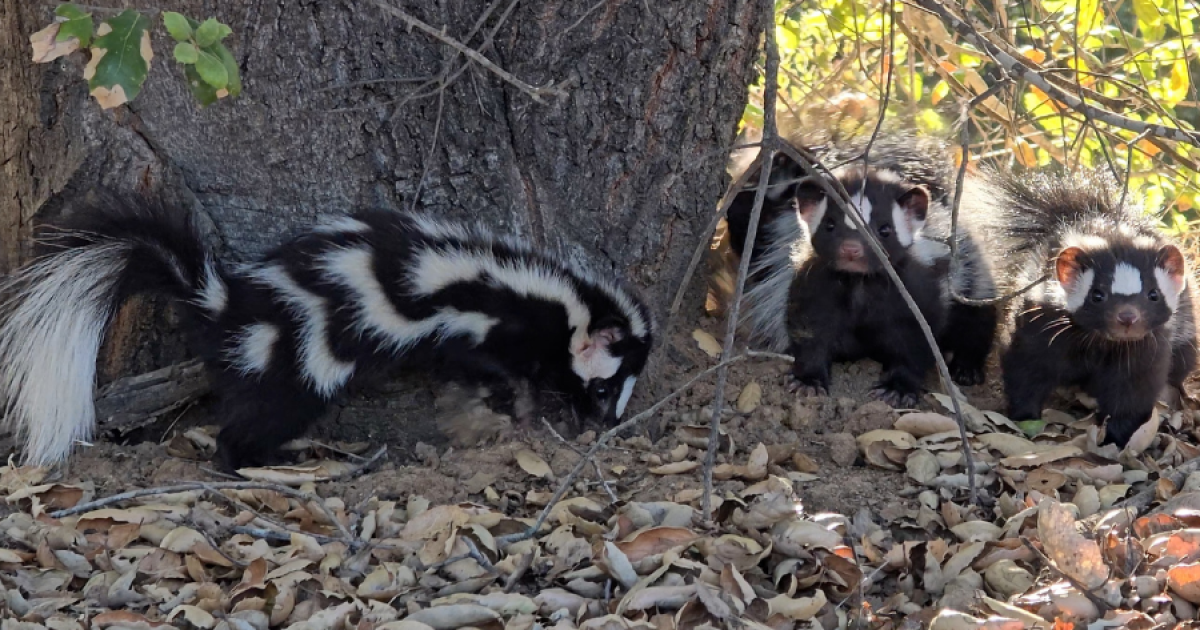
RAMONA (CNS) – Four rare western spotted skunks were released back in the wild after weeks of rehabilitation and socialization at the San Diego Humane Society’s Ramona Wildlife Center, officials announced Wednesday.
The successful release marks a major milestone for a species rarely seen in wildlife rehabilitation. The group included one orphaned skunk that was flown more than 400 miles by Flying Tails Animal Rescue from Sierra Wildlife Rescue in Northern California to join an orphaned group in Ramona, according to the SDHS.
The four skunks were returned to a carefully selected, remote habitat in Valley Center after reaching the necessary weight and developmental milestones to thrive on their own.
Western spotted skunks are a rare sight for the Humane Society’s Project Wildlife team. While the wildlife center typically handles hundreds of striped skunks each year, admitting six spotted skunks from different litters in one season is unusual. Spotted skunks are generally found in remote forested areas and are not as common in urban neighborhoods, officials said.
“We have never seen this many western spotted skunks in a single season before,” said Autumn Welch, wildlife operations manager at the Ramona Wildlife Center. “Because they are more reclusive than striped skunks, they require very specific care and even more secluded release sites to ensure they can stay wild.”
Socialization is critical for orphaned spotted skunks. During their stay at the Ramona Wildlife Center, the group became a bonded unit — exploring, digging and sleeping together, according to SDHS officials. Experts say these social cues prevent habituation to humans and teach the orphans natural skunk behaviors.
While four members of the group have returned to the wild, two spotted skunks remain in care at the facility. The smallest skunk was moved to an outside pre-release habitat and introduced to a slightly older skunk in late June.
Wildlife officials said by keeping the pair together, the wildlife team ensures the younger skunk will have a companion to learn from until they are both ready to be released, likely within the next month or two.
Anyone who finds an injured, sick or orphaned wild animal is encouraged to visit sdhumane.org/wildlifehelp or call 619-299-7012.
Copyright 2026, City News Service, Inc.

SAN DIEGO (FOX 5/KUSI) — A 33-year-old man was sentenced Tuesday to 325 years to life in prison for sexually abusing two 6-year-old girls, in addition to a slew of other felony sex abuse charges, according to the San Diego County District Attorney’s Office.
Christopher T. Gardner was convicted of 15 felony sex abuse charges, which included molesting the two girls, who were relatives of his, over a five-year period.
The abuse reportedly first came to light when one of the victims told a friend in confidence during a sleepover that she had been touched inappropriately. The friend then told her mother, who contacted law enforcement.
After Gardner was arrested, a third victim came forward, who was also a relative. Now a young adult, the victim said that when she was 7-8 years old, Gardner sexually assaulted her.
During the nine-day trial, the first two victims reportedly testified to multiple vulgar acts of sexual abuse by Gardner.
“Predators who rob children of their innocence and inflict lifelong trauma do not belong in our communities,” DA Summer Stephan said. “This sentence sends an unmistakable message to abusers: you will be held accountable. I am deeply grateful to our specialized sexual abuse prosecution team for their dedication in bringing a measure of justice to the survivors.”

Thursday, July 9
• La Jolla Town Council: 6 p.m., La Jolla Recreation Center, 615 Prospect St. lajollatowncouncil.org
Friday, July 10
• La Jolla Golden Triangle Rotary Club: 6:45 a.m., UC San Diego Faculty Club, 270 Muir Lane. lajollagtrotary.org
• Kiwanis Club of La Jolla: noon, La Jolla Community Center, 6811 La Jolla Blvd. kiwanisclublajolla.org
Sunday, July 12
• La Jolla Open Aire Market: 9 a.m. to 1 p.m., Girard Avenue at Genter Street. (858) 454-1699. lajollamarket.com
Monday, July 13
• La Jolla Library Book Club: 1:30 p.m., Community Room, La Jolla/Riford Library, 7555 Draper Ave. The July book is “Fresh Water for Flowers” by Valérie Perrin. sandiego.events.mylibrary.digital/event?id=316631
• La Jolla Planned District Ordinance Committee: (pending items to review), 4 p.m., La Jolla Recreation Center, 615 Prospect St. Email info@lajollacpa.org.
• Laughmasters Toastmasters: 6:30 p.m., online. Email jrmmt@cox.net.
Tuesday, July 14
• San Diego Blood Bank blood drive: 9 a.m. to 2:30 p.m., Hensel Phelps Construction Co., 9404 Genesee Ave. Donors must be 17 or older, weigh at least 114 pounds and be in good health. Photo identification is required. (619) 400-8251. sandiegobloodbank.org
• Rotary Club of La Jolla: noon, La Valencia Hotel, 1132 Prospect St. rotarycluboflajolla.org
• Co-op Toastmasters Club: noon, online at bit.ly/46W13bx (meeting ID: 849 4320 0407, passcode: cccu2020). (669) 900-6833. toastmasters.org/find-a-club/00001125-coop-club
• La Jolla Development Permit Review Committee: (pending items to review), 4 p.m., online. Email info@lajollacpa.org.
Wednesday, July 15
• Torrey Pines (La Jolla) Rotary Club: noon, online. torreypinesrotary.org
• La Jolla Shores Association: 6 p.m., Martin Johnson House, Scripps Institution of Oceanography, 8840 Biological Grade. lajollashoresassociation.org
Thursday, July 16
• La Jolla Sunrise Rotary Club: 6:58 a.m., La Jolla Shores Hotel, 8110 Camino del Oro. Call Cheryl Collins at (760) 936-3272 or Steve Cross at (619) 992-9449.
• San Diego Blood Bank blood drive: 9 a.m. to 2:30 p.m., Sanford Burnham Prebys (patio outside Buildings 6 and 7), 10901 N. Torrey Pines Road. Donors must be 17 or older, weigh at least 114 pounds and be in good health. Photo identification is required. (619) 400-8251. sandiegobloodbank.org
• La Jolla Shores Permit Review Committee: (pending items to review), 4 p.m., online. Email info@lajollacpa.org.
Friday, July 17
• La Jolla Golden Triangle Rotary Club: 6:45 a.m., UC San Diego Faculty Club, 270 Muir Lane. lajollagtrotary.org
Did we miss listing your community event? Email calendar information to Noah Lyons at noah.lyons@lajollalight.com by noon Thursday for publication in the following week’s edition. ♦
-
 Lifestyle31 minutes ago
We unpack the 2026 Emmy nominations : Pop Culture Happy Hour
-

 Technology39 minutes ago
Get a $30 credit when you reserve Samsung’s upcoming Galaxy phones
-

 World46 minutes ago
Critics say Turkey’s verbal attacks on Israel have crossed into antisemitism
-

 Politics49 minutes ago
WATCH: Dana White drops 2028 hints while raving about his favorite Trump cabinet secretary
-

 Health54 minutes ago
Katie Couric couldn’t remember the year or the president during frightening brain episode
-

 Sports1 hour ago
Justin Verlander announces he will retire after this season: ‘I’ve realized that time has come’
-

 Technology1 hour ago
Apple AI security update proves hackers move fast
-
 Business1 hour ago
Fire-damaged Pacific Palisades shopping center sets reopening date

