Midwest
Haitian refugees ‘don’t understand the laws,’ former lawmaker says amid fatal wreck, cultural clashes

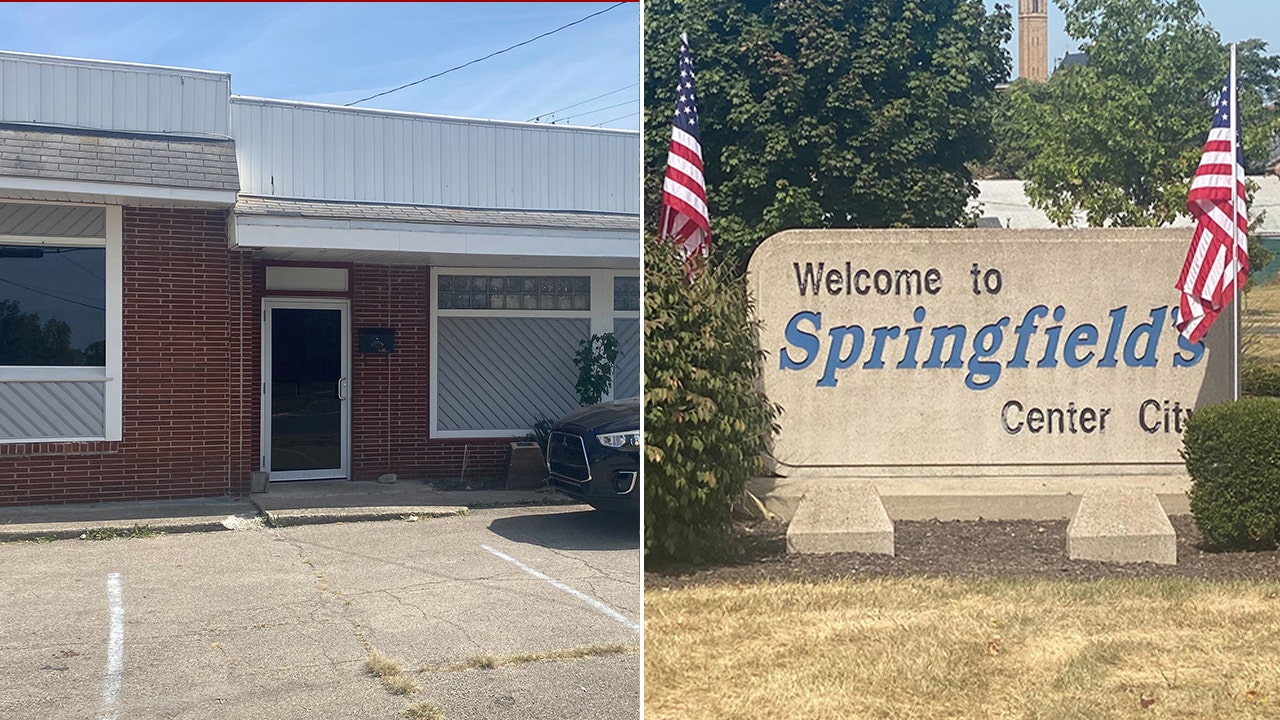
SPRINGFIELD, Ohio – An Ohio town that has seen its population swell with thousands of Haitian refugees has had to battle differences in culture and even driving practices as it adjusts to its new reality.
“We’ve got an influx of folks that have come in, and I think we were a little bit shocked that it was close to 20,000 people in a community of 60,000, and that’s caused some issues between the folks that live here and the folks that are coming in,” former Ohio State Rep. Kyle Koehler told Fox News Digital.
The comments come as Springfield, which is located roughly 50 miles west of Columbus, has entered the national spotlight in recent weeks, most recently when former President Donald Trump pointed to the town during one of his responses in Tuesday’s debate.
“They’re eating the dogs, the people that came in, they’re eating the cats,” Trump said during a response to a question about immigration. “They’re eating the pets of the people that live there, and this is what’s happening in our country, and it’s a shame.”
RESIDENTS OF SPRINGFIELD, OHIO ATTEND CITY COUNCIL MEETING TO SHARE FRUSTRATION ABOUT MIGRANT CRISIS HITTING THEIR COMMUNITY
Republican presidential nominee, former U.S. President Donald Trump, debates Democratic presidential nominee, U.S. Vice President Kamala Harris, for the first time during the presidential election campaign at The National Constitution Center on September 10, 2024, in Philadelphia, Pennsylvania. After earning the Democratic Party nomination following President Joe Biden’s decision to leave the race, Harris faced off with Trump in what may be the only debate of the 2024 race for the White House. (Photo by Win McNamee/Getty Images) (Win McNamee)
The issue has also caught the attention of Ohio Republican senate candidate Bernie Moreno, who argued that the Biden administration’s “open border” policies “have flooded Springfield, Ohio, with thousands of illegal Haitians who are sucking up social services and destroying a small town here in Ohio.”
“We need to deport illegals, not invite them to wreak havoc on our communities like Sherrod Brown and Kamala Harris have done,” Moreno told Fox News Digital.
While local officials and multiple media outlets have disputed the point that Trump raised in the debate, there is still a new reality faced by longtime members of the Springfield community. Chief among them, according to Koehler, are cultural differences between locals and the Haitian refugees who are new to the town.
Haitian community center in Springfield, Ohio, is shown here. (Michael Lee/Fox News Digital)
The lake at Snyder Park in Springfield, Ohio, from which local residents have claimed Haitian refugees have taken geese to slaughter and eat. (Michael Lee/ Fox News Digital)
“They don’t understand the laws, they don’t understand some of our customs, we don’t understand some of their customs, and that clash and the overwhelming amount of people that have come at one point has really caused some issues,” Koehler, who is now running to represent the area in the state Senate, said.
One more extreme example of that, Koehler recalled hearing second hand, allegedly played out at a local Walmart, where he said there were stories of “people showing up at the Walmart on a Saturday morning, going into the bathroom, and stripping down and bathing themselves.”
State Rep. Kyle Koehler says he has heard secondhand of migrants stripping down to bathe in washrooms in the local Springfield Walmart. (Michael Lee/Fox News Digital)
FOCUS GROUP REACTS TO TRUMP CLAIM THAT MIGRANTS ARE ‘EATING THE DOGS’ IN OHIO TOWN
“Again, not something we do here, something someone might do in another culture, or something someone might do if they don’t understand the culture they’re in now,” Koehler said. “Whether that’s true or not, those stories get passed around, and it inflames the situation we have in our community.”
There have been no reports of people taking baths or showers in Walmart stores around Springfield, an individual familiar with the situation told Fox on background.
Another issue causing concern among the local population is road safety, Koehler noted.
“The driving in town is horrendous,” Koehler said, noting that a lot of that issue can also be chalked up to cultural differences.
One notable situation occurred last August, when a school bus carrying dozens of children in the area collided with a minivan, resulting in over 20 kids being hurt and one, Aiden Clark, being killed.
The driver of the minivan was later identified as Hermanio Joseph, a Haitian immigrant who was found guilty earlier this year of involuntary manslaughter and vehicular homicide for his role in the incident.
The tragic incident inflamed tensions in the community, with Koehler noting that road safety had been one of the more visible concerns for locals.
Ohio State Rep. Kyle Koehler (Fox News) (Courtesy Kyle Koehler)
“We do have a really abnormal number of car accidents that are happening,” Koehler said. “And it’s not only the number, but the severity of them. When you go on a street that is a 35-mile-an-hour speed limit and there’s a car sitting on its hood, and I’m not talking about one, I’m talking about five or six accidents a week like that, you begin to wonder.”
Nevertheless, Koehler stressed the positive attributes of Springfield, arguing that the town was once in decline but is now on the way back.
“We have a wonderful town,” Koehler said.
EDITOR’S NOTE: Kyle Koehler is a former state representative. He was initially referred to as a current lawmaker.
Read the full article from Here


WASHINGTON (Gray DC) – The President set to travel to Mount Rushmore to mark America’s 250th anniversary.
Friday, President Donald Trump is taking that celebration to one America’s most iconic sites, Mount Rushmore
The President is traveling to South Dakota for a celebration at Mount Rushmore that will include fireworks, military bands and flyovers – including one by the new Air Force One – which had its maiden flight on Wednesday to North Dakota. The Boeing 747 is a gift from Qatar.
While at Mount Rushmore in the Black Hills near Keystone, South Dakota, President Trump will deliver a keynote address marking the nation’s 250th anniversary.
The sculpture at Mount Rushmore features 60-foot-tall depictions of the heads of four U.S. presidents: George Washington, Thomas Jefferson, Theodore Roosevelt and Abraham Lincoln. They were chosen to represent the nation’s foundation, expansion, development, and preservation
President Trump last visited Mount Rushmore for a Fourth of July Celebration in 2020. The event featured the first official fireworks display at the monument in over a decade.
He’s also repeatedly joked that his face should be added to the monument.
Copyright 2026 Gray DC. All rights reserved.

A health clinic in western Wisconsin was temporarily put into lockdown Thursday afternoon after a threatening phone call.
Just after 2 p.m., Barron County officials received a 911 call from a staff member at the Marshfield Medical Center Emergency Department in Rice Lake, stating that someone called and said two men were going to “shoot up the hospital” in about 20 minutes.
After interviewing the staff member later, it was determined that the man who called had disguised his voice and got upset before hanging up the phone, according to the Rice Lake Police Department.
Rice Lake police, the Barron County Sheriff’s Office and Wisconsin State Patrol responded to the scene, and the medical facility was secured.
Any patients who wanted to leave the facility were allowed to do so, authorities noted.
During the lockdown, law enforcement discovered there were similar threats, known as “swatting calls,” at other places across the state on Thursday.
At about 4:18 p.m., the lockdown was lifted, and authorities cleared the scene. Rice Lake police added that no one was injured during the incident.
The police department said it will continue investigating the threat with other law enforcement agencies.
The Rice Lake health center is roughly two hours northeast of the Twin Cities, and approximately 50 miles north of Eau Claire. The center’s website says it offers both inpatient and outpatient practice, covering a wide range of services.
A spokesperson for the health system told 5 EYEWITNESS NEWS that the clinic was closed for the rest of the day Thursday, but hospital operations have since returned to normal.
“The safety of our patients and staff at Marshfield Medical Center-Rice Lake is our top priority,” the system added.

Entering free agency, there was plenty of buzz surrounding the idea that the Detroit Pistons could be set to lose restricted free agent Jalen Duren.
The gap in contract negotiations sent Duren and his camp into free agency, looking to not only prove Detroit wrong about his market value but find a team that would ink him to the massive payday he’s searching for, even if it meant landing on a rebuilding team like the Sacramento Kings.
Between Sacramento’s interest, the Los Angeles Lakers’ flirting with an all-out pursuit for the 22-year-old star, and Duren’s intrigue with landing on the Boston Celtics, it felt like the Pistons didn’t have the leverage they were hoping for, even with Detroit signaling they’d match any offer sheet.
However, the Lakers have landed Walker Kessler, the Celtics have signed Mitchell Robinson and offloaded Jaylen Brown, and the Kings aren’t even a real consideration without Detroit willing to facilitate a sign-and-trade.
The silence from Duren’s camp over the last couple of days is deafening, and it signals that the leverage is back in the Pistons’ court.
Pistons are Jalen Duren’s best option
Detroit may not have offered Duren the supermax extension he was searching for, but several reports have suggested the Pistons did offer a deal they felt was enough for the former first-round pick to return to the Motor City.
With the Lakers now out of the picture, the Celtics’ future in serious question, and no other team with cap space available to make a run, the Pistons are Duren’s best option to not only get paid but also contend.
Duren has a great relationship with superstar guard Cade Cunningham, and while it’s clear that his priorities were landing a bag this summer, there’s no reason why he can’t get the best of both worlds by receiving a notable raise and returning to the place he’s called home since 2022.
The Pistons lost Tobias Harris in free agency, they moved on from Isaiah Stewart, and the futures of Caris LeVert and Duncan Robinson are still very much in question.
Detroit can’t let another key piece of their top-seeded roster exit this offseason, even if there’s a massive gripe about how Duren played during the playoffs.
Fresh off an All-Star season that landed him an All-NBA nod, the Pistons want to retain him, and with his options disappearing fast, Duren should be more open to a return now.
Follow
-

 South Dakota11 minutes ago
Pres. Trump travels to South Dakota
-
Tennessee14 minutes ago
Johnson County marks America’s 250th with Tennessee’s first Charters of Freedom display
-

 Texas19 minutes ago
What to expect on Texas roads this Fourth of July
-

 Utah26 minutes ago
Utah schools still need hundreds of teachers ahead of new school year
-

 Vermont29 minutes ago
Arizona kidnapping suspect indicted while facing separate child sex charges in Vermont
-

 Virginia34 minutes ago
Virginia nonprofit Urban Baby Beginnings to receive $5K grant for Nexstar’s ’30 Days of Giving’
-
 Washington41 minutes ago
Review: Our critic cannot tell a lie: ‘Young Washington’ is the dullest of history lessons
-

 Wisconsin44 minutes ago
Swatting call caused temporary lockdown at Rice Lake, Wisconsin health clinic


