West
On this day in history, August 24, 1932, Amelia Earhart becomes first woman to fly solo coast-to-coast

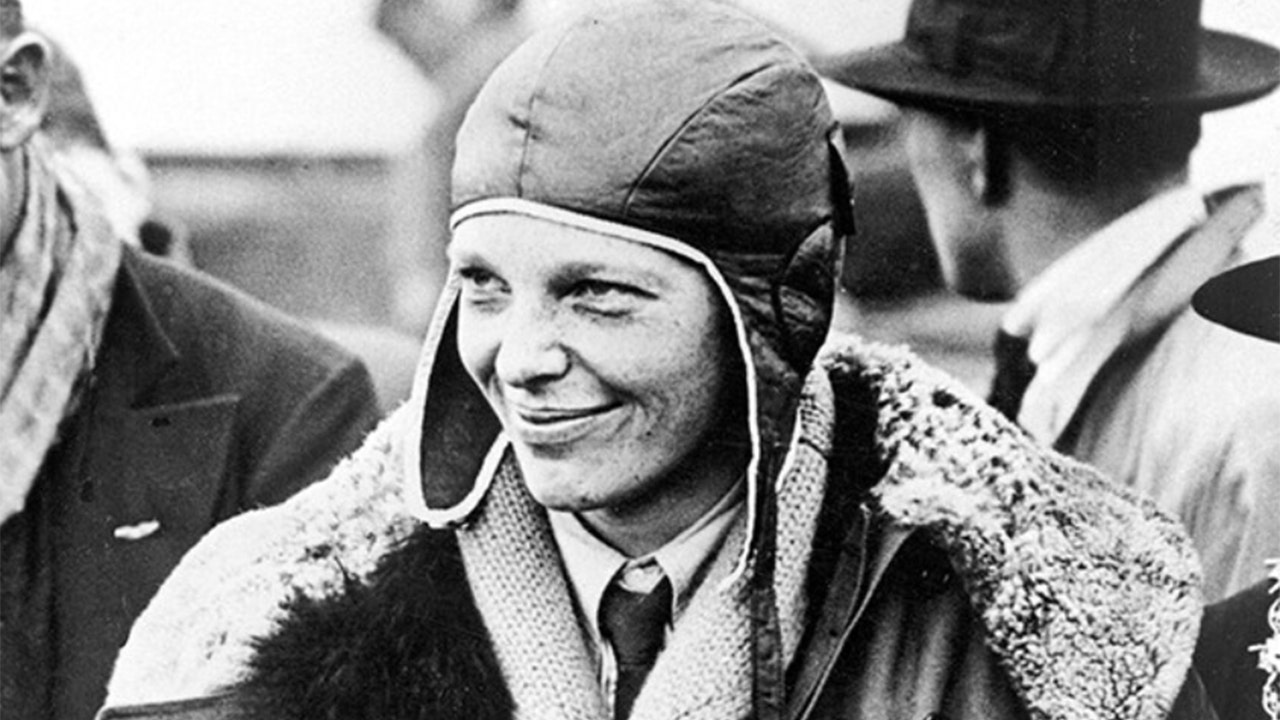
Aviation trailblazer Amelia Earhart became the first woman to fly solo across the U.S. nonstop on this day in history, Aug. 24, 1932.
Earhart piloted her Lockheed Vega 5B from Los Angeles to Newark in a record 19 hours and 5 minutes.
The 3,986-kilometer (2,477-mile) flight set an official U.S. record for women’s distance and time, according to the National Air and Space Museum.
ON THIS DAY IN HISTORY, AUGUST 23, 1973, A BANK ROBBERY IN SWEDEN LEADS TO ‘STOCKHOLM SYNDROME’
Earhart’s solo, non-stop flight’s average speed for this record-breaking flight was 206.42 kilometers per hour (128.27 miles per hour), and she flew most of the way at an altitude of 3,048 meters (10,000 feet), the same source recounted.
Less than a year later, Earhart would set a new transcontinental speed record, making the same flight in a record 17 hours and 7 minutes, the same source indicated.
Amelia Earhart at the Oakland Airport, March 12, 1937. The pilot disappeared over the Pacific Ocean just four months later. (MediaNews Group/Carl Bigelow, Oakland Tribune via Getty Images)
Then on Jan. 11, 1935, she became the first person to solo fly the 2,408-mile distance across the Pacific between Honolulu, Hawaii, and Oakland, California.
It was also the first flight in which a civilian aircraft carried a two-way radio, according to The Amelia Earhart official website.
ON THIS DAY IN HISTORY, JAN. 11, 1935, AMELIA EARHART IS FIRST AVIATOR TO FLY SOLO FROM HAWAII TO CALIFORNIA
Earhart was born on July 24, 1897, in Atchison, Kansas. Her father was a railroad lawyer, and her mother was from an affluent family.
As a child, she displayed an adventurous and independent nature for which she would later become known, noted Biography.com.
The Earhart family often moved — and while on a visit to her sister in Canada, Earhart developed an interest in caring for soldiers wounded in World War I.
Her first airplane ride in 1920 was an experience that prompted her to take flying lessons.
In 1918, she left junior college to become a nurse’s aide in Toronto, the same source indicated. When the war ended, Earhart entered a premed program at Columbia University in New York City but left in 1920 after her parents insisted that she live with them in California.
“It was there she went on her first airplane ride in 1920, an experience that prompted her to take flying lessons,” cited Biography.com.
In 1921, she bought her first plane, a Kinner Airster, and two years later she earned her pilot’s license, the same source said.
Earhart moved to Massachusetts, where she continued to pursue her interest in aviation.
Amelia Earhart after the first Hawaii-to-California flight, Jan. 12, 1935. She was the first pilot to succeed at flying the route. (Photo by ©CORBIS/Corbis via Getty Images)
Earhart continued to reach new heights in aviation.
On June 17, 1928, she departed Trepassey, Newfoundland, Canada, as a passenger aboard a seaplane piloted by Wilmer Stultz and Louis Gordon, noted Britannica.com.
Much of the publicity was managed by publisher George Palmer Putnam, who had helped organize the historic flight. The couple married in 1931, but Earhart continued her career under her birth name.
That year she also piloted an autogiro to a record-setting altitude of 18,415 feet, the same source cited.
ON THIS DAY IN HISTORY, AUGUST 15, 1935, ENTERTAINER WILL ROGERS, AVIATOR WILEY POST KILLED IN PLANE CRASH
In 1930, Earhart purchased the plane that would carry her into history, the iconic red Lockheed 5B Vega she nicknamed “Old Bessie.” It’s been on display at the Smithsonian National Air & Space Museum since its opening in 1976, according to Popular Mechanics.
In 1930, Earhart purchased the plane that would carry her into history, the iconic red Lockheed 5B Vega she nicknamed “Old Bessie.”
Then, on May 20, 1932, and exactly five years to the date of Lindberg’s journey, she made her own indelible mark — becoming only the second person to pilot a plane solo across the Atlantic and the first woman, the same source recounted.
This flight in her 5B Vega from Harbour Grace, Newfoundland, to Londonderry, Northern Ireland was completed in a record time of 14 hours 56 minutes despite a number of challenges.
Earhart faced inclement weather and some mechanical difficulties and was unable to land in her scheduled destination of Paris, Brittancia.com reported.
ON THIS DAY HISTORY, DEC. 17, 1903, THE WRIGHT BROTHERS ACCOMPLISH FIRST FLIGHT IN KITTY HAWK, NORTH CAROLINA
Earhart’s fate then turned to tragedy.
On the morning of July 2, 1937, she and her navigator, Fred Noonan, took off from Lae, New Guinea, on one of the last legs in their historic attempt to circumnavigate the globe, History.com reported.
A closeup of Amelia Earhart. Although her plane disappeared on July 2, 1937, she was declared officially deceased on Jan. 5, 1939. (AP)
Their next destination was Howland Island in the central Pacific Ocean, about 2,500 miles away.
But Earhart never landed on Howland Island.
Battling overcast skies, faulty radio transmissions and a rapidly diminishing fuel supply in her twin-engine Lockheed Electra plane, she and Noonan lost contact with somewhere over the Pacific, the same source recounted.
For more Lifestyle articles, visit www.foxnews/lifestyle
“Despite a search-and-rescue mission of unprecedented scale, including ships and planes from the U.S. Navy and Coast Guard scouring some 250,000 square miles of ocean, they were never found,” History.com stated.
Her accomplishments and her legacy serve as an inspiration to thousands.
At the time, the Navy concluded that Earhart and Noonan had run out of fuel, crashed into the Pacific and drowned, according to multiple sources. The mystery of her disappearance remains a fixture in popular culture and her fate has been the subject of numerous books and movies.
Although her plane disappeared on July 2, 1937, she was declared officially deceased on Jan. 5, 1939.
Earhart received numerous posthumous honors. She was enshrined in 1968 in the National Aviation Hall of Fame and in 1973 in the National Women’s Hall of Fame, noted the Topeka Capital-Journal.
Her image adorns a 1963 air mail stamp. She’s also the namesake of the USNS Amelia Earhart, a Navy cargo ship launched in 2007, the same source said.
Despite the tragic end to Earhart’s life, her accomplishments and her legacy still serve as an inspiration to thousands of budding young pilots everywhere, noted Britannica.com.
Read the full article from Here

Alaska
A frozen ground under Alaska’s tundra looks like ordinary soil from above, but scientists have put a $43 trillion price tag on what happens when it thaws

Stand on the tundra in Alaska and it looks like nothing special.
A vast, flat plain of amber grass, shallow ponds, and dark soil stretching to the horizon.
No obvious drama, no visible crisis.
But a few feet below your boots, something has been building for millennia, and scientists have finally put a dollar figure on what happens when it wakes up.
The ground beneath the Arctic has been keeping a secret for millions of years
Permafrost is frozen ground, soil and rock locked in ice for thousands of years across Alaska, Canada, Siberia, and the high Arctic.
It covers roughly a quarter of the land in the Northern Hemisphere.
Most Americans have never thought about it for a single second.
Permafrost contains about 1,700 gigatons of carbon in the form of frozen organic matter, accumulated over countless millennia of dead plants and animals that never fully decomposed.
That is roughly twice the carbon currently in the entire atmosphere above us.
Think of it as a freezer the size of a continent, stocked with centuries of biological material that simply never had the chance to rot.
For as long as the ground stayed frozen, that carbon stayed locked away, harmless and invisible.
Something is going wrong with the world’s largest freezer
The Arctic is warming roughly four times faster than the global average.
As the ground softens, the organic matter inside it begins to rot.
Permafrost releases both carbon dioxide and methane as it thaws, through rotting organic matter, collapsing terrain, and waterlogged soils where methane-producing microbes thrive.
That methane detail matters more than most people realize.
Methane is over 80 times more effective than carbon dioxide at trapping heat over a 20-year period.
Wildfires are accelerating the process further, scorching the insulating layer of moss and peat that once kept the frozen ground shielded from summer heat.
And once those gases escape, there is no putting them back.
The tundra is already changing in ways you can see from the ground
Across Alaska, roads are buckling and tilting where the ground beneath them has shifted.
Strange new lakes are appearing on the tundra, formed as the frozen ground collapses inward.
Scientists call these thermokarst lakes, and they are spreading.
In some Alaskan villages, houses are sinking and cracking as if the earth beneath them is slowly giving way.
Wooden boardwalks that once crossed stable ground now lean at odd angles, and in a handful of communities, entire buildings have been condemned.
This is not a future warning, it is already happening across the far north.
A study on permafrost and the remaining carbon budget found that including permafrost thaw in climate models meaningfully reduces the allowable carbon budget for avoiding dangerous warming targets.
Scientists ran the numbers and the total came out to $43 trillion
Greenhouse gas emissions from thawing Arctic permafrost could result in an additional $43 trillion in economic impacts by the end of the twenty-second century, according to research from the University of Cambridge and the National Snow and Ice Data Center.
That figure is not the cost of fixing permafrost.
It is the added damage thawing permafrost would layer on top of every other climate cost humans are already calculating.
To put it in scale: the University of Cambridge researchers note that the $43 trillion comes on top of more than $300 trillion in climate-change costs already projected by existing models, meaning permafrost alone could add roughly 13 percent to the total bill.
The NOAA summary of the research makes clear that most existing climate models do not yet fully account for this feedback loop.
A more recent analysis by Woodwell Climate Research Center sharpens that picture further, finding that abrupt thaw and Arctic wildfires together shrink the remaining carbon budget faster than gradual models predict.
The frozen ground was never just scenery, it was a climate vault, and it is now unlocking.
There is still time to slow the key that is turning in the lock
The picture is serious, but it is not hopeless.
Thawing is projected to affect 50 percent of near-surface permafrost at 1.5 to 2 degrees of warming, and up to 90 percent at 3 to 5 degrees.
That gap between those two numbers is the reason every fraction of a degree still matters enormously.
Scientists studying how the 2023 heat record overshot predictions are applying the same urgency to permafrost feedback, working to get these carbon costs into the models governments actually use.
Research teams are experimenting with methods to actively protect permafrost, from restoring grasslands that insulate the frozen layer to tracking thaw rates using satellites.
In places like Juneau, where a glacier burst open for the third summer in a row, residents are already living inside the feedback loops science is still racing to measure.
The ordinary-looking ground beneath the Arctic tundra turned out to be one of the most consequential things on Earth.
And the price of ignoring it was frozen in plain sight all along.

MESA, AZ — For many seniors, scam texts and phone calls can be confusing, intimidating, and costly.
One Mesa teenager believes getting help shouldn’t be.
BASIS Mesa student Shilo Karakkattu created ScamSafe after watching older family members struggle to sort through suspicious messages.
The goal is straightforward: help people avoid becoming the next victim of fraud.
For many seniors, scam texts and phone calls can be confusing, intimidating, and costly. Karakkattu saw that the problem was affecting people he loves and decided to create a solution.
Now, organizations that work with seniors are taking notice of his invention, which could soon help thousands of people across Arizona stay one step ahead of scammers.
Watch in the player above to see the remarkable student whose latest project is protecting some of Arizona’s most vulnerable residents.
Want more news in your community? Add ABC15 as a preferred source on Google below:


Activists are pushing for Black English to be legitimized in preschool as a way to build children’s literacy skills in California.
The Black Californians United for Early Care & Education (BlackECE) is part of a movement to challenge “harmful language hierarchies and affirm Black English as a legitimate, rule-governed language rooted in Black history, culture, and community.”
The movement also seeks to “address how language bias shows up in early learning spaces–and how it can be dismantled.”
“I don’t want my son to walk into any room and feel like his voice is not valued or his perspective can’t be heard because he’s not saying it one way or the other,” the co-founder of BlackECE Ashley Williams told PBS.
She also remembered how speaking Black English is full of slangs and grammatical errors so it came with a lot of embarrassment.
BlackECE is a nonprofit organization centered around a 10-point policy plan that seeks to gain reparations and help Black children, families, and workers.
California released a plan promoting early dual language learning and calling on the state’s education system to support bilingual children in their development in 2020, but the advocacy group believes that Black vernacular should be included.
“We talk about multilinguals, but we don’t include Black children who may be African-American English speakers,” the Director of the Children’s Equity Project Xigrid Soto-Boykin said.
Williams also recalled her experiences in having to “talk white” and talking in her comfortable English and feeling insecure.
Around 20% of American children and 44% of five to seventeen year-olds in California are considered to be bilingual, according to the National Library of Medicine’s research in 2020.
However, only 89% of African-Americans solely speak English at home.
-

 Austin, TX2 minutes ago
How much daylight are we losing in Texas this month?
-

 Alabama5 minutes ago
Sweet Home 250 draws thousands to Montevallo for Alabama’s o…
-

 Alaska11 minutes ago
A frozen ground under Alaska’s tundra looks like ordinary soil from above, but scientists have put a $43 trillion price tag on what happens when it thaws
-
Arizona18 minutes ago
WATCH: Mesa teen builds free scam detection tool to protect seniors from fraud
-

 Arkansas21 minutes ago
Arkansas restaurants adapt as rising food costs change menus and dining habits
-

 California26 minutes ago
Activists demand Black English be pushed on kids in California preschools
-

 Colorado33 minutes ago
Showers and thunderstorms forecast for Colorado’s high country as wildfires rage across the state
-

 Connecticut35 minutes ago
Eversource crews work to restore power nearly 48 hours after Independence Day storm

