Wyoming
Wyoming awarded largest investment in broadband internet infrastructure to date

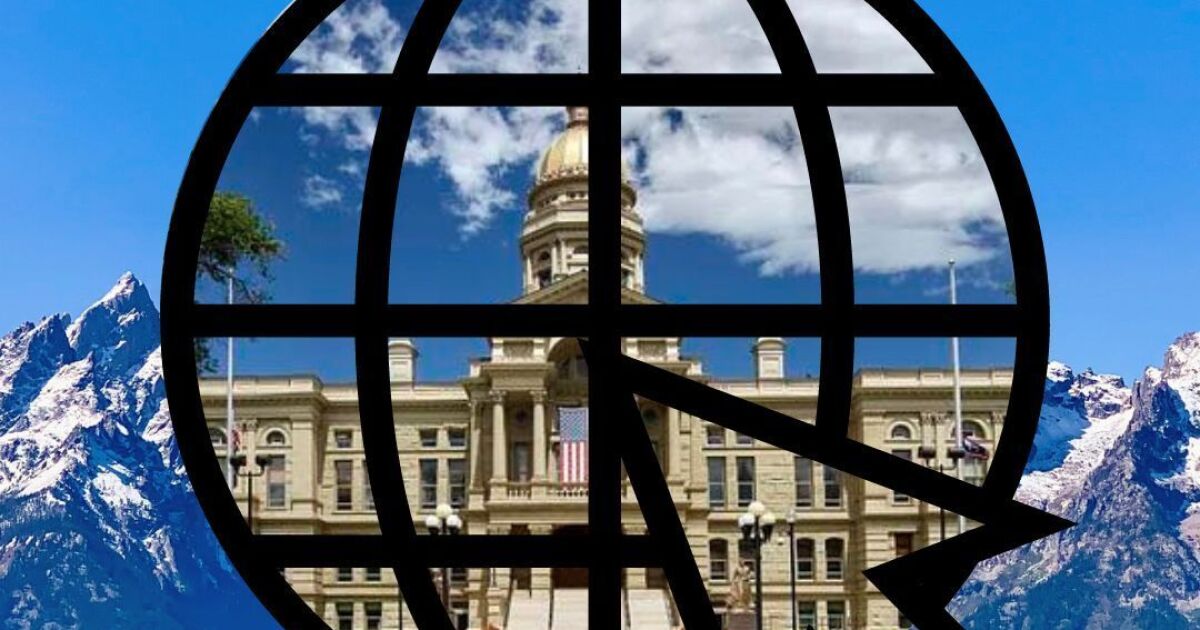
A White House initiative to provide internet access to all Americans has cleared Wyoming for the largest federal investment in broadband yet.
The Biden-Harris administration has been working with states to create proposals and map data for a massive broadband build out. Wyoming was approved to receive over $347 million in grant money to work toward “internet for all” in the state. The approval means the state can now request access to the funds and get started making its proposed statewide broadband service a reality.
“That is $347 million to help connect over 39,000 homes and businesses in the state,” said Courtney Dozier with the National Telecommunications and Information Administration (NTIA).
The goal is to create a network of connectivity across the state that ensures Federal Communications -Commission (FCC) regulatory broadband speeds. That means at least 100 megabits per second for downloads and 20 megabits per second for uploads.
Dozier expects Wyoming will have “shovels in the ground” by 2025.
Where’s all the construction?
The Biden administration had received criticism that the “internet for all” initiative, or the Broadband Equity, Access, and Deployment (BEAD) Program funded by the Bipartisan Infrastructure Act, hadn’t connected any homes since its announcement in 2021.
Republicans and Trump’s appointee to the FCC, Brandon Carr, have pointed to bureaucracy and mandates within the BEAD program that place regulatory pressure on private companies and slow the build-out. However, the NTIA says it’s a massive project and a lot of money to hand out with proper preparation.
“With this historic level of investment. $42 billion from Congress and the Biden-Harris administration that we’re not likely to get again. We need to come up with a plan to connect everyone,” said Dozier.
Wyoming, like other states, had to plan and complete a detailed map of where internet connection exists, and where it does not. A map of underserved (slow internet speeds) and unserved (very slow speeds or no connection) areas was necessary.
“We have been working really closely with states and territories to receive their proposals that they submitted on what they’re going to do to accomplish this goal,” said Dozier. “How are they going to spend this money and make sure that at the end of the day, everyone in Wyoming that’s currently un- and underserved … has that access at the end of this program.”
Wyoming last year was pre-approved for the funds so the state could incorporate federal investments in the planning stage. Now that Wyoming’s plan is finalized, $347,877,921.27 in funding can begin to be put into action.
$300 million alone won’t be enough
While this is the largest federal investment made in Wyoming for the purpose of broadband connectivity, it’s by no means the only. In a state as vast as Wyoming, full connection is an expensive endeavor.
In 2018, the Wyoming state government set aside some $10 million for the Wyoming Broadband Advisory Council (part of the Broadband office), funds that would help start a mapping project for the state and promote broadband expansion.
In 2019, the U.S. Department of Agriculture began the ReConnect Loan and Grant Program, which allowed state governments, cooperatives and corporations to apply for development of broadband services in rural areas that might otherwise be too expensive for market-incentivized building to occur. Wyoming saw funding from that program in 2020 and 2022
The U.S. Department of the Treasury has given Wyoming over $70 million in competitive grant funding from the Capital Projects Fund for last mile broadband connection. This program awarded five companies $70 million for development in the past. Visionary Broadband was recently awarded another allocation of these funds by the Wyoming Business Council Broadband Office for the additional fiber project in Cheyenne.
Despite all these investments, the act of completed, working, high-speed connections will take time. Dozier said the administration and the federal government is ready to keep working on this project well into the future.
“This is a huge priority for you and so we’re going to continue to dedicate the kind of time and resources to land the program over the next five to six years.” said Dozier.
Fiber in my backyard?
In previous interviews with WPR, former head of the Wyoming Broadband Office, Elaine Zemple, said, “I don’t think we will reach 100 percent. But it’ll be in the high 90 percent,” in response to the federal goal of “internet for all.”
This was for two reasons. One being the difficult, vast and undeveloped terrain of Wyoming. And two, the privacy wishes of those who want to disconnect as much as possible.
The NTIA appears understanding of some Wyomingites’ desire to unplug – or choosing to not receive access in the first place – so long as the reasoning is there.
“If you’ve built a hunting lodge in the middle of [Wyoming], in the middle of nowhere, because you want to disconnect, we’re not going to force you to get internet service,” said Dozier.
However, she said an objection of some kind would have to be made.
“[Maybe] a broadband serviceable location that does not want it. Maybe they have religious objections. Maybe there’s other objections. Because don’t forget, too, that the person living in that home might not always be living in that home.”
The Biden administration would like to see fiber laid out as much as possible, alongside other broadband components made here in the United States,although some of those restrictions were recently lifted. The fiber focus did not come without criticism, including in Wyoming, but the administration appears open to working with states to use alternative technologies.
“Based on that calculation and the priorities for the program, it is a kind of fiber preference,” said Dozier. “We are working with Wyoming and every state and territory to support them pushing out the most reliable technologies as far as they can, while ensuring that everyone is getting access to high speed, affordable, reliable Internet, which may take on various different forms.”
Some of those technologies are hybrid networks or fixed-wireless connections that can be used to more cost-effectively get high speed service around mountains and out to rural, small communities.
Public involvement
Dozier stressed that the public should be involved in this process. Part of Wyoming’s map-making process included talking with nonprofits, local governments and internet service providers about where the internet can or should be built.
But that doesn’t cover everyone, according to Dozier. She says the public still needs to voice their concerns, as they have been offered to do so in the past.
“[Continue] to engage with your state broadband office, with your local governments, is going to be key to the success of the program,” she said.



Summer is Wyoming’s season for turning over rocks, poking into holes and walking with a perpetual hunch looking for snakes.
Herpalogists, the zoologists who study amphibians and reptiles, are out scouring the landscape and herping, the term used when they are actively flipping rocks and searching stream beds to find Wyoming’s elusive snakes in their native habitats.
Sometimes those finds can be unexpected. The fork-tongued reptiles appear on a trail when least expected.
Recently, a foot-long “nightcrawler” suddenly moved like a snake and slithered into the rocks, its tail disappearing into the shadows. Rather than a shapeshifter, this was an elusive rubber boa, Wyoming’s tiny constrictor snake that can look like a giant worm at first glance.
These rarely seen creatures are more common in the Cowboy State than most people realize.
“I personally don’t feel that any of our snakes in Wyoming are terribly rare,” said Matt Rasmussen, vice president of the Wyoming Herpetological Society. “However, a lot of them are very rarely encountered because they spend most of their lives either underground or under rocks.”
Rasmussen said most of the secretive snakes in Wyoming only come out at night or when conditions are right — typically warmer, humid times. The rubber boa, for instance, showed up on a day when it had rained and then the temperatures spiked hot.
Rasmussen helped found the new Herpetological Society two years ago to teach others to herp. He said it’s possible to learn more about our state by flipping rocks and seeing what is beneath.
“That’s the great thing with Wyoming,” Rasmussen said. “There is so little known about the herpetofauna — the frogs, lizards, snakes, turtles, etcetera — that live here, and so little known about their distribution.”
He said Wyoming is known for “large charismatic megafauna” such as bison, elk, moose and deer rather than the harder to find animals. As a result, no widespread surveying has been done on smaller non-game species. Wyoming Game and Fish has even asked for community members to help by reporting rarely seen reptiles and amphibians.
-

The Great Basin gopher snake is a non-venomous snake found primarily in the western United States and parts of southwestern Canada. You can find these snakes in a wide range of habitats; grasslands, woodlands, and deserts. -
The plains hognose snake can be mistaken for a rattlesnake but is harmless to humans. -
The Eastern yellow-bellied racer is incredibly fast, alert, and primarily hunts during the day using their sharp eyesight. Harmless to humans but feisty and will bite and musky-spray if cornered or handled. -
The smooth green snake is completely non-venomous, quite secretive and rarely seen. The Wyoming Natural Diversity Database said they are mostly found in localized pockets within southeast and south-central Wyoming and the Black Hills area. Their habitat are moist meadows, marshes, stream edges, open woods since they can camouflage in lush vegetation. This snake feeds almost exclusively on insects and spiders such as crickets, grasshoppers and caterpillars.


Elusive, Not Rare
While most people think of the more common bullsnake or venomous rattlesnake when discussing reptiles, Rasmussen said Wyoming is home to many harmless snakes.
According to Rasmussen, a few snakes, such as the colorful pale milk snake and rubber boa, could be considered rare in Wyoming. However, he believes they are just harder to find and most people are not aware of them unless they stumble across them.
“There’s the plains black-headed snake, which we really don’t know much about their distribution in Wyoming,” Rasmussen said. “They’re just not studied and have a limited habitat.”
This tan snake with a black head is small and feeds primarily on centipedes and ant eggs. Rasmussen cautions that when found, rather than kill the strange looking snakes that are harmless, report finding them to Wyoming Game and Fish and leave them in their habitat.
In this way, Rasmussen said, herping can be fun. He encourages people to get into the action.
“There are some other really small fossorial snakes like smooth green snakes, which live along creeks in the mountains and eat caterpillars and spiders,” Rasmussen said. “Then there’s the Black Hills red-bellied snake, which is a very small snake that eats slugs, worms and snails primarily.”
People are often surprised that Wyoming is home to such a large variety of snakes. He especially likes to show off a milk snake, which is harmless and eats lizards and even baby rattlesnakes.
“It is a beautiful, almost tropical-looking animal that lives right here,” Rasmussen said. “They are just rarely encountered.”
-
The northern rubber boa is found in the northwest corner of state such as Star Valley and east into the Bighorn Mountains. They are a small, docile, non-venomous constrictors that are rarely seen since they are excellent burrowers and climbers. The Wyoming Game and Fish consider them vulnerable/secretive and track sightings to help build their statewide database. -
The pale milk snake is not a venomous coral snake and is found in the Bighorn Basin, eastern plans and southeastern corner of Wyoming. They are rare to see because they spend their life hiding under rocks, within rocky outcrops, badland scarps, ponderosa pines, and shortgrass prairies according to the University of Wyoming. Since they are so secretive, spotting one in the wild is a rare treat and Wyoming Game and Fish is asking the public to report any sightings for their database. -
The plains black-headed snake is completely harmless because it’s mouth is too small to pierce human skin and its mild venom is for small invertebrates. Due to its secretive nature, it is rare to see one but they are known to be in southeastern Wyoming in the Platte and Carbon Counties. They are very small, secretive, burrowing snakes that spend almost all of their lives underground or hidden beneath rocks and logs, typically only surfacing at night. -
The bull snake or gopher snake is completely non-venomous but does not want you to know that. When threatened, they put on a dramatic show according to the National Park Service. The bullsnake will puff up their bodies, hiss loudly, flatten their head into a triangle and vibrate their tails in dry bush to mimic a rattlesnake. (Matt Rasmussen)


A New Snake & Frog Society
Rasmussen said the new society is trying to educate the community about these fascinating creatures in the Cowboy State that don’t get much attention, such as the skink, a short-legged lizard.
“We’re a group of herpetological enthusiasts who would like to spread the word, educate and do outreach about these animals,” he said.
This outreach includes presentations with live animals, field trips and a conference in November. Wyoming’s reptiles and amphibians remain a mystery, Rasmussen encourages reporting sightings on the app iNaturalist.
“Even if you don’t know what it is, post a picture because there are tens of thousands of experts who will identify that animal,” Rasmussen said. “That’s really important, especially for our herpetofauna in the state.”
He also pointed out that some Wyoming snakes are on the protected list, including the midget faded rattlesnake. They made the list, according to Rasmussen, because people were capturing them and they became popular in among owners who like to keep small venomous snakes as pets.
Rasmussen said awareness is the best protection for Wyoming’s elusive reptiles and he is excited to prove to residents that we don’t have rare snakes, only secretive ones.
Jackie Dorothy can be reached at jackie@cowboystatedaily.com.
Wyoming
Wyoming Cultural Trust Fund awards $529K in grants, including several Fremont County projects

-

 Milwaukee, WI26 seconds ago
Missed opportunities haunt Crew as Brewers falls to Cubs in extras 4-3
-

 Atlanta, GA5 minutes ago
Robbie Ray leads SF Giants over Atlanta for first winning homestand since April
-

 Minneapolis, MN12 minutes ago
1 dead, 8 hurt in Minneapolis amid string of weekend shootings
-
 Indianapolis, IN16 minutes ago
Heat Advisory and Warning for central Indiana
-

 Pittsburg, PA21 minutes ago
Cincinnati Reds vs. Pittsburgh Pirates Game Delayed on Sunday
-

 Augusta, GA28 minutes ago
CSRA Death Cafe holds gathering at Augusta church
-
 Washington, D.C30 minutes ago
Trump lashes out at Washington, DC, mayoral nominee
-

 Cleveland, OH36 minutes ago
1 dead, 1 hospitalized after early morning crash: Cleveland EMS

