Lifestyle
How one pop band is trying to turn concertgoers into climate activists


AJR fans at Denver’s Ball Arena perform the wave on June 20, 2024.
Chloe Veltman/NPR
hide caption
toggle caption
Chloe Veltman/NPR
At Ball Arena in Denver, thousands of fans of the multi-platinum-selling indie pop group AJR do the wave. The vast, coordinated ripple as the concertgoers throw their arms up instantly unites the room.
It’s this type of mass, coordinated energy that AJR bassist and climate activist Adam Met wants to harness.
“Can we actually capture that power in the concert space and make use of it to get people to do something more?” said Met, who also runs the climate change research and advocacy non-profit Planet Reimagined.

Ryan Met, left, Jack Met, center, and Adam Met, right, of AJR at the 2019 Lollapalooza Festival in Chicago.
Amy Harris/Invision/AP
hide caption
toggle caption
Amy Harris/Invision/AP
AJR has been filling arenas across the country this summer on its Maybe Man tour with quirky-existential hits like “Bang!” “Burn the House Down” and “World’s Smallest Violin.”
Along the way, the band has also been collaborating with local nonprofits in each city to inspire concertgoers to take local, policy-based action to help reduce the impacts of human-caused climate change — right there in the arena.
Getting fans to do something more
According to data shared by Planet Reimagined and verified by its local nonprofit partners, concertgoers at AJR’s two Salt Lake City shows sent 625 letters and 77 handwritten postcards to Utah legislators calling on them to decrease the amount of water being diverted from the Great Salt Lake.

“In Phoenix, they sent more than 1,000 letters to the city council calling on them to recognize extreme heat as a climate emergency,” Met said. “In Chicago, 200 fans sent letters to Illinois legislators urging them to pass the Illinois clean jobs platform, which supports investments in building transportation and the grid.”
Those seem like tiny numbers. But they make an impact.
“So if 30, 40 or 50 people are in a live setting and they’re being encouraged to support a particular nonprofit’s agenda, and they all send emails at the same time, that is definitely going to get the attention of lawmakers because that’s unusual,” said Bradford Fitch, president and CEO of the non-partisan Congressional Management Foundation, which has done research on outreach to lawmakers. “That doesn’t happen very frequently.”
Artists for climate activism
A growing number of artists are working to educate ticket-buyers at concerts about human-driven climate change as part of a broader environmental movement in the music industry.
“We’re seeing more and more artists and venues and festival teams increasing their ambitions around sustainability overall,” said Lucy August-Perna, global head of sustainability for music events promoter and venue operator Live Nation.
Artists like Billie Eilish have discussed the issue on stage.
“Most of this show is being powered by solar right now,” Eilish said at last year’s Lollapalooza Festival in Chicago. “We really, really need to do a better job of protecting this [expletive] planet.”
Many other performers, like Dave Matthews Band, The 1975 and My Morning Jacket, are also inviting activist groups to share information at concert venues.
“We have tables where fans can learn about local climate organizations and basically just connect about climate and sustainability,” said Maggie Baird, who oversees Eilish’s climate and sustainability efforts. (She’s also the rock star’s mom.) “I think it’s really important that artists use their platforms. They have a unique gift, and they also have a unique responsibility.”
“Most of our partner tours have fan actions and things that they can do on site,” said Lara Seaver, director of touring and projects at Reverb, which works with touring artists such as Eilish and AJR on implementing their environmental efforts.
Seaver said what sets AJR’s engagement work apart to a degree is its consistency and depth. “In every single market, we have something very local and meaningful and impactful happening,” she said.
Assessing the impact
According to Planet Reimagined, around 12,000 audience members participated in climate-related civic actions during AJR’s tour, such as signing petitions, sending letters, leaving voicemails, registering to vote, making donations and volunteering. An additional 10,500 scanned QR codes and signed up for emails to learn more about an issue.
AJR’s Met said he felt confident they would be responsive: Ticket buyers for concerts and festivals featuring artists like Taylor Swift, Beyonce, Dave Matthews Band and many more were polled in the recent Planet Reimagined Amplify: How To Build A Fan Based Climate Movement study, undertaken in collaboration with Live Nation. The majority of respondents said they’d be open to not just learning about climate change, but also would be open to take climate-related actions at these events.
Met said the findings also highlight what artists should do to be effective at each stop on a tour, such as being relevant to the local community. “If it’s affecting them and their community personally, they’re so much more likely to take action,” Met said.
Met said the research also shows artists need to model those actions themselves. “Fans have this deep connection to artists,” Met said. “So there is so much more impact on fans if the artist says, ‘Will you join me in doing this?’ As opposed to, ‘Will you do this?’”
Putting research into practice

Chelsea Alexander and Bobbie Mooney of 350 Colorado were on site at an AJR concert in Denver to engage fans in supporting their phase-out fracking campaign
Chloe Veltman/NPR
hide caption
toggle caption
Chloe Veltman/NPR
In Denver, fans were able to use their phones to scan a QR code displayed on screen to support a local campaign aimed at getting an initiative on the 2026 Colorado state ballot to phase out new permits for fracking by 2030. A contentious issue in Colorado, the process is used to extract oil and gas. It generates wastewater and emits toxic pollutants and methane, which is a major source of planet-warming pollution. But it’s big business.
Meanwhile, out on the concourse, representatives from 350 Colorado, the local climate change nonprofit that’s running the campaign, chatted up fans.
350 Colorado’s Chelsea Alexander told AJR fan Robin Roston that the QR code, “takes you to a form that takes about 20 seconds to complete.”
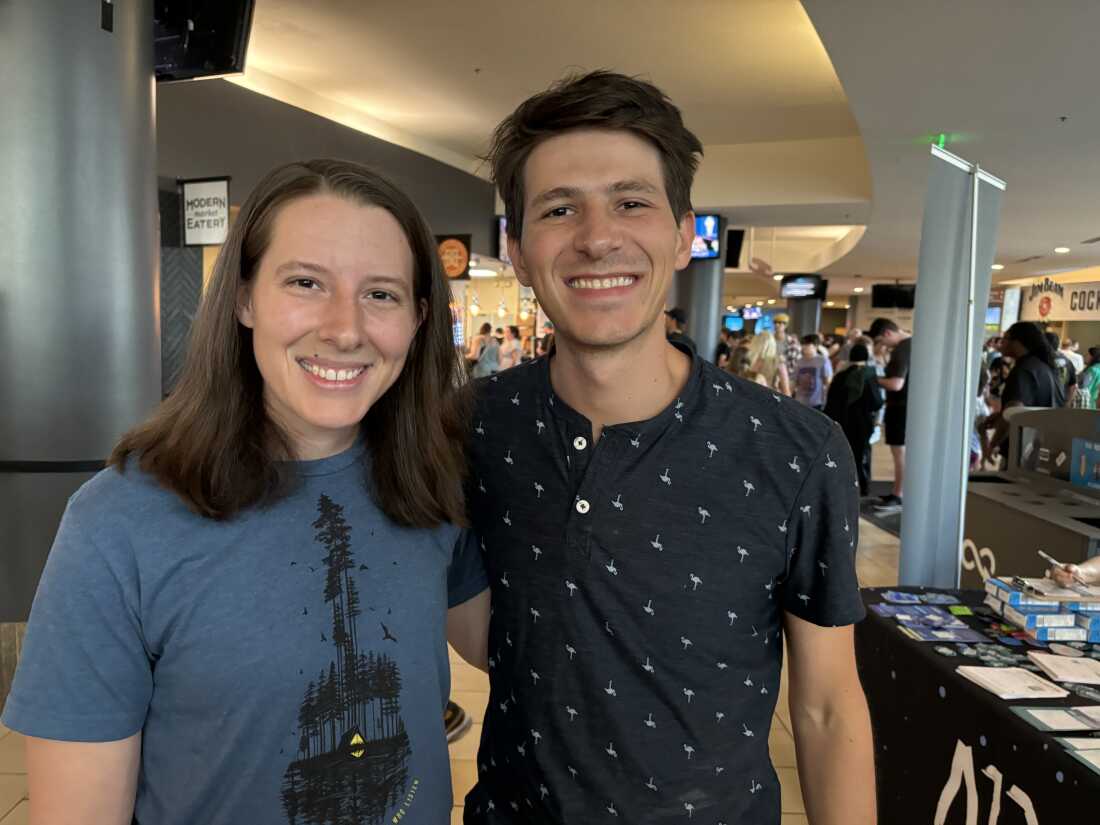
AJR concertgoers Robin Roston and Ben Roston
Chloe Veltman/NPR
hide caption
toggle caption
Chloe Veltman/NPR
“I think it’s a good way to get boots on the ground, chatting with real people who are here to enjoy music, and connecting that with helping the environment,” Roston said.
Small steps, big potential
According to 350 Colorado, 179 people took action over the course of AJR’s two performances in support of the phase-out fracking campaign. At least 125,000 physical signatures will be needed to get the initiative on the ballot in 2026.
But 350 Colorado representative Bobbie Mooney said every bit helps.
“We often think in terms of a ladder of engagement, where we can invite someone to take a small action and give them a sense of empowerment that they’re a part of the solution,” Mooney said. “And then we can invite them to take another, maybe greater action. They can join a committee, they can become a part of advocating for a particular bill in our legislature.”
Because of the collective energy they create, big, live gatherings such as concerts and sporting events provide a particularly powerful setting to get people on that ladder.
“The fact that everyone around us is doing something makes us dramatically more likely to do it ourselves,” said Cindy McPherson Frantz, a professor of psychology and environmental studies at Oberlin College.
But Frantz said it’s not easy for fans to sustain enthusiasm for such things after coming down off that big event high.
“You could get all excited about calling your senator or voting at the rock concert,” she said. “And then you go home, a week goes by or a month goes by, and you forgot all about it and you’re busy and whatever. And then it just completely evaporates.”
Frantz said simply getting fans to talk about climate change at a concert is a win, though. “The power of bringing people together and giving them the sense of, ‘I am not alone, I’m not the only person scared about this, I’m not the only person working on this problem,’ is a huge antidote to the hopelessness and the helplessness that comes from being isolated.”

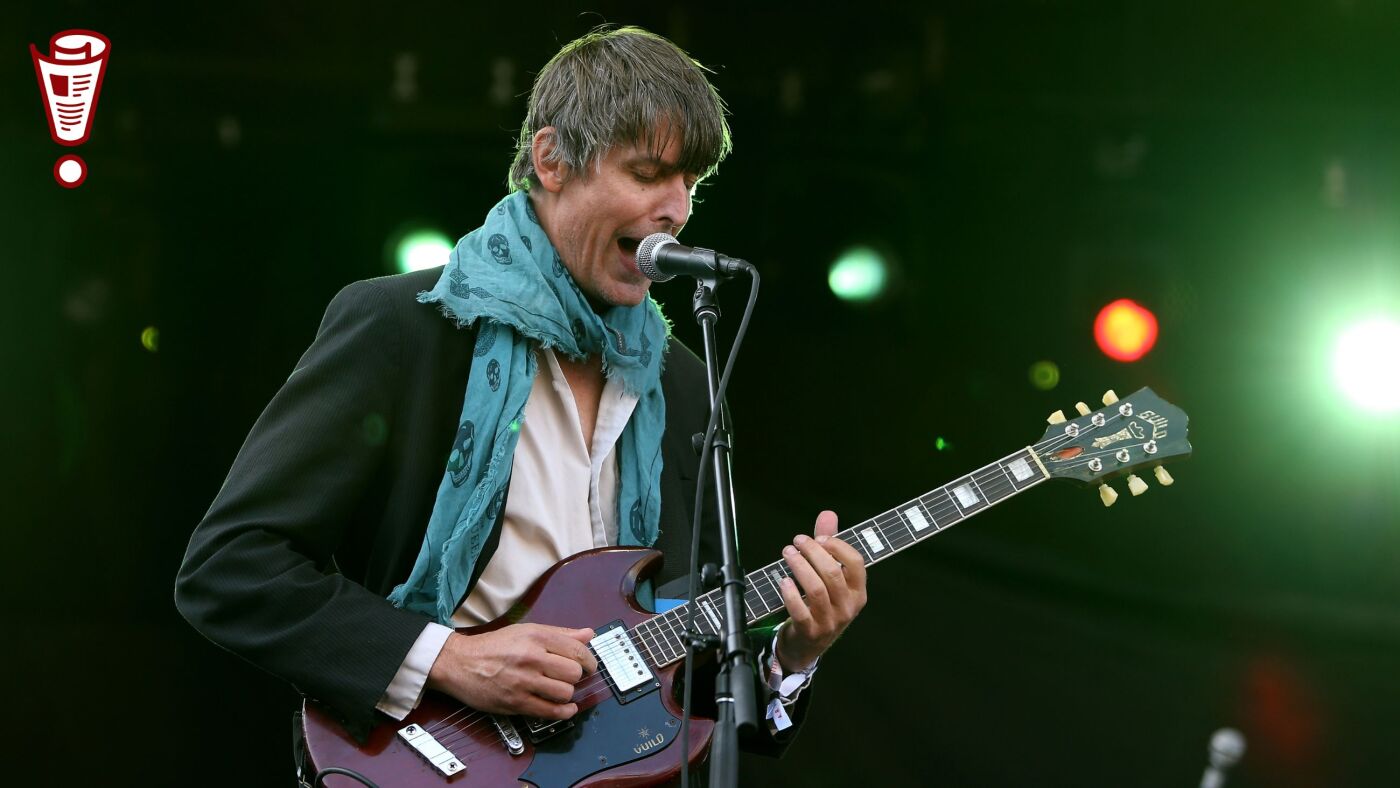
Stephen Malkmus & the Jicks perform onstage during day two of the Boston Calling Music Festival at Boston City Hall Plaza on September 26, 2015 in Boston, Massachusetts. (Photo by Mike Lawrie/Getty Images)
Mike Lawrie/Getty Images
hide caption
toggle caption
Mike Lawrie/Getty Images
This week’s show was recorded in Chicago with host Peter Sagal, judge and scorekeeper Alzo Slade, Not My Job guest Stephen Malkmus and panelists Emmy Blotnick, Joyelle Nicole Johnson, and Gianmarco Soresi. Click the audio link above to hear the whole show.
Who’s Alzo This Time
Pool Problems; Don’t Forget to Hydrate; The Rise of Hot Podium Guy
Panel Questions
TSA Gets A Dressing Down
Bluff The Listener
Our panelists tell three stories about game shows in the news, only one of which is true.
Not My Job: Stephen Malmus, lead singer and guitarist for Pavement, answers our questions about road construction
Indie rock legend and founder of Pavement, Stephen Malkmus, joins us to play a game called, “Pavement repairs are underway!” Three questions about road construction.
Panel Questions
The Battle Over A Home Sale; The Best Three Words To Get Over A Loss and Out of a Meeting?; A New Job in the Dating World
Limericks
Alzo Slade reads three news-related limericks: Good News For Gym Slobs; Cruisin’ For A Tattooin’; Fringe Food Benefits
Lightning Fill In The Blank
All the news we couldn’t fit anywhere else
Predictions
Our panelists predict what will find after the reflecting pool is emptied

When Julio Miranda-Martin began his apartment search, he had one nonnegotiable: He wanted a dedicated dining room to entertain his friends. He was scouring Zillow in 2025 when a listing for a railroad-style, one-bedroom on the edge of West Hollywood came up that included the requisite dining room. It was also walking distance to his part-time job as a marketing coordinator at furniture store Lawson-Fenning. More importantly, at $2,500 a month it was within his budget.
-
Share via
Miranda-Martin met with his landlord the same day he found the listing, who told him he looks like his son. Feeling like finding this 950-square-foot apartment was kismet, Miranda-Martin signed the lease and set about creating a sophisticated and color-saturated sanctuary. Miranda-Martin decided he needed to make two major investments before moving in: painting the walls and changing the lighting. “I was finally able to move into a place that I actually like, not just out of necessity. I was like, let’s make it feel like my own,” says Miranda-Martin, who refers to the space as his “living canvas.”

In this series, we spotlight L.A. rentals with style. From perfect gallery walls to temporary decor hacks, these renters get creative, even in small spaces. And Angelenos need the inspiration: Most are renters.
The apartment is on the second floor of a fourplex, up a windowless staircase. Miranda-Martin embraced the lack of light and painted it a high-gloss crimson. Without natural light, he hard-wired sconces found on Facebook Marketplace that recall ornamental 18th century candlesticks. They cast a dim but moody light throughout the staircase, ending with an ornate mirror at the top. The mirror shows a glimpse of the apartment’s interior in its reflection when Miranda-Martin opens the door. “Every time people walk in, especially at night, it’s such a dramatic entry,” he explains. “It’s very cinematic,” agrees friend and co-worker Kristin Reeder, who is often a guest at his soirees, “like something from ‘Eyes Wide Shut.’ ”
1

2

3

1. Julio Miranda-Martin’s apartment decor starts in the bold staircase that leads to his door. 2. A mirror at the top of the staircase offers extra depth. 3. Julio Miranda-Martin fills the bookshelf in his dining room with books and treasures.
In contrast, the living room offers a calmer palette of sky blues and earthy browns. Miranda-Martin tends to choose paint colors based on the light. The living room, with abundant west-facing windows brings in soft, bright light. Miranda-Martin painted it with Benjamin Moore’s Navajo, a flat white, as a backdrop to the softer hues of the furniture he designed at his furniture and lighting company, Studio MM. “It adds a stillness,” he says.
The room is anchored by a large velvet couch in a rich brown. The modular couch is anchored on each side with Art-Deco influenced side tables, lamps and light blue slipper chairs he designed, setting up a cozy tableau for hosting his friends. Pale pink cushioned ottomans provide additional seating that can easily be moved around the room to accommodate additional guests.

A velvet couch acts as a statement piece in the apartment living room.
(Etienne Laurent/For the Times)
French doors separate the living room from the dining room. The chartreuse-infused dining room returns to a more dramatic colorway. With less natural light, Miranda-Martin wanted to play up the idea of dining-room-as-treehouse, reflecting the second-floor foliage visible from the small windows. Rather than trying to brighten the room, he leaned into the moodiness by buying inexpensive, USB battery-powered spotlights that are mounted on the ceiling with magnets. Taking an alcohol marker, he tinted the lights a soft amber, allowing him to highlight the art in the room without adding harsh overhead lighting.

The dining room is meant to reflect the foliage just outside the window.
(Etienne Laurent/For the Times)
A shell-adorned mirror anchors the wall facing the windows and built-in shelving, making the room feel larger. Miranda-Martin sourced two shell-shaped sconces that flank the mirror at an estate sale in San Francisco. Most of the art and home decor comes from Facebook Marketplace and Craigslist, or is thrifted from local stores. Estate sales are also a source, though Miranda-Martin feels the rising popularity of these sales in Los Angeles has led to an increase in pricing. “They’ve gotten so over the top now in L.A. [They’re] super expensive. You’re not really gonna find a deal,” he laments, citing the armed security checking bags recently at some of the hottest estate sales.
In addition to changing the lighting and painting the walls, Miranda-Martin prioritized the window treatments, with pinch pleat curtains from Ikea. “Drapery can just make a space feel super elevated,” he advises. He prefers a mix of new and vintage decor, balancing both for an eclectic but deeply personal look to his home. He tries not to overthink his aesthetic choices. “I think it’s very instinctual. I’m not really thinking, ‘Is this in good taste or is this going to be weird?,’ ” he says.
Down the hall, the bedroom’s mostly white design theme returns to a more serene composition, providing a quiet sanctuary. Miranda-Martin removed the headboard from his bed, making it seem like it’s floating between the night tables he designed. “Everything feels sort of streamlined and smooth,” says Miranda-Martin. Like the living room, the bedroom is painted the same flat white but the quality of the eastern light filtering into the bedroom casts a buttery glow.
1

2

3

1. Ceramics fill inset shelves in the kitchen. 2. A glass case in the apartment corridor between the dining room and the bedroom. 3. With its lighter decor, the bedroom was meant to be a sanctuary.
The small kitchen retains its midcentury charm, but open shelving above the counter provides an airier, more contemporary cupboard to show off Miranda-Martin’s dish and glassware collection. The easier access comes in handy when he’s entertaining. His apartment is the perfect pre-game space for him and his friends before a night on the town. He tries to make sure he pre-batches cocktails before his guests arrive.
He also likes to host more elaborate dinner parties and game nights. He attributes his love of entertaining to his upbringing as an only child in Downey. “I like hosting because I enjoy being around more people than when I was growing up,” explains Miranda-Martin. His goal, ultimately, is to bring together disparate groups of people from different spheres in a space everyone will feel comfortable in. Dinner parties at Miranda-Martin’s “feel like an event,” says Reeder. “It’s something you’re excited for and you want to get dressed up for.”
“I’m kind of going through a phase right now where I need to be around people,” admits Miranda-Martin. “I think I just hate being alone.”

Ryan Benk and Ryan Ricciardi are married by their friend Cesar Garcia this year.
Christopher Di Ruggiero
hide caption
toggle caption
Christopher Di Ruggiero
Gone is the traditional wedding officiated only by a rabbi, a priest, an imam, a pastor or an archbishop.
In a recent survey by the wedding website The Knot, 67% of couples are getting married by a friend. The share has skyrocketed since 2009, when The Knot started tracking who officiates weddings. That year, 27% of couples used a friend for their ceremony.
“Gen Z culture is really infiltrating the wedding industry, and they just do not do things in a standard, traditional way,” said Esther Lee, The Knot’s editorial director.
“They are scrutinizing every aspect of the wedding day in a sense of ‘How do I make this speak to my story?’” she said.
As people swap traditional vows for more personalized weddings, friends and family are filling many more roles beyond just bridesmaids and groomsmen. The wedding officiant is a really big one.
If you’re asked to perform a wedding for a couple, “take the role seriously,” Lee suggested. “Put a lot of hours and thought into how the ceremony will go.”
An officiant with a close tie to a marrying couple can bring a beautiful intimacy to the ceremony. But Lee warned, “Don’t wing it. You can’t wing it.”
First of all, weddings have a lot of stage directions. And the officiant is in charge of telling everyone in the congregation what to do.
“Part of the proceedings is having everyone be seated at a certain time,” said Shelby Wax, a contributing weddings editor at Vogue. She would know. “I’ve been at a wedding where we have stood up too long because an officiant forgot to say that.”
Wax suggested that officiants keep the proceedings moving without making too many jokes or doing anything to draw attention to themselves and away from the couple.
Ask the couple ahead of time for their vision of the ceremony, and find out some of the special things that draw them together and make them want to commit to marriage. And be sure to find out how long they want the ceremony to last.
You’ll also need to get any necessary credentials for legally officiating a wedding. Some jurisdictions require that wedding officiants be ordained ministers. That can be just a few clicks and is often free. The Universal Life Church ordains ministers online and boasts that it has ordained 20 million people.
“Sometimes you have to register with the state and the county and have all the forms ready to go for them to sign afterwards and mail them afterwards,” Wax said.
If the hassles and the responsibility of planning a ceremony and conducting a wedding are too much, bow out right now. The sooner the better.
But Wax suggested that you consider the invitation carefully. It’s an honor that your loved ones want you to marry them. “You know, if I was asked, I would absolutely make the time to do it,” she said.
Even if weddings have become less traditional, the event is still a joyous milestone and evokes a certain dreaminess in the people who get to witness it.
“I do feel that magic and that hope, similar to a child being born,” said Alisa Allred Mercer, a school board member in Davis County, Utah. She has officiated the weddings of a brother, two nieces, a nephew and many, many others.
If people are willing to give love a try, she said, she is happy to help.
“Each time that I am able to perform a wedding, I think the greatest thing that I’m able to give is to pour out my hope and my faith in their relationship to them,” she said.
Mercer had one final piece of advice: After you pronounce the couple married and tell them to kiss, get out of the picture.
“They do not want you in that photo — they want a photo of the two of them,” she said. “So step out of the way.”
The Knot estimates that more than 2 million couples will get married this year, and we’re not even halfway through wedding season. So if you find yourself sitting at a wedding this summer, maybe offer your silent wishes and prayers not just for the couple, but for the officiant too.
-
 Sports6 minutes ago
Kyle Tucker and Dalton Rushing rebound with consecutive homers, Dodgers rout Padres
-

 World18 minutes ago
Serbian Vučić says he will resign in weeks and calls early elections
-

 News41 minutes ago
Trump-backed Rep. Julia Letlow wins Louisiana Senate primary runoff
-

 New York2 hours ago
Metropolitan Diary Challenge Day 1: What Is Your N.Y. Story?
-

 Los Angeles, Ca2 hours ago
LASD releases video of man shot by deputy after allegedly charging them with knife
-

 Detroit, MI2 hours ago
Rick Mahorn returns to coaching Detroit basketball with BIG3 Amps
-

 San Francisco, CA3 hours ago
Suspect arrested after shooting near San Francisco Pride events, police say
-

 Dallas, TX3 hours ago
Dallas shooting injures 2 as police search for suspect

