Politics
Political parallels between 1968 and 2024 as the Democrats return to Chicago


The whole world is watching.
They want to see what unfolds this week in Chicago as Democrats convene their quadrennial political convention and anoint Vice President Harris as their 2024 standard-bearer.
But, the mantra “the whole world is watching” is from 1968.
REPORTER’S NOTEBOOK: WIN OR LOSE, HARRIS MUST ATTEND THE JAN. 6 PRESIDENTIAL ELECTION CERTIFICATION
That was a battle cry from demonstrators who descended on the Democratic convention in Chicago in 1968. They brawled with delegates, reporters and police. The war in Vietnam raged. And anti-war protesters wanted the world to know how they felt. So what better opportunity to converge on the Democratic convention and air their grievances – often within the view finder of a television camera.
The 1968 Democratic convention was the most volatile in American history.
Democrats hope to avoid such controversies this year. But with raucous, anti-Israel protests raging on college campuses and across the nation all spring, that may be tough to avoid. Moreover, this highlights the schism in the Democratic Party over the Middle East.
As they said in 1968, the world is watching.
Long before the demonstrations, political observers were already making comparisons between 2024 and 1968. After all, Democrats announced plans to hold their convention in Chicago. Parallels between 1968 and 2024 intensified.
1968 was the year where American society changed. The year featured massive disintegrations in political order. Meantime, social disarray reigned in the streets. 1968 was a temporal storm. A set of months and days on a calendar – metamorphosed into indelible and at times horrific images for history.
2024 might not rival 1968 yet. But its tumult stands out – even against other recent years of bedlam and chaos.
Kamala Harris is pictured over a view of the United Center, as preparations are made for the Democratic National Convention, scheduled for Aug. 19-22. (Chris Sweda/Chicago Tribune/Tribune News Service via Getty Images)
Vietnam besieged President Lyndon Baines Johnson in 1968. Republicans won three Senate seats and an attention-grabbing 47 House seats in the 1966 midterms. Johnson may have lost political support. But he never lost his political acumen. Johnson barely won the 1968 Democratic primary in New Hampshire and knew what to do.
Like President Biden in 2024, Johnson didn’t formally contest New Hampshire, Johnson ran as a write-in. Mr. Biden’s only true competition in the primary was Rep. Dean Phillips, D-Minn. Much of the party upbraided Phillips for even challenging the President, lashing out at suggestions that the President wasn’t fit enough for another term.
In 1968, Sen. Eugene McCarthy, D-Minn., held Johnson to just under 50 percent of the vote in New Hampshire.
Flustered, but keen to the political stakes, Johnson bowed out in late March 1968.
“I have concluded that I should not permit the Presidency to become involved in the partisan divisions that are developing in this political year,” declared Johnson in a legendary Oval Office address.
In fact, President Biden’s words echoed those of Johnson when he made the decision to drop out after his disastrous debate performance with former President Trump in late June.
“I’ve decided the best way forward is to pass the torch to a new generation. That’s the best way to unite our nation,” said the President.
REPORTER’S NOTEBOOK: WHAT A ‘YACHT ROCK’ SUMMER LOOKS LIKE ON CAPITOL HILL
Political violence was a hallmark of 1968. The assassination of Martin Luther King Jr. fueled riots across the nation.
Two months later, Robert F. Kennedy celebrated his victory at the Ambassador Hotel in Los Angeles after winning the California and South Dakota primaries.
“My thanks to all of you. And now it’s on to Chicago and let’s win there,” presaged Kennedy – an ominous namecheck of what lurked ahead for Democrats.
Sirhan Sirhan – a pro-Palestinian anti-Zionist who popped out from behind an ice machine in the kitchen of the hotel – pumped multiple, point blank shots into Kennedy. Sirhan Sirhan opposed Kennedy over his support for Israel in the 1967 Arab-Israeli War.
The current Middle East conflict rocks the country today – taking the place of the Vietnam conflict of the 1960s.
But there are other similarities.
In 1968, former Alabama Gov. George Wallace (D) ran as a third party candidate.
In 2024, Kennedy’s son Robert F. Kennedy Jr. wages a challenge to Vice President Harris and former President Trump.
Republican presidential candidate and former President Donald Trump is rushed offstage during a rally on July 13, 2024 in Butler, Pennsylvania. (Anna Moneymaker/Getty Images)
And there’s political violence in 2024, too. A gunman nearly killed Mr. Trump at a campaign rally in Pennsylvania last month.
Once President Biden abandoned his re-election bid, Democrats quickly pivoted to Harris.
This mirrors what Democrats did in 1968. Democrats switched their allegiances to another vice president to be their nominee: Vice President Hubert Humphrey.
Democrats formally rally around Harris this week in Chicago – home of the most-ignominious convention on record.
“Unless they were looking for this comparison, the Democrats are going back to Chicago for what’s expected to be an unusually turbulent convention,” said Luke Nichter, a professor at Chapman University who has written about 1968.
While protesters scuffled with police outside the hall, reporters tangled with security guards inside. Guards roughed up CBS correspondent Dan Rather on the floor.
BEWARE THE IDES OF JULY: TRUMP ASSASSINATION ATTEMPT, BIDEN ENDS REELECTION CAMPAIGN IN WILD MONTH
Unflappable CBS anchor Walter Cronkite was none too pleased with how authorities manhandled his colleague.
“I think we’ve got a bunch of thugs here, Dan,” said Cronkite on the air.
Tension gurgled between Democratic delegates over Vietnam.
“With (Sen.) George McGovern, D-S.D., as President of the United States, we wouldn’t have to have Gestapo tactics in the streets of Chicago,” said Sen. Abe Ribicoff, D-Conn., of the anti-war senator.
McGovern would have to wait until 1972 to secure the Democratic nomination.
The echoes of 1968 worry Democrats ahead of this year’s convention.
“You have to re-do the right things from the legal point of view. And also from a political point of view. We want everyone to be safe. And I’m holding my breath,” said Senate Majority Whip Dick Durbin, D-Ill. “We have law enforcement at every level, local, state and federal, give me their assurance that they’re ready for this. And I pray that they are.”
But it’s unclear whether disturbances and civil unrest could supersede the convention narrative.
Former President Bill Clinton raises his hand to the crowd before giving his acceptance speech Thursday night at the 1996 Democratic National Convention at the United Center. (Harry Hamburg/NY Daily News Archive via Getty Images)
“As in 1968, a lot of it will depend on how the media covers the protesters,” said Nichter. “A lot of it, like ’68, is going to come down to (whether) the cameras glorify the violence and turn the protesters into the stars during the convention.”
However, 1968 wasn’t the last time Democrats convened in Chicago.
Democrats nominated former President Clinton for a second term in Chicago in 1996. And that isn’t even what most people remember.
In 1996, a pop cultural phenomenon consumed the convention.
Every night, the bopping, electronic tones of Los del Rio and the Bayside Boys would echo inside Chicago United Center. And within a few moments, tens of thousands of Democrats were gyrating to the unmistakable rhythm of the Macarena. On the floor. On the stage. In the aisles. The Democratic National Committee even published an animation on their official webpage, showing people the moves to do with the song.
The Macarena spent an astonishing three-and-a-half-months at number one on the Billboard chart. It was the number one song in the nation for 1996.
By the time the Macarena began to slip on the pop charts that fall, former President Clinton handily vanquished late Senate Majority Leader Bob Dole, R-Kan., and returned to the White House.
In 1968, President Richard Nixon defeated Humphrey.
Democrats hope the end result of their 2024 convention is a lot more like 1996 than 1968.
But win or lose, they probably won’t perform the Macarena.


Doug Burgum highlights American innovation at Great American State Fair
Interior Secretary Doug Burgum joins ‘Fox & Friends’ live from the Great American State Fair in Washington. He emphasizes America’s legacy of innovation and entrepreneurship, discussing the impact of AI and free markets. Burgum also addresses recent vandalism at the Lincoln Memorial Reflecting Pool on June 22 and the upcoming July 4th opening of the Teddy Roosevelt Presidential Library.
NEWYou can now listen to Fox News articles!
Interior Secretary Doug Burgum is defending President Donald Trump’s many initiatives to address infrastructure in Washington, D.C., calling it a visible reminder that the country needs to actively press back against decline.
“Nations don’t crumble by fate — they decline by choice,” Burgum told Fox News Digital.
“From rehabilitating and installing historic memorials, statues, and fountains to removing hundreds of instances of graffiti and cleaning up crime on our streets, this administration is proving that American greatness is built through action,” he continued.
Burgum’s reasoning, which came ahead of the United States’ 250th Independence Day anniversary, addresses criticisms of the administration that have surfaced in recent weeks, casting doubt on whether Trump’s many renovation and construction initiatives in Washington, D.C. have been worth their price tag.
WHITE HOUSE SEIZES ON DELAYED OBAMA PRESIDENTIAL CENTER OPENING TO CROWN TRUMP ‘BUILDER-IN-CHIEF’
Split of sample tests in the Lincoln Memorial Reflecting Pool. (@realDonaldTrump via Truth Social)
As part of the 250th celebration, Trump has spent $14.7 million to restore the Lincoln Memorial’s reflecting pool, allocated $250 million to restore the Kennedy Center and is on track to spend over $400 million on the construction of a ballroom at the White House.
Trump, in a Truth Social update about the reflecting pool, framed the efforts as part of a larger effort.
“We’ve cleaned, renovated and beautified over 45 monuments and memorials, 28 statues and 22 fountains in Washington, D.C. Things are really looking good in our nation’s capital. Add to that the fact that when I became president, crime was rampant. And now Washington, D.C. is one of the safest cities anywhere in the United States,” Trump wrote.
REPUBLICANS QUESTION TRUMP’S ‘PRIVATELY FUNDED’ BALLROOM AFTER REPORT POINTS TO TAXPAYER BURDEN
Interior Secretary Doug Burgum reacted during a meeting with Venezuela’s interim President Delcy Rodríguez at the Miraflores Presidential Palace on March 4, 2026, in Caracas, Venezuela. (Federico Parra/AFP via Getty Images)
The Department of the Interior, which has overseen many of the improvements, further updated its accomplishments ahead of July 4.
The city has removed 510 instances of graffiti, removed 154 homeless encampments, applied 212 tons of repair materials to roads and parkways, restored 280,000 square feet of roadway paving, rehabilitated 1,301 benches and fixed 1,913 lights.
Burgum said the repairs were emblematic of the administration’s aggressive posture towards addressing problems that had gone ignored in the past. In addition to these major improvements, DOI has restored and cleaned dozens of monuments and statues around DC.
DOI also recently helped transform Meridian Hill Park, which got high praise on social media by DC residents, into a desirable place to visit with a restored fountain that had been under construction for years with very little movement. They also cleaned and restored some of the statues in the park, including the Joan of Arc statue and the James Buchanan Memorial.
FIRST ON FOX: TRUMP ADMIN TRANSFORMS DC HOTSPOT ONCE ROCKED BY GEORGE FLOYD PROTESTS IN SYMBOLIC REVERSAL
Washington DC city workers dismantle tents and remove personal belongings during a sweep of a homeless encampment in the Foggy Bottom neighborhood in Washington, DC, on August 14, 2025. (JIM WATSON/AFP via Getty Images)
CLICK HERE TO DOWNLOAD THE FOX NEWS APP
“While others accept decline, President Trump and the Department of the Interior are restoring the heart of our nation’s capital,” Burgum said. “The Golden Age of America isn’t just a slogan, it’s being rebuilt, one landmark, one street and one victory at a time.”
Politics
Commentary: Birthright citizenship ruling was a win for democracy — and a warning about erasing history

This week’s narrow Supreme Court decision protecting birthright citizenship is rightly being hailed as a triumph for the American experiment.
By some, anyway.
Check out MAGA world and you’ll quickly find Trump surrogates and even elected leaders spouting a kind of extremist anti-immigrant sentiment that once, not so long ago, was considered intolerable in the public sphere.
This has included suggestions that go as far as banning pregnant women from traveling to the United States for fear they might give birth here, and — no joke — one notable commentator writing that demanding female immigrants be sterilized might be a solution.
President Trump’s homeland security advisor Stephen Miller said after the ruling that children of immigrants might not be “qualified to carry on or capable of executing the inheritance of this country.”
“We have people from all over the world, from Third World nations, nations that on their own would have never invented the wheel, let alone modern technology, let alone medicine, let alone air travel, and they can just come into the country, have a baby at a hospital, paid for it by you and me, and then that baby is automatically a citizen,” Miller said.
Before you tell me that the Supreme Court has spoken and this is a done deal, no matter if there’s more gross Miller mush, let me tell you about Supreme Court Justice Ketanji Brown Jackson’s written opinion and why it matters. It is, if read in the right light, a warning for what comes next — a fight to rewrite history to serve political aims.
“The odds were long and the stakes were high,” Jackson wrote about the creation of the 14th Amendment in 1866, which has long been understood as granting citizenship to any child born on U.S. soil and which was the focus of this case.
Still, she wrote, despite the unlikeliness of post-Civil War America rising to the challenge of inclusiveness, the amendment was always meant to do just that — because free Black people, recently emancipated but denied citizenship, “fought for the shared humanity of all people.”
Signs sit available for protesters to demonstrate outside the U.S. Supreme Court as President Trump arrives to attend oral arguments on April 1 in Washington, DC.
(Heather Diehl / Getty Images)
An alternative interpretation by MAGA world of this amendment and this history was the center of this case.
To greatly simplify, the 14th Amendment was originally a response to a Supreme Court decision, the Dred Scott case, that said freed Black slaves could not be U.S. citizens. MAGA world was arguing that the authors of the 14th Amendment never intended much more than that — citizenship for ex-slaves and their descendants.
While concurring with the majority of the court, Jackson also wrote her own summary that makes a vital point: Without history that includes the Black experience — as most of the arguments in this case did — we are left bereft of the suffering that has shaped our values and which gives us the empathy required to be a pluralistic society.
Black history — any non-white history, really — is the history of resistance and the road map to recovery from this dark era of hate.
It’s hard to call someone your fellow citizen if you take away their humanity — which is exactly what this case was attempting to do by splitting into factions those who would fight for equality and rewriting history with only the voices that match the current administration’s goals.
It was disappointing that the court, whose individual justices bounced around arguments from a myriad of sources outside of their erstwhile adherence to the ideas of originalism, did not call out that erasure more forcefully, and that it was left to Jackson to do so.
Jackson took that narrow idea that Black people — and the white legislators sympathetic to their cause — had only themselves in mind when crafting the 14th Amendment and attacked it head-on, arguing that if we just look at what Black people were saying at the time, the larger intent of the amendment becomes clear.
“This alternative account pitches Black Americans against immigrants when the advocates who promoted the Fourteenth Amendment did no such thing,” Jackson pointed out of the MAGA version of events. “Freed Blacks fought for the shared humanity of all people.”
That “universalist vision of belonging and citizenship,” she wrote, “eventually won the day.”
The 14th Amendment was largely written by Sen. Lyman Trumbull of Illinois, who took much of the basis of it from the legal arguments of Black intellectuals, including Frederick Douglass, the most influential Black statesman of the era.
Trumbull then argued in Congress that the amendment was meant to be inclusive — even of so-called “gypsies” and Chinese immigrants, who faced extreme racism, especially in California.
One congressman opposed to the measure warned that if it passed, Chinese immigrants would “overrun” California and “will double or treble the population.” At the same time, the Romani would likely continue to “wander in gangs” and “have no homes, pretend to own no land, live nowhere, settle as trespassers where ever they go, and whose sole merit is a universal swindle,” he warned.
Asked if the amendment would grant citizenship to those two controversial groups of immigrants, Jackson points out that Trumbull gave an unapologetic “undoubtedly,” again drawing on the universalist ideas of Douglass and others.
The “child of an Asiatic is just as much a citizen as the child of a European,” Trumbull said (and Jackson quoted, drawing from an amicus brief by Evan Bernick of Northern Illinois University and Jed Sugerman of Boston University).
“There is a serious breakdown on the court that reflects the breakdown and echo chambers in America,” Sugerman, the professor, told me Wednesday. “When it comes to history and originalism, you have to read more broadly than just the founding fathers that you liked.”
So the history of the 14th Amendment is right there — equality not just for Black Americans but for immigrant Americans — but it required Jackson to write her own opinion to put it on the court record.
Legal scholars aligned with Trump did Olympic-level gymnastics in this case to parse what the authors of the 14th Amendment meant with the phrase “subject to the jurisdiction” — words that MAGA claimed were meant to secretly exclude undocumented immigrants.
Brown instead reminded us that outside of those white-only discussions when the amendment was written, it was the activism of Black people — their demand for colorblind equality — that actually shaped the final words that granted citizenship to all babies born within our borders.
Solidarity — the unbreakable strength of American democracy.
After the ruling, Trump wrote on social media that Congress could write legislation undoing birthright citizenship. Some pundits say that wouldn’t work, but I’m here to say Trump has managed a bunch of stuff that the pundits said wouldn’t work.
More chilling, and direct, were more comments from Miller.
“It’s an abomination,” he said of the ruling.
But “because of President Trump’s courage and leadership, we are now on the precipice. Yes, we were dealt a setback, but because of his courage alone, we’re on the precipice as a nation of being in a position to end this travesty once and for all, and that’s what we have to fight for.”
Miller and his ilk are seeking to rewrite history to justify their vision of the future of America.
Jackson alone in the court offered us both a warning and a path — a reminder that our history holds indisputable facts despite politics, and we erase them at our own peril.

NEWYou can now listen to Fox News articles!
President Donald Trump marked the eve of America’s 250th anniversary with a sweeping patriotic address at Mount Rushmore on Friday, declaring the United States the “most exceptional nation ever to exist” and vowing that it would “never be a Communist country.”
Speaking beneath the granite likenesses of four of his predecessors — George Washington, Thomas Jefferson, Abraham Lincoln and Theodore Roosevelt — Trump touted American exceptionalism as festivities marking the nation’s 250th anniversary ramped up across the country.
“In all the chronicles of the ages, never before has any nation celebrated so magnificent a triumph as this one,” Trump told the crowd.
TRUMP KICKS OFF FOURTH OF JULY WEEKEND WITH SYMBOLIC SALUTE TO AMERICA’S LEGACY
President Donald Trump delivers remarks at Mount Rushmore on the eve of America’s 250th anniversary. (Chip Somodevilla/Getty Images)
“At 250 years, America is the oldest republic on earth,” he continued. “We are the freest people on earth. We have the most righteous and enduring Constitution on earth. We are the strongest and most powerful country on earth. And by the grace of God, the United States of America is the most successful, most accomplished, most exceptional nation ever to exist in human history.”
Trump praised the nation’s history and argued that no other country had achieved as much as the United States.
“The birth and survival of the American nation under God is, quite simply, the best and most incredible thing ever to happen on this planet by human hands, ever,” he said. “No other country has done more good for this world than the United States of America.”
AMERICA’S NEXT 250 YEARS DEPEND ON PASSING FAITH AND FREEDOM TO OUR CHILDREN
Fireworks explode after President Donald Trump spoke at Mount Rushmore National Memorial, Friday, July 3, 2026, near Keystone, South Dakota. (AP Photo/Matt Gade)
Before Trump took the stage, the new Air Force One flew over Mount Rushmore as spectators cheered. After his remarks, the president stayed to watch a fireworks display over the Black Hills.
Trump argued the country was facing what he described as a growing communist movement that sought to undermine America’s “exceptional character” and “alienate us from our history.”
The president said the movement had raised the question, “What does it mean to be an American?”
MAMDANI BLASTS ICE AGENTS, ELON MUSK AND ‘SUPREMACY’ IN AMERICA 250 SPEECH AHEAD OF JULY 4 WEEKEND
President Donald Trump speaks at Mount Rushmore National Memorial, Friday, July 3, 2026, near Keystone, South Dakota. (AP Photo/Matt Gade)
Trump described communism as “the greatest threat” facing the United States.
“It is the greatest threat to our country, including World War One, World War Two, Pearl Harbor, or even 9/11,” Trump said. “We’re not going to let this happen to us. Believe me, we’re not letting it happen, because communism is the enemy of free people.”
“Communism is the exact opposite of life, liberty, and the pursuit of happiness — it is death, tyranny and the pursuit of evil,” he continued.
“But we will not let them win,” he added. “They have no chance against us.”
Trump issued a clear directive: “You can be loyal to Karl Marx, or you can be loyal to America. You can be a communist, or you can be a patriot. You cannot be both.”
President Donald Trump speaks beneath Mount Rushmore during a celebration ahead of America’s 250th anniversary. (Chip Somodevilla/Getty Images)
As Americans face those choices, Trump pointed to the nation’s past sacrifices as a guide for its future.
“Our American ancestors did not shed their blood at Concord and Trenton, Gettysburg and Shiloh, Midway and Normandy, just so that a band of thieves, radicals and lunatics could come in and loot, pillage our nation,” he said.
Trump also highlighted the four presidents carved into the mountain behind him, saying they represented America’s founding ideals.
“They were men of action, men of ambition, men of daring, men of destiny, and men of truly great intelligence,” he said. “Above all, they were great men of history. Tonight, on the threshold of our 250th year, we stand beneath the monument of these heroes, a true group of unbelievable people. And we rededicate ourselves to being a nation as big, bold, noble, and as great as these American giants.”
CLICK HERE TO DOWNLOAD THE FOX NEWS APP
Trump is scheduled to deliver another speech Saturday on the National Mall in Washington, D.C. before a fireworks display celebrating the nation’s 250th anniversary.
“We know that this is not an ending,” Trump said. “This is only the beginning of the golden age of America.”
-

 Pittsburg, PA5 minutes ago
Noah Kahan Celebrates Furries At Pittsburgh Show
-

 Augusta, GA8 minutes ago
Augusta Museum of History offers free America 250 exhibits this weekend
-
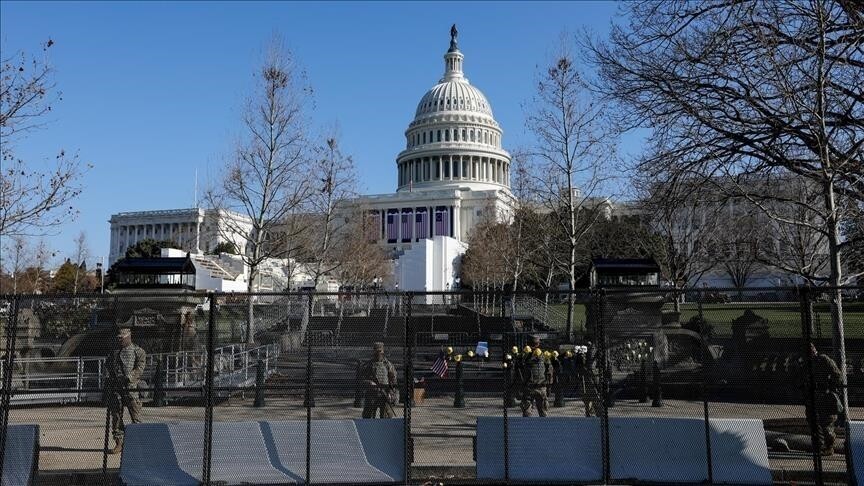 Washington, D.C13 minutes ago
Masked men carrying Confederate flags seen chanting, marching, in Washington DC
-

 Cleveland, OH20 minutes ago
Chicago White Sox vs. Cleveland Guardians prediction, pick for Friday 7/3/26
-

 Austin, TX23 minutes ago
South Texas Health System (@stxhealthsystem)
-
 Alabama28 minutes ago
5-Star OL commits to Texas over Alabama and others
-

 Alaska35 minutes ago
Semi overturns on highway north of Seward, spilling salmon
-

 Arizona38 minutes ago
Arizona gets commitment from 3-star Texas OL Mason Joshua

