Entertainment
Sebastian Maniscalco never dreamt he’d play arenas. Now he’s christening L.A.’s newest one

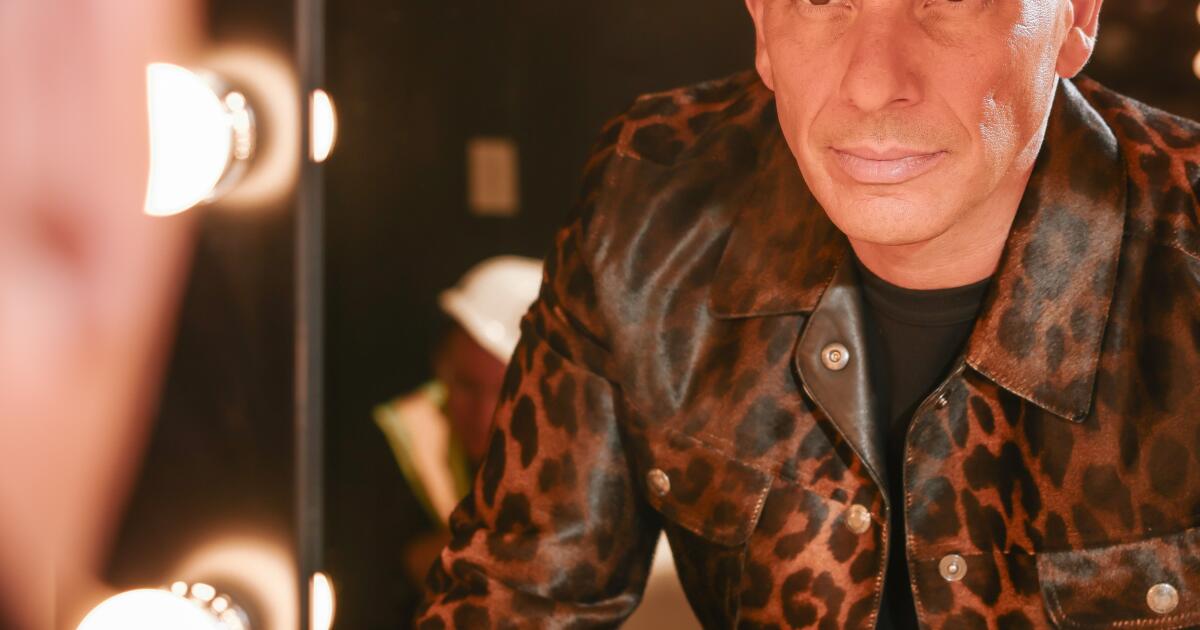
No vision board, no grand plan, no dreams of greatness.
The only thing comedian Sebastian Maniscalco really knew when he came to Los Angeles from the suburbs of Illinois 26 years ago was that he wanted to make people laugh and hopefully make some money doing it, at least enough to live on and keep his Italian family off his back about the dubious career choice of pursuing stand-up comedy. Waiting tables at the Four Seasons in Beverly Hills was his main prospect after showing up to L.A. in March 1998, along with getting stand-up gigs whenever and wherever he could.
Since then a lot has changed. As he strides through the underground labyrinth in the hull of the $2-billion, spacecraft-looking Intuit Dome — wearing snug black jeans; a heavily starched, leopard-print jacket; and perfectly coiffed silver hair — you’d think he owns the place. OK, so he doesn’t quite have Steve Ballmer money just yet, but when it comes to Inglewood’s newest arena, he most certainly owns a piece of its history as the first comedian ever to perform at the arena on Aug. 17.
“If you would have told young me, ‘Hey, in 2024, just so you know, you’re going to be performing where the Clippers play basketball in an arena,’ I couldn’t comprehend it,” he said, sitting back on a white leather couch in a dressing room. “Back then that felt like something, fame was never in the cards for me.”
A man without too many lofty aspirations, he attributes his continued success, almost three decades in, to ignoring the glitz and staying focused on the grit of getting through life.
“Am I surprised that I’m doing this? I mean, I don’t know. I just feel like I’ve worked so hard at what I do, and people seem to enjoy it. The fact that, you know, they want to come see me in an arena like this is flattering,” he said. “Quite honestly, I don’t know if it’s even really kind of hit me yet. Anytime I do anything, I just think, Where am I working tonight? I’m working at the Comedy Store tonight, and I’m working at the Intuit Dome Aug.17. I just feel like it’s just, you know, going to work.”
“If you would have told young me, ‘Hey, in 2024, just so you know, you’re going to be performing where the Clippers play basketball in an arena,’ I couldn’t comprehend it,” Maniscalco said.
(Dania Maxwell/Los Angeles Times)
Whether you count his six comedy specials, time on the big screen with Robert De Niro in Maniscalco’s semi-autobiographical comedy “About My Father,” starring in the HBO/Max series “Bookie” or being among the highest-grossing touring comedians in the country (he sold out Madison Square Garden a record-breaking five times in a row this year), there are few boxes denoting a successful career that Maniscalco hasn’t checked off.
On a recent afternoon inside one of the many dressing rooms inside Intuit Dome, Maniscalco’s calm and cool demeanor as he poses for photos is substantially subdued compared with his onstage persona of an eternally vexed Italian dad with cartoonish expressions and full-body comedic convulsions. Yes, in most respects he is very much the guy people see in his specials, but a less bullish, more thoughtful version when he’s not cracking jokes. As much of a character as he might be when calling out the embarrassing behavior of modern society, he knows his super power is relating to people and getting them to forget about their problems while he’s performing.
“I just want people to say that I never disappointed them at a show. That’s kind of what’s most important to me,” he said. “You come to my show and for an hour and a half, you’re going to forget that your mother’s dying, you’re going to forget that you were just told that you have high blood pressure. My goal is when you come here and watch comedy and forget about all those things … it’s like medicine.”
Days after his 51st birthday last month, Maniscalco kicked off his national “It Ain’t Right” tour with a new set he says is about catching his fans up with his life as an older father of two young kids (a 5-year-old son and a 7-year-old daughter) and the pitfalls and parallels of life as a professional funnyman as well as a dad. It’s the type of comedy he barely has time to rehearse because he’s too busy living it. But while some comics thrive on the mundane life events of shopping for groceries or going to the mall or picking the kids up from soccer practice, Maniscalco’s career no longer gives him much time to live those things. Instead, it’s more about the things he misses while on the road.
“I went to a water slide party yesterday with my kids and my wife, and I realized how I’m not part of the dad crew because I’m out of town a lot,” he said. “Meanwhile, they’ve been hanging out for three years. I felt like it was my first day at high school trying to find a friend.”
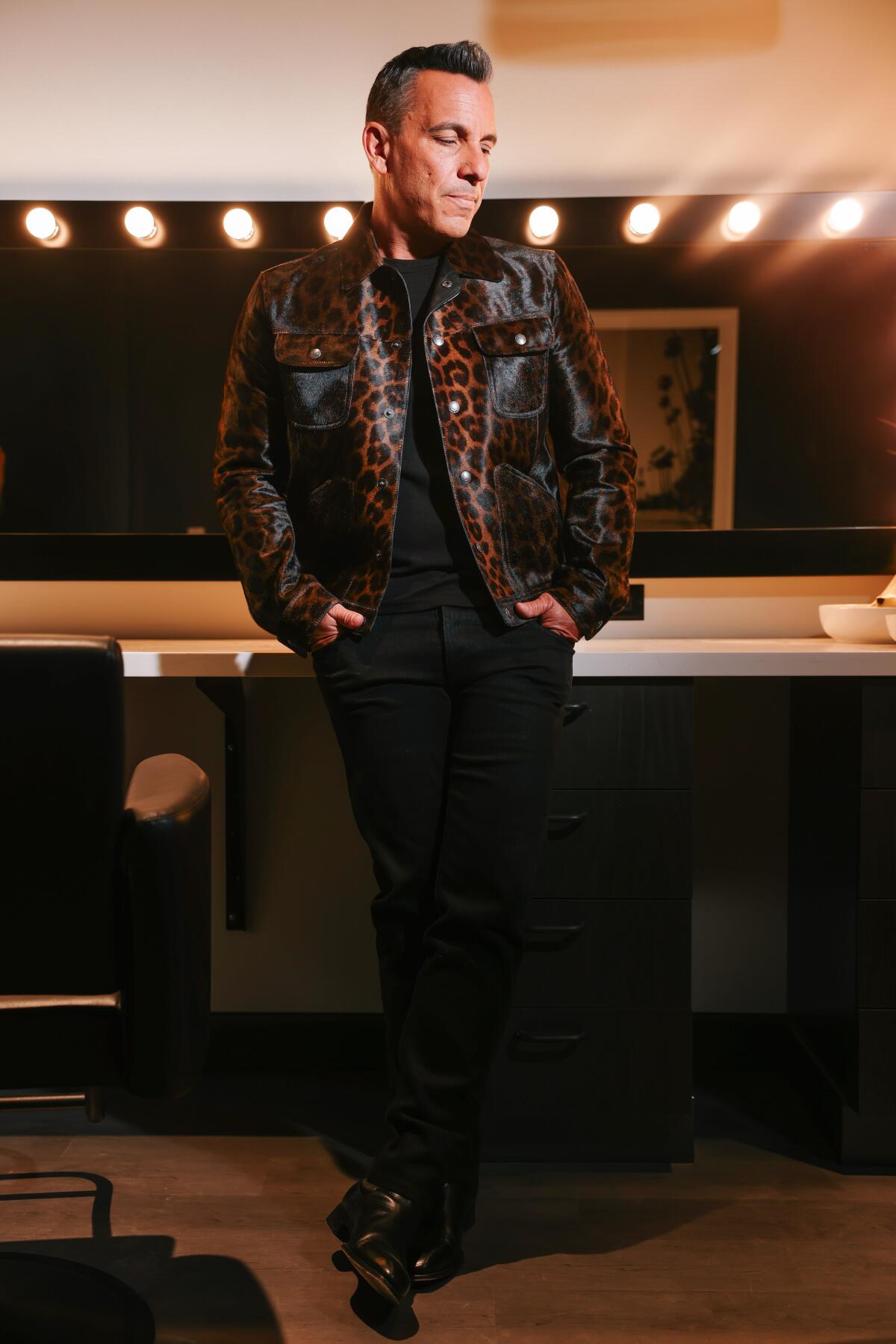
Life for Maniscalco is a constant balancing act between trying to be a good father and husband and also pushing his career in Hollywood forward.
(Dania Maxwell/Los Angeles Times)
Family has always been central to his comedy and inescapable when you consider his Italian roots. The bulk of Maniscalco’s most recognizable bits revolve around stories about his hairdresser father, Salvo, whose no-nonsense immigrant wisdom is exported from the old country. The bond he has with his father, which inspired his film “About My Father,” co-starring De Niro as his dad, inspires his role in the lives of his own kids, even as a celebrity who didn’t start having kids with his wife, multimedia artist Lana Gomez, until he was 43.
“Looking back, everything happens for a reason the way it should,” Maniscalco said. “But yeah, I wish I would have started [having kids] a little earlier, just because, you know, you start looking at your life, going, OK, my kid’s 5, I’m 50 — I’m almost double the difference between my father and I. And you start to think, am I going to be around for this kid when he gets married at 35. He might be changing my diaper on his wedding day.”
Life for Maniscalco is a constant balancing act between trying to be a good father and husband and also pushing his career in Hollywood forward. The two goals are often at odds, as any famous parent can attest, especially as Maniscalco continues venturing into Hollywood to earn his stripes as an actor, even if it means being open to a little danger.
The comedian recently signed on to do a ride-along with the Los Angeles Police Department in downtown L.A. in preparation for an upcoming role.
“Right away I have an opinion on that,” he said. “My luck is I’m going to be on the ride-along and s— is going to go down and they’re going to go, ‘We need help, get out of car,’” he says, laughing. “So already I’m setting myself up for [stand-up material] that kind of feeds into that. This is my luck, and this will happen. … I bring this type of energy or luck to the situation.”
Even in more glamorous surroundings, Maniscalco can’t help but be the guy everything always happens to. On the new tour, he’s working out a joke about a hellish experience at last year’s Oscars, falling down what he said felt like 33 flights of stairs while wearing his tuxedo.
Though the perils of star-studded award shows might not resonate with his blue-collar fan base, Maniscalco finds a way to take himself down to bring other people’s spirits up as the hapless character at the center of a (slightly judgy) everyman story. The hope is to keep finding ways to improve even while at the top of his game. Whether it’s the love of success or just the fear of failure that motivates greatness (Maniscalco says it’s mostly the latter), there is no better testing ground to prove one’s mettle than on stage alone in front of a crowd.
“Everybody’s trying to do it at different levels, and when you get down to the core of it all, I think you have to embrace that fear,” he said. “Because as a comedian, you’re up there spilling your soul to these strangers. I think it’s part of what makes the connection between you and the fans grow deeper. That’s kind of the beauty of going up there.”
The arrival of his arena-status level of touring has brought with it the need to deliver on more than just jokes. For Maniscalco, that means putting on a show from the moment he touches the stage. “I’m a huge fan of showmanship back in the ’80s — Prince, Mötley Crüe, Michael Jackson — these are all music acts, but there’s an element of production and excitement, and I just want to kind of re-create some of that by doing some things that might not be traditional in the world of comedy,” he said.
Before the Intuit Dome show, he said, he and his team have been working on ways to bring a unique comedy performance to the 18,000-seater that sits in a constellation of major venues including the Kia Forum, SoFi Stadium and the YouTube Theater. In an era when the arena-fication of comedy is common, finding ways to make a stand-up show stand out is another part of the craft for the comics at the top of the game. “I even need to figure out things like how do I get from the back of the house to the stage? How do I make an entrance? Then of course I have to be funny, or else no one in the arena gives a crap how I got there.”
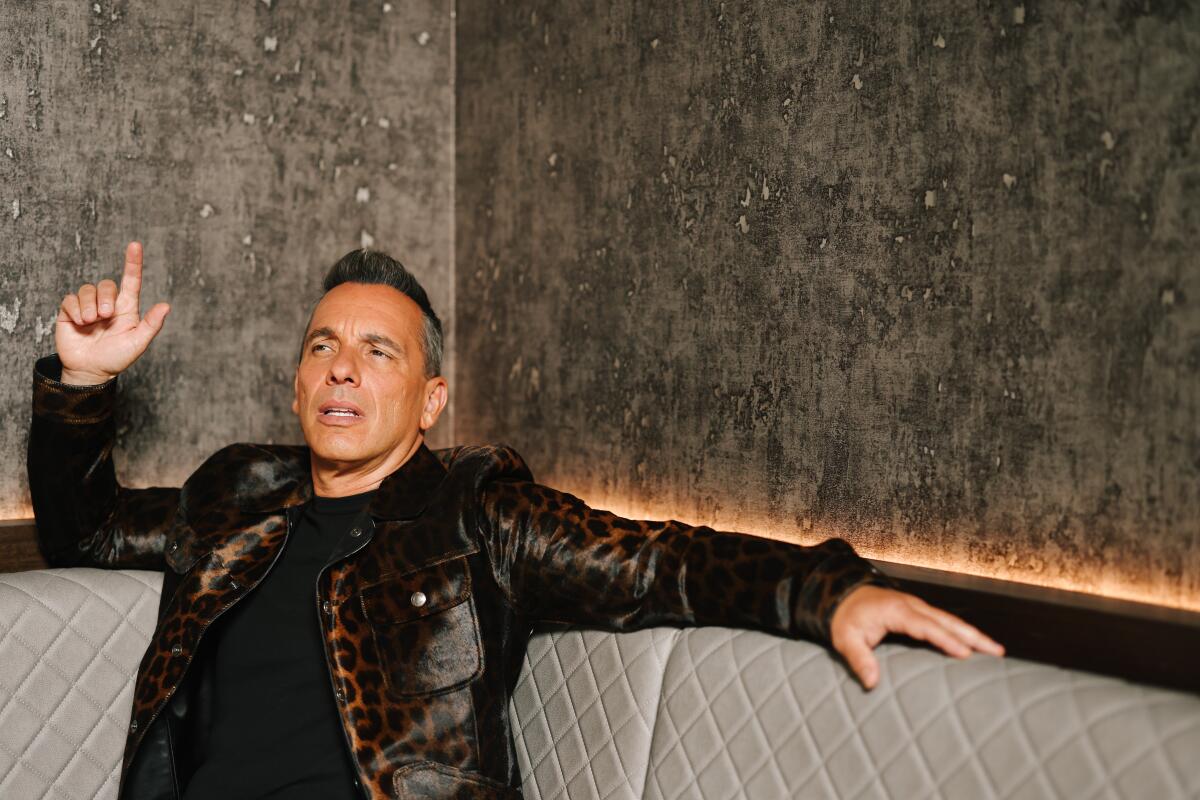
“I just want people to say that I never disappointed them at a show. That’s kind of what’s most important to me,” Maniscalco said.
(Dania Maxwell/Los Angeles Times)
Despite all the ways comics can blow up on social media, Maniscalco says he still puts most of his energy on his live show, which he says is a better use of his time at this stage than worrying about boosting his profile on TikTok or Instagram. As with most other things that have to do with his comedy, the best strategy is not to try too hard to figure out what people want and give them what you think is good — often the comic gets pleasantly surprised at the response.
One recent video he posted after pointing out Scott Stapp, the lead singer of Creed, who came to one of his shows, and telling the singer about how “With Arms Wide Open” made him cry on his way home from Vegas went viral, garnering over 12 million views.
“I just put it up as like a fun stupid video not thinking it was going nuts,” he said. “Rather than trying to figure out how do I get in the algorithm or what do kids want to see? What’s the younger generation looking for? I just do what I do, and if you like it, great. If not, that’s fine too…If you just do what you think is funny, I think people will relate.”
The tenets of comfort-food comedy continue to serve Maniscalco’s career like a hearty bowl of pasta — though he says most days he prefers a good steak. Right now his main comfort with life on the road has been taking his entire family with him on tour for the first time. With his wife and kids in tow, despite all the jokes about what’s wrong with the world, things still feel as right as they’ve ever been.
“This tour kind of has a little bit more meaning to me in the sense that for the first time in my life, I’m sharing what I do with my my entire family, particularly my kids, because now they kind of are aware of what Daddy does for a living, he makes people laugh,” he said, with a prideful grin. “I don’t know if I’m going to be doing Intuit Dome in two years. … I could be back at a theater or a comedy club, who knows. So to enjoy this tour with my family is really important to me.”


Passing “Go” has become especially lucrative for mobile game publisher Scopely.
The Culver City-based Scopely launched “Monopoly Go!” in 2023, betting fans of the classic board game would flock to a mobile version aimed at casual gamers.
By 2025, “Monopoly Go!” had accrued $6 billion in lifetime in-app purchase revenue, becoming the fastest free mobile game to do so, according to app analytics firm Sensor Tower.
This summer, the app is expected to reach $8 billion in lifetime revenue, the company says, solidifying “Monopoly Go!” as Scopely’s biggest game and far surpassing the company’s popular “Pokémon Go.” The company declined to disclose its total profits.
Scopely Co-Chief Executive Javier Ferreira.
As overall downloads in the mobile game market have stagnated and in-app purchases and retention become the main drivers of growth, Scopely has hit on an age-old Hollywood strategy — using known franchises and intellectual property to bring out fans.
“These are incredibly durable and long-lasting games that have really passionate communities and fandom around them,” said Javier Ferreira, co-chief executive of Scopely. “We’re in the business of building people’s favorite thing, and that’s a difficult thing to do. The power of [intellectual property] is that, in some cases, that is already their favorite thing.”
The company’s journey toward “Monopoly Go!” began in 2014, when Scopely formed a partnership with Rhode Island-based toymaker Hasbro. Its first collaboration was a Yahtzee mobile dice game that ultimately drew millions of players worldwide (though it was especially popular in the U.S.) and generated more than $1 billion in lifetime revenue.
After that, Scopely approached Hasbro about taking on the “crown jewel” of its board game empire — Monopoly.
Monopoly’s massive global popularity was an obvious draw. But adapting an hours-long real estate transaction game for a casual, mobile audience proved challenging.
Development of what would become “Monopoly Go!” ultimately took seven years, two of which were spent trying to make movement around the board more fun. In that time, the company scrapped two versions of the game; one deemed too competitive, and one that was too complex, Ferreira said.
Developers wanted to capture the “roller coaster feel” of the board game’s highs and lows, while also having simple rules and ensuring a strong social element, he said.
“We couldn’t just copy,” Ferreira said. “We had to reinvent it and re-imagine it, and that’s a complicated, creative endeavor.”
Today, “Monopoly Go!” brings in more than $2 billion in annual revenue and has been downloaded across the globe more than 300 million times.
Now with “Pokémon Go,” which the company owns after acquiring maker Niantic’s game business last year, “Scopely has gone from a successful publisher to one of the defining companies in mobile gaming,” Randy Nelson, head of insights at Appfigures, a mobile app analytics firm.
“The company cracked the code on licensed games years ago,” he wrote in an email. “Its biggest hits work because they’re great games first and recognizable brands second.”
Though the company’s overall game downloads have slowed, its gross revenue has largely increased every year since 2020, according to Appfigures data.
Shortly after Scopely released “Monopoly Go!,” the company was acquired by Savvy Games Group, which is owned by the Saudi Public Investment Fund, for $4.9 billion.
In a statement about the deal, Savvy Games Group Chief Executive Brian Ward touted the success of “Monopoly Go!” as “indicative of Scopely’s ongoing position at the forefront of the global games sector.”
Representatives of the Saudi investment fund are part of Savvy Game Group’s board and do sometimes give some feedback on company initiatives, though Ferreira said the company has remained “very independent.”
The proposed acquisition of gaming giant Electronic Arts by the Saudi Public Investment Fund is not expected to affect Scopely since EA largely focuses on high-budget console and computer games, he said.
As Scopely, now 3,000 employees strong, looks to the future, it has embarked on a number of entertainment partnerships with studios to add franchises such as “The Simpsons,” “Hello Kitty” and Marvel to its mobile game ecosystem.
“They give us access to these universes that millions of people love and are really invested in,” Ferreira said. “We see this as a very strategic part of our business.”

Rose of Nevada is a genuinely poetic movie that pushes the boundaries of the Groundhog Day-style time-travel narrative while carving out an identity completely its own. Rather than relying on the familiar mechanics that audiences have come to expect from the genre, the film approaches the concept through a more reflective and emotional lens. The result is a movie that feels thoughtful, ambitious, and surprisingly moving.
It makes a huge on-screen presence felt through its cast, particularly George MacKay and Callum Turner, who both deliver performances that elevate the material beyond a simple science-fiction premise. Combined with breathtaking visuals and a strong directorial vision, Rose of Nevada becomes something far more memorable than many of its genre contemporaries.
George MacKay continues to prove why he is one of the most compelling actors working today. Following his acclaimed work in 1917, he once again demonstrates an ability to carry a film through sheer presence and emotional authenticity.
Every scene feels grounded because of his performance, even when the story ventures into more abstract territory. Alongside him, Callum Turner delivers what could easily be viewed as a breakout performance. The chemistry between the two leads helps anchor the film, allowing audiences to connect with the characters even as the narrative challenges conventional storytelling expectations.
One of the film’s greatest strengths is its visual presentation. The cinematography is nothing short of earth-shattering. Nearly every frame looks like a carefully crafted painting, capturing both the beauty and mystery of the world these characters inhabit. There is a dreamlike quality to the imagery that perfectly complements the film’s themes of time, memory, and destiny.
The camera lingers on landscapes just long enough to allow viewers to soak in their beauty without ever slowing the pace. It’s the kind of cinematography that demands to be appreciated on the largest screen possible.
Director Mark Jenkin continues to establish himself as one of the most distinctive voices in modern British cinema. Following the atmospheric and haunting Enys Men, Jenkin once again crafts a story that feels deeply connected to folklore and place.
The British backdrop becomes a character in itself, with rugged coastlines, open landscapes, and isolated locations contributing to the film’s unique atmosphere. His direction never feels showy or excessive; instead, he trusts the audience to absorb the experience and interpret its deeper meanings.
What makes Rose of Nevada especially fascinating is how it recalls classic time-travel films without simply copying them. There are moments that evoke the spirit of The Final Countdown, particularly in the sense of wonder and uncertainty surrounding the temporal elements.
Yet the film remains firmly rooted in its own identity, focusing more on emotion and introspection than spectacle. It invites viewers to engage with its ideas rather than simply consume them.
This is also one of those rare films that benefits from reflection after the credits roll. It is not a movie designed to provide easy answers. Instead, it lingers in the mind, encouraging discussion and interpretation. The more time you spend thinking about it, the more rewarding it becomes. Much like a fine wine, Rose of Nevada continues to improve with age, revealing new layers and details upon reflection.
Overall, Rose of Nevada is a beautiful, ambitious, and visually stunning piece of filmmaking that deserves to be experienced on the big screen. Powered by exceptional performances, remarkable cinematography, and confident direction, it stands as one of the more unique takes on time travel in recent memory.
Overall Grade: 4/5 Stars
Entertainment
Kylie Jenner hit with third lawsuit as former chef claims Palm Springs party led to miscarriage
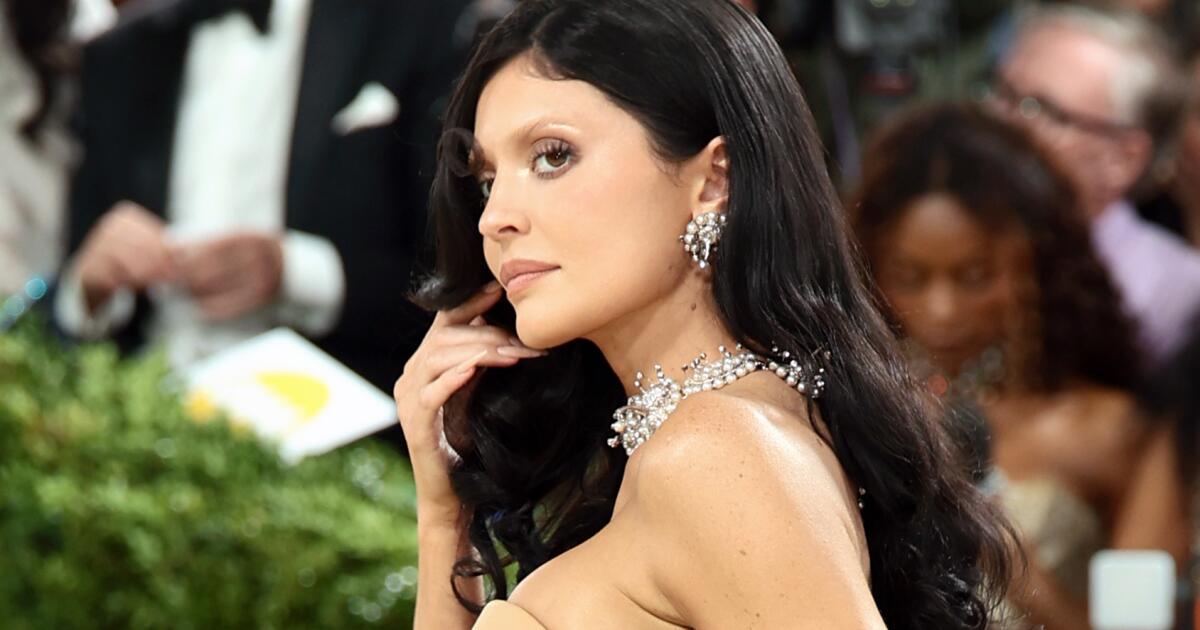
Less than two months after being sued by two former housekeepers, Kylie Jenner has been hit with a third workplace lawsuit. The beauty mogul’s former private chef alleges a grueling workload led to her miscarriage.
Filed Monday in Los Angeles Superior Court, the complaint alleges the woman routinely worked 11- to 12-hour shifts, five days a week, and was assigned physically demanding tasks despite alerting supervisors to her high-risk pregnancy.
A representative for Jenner did not immediately respond to The Times’ request for comment.
According to the filing, reviewed by The Times, the woman was told she was selected to work as Jenner’s private chef around Thanksgiving 2024. In early December 2024, the woman claims she informed her supervisors, also named as defendants, that she was three months pregnant and “required reasonable accommodations to protect her health and pregnancy.”
On New Year’s Eve in 2024, supervisors who had allegedly been hostile with the former chef directed her to “lift and transport heavy food items across the street and uphill without assistance,” the documents say.
As a result of the physical exertion, the former chef claims that she “became dizzy, began choking and gasping for air, and required assistance from security personnel, who intervened by providing water and aid.”
Around Feb. 1, 2025, the then-chef, five months’ pregnant at the time, was assigned to work Jenner’s child’s birthday event in Palm Springs, where she wasn’t provided “adequate support” despite the scale and demands of the party, according to the lawsuit. The former chef claims that when she asked for help and expressed concern over the workload, she was ignored by supervisors.
“Due to exhaustion and overwhelming physical strain, [she] broke down emotionally in the bathroom during the event,” reads the suit. “That evening, [she] experienced extreme physical exhaustion and heaviness throughout her body as a result of the prolonged and intense workload.”
The next morning, while the former chef was still in Palm Springs, the filing states that she awoke experiencing severe hemorrhaging and drove herself to the emergency room. “At the hospital, [she] was informed that there was no detectable heartbeat and that she had lost her unborn child.”
According to the former chef, she informed her supervisors of the miscarriage and medical emergency and, in the following days, was “falsely accused of leaving the kitchen and refrigerator in disarray following the Palm Springs event,” the lawsuit states.
The court documents claim that the former chef suffered severe hemorrhaging again on Feb. 8 and collapsed in her bathroom. The filing states that after the miscarriage she suffered severe depression and emotional distress, and claims that a supervisor reprimanded her, saying, “Stop it, just stop it. You are upsetting Kylie. You are making her depressed.”
“Celebrity status does not exempt anyone from California’s employment laws. We look forward to presenting the evidence in court and allowing the facts to speak for themselves,” attorney Della Shaker told The Times.
The former chef is seeking an unspecified amount of damages and claims that in addition to suffering accommodation failures, pregnancy discrimination and harassment, she was misclassified as an independent contractor, did not get paid on time or for the appropriate hours she worked, and was wrongfully terminated.
After being let go, the former chef claims that she sent a formal written complaint to co-defendant Tri Star detailing the alleged discrimination, harassment and wage theft. The lawsuit states that on May 22, 2025, the management team sent her an email offering a settlement and release agreement (essentially offering her money to sign away her right to sue).
The legal filing follows two lawsuits brought by former housekeepers of the embattled reality star. Less than two weeks after one woman on Jenner’s cleaning staff sued her, claiming her co-workers harassed and discriminated against her, another housekeeper came forward with allegations claiming the “Keeping Up With the Kardashians” star didn’t intervene while she suffered abuse from fellow staff, despite the housekeeper slipping the reality star a letter pleading for help.
Shaker also represents Angelica Hernandez Vasquez, who filed the suit against Jenner on April 17, and Juana Delgado Soto, who filed her lawsuit on April 29.
-

 World2 minutes ago
Israel slams UN report as ‘political blood libel’ for alleging deliberate targeting of Palestinian children
-

 Politics7 minutes ago
Biden judge rejects Trump’s sanctuary cities lawsuit, says even a win wouldn’t solve DOJ’s problem
-

 Health14 minutes ago
Latest COVID vaccine may have unexpected health benefit, study suggests
-

 Sports16 minutes ago
How to watch USA vs Turkey: Live stream the 2026 FIFA World Cup
-

 Technology22 minutes ago
Bionic hands are now teaching robots to feel
-
 Business29 minutes ago
Snap CEO Evan Spiegel and Miranda Kerr help erase $550 million in medical debt for Californians
-
Entertainment32 minutes ago
How Culver City-based Scopely built ‘Monopoly Go!’ into a mobile games juggernaut
-
 Politics44 minutes ago
Supreme Court rules Trump may end legal protection for Haitians and Syrians

