West
Kamala was a rogue Soros-like prosecutor before it was popular among woke elites

NEWYou can now listen to Fox News articles!
Kamala Harris’ presidential campaign advertises her as the good prosecutor, to distinguish her from former President Trump, whom they brand as the bad felon.
As San Francisco’s district attorney from 2004 to 2011 and California’s attorney general from 2011 to 2017, Harris has willingly – nay, eagerly – participated in the destructive criminal justice policies that have ruined the Golden State.
She is giving the Trump campaign a gift if she continues to rely on her terrible law enforcement record.
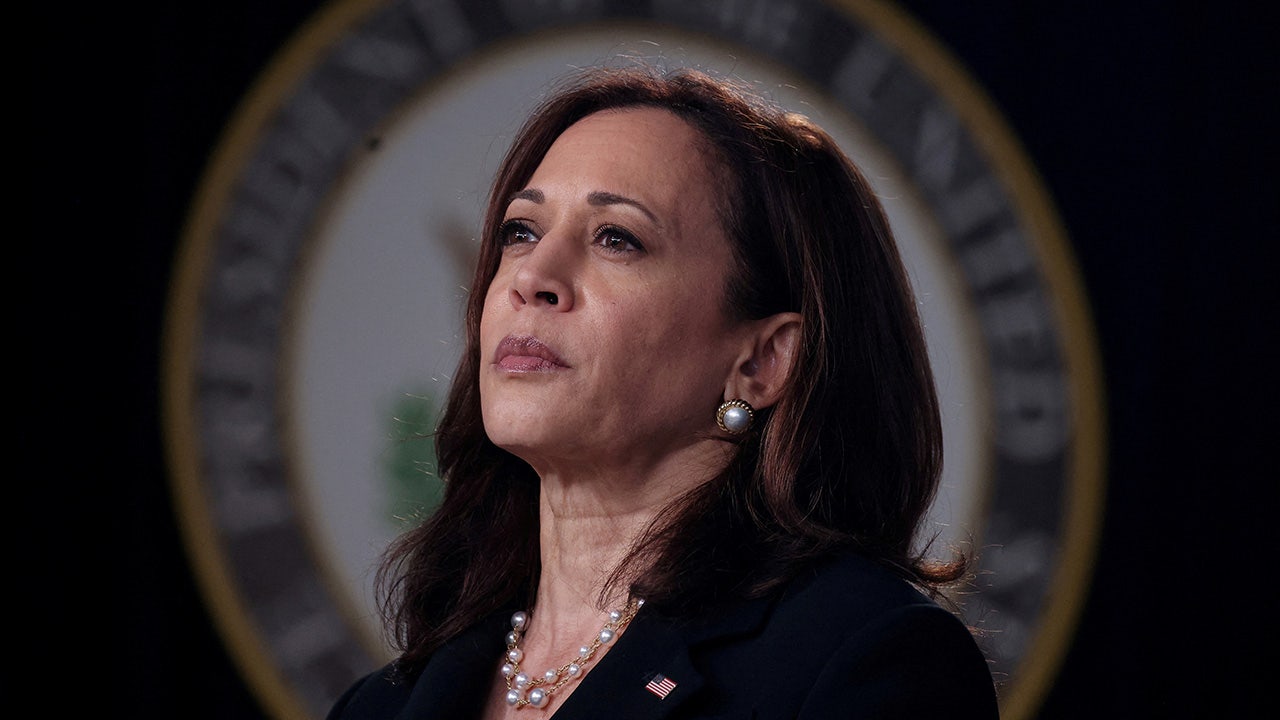
Vice President Kamala Harris attends an event in the Eisenhower Executive Office Buildings South Court Auditorium at the White House, June 3, 2021. (Reuters/Evelyn Hockstein)
In San Francisco, she was a rogue prosecutor long before George Soros started funding the soft-on-crime DAs who have wreaked havoc in our cities. She made a centerpiece of her program the protection of sanctuary city policies that shielded illegal aliens – including those with criminal records – from deportation, prosecution and the death penalty.
KAMALA HARRIS’ RECORD AS PROSECUTOR IN CALIFORNIA SPELLS ‘TROUBLE’ FOR PRESIDENTIAL CAMPAIGN: LAWYER
For example, Harris put her personal policy preferences above the law and refused to seek the death penalty for Edwin Ramos Umaña, an illegal alien and MS-13 gang member. He previously had been convicted – but not deported – of crimes such as robbery and assault, including assaulting a pregnant woman.
On June 22, 2008, Ramos murdered Anthony Bologna, a grocery store night-shift manager, and his two boys, Michael and Matthew, as they were driving home from a family barbecue. Harris’ office dithered over the case and Ramos wasn’t even convicted until after Harris left office three years after the crime. Bologna’s widow and surviving children were forced into witness protection.
Harris again put her personal beliefs above the law when she refused to seek the death penalty against the killer of a police officer. On April 10, 2004, gang member David Lee Hill murdered San Francisco Officer Isaac Espinoza, who was only 29 years old, and severely wounded his partner, Officer Barry Parker.
Harris publicly announced that she would not seek the death penalty quickly after Hill’s arrest, angering career prosecutors, police officers and Sens. Barbara Boxer and Dianne Feinstein. In part because of Harris’ opposition to the death penalty, the jury found Hill guilty of second-degree murder, which usually carries a sentence of 15 years to life. Hill only received life without parole because California law imposes a mandatory sentencing enhancement for killing an on-duty police officer.
HARRIS’ SHIFT FROM TOUGH-ON-CRIME PROSECUTOR TO SOCIAL JUSTICE ADVOCATE FACES SCRUTINY FROM CONSERVATIVE GROUP
Worse yet, Harris showed that her personal views on crime would give way to her political ambitions.
She flip-flopped in 2014 when a federal judge in Los Angeles ruled California’s death penalty unconstitutional. As California’s attorney general, Harris appealed the ruling, in part making the weird argument that it “undermines important protections that our courts provide to defendants.”
She also flip-flopped on “Jessica’s Law,” which imposed harsher penalties on child molesters. Harris publicly supported Jessica’s Law in 2006 as San Francisco DA, but then when it became politically expedient, she ordered parole officers to ignore its restrictions on where sex offenders could live.
Beyond Harris’ elevation of her personal views above the law, she has taken delight in abusing her prosecutorial power. For example, as DA and AG she bragged about punishing parents with fines and jail time for truancy if their kids skipped school, along with collateral charges such as contributing to the delinquency of a minor and domestic violence.
The most vulnerable parents, of course, were those who were low-income, minority and/or disabled whose children attended public schools. Harris bragged that “as a prosecutor in law enforcement, I have a huge stick,” in order to frighten these families, and sent homicide and gang prosecutors to schools to scare both administrators and parents.
KAMALA HARRIS SUPPORTED ‘DEFUND THE POLICE’ IN 2020 RADIO INTERVIEW, BEFORE BIDEN CAMPAIGN SAID OTHERWISE
It didn’t work; according to the state Department of Education, overall truancy continued to rise.
But perhaps Harris’s worst prosecutorial behavior was fighting to keep innocent people in jail and to uphold wrongful and overturned convictions that had been secured through unconstitutional official misconduct such as perjury, evidence tampering, and hiding potentially exculpatory evidence.
For example, as DA, Harris violated the Constitution when she did not disclose to defense attorneys crucial information about a police laboratory employee who stole drugs from the lab, intentionally sabotaged its work, spent time in an alcoholic rehabilitation center, and had been convicted of assault and domestic violence.
Harris’ unconstitutional and unethical behavior was so egregious that more than 600 cases were dismissed and thousands more placed into question. The courts condemned her and her office for systemically violating defendants’ constitutional rights. Harris blamed the police and the judge for her choices.
CLICK HERE FOR MORE FOX NEWS OPINION
As AG, Harris continued violating the Constitution and defendants’ civil rights. For example, she insisted on keeping an innocent man, Daniel Larsen, in prison for an additional two years after a federal court threw out his conviction and found him “actually innocent.” Even after Larsen was finally freed, Harris continued to appeal and challenge his release.
Worse, she did her best to keep Efrain Velasco-Palacios in custody even though the court found that a local prosecutor had inserted a falsified confession into the transcript of a defendant’s statement. Harris argued that the court was wrong to describe it as “outrageous government misconduct” that “shocked the conscience” because the prosecutor’s evidence tampering didn’t involve “abject physical brutality.”
In a similar case, Baca v. Adams, the 9th Circuit slammed Harris at oral argument for defending a wrongful conviction which prosecutors unconstitutionally obtained by putting on perjured testimony from a jailhouse informant and a prosecutor, both of whom lied under oath. The 9th Circuit scolded Harris and her office so badly that she was forced to dismiss the case.
These examples barely scratch the surface of Harris’ failures as the top prosecutor in San Francisco and then California. She has also selectively investigated and prosecuted entities for her own political benefit, failed to protect her female staff from sexual harassment by her top male aide, and overseen thousands of marijuana-related convictions which disproportionately affected Black and Latino communities, all while bragging about her own marijuana use in high school and college.
The more Harris invokes her prosecutorial record, the more she will raise doubts about her candidacy for the presidency.
CLICK HERE TO READ MORE FROM JOHN YOO
CLICK HERE TO READ MORE FROM JOHN SHU
John Shu is a legal scholar and commentator who served in the administrations of Presidents George H.W. Bush and George W. Bush.
Read the full article from Here


The Denver Broncos have undergone a uniform overhaul, beginning in 2024. The Broncos rolled out the Mile High Collection ahead of the 2024 season, which included three different uniform combinations, plus the ’77 Throwbacks.
In 2024, Broncos fans were also treated to a Midnight Navy jersey/pants combination with the white ‘D’ helmet on Monday Night Football against the Cleveland Browns. On top of that, the Broncos rocked their White Out look, which included the Summit White jersey/pants combination and their standard Bronco logo on a white helmet, against the Kansas City Chiefs on Christmas Day last season.
The Broncos are keeping things fresh, and it’s going to be fun to see the different jersey combinations the team rolls out each week this coming season. Fans are obviously partial to the designs, but where do the Broncos’ uniform combinations rank among their NFL peers?
Sports Illustrated‘s Mike Kadlick ranked all 32 NFL teams’ uniform combinations, with the Broncos checking in at No. 10.
“Known as the ‘Mile High’ collection, the Broncos’ new uniforms debuted ahead of the 2024 season, and they remain awesome. Jam-packed with nods to Denver and the surrounding area, their jerseys feature a sleeve cap with a mountain peak and subtle triangles along the sides to represent Colorado’s summit markers. Their helmets, meanwhile, don a bumper that reads “5280”—a reference to Denver’s elevation above sea level. Rounded out with an all-blue alternate kit and a classic throwback look that incorporates the team’s D helmet logo, the Broncos nailed their recent redesign,” Kadlick wrote.
Attention to Detail
It’s not No. 1, but at least the Broncos are in the top 10. As Kadlick noted, Denver’s attention to detail in the new uniform designs is second to none.
Kadlick had the Los Angeles Chargers ranked No. 1, which, I’ve got to admit, kind of surprised me. I’ve never been that impressed by the Chargers’ designs, but to each their own, I suppose.
The Chiefs ranked No. 11, with the Las Vegas Raiders at No. 14, for whatever it’s worth. Beauty is always in the eye of the beholder, but Kadlick had a few questionable uniform designs ranked ahead of the Broncos, I must say.
Besides the Chargers at the top, Kadlick had the Cincinnati Bengals (No. 5), Tampa Bay Buccaneers (No. 6), Washington Commanders (No. 8), and Miami Dolphins (No. 9) ranked above the Broncos. I’ll hear you out on the classic look of the Dallas Cowboys and San Francisco 49ers (with slight modern twists), as well as the cool options the Baltimore Ravens and Houston Texans are rolling out nowadays, but the Chargers are meh, the Bengals and Bucs are downright ugly, and the Commanders are just plain.
No big deal, though. Posts like this make for timely offseason fodder as we await the return of football. The Broncos just finished up their offseason training program, and we’re now firmly in the NFL summer.
The cleats will hit the grass again at Broncos Park Powered by CommonSpirit on July 28, when the veterans report for training camp. From there, the whirlwind of the 2026 season will begin in earnest.
Let’s hope the product on the field looks as good as the Broncos’ Mile High Collection uniforms. The Broncos have produced two double-digit-win seasons since the Walton-Penner ownership group rolled out the new uniform designs, so there is a precedent in place.
Sign up for our free Denver Broncos On SI newsletter, and get breaking Broncos news delivered to your inbox daily!
 Add us as a preferred source on Google
Follow

PHOTOS BY OLIVER HAMLIN FOR WEST SEATTLE BLOG
Hundreds of people spent Sunday admiring and photographing the 12 gardens spotlighted on this year’s West Seattle Garden Tour. Among them was WSB contributing photojournalist Oliver Hamlin, who presents a scene from each garden (including some of the gardeners. First, at Garden A, “A Show of Northwest Natives“:
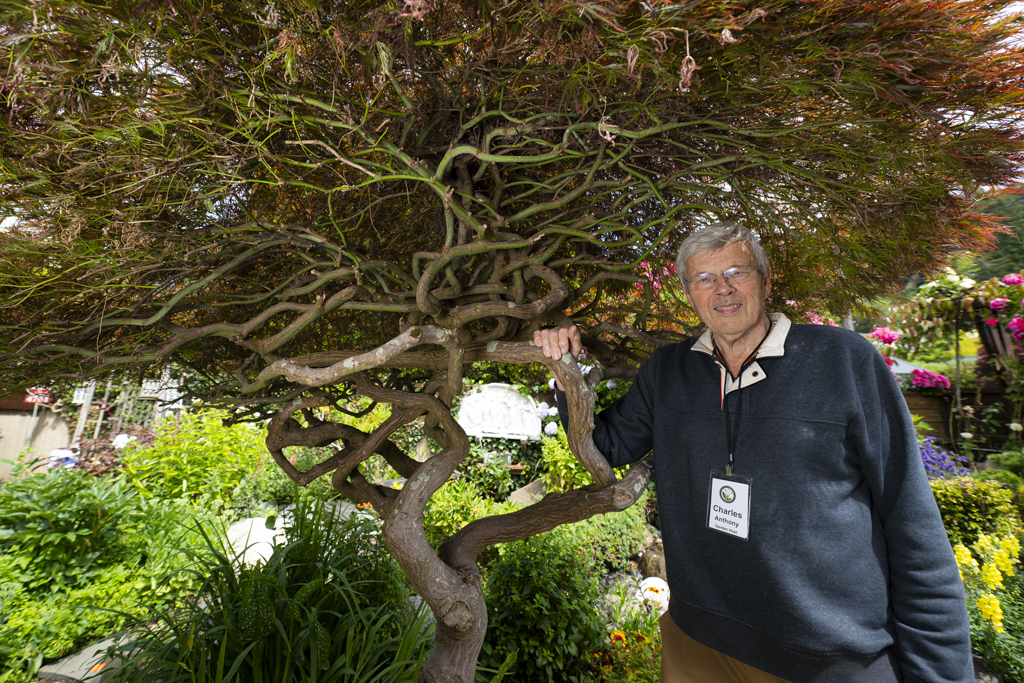
Charles Anthony, who created Garden B, “Salish Sea Sanctuary,” posed with his Japanese Maple:
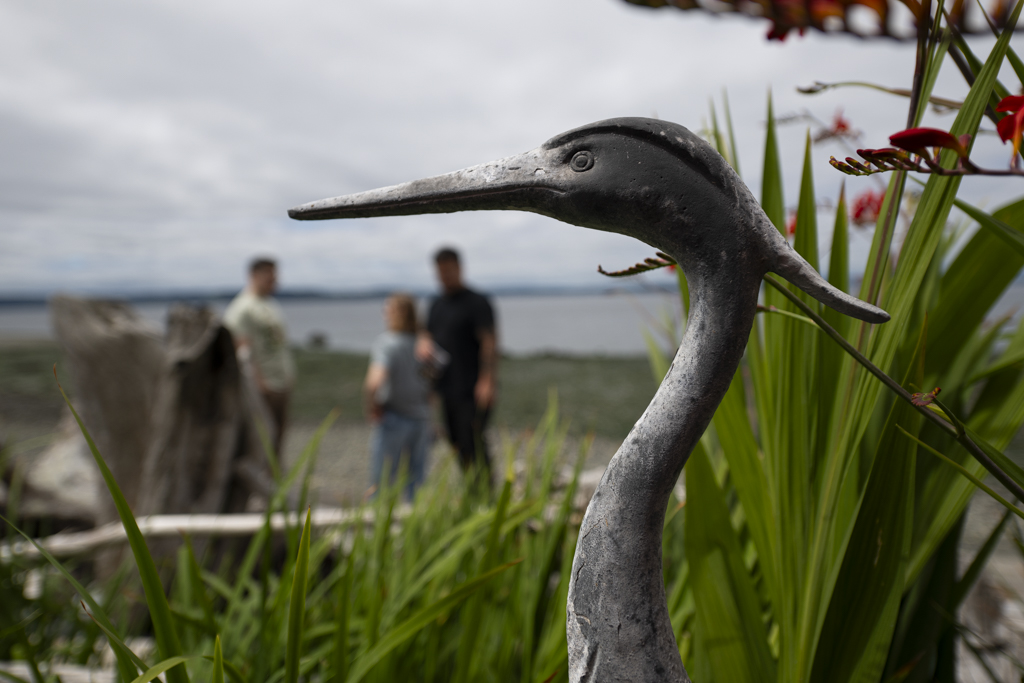
Garden C, “Heron Cove,” has its namesake standing sentinel:
Below are Debra Montgomery and Lee Kelly; she bought the “Heron Cove” house 7 years ago and inherited Lee, who has been the gardener for 40 years. She said the previous homeowners sought out a buyer who wouldn’t tear down the house and would keep caring for the garden, which she and Lee both now do.

Garden D was described as “Small Spaces, Big Moments”:

Below (L-R) are the gardeners behind Garden D, Laird Applegate and Brian Pelzel:

Garden E was “From a Sprawling Lawn and One Tree to …”
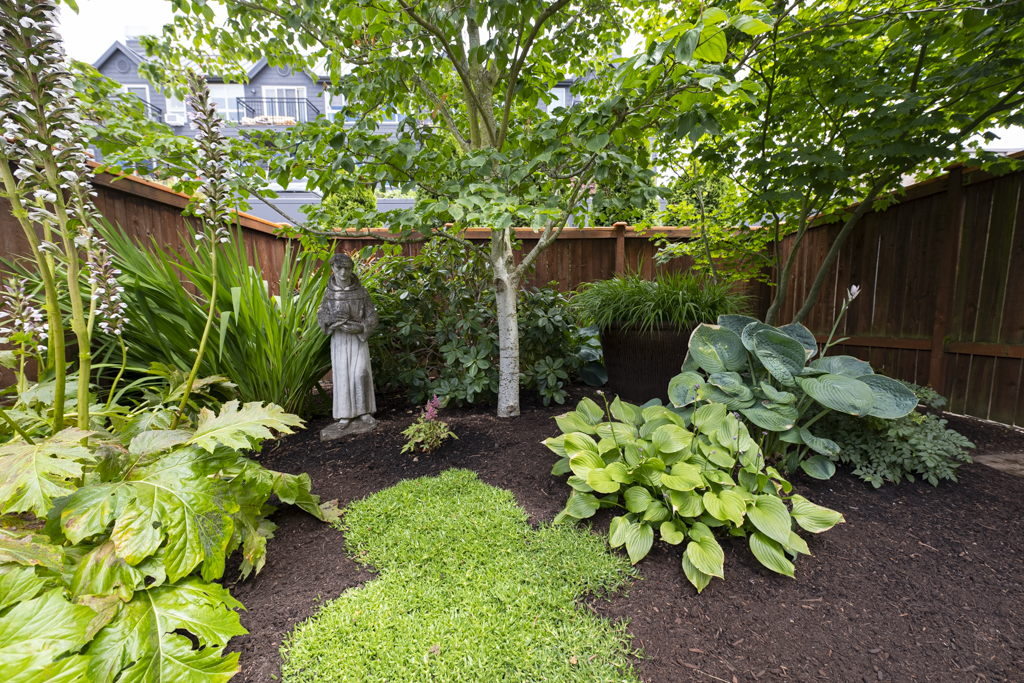
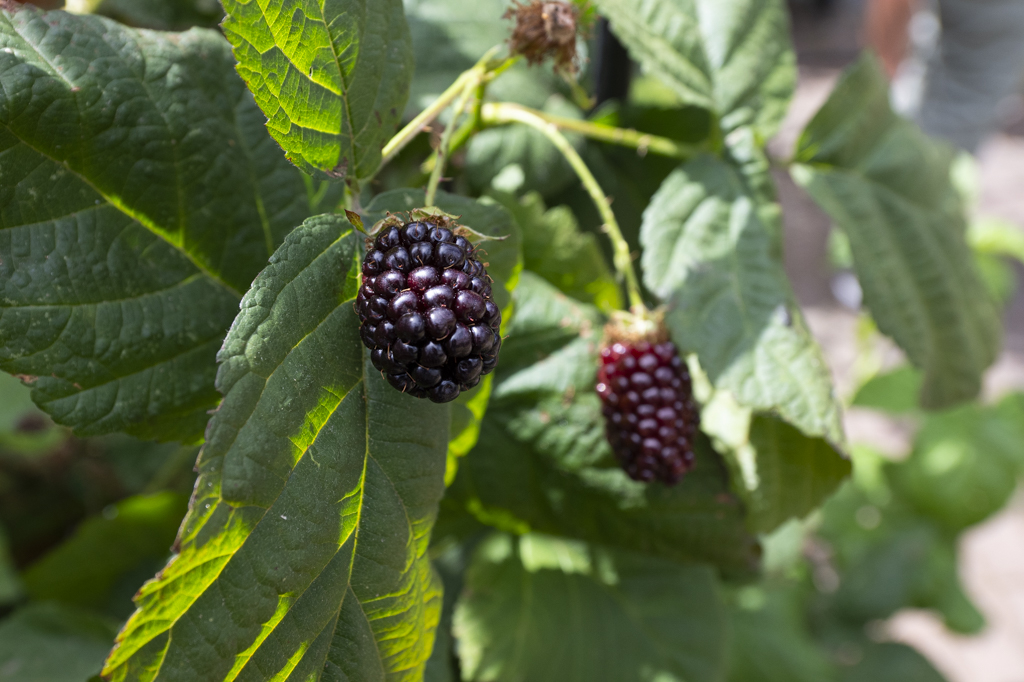
Blackberries are often the bane of a gardener’s existence, but in Garden F, “Transformation,” they were beautiful:
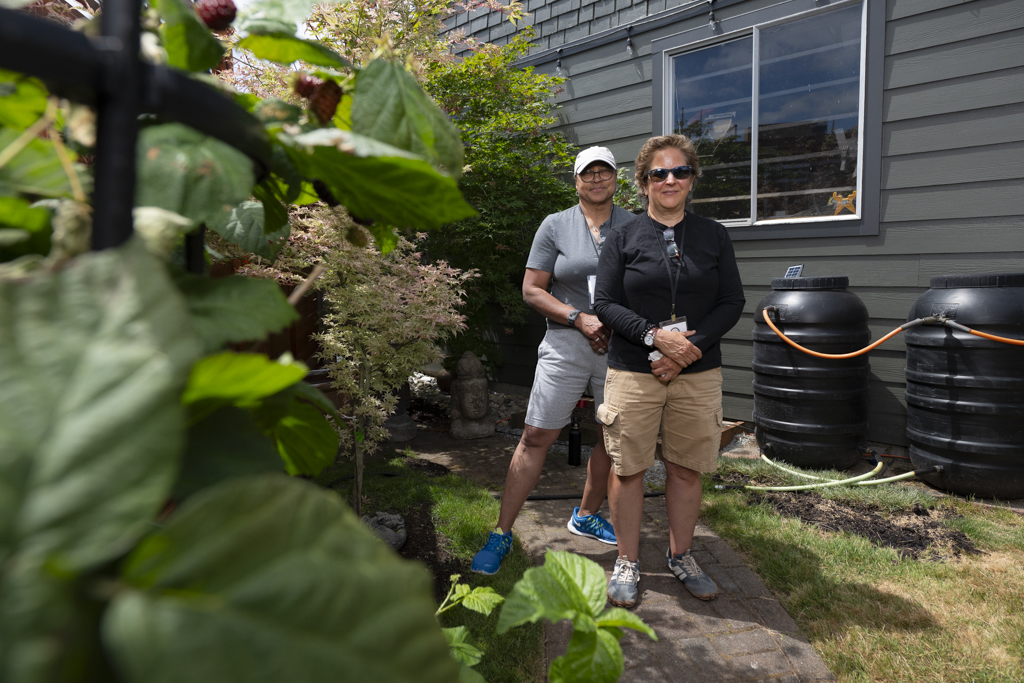
Garden F’s (L-R) Diane Elie and Raquel Gonzalez store water in 60-gallon rainbarrels and told Oliver that it fills most of their irrigation needs:
At Garden G, “Hidden Gem,” Julie Robinson-Jasper and Maple the dog are seen through a mirror surrounded by star jasmine at Garden G, “Hidden Gem”:

Another scene from Garden G:

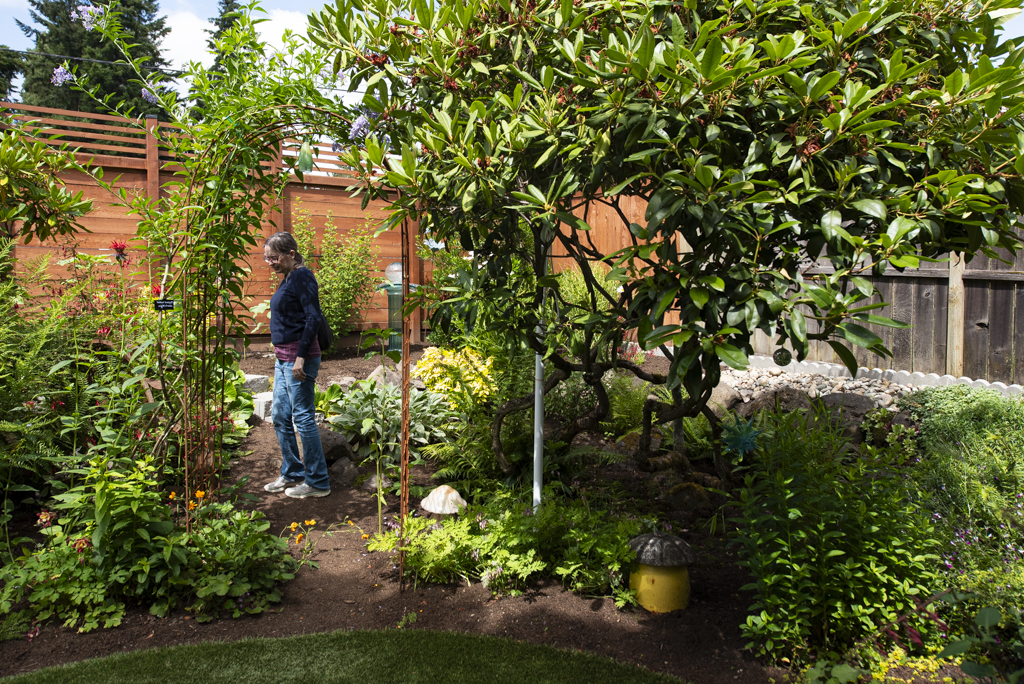
Garden H, “Behind the Fences,” sported an arch of bittersweet nightshade:
A clawfoot bathtub graced Garden I, “A Fresh Look for A Once-Beloved Garden“:

Garden J, “Garden of Many Rooms,” was conducive to wandering:
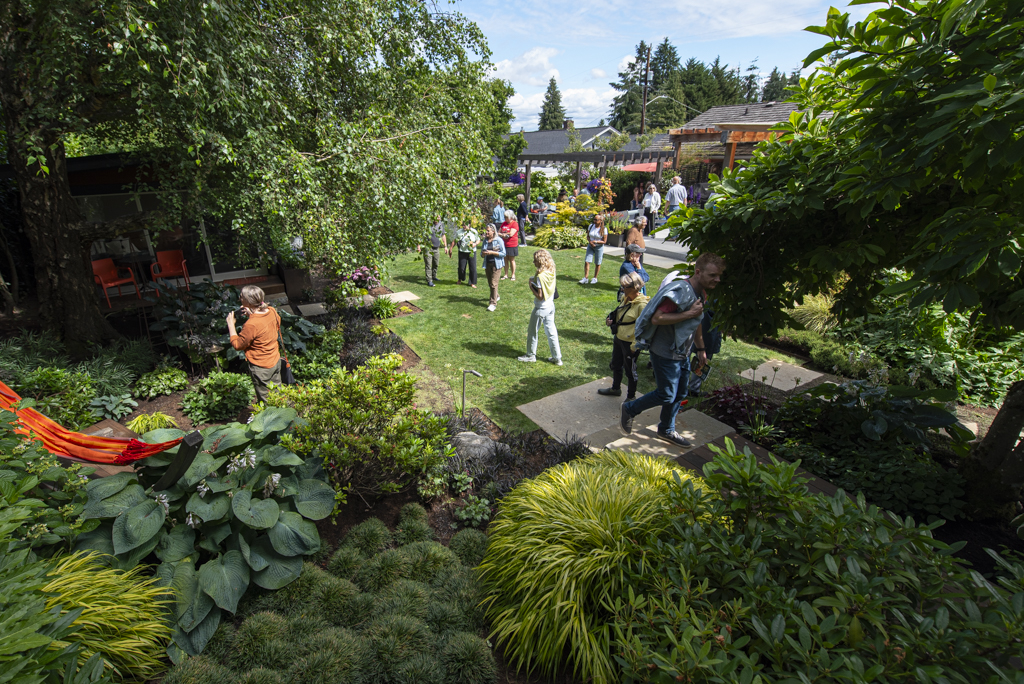
Garden K offered onlookers “Plants from Around the World“:
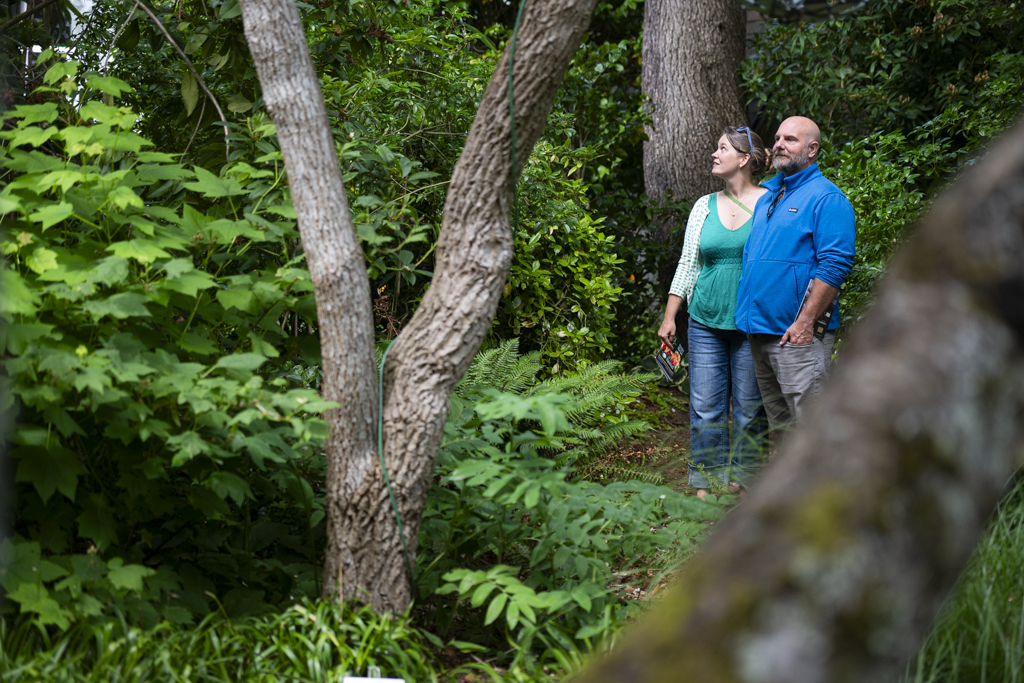
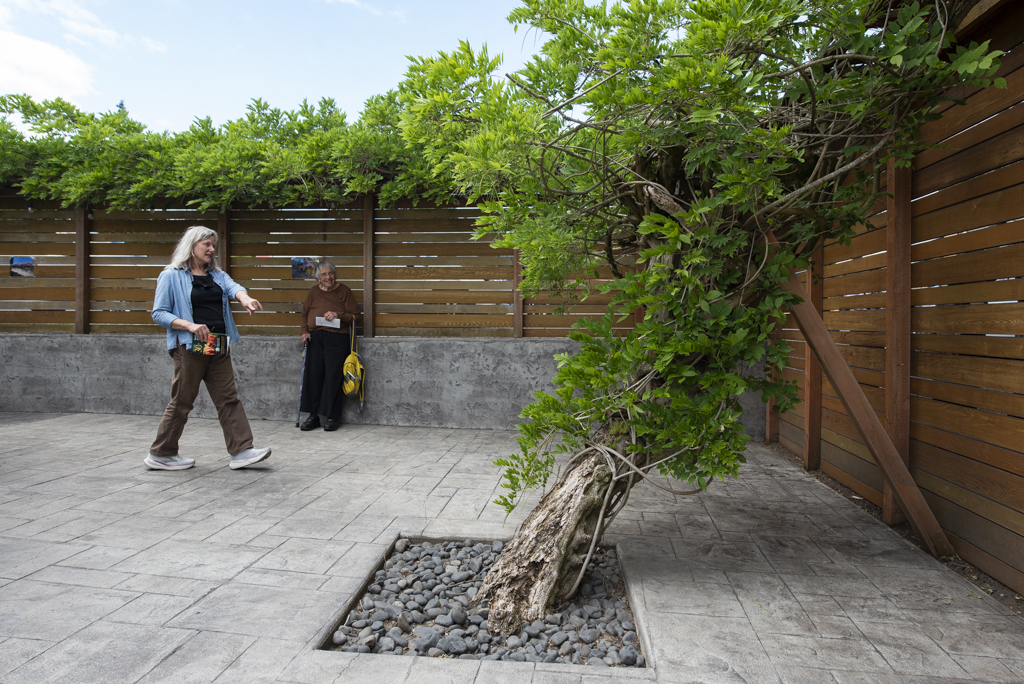
And Garden L, “Conifer Corner,” featured a 75-year-old wisteria:
(Read details of each garden here.) The West Seattle Garden Tour is organized by a nonprofit that uses the proceeds to support other nonprofits – here are this year’s grant recipients; see how to apply for one of next year’s grants by going here (July 15 is the deadline).
Alaska
Man with same name as Alaska Sen. Dan Sullivan can appear on GOP primary ballot, state’s Supreme Court rules

The battle of the Dan Sullivans is on.
The Alaska Supreme Court ruled Monday that a man with the same name as Republican Sen. Dan Sullivan can challenge the sitting lawmaker in the state’s GOP Senate primary in August. The high court upheld a ruling from a lower court judge that cleared the way for Daniel J. Sullivan to appear on the primary ballot, reversing a decision by state officials earlier this month that he was ineligible because he was allegedly trying to confuse voters.
The state Supreme Court directed Alaska’s Division of Elections to decide how Daniel J. Sullivan should be listed on the ballot “within the confines of existing Alaska ballot design law.”
The conflict is taking place in one of the country’s most closely watched Senate elections. The sitting Sen. Sullivan is running for a third term, but former Democratic Rep. Mary Peltola is vying to challenge him, setting up what could be an unusually competitive race in a deep-red state that hasn’t elected a Democrat to the Senate in almost 20 years.
The senator has called his same-name competitor a “sham candidate” and accused him of trying to trick voters and help Democrats flip the seat. Daniel J. Sullivan — a retired teacher and former U.S. Forest Service employee from Petersburg, Alaska — has denied those allegations and insisted he is both qualified and genuinely interested in running for Senate.
About two weeks ago, the Alaska Division of Elections determined that the challenger Sullivan could not appear on the ballot, arguing his paperwork “was not filed in order to declare an actual good-faith candidacy, but was instead filed with a purpose to confuse or mislead.”
In a letter to the candidate, Director Carol Beecher pointed to the fact that Daniel J. Sullivan had initially requested to appear on the ballot as “Dan Sullivan,” the same name format as the senator. She also wrote that he hadn’t previously been affiliated with the state Republican Party, had a website design that “appears to be deliberate[ly]” similar to the senator’s campaign site and had worked with a political consultant with links to Democratic candidates.
Daniel J. Sullivan asked a state court to reverse the decision. On Friday, Judge Thomas Matthews ruled in his favor, finding the non-senator Sullivan met the requirements to run for U.S. Senate and the state didn’t have the authority to exclude him based on “good faith.”
“The court does not minimize the Division’s concern that voters should not be misled,” the judge wrote. But he added that “Alaska election law gives the Division tools to address that concern,” including regulating how candidates appear on the ballot.
With ballots set to be printed this week, the issue was appealed to the Alaska Supreme Court on an expedited basis, with both sides filing court papers over the weekend.
The state Division of Elections asked the high court to overturn Matthews’ ruling, arguing it would “leave Alaska constitutionally required to permit bad-faith ballot access.” The agency said it reached its conclusion about Daniel J. Sullivan after it received a complaint from the National Republican Senatorial Committee “credibly alleging” he was seeking to “cause voter confusion” and made a “bewildering” request to appear on the ballot with the senator’s middle initial.
If Daniel J. Sullivan is permitted to remain on the ballot, the state asked the Alaska Supreme Court to allow it to print his full name and list his party affiliation as “nonpartisan” to “ensure voters are not forced to guess between two nearly identical names.”
The Alaska Republican Party and several GOP-led states filed amicus briefs siding with Alaska.
Daniel J. Sullivan’s lawyers, meanwhile, argued the state “lacked any basis in Alaska law to exclude Mr. Sullivan from the ballot” and didn’t have the power to look into his “private motivations.” They wrote that state law doesn’t give officials the power to keep qualified candidates off the ballot due to potential confusion.
“[All] that Mr. Sullivan asks here is to be listed on the ballot, and the Division is obviously empowered to do so in a non-confusing manner,” his lawyers wrote.
Following oral arguments, the high court sided with Daniel J. Sullivan in a two-page order late Monday, and said it would issue a fuller opinion at a later date.
Jeffrey Robinson, an attorney for Daniel J. Sullivan, told CBS News his legal team is “grateful” for the Alaska Supreme Court’s decision to “affirm Judge Matthews’ well-reasoned, thorough order vacating the Division’s unlawful decision to exclude Mr. Sullivan as a candidate.”
“We expect that the Division will act in full compliance with existing Alaska ballot design law in its preparation of the ballots,” Robinson said in an email.
The senator’s campaign spokesperson, Nate Adams, said: “We’re disappointed in the court’s decision because as the sham candidate Dan J. Sullivan’s lawyers made clear in their legal arguments, the only reason he is running is to deceive voters and manipulate Alaska’s election system.”
“However, we are encouraged by the fact that the Director of the Division of Elections will be able to use her expertise to differentiate between the Petersburg fraud and the incumbent — Senator Dan Sullivan — to the benefit of Alaska voters,” Adams said.
-

 Miami, FL3 minutes ago
Bradley Beal to Miami Heat rumors draw skepticism
-

 Boston, MA11 minutes ago
Boston Pops surprise travelers at Logan Airport with July 4th preview performance
-

 Denver, CO12 minutes ago
Denver Broncos Crack Top 10 in NFL Uniform Rankings
-

 Seattle, WA18 minutes ago
PHOTOS: Visiting all 12 stops during this year’s West Seattle Garden Tour
-

 Milwaukee, WI28 minutes ago
Milwaukee Barbecue: A Legacy of Smoke
-

 Atlanta, GA33 minutes ago
Georgia Haitian communities face sudden July 27 deportation deadline
-

 Minneapolis, MN41 minutes ago
Broken A/C leaves 75-year-old cancer patient sweltering at north Minneapolis apartments
-

 Indianapolis, IN43 minutes ago
Jazz saxophonist Jared Thompson shares journey of self-acceptance and artistry

