Uncommon Knowledge
Newsweek is committed to challenging conventional wisdom and finding connections in the search for common ground.


California farmers reportedly embraced the “weird” label that some have placed on Republican vice presidential nominee JD Vance during a GOP fundraiser.
Recent rhetoric from Democrats and other critics of the 2024 Republican presidential ticket has classified both Vance and former President Donald Trump as “weird” due to their policy positions and public behavior.
Fundraiser guests had a different view of Vance in rural Coalinga, California, on Wednesday, according to Politico. Barbara Hallmeyer, a GOP delegate and former high school teacher, told the outlet that she and others in the crowd were “weird like him,” referring to Vance.
About 150 Trump and Vance supporters reportedly forked over $3,300 each for entry into the event, while those who wanted a photo opportunity with the vice presidential hopeful paid as much as $25,000.
Newsweek reached out for comment to the Trump/Vance campaign via email on Wednesday night.
Hallmeyer was not the only fundraiser attendee countering criticism of Vance, who has been under fire in the weeks since his selection as Trump’s running mate over issues like his past support for total abortion bans and comments on “childless cat ladies.”
“[President] Joe Biden and [Vice President] Kamala Harris, they don’t care about us,” farmer Steve Samra, who was also at the event, told Politico. “I don’t think [Vance is] anti-women … I think his wife was at one point anti-Trump, but I think she’s gotten over that.”
Republican leaders have touted Vance, the author of bestselling memoir Hillbilly Elegy, as a secret weapon for the Trump campaign to appeal with voters in rural areas. His appeal to farmers wealthy enough to attend Wednesday’s fundraiser was clear.
While California is anything but a GOP stronghold, many rural areas of the state lean heavily red. In the Central Valley, home to Coalinga, some have become furious at Democrats for diverting much-needed water away from the farmlands to protect endangered fish species.
Fundraiser co-host William Bourdeau, vice president at Harris Farms—the site of the fundraiser—told Politico that Central Valley farmers “are an endangered species.”
Fresno County Supervisor Buddy Mendes told The Sacramento Bee that Vance discussed the water issue “really just in generalities” during the fundraiser, while adding that “he knows the federal government can only do so much because part of it’s a state issue.”
Vance also told guests that he considered Harris becoming Biden’s likely replacement as the Democratic presidential nominee “a coup d’etat” and said that a large amount of fundraising was required “to combat the news media’s false narrative,” according to Mendes.
Regardless of support for Vance and Trump among California Republicans, the GOP presidential ticket has little realistic chance of winning the Golden State in November. A poll released on Tuesday by Capitol Weekly found that Harris holds a 24-point lead over Trump in California.
Newsweek is committed to challenging conventional wisdom and finding connections in the search for common ground.
Newsweek is committed to challenging conventional wisdom and finding connections in the search for common ground.


A showdown between Xavier Becerra and Tom Steyer in the California governor’s race would have made climate policy one of the most talked-about issues through November.
Now, environmental advocates are preparing for their work to fade into the background.
Steyer, the billionaire climate activist who ran as a progressive, finished third in the primary behind Becerra and Republican Steve Hilton, the Trump-backed political commentator. His loss ended a campaign that spent millions on ads attacking Becerra for accepting oil industry money and promising to break up power companies.
“I’m proud of the enemies we made,” Steyer said in a concession statement Tuesday, singling out energy corporations like Chevron and PG&E that infused millions in independent expenditure committees opposing him.

A pest that is considered a major threat to California’s vineyards and its $73-billion wine industry has been found on grapevines sold at Northern and Central California Costco stores between April 21 and May 21, according to authorities.
The glassy-winged sharpshooter, which was first identified and detected May 19 from grapevines sold at a wholesaler in Fresno, is a small invasive insect that can spread a strain of bacteria, Xylella fastidiosa, that kills grapevines by “clogging their water-conducting vessels (xylem).” The deadly plague is called Pierce’s disease. Several other strains of the bacteria exist and can infect other host plants, including citrus, stone fruits, almonds, oleander and some shade trees, according to the California Pierce’s Disease Control Program.
If the insect was left unchecked, the disease could cost the California wine industry $166 million annually, California Department of Food and Agriculture officials said in an email.
The insect can be identified by its flat triangular head, large eyes and clear wings. The head is brown to black and has several ivory to yellowish spots, which helps separate it from its native counterpart, the smoke-tree sharpshooter. The insect is often found on the stems of plants and grows up to about half-an-inch as fully grown adults, according to the University of California.
“While many vines have been intercepted and destroyed, locating the thousands that may still be in customers’ hands remains our top priority,” said California Secretary of Agriculture Karen Ross in a press release. “Anyone who purchased these vines should contact their local agricultural commissioner immediately.”
California’s wine grape industry supports more than 422,000 jobs statewide, according to the CDFA.
The glassy-winged sharpshooter was first reported in California in the early 1990s and is native to the southeastern U.S. and northeastern Mexico. The insect was first identified as a threat in August 1999, when more than 300 acres of grapevines in Temecula were infested with the glassy-winged sharpshooter and Pierce’s disease and subsequently destroyed, the CDFA reported.
Overall, the disease has costs growers and government agencies about $110 million a year in losses and compliance costs, according to a March 2025 report titled The Costs of Pierce’s Disease in the California Grape and Wine Industry.
Up to 13,000 grapevine plants potentially infected by the bacteria have been sold across a total of 24 Northern and Central California counties, the CDFA said.
“In addition to destroying infested stock still in Costco warehouses, CDFA is working with agricultural commissioners and conducting public outreach to locate vines sold to consumers across 24 counties, as well as neighboring at-risk counties,” CDFA authorities said in a press release.
“Officials are responding to public reports, conducting inspections and public outreach, and trapping near stores and locations where purchased vines were taken. They are also ensuring that potentially infested plants are safely contained and disposed of,” the press release said.
Costco has also been working with the CDFA to notify customers, issue refunds to those who purchased the grapevines and assisted in connecting them to local agricultural officials in the impacted counties “for inspection and disposal guidance,” the CDFA said in a notice about the pests.
Authorities are asking residents that purchased the grapevines in the impacted counties to follow strict guidelines, including to isolate the plant and wrap it in double trash bags and contact their county agricultural commissioner, authorities said.

CDCR staff assisted local, state and federal law enforcement agencies May 28 for Operation Hands Down, a large-scale gang takedown.
Overall, 43 search warrants were served at different locations throughout the San Joaquin Valley.
This marked the culmination of a two-month undercover operation focusing on Mexican Mafia and Sureño gang members committing various crimes.
Crimes included homicides, firearms trafficking, narcotics trafficking, shootings, robberies, assaults, sex offenses against minors and organized violence within custodial facilities.
Results:
The drugs included 55 pounds of methamphetamine, three pounds of cocaine and a small amount of fentanyl powder. Nearly $165,000 was seized, which derived from narcotics trafficking, firearms sales and organized street gang taxes.
The arrests of these men, women and children are expected to have an immediate impact on lowering violence across California’s Central Valley.
“By disrupting these criminal organizations, we are confident our hard work will deliver a sense of peace to residents who deserve to feel safe in their communities,” according to the agencies.
The Fresno County Sheriff’s Office and the Multi-Agency Gang Enforcement Consortium (MAGEC) thanked the numerous law enforcement agencies for their assistance throughout this investigation.
In total, more than 500 law enforcement members participated.
Some of their specialized assignments are: Special Weapons and Tactics (SWAT), Crisis Negotiation Team (CNT), Air Support Unit, K-9 Unit, Explosive Ordnance Disposal (EOD), Incident Management Team (IMT), Dispatch Unit, Crime Analyst Unit and Fresno County Jail Correctional Officers.
Participating agencies / task forces included:
This remains an ongoing investigation. Anyone with information that can help detectives, report it by contacting the Fresno County Sheriff’s Office at 559-600-3111. You may also contact Valley Crime Stoppers at 559-498-7867 or www.valleycrimestoppers.org. You will remain anonymous and may be eligible for a cash reward.
Follow CDCR on YouTube, Facebook, X (formerly Twitter). Listen to the CDCR Unlocked podcast.
See more stories on joint operations.

Who will be the new ’60 Minutes’ correspondents?
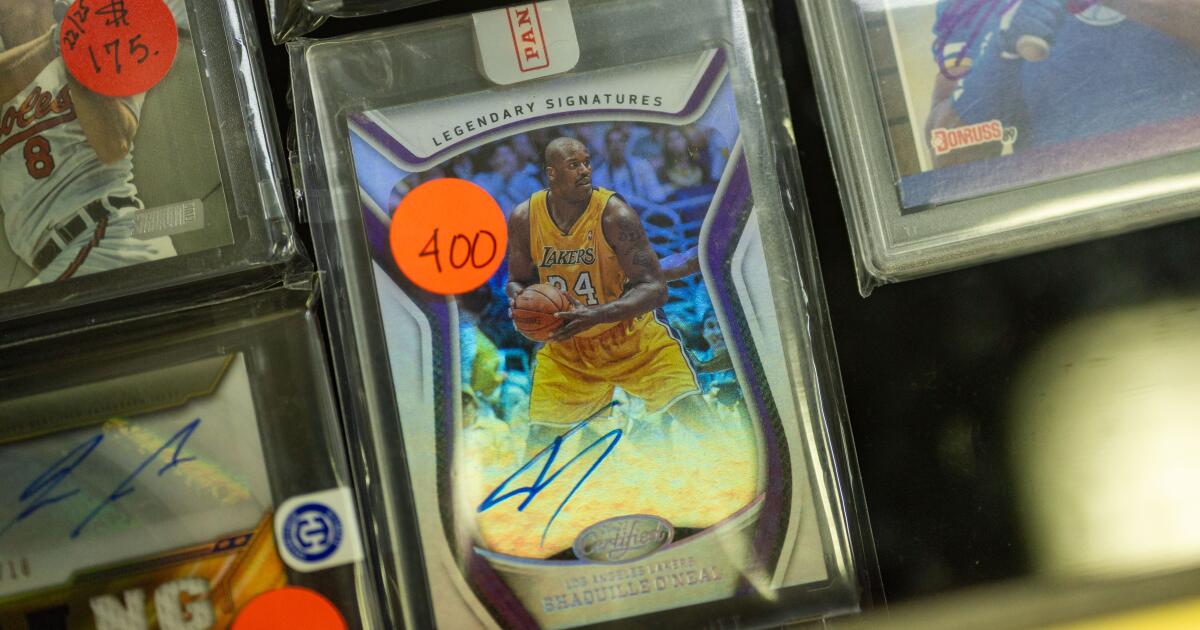
LA Card Show! Everything you need to know to make the best of the event this weekend


Trump says US will ‘be taking’ Kharg Island in latest Iran war threat

We Keep Us Safe: The Standoff : Embedded


Video: Knicks Fans Rejoice After Game 4 Victory


Police chase suspected DUI driver in Los Angeles County


Opening of Canada-US bridge in Detroit that Trump threatened to block is delayed


Going to San Francisco Pride 2026? Parade Times, Maps, Street Closures and Safety Advice | KQED


