Politics
Newsom calls on Oakland to allow more police chases, stop suspects from 'fleeing with impunity'

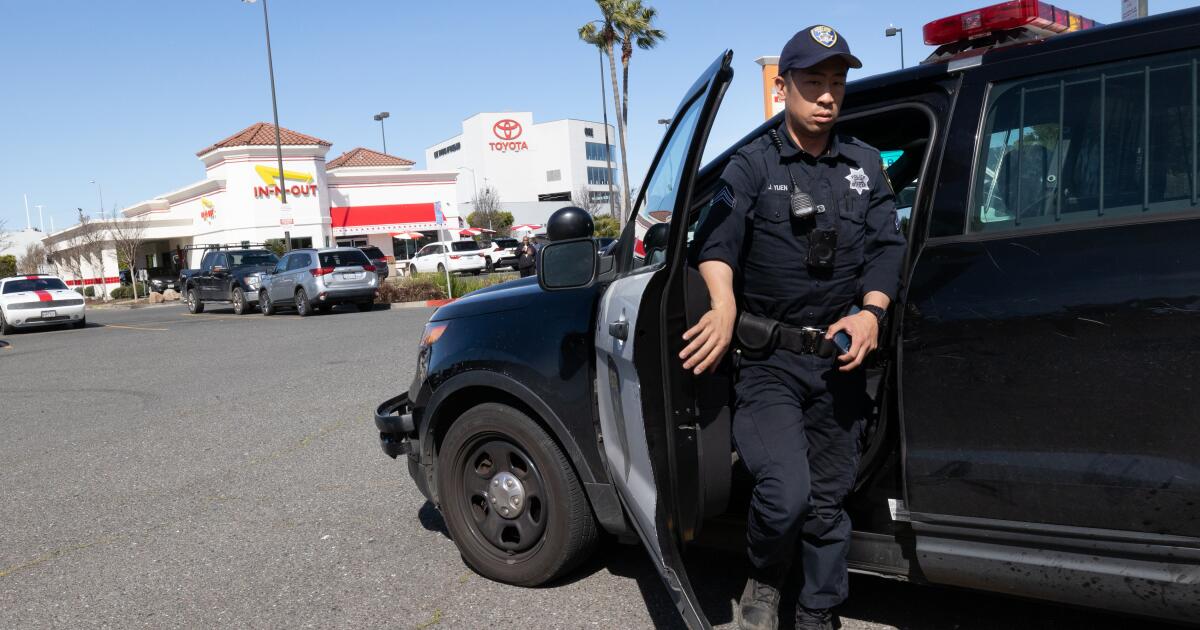
Gov. Gavin Newsom on Friday sent a letter to Oakland officials urging them to allow police to engage in more vehicle pursuits, contending that the limitations placed on officers contribute to public safety challenges in the city.
The California Highway Patrol inspired the governor’s missive after the agency “observed criminals fleeing with impunity” during the governor’s campaign to boost law enforcement and reduce crime in a city that has historically been one of the most dangerous in the state.
In a policy Newsom described as an “outlier,” Oakland only allows police chases when a suspect is armed with a gun or involved in a forcible violent crime. The governor pointed out that unlike in other cities, Oakland police cannot pursue people suspected of committing many felonies or any misdemeanor, such as reckless driving, sideshow activity, and driving under the influence of drugs or alcohol.
“I urge you to reconsider whether OPD should be permitted to pursue suspects in more circumstances to improve public safety in your city and to establish a process to evaluate whether OPD is making full use of its authority, including that granted under the existing pursuit policy, to protect public safety and enforce the law,” Newsom wrote.
The governor’s letter, addressed to Oakland Mayor Sheng Thao, the Oakland City Council and the Oakland Police Commission, laid out his support for a recent City Council decision to review the policy.
A top political topic in the 2024 election, crime has created pressure on Newsom and other elected officials and bolstered criticism of California’s criminal justice policies.
Newsom ramped up police presence in Oakland in February with the deployment of 120 California Highway Patrol officers to the city under a state law enforcement campaign targeting an uptick in violent crime and theft.
At the time, reports of In-N-Out Burger and other high-profile businesses in Oakland closing due to crime had made headlines around the country and raised questions about state policy and the need for criminal justice reform in the Golden State. In his letter, Newsom referenced viral videos and news coverage “witnessed regularly by the public” that show the dangers of allowing criminal acts, such as reckless driving at sideshows, to go unchecked.
The governor also acknowledged risks associated with pursuits, which he said can be “dangerous to police, suspects, and innocent bystanders.”
Newsom quadrupled the number of shifts CHP officers conducted in Oakland two weeks ago, with the goal of targeting organized crime, sideshows, carjackings, and other criminal activity over the next four months.
In the letter, the governor wrote that CHP “observed suspects attempting to escape arrest by using the same routes, concluding that they knew where OPD would discontinue a pursuit” because of the pursuit policy. In comparison, CHP’s pursuit of suspects, with the help of air support, caught suspects in each of the six chases that state officers initiated.
The increased CHP presence in the East Bay has resulted in the recovery of more than 1,142 stolen cars, the seizure of 55 firearms, and the arrests of 562 suspects, according to the governor’s office.

Construction workers unfurled a large printed tarp to cover scaffolding installed at the White House’s front entrance. Doug Burgum, the interior secretary, said President Trump had ordered the repairs after noticing damage to columns.
Politics
WATCH: Trump’s Energy chief reveals what escalating Iran tensions could mean for gas prices

NEWYou can now listen to Fox News articles!
Energy Secretary Chris Wright is telling Americans not to be concerned about the possibility of another surge of sharp increases in gasoline prices as tensions with Iran have started to escalate once again.
Asked whether Americans should worry about higher prices at the pump and how the Trump administration is preparing to keep the economy stable if the conflict continues to worsen, Wright told Fox News Digital: “It has not been any good behavior from Iran that’s allowed oil to flow. It’s been the United States military.”
“That’s not changing,” he assured, speaking from the Great American State Fair on the National Mall this week.
US CLAWS BACK KEY CONCESSION TO IRAN AFTER FRESH ATTACKS ON COMMERCIAL SHIPS IN STRAIT OF HORMUZ
(Mario Tama/Getty Images) (Mario Tama/Getty Images)
With Iran striking three commercial vessels transiting the Strait of Hormuz on Monday and Tuesday, Wright doubled down in urging citizens to not credit Iran for the U.S. military’s work to ensure oil shipments continue flowing through the strait.
“Look, the U.S. Military has been the key asset here,” he said. “They have assured the flow of oil and gas through the Strait of Hormuz throughout. Not at the beginning of this conflict, but through the last six weeks.”
Wright said the administration is closely monitoring global oil supplies as the tentative ceasefire with Iran seemingly came to come to a halt, with President Donald Trump telling Secretary-General Mark Rutte the call for peace with Iran is “over” at the NATO Summit in Turkey on Wednesday.
But, he pointed to the continued shipping through the Strait as evidence that markets should remain stable.
TRUMP SAYS IRAN CEASEFIRE IS ‘OVER’ AFTER IRANIAN ATTACKS TRIGGER MASSIVE US RESPONSE
President Donald Trump speaks at the White House on Tuesday, April 22. (AP/Alex Brandon)
“We’re of course constantly watching the supply of oil, the supply of refined products and what’s going on there,” Wright said. “And I think still all positive trends.”
Beyond geopolitical concerns, Wright also praised the new chain of discounted gas stations across Pennsylvania and New Jersey, Freedom Fuel, which promises customers prices below the national average.
The Trump administration, though not involved with the network, has heavily endorsed the new chain and its 25 locations.
“We love it,” Wright said when asked about Freedom Fuel. “I mean, look, any mechanism we can to lower energy costs for Americans of all kinds, we’re all in on.”
“With Freedom Fuels, they’re just lowering it down to their wholesale price of gasoline,” Wright said. “So they’re not making any money selling gasoline, but they’ve got convenience stores. That’s how most gas stations make money.”
NEWSOM UNDER FIRE AS CALIFORNIA GAS TAX HIKE SENDS PUMP PRICES EVEN HIGHER
Gasoline costs are a known concern for many Americans, and amid surging prices there has been a considerable increase in those opting to purchase electric vehicles to save money long-term at the pump — with Tesla dominating the market for these types of models.
Wright argued one of the benefits to living in America is having the option to choose what type of vehicle you drive.
CLICK HERE TO DOWNLOAD THE FOX NEWS APP
“We just want people to buy what they would prefer,” he told Fox News Digital when asked his thoughts on increasing calls for support of the electrification of cars. “Consumer choice — you wanna buy an electric car, you wanna buy a gas powered car, diesel powered car, buy a big truck. That’s the choice.”
“That’s why you live in America. You get the choice of all those.”

In 2023, California regulators levied more than $100,000 in fines against the private operator of a federal immigration facility, kicking off a three-year battle over whether detainees who do work at the facilities should be considered employees.
The question went beyond semantics: If considered employees, the detainees would be subject to state worker protection laws.
A legal settlement announced this week now affirms that private immigrant detention facilities are subject to California’s workplace safety and health requirements.
“Every worker deserves a safe and healthy workplace and should be able to report workplace hazards without fear of retaliation,” said Denisse Gómez, spokesperson for the California Division of Occupational Safety and Health or Cal/OSHA.
“Individuals who perform work in these facilities are entitled to workplace safety protections, and this settlement reinforces Cal/OSHA’s commitment to enforcing those protections and safeguarding vulnerable workers,” she added.
Under the settlement between California and the GEO Group, a Florida-based private prison company, the company recently withdrew its legal challenges and agreed to pay more than $100,000 in the fines.
The GEO Group did not respond to requests for comment.
Back in 2023, Cal/OSHA issued $104,510 in fines against the GEO Group. The agency had found six violations of state code by the company after detainees complained about a lack of protective equipment and proper training while cleaning the facility for $1 per day.
Detainees alleged they routinely wiped black mold off shower walls at the facility, saw black dust spew from air vents and used cleaning solutions that lacked instructions during the COVID-19 pandemic.
The biggest fine levied against the GEO Group was for failure to establish and maintain “effective written procedures to reduce employee risk of exposure to aerosol transmissible disease.”
Advocates viewed Cal/OSHA’S recognition of the detainees as workers as a victory that could pave the way for future labor rights fights at other detention centers in the state.
But the GEO Group appealed, arguing that detainees participating in ICE’s voluntary work program make their own schedules and aren’t employees, so hazard exposure couldn’t be “as a result of assigned duties,” as California law states. Plus, the company argued, there wasn’t enough evidence that detainees were exposed to any hazard.
Early last year, the state’s Occupational Safety and Health Appeals Board rejected the GEO Group’s argument and found that detainees should be considered “affected employees.”
The GEO Group sued, but three days before a California Superior Court hearing in May, the company and Cal/OSHA reached the settlement.
Along with paying the fines, the GEO Group agreed to draft plans for avoiding aerosol transmissions at 12 secure and reentry facilities in California, including five detention centers that hold immigrants.
“GEO ensures detainees are afforded the necessary tools, equipment, and personal protective equipment … to safely and effectively perform any necessary tasks,” the settlement states.
Gómez said the settlement also leaves intact the appeals board’s ruling that civil immigration detainees who participate in work programs can participate in proceedings anonymously, “acknowledging the potential for retaliation when individuals raise workplace safety concerns.”
But the question of whether detainees are employees and deserve certain protections isn’t entirely resolved — at least not for the federal government.
Last month, U.S. Immigration and Customs Enforcement released new standards for detention facilities across the country. The revised guidelines “emphasize that detainee volunteers participating in the voluntary work program are not considered facility and/or government employees” and thus not entitled to labor regulations.
Attorney Mariel Villarreal said the timing of the new detention standards made her question whether the GEO Group had asked ICE to specify in its standards that detainees are not workers in response to its battle with Cal/OSHA.
“To me, it’s a reaction to this very settlement,” she said. Villarreal works for the California Collaborative for Immigrant Justice, which filed the original complaint on behalf of detainees who said they worked in unsafe conditions.
Villarreal pointed to a Washington Post report that GEO Group executives privately asked ICE to specify that detainees are not employees of the facilities where they work. Two top Trump administration officials, border czar Tom Homan and acting ICE director David Venturella, previously worked for the GEO Group.
New versions of ICE detention standards take effect as contracts are established or modified, so this year’s rules won’t immediately apply to every facility.
An ICE spokesperson did not comment about the settlement. The spokesperson, who did not provide their name in an emailed statement Wednesday, said the agency has begun transitioning detention facilities to meet the 2026 standards, “building on its longstanding commitment to safe, secure, and professional detention operations.”
“ICE has consistently implemented many of these best practices independently, reinforcing its role as the leader in detention operations,” the spokesperson added.
The GEO Group and other immigrant detention center operators have faced other legal battles over workers’ rights, including lawsuits in Washington, Colorado and California over the $1-per-day payment.
Villarreal said she’s confident that the Cal/OSHA settlement would continue to hold even if California facilities incorporated the new standards. But she said she believes the statements are an attempt by the GEO Group to “sidestep responsibility” and avoid the possibility of being fined under similar circumstances in other states.
“These statements in the new standards are a way for them to try and preserve profits as much as possible,” she said. “GEO and ICE are so intertwined at this point that they have the same motives.”
-

 Movie Reviews8 minutes ago
‘Gail Daughtry and the Celebrity Sex Pass’ Review: We’re Off to Hump the Wizard
-

 World15 minutes ago
Backlash on ethanol-blend fuel intensifies in India, puts carmakers in the dock
-
Politics26 minutes ago
Crews Drape Tarp Over White House in Latest Trump Restoration
-

 Health40 minutes ago
GLP-1 Users’ Guide to Protein Snacks: Here’s What a Dietitian Actually Recommends
-
 Lifestyle55 minutes ago
‘The Invite’ is a marriage comedy with sex and heart
-

 Technology1 hour ago
I spent a week using the Trump phone — it sucks
-

 World1 hour ago
With US unleashing attacks, Iranian official threatens that the Islamic Republic will deliver a ‘hard slap’
-

 Politics1 hour ago
WATCH: Trump’s Energy chief reveals what escalating Iran tensions could mean for gas prices

