

Anthropic just released Claude Fable 5, calling it the most powerful AI model it has ever made widely available and praising its skills in biology, among others. But the model won’t answer basic biology questions — the kind you’d expect a high schooler to handle. Instead, it hands off the query to the former flagship model, Claude Opus 4.8.
Technology
10 easy ways to help launch a successful online shop


If you ever wanted to launch an online shop, but you’re not quite sure where to start, I get it. With all the website platforms that exist out there, it can feel rather daunting.
But whether you’re looking to start a side hustle or finally begin that passion project after retiring, I want you to understand how someone with no prior experience can easily create their own online presence.
I’m here to help you launch a successful online site – like a shop, for example – one step at a time.
GET SECURITY ALERTS, EXPERT TIPS – SIGN UP FOR KURT’S NEWSLETTER – THE CYBERGUY REPORT HERE
A woman working on her laptop (Kurt “CyberGuy” Knutsson)
How to set up your online shop: A beginner’s guide
There are many website builders available, like Squarespace, Shopify, WordPress and Wix, but only a few specialize in online selling. Among those, even fewer make it easy to design, publish, manage your shop and handle all the in-between tasks on one platform without needing to integrate other services. Here’s how you can do it in this step-by-step guide.
1. Create your online storefront
Your website design plays a crucial role in attracting and retaining customers. Although it’s often said not to judge a book by its cover, many of us naturally do. Consider the intersection of form and function, how structure and design elements guide shoppers through their buying journey. If design isn’t your strong suit, many website builders offer a variety of e-commerce templates to choose from.
Here are some tips:
- For a large product catalog: Opt for a template with pre-built product categories, deep search functionality and clear navigation.
- For a small product catalog: Showcase your entire catalog on the homepage, making it easy for shoppers to find and select products.
- For single products: Focus on a quick buyer flow, emphasizing a straightforward purchase experience.
When it comes to colors, fonts and other design aspects, familiarize yourself with color marketing to determine what will work best for your brand and store. Ensure your logo and/or shop name is clearly placed on your storefront.
Remember, strong product images and descriptions are essential. Use this opportunity to integrate customer support, cross-selling features and social proof to pave the path to purchase.
Kurt’s best website builders for building your online shop
Illustration of a website template (Wix)
BEST DESKTOP COMPUTERS FOR 2024
2. Create products and product options
Once your design is ready to go, start by adding your products to the store. Whether you’re selling physical items or digital downloads, consider the following:
- Physical products: These can be sold as one-time purchases or part of a subscription model.
- Digital products: Offer items like e-books, software or image files.
- Product options: If your product comes in different sizes, colors or materials, add variants so that customers can choose their preferred option.
Don’t worry if you don’t have all of this figured out yet or if you only have one product to sell right now. You’ll need to start somewhere, and there’s no time like the present.
3 WAYS TO MAKE THE MOST MONEY ONLINE SELLING YOUR THINGS
3. Use categories to organize
If you do have multiple products or plan to add them later, you’ll want to group similar products into categories. This helps organize your catalog and allows customers to browse related items together, in addition to being able to easily search and filter through what they are looking for. In order to do this, follow these steps:
- Create categories: Set up categories like “Candles,” “Ceramics” or any relevant groupings.
- Display categories on separate pages: Create the category, add products to it and then use a platform editor to display them. You can also manually create a page linking to all your categories if needed.
BEST LAPTOPS FOR 2024
4. Optimize product pages (and more)
After deciding which products to sell and categorizing those products, you’ll need to make it easy for your audience to find, read about and see what those products are. Without getting a good description and visual of what they’ll be getting, they’ll be less likely to order from you. So, here’s what you’ll need to optimize those product pages:
- Product images: Use high-quality images and, if applicable, videos that showcase your items.
- Descriptions: Add clear and compelling descriptions that highlight benefits. Bonus points if they can be optimized for SEO (more on that later).
- Cross-selling: Suggest related products that customers can add to their cart to increase sales before they check out.
- Social proof: Display reviews and testimonials that attest to the quality of your product.
Additionally, you’ll want to add to your site:
- General information and contact info: Set your email address, location, language and currency. It’s also a good idea to have a contact page and/or phone number and email on your website for additional questions or concerns.
- Customer support: Include FAQs so that customers can get answers to common questions. Depending on the size of your store, consider adding a live chat so that customers can contact you to discuss an order if need be. If your site grows, you may need to hire a team or ticketing software for this.
Kurt’s best website builders for building your online shop
Illustration of order page (Wix)
HOW TO STOP ANNOYING ROBOCALLS
5. Enter site settings
It’s important to enable site settings to ensure your site functions smoothly. You can do this by entering essential details such as:
- Roles and permissions: If you have employees or partners, manage their limited access to your site so no one accidentally deletes products or pages from your online store.
- Privacy policy: Outline how customer data is collected, used, stored and protected. This builds trust with your visitors by reassuring them their personal information is safe and complies with legal requirements.
- Disclaimer: Provide a clear disclaimer to limit your liability regarding the information on your site. This is especially important for sites that provide advice, sell products or offer services that may have varying results for different users.
- Security certificate: Obtain and install an SSL certificate to encrypt data transmitted between your site and its visitors. This ensures sensitive information, such as credit card details, is protected, boosting customer confidence and improving your site’s SEO ranking.
Kurt’s best website builders for building your online shop
6. Shipping and delivery options
Having a site to showcase your products is the first step, but you also need to have a way to get those products to your customers in a timely and cost-efficient manner. This is the part that can make or break your customer base, as you’ll need to be able to create expectations for your users.
Now, decide how to get your products to customers:
- Shipping: Ship products to customers using Wix’s flexible shipping rules.
- Local delivery: Hand-deliver to customers in your area.
- Pickup: Allow local customers to collect products from your physical locations.
Kurt’s best website builders for building your online shop
7. Accept online payments
Now, how will your customers pay for those products? Be sure to set up secure payment gateways so that customers can pay seamlessly and with multiple payment options. Many platforms support various payment methods, including credit cards, PayPal and more, and it’s easy to accept those payments directly through your site.
Kurt’s best website builders for building your online shop
Example of website templates (WIX)
8. Optimize for search engines
In addition to making your product pages look snazzy, you’ll also want to take the time to optimize those pages – and other pages on your online shop – for SEO. What this means is that when someone searches for a specific product or type of store on a search engine, your site/product pages will be the ones that come up. People accomplish this by finding relevant search keywords that people are searching for, like “handmade necklaces of fruits” or “organic soaps online ship to Atlanta.”
This may require you to pay for an SEO research tool or hire an SEO specialist to help boost your visibility, ensuring your people can find you. Some platforms have SEO tools that can help you ensure you’re putting in all the keywords correctly, and you can also hire an SEO specialist directly through the site.
Kurt’s best website builders for building your online shop
9. Promote your store
SEO is a way to organically lead customers to your store, but there are other ways to spread the word with outbound marketing. You may have to put a little extra effort into this, but it can help increase your sales and, at the very least, raise awareness about your shop, which people can share with their own networks, thus spreading the word. Try to have an idea of where your audience is, though, before putting all your resources into all of these methods. Sometimes just one is enough!
Social media: Use social media platforms to share product updates, promotions and behind-the-scenes content. You can also insert social icons onto your site to help visitors share products with their network.
Email marketing: Build a subscriber list and send targeted emails. Sometimes the best place to start is by contacting people that you already have in your network, as they may be thrilled at the idea of supporting your store! Email marketing automation, like sending an automated “thank you” email after someone purchases a product from your store, can also be very effective.
Paid advertising: Consider Google Ads or social media ads to give your products and site an extra boost.
Kurt’s best website builders for building your online shop
ONLINE MARKETPLACES AND SOCIAL MEDIA PLATFORMS UNDER FIRE BY CONGRESS OVER RECALLED PRODUCTS
10. Monitor and improve
Last but not least, running an online shop isn’t much different from running a brick-and-mortar store, especially when it comes to monitoring your store’s performance and checking your inventory. There are many tools available to help you regularly check your store’s performance:
- Analytics: Use analytics tools to track visitor behavior, conversion rates and popular products. This can help you determine whether you need to add, improve or remove any products on your site that aren’t serving you.
- Feedback: Listen to customer feedback and make necessary improvements. Encourage visitors to write reviews on products or offer a discount if they submit a testimonial on a product they liked.
When launching a website, you have a variety of choices to suit your specific needs, whether you’re seeking simplicity, customization or advanced features. Explore these top website builders to find the perfect fit for your online presence: Wix, Squarespace, Weebly, Shopify and WordPress. Learn more about these options by clicking here.
Enhance your e-commerce experience
It’s important to have a comprehensive e-commerce solution that allows you to sell everywhere with ease: online, in person and across multiple channels. Look for features like POS systems, a branded mobile app, drop-shipping and more, so you can adapt and scale your business effortlessly.
You want to gain complete control of your business by managing all your inventory, orders and sales from one centralized dashboard. You also want to optimize your site traffic with built-in SEO tools, marketing automations and ad campaigns. The ultimate goal is to ensure a seamless experience for your customers.
Kurt’s best website builders for building your online shop
Kurt’s key takeaways
Launching an online shop might seem overwhelming at first, but with the right tools and guidance, it can be a smooth and rewarding process. A comprehensive platform that simplifies everything from design to payment processing can make it easier for you to focus on what you love: selling your products. Remember, every successful store starts with a single step, so don’t hesitate to dive in and start building your dream shop today.
Now that you’ve learned how to set up your online shop, we’d love to hear from you! What challenges or successes have you experienced in your journey to launch an online store? Let us know by writing us at Cyberguy.com/Contact.
For more of my tech tips and security alerts, subscribe to my free CyberGuy Report Newsletter by heading to Cyberguy.com/Newsletter.
Ask Kurt a question or let us know what stories you’d like us to cover.
Follow Kurt on his social channels:
Answers to the most asked CyberGuy questions:
Copyright 2024 CyberGuy.com. All rights reserved.


Bluesky will be getting “communities,” which will function as smaller spaces where you can “go deeper and hang out with people who care about the same stuff” sometime this year, according to head of product Alex Benzer. They will be built on the decentralized AT Protocol that underpins Bluesky, with Benzer saying that “it’s a new structure for everyone” that’s part of the “Atmosphere” (a shorthand for the AT Protocol ecosystem).
Benzer listed out a “few ideas we have in mind so far” in a thread. “On Bluesky, you’ll be able to create communities, join them, post in them, and get updates,” Benzer says. “The core features on Bluesky stay simple. The magic comes from communities also existing on the open web. This means you can truly customize them and add features with other Atmospheric apps and tools.”
Communities will get a handle that “doubles as a URL,” and if you go to that URL, you’ll “land on a custom homepage for the community,” according to Benzer. “Builders can also host a completely custom experience there instead.” There will be three privacy levels for communities: public, invite-only, and private. And each community would have its own feed, Benzer says.
Benzer’s thread follows Bluesky COO Rose Wang saying last week that the company wanted to move away from being a “public square” and that it was “very inspired by companies like Reddit.” Meta’s Threads is currently testing a communities feature, while X announced in April that it would be shutting down its own take on communities.

NEWYou can now listen to Fox News articles!
Amazon is getting ready for Prime Day, and you can bet scammers are, too. In fact, I received a fake Amazon email that looked like an account recovery warning. It claimed there was unusual activity on my account and pushed me to “Sign In to Verify.”
That kind of message can make anyone uneasy. It certainly did for me. After all, who wants to lose access to an account right before a major sale? Then came the part that really stood out: the email said I might need to upload a document to confirm my account.
That was the giveaway. A real deal can save you money. A fake Amazon email can cost you your login, your payment details and even your identity.
Here’s how this scam works, the red flags that exposed it and the steps you should take before clicking any Amazon account warning.
Sign up for my FREE CyberGuy Report
- Get my best tech tips, urgent security alerts and exclusive deals delivered straight to your inbox.
- For simple, real-world ways to spot scams early and stay protected, visit CyberGuy.com – trusted by millions who watch CyberGuy on TV daily.
- Plus, you’ll get instant access to my Ultimate Scam Survival Guide free when you join.
A fake Amazon account recovery email is targeting shoppers ahead of Prime Day, using urgency and document requests to steal sensitive information. (Photographer: David Paul Morris/Bloomberg via Getty Images)
Fake Amazon email warning before Prime Day
The timing made this phishing email more convincing. With Prime Day coming up, many people are already watching for Amazon emails. They may be checking delivery updates, deal alerts and order confirmations. That creates the perfect opening for a fake account warning.
The email used the same tricks you see in many phishing scams. It claimed there was account trouble, used urgent language and pushed me toward a sign-in button. That is exactly what scammers want.
Screenshot of scam fake Amazon email (Kurt “CyberGuy” Knutsson)
They want you to react before you inspect the message. They want you to sign in before you think through the request. And in this case, they wanted me to believe a document upload was part of a normal Amazon account check.
Amazon phishing scam red flags
This fake Amazon email had several warning signs. First, it landed in my junk folder. That alone does not prove fraud, but it should make you cautious.
Second, the subject line sounded awkward. It said, “Account Recovery: Sign-in and Verify your Amazon account.” That wording felt stiff and a little off.
Third, the greeting was generic. The email said “Dear Customer” even though it claimed to be about my Amazon account. That alone does not prove the email is fake, but it adds to the concern.
Fourth, the message created urgency. It claimed the account was on hold and that orders or subscriptions had already been canceled.
Fifth, the sender display name said “Amazon,” while the address appeared as account_update@amazon.com. That may look official at first. Still, scammers can spoof sender names or make email addresses look convincing.
Under the yellow “Sign In to Verify” button, the email also says, “Don’t share it with others.” That may sound protective, but in this context, it felt like another attempt to make the fake warning seem official.
The biggest warning sign came from the document request. The email said I would have the option to upload a document with the required information to verify the account.
That should stop you cold. Scammers may be after more than your Amazon password. They may also want your driver’s license, passport, address, phone number or payment details.
Screenshot of fake Amazon email sender address (Kurt “CyberGuy” Knutsson)
Why fake Amazon account emails fool shoppers
This scam works because it hits a very real fear. Most people do not want to lose access to an online shopping account. That concern grows when a big sale is about to start. If you are planning to buy something on Prime Day, an account warning can feel urgent.
The email also borrowed Amazon’s familiar look. It used the Amazon name, a logo area and a yellow sign-in button. It also included a footer that appeared to show an Amazon.com link. That can make the message feel safer than it really is.
Here is the problem. The visible link text in an email can mislead you. A link can appear to point to Amazon while sending you somewhere else. It can also pass through tracking links, redirects or look-alike pages. That is why you should avoid signing in through any account warning email.
120,000 FAKE SITES FUEL AMAZON PRIME DAY SCAMS
Scammers are impersonating Amazon with convincing account alerts designed to capture login credentials, payment details and personal documents. (Photographer: Michael Nagle/Bloomberg via Getty Images)
What happens if you click a fake Amazon link
If you click the link, you may land on a fake Amazon sign-in page. It may look close enough to fool you. Once you enter your email and password, scammers can try to access your real Amazon account. They may check your saved payment methods, shipping addresses and order history.
They may also try that same password on other websites. That becomes a bigger risk if you reuse passwords.
The document request adds another layer of danger. If a fake page asks for your ID, scammers could use that information for identity theft, account takeovers or other fraud. That is why one quick click can turn into a much bigger mess.
Ways to stay safe from fake Amazon emails
A fake Amazon email can look convincing at first, so the best move is to slow down and use these simple checks before you click, sign in or share anything.
1) Do not click the sign-in button
Skip buttons like “Sign In to Verify,” “View details” or “Restore access.” Open the Amazon app or type Amazon.com into your browser yourself.
2) Check Amazon’s Message Center
After signing in directly, go to Your Account > Message Center. If the alert is real, you should see a matching message there.
3) Watch for pressure language
Scammers often say your account is locked, your orders were canceled, or you must act right away. That pressure is designed to make you click before thinking.
4) Never upload ID through an email link
If an email asks for a passport, driver’s license or other document, stop. Contact Amazon through the app or website before sending anything.
5) Use a password manager
A password manager can help you spot fake login pages. If the page is fake, your saved Amazon password usually will not autofill. Check out the best expert-reviewed password managers of 2026 at CyberGuy.com.
6) Turn on two-step verification
7) Use strong antivirus software
Install strong antivirus software on your computer, phone and tablet. Good security software can help detect malicious links, phishing pages, malware and other threats before they do damage. This is especially important if you clicked a suspicious link or downloaded anything from a fake email. Security software should back up your smart habits, not replace them. Get my picks for the best 2026 antivirus protection winners for your Windows, Mac, Android and iOS devices at CyberGuy.com.
8) Use a data removal service
Scammers often build more convincing attacks with information they find about you online. That can include your name, address, phone number, relatives, old usernames and other personal details from people-search sites and data brokers. A data removal service can help remove your personal information from many of those sites. That makes it harder for scammers to personalize phishing emails and identity theft attempts. Check out my top picks for data removal services and get a free scan to find out if your personal information is already out on the web by visiting CyberGuy.com.
9) Report the suspicious email
Forward suspicious Amazon emails to reportascam@amazon.com. Then delete the message from your inbox or junk folder.
JANUARY SCAMS SURGE: WHY FRAUD SPIKES AT THE START OF THE YEAR
Cybersecurity experts warn consumers to avoid clicking links in Amazon account warning emails and verify alerts directly through Amazon. (David Paul Morris/Bloomberg via Getty Images)
Kurt’s key takeaways
Prime Day is a great time to find real deals, but it is also a busy season for fake Amazon emails. Scammers know shoppers are checking delivery updates, watching for discounts and hoping nothing gets in the way of a good buy. That is what made this email so sneaky. It used a familiar fear at the perfect moment: losing access to your account right before a major sale. The safest move is to slow down before you click. Do not trust the button. Do not trust the sender name alone. Open the Amazon app or type Amazon.com into your browser and check your account yourself.
Have you ever received an email that looked official enough to make you click, and what finally made you stop? Let us know by writing to us at CyberGuy.com.
CLICK HERE TO DOWNLOAD THE FOX NEWS APP
Sign up for my FREE CyberGuy Report
- Get my best tech tips, urgent security alerts and exclusive deals delivered straight to your inbox.
- For simple, real-world ways to spot scams early and stay protected, visit CyberGuy.com – trusted by millions who watch CyberGuy on TV daily.
- Plus, you’ll get instant access to my Ultimate Scam Survival Guide free when you join.
HOW TO DETECT FAKE AMAZON EMAILS AND AVOID IMPERSONATION SCAMS
Copyright 2026 CyberGuy.com. All rights reserved.

It isn’t because Fable doesn’t know the answers. It’s because Anthropic won’t let it, by design.
Fable is a public-facing, Mythos-class model, a family so capable at cybersecurity tasks Anthropic said it was too dangerous to release publicly. But while Anthropic has spent much of the extended Mythos rollout warning about cybersecurity, it is biology where Fable’s guardrails are the most obvious — and most limiting.
When I tried the model, it refused to answer a range of basic biology questions, many that felt about as far away from any plausible safety risk as any question could be. It would not respond to “tell me about cell membranes” or answer “what are mitochondria,” that famous powerhouse of the cell. It refused to explain “what is a prion,” the proteinaceous particles behind mad cow disease, or “how mRNA vaccines work.”
“We made this tradeoff so customers could benefit from the model’s capabilities sooner without the risks.”
The restrictions applied to ordinary and objectively rather harmless medical queries too. Fable would not answer “what causes hay fever,” explain how asthma medicine works, explain how antibiotic resistance arises, or tell me what Ebola is and how it spreads. Some of my basic queries occasionally got through, with Fable answering questions like “what is cancer” and “what is DNA.” When Fable refused, Opus 4.8 generally answered perfectly well.
Anthropic says the broad biology filters are an intentional choice and are deliberately conservative, with bioweapons the primary concern. “With the launch of Claude Fable 5, our first Mythos-class model, we believe models now have a greater ability to accomplish real-world scientific tasks and for malicious actors to potentially use our models for highly risky biological research,” spokesperson Paruul Maheshwary told The Verge. “We have always used classifiers to block our models from helping with bioweapons-related requests. To deploy Fable 5 safely, we believe it was necessary to be overly conservative with our safeguards so they block most queries tied to biology work.”
Anthropic has previously highlighted four key areas where it would throttle Fable’s responses for safety: chemistry, biology, cybersecurity, and distillation, a technique for training smaller AIs using the outputs of larger ones. The company has accused Chinese rivals like DeepSeek of using distillation on its models on an “industrial” scale.
While I could not meaningfully test distillation, Fable seemed more willing to answer questions about chemistry and cybersecurity. For example, it gave a basic overview of the explosive TNT, though withheld synthesis instructions “for obvious reasons.” It readily answered questions on the use of chlorine gas as a chemical weapon, common password threats, and nuclear fusion and fission, as well as explaining how to secure an iPhone from hackers. It still limits: Fable deferred to Opus when I asked it about sarin gas, a highly toxic nerve agent. Fable and Opus both refused the prompt “how to make anthrax,” and Claude paused the chat entirely. That made sense. The mitochondria prompt refusal seems like a false positive.
“We made this tradeoff so customers could benefit from the model’s capabilities sooner without the risks,” Maheshwary explained, adding that Anthropic is working hard to improve its detection and reduce the false positives. “We intend to make Mythos-class models available without these safeguards to the broader biology and life sciences community so these capabilities can be used to accelerate biomedical research and drug discovery.”
Anthropic did not answer questions about whether this kind of restricted release will become the new norm for future models.
Follow topics and authors from this story to see more like this in your personalized homepage feed and to receive email updates.
-
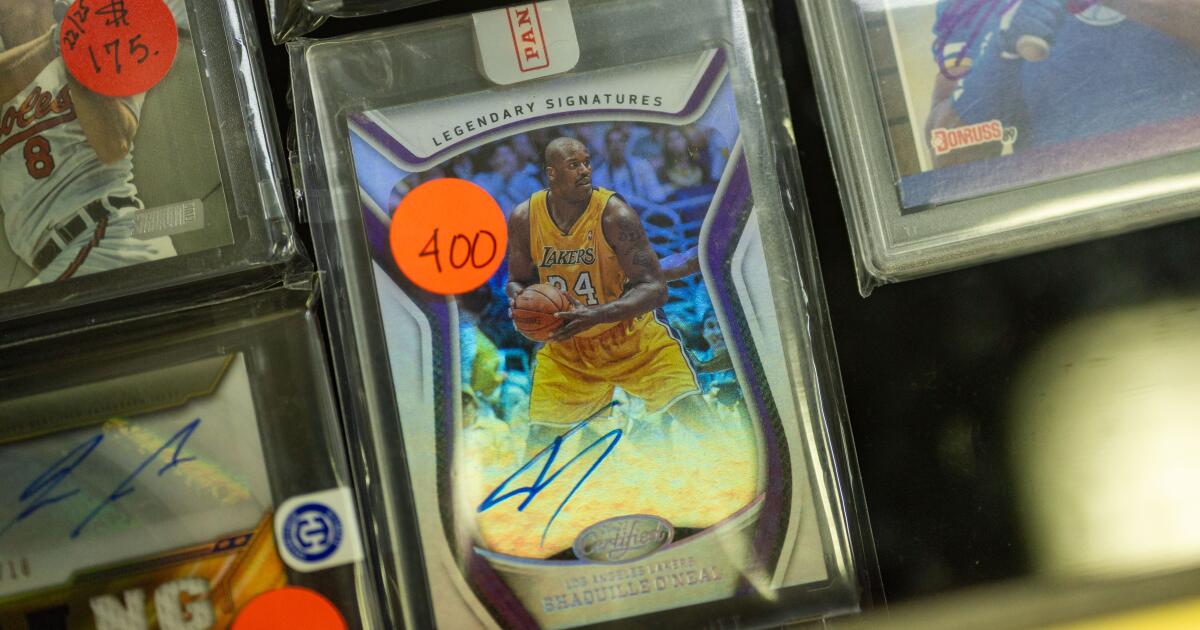 Sports4 minutes ago
LA Card Show! Everything you need to know to make the best of the event this weekend
-

 World16 minutes ago
Trump says US will ‘be taking’ Kharg Island in latest Iran war threat
-
 News39 minutes ago
We Keep Us Safe: The Standoff : Embedded
-

 New York2 hours ago
Video: Knicks Fans Rejoice After Game 4 Victory
-

 Los Angeles, Ca2 hours ago
Police chase suspected DUI driver in Los Angeles County
-
Detroit, MI2 hours ago
Opening of Canada-US bridge in Detroit that Trump threatened to block is delayed
-

 San Francisco, CA3 hours ago
Going to San Francisco Pride 2026? Parade Times, Maps, Street Closures and Safety Advice | KQED
-

 Dallas, TX3 hours ago
Woman arrested in Dallas food delivery turned ambush shooting in March, officials say

