Connect with us

Movie Reviews

Drop-Dead Glamour-Puss Glen Powell Is a Reason to See ‘Twisters’

Published

on

Drop-Dead Glamour-Puss Glen Powell Is a Reason to See ‘Twisters’
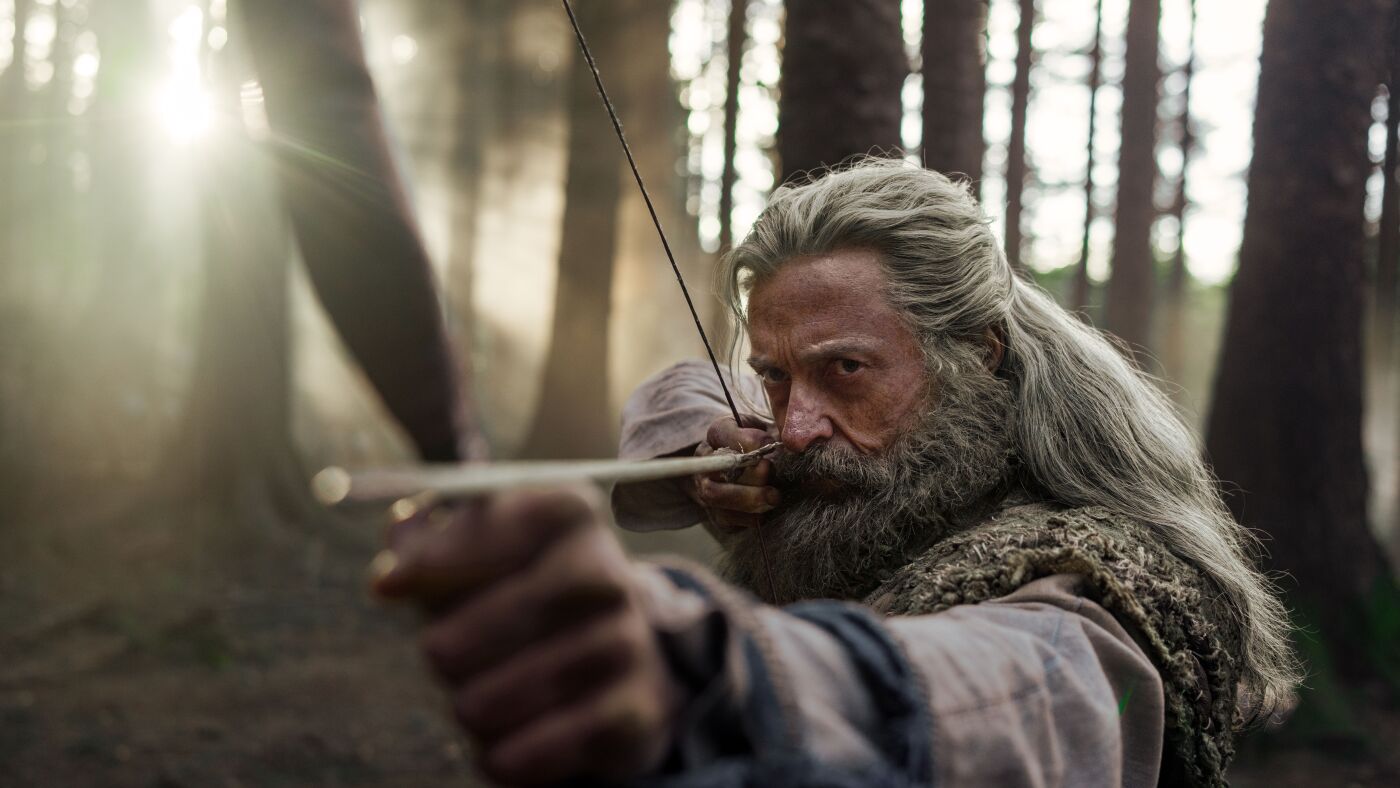
Daisy Edgar-Jones and Glen Powell star in ‘Twisters’, but the love affair part of the film is so wholesomely family-oriented that they never share even one single kiss. Courtesy of Universal Pictures

Before tornado movies threaten to become a cottage industry, just remember that in spite of both the bad ones and the forthcoming plans for more that are being assembled on the drawing boards as we speak, the only one that ever reached blockbuster status was the 1996 action epic Twister. In the realm of tornado movies, we now have Twisters. Erroneous publicity misleads us to consider it a sequel, which it isn’t. In fact, Twisters has nothing whatsoever to do with Twister, aside from the fact that it consists primarily of the same computer-generated special effects and it also takes place in Oklahoma, where the Richard Rodgers-Oscar Hammerstein corn is no longer high as an elephant’s eye, but on its way to almost total crop destruction thanks to not one but an army of lethal, never-ending new twisters that seem to arrive every ten minutes, and the wind comes sweeping down the plain with pulse-pounding noise and life-altering force.  


TWISTERS ★★(2/4 stars)
Directed by: Lee Isaac Chung
Written by: Mark L. Smith
Starring: Daisy Edgar-Jones, Daryl McCormack, Glen Powell
Running time: 122 mins.


There is also something of an obstacle-riddled romance, but nothing as interesting as the one in Twister. (You can’t improve on Helen Hunt and the late Bill Paxton, and only a fool would try.) The new female centerpiece is Kate (Daisy Edgar-Jones), a lovely would-be scientist who grew up obsessed with weather, first shown in a prologue as a college student, placing some kind of gizmo inside the heart of a ferocious tornado in a dangerous project designed to record enough scientific data to give folks in the paths of devastating storms a better chance to prepare and run for their lives in advance of weather patterns. The research fails, killing three of her best friends who are blown away to Tornado Heaven, leaving Kate so depressed and disillusioned that she retires from studying the weather forever.

Five years later, she’s a meteorologist in a Manhattan research lab, safe and far away from the dangers of Oklahoma twisters. An old boyfriend named Jeb (Daryl McCarmack), one of the few survivors of the college tragedy five years earlier, appears suddenly and, for reasons known only by the screenwriter, talks Kate into returning to Oklahoma to track another deadly storm. Subplots about Jeb’s secret job working for a crook and a brief, aborted attempt to revive their stale romance are deleted fast between lightning flashes, ear-splitting wind tunnels and hail the size of billiard balls while Kate falls in with a new heartthrob named Tyler, played by drop dead Glen Powell, the fastest rising glamour-puss movie star since the young Robert Redford first appeared on the scene. The hot sparks between these two are leavened by their constant hostility. Kate and her crew aim to make a difference; Tyler is a storm tracker in it for excitement and adventure.  

References to the twister in The Wizard of Oz are annoying gimmicks inserted to inject some humor into the proceedings, including Tyler’s crew of storm chasers, with names like Scarecrow, Tin Man and Lion. But clearly, the only true wizards in Twisters are not in Kansas anymore—or Oz. They’re the fearless computer geniuses who have conjured up the fantastic special effects in this movie and made them work—the tractors flying through deafening decibel levels of howling wind and rain, the towns razed and obliterated by airborne trucks, barns, farmhouses, trees, chickens and even a rodeo. The thunderous effects they create would keep the Weather Channel in business for years.

Advertisement

The sets, lighting design, and computer-generated special effects are superb, enhancing the viewer’s fascination with the subject matter. By comparison, the humans in Twisters are so unimportant and so undeveloped they seem like interlopers. The one-dimensional plot is tedious and the charm, good looks and style of the two leads are the only elements of the film that try but fail to invigorate. There don’t seem to be any limits to Glen Powell’s charisma. Even his smile is in Cinemascope and Technicolor, and he can act, too—although the benign script by Mark L. Smith is so mired in technology about pollen counts, anchor funnels, velocity measurements and silver oxide, and Lee Isaac Chung’s mediocre direction is so camouflaged in technical obscurity that they don’t give Mr. Powell much of an opportunity to show what he can do. The love affair part of the film is so wholesomely family-oriented that it’s about as sexy as an algebra book. There isn’t even one single kiss. 

Fortunately, the action sequences are nothing bland or dull, adding up to a whale of entertainment. I guess my scoreboard reads: Twisters, 10. People: 0. In the end, Kate prepares to return to New York, Tyler wants to know when she’ll come back, and there’s evidence that a lot of unfinished business is waiting to be solved. Twisters 2, anyone?

Drop-Dead Glamour-Puss Glen Powell Is a Reason to See ‘Twisters’

Movie Reviews

‘Hen’ movie review: György Pálfi pecks at Europe’s migrant crisis through the eyes of a chicken

Published

on

‘Hen’ movie review: György Pálfi pecks at Europe’s migrant crisis through the eyes of a chicken

A rogue chicken observes the world around it—and particularly the plight of immigrants in Greece—in Hen, which premiered at last year’s Toronto International Film Festival and is now playing in Prague cinemas (and with English subtitles at Kino Světozor and Edison Filmhub). This story of man through the eyes of an animal immediately recalls Robert Bresson’s Au Hasard Balthazar (and Jerzy Skolimowski’s more recent EO), but director and co-writer György Pálfi (Taxidermia) maintains a bitter, unsentimental approach that lands with unexpected force.

Hen opens with striking scenes inside an industrial poultry facility, where eggs are laid, processed, and shuttled along assembly lines of machinery and human hands in an almost mechanized rhythm of production. From this system emerges our protagonist: a black chick that immediately stands apart from the others, its entry into the world defined not by nature, but by an uncaring food industry.

The titular hen matures quickly within this environment before being loaded onto a truck with the others, presumably destined for slaughter. Because of her black plumage, she is singled out by the driver and rejected from the shipment, only to be told she will instead end up as soup in his wife’s kitchen. During a stop at a gas station, however, she escapes.

What follows is a journey through rural Greece by the sea, including an encounter with a fox, before she eventually finds refuge at a decaying roadside restaurant run by an older man (Yannis Kokiasmenos), his daughter (Maria Diakopanayotou), and her child. Discovered by the family’s dog Titan, she is placed in a coop alongside other chickens.

After finding a mate in the local rooster, she lays eggs that are regularly collected by the man; in one quietly unsettling scene, she watches him crack them open and cook them into an omelet. The hen repeatedly attempts to escape, as we slowly observe the true function of the property: it is being used as a transit point for migrants arriving in Greece by boat, facilitated by local criminal figures.

Advertisement

Like Au Hasard Balthazar and EO, Hen largely resists anthropomorphizing its animal protagonist. The hen behaves as a hen, and the humans treat her accordingly, creating a work that feels unusually grounded and almost documentary in texture. At the same time, Pálfi allows space for the audience to project meaning onto her journey, never fully closing the gap between instinct and interpretation.

There are moments, however, where the film deliberately leans into stylization. A playful montage set to Ravel’s Boléro captures her repeated escape attempts from the coop, while a romantic musical cue underscores her brief pairing with the rooster. These sequences do not break the realism so much as refract it, gently encouraging us to read emotion into behavior that remains, on the surface, purely animal.

One of the film’s central narrative threads is the hen’s search for a safe space to lay her eggs without them being taken away by the restaurant owner. This deceptively simple instinct becomes a powerful thematic mirror for the film’s human subplot involving migrant trafficking. Pálfi draws a stark, often uncomfortable parallel between the treatment of animals as commodities and the treatment of displaced people as disposable bodies moving through a similar system of exploitation.

The film takes an increasingly bleak turn toward its climax as the migrant storyline comes fully into focus, sharpening its allegorical intent. The juxtaposition of animal and human vulnerability becomes more explicit, reinforcing the film’s central critique of systemic indifference and violence. While effective, this escalation feels unusually dark, and our protagonist’s unknowing role feels particularly cruel.

The use of animal actors in Hen is remarkable throughout. The hen—played by eight trained chickens—is seamlessly integrated into the film’s world, with seamless editing (by Réka Lemhényi) and staging so precise that at times it feels almost impossible without digital augmentation. While subtle effects work must assist at certain moments, the result is convincing throughout, including standout sequences involving a fox and a dog.

Advertisement

Zoltán Dévényi and Giorgos Karvelas’ cinematography is also impressive, capturing both the intimacy of the hen’s low vantage point and the broader Greek landscape with striking clarity. The camera’s proximity to the animal world gives the film a distinct visual grammar, grounding its allegory in tactile observation rather than abstraction.

Hen is a challenging but often deeply affecting allegory that extends the tradition of animal-centered cinema while pushing it into harsher political territory. Pálfi’s approach—unsentimental, patient, and often confrontational—ensures the film lingers long after its final images. It is not an easy watch, nor a comfortable one, but it is a strikingly original piece of filmmaking that uses its unusual perspective to cast familiar human horrors in a stark, unsettling new light.

Continue Reading

Movie Reviews

Movie Review: ‘The Drama’ – Catholic Review

Published

on

Movie Review: ‘The Drama’ – Catholic Review

NEW YORK (OSV News) – Many potential brides and grooms-to-be have experienced cold feet in the lead-up to their nuptials. But few can have had their trotters quite so thoroughly chilled as the previously devoted fiance at the center of writer-director Kristoffer Borgli’s provocative psychological study “The Drama” (A24).

Played by Robert Pattinson, British-born, Boston-based museum curator Charlie Thompson begins the film delighted at the prospect of tying the knot with his live-in girlfriend Emma Harwood (Zendaya). But then comes a visit to their caterers where, after much wine has been sampled, the couple wanders down a dangerous conversational path with disastrous results.

Together with their husband-and-wife matron of honor, Rachel (Alana Haim), and best man, Mike (Mamoudou Athie), Charlie and Emma take turns recounting the worst thing they’ve ever done. For Emma, this involves a potential act of profound evil that she planned in her mind but was ultimately dissuaded from carrying out, instead undergoing a kind of conversion.

Emma’s revelation disturbs all three of her companions but leaves Charlie reeling. With only days to go before the wedding, he finds himself forced to reassess his entire relationship with Emma.

As Charlie wavers between loyalty to the person he thought he knew and fear of hitching himself to someone he may never really have understood at all, he’s cast into emotional turmoil. For their part, Rachel and Mike also wrestle with how to react to the situation.

Advertisement

Among other ramifications, Borgli’s screenplay examines the effect of the bombshell on Emma and Charlie’s sexual interaction. So only grown viewers with a high tolerance for such material should accompany the duo through this dark passage in their lives. They’ll likely find the experience insightful but unsettling.

The film contains strong sexual content, including aberrant acts and glimpses of graphic premarital activity, cohabitation, a sequence involving gory physical violence, a narcotics theme, about a half-dozen uses of profanity, a couple of milder oaths, pervasive rough language, numerous crude expressions and obscene gestures. The OSV News classification is L — limited adult audience, films whose problematic content many adults would find troubling. The Motion Picture Association rating is R — restricted. Under 17 requires accompanying parent or adult guardian.

Read More Movie & Television Reviews

Copyright © 2026 OSV News

Advertisement
Continue Reading

Movie Reviews

Thimmarajupalli TV Movie Review: A grounded rural drama that works better in the second half

Published

on

Thimmarajupalli TV Movie Review: A grounded rural drama that works better in the second half

The Times of India

TNN, Apr 18, 2026, 3:39 PM IST

3.0

Story-The film is set in a quiet, close-knit village, Thimmarajupalli, where life follows a predictable rhythm, shaped by routine, relationships and unspoken hierarchies. The arrival of a television set marks a subtle but significant shift, slowly influencing how people see the world beyond their immediate surroundings. What begins as curiosity and shared entertainment starts to affect personal dynamics, aspirations and even conflicts within the community.Amid these changes, the film follows a group of villagers whose lives intersect through everyday interactions, simmering tensions and evolving relationships. As the narrative progresses, seemingly ordinary incidents begin to connect, revealing a layer of mystery beneath the surface.Review-There’s a certain patience required to settle into Thimmarajupalli TV. It doesn’t rush to impress, nor does it lean on dramatic highs early on. Instead, director Muniraju takes his time — perhaps a little too much, to establish the world, its people and their rhythms. The first half feels like a long, observational walk through the village, capturing its textures, silences and small interactions. This slow-burn approach may test your patience initially. Scenes linger, conversations unfold without urgency, and the narrative seems content simply existing rather than progressing. But there’s a method to this stillness. By the time the film begins to reveal its underlying tensions, you’re already familiar with the space — its people, their quirks and their unspoken conflicts.It is in the second half that the film finds its footing. The mystery element, hinted at earlier, begins to take shape, pulling the narrative into a more engaging space. The shift isn’t dramatic but noticeable, the storytelling gains purpose, and the emotional stakes become clearer. What once felt meandering now starts to feel deliberate. The film benefits immensely from its rooted setting. The rural backdrop isn’t stylised for effect; it feels lived-in and authentic. The cast blends seamlessly into this world, delivering natural performances that add to the film’s grounded tone. There’s an ease in how the characters interact, making even simple moments feel genuine.The background score works effectively in enhancing mood, particularly in the latter portions where the mystery deepens. It doesn’t overpower but gently nudges the narrative forward, adding weight to key moments. Visually too, the film stays true to its setting, capturing the quiet beauty and isolation of rural life. That said, the pacing remains inconsistent. Even in the more engaging second half, certain stretches feel slightly indulgent, as though the film is reluctant to let go of its observational style. A tighter edit could have made the experience more cohesive without losing its essence.Thimmarajupalli TV is not a film that reveals itself instantly. It asks for time and patience, but rewards it with sincerity and a quietly engaging narrative. It may stumble along the way, but its rooted storytelling and stronger latter half ensure that it leaves a lasting impression.—Sanjana Pulugurtha

Continue Reading
Advertisement

Trending