Maine
Maine Has No Medical Cannabis Testing Requirement. Health Advocates Urge Change.


Keri-Jon Wilson started as a hobbyist, making medical marijuana edibles on a small scale for patients suffering from chronic pain and cancer. But in 2015 she expanded her business, Portland-based Pot + Pan Manufacturing, and began to standardize her products.
“Eventually you’ve got to kind of grow up and decide if you want to grow the business, and add those additional steps and processes and best practice that comes with growth,” she said.
Despite no requirement in Maine to test medical cannabis for content or potency, Wilson has tested all of her batches since 2021.
The medical cannabis program in Maine is governed by separate regulations from the adult use, or recreational, program: While the adult use program requires testing for contaminants and potency, and includes potency limits, the medical use program requires neither.
Public health advocates and state officials want to see testing requirements aligned across both programs, but efforts to mandate testing have been met with strong pushback from the industry.
State Report
Last fall, the state’s Office of Cannabis Policy released a report pushing for required testing in the medical cannabis program, but lawmakers instead pursued broad legislation intended to reduce stigma around the cannabis industry that largely loosened restrictions in both the adult use and medical programs.
The resulting legislation, which takes effect this month, aims to make regulations around cannabis closer to those around alcohol by eliminating ID checks at the door, allowing minors to go into stores with a parent or guardian and allowing samples.
Wilson says it’s worth the additional cost to ensure the safety and quality of her product, as well as to check her processes and ensure consistency.
One time, lab results showed that an edible had five times the amount of THC it was supposed to have, 50 mg instead of 10. What could have been a large discrepancy in dose was caught before it left the building and never made it to the shelves, she said.
While she’s grateful there are strong lobbying groups on behalf of the medical cannabis industry, and she noted that many operations are transparent and safe, Wilson said it is alarming that there is such limited oversight for a medical product.
When she tells counterparts in other states that there are no testing requirements in Maine, “their jaws drop.”
“The reality is in the absence of those checks and balances, you really are just taking people’s words (for it) and that’s where it gets a little muddy,” she said.
Consumer Laws
Matt Wellington, associate director of the Maine Public Health Association, said he thinks the way to reduce stigma around cannabis use is to impose consumer protection regulations that ensure Mainers know they have accurate information about the products.
“Lawmakers have to see that the way forward for cannabis in Maine is to make sure that folks can have confidence in the products that they’re using, that the products are deemed safe, (and to) strengthen the oversight of the medical program, and make sure that we have common sense protections like testing and potency limits,” Wellington said.
Catherine Lewis, who’s on the board of the Medical Marijuana Caregivers of Maine — a nonprofit advocacy group that represents medical cannabis patients, growers and manufacturers — pushed back on the idea that caregivers are refusing to be regulated. The term “caregiver” in this context refers to those who can cultivate, manufacture and sell medical cannabis to qualifying patients, other caregivers and dispensaries.
Lewis, herself a caregiver, said she would support mandatory testing but only under certain conditions. She has concerns about the consistency and accuracy of lab testing, and worries the expense of testing could push small-batch caregivers out of business.
Lewis wants the state to set more explicit testing standards for private labs to ensure their processes are the same, and she doesn’t think the medical program should be subject to as rigorous testing as the adult use program due to the smaller size of their operations.
“The state has refused to meet us in the middle with the testing requirements so we’ve had to fight to kill it completely,” she said. “If we allow them to put the laws in place the way they have for adult use, the medical industry and smaller producers would crumble, and patients would lose access to their medicine.”
Regulatory Debate
The medical cannabis program in Maine evolved before the adult use program and has separate regulations. When the medical use program was started in 1999, there were fewer businesses and they were small operations.
After Maine voters approved recreational marijuana use in 2016, there was an extensive public process to establish regulations and protections, which were adopted in 2019.
The state requires that recreational marijuana products be tested in their final form before they are sold to check for mold, toxins and other harmful chemicals. The products are also checked for THC potency and homogeneity; the potency limit for edible cannabis is 10 mg per serving.
The field of medical cannabis has no testing requirements nor potency limits.
Linda Frazier, who was involved in the regulatory process for the adult use program in 2019 as a public health consultant, said the intention was to establish a regulatory framework for the recreational program, then to update the medical use program to align with the new framework.
But the medical cannabis industry pushed back, Frazier said, voicing concern about changing the regulations too much and too fast, and worried about the financial impact on businesses.
“Right now the loudest people in the room the committee is listening to and the legislature hears from are medical providers,” Frazier said. “They’ve become very organized and their message has been very clear that to implement more restrictive marketing and testing … has a fiscal impact on them that they feel is unnecessary and unfair. They’ve been very successful with that messaging.”
Lewis, with the caregiver group, said it would not make sense to require the same level of testing for the medical cannabis program as the adult use program because the medical caregivers often are home-based programs and make small batches, so extensive testing requirements would significantly cut into their profit margin.
Instead, she said manufacturers should be required to test the oil before making a product, then spot-check final products and ensure the dose calculations were correct. She suggested that any product that has not been tested could be labeled “not tested.”
Testing Requirements
John Hudak, director of the Office of Cannabis Policy, said one of the first things he noticed when taking over in 2022 was the medical program lacked a testing requirement, despite hearing from patients assuming there was one.
“We kept hearing from the medical cannabis industry to essentially just trust them that everything was clean. We decided to test that question and provide as much information as we could to medical patients,” Hudak said.
Last fall his office tested 120 samples from medical cannabis sellers across the state and found 42 percent had at least one contaminant that would have prohibited them from being sold on the recreational market, including pesticides, heavy metals, yeast and mold. The most common pesticide detected, myclobutanil, “releases cyanide gas upon combustion and causes a range of mild to severe effects when inhaled,” according to the report.
Lewis, with the medical cannabis industry group, said she had concerns about the sample size of the report and wondered what precipitated the test when she had heard few stories about patients getting sick from the products.
Hudak said he has not conducted a similar study on the potency of medical cannabis, but his agency has tested products on a case-by-case basis when consumers raised concerns. In a recent example, he said an edible that was supposed to be 10 mg tested at 120 mg.
Overconsumption is rarely fatal, but can include nausea, vomiting, intense fatigue and even hospitalization, Hudak said.
Other States
Testing is required for medical programs in most other states, he said, calling it the national standard. A 2022 study from Safe Access, a medical cannabis patient advocacy organization, found that of the 35 states with medical cannabis programs, Maine was one of the two without required testing. The other was Louisiana.
Hudak said he believes the opposition in Maine is a small but vocal minority that has been able to stave off previous attempts at regulations.
Rather than piecemeal changes to the medical program, Hudak said a massive overhaul is needed. The program is “wildly outdated,” he said, and a testing requirement would be a good place to start.
In response to concerns about the cost of testing, Hudak said the price of recreational marijuana has decreased despite the rollout of mandatory testing requirements. An OCP dashboard shows the average price per gram of bud/flower decreased from $15.83 to $7.30 between 2020 and 2024.
“If producing uncontaminated cannabis — that is demonstrated to be uncontaminated — is too expensive, you probably shouldn’t be producing medicine for patients,” he said.
“Absolutely,” Lewis said in response when The Monitor shared his comment. “But who is to say it’s contaminated?”
She said she’s sent portions of the same sample to different labs; it passed one lab and failed another. Without set standards from the state, she worries about the consistency of the lab results.
Hudak’s office studied this question by examining nearly 8,000 potency test results for cannabis flower at three certified labs over a two-year period and found “the variation in potency is explained by the cultivator and not the cannabis testing facility.”
Safety Monitoring
Barry Chaffin, co-founder of Nova Analytic Labs in Portland, said he has many medical caregiver clients who voluntarily test their products to monitor safety and quality. In the last year, Chaffin said he has tested about 80 recreational and 190 medical accounts.
In the recreational industry, a producer must select a sample from each batch and get it tested before selling it, Chaffin said. If the batch fails, it sometimes can be remediated. For example, if cannabis flower failed for microbials, there might be a way to kill the microbes. Other contaminants, like heavy metals, can’t be remediated and the client would have to destroy any batch where they are found, Chaffin said.
There’s no potency limit for recreational cannabis flower, so if it tests at a higher potency than expected, the product would simply be labeled at the higher dose. There is a potency limit for edibles, so if those exceeded the limit, they would need to be remade or destroyed, he said.
Chaffin said there should be a regulatory framework for testing in the medical cannabis program, but like others noted that the pushback from industry groups has been strong.
“There are a lot of politics at play when it comes to any kind of regulatory framework on the medical program,” he said. “There’s some very strong feelings on having it regulated and there’s very strong feelings against having it regulated.”
Lewis said the medical and adult use industries worked well together during the past legislative session, but they don’t want to see the programs merged because they serve different populations.
“They are overregulating adult use and under-regulating medical,” she said. “It would be nice to see it meet somewhere in the middle.”
This story was originally published by The Maine Monitor and distributed through a partnership with The Associated Press.
Copyright 2024 Associated Press. All rights reserved. This material may not be published, broadcast, rewritten or redistributed.
Topics
Cannabis
Maine



A woman died Monday after a fire on East Main Street in Fort Kent.
Woman Died after Fire in Fort Kent
Fort Kent Fire and Rescue said “Upon arrival, Chief Pelletier was unable to confirm that all tenants of the apartment building were accounted for.”
Fire at the Front of the Building and Second Floor
Firefighters battled the blaze at the front of the building and another crew attacked the second floor.
First Floor Fire Put Out
The fire on the first floor was quickly extinguished.
Crews Learned Someone was Still in the Building
Crews got information that there was someone inside the building.
ALSO READ: One Person Died & One Injured after Rollover ATV Crash
Woman was Located in the Building and First Responders Tried Resuscitation
“Shortly thereafter, firefighters located a civilian victim and rescued her, unfortunately resuscitation efforts by ASI and Fort Kent firefighters were unsuccessful,” said Chief Pelletier with Fort Kent Fire and Rescue.
Maine Fire Marshal’s Office Investigating the Cause of the Fire
The Maine Fire Marshal’s Office responded to the scene and is investigating the cause of the fire.
MORE NEWS: Woman Shot and Seriously Injured with Gunshot Wound
Name and Age Not Released Pending Family Notification
The woman’s name and age were not released pending notification of the family.
READ MORE: Two Men Fled Crash & One Apprehended after Hitting Pole
Multiple Agencies Responded and Assisted with the Fire
Assisting Fort Kent Fire and Rescue were the Eagle Lake Fire Department, ASI, Fort Kent Public Works and the Red Cross.
LOOK: Are These 16 Classic American Meals Finally Making a Comeback?
From casserole-night favorites to full-on beige-on-beige comfort, these American dinners fell out of fashion — but could they be on their way back?
Gallery Credit: Stephen Lenz
LOOK: 21 Candies From the ’80s That You Probably Haven’t Thought About in Years
How many of these over-the-top ’80s candies — sweet, sour, and sometimes downright ridiculous — do you remember from your childhood?
Gallery Credit: Stephen Lenz

If you’re gluten-free or have celiac disease, you know the feeling: sometimes you just want what everyone else is eating. Wings, fries, pizza, those classic comfort foods that can often feel off-limits. Thankfully, Maine is really starting to show up for the gluten-free community. More restaurants are adding gluten-free options to their menus, and even better, more places are investing in separate fryers to help keep us safe.
One local favorite that deserves a reminder is 104 Main Public House in Topsham. They’ve been serving gluten-free wings, pizza, and fries for quite a while, but it’s worth highlighting again because they do it right. Their menu includes gluten-free wings and gluten-free pizza options, and they are known for accommodating gluten-free diners.
As someone who has personally eaten their wings, I can confidently say they’re delicious and I’ve always felt safe ordering them. Knowing they have a dedicated fryer makes all the difference when you’re navigating celiac disease and trying to enjoy a meal without worrying about cross-contact.
The real question is: are you a ranch or blue cheese person? Do you go for classic BBQ or are you all about the hot wings? Either way, if you’ve been craving crispy, flavorful wings this summer, 104 Main should be at the top of your list.
It’s great to see more Maine restaurants making gluten-free dining easier, and tastier, for all of us.
8 of the Best and Most Cozy Portland, Maine, Cafes
Gallery Credit: Allyssa Marson
12 Things That Absolutely Surprise People When They First Visit Maine
Let’s chat about the things that shock you when you visit the great Pine Tree state.
Gallery Credit: Lizzy Snyder
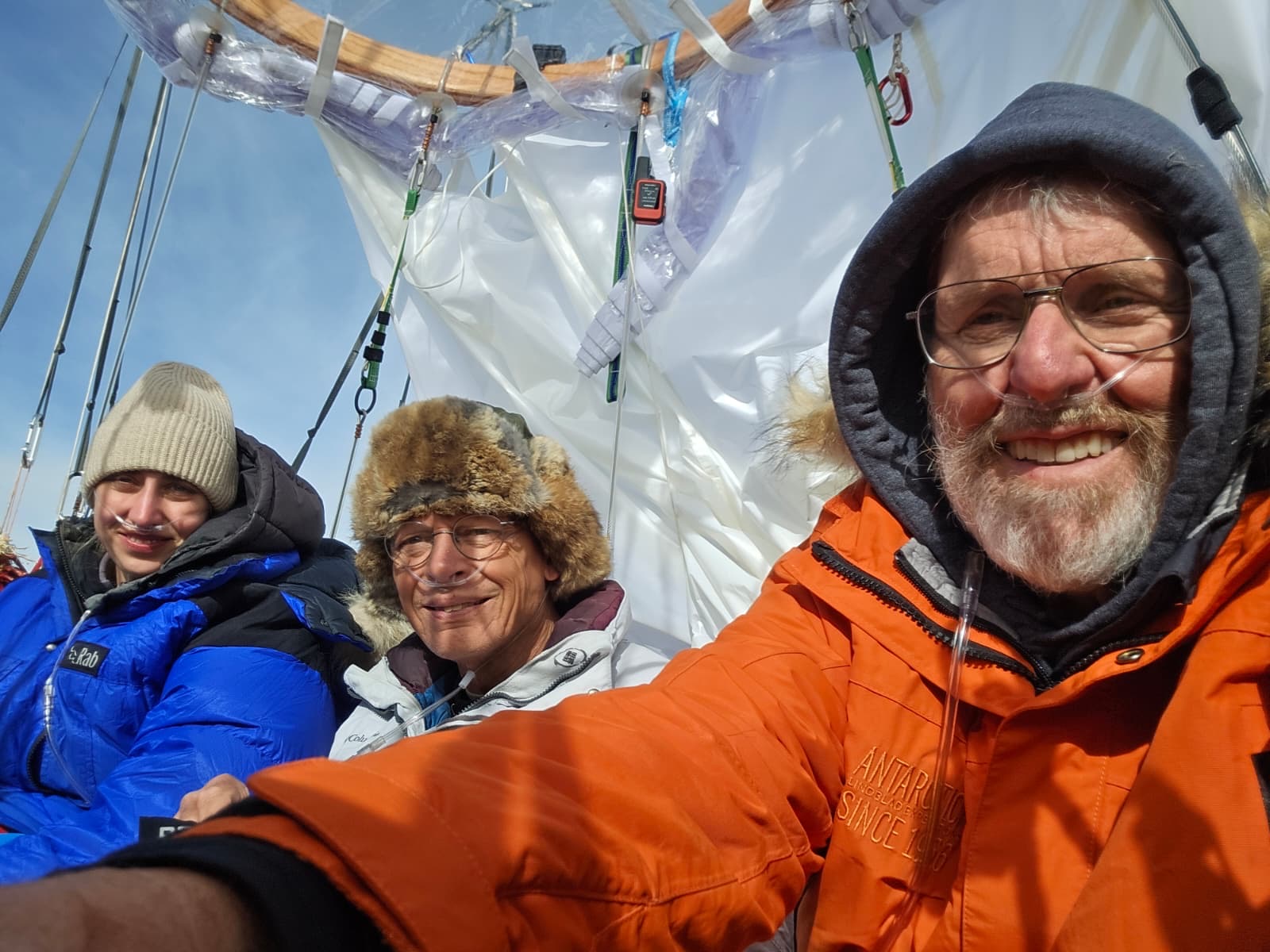
Pilots of the Atlantic Explorer, which lifted off from Presque Isle Thursday in a quest to make the first trans-Atlantic crossing by hydrogen balloon, smile after heading out over the open ocean Friday. From left are Alicia Hempleman-Adams, Bert Padelt and Peter Cuneo. (Courtesy of Peter Cuneo)
Days after Bert Padelt completed a history-making 2,852-mile balloon journey from Maine to Europe across the Atlantic Ocean, the whole experience still felt like a blur.
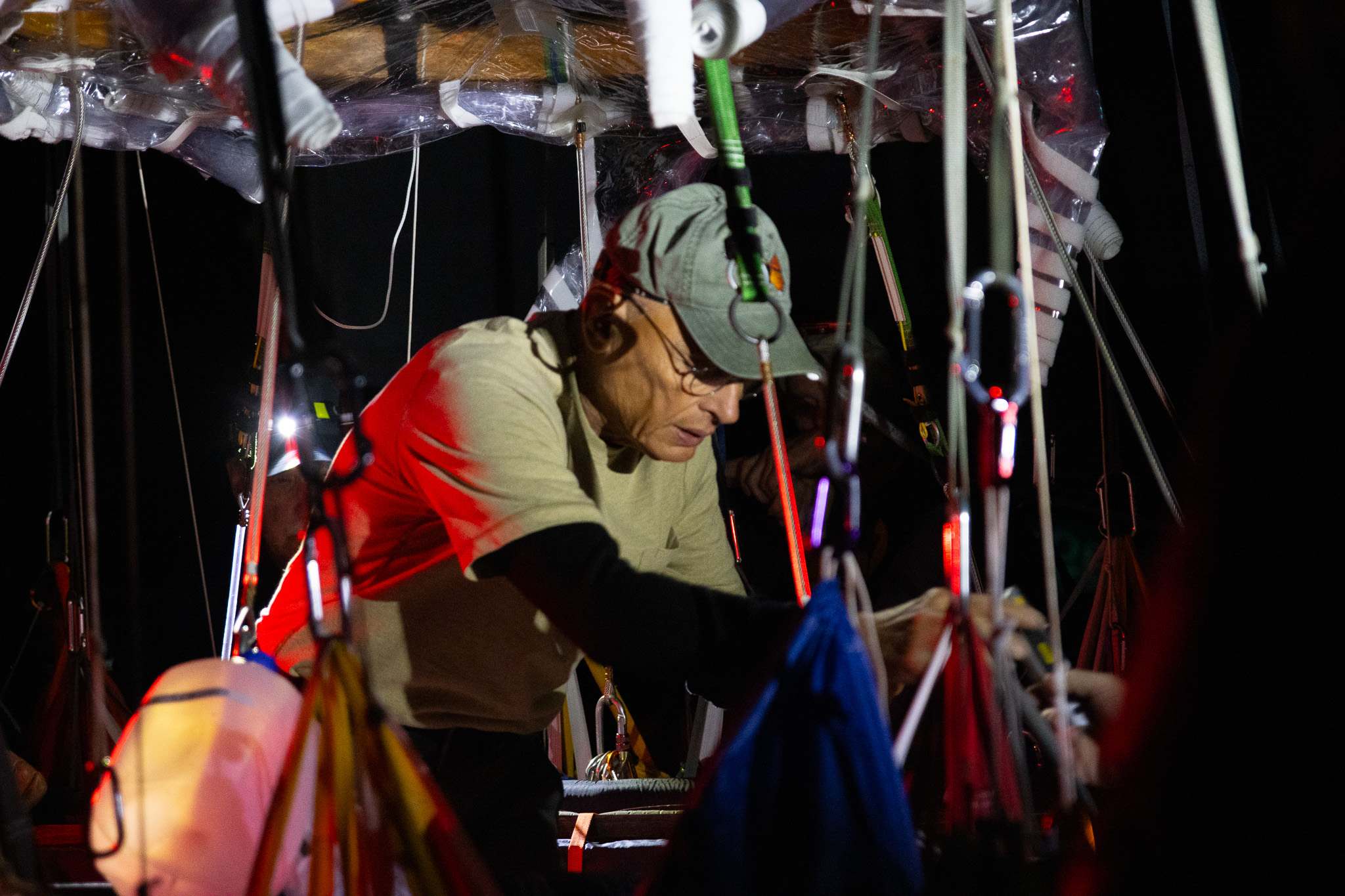
The closet-sized basket where he and his co-pilots endured torrential rain, snow and freezing temperatures was packed up, its voluminous canopy deflated, but the world record-holding American balloon builder couldn’t believe he had finally accomplished a lifelong dream.
“I kept waking up thinking, did this really happen?” Padelt said in an interview with the Bangor Daily News from Luxembourg, where the Atlantic Explorer landed on June 7. “It’s now starting to sink in, and it has turned out better than I ever thought it would.”
Padelt — who is from Pennsylvania — alongside fellow American Peter Cuneo and British explorer Alicia Hempleman-Adams, are now the first people to cross an ocean in a hydrogen-powered open-basket balloon, and just the 20th team ever to mount a successful trans-Atlantic balloon flight.
The trio spent more than 70 hours in the air after taking off from a Presque Isle field early June 4, traveling as fast as 90 miles an hour and as high as 25,000 feet as they navigated strong winds and a storm above the open ocean. They set down near the city of Diekirch in northeastern Luxembourg on a “very peaceful” morning, a stark contrast to the conditions they had faced earlier.
“It was almost like we were on another flight altogether,” Padelt said. “You could hear birds chirping, roosters crowing, cows mooing. You saw fog in the valleys, which was indicating calm winds. Our final hour in the air was an extremely peaceful, wonderful moment.”

The Atlantic Explorer set off from Presque Isle after hours of delays from high winds. The delay prevented the team from getting ahead of bad weather that would catch up to them later, Padelt speculated.
The first day went well, he said. All their equipment functioned perfectly and the balloon flew well. The team crossed New Brunswick, then Prince Edward Island over the first 12 hours, surpassing where the Atlantic Explorer had been forced down in its previous two attempts due to bad weather and a gas leak.
By that evening, they cleared Cape Breton Island and headed for Newfoundland, the last landmass before the open ocean. A few hours later, Padelt, Cuneo and Hempleman-Adams committed to the crossing and ventured out over the Atlantic.
Atmospheric conditions on the second day meant the team had to drop more ballast — jettisoning sand bags from the basket to gain altitude — than they wanted to.
“We basically knocked off two days of duration [of] ballast,” Padelt said. “But the saving grace is we knew that the speed was going to pick up, so we weren’t all that concerned.”
Then came the storm.
“It was a surprise,” Padelt said. “We knew the weather was there with the hopes that it was going to be south of us.”
With little more than a thin rain cover, the Atlantic Explorer battled heavy precipitation through the night. It rose into the clouds, where temperatures dropped as low as 17 degrees below zero and snow built up on top of the balloon, forcing it to sink. The snow turned to rain and then the process repeated itself.
“This continued probably for about four hours or so,” Padelt said. “But when the sun came up, it was a bright blue sky above us and [the storm] was beyond us.”

The pilots had projected a successful flight would take four to six days averaging around 35 miles per hour. But as the wind picked up and the sun beat down on the balloon the morning after the storm, the Explorer topped 90 miles per hour. The balloon crossed the open Atlantic Ocean in approximately 37 hours.
They passed over the beaches of Normandy along the French coast on the evening of June 6, the 82nd anniversary of the D-Day invasion, when the Allied forces used hydrogen powered barrage balloons to prevent German aircraft from attacking their position from a low altitude.
They flew inland overnight, crossing into Luxembourg as the sun rose on June 7, and landed in a field.
Besides being the first hydrogen-powered trans-Atlantic trip, the journey set a world distance record for the size and type of balloon. Hempleman-Adams, once the youngest person ever to visit the North Pole, also became the first woman to cross the Atlantic in a gas-powered balloon, and the second to do so in any type of balloon.
The balloon’s chase team reached the site within an hour. That group included Padelt’s wife, Joanie, with whom he built the Atlantic Explorer.
“All the times I’ve been thinking about this flight and how I wanted it to end, I wanted it to end with a stand-up landing with my wife there to see the balloon,” Padelt said. “The odds of that are very slim when you think about how far you’re flying … but as it turned out, it worked. And so when she arrived, there were some strong emotions, for sure.”
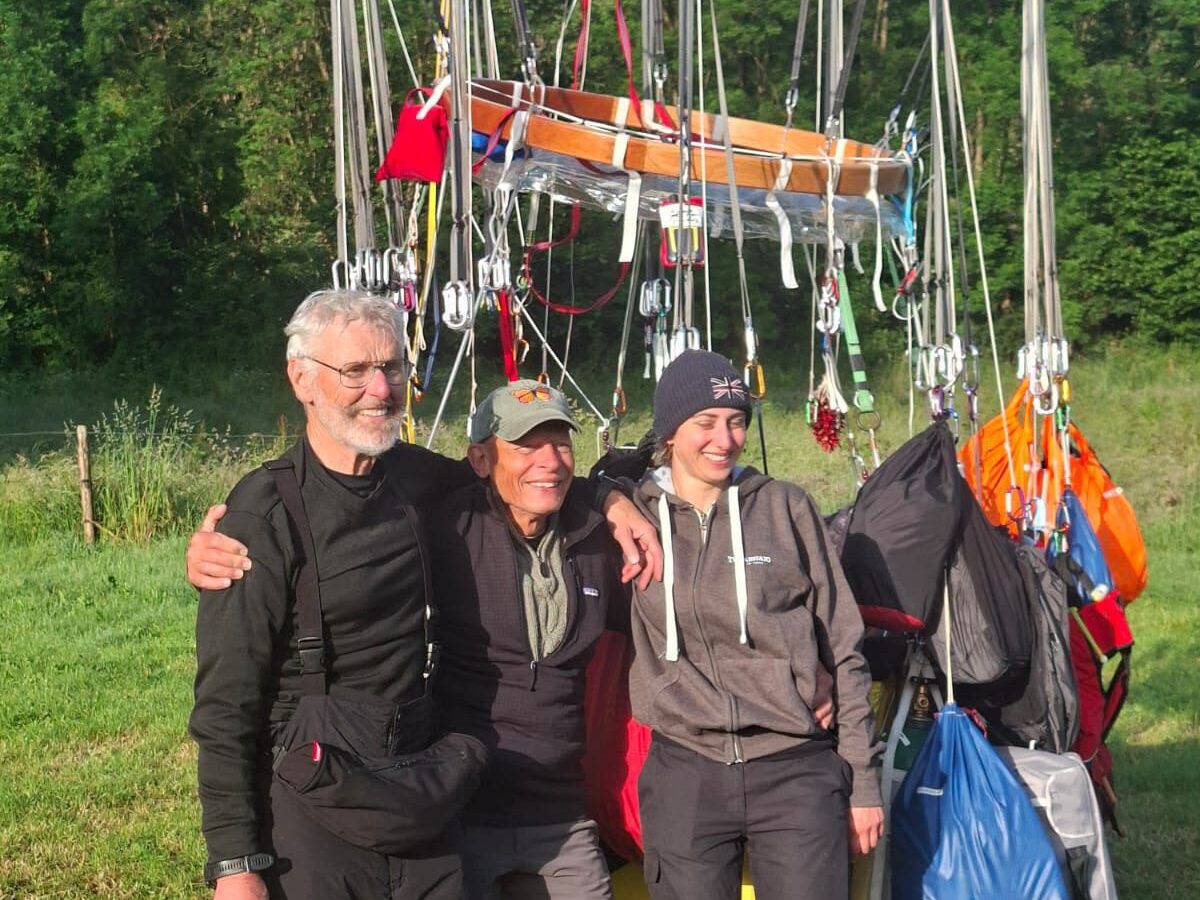
Members of the Cercle Luxembourgeois de l’Aérostation, a nearby balloon club, also arrived to help the crew deflate and pack up the balloon.
As their successful crossing drew attention, the royal family of Luxembourg invited the group to the Palais Grand-Ducal — the country’s royal palace. Padelt, Cuneo and the chase team met with the Grand Duke Henri, whom they presented with one of their final two bags of ballast from the flight.
“He was very, very interested in the flight and how it turned out,” Padelt said. “He was asking quite a few questions and so forth and went to great efforts to welcome us to Luxembourg.”
The crew headed back to the U.S. on Thursday, capping off an adventure Padelt had dreamt of since he was awed by the first trans-Atlantic balloon flight. That balloon, the Double Eagle II, launched from Presque Isle in 1978.
As the Atlantic Explorer took off from the same city last week, hidden in the canopy was a 1978 silver dollar, both a good luck charm and an homage to the Double Eagle II, as a new group of balloonists made history.
“I knew it would be hard. So there were no surprises,” Padelt said. “But the sense of reward afterwards is exactly the feeling I was looking for.”

-

 Los Angeles, Ca15 minutes ago
Suspicious item leads to closure of Metro station on Tuesday morning
-

 Detroit, MI37 minutes ago
How to celebrate Juneteenth in Metro Detroit
-

 San Francisco, CA45 minutes ago
Headlines, June 16 – Streetsblog San Francisco
-
Dallas, TX52 minutes ago
Mailbag: Is Lawrence expected to start?
-

 Miami, FL55 minutes ago
Naked man burglarized Miami Beach apartment and battered detective, cops say
-

 Boston, MA1 hour ago
Two Ex-Red Sox Are Suddenly Thriving Again After Leaving Boston
-

 Denver, CO1 hour ago
Denver police investigate early morning shooting in Capitol Hill neighborhood
-

 Seattle, WA1 hour ago
Seattle weather: Cooling down Tuesday, highs in the 70s


