Address Newsletter
Our weekly digest on buying, selling, and design, with expert advice and insider neighborhood knowledge.

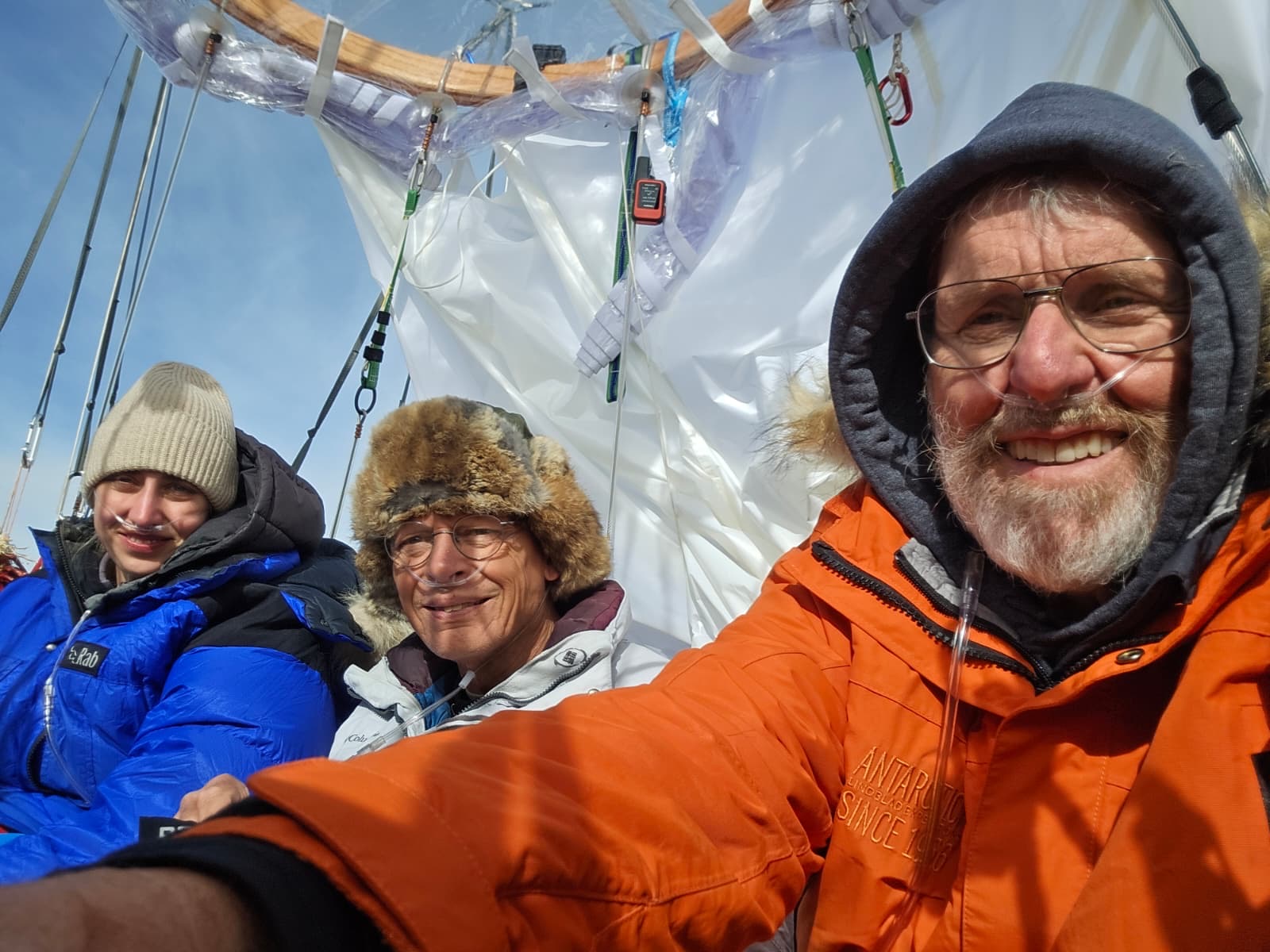
Pilots of the Atlantic Explorer, which lifted off from Presque Isle Thursday in a quest to make the first trans-Atlantic crossing by hydrogen balloon, smile after heading out over the open ocean Friday. From left are Alicia Hempleman-Adams, Bert Padelt and Peter Cuneo. (Courtesy of Peter Cuneo)
Days after Bert Padelt completed a history-making 2,852-mile balloon journey from Maine to Europe across the Atlantic Ocean, the whole experience still felt like a blur.
The closet-sized basket where he and his co-pilots endured torrential rain, snow and freezing temperatures was packed up, its voluminous canopy deflated, but the world record-holding American balloon builder couldn’t believe he had finally accomplished a lifelong dream.
“I kept waking up thinking, did this really happen?” Padelt said in an interview with the Bangor Daily News from Luxembourg, where the Atlantic Explorer landed on June 7. “It’s now starting to sink in, and it has turned out better than I ever thought it would.”
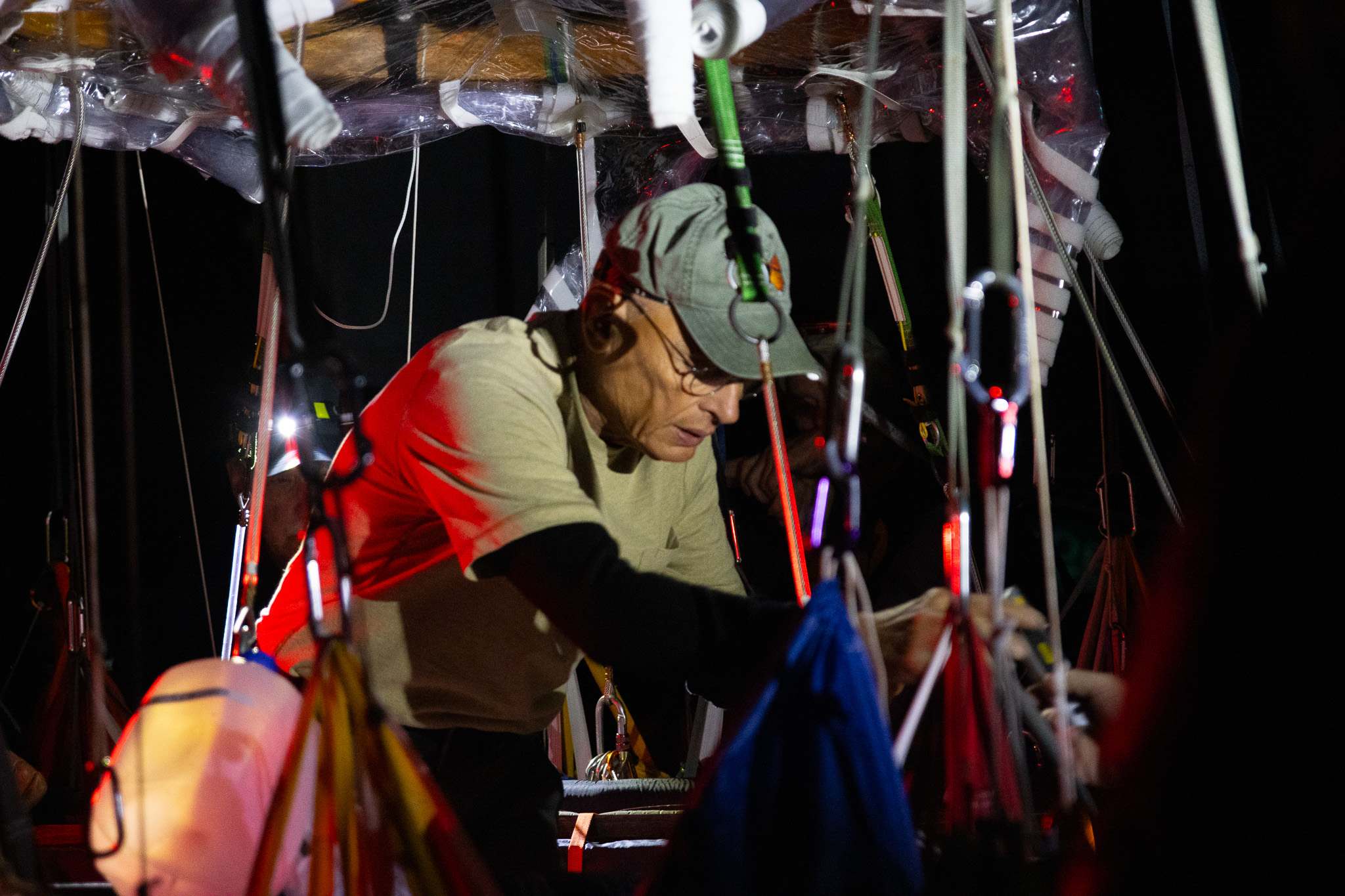
Padelt — who is from Pennsylvania — alongside fellow American Peter Cuneo and British explorer Alicia Hempleman-Adams, are now the first people to cross an ocean in a hydrogen-powered open-basket balloon, and just the 20th team ever to mount a successful trans-Atlantic balloon flight.
The trio spent more than 70 hours in the air after taking off from a Presque Isle field early June 4, traveling as fast as 90 miles an hour and as high as 25,000 feet as they navigated strong winds and a storm above the open ocean. They set down near the city of Diekirch in northeastern Luxembourg on a “very peaceful” morning, a stark contrast to the conditions they had faced earlier.
“It was almost like we were on another flight altogether,” Padelt said. “You could hear birds chirping, roosters crowing, cows mooing. You saw fog in the valleys, which was indicating calm winds. Our final hour in the air was an extremely peaceful, wonderful moment.”

The Atlantic Explorer set off from Presque Isle after hours of delays from high winds. The delay prevented the team from getting ahead of bad weather that would catch up to them later, Padelt speculated.
The first day went well, he said. All their equipment functioned perfectly and the balloon flew well. The team crossed New Brunswick, then Prince Edward Island over the first 12 hours, surpassing where the Atlantic Explorer had been forced down in its previous two attempts due to bad weather and a gas leak.
By that evening, they cleared Cape Breton Island and headed for Newfoundland, the last landmass before the open ocean. A few hours later, Padelt, Cuneo and Hempleman-Adams committed to the crossing and ventured out over the Atlantic.
Atmospheric conditions on the second day meant the team had to drop more ballast — jettisoning sand bags from the basket to gain altitude — than they wanted to.
“We basically knocked off two days of duration [of] ballast,” Padelt said. “But the saving grace is we knew that the speed was going to pick up, so we weren’t all that concerned.”
Then came the storm.
“It was a surprise,” Padelt said. “We knew the weather was there with the hopes that it was going to be south of us.”
With little more than a thin rain cover, the Atlantic Explorer battled heavy precipitation through the night. It rose into the clouds, where temperatures dropped as low as 17 degrees below zero and snow built up on top of the balloon, forcing it to sink. The snow turned to rain and then the process repeated itself.
“This continued probably for about four hours or so,” Padelt said. “But when the sun came up, it was a bright blue sky above us and [the storm] was beyond us.”
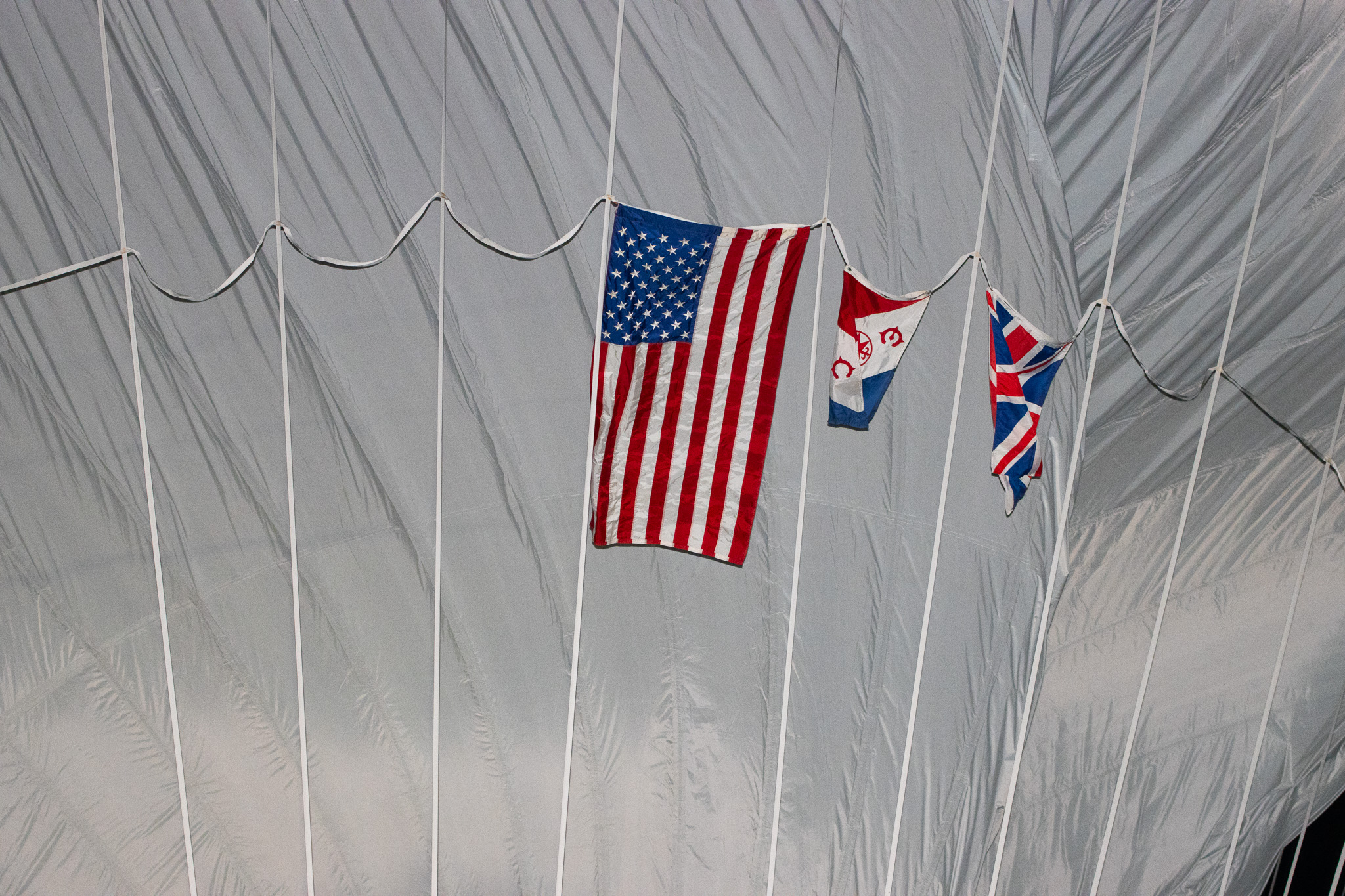
The pilots had projected a successful flight would take four to six days averaging around 35 miles per hour. But as the wind picked up and the sun beat down on the balloon the morning after the storm, the Explorer topped 90 miles per hour. The balloon crossed the open Atlantic Ocean in approximately 37 hours.
They passed over the beaches of Normandy along the French coast on the evening of June 6, the 82nd anniversary of the D-Day invasion, when the Allied forces used hydrogen powered barrage balloons to prevent German aircraft from attacking their position from a low altitude.
They flew inland overnight, crossing into Luxembourg as the sun rose on June 7, and landed in a field.
Besides being the first hydrogen-powered trans-Atlantic trip, the journey set a world distance record for the size and type of balloon. Hempleman-Adams, once the youngest person ever to visit the North Pole, also became the first woman to cross the Atlantic in a gas-powered balloon, and the second to do so in any type of balloon.
The balloon’s chase team reached the site within an hour. That group included Padelt’s wife, Joanie, with whom he built the Atlantic Explorer.
“All the times I’ve been thinking about this flight and how I wanted it to end, I wanted it to end with a stand-up landing with my wife there to see the balloon,” Padelt said. “The odds of that are very slim when you think about how far you’re flying … but as it turned out, it worked. And so when she arrived, there were some strong emotions, for sure.”
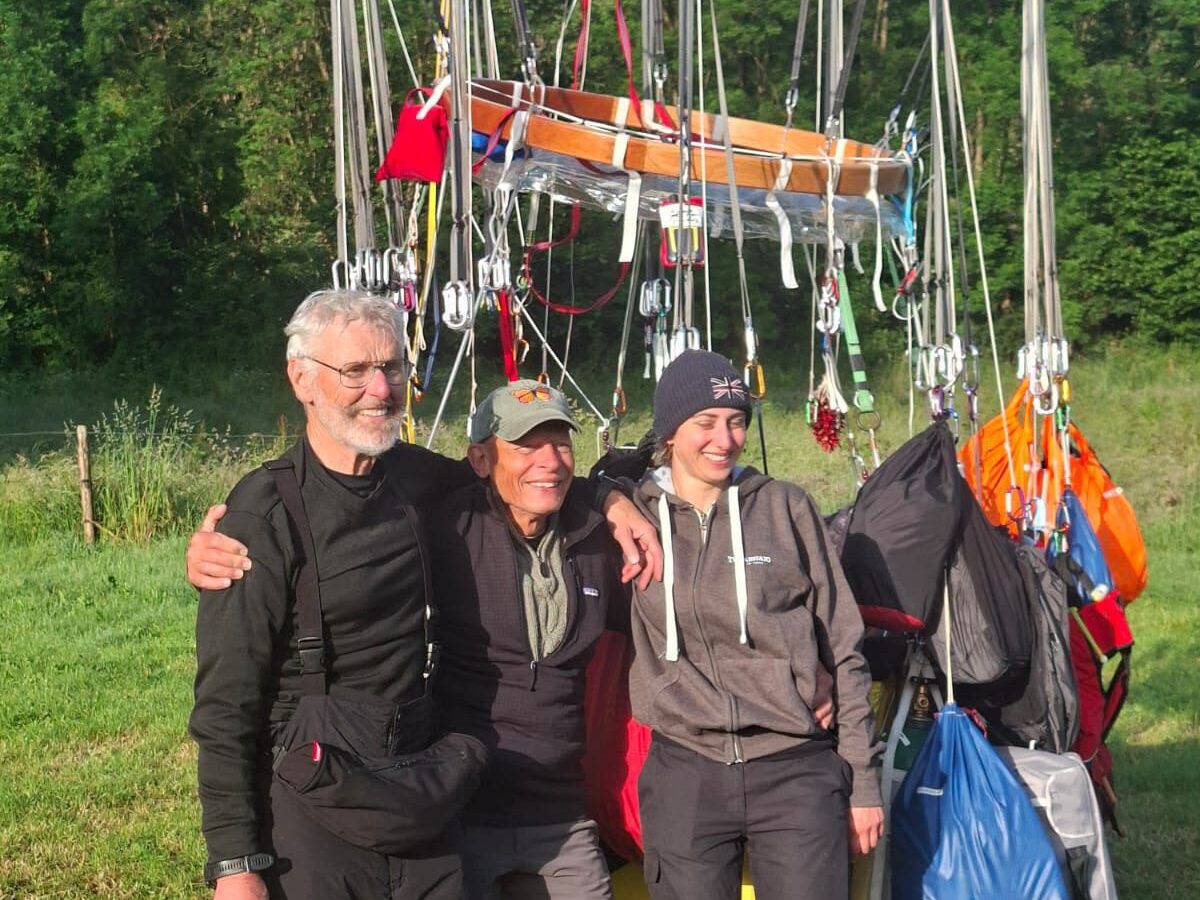
Members of the Cercle Luxembourgeois de l’Aérostation, a nearby balloon club, also arrived to help the crew deflate and pack up the balloon.
As their successful crossing drew attention, the royal family of Luxembourg invited the group to the Palais Grand-Ducal — the country’s royal palace. Padelt, Cuneo and the chase team met with the Grand Duke Henri, whom they presented with one of their final two bags of ballast from the flight.
“He was very, very interested in the flight and how it turned out,” Padelt said. “He was asking quite a few questions and so forth and went to great efforts to welcome us to Luxembourg.”
The crew headed back to the U.S. on Thursday, capping off an adventure Padelt had dreamt of since he was awed by the first trans-Atlantic balloon flight. That balloon, the Double Eagle II, launched from Presque Isle in 1978.
As the Atlantic Explorer took off from the same city last week, hidden in the canopy was a 1978 silver dollar, both a good luck charm and an homage to the Double Eagle II, as a new group of balloonists made history.
“I knew it would be hard. So there were no surprises,” Padelt said. “But the sense of reward afterwards is exactly the feeling I was looking for.”



On the Market
Gilbert Head, at the southern end of Long Island in Georgetown, Maine, includes a beautifully kept Federal house, another house that has served as an artist’s studio, a private deep-water dock and pier built of Deer Isle granite, a spacious boat house, and hiking trails on 25 acres of one of Maine’s surpassingly beautiful mid-coast islands. It is a historic site at the mouth of the Kennebec River for sale for $3,850,000. Along with the natural beauty of a Maine island, it has privacy as it’s accessed by water only.

Built in 1837, the 3,346-square-foot main house has the dignified hallmarks of the Federal style: simple rectangular massing topped by a hipped roof, a pedimented entry flanked with side lights, wide-plank pumpkin pine floors, and gracefully proportioned rooms featuring original woodwork.
There are five bedrooms (including a first-floor primary bedroom with an ensuite bathroom) and three full bathrooms, two fireplaces, and a large eat-in kitchen. While the kitchen is equipped with modern enmities like granite countertops, a farmhouse sink, an electric cooktop, twin dishwashers, and a large central island, it retains historic charm with a turn-of-the-20th-century cast iron cookstove, beaded-board wainscoting, and a fireplace with original Federal styling.


The separate house known as the Studio is a one and one-half story farmhouse. Its interior is unfinished, but while it presents a building project, it retains many original features, including old flooring, wainscoting, the stairs, and fireplace surrounds. The structure includes a new roof and chimney.
The current owners, who bought the property in 2000, made significant improvements, including the kitchen updates. They built the dock, a new post-and-beam barn, a new gravel road to the dock, installed a new septic system, drilled a new well, put standing-seam metal roofs on both houses, and brought power to the island via an underground cable.


While the main house has the comforts and amenities of modern life, it is surrounded by mementoes of the past, including old stonework, perennial gardens, an ancient orchard, and waterfront meadows. A large stone bears a plaque installed in 1934 by descendants of the original settlers, John and Joanna Spinney, who moved here with their nine children in 1753.
Notable past owners were Stephen and Elizabeth Etnier, who bought the property in 1935. He was a well-known artist; she wrote “On Gilbert Head” about their life on the island. Although the Spinneys and their descendants farmed and fished here year-round, Gilbert Head served as a vacation home for the Etniers and for the two owners who have held the property since Elizabeth Etnier died in 1994.


From here, residents can take a boat to a number of public landings in Bath, Phippsburg, Georgetown, or Popham Beach, but the property includes deeded access to a dock in Georgetown.
The house is to be sold furnished, and the barn and boathouse are full of the things you need on an island, including a John Deere all-wheel tractor and mower. Gilbert Head is essentially turnkey — all you need is a boat to get there.
Poe Cilley of Vitalius Real Estate Group has the listing.


Our weekly digest on buying, selling, and design, with expert advice and insider neighborhood knowledge.

One person is dead and another is severely injured following an ATV rollover crash in Madison early Sunday morning.
Deputies from the Somerset County Sheriff’s Office were dispatched to the scene on East Madison Road just after midnight, and found driver Tyler Atkinson, 37, had suffered from a severe head injury. Atkinson was pronounced dead at the scene.
Mike Mitchell, Somerset County Sheriff chief deputy, said passenger Corey Gordea, 33, sustained severe leg injuries as a result of the crash. Gordea was transported by the Anson-Madison-Starks Ambulance Service to Redington-Fairview General Hospital in Skowhegan, although his condition is unknown.
A preliminary investigation determined that Atkinson and Gordea were traveling down Abenaki Road when they failed to stop at the intersection of Abenaki and East Madison Road. They continued across East Madison and drove into a ditch where the ATV struck a tree and rolled over.
Somerset deputies and Madison Fire Department officials determined that neither Atkinson or Gordea were wearing helmets. The preliminary investigation also indicated that alcohol and speed were factors in the crash, Mitchell said.

Note: “People We’ve Lost” is a feature of the Bar Harbor Story where we share obituaries of people that the island lost in the previous 1-2 weeks.
We’re doing this because we think everyone deserves to be remembered as widely as possible and not behind paywalls or at a cost of $500 for people mourning. We’re free.
If you have an obituary for a loved one or friend that you can’t afford to place in other spaces, please let us know, and we’ll share it here for you. We will also share obituaries that have been in other places, too. Just let us know.
By request we’ve started sharing obituaries from throughout Hancock County. This is a bit of a bigger lift for us, but we’ll try to keep doing it if it’s something that you all want. We all are so connected here.
Ellsworth and Bar Harbor
Frank Charles Anderson Jr., 53, of Ellsworth, Maine, passed away on June 19, 2026, following a brief illness.
Frank was born in Brunswick, Maine, to Estelle Cook and Frank Charles Anderson Sr. He spent his childhood in Dresden, Maine, and later moved to Bar Harbor, then Ellsworth where he developed the strong work ethic, curiosity, and love of helping others that would define his life.
Frank graduated from Mount Desert Island High School with the Class of 1992. He continued his education at Washington County Community College, earning a degree in building construction.
While in high school in the early 1990s, Frank met the love of his life, Brandie. Their relationship grew into a lifelong partnership built on love, friendship, laughter, and unwavering support.
A few of Frank’s greatest accomplishments were building his own business, Anderson Lawn Care and Property Maintenance. For the past twenty-plus years, he poured his heart into serving his customers and took immense pride in the relationships he built through his work. Frank never viewed helping others as simply a job. He was a problem solver, and he found genuine joy in being there for people. Often, knowing he had helped someone was reward enough. Also, in 2025 he fulfilled a lifelong dream of earning his Class A commercial driver’s license, including endorsements for doubles and triples, as well as hazardous materials.
Frank was also a proud member of the Hancock Volunteer Fire Department, where he found not only a way to serve his community but also a second family. He treasured the friendships he made there and embraced every opportunity to learn new skills. Few things brought him more excitement than climbing into the driver’s seat of a fire truck.
Frank was inquisitive by nature and remained a lifelong learner, always eager to understand how things worked and willing to take on new challenges. He was also an enormous animal lover.
Above all else, Frank was devoted to his family. His proudest role was being a husband and father. From the day his son Avery was born, Frank poured his heart into every stage of his life—coaching and cheering him on through school sports, celebrating every achievement, and beaming with pride as Avery graduated from both high school, and later, college with a culinary degree. Nothing made Frank happier than seeing his family succeed. Among the many special relationships in his life was the unique bond he shared with his nephew, Tyler Strout, who held a special place in Frank’s heart much like another son.
Frank was a vibrant presence wherever he went. It often seemed as though he was everywhere all at once, always ready with a smile, a helping hand, or a friendly conversation. He had a remarkable ability to make people feel valued and cared for, and his generosity, kindness, and infectious enthusiasm left a lasting impression on everyone fortunate enough to know him.
Frank was predeceased by his father, Frank Charles Anderson Sr.
He leaves behind his beloved wife, Brandie Anderson; his son, Avery Anderson; his mother, Estelle Cook; stepmother, Marian Anderson; sister, Shanna McNeil, and husband, Eric; step-siblings, Rachel, Bobbi, Carla, Crystal, Wayne, and Ryan; aunts, Cheryl, Stephanie, Martha, and Jane; mother- and father-in-law, Roberta and Eugene Strout; brother-in-law, Derek Strout, and his wife, Kristen, and sons, Oliver and Niall; his sister-in-law, Brittany Strout, and son, Tyler; nieces and nephews, Abby Frazier, and husband, Kyle, and son, Beau, Spencer McNeil, Christopher Simpson, Nicholas Simpson, Madison Nichols, along with many extended family members, dear friends, neighbors, fellow firefighters, and loyal customers.
A celebration of life will be held at The River Church, 1184 ME-102, in Town Hill, on July 11 at 11 a.m. At Frank’s request, this will be a casual gathering of friends and family.
The family invites everyone attending to share a favorite memory, story, or message. A memory jar with paper and pens will be available at the service for those who would like to write down a special remembrance. Your words will become a treasured keepsake for Frank’s family and a lasting reminder of the many lives he touched.
Though he left this world too soon, Frank’s spirit will live on in the hearts of all who are blessed to call him family or friend. His legacy is one of kindness, generosity, hard work, and unwavering love for his family and community. His absence leaves an immeasurable void, but the countless lives he touched will continue to reflect the compassion and warmth that defined him.
Waynesville, North Carolina, and Bar Harbor

Judith Wasgatt Reece, 89, of Waynesville, North Carolina, passed away on Friday, June 26, 2026, at Haywood Regional Medical Center surrounded by family. A native of Bar Harbor, Maine, she has been a resident of Haywood County since 1960. Judy was preceded in death by her parents, Dr. Richard and Natalie Small Wasgatt. She was also preceded by her husband, C. Jeff Reece Jr., who passed away in 2020.
Judy graduated from Westbrook Junior College. She was employed by Haywood County Hospital as a registered medical technologist. She also was the bookkeeper for Reece, Noland & McElrath Engineers, Inc. She was a member of First United Methodist Church, Waynesville.
Judy and Jeff were married in The Little Church Around the Corner in New York City and honeymooned in the U.S. Virgin Islands. Judy was active in her children’s activities with the Girl and Boy Scouts, the Pony Club and The Tuscola Marching Band. She loved to travel and spend time with her grandchildren. She loved The Clemson Tigers.
She was known for her flower garden and was so proud of it. In her later years she appreciated Tonya Nifong’s assistance in helping to keep it beautiful. She enjoyed her lunch bunch and Bunco group of friends.
Judy is survived by her daughter, Caroline Aquino and her husband Agustin of The Plains, Va.; one son, Chuck Reece of Waynesville, N.C.; one brother, David Wasgatt and his wife Linda of Venice, Fla.; and two grandchildren, Leigh Reece of Clemson, S.C. and James Aquino of Richmond, Va.
The family would like to thank the Care Angels for the care and compassion given. She loved their company. The family also recognizes a special person who helped Judy stay at home, Reina Palacios.
A Celebration of Life will be held at 4 p.m. on Sunday, July 5, 2026, at Wells Events and Reception Center. Judy will be laid to rest next to Jeff at Green Hill Cemetery.
Memorial donations may be made to Sarges, 256 Industrial Park Dr. Suite B, Waynesville, NC 28786.
The care of Mrs. Reece has been entrusted to Wells Funeral Home & Wells Events & Reception Center and an online memorial register is available at “Obituaries” at www.wellsfuneralhome.com.
Bar Harbor
Frank W. Gray Jr., age 74, of Bar Harbor, Maine, passed away June 17, 2026. He was born on September 25, 1951, to Evelyn Gray and Frank Gray Sr.
He achieved the highest-level degree of freemasonry as a master mason, attended trade school and spent many years working at the Jackson Lab. He found joy in hunting, fishing, and filling the world around him with his contagious sense of humor, his smile and his laughter.
He is survived by his two daughters, Amber Gray and Hillary Gray, and six grandchildren: Cooper, Trevor, Kieyara, Stone, William and Chyler. He is also survived by his close friends and hunting/fishing buddies, Rusty Reed and Bill Strout.
He was predeceased by his mother, Evelyn Gray; father, Frank Gray Sr.; and brother, Alden Gray.
A celebration of life gathering will be held at a later time.
Bar Harbor

Marjorie Elizabeth Welsh Dole (101), of Bar Harbor, ME, died peacefully on Monday, June 8, 2026. Her laughter, her humorous stories and her exuberant spirit will be sorely missed.
Marj was born in 1924 in Grinnell, IA, and grew up in Arlington, VA. She graduated from Antioch College in 1946 in the same class as her future husband, but never met him while there. At one point she was accepted as a summer student at the Jackson Lab in Bar Harbor, ME. She attended a concert in Bar Harbor one evening where Art was also in attendance and although he was asked if he would like an introduction, he said no. It was not until graduate school at Ohio State University that she and Art finally met during a party in which wood alcohol was served, which must have loosened the tongue of the usually shy Art. They married in 1948, created a family, and lived happily together for 69 years.
In 1951 after Art received his Ph.D., the Doles moved to Honolulu where their three children, Peter, Steven and Barbara were born. Hawaii was still a territory at that time. Marj was a loving, enthusiastic, and energetic mother. She delighted in creating memorable experiences for her three kids, from making plaster casts together at the beach to bringing home Petri dishes inoculated with bacteria from her lab for the kids to incubate and observe. She also brought home lab rats who then became pets, making science a natural and exciting part of their childhood. Marj was a devoted Cub Scout den mother and was the one who taught each of her three kids how to drive a stick shift.
Since a child, Marj had developed a fascination for microbiology, and she went on to receive her Master’s degree from Ohio State University in that field. Marj’s professional career included several positions in research microbiology. After moving back to the mainland in 1967, she worked with anaerobes at Einstein Hospital in the Bronx and then, in Philadelphia, was part of the team headed by Robert Austrian, M.D., that developed the current pneumococcal vaccine. She administered the clinical microbiology laboratory at Pennsylvania Hospital in Philadelphia from 1971 to 1989.
Beginning in 1968, when the entire Dole family spent ten weeks touring Europe, Marj and Art traveled widely. Many trips to foreign lands initially began as professional meetings for one or the other, followed by explorations with Elderhostel or on their own.
After retiring, Marj and Art moved to Trenton and she traded in her microscope for watercolor brushes. Many of her paintings have been exhibited at local libraries and other venues on Mount Desert Island, and her works grace the homes of her descendants. Marj also enjoyed hiking with the Footloose Friends, volunteering on the curriculum committee for Acadia Senior College, and organizing gourmet meals with Bon Appetit. Marj was an active member of the Honolulu Unitarian Church, the Unitarian Universalist Church of Delaware County, the Mainline Unitarian Church of Devon, PA, and the Unitarian Universalist Church of Ellsworth, ME. Marj spent her later years at Birch Bay Retirement Village in Bar Harbor. The family is grateful for the wonderful care she received from the staff at Pleasant Cove Assisted Living as well as Beacon Hospice. A celebration of life will be held this coming fall. In lieu of flowers, donations may be made to the American Friends Service Committee.
Marj was predeceased by her husband, Arthur Alexander Dole, and her parents, Margaret and Harvey Welsh. She is survived by her sons, Peter Dole and his wife, Jill; Steve Dole and his wife Molly; and her daughter, Barbara Dole Acosta; grandchildren Isaac Dole and his wife Kate, Nathan Dole and his wife Pam, Sam Dole and his wife Alecia, Alyssa Dole Witeof and her husband Zach, Margarita Dole Acosta and her partner Michael Stern, and Gabriela Dole Acosta and her wife Jenelle. Marj’s six greatgrandchildren are Maya, Caroline, Ivy, Harper and Hannah Dole and Ellie Acosta.
Ellsworth
Mary Moore Smith passed away peacefully with her family by her side on June 28, 2026 at the age of 93. Mary was born January 28, 1933, in Ellsworth, the daughter of John and Olivia (Smith) Moore.
She was a graduate of Ellsworth High School, Class of 1950, and the University of Maine at Orono in 1954. She was a longtime resident of Ellsworth, active in many Ellsworth civic and local organizations including the Ellsworth Historical Society and the Black House at Woodlawn. She was also longtime member of the Ellsworth Congregational Church.
She was a wonderful artist; it was always a pleasure to receive one of her beautiful handmade note cards in the mail. As a fan of the opera, Mary attended many in person and at the Grand in Ellsworth. She loved family history especially when it involved trips to the family farm and cemetery in Brooksville. She was an avid birdwatcher, enjoying birding with her dear friend, Ginger Constantine. She enjoyed playing bridge and Mahjong as well as watching pro golf and cheering on her favorite, Phil Mickelson. She also had a love of horses and horse racing. As a lifelong Red Sox fan, she delighted in following them and especially enjoyed talking baseball with her close friend, Mike Woodard. Following their retirement, Mary and her husband, Doug, traveled the country extensively visiting all 50 states.
She is survived by her four children: Douglas N. Smith, Jr. and wife Teresa of Surry, Olivia J. Scott and husband Steven of Berryville, Virginia, Nathaniel M. Smith and wife Diane of Blue Hill and Allison S. Moorwood and husband Andrew of Trenton; 7 very special grandchildren, Adam, Michael, Amy, Chrissy, Andy, Victoria and Jon; 7 great-grandchildren; Brooklyn, Brady, Maizey, Piper, Mia, Ari and Rowan; her brother, John Moore of Trenton, and sister, Elizabeth Moore-McDeavitt of Virginia. She was predeceased by her husband of 67 years, Douglas N. Smith.
A private service will be held at Woodbine Cemetery, Ellsworth. In lieu of flowers, contributions may be made in Mary’s memory to The Ellsworth Historical Society, PO Box 355, Ellsworth, or The Black House Museum at Woodlawn, PO Box 1478, Ellsworth, ME 04605.
Steuben

Robert “Bob” Dorr Sr., age 78, passed away at his home in Steuben on June 28, 2026. He was born in Portland on January 14, 1948, the son of Lorraine (Thurlow) and Lyle M. Dorr Sr.
In 1976, he married his best friend and life-long soulmate, Stanya. Together they had three children – Lorraine, Bobby, and Jeremy. He enjoyed hunting with his sons, traveling to San Francisco with his wife, and being involved with the Little League, to which he dedicated more than 40 years of service, touching the lives of countless children, parents, and coaches alike.
In 2014, Bob began working at Shaw’s in Ellsworth and quickly became a familiar, friendly face to everyone who shopped there. He loved to make connections with people and was even often seen cooking hot dogs or selling baked goods to benefit various charities through fundraisers at Shaw’s. Bob was known for his incredible cooking and baking skills, with his whoopie pies and pumpkin logs being infamous in all of Downeast Maine.
Bob is survived by his daughter, Lorraine Bohacik and husband, Tim, and his son, Jeremy Dorr Sr.; grandchildren, Timothy Bohacik, Aubrey Corson and husband, Zach, Alli Jodrey and husband, Norman, Jeremy Dorr Jr., and Jayden Dorr: great-grandson, Sebastian Bohacik, and many nieces and nephews. He will be greatly missed by his dear friends, Tom and Allyson Wallace, Steve and Amanda Corson, Terry and Barry Willey, Dawson Hinckley, and his extended family at Shaw’s, Little League, and the EFD. In addition to his parents, Bob was predeceased by a sister, Heidi Dorr Weimer, brothers Donald, David, and Lyle Dorr Jr., his beloved wife Stanya Dorr, son Robert Russell Dorr Jr., and daughter-in-law Janet Rice Dorr.
A Celebration of Bob’s life will be held will be held 10am, July 11, 2026, at Jordan-Fernald, 113 Franklin St., Ellsworth. Interment will follow at Steuben Village Cemetery, Steuben.
In lieu of flowers, donations may be made to the Bobby Dorr Memorial Scholarship fund.
Condolences may be expressed at www.jordanfernald.com.
The Poteet Family invites the community to join in celebrating the life of Daniel Powell Poteet on Monday, July 13, 2026 from 2 – 4pm at the Jesup Memorial Library.
Friends are invited to join this celebration and share their own reflections and memories of Dan in the original Reading Room, with a reception in the new Community Room and Gallery. A video livestream will be provided for those who wish to attend remotely.
Following a career in academic administration, Dan and his partner, Nancy, first tried to retire to Bar Harbor in 1998. They succeeded at a second attempt in 2010, and spent the following years dedicated to the community. Their impact is evident in the Jesup Memorial Library expansion, for which they were tireless advocates.
In his retirement, Dan served on boards and committees with Maine College of Art, Bar Harbor Warrant Committee, Mt. Desert Island Historical Society, Acadia Senior College, Schoodic Institute, College of the Atlantic, the Abbe Museum, and Jesup Memorial Library.
Dan will be remembered for his kindness, generosity, humility, quiet brilliance and wry wit that was occasionally sardonic but never mean. He was an admired and beloved colleague, a loyal friend, and a devoted husband and father. He relished becoming a grandfather, and he was an affectionate and proud follower of his family’s life developments, with sage advice, but only when solicited.
Dan’s full obituary can be read at https://www.legacy.com/legacy/daniel-poteet-ii.
Check jesuplibrary.org/events/poteet for updates and details on additional parking. Please register online to receive the Zoom link.


How a Museum Security Guard and Artist Lives on $51,000 in Parkchester


Heat advisory issued as Southern California temps near triple digits this week


Detroit Battery Safety Provider Reaches to the Skies with Med Hawk


A Locals-Approved Modern Guide to Fisherman’s Wharf: Seafood, Beer Gardens + Iconic Bay Views


New glitzy Houston steakhouse Juliet opens next to Delilah this summer


Allapattah man faces charges over armed robbery after crash in Miami’s Liberty City


Somehow, This is a Fitting, Confusing End to Jaylen Brown’s Boston Celtics Career


Denver Broncos 2026 schedule

