Lifestyle
Restoring a midcentury Valley home to 'its original glory,' with tiki flair

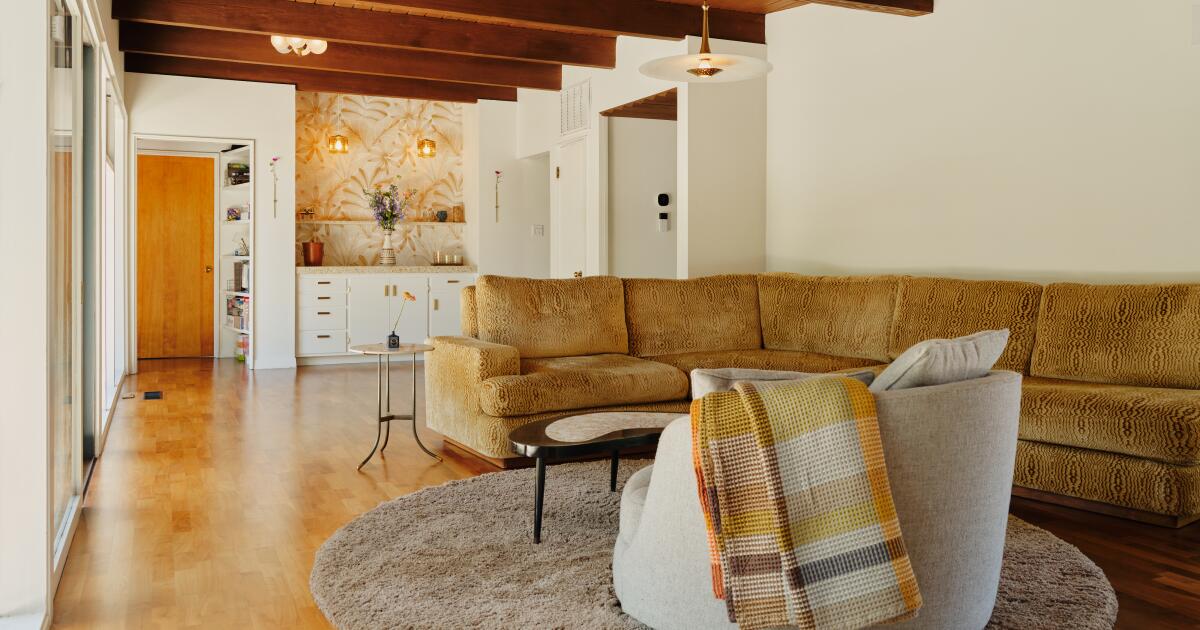
Art and Jessica Martinez never imagined they’d own a home in the Valley. Their Silver Lake condo suited their urban lifestyle: strolling around the reservoir, walking to the local grocery store and frequenting their favorite tiki bar, Tiki-Ti.
However, the pandemic made them rethink everything. Trapped at home, they dreamed of a single-family house with outdoor space to entertain friends and eventually start a family.
After months of searching, they stumbled upon a 1953 ranch house in Van Nuys designed by modernist architect Kenneth Lind. They saw an opportunity to enjoy more space, restore the home’s original midcentury charm and add personal touches to make it their own.
The exterior of the modernist ranch house, originally designed by Kenneth Lind.
“I had a hunch,” Jessica says, recalling the showing. “As soon as you come in the front door and see the way that this house opens up into this yard and all of the light that pours in, I feel like it’s immediate.”
They learned that Lind designed the home for Mel Sloan, a USC School of Cinematic Arts professor, and his wife, Rita, who raised their three children there. The Martinezes felt a connection; Art is a podcaster and Jessica is a feminist scholar and a lecturer in a gender studies program.
Despite being sure this was “the one,” the couple also worried they were in over their heads. The 1,881-square-foot home, with three bedrooms, two and a half baths and a 576-square-foot detached studio, would require significant restoration. The lot was also 10,322 square feet with overgrown plants.
The couple wrote a heartfelt letter to the sellers (the Sloans’ children), won a bidding war and purchased the property for $1.05 million. Then they envisioned their new life in Van Nuys: a backyard pool, a home gym in the studio and space to entertain.
During the inspection period, a neighbor on Nextdoor tipped them off to interior designer Jared Frank, whose clients include musician Reggie Watts, actor Matthew Gubler and filmmaker Jon Watts.
“There was a spark, and he affirmed for us a shared logic about how to approach a renovation,” Jessica says of Frank. Frank explained that if they were going to buy this home, they needed to respect the architecture and its history. They would find period-appropriate finishes, and it would take time. The Martinezes also expressed a love for Tiki-Ti to Frank, who began to think about how to bring a version of it into the home.
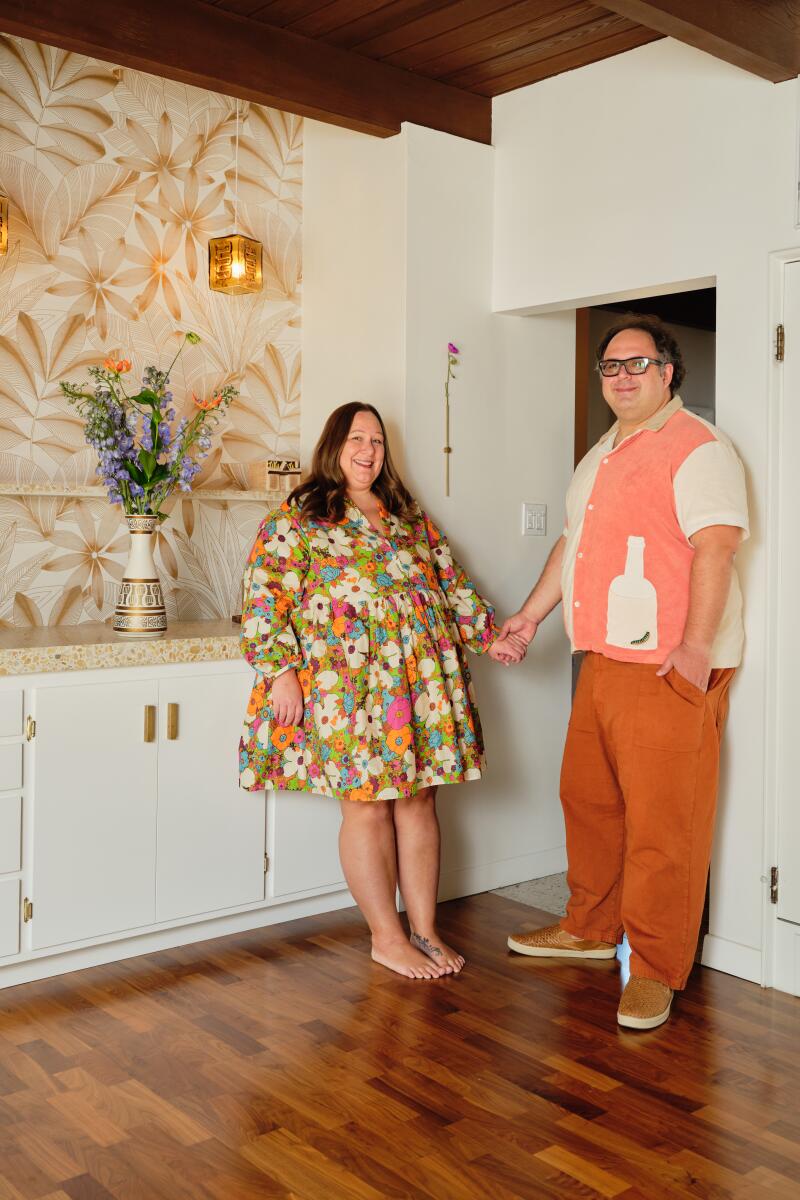
Jessica and Art Martinez stand in front of the tiki bar meant to remind them of their favorite tiki spot in Silver Lake.
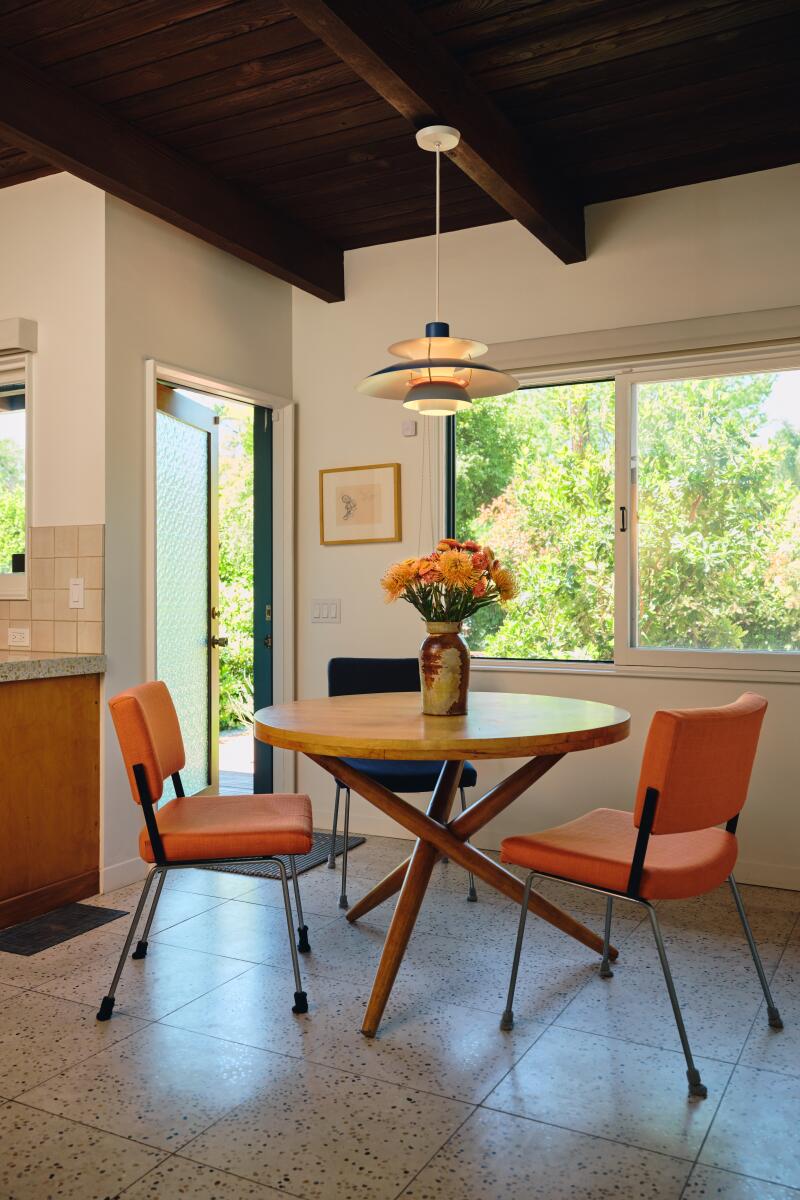
The renovated dining room.
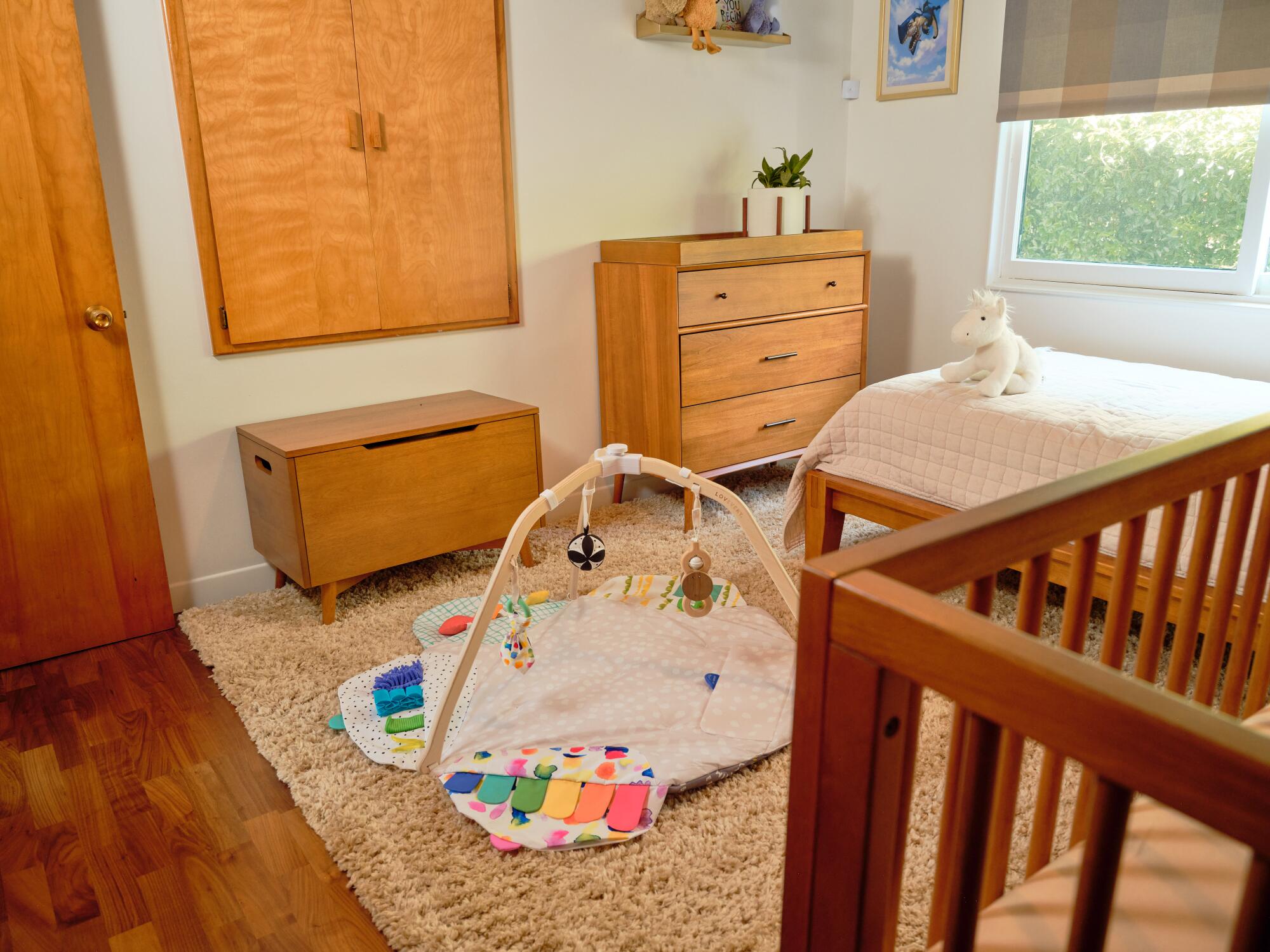
A guest room was turned into a nursery to prepare for the arrival of the couple’s child.
Escrow closed, and Frank got to work the day the Martinezes got the keys. From then, it took four and a half months for the Martinezes to move in. The restoration, which ended up costing $150,000, included updating plumbing and electrical systems and replacing the roof, which was a lasagna of old roofs stacked on top of one another. Meanwhile, the Martinezes and Frank made anchoring choices fast, choosing the wood beam ceiling paint color, floors and appliances, for example, knowing it would take a while for the product to arrive thanks to especially protracted supply chain issues and high demand due to the pandemic renovation bubble.
Unlike many midcentury renovations, the Martinezes took down no walls. Because the home was already a fairly open floor plan and it surrounded the yard with a lot of light coming in, they felt it unnecessary.
The contractor asked if they wanted to move the washer and dryer to a different space in the home or enclose them to hide them. Jessica drew upon her work as a feminist scholar, remembering how life-altering these machines were in the 1950s. She kept them at the center of the home as a way of acknowledging the past.
In the living room, Frank (who is also a furniture designer) drew an 18-foot, custom-built couch that evokes the glamour of the midcentury era. Tables, pendants and sconces came from online sellers including 1stDibs, Chairish and Etsy, and sometimes were shipped from overseas.
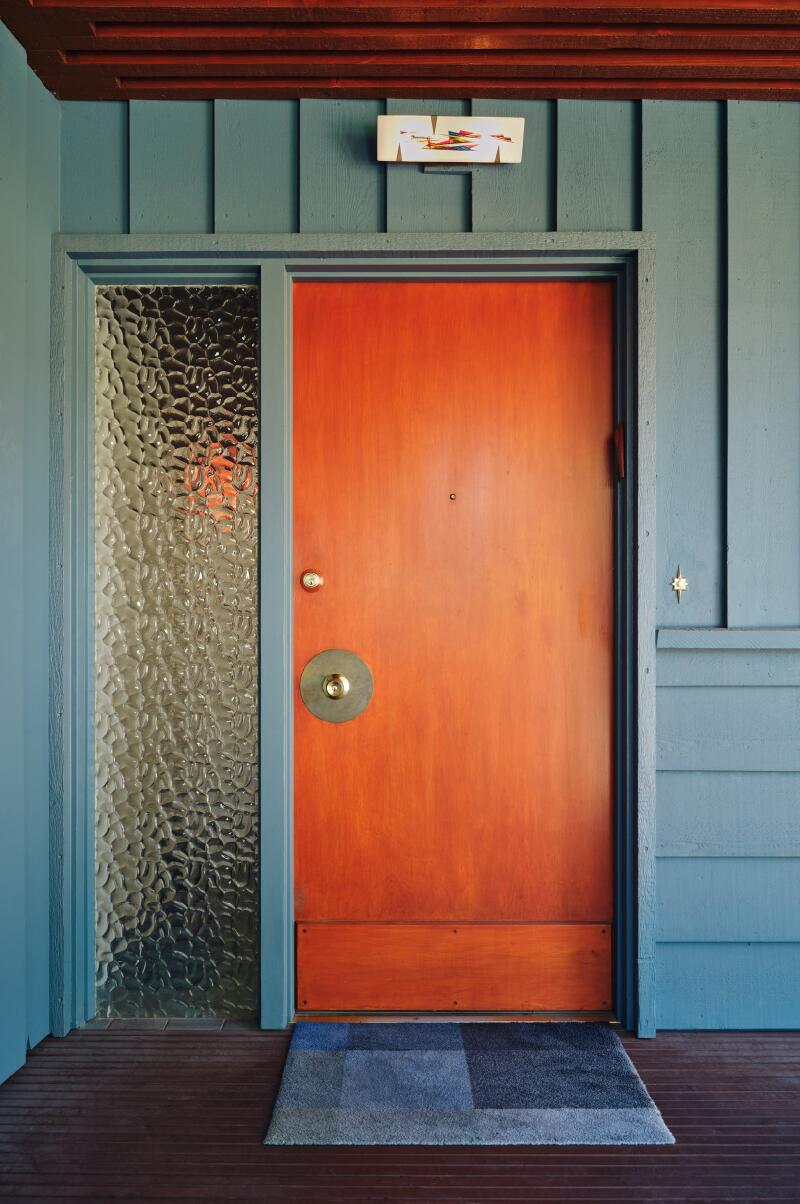
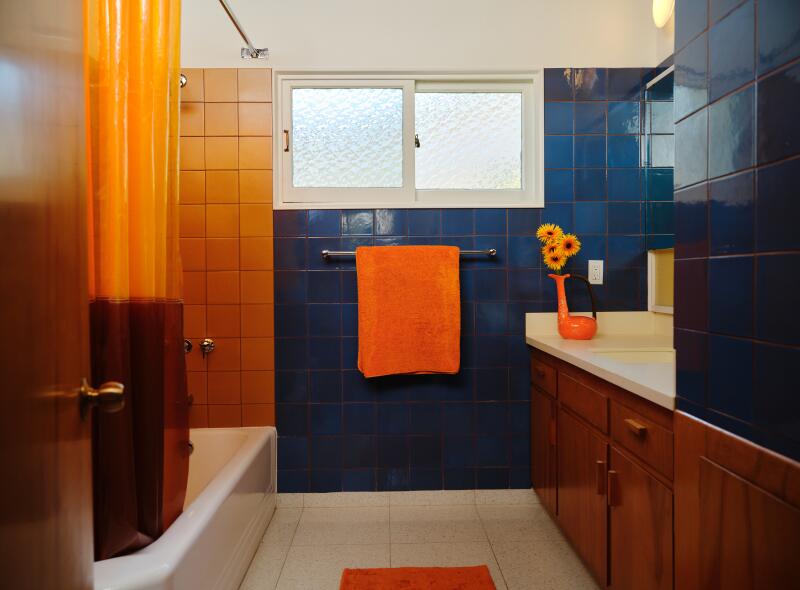
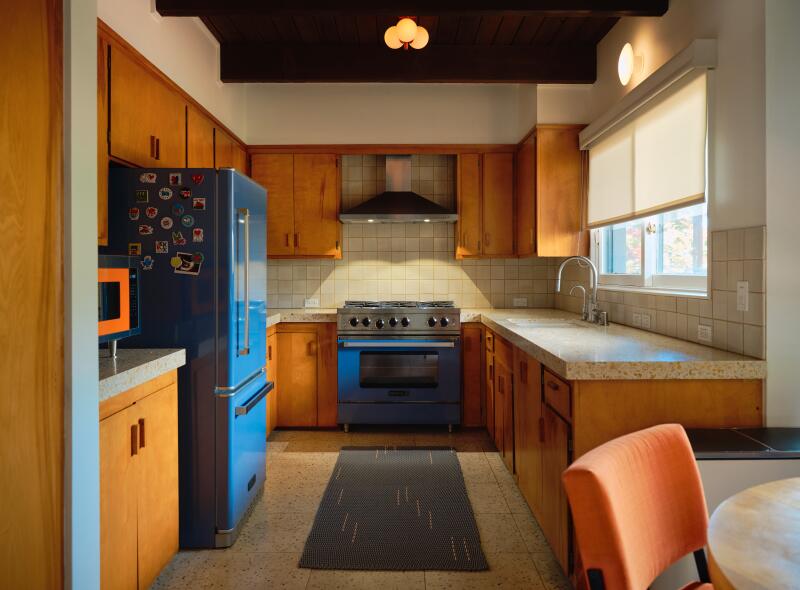
The exterior door of the modernist ranch house originally designed by Kenneth Lind. The renovated bathroom picks up the blue and orange theme of the home’s exterior. The renovated kitchen.
Frank even gave the couple their own in-house tiki bar to stand in for Tiki-Ti. In the entryway alcove, he used tropical-patterned grasscloth wallpaper and 1960s glass pendants to display the couple’s barware and Tiki-Ti memorabilia.
In the kitchen, bold-hued Big Chill appliances from the 1950s-inspired Retro Collection continue the throwback vibe. A cozy nook anchored by period-appropriate chairs and a breakfast table has become a favorite spot for the Martinezes to play “a good meaty board game” like Betrayal.
Outside, Frank designed a pool that began behind the detached studio (which the Martinezes turned into a home gym), curving around to what they affectionately call “the meadow.” Here, they planted a drought-resistant mix of California dune grass, mondo grass and poppies alongside the former owners’ birds of paradise, pink camellias and pineapple guava tree. Frank tapped L.A. painter Jessalyn Brooks to paint a colorful mural on the cinderblock wall backdropping the pool.
“It was incredibly fulfilling to restore a piece of architecture back to its original glory while reimagining it for my clients’ specific needs and desires,” says Frank.
After the Martinezes moved in, they received a letter from one of the original owners’ sons regarding the property’s Japanese maple trees.
“He said, ‘I hope that you’ll make the house your own in every way, but I’m secretly hoping you’ll keep those trees because they were a gift from my dad to my mom,’” Jessica remembers.
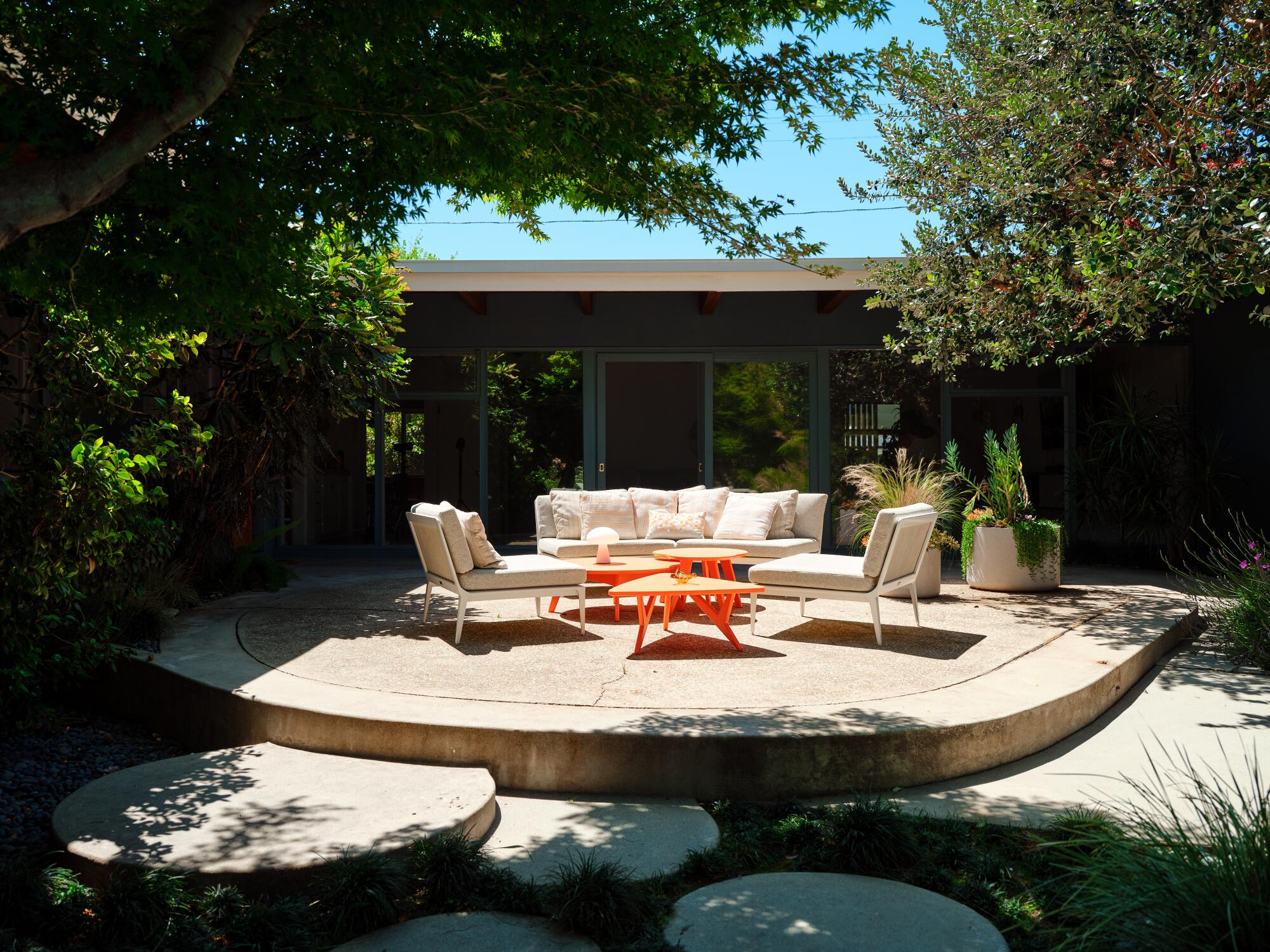
The outdoor patio at the modern ranch house.
(Emanuel Hahn / For The Times)
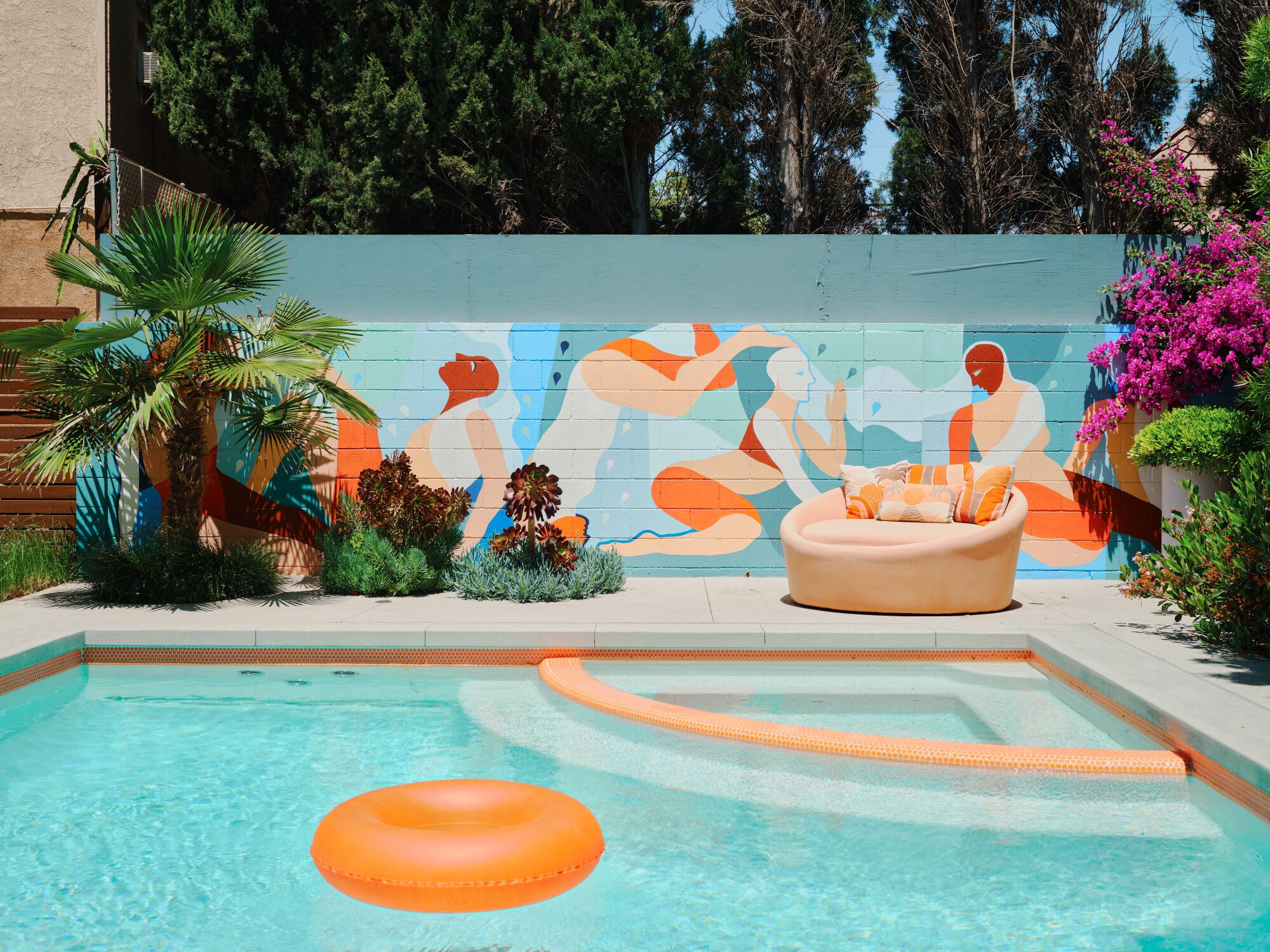
The swimming pool in the backyard, with a mural created by Jessalyn Brooks.
Ever the stewards, just as they’d discussed with Frank on day one, the Martinezes have had three arborists treat the maples for bark beetles and bacteria in the soil. “We have taken it seriously that we were entrusted to take care of Rita’s trees,” Jessica says.
And despite the initial concerns about supermarket proximity, Art still finds himself walking to theirs. It’s not across the street anymore, but the couple is finding meaning in talking to their neighbors about gardening — something they never did in Silver Lake. In October, the couple found out that their first child soon will join the family, which includes a chihuahua and a cocker spaniel mix rescue dog.
“It’s going to be a very happy summer,” Jessica says. “We are so excited to experience this much-anticipated transition in the comfort and beauty of this home.”


Lifestyle
A meal with an animated Mona Lisa? Immersive dining goes high tech — but will L.A. eat it up?
My dinner course is served. It is a Campbell’s-inspired soup can, lightly angled so strands of broccoli are peeking out. I lift the can to uncover a slow-braised short rib and mashed potatoes. An American dish to represent an American artist, here Andy Warhol.
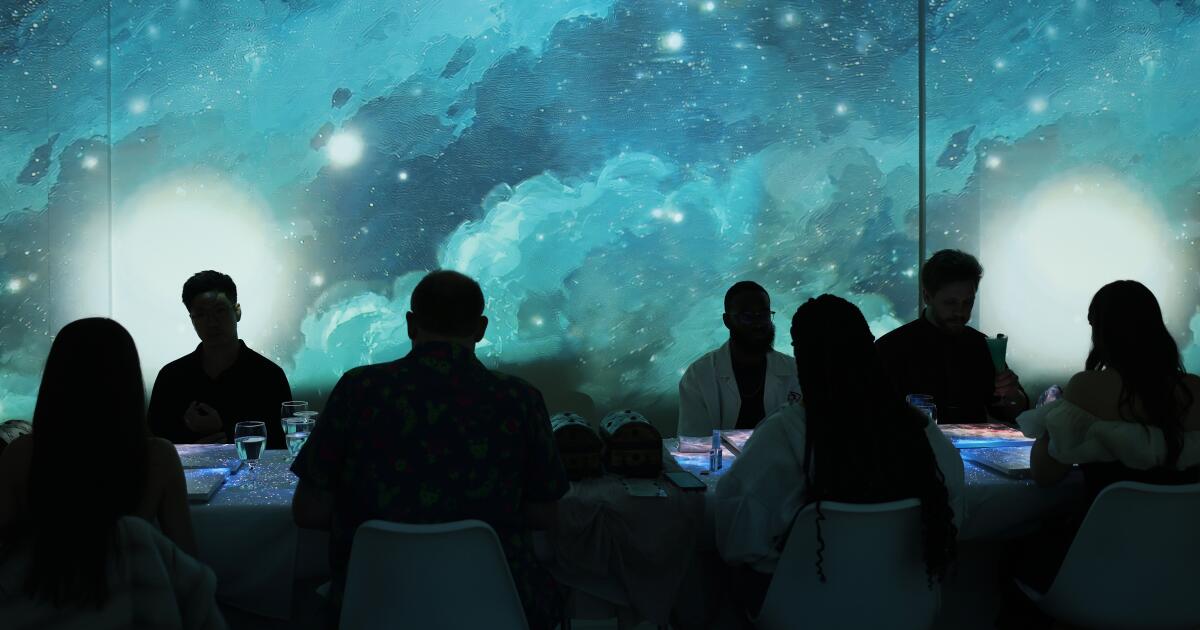
The room is overtaken with projections, scenes of bustling New York traffic paired with bachelor-pad-like guitar riffs. Shown on a wall above a dinner table is a selection of Warhol silkscreens. It’s a Friday night in West Hollywood, and I’m surrounded by a mix of out-of-towners and those celebrating an anniversary. And while this is a special occasion, we’re urged to get a little messy with our food — to use our hands, to paint with a salad, to draw on a cookie.
The main course: A tomato soup can? “7 Paintings” is an immersive event that occasionally hides dishes in artist-inspired presentations.
(Christina House / Los Angeles Times)
Play is the primary side dish at “7 Paintings,” a tech-infused dinner theater that aims to be a crash course in fine art. That selection of veggies paired with multiple mini cups of colorful dressings? Guests are encouraged to mix and match the vinaigrettes into a mess of hues, a nod to abstractionist Jackson Pollock. And yellowfin tuna with dashes of avocado and taro chips? That’s an edible tribute to Banksy, of course. What does raw fish have to do with stenciled street art? It’s bold, heavily angled and has a short shelf life? Maybe? Perhaps don’t overthink it.

Even the paper is edible.
(Christina House / Los Angeles Times)
“Have you ever eaten a painting before?” says Nadine Beshir, the Dubai-based creator of “7 Paintings.” “We try to get people out of their comfort zones and eating paper. I want to bring out the child in them.”
“7 Paintings,” held at Sunset House L.A. through the end of August, is the latest example of immersive dining to arrive in this city. These experiences often involve guest participation and are accentuated with advanced multimedia technology and sometimes theatrical elements.
Worldwide, there have been standouts. For instance, Eatrenalin at Germany’s Europa-Park, a dining room-meets-ride where participants are whisked around the space on trackless “floating chairs,” has just received a coveted Michelin star. Ibiza’s Sublimotion has similar haute ambitions, pairing 12 diners together in a room that will come alive with otherworldly projections and performers. At times, diners will win don virtual reality headgear.
But tech-driven immersive dining experiences have never quite taken off in Los Angeles as a trend. Last year, the Gallery, where fantastical cityscapes and projections surrounded downtown L.A. diners, stood just a couple months before the concept was abandoned.

“7 Paintings” pairs food with art and music. It’s “fun dining, not fine dining,” says its founder.
(Christina House / Los Angeles Times)

Bartender Luca Famulari shakes a cocktail at the immersive dining event.
(Christina House / Los Angeles Times)
“The economics of a restaurant are not the same as the economics of theater and the challenge of combining the two lies in thinking outside the box with respect to pricing and cost structure, such that the customer perceives high value from both the food and the experience,” says the Gallery co-founder Daren Ulmer.
Entrepreneurs keep aiming for that careful balance. “Le Petit Chef and Friends” is currently running at Tangier at downtown’s Hotel Figueroa, an event in which a fully animated film is projected on our plates and tables. Long-running pop-up event Fork N’ Film leans more dinner and movie, pairing dishes directly inspired by what is happening on screen. Upcoming films include “Ratatouille” and “Lilo and Stitch.”
The field comes with challenges. “The costs are very high,” says Joanna Garner, an immersive designer and former creative director with experiential art firm Meow Wolf. Garner has been experimenting herself with communal, immersive dinner events, and her next, the flirtatious “Please Open Your Mouth,” is set for July 11. (No tech there, as Garner is after a more sensual, adult-focused gathering.) Tickets for her event are $150 and a spot in the “7 Paintings” dining room runs $175, priced on par with a number of city’s most acclaimed restaurants.
There is also the reality that all public dining is in some fashion immersive, usually requiring varying combinations of engagement, communication and presentation. And then, are all these added elements distracting?

An animated Mona Lisa sits on the wall as guests enjoy their meals. Throughout the dinner, the painting provides factoids on various artists.
(Christina House / Los Angeles Times)
Throughout “7 Paintings,” for instance, an animated Mona Lisa, situated on the wall next to the main dinner table, will provide brief biographical details of each artist represented.
“Being able to nail the food, and nail the story, those are two very difficult threads to weave,” Garner says. “I do think, ultimately, people come to a dinner table to talk to the people at the table and to have intimate experiences. To have an experience where you’re constantly being taken away from the food, I’m not so sure if that’s what people are looking for.”
Food is framed as a star of “7 Paintings” but tasting it is just one component. At one point, we must uncover a cheese course in a tiny treasure chest, the code for the lock hidden in the projections (don’t stress, it’s not a hard puzzle). Beshir highlights the Pollock-inspired salad course, which is accentuated with a jazz soundtrack, as the thesis of the evening.
1

2

1. A guest uses a silicon brush to apply sauces onto an entree, a nod to abstractionist Jackson Pollock. 2. Projections fill up the dining table during meals.
“This course is really about getting people to free their minds from preconceived ideas,” Beshir says. “Like, you have to eat with a fork and knife, or the salad comes and then the dressing. No, the dressing comes and then the salad, and it’s trying with big brushes to paint the way he did. A lot of people do not understand Abstract Expressionism, and they think it’s people just splashing colors around. But when you understand the link between the rhythm of the music and painting, you live it. We give you time to paint with your salad dressing.”
In L.A., Beshir has partnered with nightlife impresario Kim Kelly, who is plotting a “Sleep No More”-inspired walk-around theatrical show for the Sunset House venue later this year. “7 Paintings,” however, is fully seated, and purposefully a little silly. Beshir and Kelly have been evolving it during its L.A. run, recently adding a stronger painting component by giving guests their own canvas to work on throughout the evening. Each night crowns a winner.
“Everyone comes over to look at their art,” Kelly says. “It just kind of changed the whole thing, to be honest. People are now being creative throughout the entire evening. Instead of just watching and occasionally painting, you’re now painting the whole time.”
As for what, perhaps, soba noodles with edamame and mushrooms have to do with Pablo Picasso, or why Salvador Dali gets an unexpected dessert course of a white chocolate potato souffle, Beshir clarifies the goal of the evening. While the animated Mona Lisa will provide backstories on each painter, this isn’t an educational night. “It’s fun dining, not fine dining,” Beshir says.
And by the end of my night, strangers were socializing, showing off their painted cookie creations, sharing Banksy tidbits and asking for recommendations on various vinaigrette combinations. Ultimately, it’s an evening of discovery, packed with surprises like finding an entire course hidden under a canvas.

Darryl Mayes of Charlotte, N.C., left, and Taylor Smith of North Hollywood, right, uncover their course.
(Christina House / Los Angeles Times)
“We try not to have too much sophistication, like fried ants or something. I’m personally very adventurous in how I eat, but if I want to have this in 100 cities around the world, I cannot be too meticulous.”
And Beshir has big goals.
“I want this be your movie and dinner thing,” Beshir says. “I want people to be waiting for our next show, and to be able to afford to come every couple months.”
And to come home not with leftovers, but perhaps a painting of their own.

Matthew Rhys was nominated for his role in Widow’s Bay.
Apple TV
hide caption
toggle caption
Apple TV
The 2026 Emmy nominations are here. We’re unpacking the record-breaking nominations for Hacks, plus a big day for Widow’s Bay, The Pitt, and The Bear. We’ll also talk about the snubs and make some early predictions of who will win.
Connect with Pop Culture Happy Hour:
Letterboxd / Facebook
Our weekly newsletter
Support Pop Culture Happy Hour+

-

 Technology2 minutes ago
Meta is reportedly working on smart glasses that would be recording all the time
-

 World9 minutes ago
Trump says ‘Iran lies and cheats’ as IRGC emerges as dominant force in negotiations with US
-

 Politics13 minutes ago
Who is Valli Geiger? Meet the Maine Dem that Platner urged to run for Senate
-

 Health17 minutes ago
Deadly Legionnaires’ disease outbreak sparks concern in major US city: Know the symptoms
-

 Sports24 minutes ago
Caitlin Clark’s return falls flat after Fever coach limits her in loss to shorthanded Sparks
-
Business32 minutes ago
Commentary: Trump wants to let companies make fewer disclosures, thus keeping investors in the dark
-
 Entertainment39 minutes ago
Justin Baldoni and wife break silence after ‘It Ends With Us’ legal battle with Blake Lively
-
Lifestyle42 minutes ago
A meal with an animated Mona Lisa? Immersive dining goes high tech — but will L.A. eat it up?

