Science
Opinion: Abortion foes lost Round One on mifepristone. Here's how their fight continues

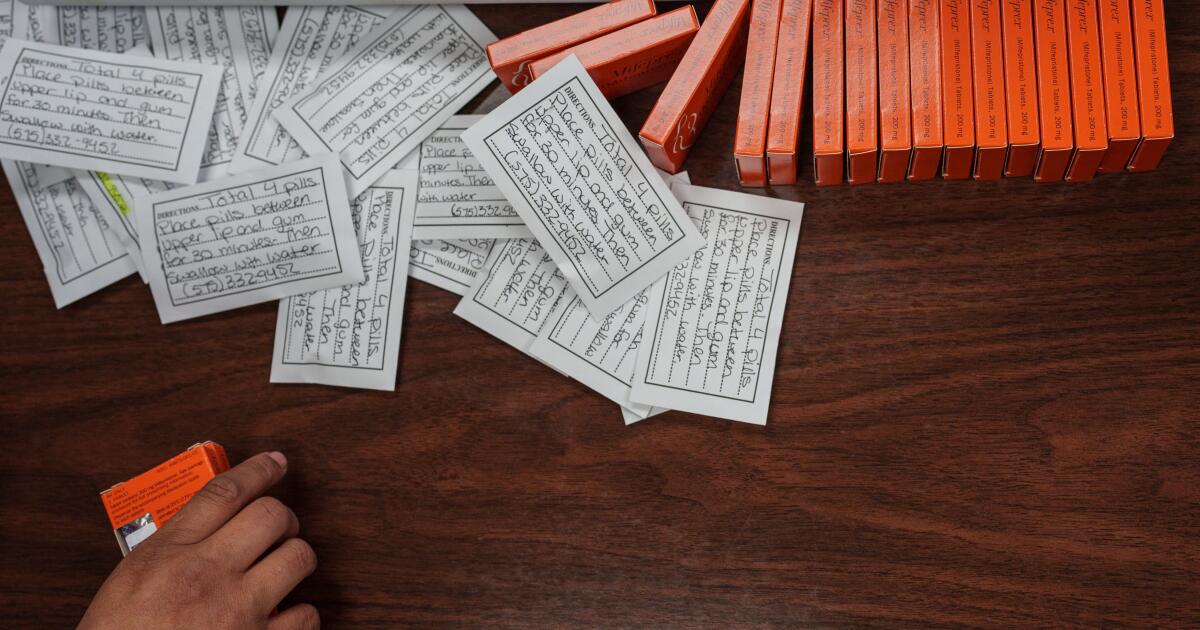
The Supreme Court’s mifepristone decision on June 13 put a stop to one challenge to the drug used in more than half of all abortions in the United States. But antiabortion groups are already preparing their next line of attack.
New groups of plaintiffs might try to establish that they have standing where the doctors in the Food and Drug Administration vs. Alliance for Hippocratic Medicine failed. But if Donald Trump wins the 2024 election, such lawsuits might be far less important to abortion foes: Conservatives already have detailed plans in place to use the executive branch to impose national limits on abortion.
The plaintiffs in FDA vs. Alliance made two sets of claims. First, they challenged the overall authority of the agency to approve and subsequently lift restrictions on mifepristone. The plaintiffs also argued that the FDA didn’t have the power to allow patients to receive the pills in the mail because the federal Comstock Act, a 19th century obscenity law, includes a ban on mailing and receiving abortion-related items.
In holding that the Alliance plaintiffs didn’t have standing to sue, the Supreme Court didn’t say a word about the merits of either of those claims. So it’s no surprise that other plaintiffs might try to bring them again before the justices. The leading contenders are the states of Kansas, Missouri and Idaho, which had sought to intervene in the case, a request turned away by the Supreme Court.
The states’ attorneys general have suggested that they will continue the litigation, with a new argument on standing. A preview of that claim came in the states’ petition to intervene: They argued that because their citizens could get mifepristone from doctors out of state, the states’ own interests were affected. Medicaid recipients who suffered mifepristone complications were imposing costs on state medical systems, they added, and the availability of mifepristone was making it difficult to make and enforce abortion bans.
There may be problems with the states’ case for standing too. Patients might experience complications if they take mifepristone, which might impose costs on the states. That doesn’t sound so different from the weak hypotheticals on which the Alliance plaintiffs relied. And what about Missouri and Idaho’s supposed sovereign interest in enforcing their abortion bans when other states allow it? The answer the court gave the Alliance doctors would seem to apply: “A plaintiff’s desire to make a drug less available for others does not establish standing to sue.”
Kansas’ case for standing is even more puzzling. Abortion is legal in Kansas until 22 weeks, albeit with restrictions. Barely more than a month after Roe was overturned, Kansans expressly voted against amending their state constitution to say there was no right to abortion. How will the state make the case that it is harmed by the approval of mifepristone when its own voters chose to preserve abortion access?
Whatever the fate of the case the Alliance doctors started, abortion foes and conservatives understand that the war against mifepristone and medication abortion can’t just depend on litigation. For example, Louisiana recently passed a law categorizing mifepristone and misoprostol, another drug used in medication abortion, as controlled substances, making it easier for the state to surveil patients, doctors and pharmacies and to punish anyone in possession of the drugs without a prescription. Idaho passed a so-called trafficking law that criminalizes those who help minors travel out of state or obtain abortion pills without parental consent.
But even these kinds of strategies may be far less important if Donald Trump wins a second term. The Heritage Foundation and a coalition of more than 100 conservative groups have laid out a detailed plan — known as Project 2025 — for a second Trump administration. The plan begins with a call for the FDA to “reverse its approval of chemical abortion drugs,” including mifepristone, or at a minimum, to eliminate the telehealth option for the drug.
Thousands of abortions can take place each month in states that ban the procedure because the telehealth option allows patients to get a prescription and get the pills by mail. With a Trump appointee as secretary of Health and Human Services, and one heading the FDA , the government might approach mifepristone differently without the pressure of a lawsuit. Some legal scholars argue that structural features of the federal Food and Drug Act could even allow the HHS secretary alone to override scientists at the FDA.
Then there is the ancient Comstock Act — moribund but still on the books. Gene Hamilton, a prominent figure in the first Trump administration, argues in the Project 2025 plan that the Department of Justice could simply dust off the 151-year-old law and start criminally prosecuting the mailing or receipt of mifepristone. If the Supreme Court buys this interpretation of the Comstock Act, despite its flaws, such an executive action would get around the thorny questions about standing raised in Alliance.
The Supreme Court deflected the Alliance case against mifepristone. We may well see it reappear in some form on the court’s docket next year. But whatever shape Alliance 2.0 takes, in the fight over a national abortion ban, it’s unlikely to be the main event.
Mary Ziegler is a law professor at UC Davis and the author of “Roe: The History of a National Obsession.”


It seems like nothing is off limits these days in L.A.’s most woo-woo wellness scenes. From ayahuasca circles and mail-order ketamine lozenges to off-label peptide injections, IV drips and longevity treatments, there’s a seemingly infinite number of ways to look and feel better that people will swear by in this town. Coffee enemas — mostly for digestive issues, but also for a host of other emotional and physiological conditions — is on that alleged miracle menu, and far more common than I even realized before I started writing this article.
“Oh, I have a friend who does that,” “Oh, my cousin swears by it,” I began hearing from people as soon as I started looking for interviewees.
Reddit contains hundreds of anecdotes — both enthusiastic and cautionary — about coffee enemas, which involve a person, often on their own, but sometimes with the assistance of an alternative health practitioner, filling a bag with coffee fluid, inserting a tube into their rectum, and slowly allowing the liquid to be absorbed. “Beware of coffee enemas,” reads the subject line of a post from a woman who did them regularly for a decade and reports feelings of exhaustion, spaciness and cravings when she tries to stop. “Caffeine in any form only (temporarily) masks and provides salve toward bigger, unaddressed issue(s),” she writes.
In response, another user — a person with Stage 4 ovarian cancer — jumps in to defend the practice. “Let’s respect what we are all doing, whether we agree or not,” they write. “I am doing conventional [treatment] in conjunction with alternative (I believe there is a place for both). I haven’t felt this good since my diagnosis. I feel light, have never felt jittery and chemotherapy had me so constipated I would cry.”
Over the last couple of decades, the interest in digestive health has grown exponentially, prompted by research on the gut-brain connection. According to a report by Grand View Research, the global gut health market was valued at $60.31 billion in 2025 and is projected to reach $114.83 billion by 2033. The growing number of people who are quietly (and often devoutly) doing coffee enemas is a part of this larger trend, which also includes fasting, cleanses, colonics, probiotics, food allergy and stool tests, and a number of other products and services intended to address everything from irregular or uncomfortable bowel movements to energy levels and mood. But what’s the deal with coffee enemas? And are they actually good for you? We talked to a wide range of people with an equally wide range of opinions.
Five enemas a day? Inside the controversial Gerson therapy
The pro-enema Reddit user coping with Stage 4 cancer posted that they do three coffee enemas daily. They discovered the practice through Gerson, an institute founded in 1978 to promote a treatment plan initially developed for tuberculosis, and later for cancer, migraines and other chronic conditions, by German American physician Dr. Max Gerson in the 1930s. If you visit the Gerson Institute website, the supplies for a coffee enema — organic therapy blend coffee ($9.75) and the complete enema bucket kit with catheter ($19) — are listed in its store. It has clinics in Tijuana, Budapest and Shangri-La, China.
Nicole Ferrer-Clement, executive director of the Gerson Institute, says the treatment plan, referred to as the Gerson therapy, has four parts, with five coffee enemas per day being the first part and an essential component of the protocol. The other parts include a vegetarian, fat-free diet, three juices (carrot, carrot and apple, and a green juice) and supplements. The idea behind the coffee enemas, she says, is that compounds (theobromine, theophylline, caffeine) in coffee stimulate the liver to produce more bile, which helps carry toxins out of the body through the digestive tract. Ferrer-Clement says this is important for cancer patients, whose livers may already be compromised while processing toxins released during treatment. Even though many people reach out to Gerson about coffee enemas for general health and wellness and constipation, she says that’s not generally something they recommend. The therapy remains controversial among mainstream oncologists, in part because there are few rigorous clinical studies evaluating its efficacy.
“We want research on [coffee enemas], we’re happy and open to do that, if someone is going to fund it,” Ferrer-Clement says, estimating the institute has treated thousands of patients over the years.
In addition to using coffee enemas to treat cancer, the majority of users online report turning to them for constipation. Many anecdotes are from people who tried more conventional medicine for digestive issues and, from a place of desperation, decided to look elsewhere for solutions. Others, like Chevanni Davids, a 33-year-old South African man living in Bali, use them to maintain a general sense of well-being. Davids — who grew up in South Africa, where culturally it’s common for grandmothers to administer enemas to children in rural areas — does a coffee enema twice per month. He was introduced to the practice of enemas with coffee by someone he describes as a Brazilian grandmother or elder. He swears by the practice, saying it’s kept his bowel movements regular and his emotional state at an equilibrium. Davids warns against doing them too frequently, however. “The addiction is a thing,” he says, “because it feels so, so good. After you do it once, you’re going to say, ‘I’m going to do that tomorrow.’”
A doctor’s take
Unsurprisingly, given that most people tend to find coffee enemas after reports of being failed by Western medicine, mainstream gastroenterology is not on board with this practice. “Coffee enemas are based on the ill-conceived idea that you’re washing toxins out of your colon, but your colon is not an organ that clears toxins like the liver,” says Dr. Barry Zamost, a gastroenterologist who was in private practice in Long Beach for more than 40 years. “This just flies in the face of all logic and physiology that any doctor has learned for 100 years.”
Zamost remembers first hearing of coffee enemas decades ago when Michael Landon, an actor best known for his roles on “Little House on the Prairie” and “Bonanza,” decided to reject chemotherapy in favor of alternative treatments following a pancreatic cancer diagnosis in 1991. Over his four decades in private practice, Zamost says he frequently saw patients with constipation who were frustrated and trying alternate methods, but that oral therapies such as laxatives, supplements and prescription medications remain the most safe and effective treatments.
A review of case reports from nine people who self-administered coffee enemas also concluded that there’s insufficient evidence to prove that the practice is helpful, and that it could be harmful, to the colon. Zamost says he thinks it’s unlikely for someone to cause themselves serious harm by doing coffee enemas, although it’s happened. He also says that in rare cases that enemas — not with coffee — are appropriate for patients who are severely constipated to provide temporary relief. But, generally, he doesn’t see any benefit to using coffee. As for why people report loving them? That’s easy enough to explain, he says. “Everybody feels better after a bowel movement. So if you gave yourself an enema that really made you feel like you were emptied, you’ll feel good. It doesn’t mean your health is better.”
The takeaway
Coffee enemas are likely not harmful when done in moderation, but we don’t have much more than anecdotal evidence at this point to indicate that they’re helpful either.

One of us got a call last spring from a longtime friend. The story was familiar: two doctors, an MRI, an online AI tool, a stack of articles — and one anxious question. “Everything tells me something different. The AI says I might need surgery. What should I do?”
We believe there’s one key response to anyone in this all-too-common conundrum: “What matters most to you?”
There was a long pause.
That pause is one of the most important moments in modern healthcare — and it is exactly the question artificial intelligence is unable to address.
In our careers as physicians and researchers, we have found, clearly and repeatedly, that for many common conditions the medical evidence does not point to a single “right” answer. The biology is often close. What determines the success of an outcome is whether the choice fits the person making it.
Some patients with back pain want the fastest possible return to physically demanding work, even if it means surgery. Others want to avoid an operation at almost any cost, even if recovery takes longer. The scan may look the same. The lives behind the scan are not.
That insight is becoming critically important as artificial intelligence moves deeper into everyday health decisions.
In our research on AI and clinical decision-making, we’ve studied what happens when systems are trained to optimize medical outcomes but are blind to human values. In plain English, today’s AI is very good at telling you what usually works for people like you with similar demographics and medical histories. It is far less capable of understanding what you are trying to protect, avoid or prioritize.
This matters because some of the most common and most expensive medical decisions are not purely biological. Should someone with low-risk prostate cancer choose surgery, radiation or careful monitoring? Should a person with atrial fibrillation undergo a procedure or manage the condition with medication? Should a patient with chronic knee or back pain operate now or try months of physical therapy to see whether surgery can be avoided?
In these situations, the medical differences between options are often small or uncertain. What makes the biggest difference is whether the treatment aligns with the patient’s goals: tolerance for risk, willingness to undergo recovery, ability to adhere to long-term therapy or simply what kind of life they want to live.
AI systems can calculate probabilities. They cannot determine what those probabilities mean to a particular person.
In some respects, artificial intelligence may know more medicine than any individual physician. It can synthesize millions of scientific papers, clinical studies and patient records in seconds. Yet it knows remarkably little about the person sitting across from it. AI does not know a patient’s goals, fears, obligations, tolerance for risk or personal definition of a good outcome. And because it knows little about either the patient or the physician, it knows even less about the conversation between them — the place where facts, values and trust come together to produce the right decision for a particular person.
A second patient story brought this home. A retired teacher was referred after an AI-based symptom checker flagged a heart rhythm abnormality and “favored” an invasive procedure. The patient arrived frightened, convinced there was one correct path. When we talked, it became clear that what mattered most was avoiding a long recovery and staying healthy enough to travel to see grandchildren.
Medication and monitoring — less dramatic, but well-supported by evidence — fit those goals better. The AI wasn’t wrong. It just didn’t know what mattered.
This blind spot is not trivial. Roughly a quarter of U.S. healthcare spending flows through decisions in which patient preferences meaningfully affect outcomes. When those preferences are ignored — by people or by algorithms — care becomes misaligned. That can mean unnecessary procedures, poor adherence, regret and rising costs without better health.
So what should consumers do when an app, portal or “smart” tool recommends a course of action?
Start with three questions.
First: “Best for whom?” If a tool says one option is best, ask whether it means best on average — or best for someone with your priorities.
Second: “What does this system not know about me?”
AI can see lab values and imaging results. It cannot see your job, your family responsibilities, your fears or what you are trying to get back to.
Third: “What happens if I wait or choose differently?”
Many important medical decisions are not emergencies. When options are close, taking time to reflect is often part of good care.
Artificial intelligence is becoming a powerful partner in medicine. It can help explain options, surface evidence and reduce confusion. But it should inform human decisions, not replace them.
AI may know more medicine than any physician.
It knows far less about any patient.
And it knows least about the conversation between them.
The most important variable in your healthcare is not in any algorithm. It is you.
James N. Weinstein is a surgeon and former chief executive of Dartmouth Health. He is a clinical professor at Northwestern University’s Kellogg School of Management and global head of Health Futures at Microsoft, which develops AI systems. Ogan Gurel is a physician and assistant professor at the University of Texas at Arlington, where he researches AI, causal inference and patient decision-making.

While it may not be remembered as FIFA’s most controversial decision of the 2026 World Cup, the institution of mandatory cooling breaks in all matches has been met with boos and derision, with critics saying the pauses disrupt the game’s flow and offer little benefit in air-conditioned environments.
“They’re in a dome here! Temperature-controlled, climate-controlled — why are we having a break?” fumed one England fan to a radio reporter outside the England-Croatia match in Arlington, Texas, where field temperatures inside AT&T Stadium approached a comfortable 70 degrees Fahrenheit despite an outdoor heat and humidity index near 105 degrees.
But for Dr. Bert Mandelbaum, chief medical officer for U.S. men’s soccer and vice chair of Cedars-Sinai Medical Center’s orthopedic surgery department, the breaks set an important precedent for prioritizing athlete health in extreme heat, even at the highest levels of competition.
“I do think the cooling breaks are an important part of the game. I’m really excited and happy that we are employing those,” he said by phone Tuesday morning, hours after the U.S. team’s 4-1 knockout loss to Belgium.
“Difficult weather environments bring on dehydration and can create severe exhaustion, heat exhaustion, and those [conditions] have tremendous and dire consequences,” Mandelbaum said. “Talk radio could discuss it over and over again, but from our standpoint, the real messaging should be to our communities, our club players, that this is an important part of our game, and the cooling break is how we help manage it.”
Warming climate conditions are forcing changes to human behavior all around the globe, including on the pitch.
Extreme heat kills more people each year than all other forms of extreme weather combined. Elite athletes are not immune to its effects.
As temperatures during a game rise, the circulatory system diverts blood to the skin to lower core body temperatures at the same time that active muscles require oxygen-rich blood. This places extra strain on the heart, which pumps harder to keep up with demand. Sweating players lose electrolytes faster than they can consume them, leading to muscle cramps, fatigue and dizziness.
Virtually all aspects of the game degrade in the heat, Mandelbaum said. Players’ performance, recovery ability and decision making erode. Artificial turf becomes intolerably hot, and the soil in natural grass can harden until it’s like playing on concrete. Air molecules inside the ball expand, making it a harder and faster object. Even fans risk injury: 22 people were treated for heat-related illnesses at a FIFA Fan Festival in Houston last month.
Mandelbaum directs the FIFA Medical Center of Excellence at Cedars-Sinai and was part of the FIFA Medical Committee in 2014, when the first World Cup cooling break was called during a Netherlands-Mexico match in Fortaleza, Brazil.
At the time, the sport’s governing body recommended hydration breaks if temperatures surpassed 102.2 degrees.
This year’s World Cup, hosted across the U.S., Canada and Mexico, is the hottest played since the tournament began in 1930. It has coincided with a withering heat wave in the eastern U.S. With a heat index of nearly 104 degrees at kickoff, the July 4 match in Philadelphia between France and Paraguay is believed to be the second-hottest game in World Cup history, after a 105-degree match in 1994 between Ireland and Mexico in Orlando, according to meteorologist Brad Maushart.
FIFA announced in December that this year’s tournament would be the first in which all matches must pause once in each half for hydration and cooling, regardless of temperature conditions.
FIFA President Gianni Infantino said mandatory breaks equalize playing conditions in all matches. When they haven’t been loudly booing, many fans have noticed that teams often appear to spend as much time strategizing during the pauses as they do hydrating.
Given this, “if we were to use hydration breaks only in those matches where it was too hot and not in the other matches, we would give an advantage or a disadvantage to some of the coaches or some of the teams,” Infantino told Sports News Television.
Harry Brown, a postdoctoral research associate at the University of Sydney’s Heat and Health Research Centre, expressed frustration over the universal breaks in an op-ed in the journal Nature.
“Although it might seem fair to treat all games in the same way, this blanket approach risks undermining trust in heat-safety measures. If breaks are always used, regardless of risk, they stop being meaningful and start looking like routine stoppages,” Brown wrote.
Without active efforts to lower players’ core temperatures, pausing game play may not be enough to effectively stave off heat injury, he wrote. In his own research, Brown’s team compared the effects of passive breaks against breaks with active cooling measures on the health of players participating in 90-minute soccer games in 104-degree heat and 41% humidity.
When players cooled themselves with cold drinks and icy towels during short breaks and took longer halftimes, their core temperatures and cardiovascular strain lowered considerably more than they did after only passive breaks, Brown wrote.
Other physicians argued that even an under-utilized break was better for athletes than nothing at all.
“I would say that it’s better to err on the side of having cooling breaks rather than risk not having them,” said Dr. Miho J. Tanaka, an associate professor of orthopedic surgery at Harvard Medical School who also serves as a team physician for the Boston Red Sox and the New England Revolution.
“Ultimately, an individualized screening or monitoring process may be the safest approach, but we are still far from being able to precisely identify and intervene when an individual player may be at risk,” she said. “Until we are able to do so, having standardized breaks is a step in the right direction, as long as teams and players are informed when to escalate their level of concern and take action when more aggressive measures are truly needed.”
While a cooling break is rarely medically necessary inside a climate-controlled indoor stadium, Mandelbaum said it still sends a valuable message to players around the world: If hydration breaks are a part of the sport’s biggest event, they should be allowed at every other level of play.
“Not only is [the hydration break] a good thing, it’s a necessary thing,” Mandelbaum said. “This is the world’s game … we have to figure out how to help players at all levels and ages to have the ability to thermoregulate, hydrate, how to do it well.”
-

 Georgia41 seconds ago
Co-owner of Yurezz Home Center in Greeneville arrested in Georgia
-

 Hawaii8 minutes ago
Hawai‘i Fire Department responds to brush fire in North Kona | Big Island Now
-

 Idaho11 minutes ago
Idaho man bit by rattlesnake in Northern California recovering
-
 Illinois16 minutes ago
Cash App parent company agrees to $45 million settlement with Illinois, 44 other states
-
 Indiana23 minutes ago
Indiana sees significant drop in number of homeless veterans
-

 Iowa26 minutes ago
Iowa High School Looking To Consolidate In More Sports After Canceling Football Season
-

 Kansas31 minutes ago
Kansas Basketball Makes the Cut for 5-Star SF Demarcus Henry
-

 Kentucky38 minutes ago
Cyclospora parasite cases in Kentucky, health officials warn

