Politics
Biden announces new measures to speed up work visas for Dreamers


President Biden on Tuesday marked the 12th anniversary of the Deferred Action for Childhood Arrivals (DACA) program by announcing new measures that will help recipients qualify more easily for long-established work visas.
The president spoke at a White House event tied to the anniversary of DACA, which former President Obama and then-Vice President Biden launched in 2012.
The aim of the program was to protect those who had entered the U.S. illegally as children from deportation and provide a pathway to citizenship.
Recipients, referred to as “Dreamers,” were able to request “consideration of deferred action” for a period of two years, which was subject to renewal.
OBAMA LEADING BIDEN OFF LA FUNDRAISER’S STAGE JUST LATEST EXAMPLE OF ALLIES DIRECTING PRESIDENT
President Biden speaks during an event marking the 12th anniversary of the Deferred Action for Childhood Arrivals program in the East Room of the White House on June 18, 2024. (AP Photo/Evan Vucci)
After bashing Republicans for what he deemed inaction at the border – and appearing to freeze up when mentioning the Homeland Security secretary – Biden announced new measures “to clarify and speed up work visas and help people, including Dreamers” who have graduated from U.S. colleges and landed jobs in “high-demand, high-skilled professions.”
“I want those who have been educated at U.S. colleges and universities to put their skills and knowledge to work here in America,” Biden said. “We want to keep building the strongest economy in the world with the best workforce in the world.”
Immigration rights activists rally in front of the U.S. Supreme Court on Nov. 12, 2019. (MANDEL NGAN/AFP via Getty Images)
The president said these steps build on other actions taken in support of Dreamers, “from defending Dreamers and the courts, and expressing and expanding access to health care for millions of Americans, under the Affordable Care Act, including for Dreamers.”
Many companies who employ DACA recipients can apply for them to get a work visa, which is more stable and provides a pathway to permanent residence, Dan Berger, an immigration fellow at Cornell Law School, told the Associated Press.
Berger co-founded Path2Papers, an organization that helps Dreamers pursue work visas and other ways to get legal permanent residency.
OBAMA MARKS 12 YEARS SINCE ‘DREAMERS’ EXECUTIVE ACTION, SEEKS ‘PERMANENT’ SOLUTION FOR DACA RECIPIENTS
But to get a work visa, the DACA recipient must travel abroad, apply and get a waiver to reenter the U.S. Berger said that the waiver process is cumbersome and offers little guidance, so employers and DACA recipients aren’t eager to pursue it.
“Having clear guidance and clear expectations is really helpful,” he said.
Immigration advocates rally to urge Congress to pass permanent protections for DACA recipients and create a pathway to citizenship near the U.S. Capitol on June 15, 2022. (Drew Angerer/Getty Images)
Biden’s new policy for DACA recipients is part of a broader election-year move by the Biden administration to offer a pathway to citizenship for illegal immigrants in the U.S.
Another new measure announced Tuesday allows spouses living without legal status in the U.S. to apply for lawful permanent residence without leaving the U.S. and eventually get a path to citizenship.
To be eligible, people must have lived in the U.S. for at least 10 years, not pose a security threat and have been married by June 17, 2024.
This would apply to more than a million illegal immigrants who are married to U.S. citizens, per statistics from the immigration advocacy organization FWD.us.
The Associated Press contributed to this report.

Politics
Obama Center visitors say project symbolic of ‘Black excellence,’ claim scandal-free legacy while Trump ripped

NEWYou can now listen to Fox News articles!
CHICAGO — Opening weekend visitors at the Barack Obama Presidential Center called the 44th president’s legacy an example of unifying, scandal-free “Black excellence,” while they lamented what they view as a dark turn for the U.S. under President Donald Trump.
“The community is great, we’re just kind of glad it’s here,” Lauren Tillman, who lives about 40 minutes outside of Chicago, told Fox News Digital. “We needed something like this. Chicago looks like a certain place to certain people who are not from the area… so I just think this brought everybody together, like, ‘oh there’s something for the community,’ for Black people, and on Juneteenth, so I thought that was great, too.”
The presidential center’s opening weekend began with a star-studded private ceremony and concert on Thursday night, and the 19.3-acre campus opened to the public on Friday during the Juneteenth holiday, which celebrates the day Black slaves were declared free in 1865.
TOM HANKS, OPRAH, STEVEN SPIELBERG TURN OBAMA’S PRESIDENTIAL CENTER OPENING INTO HOLLYWOOD’S HOTTEST TICKET
The Obama Presidential Center building is shown with its glass facade and surrounding trees. (Peter D’Abrosca/Fox News Digital)
“Just knowing that Chicago doesn’t always get the best rep, to know that we’ve had a Black president come from this place, and then to memorialize his legacy is just great,” said Ashley Woods, who joined Tillman at the opening.
“To know that [Obama] was going to try to do at least something for his people, that meant a lot to me and being here means a lot,” added Tillman.
“And I think, to piggyback off that, I think the legacy is Black excellence,” continued Woods. “Again, growing up in a place like Chicago, you don’t really think you can do much besides being a rapper or, you know, going into sports, but so see that somebody actually made it to the top per se, they were able to run the nation, there was very little scandal around him and his family, like it just shows you that we can be more than what America tells us we can be.”
OBAMA’S LEGACY PROJECT OFFERS LITTLE HOPE FOR CHICAGO’S SOUTH SIDE RESIDENTS
Lauren Tillman and Ashley Woods speak with Fox News Digital at the Barack Obama Presidential Center in Chicago on Friday. (Peter D’Abrosca/Fox News Digital)
Sheryl Rogers and Peggy Neely-Harris made the trip from St. Louis for the weekend’s festivities.
“What it means for African Americans [is] a coming together, a reckoning, a remembrance of the excellence that is within each one of us, particularly in African Americans and particularly at this time when our very existence is under attack,” Rogers told Fox News Digital.
Neely-Harris agreed, and said that the brand new presidential center is a symbol of hope and renewal, and that the center is a “light in this present darkness.”
OBAMA PRESIDENTIAL CENTER SLAMMED FOR PROMOTING ‘FAR-LEFT’ AGENDA ON PUBLIC LAND
Sheryl Rogers and Peggy Neely Harris speak with Fox News Digital on the opening weekend of the Barack Obama Presidential Center in Chicago, Friday. (Peter D’Abrosca/Fox News Digital)
“[Obama] has left an excellent example of how you should live, what type of character you should have and the love of family and community,” Rogers continued. “You can see love just exudes from them, and I love to see love in action.”
“No scandal,” she added.
However, Obama did face some major scandals and controversies during his two terms in the White House.
Obama’s DOJ infamously seized records of Fox News’ phone lines, including a phone number that belonged to the parents of a reporter.
The seizure was approved after a warrant was granted by a judge, and in an affidavit seeking the warrant, an FBI agent called reporter James Rosen a likely criminal “co-conspirator” in a violation of the Espionage Act.
Obama also faced government weaponization claims when his IRS allegedly slow-rolled the tax-exempt nonprofit approval of grassroots conservative organizations that set out to oppose his agenda.
Groups with words such as “Tea Party” or “Patriot” in their names were allegedly hindered from forming for months and years.
OBAMA CENTER SUBCONTRACTOR FILES $40M DISCRIMINATION LAWSUIT AGAINST ENGINEERING FIRM FOR OVERRUNS
Barack Obama speaks during the dedication of the Barack Obama Presidential Center, Thursday, in Chicago. (Kent NISHIMURA / AFP via Getty Images)
Operation Fast and Furious was another chart-topping Obama scandal.
ATF agents intentionally allowed illegal straw purchases of weapons near the U.S. southern border with Mexico, in hopes that tracking the firearms would lead them directly to high-level cartel kingpins. But the Obama-era agency failed to monitor at least 2,000 of the weapons, which did in fact make their way into the hands of dangerous characters.
One of the weapons in the ill-fated sting was used to kill Border Patrol Agent Brian Terry in 2010.
When, in 2012, then-Attorney General Eric Holder was subpoenaed during a House Oversight Committee investigation into the matter, he refused to comply, disallowing the committee from seeing thousands of pages of records pertaining to the operation. He later became the first U.S. cabinet official to be held in contempt of Congress, but the Obama DOJ failed to prosecute him.
Obama ordered the extrajudicial drone strike killings of four terror-tied Americans in Yemen without due process.
TRUMP OFFERS TO HELP OBAMA WITH PRESIDENTIAL LIBRARY’S ‘DISASTER’
Valerie Reynolds speaks to Fox News Digital during the opening weekend of the Barack Obama Presidential Center in Chicago, Friday. (Peter D’Abrosca/Fox News Digital)
Twenty-six-year-old Chicago resident Valerie Reynolds told Fox News Digital she thinks the center will improve the image of the city’s South Side, which often finds itself in news headlines for violence and poverty.
“I think Barack Obama’s legacy is and will continue to be the inspiration of togetherness, of the power of what can be done and what can be created when we all come together,” she said. “It’s absolutely something that we are missing today. I’ve seen divisions in this country in ways that I’ve never seen before, and I was reminded of just how vast those divisions are being out here today, because it’s the first time I’ve felt this closeness since he ran for office in 2008.”
An emotional Kia Ware, a woman from Virginia, said the grand opening of the center was a sad reminder of the direction of the U.S. since Obama left office.
OBAMA REMAINS DEM HEADLINER WHILE PRESIDENT WITH MOST VOTES EVER FADES INTO BACKGROUND: ‘IT WAS ALL A DREAM’
Kia Ware speaks with Fox News Digital during the opening weekend of the Barack Obama Presidential Center in Chicago on Friday. (Peter D’Abrosca/Fox News Digital)
“It makes me sad because I was so proud of everything that was accomplished during that legacy in terms of, you know, fighting for vulnerable people and vulnerable lands and protection of so many things that are now being erased forever, and I feel like it’s setting us back,” she said.
CLICK HERE TO DOWNLOAD THE FOX NEWS APP
Ware added that Obama is still a “powerhouse” in the Democratic Party, and said that people who believe in his legacy want him to “step back in.”
“I guess it just means, like for me, I just am feeling very thankful that we have those eight years of history for putting women forward, putting minorities forward,” she said. “I felt like that unification, just seeing all people of different backgrounds and ages and generations here, I get that same feeling.”
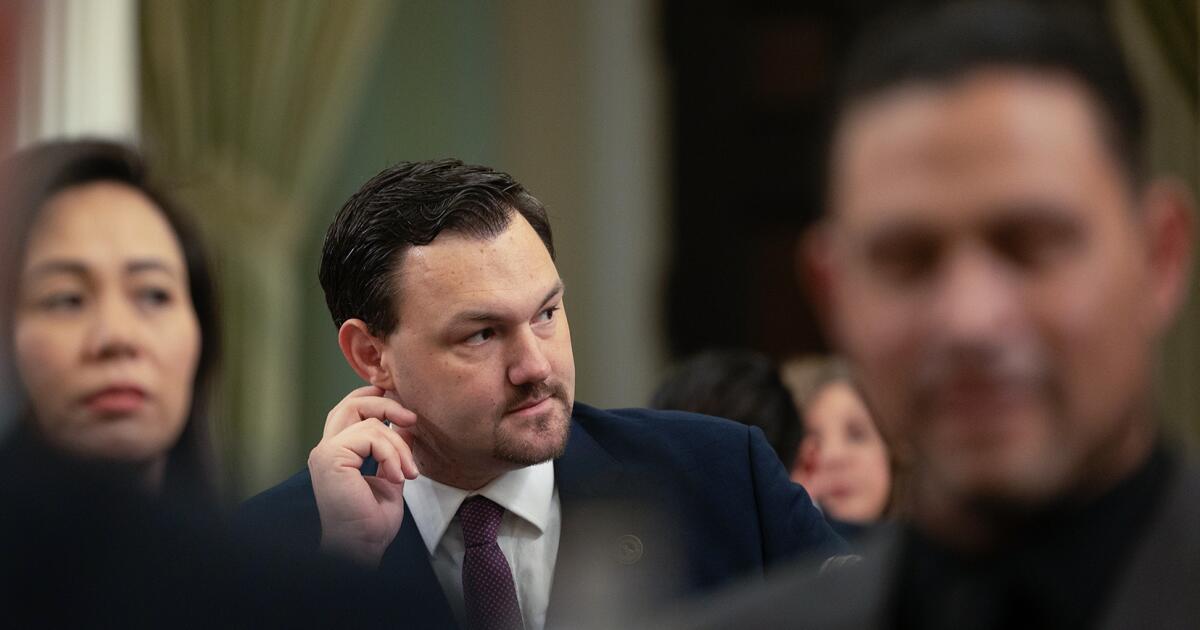
A new commission made up of legislators, public defenders, academics and advocates seeks to push California — one of just two states that don’t pay for basic public defense — to begin providing resources and enforcing minimum standards for county public defender systems.
The California Independent Commission on Public Defense includes three assemblymembers and two senators — among them Jesse Arreguín and Nick Schultz, chairs of the Senate and Assembly Public Safety Committees — as well as chief public defenders from several counties, retired judges, the directors of criminal justice nonprofits, and the heads of organizations representing thousands of defense attorneys in the state.
“We have discussed the problem of our public defense system for years,” said Schultz, a Democrat from Burbank and former prosecutor who has sponsored legislation to improve public defense.
The goal is to “move past discussion and study, and come up with an actionable road map of what we need to do to really build out the robust public defense infrastructure that Californians are rightfully entitled to,” he said.
The commissioners plan to develop a five-year plan to phase in state funding, along with enforceable standards like caseload limits and access to defense investigators.
A CalMatters investigation last year found that criminal defendants across the state are routinely convicted without anyone investigating the charges against them, significantly increasing the likelihood of wrongful convictions. Many California counties do not employ a single defense investigator who can interview witnesses, review police reports, visit crime scenes and retrieve video surveillance footage. CalMatters also found that lawyers in some rural counties are handling caseloads that far exceed even the most permissive standards, making them less likely than other defense attorneys to challenge the prosecution’s evidence in legal motions and take their cases to trial.
But the state has resisted stepping in. After a proposed bill that would have created an official state commission to address the issue was abandoned, two advocacy groups, the Wren Collective and UC Berkeley’s Criminal Law and Justice Center, decided to form an independent commission and began assembling participants who could develop and act on reforms. These types of commissions, which have facilitated significant improvements in other states’ public defender systems, are usually established by the governor.
“It became clear that this was an issue that was not a high priority for Sacramento, especially during a budget crisis,” said Chesa Boudin, the Berkeley center’s founding director and a former San Francisco district attorney. It also became clear, Boudin said, that “there was a tremendous gap between what experts understood to be the crisis and the public perception of California government as a kind of progressive leader in the country.”
In the decades since the U.S. Supreme Court established the right to an attorney in state court criminal proceedings, California has saddled its counties with the responsibility of providing lawyers to poor people accused of crimes. Many of those counties have opted for the cheapest path: paying private lawyers and firms a flat fee to represent indigent defendants, regardless of how many cases they handle or how much time they spend on each case.
“You’ve got some offices that have an incredibly high caliber of representation that they can provide, and you have other offices that are doing these flat-fee contracts where the quality has been documented to be pretty bad,” said Eve Brensike Primus, a law professor at the University of Michigan.
Primus is the only member of the new commission from outside of California. She was asked to join because of her extensive research and writing about the structure of indigent defense.
An indigent defense commission in Michigan, which was formed by the legislature in 2013, has led to significant reforms and a substantial influx in state funding.
The California commission’s work, Primus said, can serve “as a catalyst for political actors to do the right thing and start to fund and improve indigent defense delivery, or as fodder for lawsuits that then can try to get the judiciary to push the political actors to do what is necessary to provide for effective representation.”
The commission is scheduled to hold its first in-person meeting, which will be open to the public, in Berkeley in October, with additional meetings planned for Los Angeles, the Central Valley and Northern California over the next 12 months. Commissioners say they will work in subcommittees in between these quarterly sessions to develop a concrete fiscal plan for the state, draft legislative language, and establish minimum standards for how counties should structure their public defender offices, compensate their attorneys, provide access to experts, and report on their work.
Anat Rubin writes for CalMatters.
Politics
Pope Leo sends unmistakable message on immigrants during visit honoring America’s first saint

NEWYou can now listen to Fox News articles!
Pope Leo XIV used a visit Saturday honoring St. Frances Xavier Cabrini, the first American saint and patron saint of immigrants, to deliver his latest appeal on behalf of them, asking Catholics to look to her example at a time when migration remains one of the defining issues of his emerging papacy.
The remarks came as Leo continues to make migration a central focus of his public ministry, a position that has sparked months of public friction with President Donald Trump over immigration and foreign policy.
“What could be more relevant today than a missionary charism dedicated to serving migrants?” Leo said during an evening prayer service in Sant’Angelo Lodigiano, the northern Italian town where Cabrini was born.
The American-born pope prayed at Cabrini’s tomb and urged young Catholics to learn from the saint’s life of serving immigrants, many of whom had left their homelands in search of better opportunities.
POPE LEO XIV STRONGLY SUPPORTS US BISHOPS’ CONDEMNATION OF TRUMP IMMIGRATION RAIDS: ‘EXTREMELY DISRESPECTFUL’
Pope Leo XIV presides over a celebration at the parish of Santi Antonio Abate e Francesca Cabrini in Sant’Angelo Lodigiano, Italy, Saturday. The visit was part of his pastoral journey to nearby Pavia and marked the birthplace of Francesca Cabrini, the first U.S. saint and Patroness of Migrants. (Mario Tomassetti/Vatican Media)
But Leo also invoked his predecessor, Pope Francis, whose own papacy was defined in part by calls to welcome migrants.
“Let us ask ourselves: if Mother Francesca were alive today, what would her missionary spirit tell her?” Leo said. “And what would a pope like Francis — who, as the son of Italian immigrants, made service to migrants one of the key priorities of his pontificate — ask of her?”
The comments are the latest in a series of migration-focused appearances that have helped define Leo’s first year as pope.
POPE LEO APPOINTS PRO-IMMIGRATION BISHOP TO DIOCESE HOME TO TRUMP’S MAR-A-LAGO
Pope Leo XIV greets faithful as he leaves the parish of Santi Antonio Abate e Francesca Cabrini in Sant’Angelo Lodigiano, Italy, Saturday. (Mario Tomassetti/Vatican Media)
Last week, Leo traveled to Spain’s Canary Islands, a major destination for migrants departing West Africa, where he met migrants and called for greater efforts to welcome and integrate people fleeing hardship and conflict.
During that trip, Leo urged world leaders to create “legal and safe pathways” for migration and warned against reducing migrants to statistics.
Leo’s migration advocacy has frequently drawn criticism from Trump, who has accused the pontiff of venturing into politics and sharply disagreed with some of his comments on immigration and foreign affairs.
The public disagreements have become one of the most closely watched relationships between the Vatican and Washington during Leo’s papacy.
INCLUSIVE TONE OF NEW POPE ISN’T SITTING WELL WITH SOME IN THE ‘AMERICA FIRST’ MOVEMENT
Pope Leo XIV presides over a celebration at the parish of Santi Antonio Abate e Francesca Cabrini in Sant’Angelo Lodigiano, Italy, Saturday, during his pastoral journey to nearby Pavia. (Mario Tomassetti/Vatican Media)
Earlier this year, Reuters reported that Secretary of State Marco Rubio was expected to meet with Vatican officials and Italian leaders during a period of heightened tensions between the Holy See and the Trump administration.
Leo has rejected suggestions that his remarks are political attacks, arguing instead that his appeals stem from Catholic teaching on human dignity, peace and care for vulnerable people.
Saturday’s visit centered on Cabrini, who became a naturalized U.S. citizen and spent decades serving Italian immigrants through schools, hospitals and orphanages before her death in Chicago in 1917.
US CATHOLIC BISHOPS PRESIDENT SAYS DEPORTATIONS INSTILLING ‘FEAR’ IN ‘WIDESPREAD MANNER’: ‘CONCERNS US ALL’
Pope Leo XIV holds a private audience with Vice President J.D. Vance at the Apostolic Palace in Vatican City, May 19, 2025. (Simone Risoluti/Vatican Media)
The Vatican has also announced that Leo will travel to the Italian island of Lampedusa on July 4, a date likely to draw attention in the United States given the pope’s American roots.
CLICK HERE TO DOWNLOAD THE FOX NEWS APP
Lampedusa has become one of Europe’s most recognizable migration flashpoints because of the thousands of migrants who attempt dangerous crossings from North Africa each year. The island also carries symbolic importance within the Catholic Church because it was the destination of Pope Francis’ first trip outside Rome after becoming pope in 2013.
Fox News Digital’s Eric Mack and Robert McGreevy, and The Associated Press contributed to this report.
-

 Politics1 minute ago
Obama Center visitors say project symbolic of ‘Black excellence,’ claim scandal-free legacy while Trump ripped
-

 Health6 minutes ago
Poison centers link growing Benadryl abuse among teens to dangerous social media trends
-

 Sports13 minutes ago
Bryce Harper hits for cycle, Kyle Schwarber blasts three homers in Phillies blowout win over Mets
-

 Technology16 minutes ago
Meta offers paid training for AI data center jobs
-
 Business21 minutes ago
‘I got crushed’: AI giants are funding ad wars in races across the country
-
 Entertainment28 minutes ago
A fake mountain and real magic transform Paris’ oldest bridge
-
Lifestyle30 minutes ago
Day 1,578 of WW3: The UN Security Council will meet on Monday to address Russia's latest strikes on cultural and religious sites, including the attack on Kyiv-Pechersk Lavra. ANGH, of course. This is your Saturday Ukraine discussion
-
Politics36 minutes ago
Can a new commission remedy California’s public defender crisis?

