Lifestyle
Franz Kafka's life wasn't so kafkaesque after all, TV miniseries shows

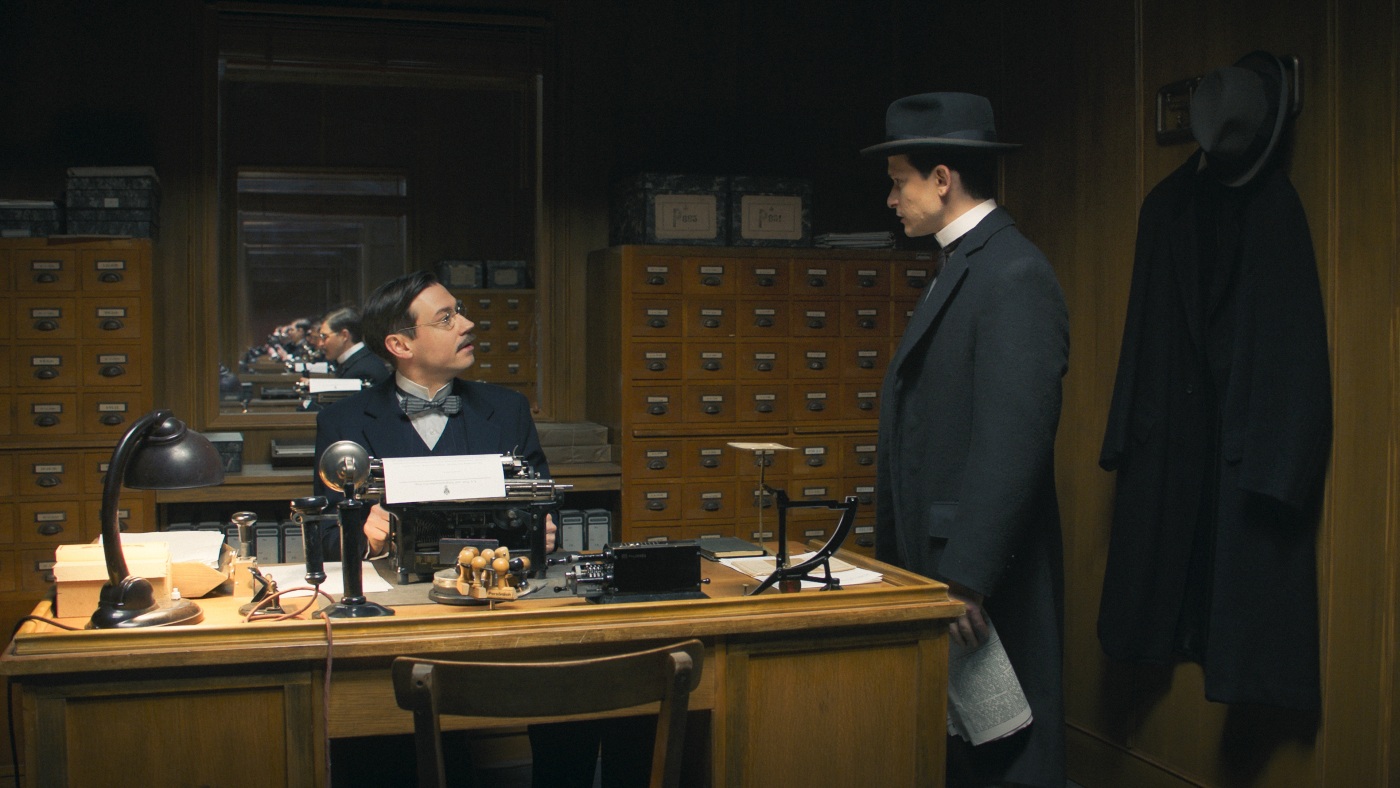
Max Brod (left), a recognized writer at the time, relentlessly promoted the writings of his friend, Franz Kafka, played here respectively by David Kross and Joel Basman in the Austrian-German series Kafka, now streaming in the U.S.
ORF/Superfilm/Nicole Albiez/Superfilm
hide caption
toggle caption
ORF/Superfilm/Nicole Albiez/Superfilm
If you’ve ever felt powerless when confronted with faceless bureaucracy, confounded by absurd accusations or simply hopeless, chances are the word “kafkaesque” might sum up your situation.
But a television miniseries released in the U.S. this month shows Prague-born author Franz Kafka, whose work inspired the word, as anything but kafkaesque. Tortured recluse he is not here.
Instead, Kafka is a wrangler of labyrinthian bureaucratic systems, so successful in fact that his bosses do all in their power to keep him at home and prevent him from enlisting in World War I. That’s the story according to Kafka, a six-part series that was co-produced by Germany’s ARD, Austria’s ORF and Superfilm.
“We all think we hear of the bureau, or the office, that it’s a dark world and it’s apocalyptic (for Kafka). But in the real world, it was a paradise,” Director David Schalko told NPR’s Michel Martin during a joint interview with Joel Basman, who plays the title role.
Schalko said he was inspired to take on the project after reading Reiner Stach’s three-volume biography of Kafka, originally published in German between 2002 and 2014. In rejecting the usual tropes of equivocating Kafka’s angst-ridden works with the writer’s life, Schalko’s biopic offers a lush, more humanly complex picture.
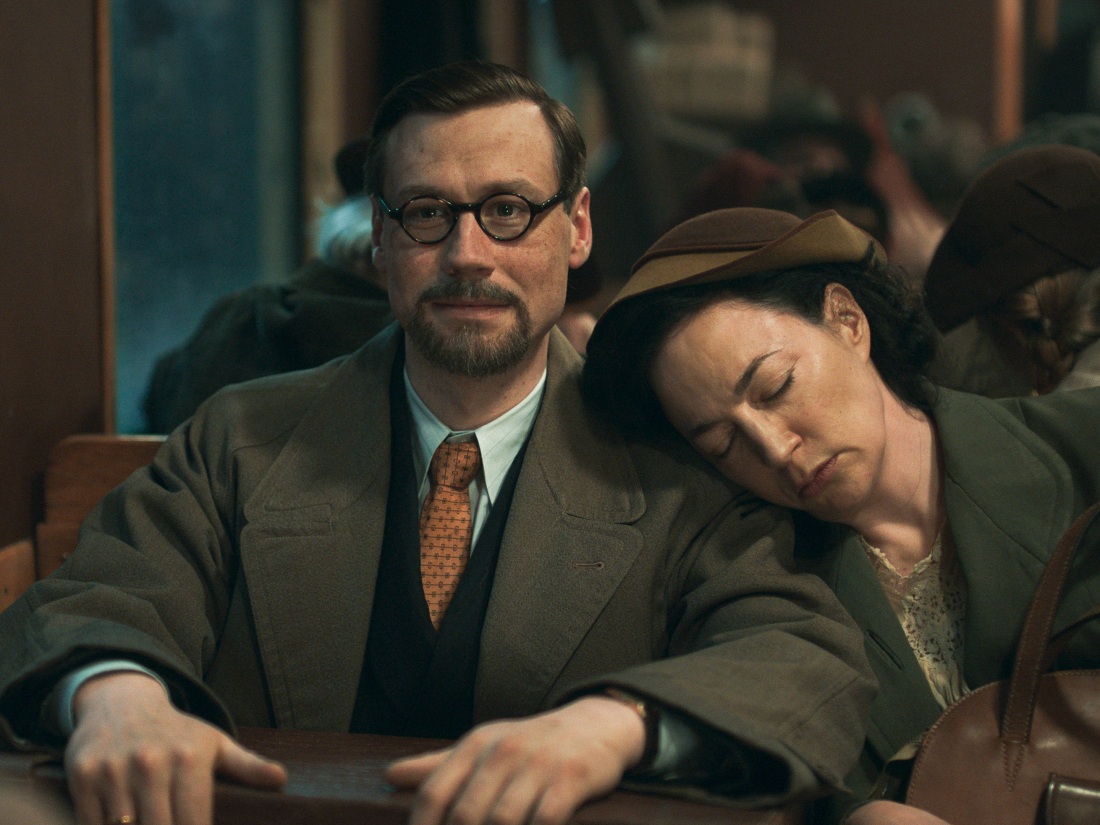
Max Brod (David Kross) and his wife Elsa (Tamara Stern) escaped Prague on one of the last trains to leave the city before Nazi forces took control, recognizing the danger to Jews like himself. He carried Franz Kafka’s papers with him in a suitcase.
Copyright ORF/Superfilm/Nicole Albiez/Superfilm
hide caption
toggle caption
Copyright ORF/Superfilm/Nicole Albiez/Superfilm
One perspective per episode
ChaiFlicks
The first theme is the author’s relationship with his close friend Max Brod — who ultimately defied Kafka’s wish to have all his manuscripts burned and instead posthumously became his biographer and literary executor.
The other episodes focus on the his (bourgeois) family, three of his lovers and his role as an insurance lawyer.
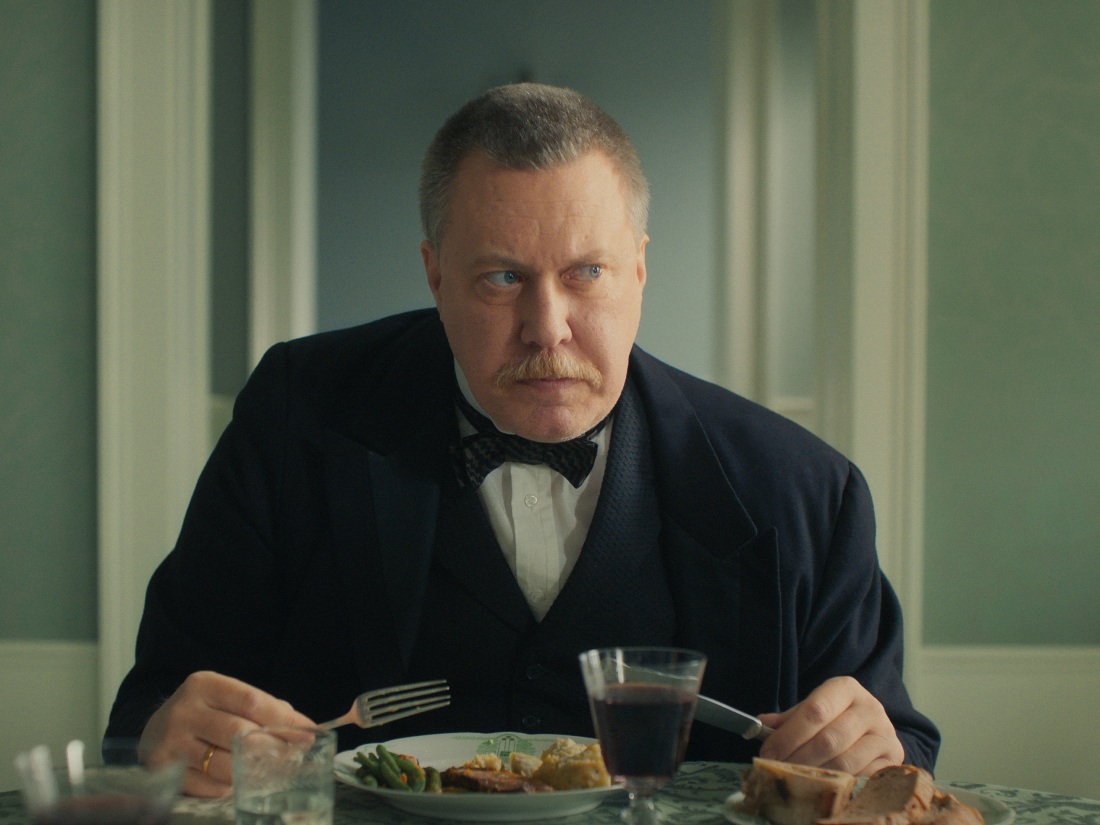
Kafka’s domineering father Hermann (Nicholas Ofczarek) plays a central role in his life and writings.
Copyright ORF/Superfilm/Nicole Albiez/Superfilm
hide caption
toggle caption
Copyright ORF/Superfilm/Nicole Albiez/Superfilm
In episode four, Kafka wins successive court cases and contracts for the company. He is held in high esteem by his superiors at the Workers’ Accident Insurance Institute. They also admire his writings and press him to review their own mediocre texts. It’s an admiration that Kafka does not reciprocate.
“He was very good rhetorically and he was fighting for the insurance company,” Schalko said. “It’s not the silent Kafka who is not able to talk in front of other people. It shows a complete different Kafka.”
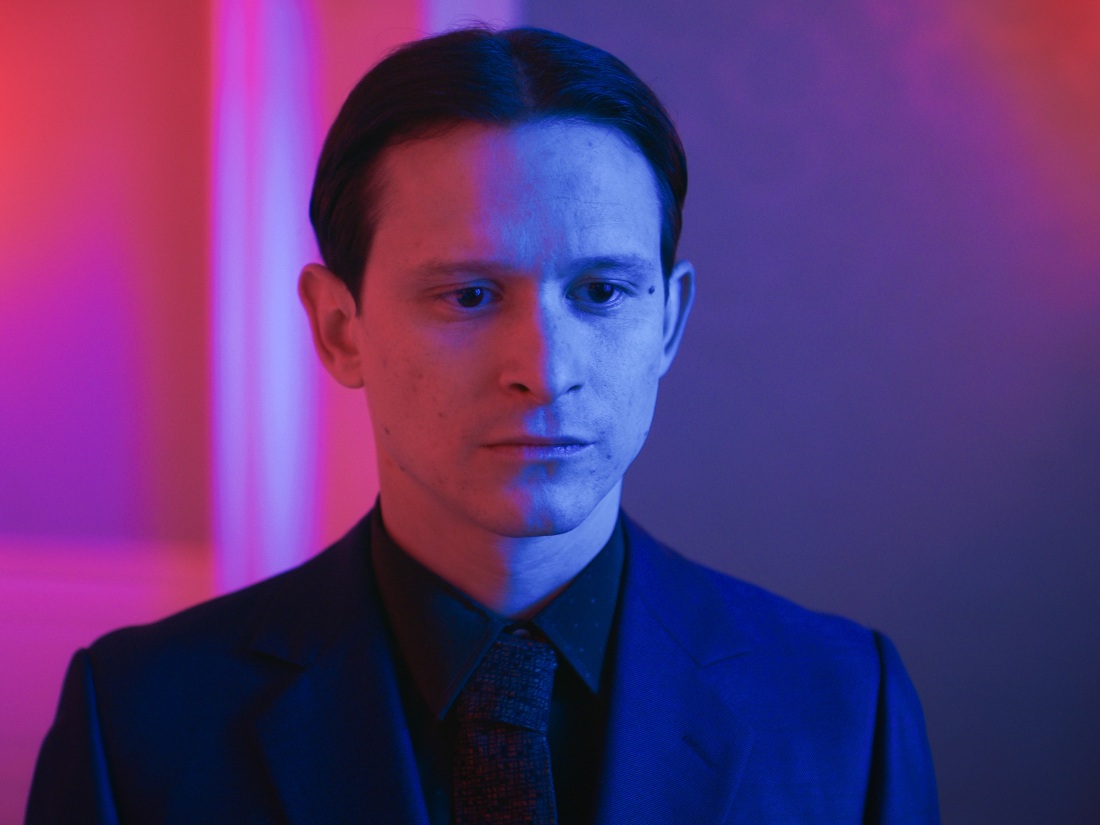
The series alternates between biographical material, historical context and scenes from Kafka’s writings.
Copyright ORF/Superfilm/Nicole Albiez/Superfilm
hide caption
toggle caption
Copyright ORF/Superfilm/Nicole Albiez/Superfilm
Basman says he felt compelled in portraying Kafka to “get away from the cliché of him being a depressed person. First of all, he’s a funny man. He’s got humor. And of course, he’s got his issues, and we all got them in our lives, but he was far away from depressed.”
A century since Kafka’s death
The series’ release coincides with the 100th anniversary of Kafka’s death this month. And it comes at a time of renewed interest in the writer, who has become an unexpected hot item among a younger generation reflecting on alienation via posts on TikTok.
Just last year, readers could finally access a new translation of Kafka’s diaries, by Ross Benjamin. Prior versions relied on a manuscript heavily edited and redacted by Kafka’s friend Brod, whose version was polished and removed lewd, homoerotic and unflattering material concerning Kafka and himself.
The unfiltered version shows a more hesitant Kafka who often left his thoughts unfinished mid-sentence — not surprising for an author who never didn’t complete the three novels he started and whose characters struggled with the impossibility of finishing tasks.
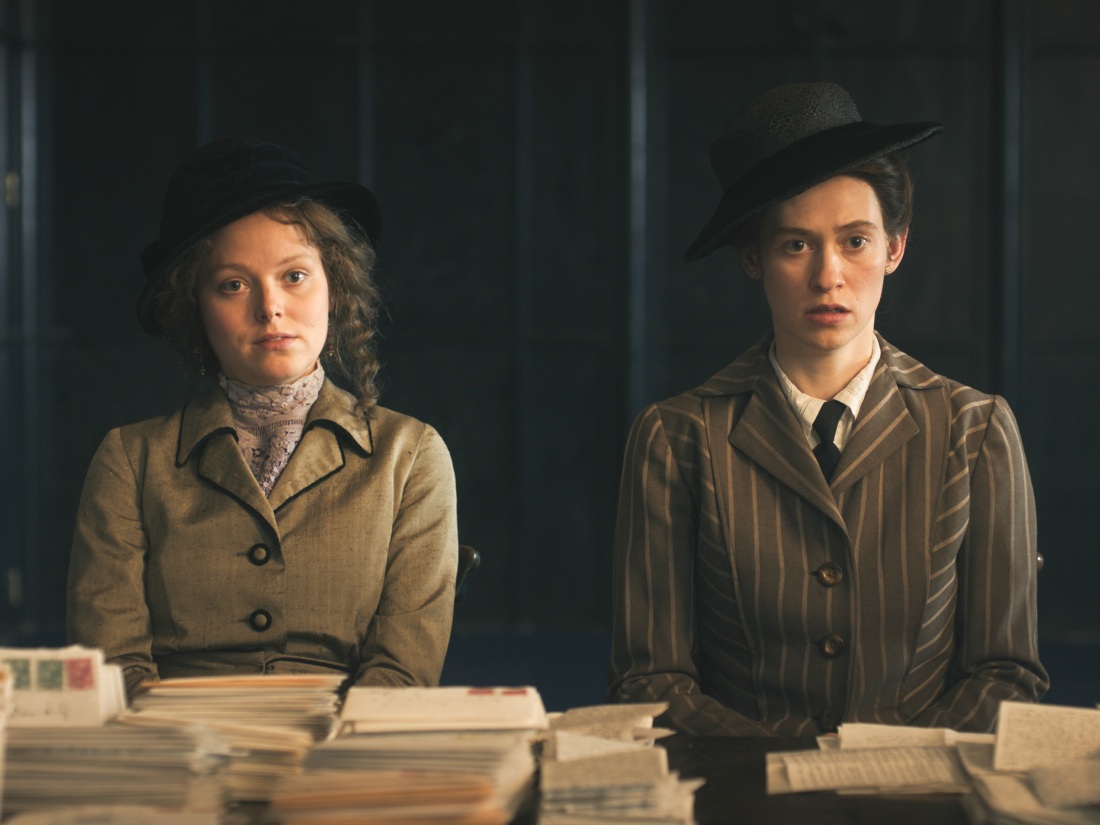
Kafka’s longtime fiancée Felice Bauer (Lia von Blarer, right) got so fed up with his constant equivocation that she confronted him alongside her friend, Grete Bloch (Marie-Luise Stockinger), an event that inspired the novel The Trial.
Copyright ORF/Superfilm/Nicole Albiez/Superfilm
hide caption
toggle caption
Copyright ORF/Superfilm/Nicole Albiez/Superfilm
“The feeling to wake up and feel like vermin, like an insect, and feeling the shame and get canceled by the others, is a feeling you know from social media very well,” Schalko said, while pointing to arbitrary arrests in Russia as another example.
“He also writes about the bureaucracy and how it feels to be a human being in a system that doesn’t see you as a human being. And that’s a big issue in our times as well.”
In a memorable scene in episode three, Kafka brings home for dinner a traditional Yiddish theater actor he befriended, Yitzhak Löwy. But Kafka’s domineering father, Hermann, disapproves and says Löwy is dirty and compares him to an insect.
The confrontation inspired Kafka to write his novella The Metamorphosis, the story of a man who turns into a bug. Kafka had also written a 100-page letter criticizing his father — the closest he came to writing an autobiography — though he neither sent nor published it.
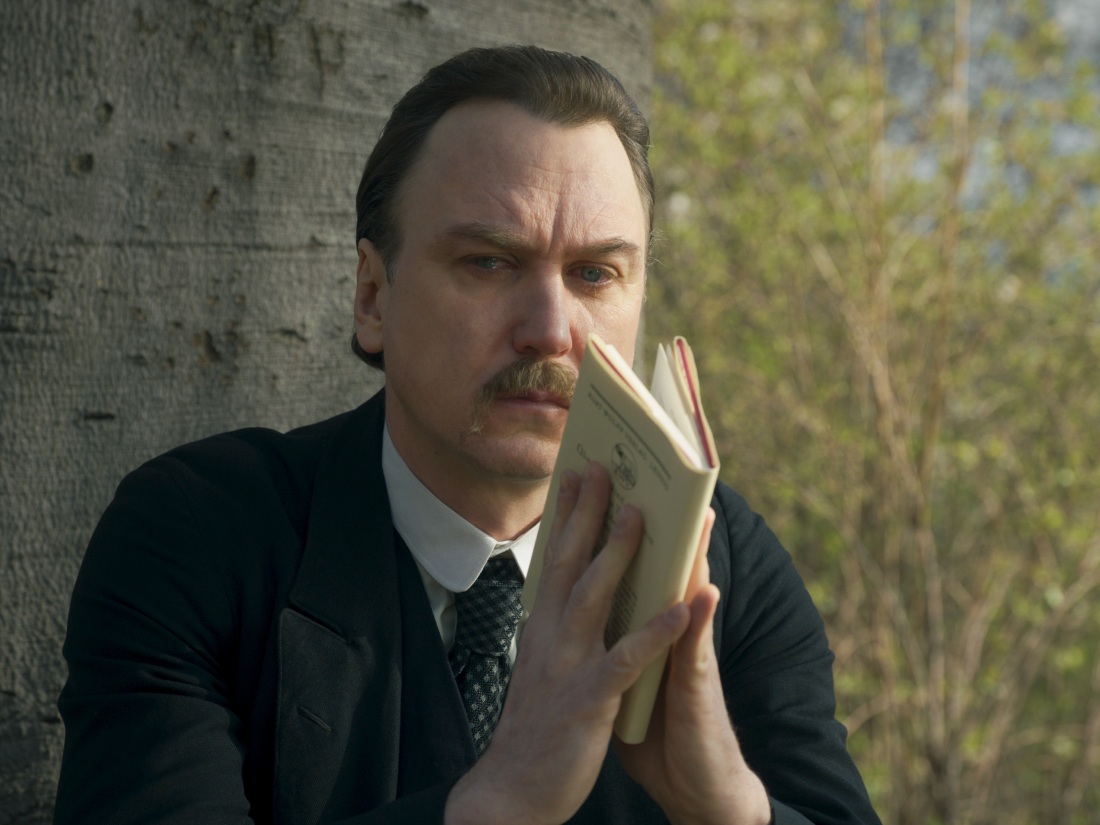
The poet Rainer Maria Rilke, played by Lars Eidinger, is shown moved to tears after reading Kafka’s The Metamorphosis, the story of a man who turns into an insect that was inspired by a confrontation between Kafka’s domineering father and the writer’s Yiddish actor friend Yitzhak Löwy.
Copyright ORF/Superfilm/Nicole Albiez/Superfilm
hide caption
toggle caption
Copyright ORF/Superfilm/Nicole Albiez/Superfilm
“For his father, it was more important to be accepted by the elites of Prague; he tried to maybe even hide his Judaism,” Basman said.
The Swiss-born actor says he could relate to this ambiguity in Kafka’s family identity because his own father is originally from Israel but he’s an atheist.
“I was never Jewish enough, but I also was never Swiss enough… I realized, okay, people want to brand you and if they can’t brand you, they don’t want you on their team,” Basman said.
“I think for Kafka, religion was also just a journey of getting to know himself because it was hidden by his father so strongly that he took this journey by himself.”
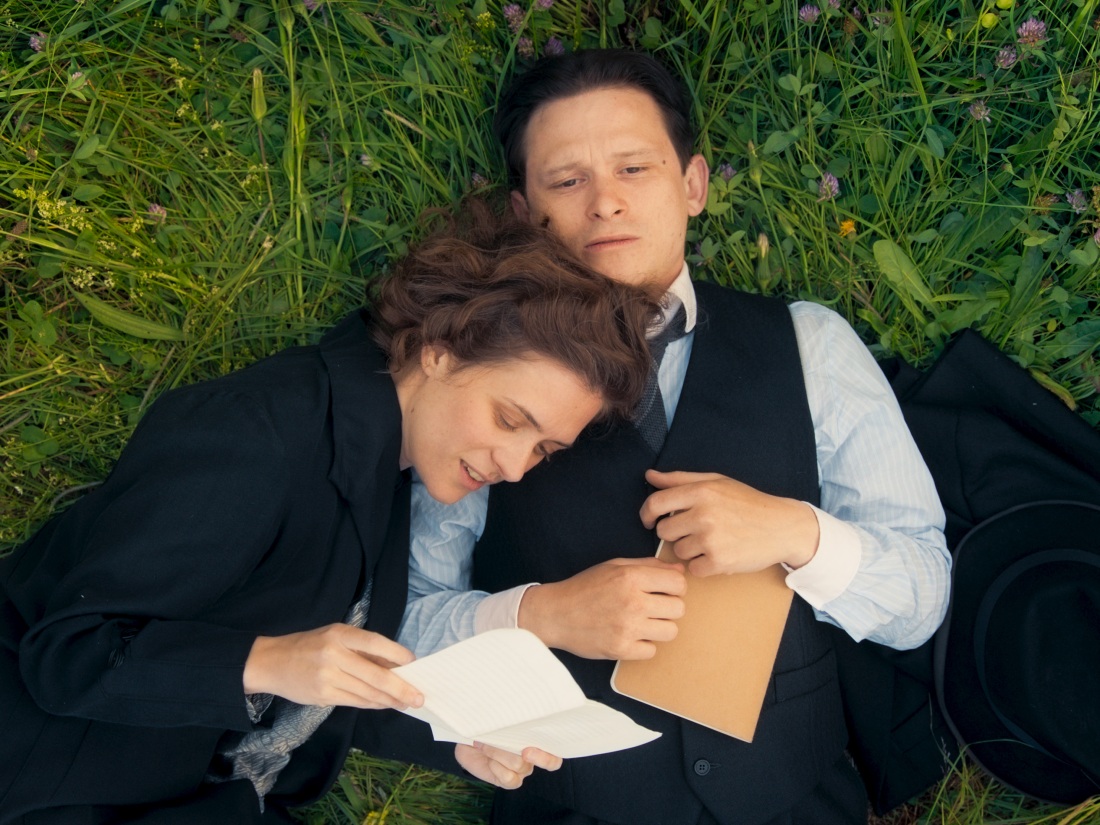
Kafka was engaged four times and never married, keeping most relationships long-distance via extensive letter-writing. His penultimate relationship was with the writer Milena Jesenská (Liv Lisa Fries), who recognizes his talent.
Copyright ORF/Superfilm/Nicole Albiez/Superfilm
hide caption
toggle caption
Copyright ORF/Superfilm/Nicole Albiez/Superfilm
Kafka and women
The women in Kafka’s life also left an indelible mark. He was engaged several times but never married. One of his fiancées was Felice Bauer, Brod’s cousin. The pair meet and only get to know each superficially before Kafka sends her hundreds of agonizing letters for months on end, through an initial parting, a second engagement and a final breakup.
Fed up with Kafka’s constant equivocation, Bauer at one point confronts him, letters in hand, with her friend Grete Bloch — another recipient of letters from Kafka — by her side. The episode drawn from the writer’s life inspired his novel The Trial, published posthumously in 1925.
The protagonist Joseph K. navigates an absurdly complex bureaucratic system and makes mistakes that make him look guilty of an unknown crime for which he is put on trial and then executed “like a dog.”
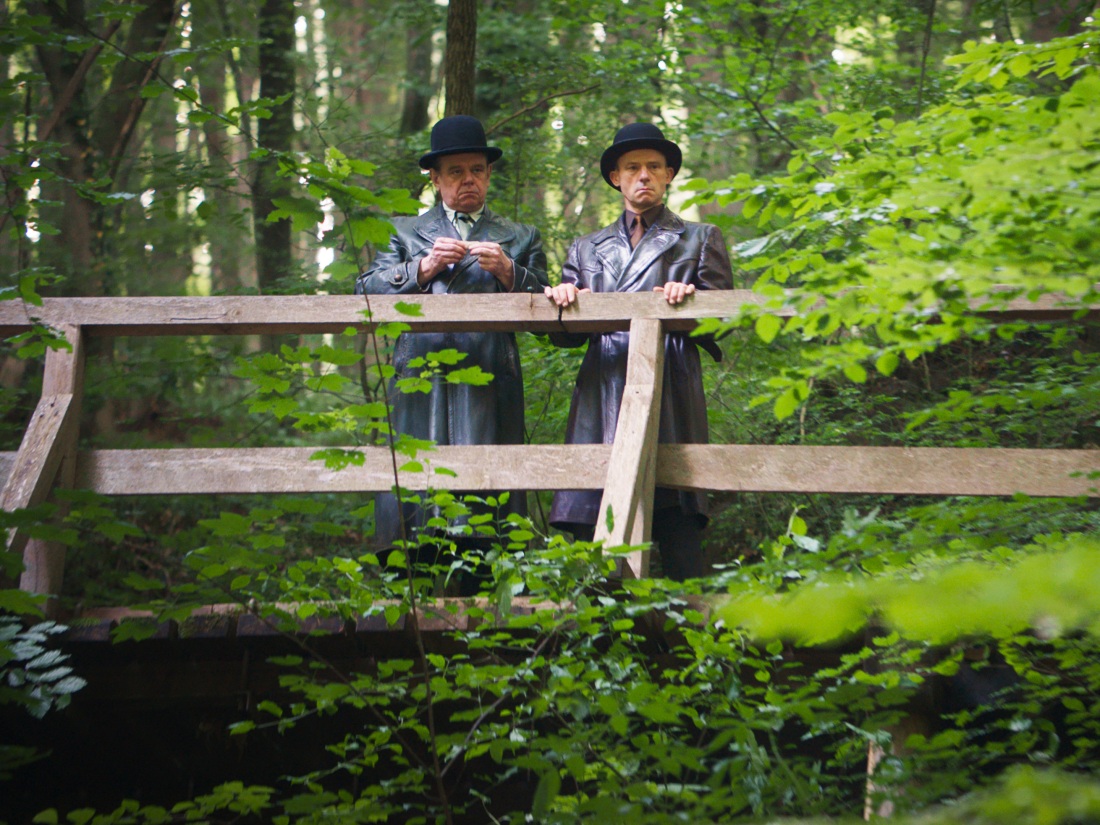
Two men in leather coats (Raimund Wallisch, left, and Gerhard Liebmann) lurk in the background, a representation of the angst and absurdities of bureaucracy that concerned Kafka.
Copyright ORF/Superfilm/Nicole Albiez/Superfilm
hide caption
toggle caption
Copyright ORF/Superfilm/Nicole Albiez/Superfilm
Kafka is available to stream on ChaiFlicks. New episodes will release weekly.
The broadcast version of this story was produced by Mansee Khurana. The digital version was edited by Obed Manuel.


Milly Alcock in Supergirl.
Warner Bros. Pictures
hide caption
toggle caption
Warner Bros. Pictures
Hollywood’s newest Supergirl is kind of a dirtbag — in the good way. Fearless and grumpy, Supergirl (Milly Alcock) sets out on a quest to support a new pal’s revenge journey and to make a point that should be clear by now: Never mess with a lady’s dog. Also featuring David Corenswet and Jason Momoa, is Supergirl a worthy follow up to Superman?
If you want more DC superhero action, check out these episodes:
‘Superman’ takes off and nails the landing
‘The Batman’ puts the emo in emote
Connect with Pop Culture Happy Hour:
Letterboxd / Facebook
Our weekly newsletter
Support Pop Culture Happy Hour+
Lifestyle
L.A. Affairs: After decades of near-misses, I finally told him: ‘I’m not leaving here without you’

It didn’t take endless quarantining with my spouse during the COVID-19 pandemic to end my marriage of over two decades. By the summer of 2019, menopause — and the extra-added “bonus” of frontal fibrosing alopecia that it awakened — was pummeling me physically and mentally to the extent that I no longer had the capacity to function inside the dysfunction of my life.
The relief that came with the decision to finally let go was completely dwarfed by the immense pain of severing a family in two. I cried as I packed. I cried as I unpacked. I was rolling endlessly in a dark wave that would not stop; my feet could not tell sand from sky. Once I managed to break the surface, I reached out.
I called Tish, Diane and Michelle, three smart, strong, nurturing women who’d been through and survived divorce. I also called my brother, Dan, and my friends Doug and Steve, three kind, creative, funny men who always “got” me.
As for Steve, we met in the spring of 1984 when he auditioned to be the drummer for the Secrets, the band Dan, Doug and I had started the year before. In our small-town high school of fewer than 400 students, he had flown completely under my radar, as he was two years younger, and he joined marching band the year after I’d ditched my baritone horn for a microphone and Pat Benatar tights. Steve aced the audition, and the four of us clicked immediately over our shared love of the Pretenders and all things Monty Python. By mid-June, the Secrets were playing local bars and biker parties in the middle of nowhere, and I was head over heels in love with the drummer.
It wasn’t supposed to happen like that. I wasn’t supposed to fall in love with a boy from my hometown.
I had spent my whole life dying to get out of Middlebourne, W.Va., and had been champing at the bit to leave for college, but by late August, that no longer meant freedom; it meant that I’d have to leave Steve behind. I told myself we’d defy the odds and make it work. He was my soul mate. But we were just kids, and there was no internet, no cellphones with unlimited text and calling. By February 1985, the divide was too great. In a moment of loneliness, I cheated on him. It was over, and I was firmly told to take my place in the friend zone.
I spent the following year flailing and failing in college before making the bold, half-baked decision to drop out of the West Virginia University theater program and move to Los Angeles, a place I’d never been, to pursue a singing career. When Steve found out that I was moving across the country, he softened his friend-zone stance and told me he loved me. On July 13, 1986, he went with my parents to Pittsburgh International Airport to see me off.
For the next 33 years, we would come together and drift apart — sometimes as lovers but mostly as friends. During a visit to my Hollywood apartment in 1988, when he was still in college and the timing was still wrong, I told him, “Who knows. Maybe in 30 years, I’ll come back and get you.”
In November 2019, Steve came to visit me for a long weekend.
I picked him up at Los Angeles International Airport and took him straight to Zuma Beach for a picnic, where we watched dolphins jumping in the waves while the seagulls stole our potato chips. The following day, we cozied up for an afternoon of wine and cheese at Cornell Wine Co. in Old Agoura, then made our way over Topanga Canyon for dinner at Canyon Bistro & Wine Bar.
The night before he flew home, we watched the sun set from our table by the lake at Zin Bistro Americana in Westlake Village. I felt giddy, excited, seen, understood and appreciated in a way I hadn’t felt in a very long time. While it was tempting to jump right in with both feet, we decided to date long distance and take things slowly.
On March 26, 2020, while Steve was still recovering from being profoundly ill with COVID, I arrived at his doorstep at 6 a.m. and proclaimed, “I’m not leaving here without you.”
Two weeks later, after packing most of his belongings into U-Haul shipping crates, we left Parkersburg, W.Va., in Steve’s red Volkswagen Golf with two suitcases, one Treeing Walker Coonhound and one Aussie/Chow mix. I-40 West was practically empty; just us and the occasional car or Amazon truck.
We arrived in California on Easter Sunday and joined the rest of the world in quarantine, not knowing how it would affect our work and financial future. We took a lot of long walks to help deal with the stress of the not knowing, but the magic panacea for me came the day Steve’s Harley-Davidson arrived in one of the crates.
We cruised up and down PCH, and roared our way up and over Mulholland Highway, Stunt Road, Malibu Canyon and Decker Canyon, stopping along the way to stretch our legs, feel the sea spray on our faces and take in views from the valleys to the coastline. We were surrounded by so much beauty; it was almost impossible to let trepidation win.
On one particularly memorable ride on Mulholland Highway between Kanan Road and SR 23 near Saddle Rock, we came around a bend and — bam! — right in front of me was the greenest mountain range I’d ever seen in California, gleaming spectacularly in the sunlight. As I inhaled its gorgeousness and exhaled my stress, I thought, “I can’t believe I get to see this. I can’t believe I get to do this. I can’t believe I get to be with Steve.”
In September 2024, I got to marry Steve.
As my brother, Dan, said at the reception, “What a long, strange trip it’s been.”
The author lives in the suburbs of Los Angeles with her husband, Steve, and their dogs, Coco Puff and Kira.
L.A. Affairs chronicles the search for romantic love in all its glorious expressions in the L.A. area, and we want to hear your true story. We pay $400 for a published essay. Email LAAffairs@latimes.com. You can find submission guidelines here. You can find past columns here.

Sydney (Ayo Edebiri) and Carmy (Jeremy Allen White).
FX
hide caption
toggle caption
FX
There has always been a metaphorical parallel between The Bear, the television show, and The Bear, the fictional restaurant on the television show. Even as Carmy (Jeremy Allen White) and Sydney (Ayo Edebiri) transformed the Italian beef joint into the fancy restaurant of their dreams and wished for a Michelin star, there were undoubtedly locals who thought, “This is great and all, and I’m sure the food is good, but … I liked the beef sandwiches.” There’s still a window at The Bear to get them, but the focus is certainly elsewhere.
When it started, The Bear was mostly about the work that took place in the kitchen. The stresses of too many orders, territoriality from Richie (Ebon Moss-Bachrach), the arrival of Sydney, and the tightly wound but undeniably talented Carmy, making everybody both extremely stressed and significantly better. Over time, it shifted and grew, putting together beloved departure episodes like “Fishes” in Season 2, which introduced a boatload of guest stars for a flashback story of a disastrous family dinner before Mikey (Jon Bernthal) died. It spent time with Sydney’s family, it explored the way Tina (Liza Colón-Zayas) and Mikey originally met, it followed Marcus (Lionel Boyce) to Copenhagen, and it went with Richie to work for Andrea (Olivia Colman). All these episodes were excellent. And there was still a kitchen. But the focus seemed to be elsewhere.

At times, the show seemed to have disappeared up its own nose, to the point where you weren’t watching the show The Bear as much as you were watching the phenomenon The Bear. There were too many real-life chef cameos, until it seemed like those chefs were checking a box on a list of “things all the cool kids do.” There were too many other cameos, culminating in a rare miss from the reliably charismatic John Cena. The show placed a lot of narrative weight on Carmy’s love interest, Claire (Molly Gordon) — weight that the underwritten character couldn’t support. But even if every experiment and every diversion had worked, viewers couldn’t be blamed for missing the close focus on the kitchen and the camaraderie — for thinking, “This is all really special, but I do miss the beef sandwiches.”
The fifth and final season dispenses with the departure episodes, and it mostly dispenses with cameos. It all takes place on one day, just after Carmy tells Richie and Sydney that he wants to step back from the restaurant and give it to them and Sugar (Abby Elliott) to run, and it mostly takes place right there at The Bear. Now that the clock set by Jimmy (Oliver Platt) has run out, his money has run out as well, and a series of cascading disasters puts Sydney, Carmy and Richie behind the 8-ball from very early in the day, not least because of the tension hanging over all three of them as they prepare to tell the staff about Carmy’s decision to leave.

Tina (Liza Colón-Zayas).
FX
hide caption
toggle caption
FX
We spend this day mostly with the people we know best: our three leads, along with Sugar, Tina, Marcus, and the rest of the staff — including Luca (Will Poulter), who has stayed around to keep working with Marcus. Jimmy is running around with Computer (Brian Koppelman) and a young apprentice of his named Cheese (Elsie Fisher of Eighth Grade), trying to figure out what to do about his finances since it is Jimmy, and not just the restaurant, who’s out of money.
This day takes a while to get cooking, so to speak. The first three episodes of the season are slow, the first two in particular. It’s pouring rain outside, the lighting is dim, and the score maintains the same contemplative melancholy for a long, long time. For about two and a half episodes, it feels like one extended, low-energy scene.
But after that, there’s a shift in tone as the staff looks to get through service, and through seven episodes (FX did not make the finale available in advance for critics), the rest of the season is terrific. What you see is the core story of The Bear, which is people trying to serve food and overcome problems, but through the lens of everything that has happened over the show’s run: Carmy’s retreat from his obsessiveness, Richie’s expansive (and inspiring) discovery of his gift for hospitality; Sydney’s stepping forward from second-in-command to leader; Tina’s complex relationship with the restaurant and her grief over Mikey; Sugar and Carmy’s relationship with Donna (Jamie Lee Curtis); the arrival of Marcus as a high-end pastry chef.
The question the show asks over the last four episodes is: Given all those digressions and flashbacks, given all those visits with families and others, given everything we know about where all these people have been and what they’ve experienced, how does a high-pressure service — of the same kind we used to see in that first season — look now? How do they behave differently, and how does their behavior read differently? How are they the same people we have always known, but at a different juncture, in a different context? How do their wins mean more to them, and to the audience?
On the one hand, making a season this way, there are fewer surprising grace notes, like “Napkins,” the Tina/Mikey flashback episode in Season 3, or “Worms,” the episode in Season 4 where Sydney hung out with her cousin (Danielle Deadwyler) and her cousin’s kid. The Bear feels less daring and more conventional.
But oh, when they have victories under pressure? Victories, large or small? It is immensely, richly satisfying. There’s also more comedy other than just the goofy Faks family than we’ve had in a few seasons; Richie is perhaps the MVP of the season, and that’s partly because of how often he gets to be really funny. Ayo Edebiri continues to be the show’s best reactor, showing Syd eternally a little bit surprised (dismayed?) that she’s chosen to throw in her lot with these people.
There are a couple of questions yet to answer in the finale, both little plot items and broader character resolutions. Over these seven episodes, though, there is much to cheer.


-

 Pittsburg, PA6 minutes ago
Pittsburghers lash out at proposed Downtown tax diversion district
-

 Augusta, GA9 minutes ago
Suspect convicted in 2024 Augusta shooting death
-

 Washington, D.C14 minutes ago
DC reaches settlement with man detained while protesting troops with Darth Vader song
-

 Cleveland, OH16 minutes ago
Heinen’s closing downtown Cleveland location
-

 Austin, TX21 minutes ago
Texas board approves Bible stories as required reading in public schools
-

 Alabama24 minutes ago
Best downtowns in Alabama? These 10 towns made the list
-

 Alaska29 minutes ago
Lavrov Challenges Rubio: Kremlin Says Trump-Putin Reached Deal as Moscow Questions Washington’s Neutrality
-

 Arizona36 minutes ago
Central Arizona is home to the ‘World’s Oldest Rodeo.’ Here’s what to see and do there

