Politics
A year after Newsom called for constitutional amendment on gun safety, no other states have joined him

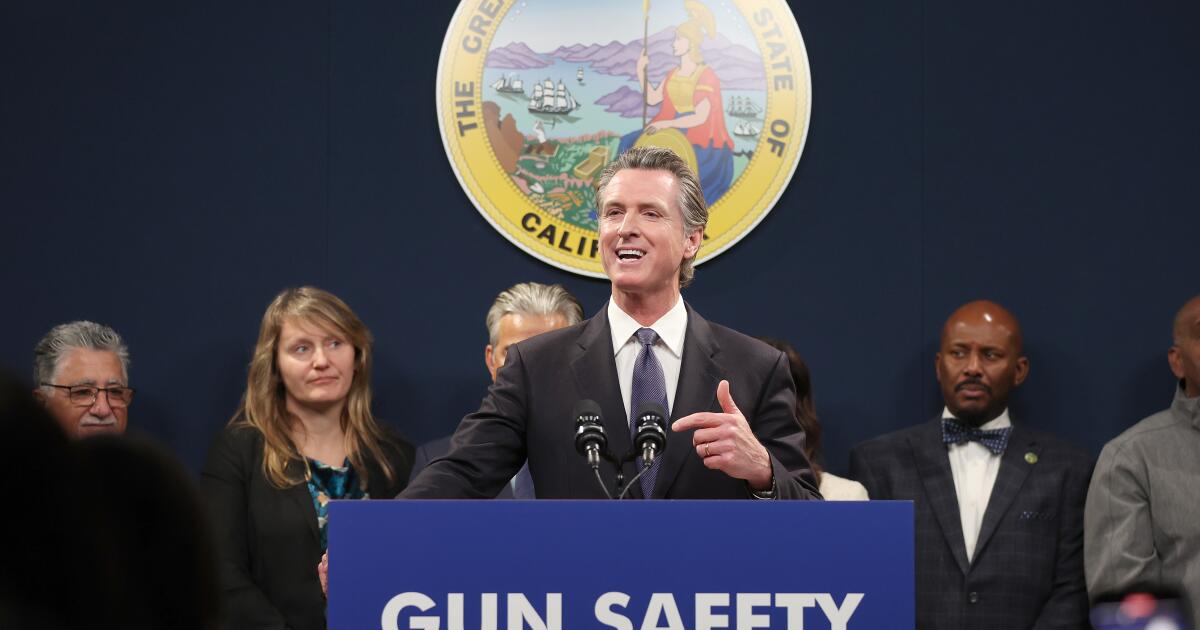
On NBC’s “Today” show last June, Gov. Gavin Newsom announced a proposal that seemed politically impossible from the start: Convincing two-thirds of state legislatures in America to officially call for a constitutional convention to adopt national gun safety laws.
Newsom didn’t see it that way.
“It’s possible because their constituency demands it,” Newsom said when the interviewer pointed out that more than half the states are controlled by Republicans who generally oppose gun restrictions.
One year later, no other state has joined Newsom’s fight.
The inability to advance the gun safety proposal beyond California, even in other Democratic-controlled states, suggests that — so far at least — Newsom’s plan was more flash than substance.
The governor’s pitch inspired a round of media coverage last year that elevated his national profile as a Democrat trying to do something about mass shootings and other gun violence. Newsom pointed to findings of a Fox News Poll that found overwhelming voter support for the restrictions.
The gun initiative has given him another opportunity to reach out to voters outside of California, widening his national appeal for a potential White House run in the future and creating an opportunity to expand his database of political supporters before his time as governor ends in two years.
Yet Newsom must still contend with the stubborn politics of the 2nd Amendment. Many lawmakers at the national and state level are reluctant to buck a powerful gun lobby and risk being accused of trying to dilute the constitutional right to bear arms.
The governor said he expected the slow progress, adding that support for a constitutional amendment on gun control could take 20 years to catch on.
“Come on, no one was naive about this,” Newsom said in a recent interview with The Times. “This has been done before, but not recently. It will have its fits and starts. It will have its champions and will have its setbacks.”
So far, the setbacks have been easier to spot.
Newsom’s plan would require two-thirds of states to pass resolutions supporting a constitutional convention. Through the convention, new federal gun safety measures would have to be ratified by three-fourths of state legislatures. Newsom is calling for states to pass an amendment to the U.S. Constitution that requires universal background checks on gun purchases and raises the minimum age to purchase a firearm from 18 to 21. The governor wants the gathering of states to also result in a “reasonable waiting” period for all gun purchases and to prohibit the sale of assault weapons to the public.
California lawmakers passed a resolution in September calling for a constitutional convention to consider the proposal.
The governor and his political aides began reaching out to other states after the California Legislature acted, hoping to find lawmakers around the country with compelling personal stories to lead the effort.
Some states have part-time Legislatures, which meet for only a few months annually or every other year, and lawmakers told Newsom’s aides it wasn’t feasible to pass a resolution this year, an advisor to the governor said. In other states, legislators who advocate for gun control had already committed to their bill packages for 2024.
“And others specifically said, ‘Not right now,’ I mean, there’s electoral issues,” Newsom said.
Newsom said he’s had “dozens of conversations,” but the governor and his political staff declined to name any states or individuals they have spoken with.
He said he’s discussed the constitutional amendment in every state he’s visited through his Campaign for Democracy, a political action committee that he formed to raise money for Democrats and to fight Republicans nationally in the 2024 election.
“So we’re talking to legislative leaders in all those red states,” Newsom said.
Last year, a few weeks after launching his call for the constitutional convention, Newsom went to Idaho to meet with Democrats and fund-raise for Biden’s reelection through his political action committee.
Democrat Melissa Winthrow, the minority leader in the Idaho state Senate, said she never heard from the California governor.
“No, I have not spoken to Gov. Newsom,” Winthrow said. “I’m not aware of if he’s been in communication with anybody. I have not.”
Winthrow doesn’t see how Newsom’s proposal has a chance of passing in Idaho.
“This is a supermajority red state, probably one of the most conservative in the country, with the strictest abortion bans and so forth,” she said. “So you’re not going to see any movement to restrict anything with firearms.”
Winthrow said she’s not sure she could support Newsom’s resolution because if a convention ever took place, her state would be represented by Republicans who would gut any amendment to restrict guns. In California, some Democrats declined to back the measure after legal scholars warned that states might be able to take up other issues beyond the scope of Newsom’s gun amendment at a constitutional convention.
There also are political realities in states like Idaho, where gun culture is so ingrained that Democrats largely avoid campaigning on the issue. Winthrow has introduced legislation to keep firearms from people convicted of domestic abuse and another bill to keep firearms from convicted pedophiles. Both failed.
She can’t imagine a scenario where Newsom’s proposal gains traction.
“There’s just no way the state is going to agree to that. It just isn’t going to happen. As I’ve described, the political climate here is such that it just wouldn’t even be on the table,” Winthrow said. “They would laugh.”
Newsom said he knew his proposal might not play well in some GOP-controlled states. But there are no signs it’s taken off in blue states either.
Despite Newsom’s cooperation with the Democratic leaders of other West Coast states on abortion access and curbing climate change, neither Oregon nor Washington have picked up the mantle of his gun control amendment.
“There has been no talk here of doing something similar,” said Aaron Wasser, a spokesman for Washington state Senate Democrats.
Washington House Speaker Laurie Jinkins “has not had any discussions with Gov. Newsom about this topic,” said her spokesperson Jen Waldref.
“This is not a concept that has been considered by the Oregon Legislature,” said Lucas Bezerra, spokesman for Oregon House Democrats.
Newsom did not directly answer questions about whether a nationwide campaign to restrict guns could hurt Biden’s reelection bid if Republicans responded by claiming Democrats are out to take away firearms. The governor said other issues, such as inflation, the cost of living and the economy were more top of mind to voters.
Newsom reiterated that his proposal would preserve the right of Americans to bear arms and focus strictly on gun safety that most Americans support. Newsom was inspired by inaction in Congress and California’s own efforts to pass gun control laws that have been struck down by federal courts.
“This was done very thoughtfully in the context of where things actually are, and where the American people are in every state,” Newsom said.
Newsom’s political advisor said lawmakers in many states are focused on their own elections or the presidential race this year, forcing the governor’s team to reevaluate their strategy and timetable.
Newsom’s team shifted focus to building support on the local level this year before ramping up their effort in 2025.
“Since California passed the amendment last year, the campaign has been building a grassroots army of activists who will support a national right to safety in states across the country and working with legislators on bill introductions for 2025 when states begin a new legislative session,” said Nathan Click, a spokesperson for Newsom.
Click said the campaign has “signed up over a million Americans to support the right to safety in their states.” More than 1,500 have completed volunteer training to help in their states and 10,000 volunteers will be trained by early 2025 when the bill introductions begin, he said.
Newsom’s Campaign for Democracy, his national political committee, sent out an email to its fundraising list in early May seeking volunteers.
The goal for volunteers laid out in the email was two-fold: To turn out voters across the country who will elect Democrats and get the Right to Safety amendment introduced in more states next year.
But the odds of Newsom building a successful movement are slim, because it’s so difficult to amend the Constitution, said University of Texas law school professor Sanford Levinson.
“He’s swimming upstream in terms of trying to persuade people that a constitutional amendment regarding guns is going to be a very fruitful way of spending their time,” Levinson said.
“No knowledgeable person about contemporary politics could really believe that that proposal is going to take off nationally with other state legislatures.”
Newsom’s pitch echoes a similar move the governor of Texas once made from the opposite end of the political spectrum.
In 2016, Republican Gov. Greg Abbott called for a convention of the states to make nine amendments to the U.S. constitution. They included a slew of conservative goals to limit federal power and require a balanced federal budget, which Abbott detailed in a 92-page plan.
The Texas Legislature passed the resolution the next year. But not much happened after that.
“He obviously thought that it might give him some political mileage,” Levinson said. “And it clearly didn’t.”

Politics
Warren tells Trump to ‘sign the damn bill’ as bipartisan housing package remains stalled in Washington

NEWYou can now listen to Fox News articles!
Sen. Elizabeth Warren, D-Mass., lashed out at President Donald Trump during a recent local television interview, labeling him a “man-child” throwing a “tantrum” over his refusal to sign a sweeping bipartisan housing package.
Appearing on WCVB’s “On the Record,” the left-wing senator did not hold back her frustration over the stalled legislation, delivering a blunt message to the president: “Sign the damn bill.”
“If he cared about the American people, he’d have already signed the damn thing,” Warren said during the interview, arguing that Trump “does not care about the economic survival of America’s working families.”
FILE – The Senate previously advanced the massive housing package geared toward lowering the costs of homes and supercharging the housing supply. Sen. Elizabeth Warren, D-Mass., pitched it as legislation to prevent America from becoming a “nation of renters.” (Jemal Countess/Getty Images for Protect Borrowers ; Anna Moneymaker/Getty Images)
TRUMP-BACKED HOUSING BILL CLEARS HOUSE AFTER GOP DEFIES SENATE PRESSURE CAMPAIGN
The 21st Century ROAD to Housing Act is an expansive bipartisan package that she said contains nearly 50 provisions designed to address the nationwide housing emergency.
Warren noted that decades of under-building have driven prices up, leaving the U.S. in need of millions of new units.
The primary focus of the bill is to lower the costs of construction and make it easier to build new homes.
FILE – President Donald Trump previously said lawmakers must first approve the SAVE America Act before he moves forward with the housing package. (Yuri Gripas/Abaca/Bloomberg)
BIPARTISAN HOUSING PUSH ADVANCES, BUT TRUMP-BACKED INVESTOR BAN FACES RESISTANCE
The bill, which was co-sponsored by Sen. Tim Scott, R-S.C., also includes a secondary focus aimed at blocking corporate consolidation of the housing market.
Warren explained that the legislation is designed to keep private equity firms from buying up local neighborhoods and turning America “into a nation of renters.”
According to Warren, the legislation had widespread support from both sides of the aisle before it was stalled.
TRUMP VOWS BLOCK ON SIGNING NEW LAWS UNTIL SAVE AMERICA ACT PASSES SENATE
She claimed the bill was “handed to the president on a silver platter” and that lawmakers from both parties were eagerly taking credit for the legislation.
“Republicans were all going online, saying, ‘well, I helped write that bill. This bill is terrific,’” Warren said. “So everybody’s out there saying, ‘my bill, I helped make this happen,’ right up until the man-child has a tantrum and announces he will not be signing it.”
FILE – Sen. Elizabeth Warren called President Donald Trump a “man-child” during the interview, describing his refusal to sign the bill as a “tantrum.” (Chip Somodevilla/Getty Images)
CLICK HERE TO DOWNLOAD THE FOX NEWS APP
Critics of the legislation claim it does not allocate fresh federal funding, directly address rising costs of homeownership, or go far enough to address permitting issues.
The president previously canceled a scheduled signing event, insisting lawmakers must first approve the unrelated SAVE America Act, a voting-focused measure, before he moves forward.
The White House did not immediately respond to Fox News Digital’s request for comment.
Fox News Digital’s Alex Miller contributed to this report.
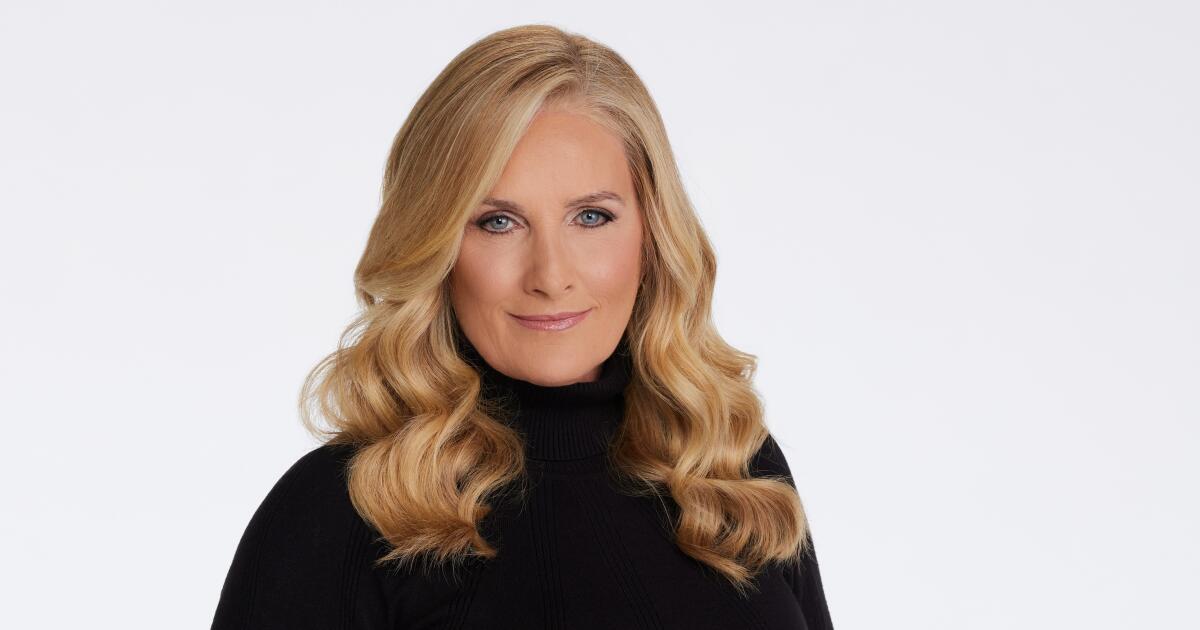
Veteran MS NOW anchor Alex Witt is leaving the news network, which is moving away from live evening programming on weekends.
The new weekend programming strategy announced Friday is a cost-saving measure that will give parent company Versant more resources for a new direct-to-consumer streaming offering that makes MS NOW available to consumers without a pay-TV subscription. The company is also looking to expand its live event business.
According to a memo from MS NOW President Rebecca Kutler, “The Weekend: Primetime,” a live discussion program launched last year, will have its final airing Saturday.
One of the program’s co-hosts, Antonia Hylton, will take over Witt’s midday shifts later this year. Hylton’s co-hosts Ayman Mohyeldin, Catherine Rampell and Elise Jordan will remain with MS NOW and continue to appear on other programs.
Kutler said job losses from the moves are minimal and encouraged staffers who lose their current roles to apply for 40 current job openings at the company with more on the way. MS NOW has been staffing up its news operation since separating from NBC News last year.
MS NOW changed its name from MSNBC in November. The network, along with other Comcast-owned cable channels, were spun off into Versant in January.
Weekends have long been a ratings weak spot for MS NOW, which while a distant second to Fox News, has seen audience growth in 2026 and remains ahead of CNN. The network has started to rely on podcasts such as “Pod Save America,” from Crooked Media, to fill some hours. The episodes have performed strongly enough for MS NOW to try similar deals with outside podcast producers.
“Throughout the summer, we will expand our taped strategy and announce new content partnerships,” Kutler said in her memo.
With the changes, MS NOW will still have 20 hours of live programming each weekend and will be staffed to handle breaking news.
Witt joined the network formerly known as MSNBC in 1999, long before it began its strong tilt toward progressive political commentary. Over the years, Witt’s weekend newscast became one of the few programs on the network that delivered straight news without opinion.
Kutler called Witt “a beloved longtime member of our MS NOW family” and “a continued, trusted, and steady presence for our audiences.”
While Witt works through the summer, Hylton will anchor the 11 a.m. weekday time period, which will eventually be handled by former NBC News White House correspondent Peter Alexander.
Politics
McCarthy says Trump will use ‘everything he can’ to force Senate action on SAVE America Act

NEWYou can now listen to Fox News articles!
As infighting over the SAVE America Act throws congressional Republicans into disarray, President Donald Trump’s bid to get the stalled election bill across the finish line gained one notable ally.
Former House Speaker Kevin McCarthy, R-Calif., told Fox News Digital that he supports the election integrity measure and indicated that Trump should continue to use every available tool to pressure the Senate to pass it.
“He’s going to try everything he can to make sure he passes that through,” McCarthy said in a brief interview outside the U.S. Capitol.
The ex-speaker’s comments came after Trump abruptly called off a signing ceremony Wednesday for a bipartisan housing bill to pressure the Republican-controlled Senate to act on the SAVE America Act.
President Donald Trump boards Air Force One as he departs Reading Regional Airport in Reading, Pa., on June 23, 2026. (Evelyn Hockstein/Reuters)
IRATE REPUBLICANS ACCUSE TRUMP OF HANDING DEMOCRATS A WIN AFTER BLOWING UP HOUSING PACKAGE
The move surprised Republican lawmakers, some of whom were praising the bill’s passage at a press conference when Trump’s Truth Social post broke.
But Trump has repeatedly cast the election measure — requiring proof of citizenship to vote in federal elections and voter identification requirements — as his top legislative priority.
The legislation’s momentum, however, has slowed in the upper chamber, where Republican leadership insists the votes aren’t there amid widespread Democratic opposition. Senate Republicans have also been unwilling to eliminate the legislative filibuster, which requires a 60-vote threshold to pass the legislation.
Former Speaker of the House Kevin McCarthy speaks during a ceremony honoring President Ronald Reagan on the 115th anniversary of his birthday at the Ronald Reagan Presidential Library in Simi Valley, Calif., on Feb. 6, 2026. (Hans Gutknecht/MediaNews Group)
TRUMP CALLS MAIL IN VOTING CORRUPT AS SENATE BEGINS DEBATE ON SAVE ACT REQUIRING VOTER ID
Amid the SAVE standoff, a group of conservative lawmakers effectively shut down the House floor in an effort to force Senate action on the election bill.
But the Senate recessed Wednesday for two weeks over the July 4 holiday, leaving the measure in limbo until lawmakers return.
The conservative-led blockade sparked fierce backlash, with several members inside the GOP conference telling Fox News Digital the move risked torpedoing their own legislative agenda.
Meanwhile, the House has also yet to pass a version of the legislation incorporating several of the president’s priorities, including a mail-in voting crackdown and provisions banning men from competing in women’s sports and child sex change procedures.
Trump has not indicated whether he will sign the 21st Century ROAD to Housing Act, despite the likely existence of a veto-proof majority.
House Speaker Mike Johnson, R-La., told reporters Thursday that the housing bill had been transmitted to the White House for Trump’s signature following a meeting with the president.
Speaker of the House Mike Johnson, R-La., talks with reporters in the U.S. Capitol on June 10, 2026. (Tom Williams/CQ-Roll Call, Inc via Getty Images)
CLICK HERE TO DOWNLOAD THE FOX NEWS APP
Trump now has 10 days to sign the package or veto it. If he does nothing, the legislation automatically becomes law at the end of the 10-day period.
-

 Technology3 minutes ago
Prime Day’s final hours bring rare discounts on Philips Hue smart lights
-

 World6 minutes ago
Video shows gaping hole after small plane crashes into towering skyscraper
-

 Politics11 minutes ago
Warren tells Trump to ‘sign the damn bill’ as bipartisan housing package remains stalled in Washington
-

 Health18 minutes ago
Common food preservatives may raise blood pressure and heart risks, study suggests
-

 Sports21 minutes ago
Who is Alyssa Thomas? WNBA star suspended for punching Caitlin Clark in the throat
-

 Technology26 minutes ago
Fox News AI Newsletter: Waymo’s robotaxi recall
-
Business33 minutes ago
Cisco to lay off more than 400 workers in California
-
 Entertainment36 minutes ago
Tom Sandoval’s girlfriend Victoria Robinson arrested after patio fire pit altercation


